标签: Asia

亚洲

  • ‘We will vote but not with our hearts’: Inside the election staged by Myanmar’s military rulers

    ‘We will vote but not with our hearts’: Inside the election staged by Myanmar’s military rulers

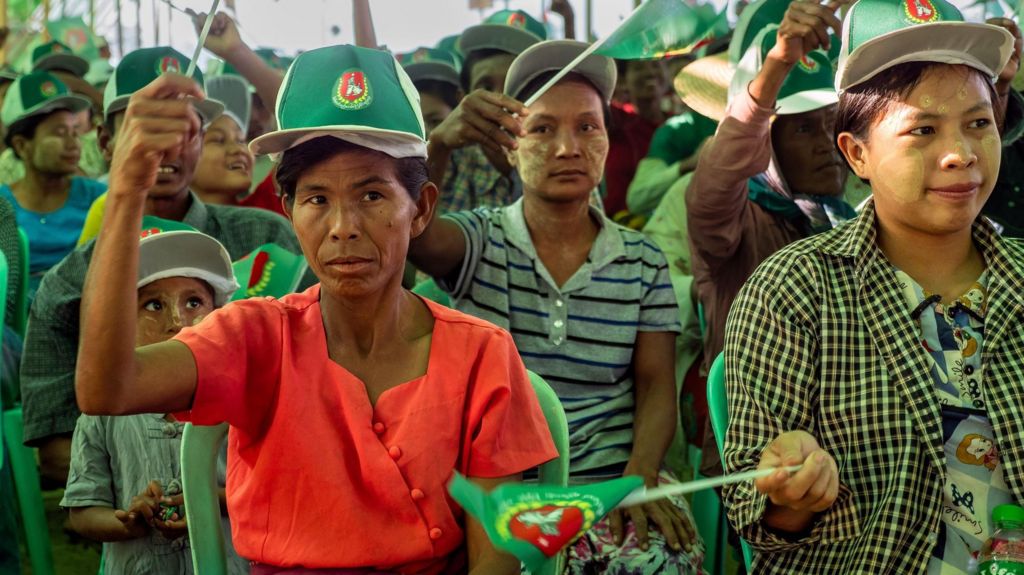
    In a carefully staged political performance ahead of Myanmar’s December 28 election, retired Lieutenant-General Tayza Kyaw attempted to generate enthusiasm among a modest crowd in Mandalay. The military-backed Union Solidarity and Development Party (USDP) candidate addressed approximately 300-400 attendees, many of whom were earthquake victims seeking assistance rather than political engagement. The event exposed the profound challenges facing what international observers have universally condemned as a illegitimate electoral process.

    This marks Myanmar’s first voting opportunity since the military seized power nearly five years ago, triggering a devastating civil war that has claimed approximately 90,000 lives according to ACLED data analysis. The election proceeds under circumstances that fundamentally undermine its credibility: the popular National League for Democracy has been dissolved, its leader Aung San Suu Kyi remains imprisoned, and voting cannot occur in extensive regions still engulfed in conflict.

    The climate of intimidation permeates every aspect of the process. When BBC journalists attempted to gather opinions at the rally, party officials intervened, citing concerns about attendees “saying the wrong thing.” This apprehension stems from the visible presence of plain-clothes intelligence officers and draconian laws that criminalize dissent. A July statute prohibits any speech or action deemed destructive to the electoral process, with violators facing extreme penalties—three Yangon residents recently received 42-49 year sentences for merely posting stickers combining bullet and ballot box imagery.

    Despite these conditions, junta leader Min Aung Hlaing appears confident the election will provide the legitimacy that has eluded him during five catastrophic years of rule. His confidence stems from several factors: diplomatic support from China, which is providing technical and financial assistance despite being a one-party state itself; recent military gains achieved with Chinese and Russian weapons; and the elimination of meaningful political opposition.

    The reality on the ground reveals a nation deeply fractured. Even near Mandalay’s apparent normality, the conflict’s scars remain visible. Areas like the spectacular Mingun temple complex, once a tourist destination, have become contested territory where volunteer People’s Defence Forces control villages and ambush military convoys. A young police commander interviewed by the BBC revealed the constant danger facing security forces, describing shoot-on-sight relationships with guerrilla groups.

    General Tayza Kyaw, when confronted about civilian casualties and air strikes against schools and hospitals, deflected responsibility entirely onto those resisting military rule, labeling them “terrorists” rather than citizens. This rhetoric reflects the regime’s uncompromising position and explains why many Burmese will participate in the election not out of conviction but fear. As one woman summarized: “We will vote, but not with our hearts.”
  • Israel becomes first country to officially recognise Somaliland

    Israel becomes first country to officially recognise Somaliland

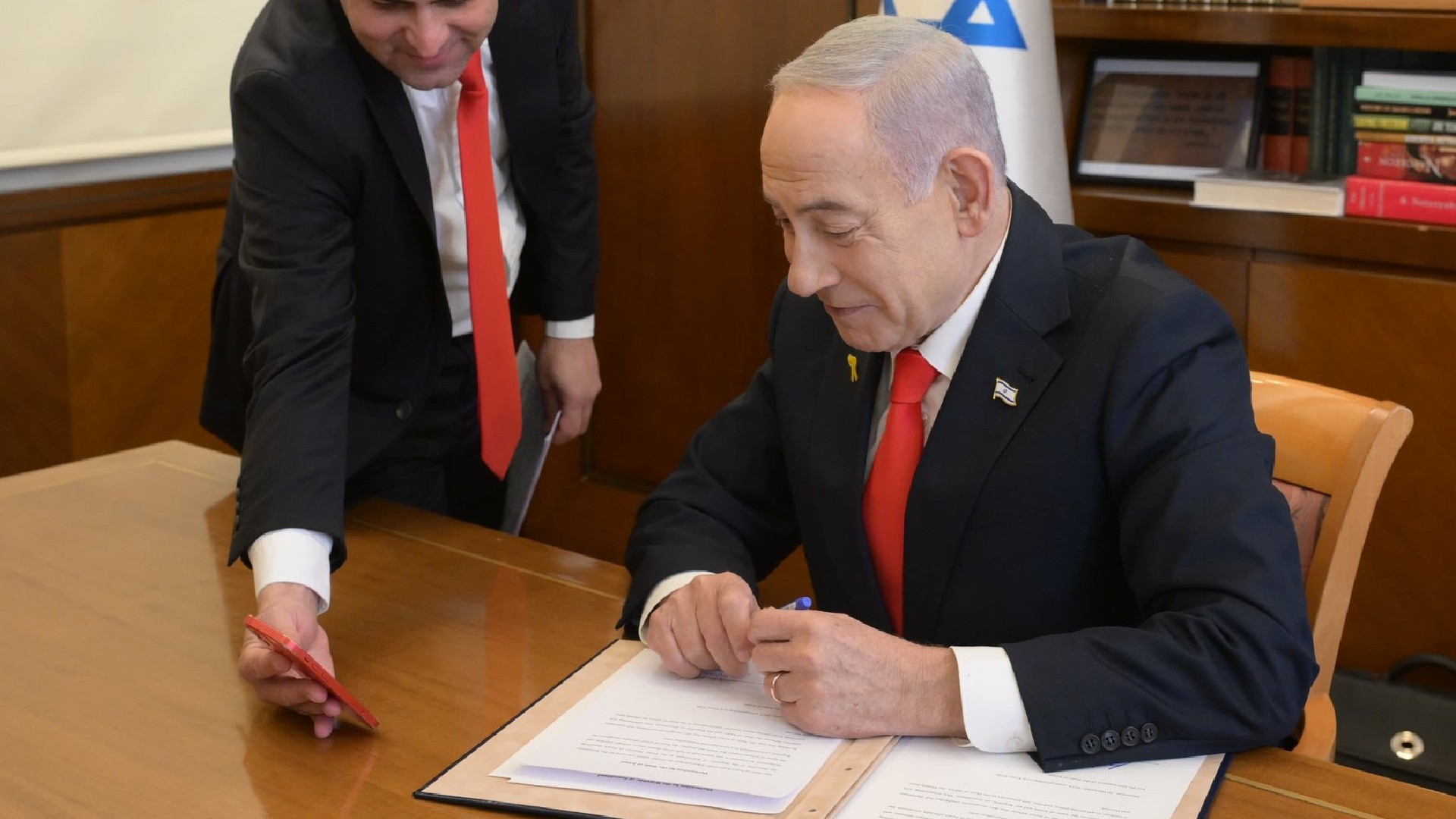
    In a groundbreaking diplomatic development, the State of Israel has formally extended recognition to the breakaway territory of Somaliland as an independent and sovereign nation. This decision, announced on Friday by Israeli Prime Minister Benjamin Netanyahu, marks the first instance of any country granting full sovereign recognition to the region since it declared independence in 1991.

    The formal recognition was cemented through a mutual declaration signed by Prime Minister Netanyahu, Israeli Foreign Minister Gideon Saar, and Somaliland President Abdirahman Mohamed Abdullahi. The signing ceremony was conducted via video conference, with Netanyahu characterizing the agreement as both ‘seminal and historic’ in nature.

    Somaliland, which initially united with the Somali republic in 1960, has operated as a de facto independent state for over three decades following its declaration of independence during Somalia’s civil conflict. Despite maintaining unofficial diplomatic channels with several nations, the territory had previously failed to gain recognition from any permanent members of the United Nations Security Council.

    The Israeli Prime Minister’s office indicated that this diplomatic breakthrough aligns with the spirit of the Abraham Accords, the normalization agreements established between Israel and several Arab states in 2020. Netanyahu specifically referenced former U.S. President Donald Trump during the announcement, expressing intentions to communicate Somaliland’s ‘willingness and desire’ to join the Accords framework.

    Both leaders expressed commitment to expanding bilateral cooperation across multiple sectors including economic development, agricultural innovation, and social advancement. President Abdullahi accepted Netanyahu’s invitation for an official visit to Jerusalem, stating he would ‘be glad to be in Jerusalem as soon as possible’ to further solidify the new diplomatic relationship.

  • UAE President, Pakistani PM hold talks to strengthen ties in investment, economy

    UAE President, Pakistani PM hold talks to strengthen ties in investment, economy

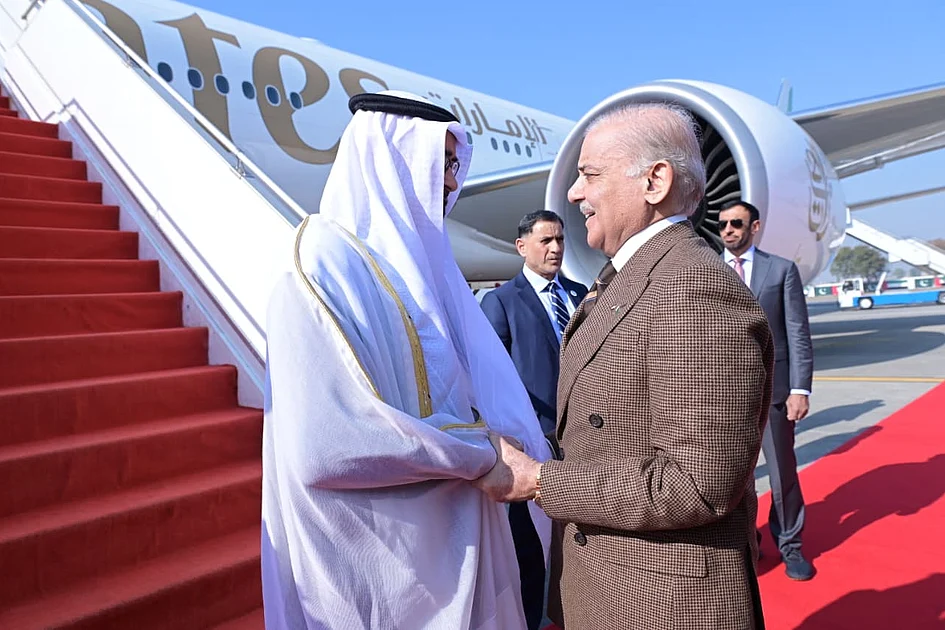
    In a significant diplomatic engagement, UAE President Sheikh Mohamed bin Zayed Al Nahyan embarked on an official visit to Pakistan on Friday, where he was formally received by Prime Minister Muhammad Shehbaz Sharif at Islamabad’s Nur Khan Airbase. The high-level meeting marked a pivotal moment in bilateral relations between the Gulf nation and the South Asian country.

    The two leaders conducted comprehensive discussions focused on expanding cooperation across multiple strategic sectors, with particular emphasis on economic development, energy infrastructure, technological innovation, and investment opportunities. President Sheikh Mohamed emphasized the UAE’s commitment to deepening collaboration with Pakistan in development-focused areas that align with mutual national interests and shared prosperity objectives.

    Beyond economic matters, the dialogue extended to regional and international affairs of mutual concern. Both leaders highlighted the critical importance of supporting initiatives that promote peace, security, and stability across the region and globally. The UAE President specifically noted the significance of continued coordination between the two nations, particularly given Pakistan’s current position on the UN Security Council, which presents a valuable platform for enhanced collaborative efforts in global peacekeeping initiatives.

    President Sheikh Mohamed reiterated the UAE’s consistent foreign policy approach of resolving international disputes through diplomatic channels and constructive dialogue, emphasizing that these methods represent the most effective pathway toward overcoming challenges and achieving sustainable development.

    Prime Minister Sharif expressed appreciation for the UAE’s ongoing developmental initiatives within Pakistan and welcomed the strengthening bilateral relationship. He acknowledged the UAE President’s influential role in fostering regional stability and international cooperation.

    The high-profile meeting was attended by distinguished delegations from both nations, including Sheikh Sultan bin Hamdan Al Nahyan and Sheikh Mohammed bin Hamad bin Tahnoun Al Nahyan, both Advisers to the UAE President, along with several ministers and senior officials. The Pakistani delegation included Field Marshal Asim Munir, Chief of Army Staff of Pakistan, alongside various ministers and government officials.

  • Fake Grand Egyptian Museum ticket website shut down, Ministry warns public

    Fake Grand Egyptian Museum ticket website shut down, Ministry warns public

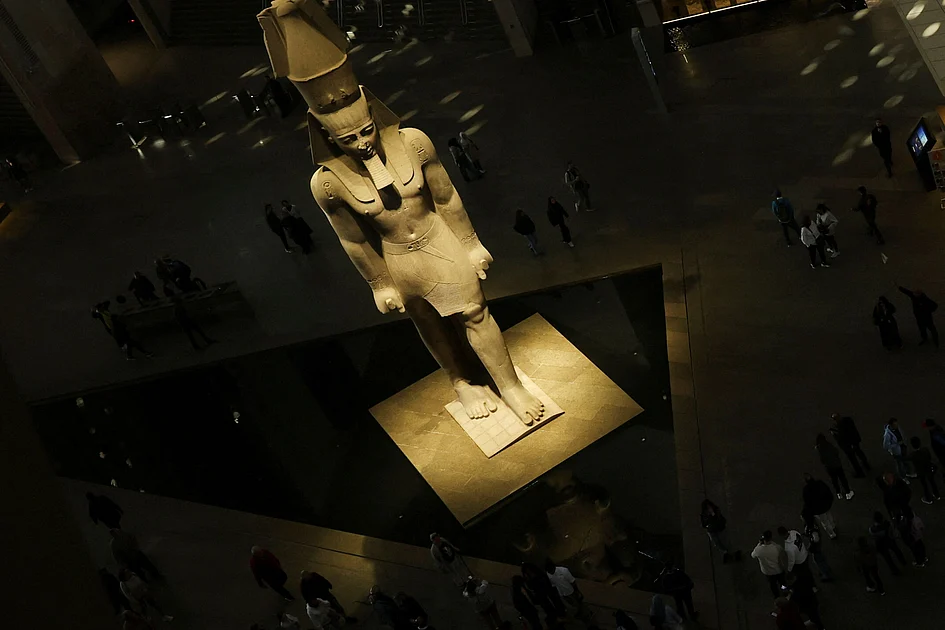
    Egyptian authorities have successfully dismantled a counterfeit website falsely advertising ticket sales for the Grand Egyptian Museum (GEM), according to an official announcement from the Ministry of Tourism and Heritage. The fraudulent platform, which emerged recently, was promptly identified and reported to museum administrators who initiated immediate legal proceedings.

    The National Agency for Regulation of Communications, alongside other relevant governmental bodies, was notified of the illicit operation, resulting in the complete shutdown of the deceptive website. This coordinated effort highlights Egypt’s strengthened cybersecurity measures to protect both domestic and international visitors from digital fraud schemes.

    Tourism Minister Sharif Fathi addressed the public regarding the incident, emphasizing the critical need for vigilance in today’s increasingly sophisticated digital environment. He advised all potential visitors to rigorously verify the authenticity of websites before proceeding with any financial transactions or sharing personal data. Minister Fathi specifically cautioned against unauthorized platforms that might attempt to mimic official government or cultural institution websites.

    Dr. Ahmed Ghanim, Executive President of the Grand Egyptian Museum, reaffirmed that gem.com remains the exclusive authorized platform for all legitimate ticket purchases. He detailed the museum’s proactive digital surveillance strategy, which involves continuous monitoring of internet activity to detect and neutralize fraudulent entities claiming association with the prestigious institution. Dr. Ghanim confirmed that the administration maintains a zero-tolerance policy toward such scams and pursues maximum legal penalties against perpetrators.

    The Grand Egyptian Museum, one of the world’s most anticipated cultural institutions, represents a significant investment in Egypt’s cultural heritage and tourism infrastructure. This incident marks the latest in a series of attempts to exploit the museum’s global popularity through digital deception. Authorities have indicated that similar monitoring operations are ongoing to prevent future occurrences that could undermine visitor confidence and financial security.

  • Beijing community leads the way in grassroots governance

    Beijing community leads the way in grassroots governance

    The Xiaoguan sub-district in Beijing’s Chaoyang district has emerged as a national model for effective grassroots governance through its innovative problem-solving systems. This community recently showcased its administrative achievements during an annual ceremony that highlighted China’s ongoing modernization of urban governance structures.

    Central to Xiaoguan’s success is its pioneering ‘Swift Response to Public Complaints’ mechanism, which has fundamentally transformed how governmental departments interface with residents. This streamlined system serves as a critical conduit between authorities and citizens, enabling efficient resolution of community concerns through optimized bureaucratic processes.

    Throughout 2025, this mechanism facilitated the resolution of more than 6,700 public appeals according to local officials. These addressed matters spanned diverse areas including daily livelihood challenges and essential community facility enhancements. The systematic approach to problem-solving has substantially elevated residents’ quality of life while strengthening their sense of civic satisfaction.

    The sub-district’s governance model demonstrates how people-centered administrative frameworks can effectively support high-quality urban development. Experts and policymakers recently convened to discuss Xiaoguan’s development pathways as part of broader strategic planning for the upcoming 15th Five-Year Plan period, examining how its successful approaches might inform national governance modernization efforts.

    This case study illustrates the practical implementation of China’s governance philosophy that prioritizes citizen needs while maintaining administrative efficiency. The district’s achievements provide valuable insights into how localized innovation can drive meaningful improvements in public service delivery and community welfare.

  • Hangzhou–Quzhou High-Speed Railway begins operations

    Hangzhou–Quzhou High-Speed Railway begins operations

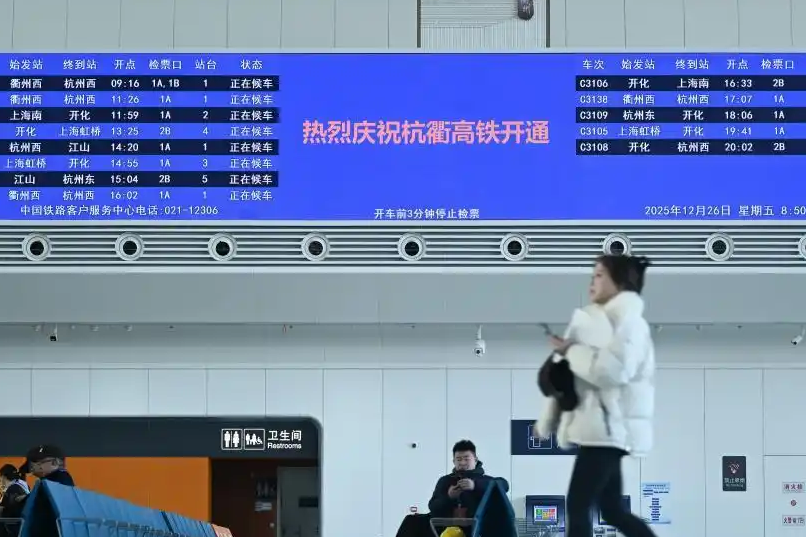
    Eastern China’s regional connectivity enters a new era with the formal inauguration of the Hangzhou–Quzhou High-Speed Railway on December 26, 2025. The inaugural service, train C3132, departed Quzhou West Station bound for Hangzhou, marking a significant expansion of the Yangtze River Delta’s sophisticated rapid transit network.

    This newly operational corridor spans 131 kilometers and represents a major engineering achievement. Designed for peak speeds of 350 km/h, the railway features five strategically located stations: Jiande, Jiande South, Longyou North, Quzhou West, and Jiangshan. It establishes a parallel route to the existing Hangzhou–Quzhou segment of the Shanghai–Kunming High-Speed Railway, creating a robust dual-channel transportation link between these key Zhejiang province hubs.

    The project, whose construction commenced in May 2020, presented substantial technical hurdles. The main line incorporates 38 tunnels and 119 bridges, with viaducts and subterranean passages constituting nearly 79% of its total length. A notable engineering challenge was the construction of a 685-meter bridge that had to safely cross the active Jinqian Railway. Huang Baoliang, project head at China Railway No 11 Bureau Group, emphasized that construction plans underwent continuous optimization to ensure safe passage over existing railways, highways, and rivers.

    Transportation experts highlight the line’s critical strategic importance. “The Hangzhou–Quzhou High-Speed Railway occupies a crucial position in the Yangtze River Delta intercity rapid transport network,” stated Guo Jianbin, a senior engineer with China Railway Shanghai Group’s transport department.

    The railway’s design prioritizes seamless regional integration. At Jiande Station, it interconnects with the Hangzhou–Huangshan High-Speed Railway, providing direct access to the comprehensive Hangzhou rail hub. The western terminus at Quzhou West links with the Jiujiang–Jingdezhen–Quzhou Railway, creating a direct westward corridor to major cities including Wuhan in Hubei province and Jiujiang in Jiangxi province. Additionally, Jiangshan Station facilitates convenient transfers to the Shanghai–Kunming High-Speed Railway, substantially optimizing regional rail connectivity and supporting accelerated regional economic development.

  • Exiled Assad loyalists plot to destabilise Syria’s new government, report says

    Exiled Assad loyalists plot to destabilise Syria’s new government, report says

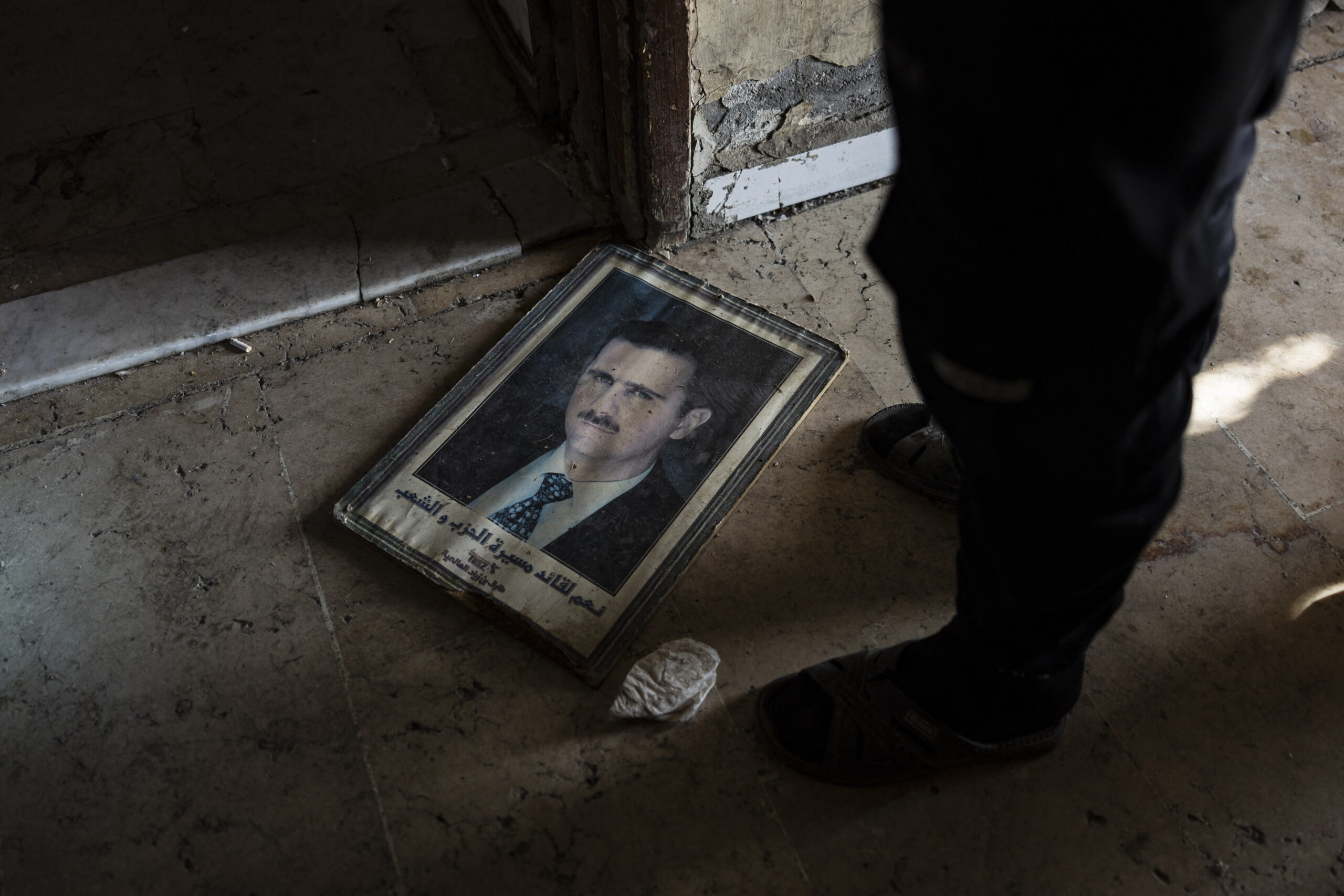
    A sophisticated network of exiled Syrian figures with close ties to former strongman Bashar al-Assad is actively working to undermine the country’s new government and seize control of strategic coastal regions, according to intercepted communications obtained by The New York Times.

    The investigation reveals that former intelligence chiefs and military commanders, now primarily based in Russia and Lebanon, are quietly reconstructing loyalist networks within Syria’s Alawi community—the sectarian foundation that previously supported Assad’s regime. Central to these efforts are Suhail al-Hassan, the former special forces commander known as “The Tiger,” and Major-General Kamal Hassan, the former head of military intelligence. Both relocated to Moscow with Assad but maintain active involvement in Syrian affairs.

    Intercepted text messages indicate al-Hassan has met with collaborators across Lebanon, Iraq, and inside Syria over the past year. These communications include detailed charts enumerating fighters and weaponry available in coastal villages, with claims of being able to mobilize tens of thousands of combatants. Al-Hassan has signed several messages as a “holy warrior,” indicating the ideological motivation behind these efforts.

    The operation appears financially supported by Rami Makhlouf, Assad’s billionaire cousin who also resides in Moscow. Makhlouf has reportedly channeled funds to impoverished Alawi families along the coast while positioning himself as a community protector. Another key figure, Ghiyath Dalla, a former commander in the disbanded Fourth Division, is coordinating efforts from Lebanon. In an intercepted April 2025 phone call, Dalla stated: “We will not begin until we are fully armed.”

    Financial records show Dalla distributing approximately $300,000 monthly to potential fighters and local commanders, with individual payments ranging from $200 to $1,000. He has also sought approval to acquire satellite communications equipment valued at over $130,000 to enhance operational capabilities.

    The communications further reveal coordination with Iran-aligned Iraqi militia leaders to discuss weapons smuggling routes into Syria while avoiding detection by Israeli air strikes or Syrian authorities. Additional messages reference aborted assassination plots and efforts to procure drones and anti-tank missiles, including weapons allegedly hidden within Syria.

    These developments follow April’s sectarian violence along Syria’s Mediterranean coast that resulted in over 1,600 fatalities, predominantly Alawi. The coordinated attacks by former security forces against new government troops served as a rallying point for ex-regime figures seeking to mobilize fighters.

    Simultaneously, Hassan is backing the Beirut-based Foundation for the Development of Western Syria, which presents itself as an advocate for Syrian minorities and displaced Alawis. According to U.S. disclosure filings, the foundation hired lobbying firm Tiger Hill Partners and former Trump adviser Joseph Schmitz on a $1 million contract. The organization has publicized meetings with several U.S. lawmakers’ offices, though aides characterize these as routine staff engagements.

    Associates indicate Hassan appears more focused on building long-term political leverage than launching an immediate insurgency, including promoting calls for “international protection” for Syria’s Alawi-majority coastal regions. Syrian officials monitoring former regime figures have downplayed the threat of a coordinated armed uprising, while diplomats express greater concern about overseas lobbying efforts that could normalize calls for fragmentation or semi-autonomy if Syria’s political transition falters.

    Complicating the situation, Israeli authorities have intensified air strikes across Syrian territory, targeting military sites and key infrastructure while signaling openness to working with armed actors in southern Syria—a move analysts say compounds efforts by former government figures to destabilize the country.

  • Trump says US military struck Islamic State militants in Nigeria

    Trump says US military struck Islamic State militants in Nigeria

    In a significant military operation, the United States executed targeted airstrikes against Islamic State group militants in Nigeria’s northwestern Sokoto State on Thursday night. The action was conducted in close coordination with Nigerian authorities through established security cooperation channels.

    Former President Donald Trump publicly claimed responsibility for authorizing the operation via his Truth Social platform, characterizing the intervention as a decisive response to escalating violence against Christian communities. “Tonight, at my direction as Commander in Chief, the United States launched a powerful and deadly strike against ISIS Terrorist Scum in Northwest Nigeria,” Trump stated, emphasizing that the militants had been “targeting and viciously killing, primarily, innocent Christians, at levels not seen for many years.”

    The operation targeted elements of Islamic State Sahel Province (ISSP), also known as Lakurawa, which maintains operational bases in forested border regions between northern Nigeria and Niger. These groups have been implicated in both terrorist activities and widespread banditry across the region.

    Nigeria’s Foreign Ministry confirmed the collaborative nature of the operation, noting that intelligence sharing between the two nations facilitated “precision hits on terrorist targets in Nigeria by air strikes in the North West.” This confirmation came despite the unusual involvement of a former president in announcing current military operations.

    The strikes occurred against a complex backdrop of intercommunal violence. While religious tensions have drawn international attention, particularly from American conservative groups concerned about Christian persecution, Nigerian officials and analysts emphasize that the conflict involves multiple dimensions including competition over natural resources, ethnic tensions, and criminal banditry affecting both Muslim and Christian communities.

    The timing followed a recent Christmas Eve suicide bombing at a mosque in northeast Nigeria’s Borno State that killed five people and wounded thirty others—an attack attributed to Boko Haram militants who have operated in the region for nearly two decades.

    Despite the complex dynamics underlying regional violence, both Nigerian and US authorities have demonstrated continued commitment to security cooperation targeting militant groups operating within Nigeria’s borders.

  • Xiaoguo Comedy launches nationwide year-end tour

    Xiaoguo Comedy launches nationwide year-end tour

    Shanghai witnessed the spectacular launch of Xiaoguo Comedy’s annual year-end extravaganza on Tuesday, December 26, 2025. The premiere of ‘To Gather, Together’ at the prestigious Bocom New Bund 31 Performing Arts Center drew an enthusiastic crowd of over 2,000 attendees, setting the stage for what promises to be an unprecedented comedy tour across China.

    Headlined by renowned stand-up comedian Tong Monan, the production marks the beginning of an extensive nationwide journey that will continue through February 8, 2026. The ambitious schedule includes nearly 60 performances spanning 18 different cities, creating one of the most comprehensive comedy tours in recent Chinese entertainment history.

    The production distinguishes itself through its diverse comedic offerings, featuring an impressive roster of more than 150 top-tier stand-up comedians from across China. The show’s innovative format incorporates multiple comedy styles including traditional stand-up specials, intellectual property-based shows, Japanese-inspired manzai (a dynamic double-act comedy style), and spontaneous improvisational comedy performances.

    This massive undertaking represents significant growth for China’s comedy scene, demonstrating both the increasing popularity of live comedy performances and the expanding market for diverse entertainment formats. The multi-city tour is expected to bring high-quality comedy productions to audiences who previously had limited access to such performances outside major metropolitan areas.

    The timing of the tour, spanning the year-end holiday season and extending through the Lunar New Year period, positions it as prime entertainment during one of China’s most celebrated times for family gatherings and social activities. The inclusion of various comedy formats ensures appeal across different demographic groups, from traditional comedy enthusiasts to younger audiences seeking innovative performance styles.

  • CPC expels former China Life Insurance president

    CPC expels former China Life Insurance president

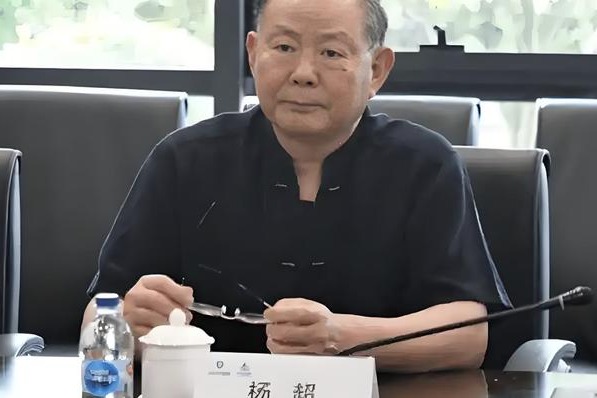
    In a significant demonstration of China’s ongoing anti-corruption campaign, Yang Chao, the former president of China Life Insurance (Group) Company, has been expelled from the Communist Party of China following extensive investigations by the nation’s top disciplinary watchdogs.

    The CPC Central Commission for Discipline Inspection and the National Commission of Supervision announced the decision through an official statement released on Friday, December 26, 2025. The investigation, which began in March, uncovered systematic violations of Party discipline and national laws by the senior executive.

    According to the disciplinary authorities, Yang, who held leadership positions in one of China’s central financial State-owned enterprises, demonstrated disloyalty to the Party and exhibited a profound disregard for organizational discipline. The investigation revealed multiple layers of misconduct spanning his tenure and even continuing after his retirement.

    Yang’s violations included illegally accepting gifts and banquet invitations, along with persistent misuse of official vehicles. The former executive also provided false information during questioning and was found to have solicited and accepted bribes in exchange for influencing personnel promotions and recruitment decisions within the company.

    Notably, the disciplinary commissions highlighted that Yang continued to breach regulations post-retirement by engaging in unauthorized part-time employment and illicit business activities. Furthermore, he systematically enabled family members to exploit his former position and influence for personal gain.

    The investigation particularly emphasized Yang’s interference in investment activities, where he allegedly accepted substantial illicit payments, characterizing his case as emblematic of corruption within China’s financial investment sector.

    In addition to his expulsion from the Party, authorities have confiscated all illicit gains obtained through his corrupt practices. The case’s criminal aspects and related assets have been transferred to prosecutors in Shangrao, Jiangxi province, for formal legal proceedings.

    Yang Chao, a 75-year-old Shanghai native, dedicated decades to China’s banking and insurance sectors. He ascended to the positions of Party chief and general manager of China Life Insurance Co Ltd in 2000 before retiring in 2011, though his post-retirement activities have now drawn severe disciplinary consequences.