标签: Asia

亚洲

  • Bangladesh’s Gen Z voters pin hopes on jobs, governance and freedom

    Bangladesh’s Gen Z voters pin hopes on jobs, governance and freedom

    As Bangladesh approaches its first competitive national election since 2009, Generation Z voters are emerging as a decisive political force with clear demands for economic opportunity, governance reform, and civil liberties. Thursday’s pivotal vote follows the 2024 student-led uprising that toppled longtime Prime Minister Sheikh Hasina, whose Awami League party remains barred from contesting due to suspended registration.

    The electoral landscape presents a complex choice for the nation’s substantial youth demographic, who constitute approximately 28% of Bangladesh’s 175 million population. Despite their instrumental role in Hasina’s ouster, young voters now face a political arena dominated by established parties—the Bangladesh Nationalist Party (BNP) and Islamist Jamaat-e-Islami—with no comprehensive reform agenda or viable new alternative having emerged.

    Economic concerns dominate youth priorities, with unemployment representing a particularly acute challenge. National University graduates face disproportionate employment difficulties, with an estimated 86% unemployment rate among the institution’s extensive network of 2,200 colleges. “We need IT-based education to compete globally,” emphasized Mohammed Muniruzzaman, 21, echoing widespread demands for educational reform aligned with modern job markets.

    Civil liberties and governance transparency constitute equally critical issues for young voters. Journalist Mohammed Saimum Jahan, 22, articulated concerns about freedom of expression: “We couldn’t speak freely during what many considered a fascist period. We need the freedom to criticize government, whoever holds power.”

    Regional variations in priorities are evident, with rural youth emphasizing agricultural economics. Farhana Akhter, 21, from a Bogura farming family, highlighted market inequities: “We invest significantly in seeds and fertilizer but receive unfair rates for our produce. We hope for gradual improvement.”

    Political analysts present diverging predictions regarding youth voting patterns. Professor Shakil Ahmed of Jahangirnagar University suggests BNP may benefit from youth discontent, while University of Dhaka’s Asif Shahan believes Jamaat-e-Islami could gain significant support. Some voters indicate preferences for local candidates over national parties, seeking practical solutions rather than ideological alignment.

    The election’s outcome carries profound implications for national stability following months of unrest that disrupted major industries, including the crucial garment sector. Beyond economic and governance issues, minority safety concerns and interfaith harmony also feature prominently in voter considerations, reflecting the complex social fabric of this Muslim-majority nation.

  • Japan’s main opposition to choose new leader on Friday after election loss

    Japan’s main opposition to choose new leader on Friday after election loss

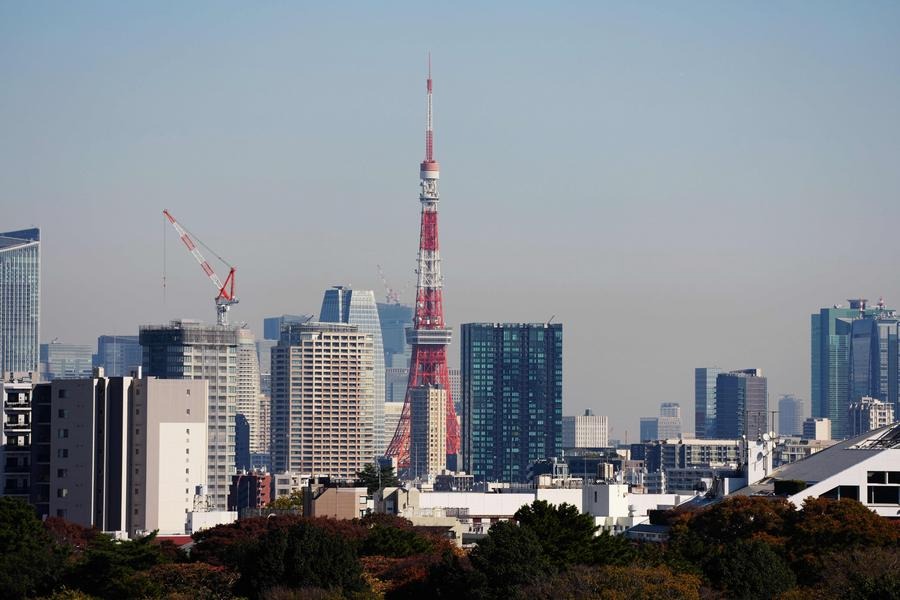
    TOKYO – Japan’s political landscape undergoes significant reorganization as the Centrist Reform Alliance (CRA), the nation’s primary opposition force, prepares to select new leadership this Friday. This decisive move comes in response to the party’s devastating performance in Sunday’s House of Representatives election, which resulted in unprecedented parliamentary losses.

    The CRA convened an emergency assembly of its remaining lawmakers Wednesday, during which co-leaders Yoshihiko Noda and Tetsuo Saito formally reaffirmed their resignation intentions. Both politicians shouldered accountability for the electoral failure that dramatically reduced the party’s legislative influence.

    Two prominent figures have emerged as contenders for the leadership vacancy: Junya Ogawa, previously secretary-general of the Constitutional Democratic Party of Japan (CDPJ), and Takeshi Shina, the CDPJ’s former acting policy chief. Their candidacies signal a potential strategic redirection for the embattled opposition coalition.

    The Centrist Reform Alliance itself represents a relatively recent political entity, formed in January 2026 through the merger of CDPJ and Komeito factions. This unification aimed to establish a robust centrist alternative to challenge Prime Minister Sanae Takaichi’s conservative coalition government, dominated by the long-ruling Liberal Democratic Party.

    Sunday’s electoral outcome proved catastrophic for CRA ambitions. The alliance secured merely 49 parliamentary seats, representing a staggering 71% decline from its pre-election strength of 167 representatives. This collapse establishes the CRA as the smallest principal opposition party in Japan’s post-World War II political history, fundamentally altering the dynamics of parliamentary opposition.

  • Jewish groups dispute claims Palestine Action targets ‘Jewish-owned businesses’

    Jewish groups dispute claims Palestine Action targets ‘Jewish-owned businesses’

    A significant controversy has emerged in the UK regarding the government’s proscription of the protest organization Palestine Action, with Jewish activists challenging official assertions that the group deliberately targets Jewish-owned businesses. The dispute centers on a recent Channel 4 Dispatches documentary that examined the government’s rationale for designating the group as a terrorist organization.

    Central to the debate are claims repeated in the documentary by Gideon Falter, chief executive of the Campaign Against Antisemitism (CAA), who stated that Palestine Action had ‘created a climate of fear’ within the Jewish community through a series of attacks on Jewish commercial properties. Falter described these incidents as ‘thuggish, violent attacks’ involving property damage and red paint splattering.

    However, Jewish activists and Palestine Action representatives have vigorously contested these allegations. Huda Ammori, co-founder of Palestine Action, asserted that their targets were selected exclusively based on connections to Israel’s weapons industry and complicity in Gaza operations, regardless of the owners’ identities. She characterized the accusations as ‘weaponizing antisemitism’ and ‘obfuscating the facts.’

    The documentary also featured Jonathan Hall KC, the government’s independent reviewer of terrorism legislation, who questioned the official narrative by stating that press briefings about Palestine Action’s alleged ties to Iran were ‘wrong.’

    Notable Jewish organizations joined the critique. Naomi Wimborne-Idrissi of Jewish Voice for Liberation expressed shock at the suggestion that Palestine Action constituted a threat to Jewish people, noting that the CAA was ‘stoking antisemitism in a completely irresponsible way.’ Similarly, the group Na’amod argued that characterizing Bicom—a targeted organization that facilitates journalist access to Israeli officials—as ‘merely a Jewish business’ deliberately obscured its complicity in Gaza operations.

    Evidence presented in the report indicates that the government’s Joint Terrorism Analysis Centre assessment, used to support the proscription decision, did not include claims about attacks on Jewish businesses. Instead, the justification focused primarily on property damage incidents aimed at advancing political causes.

    Specific cases examined include the targeting of Discovery Park Ltd, registered at a Stamford Hill address with a large Jewish population. While government officials portrayed this as an attack on a Jewish business, Palestine Action clarified they targeted the company because it served as landlord to Instro Precision, a subsidiary of Israel’s major weapons supplier Elbit Systems. Ammori acknowledged the Jewish ownership but emphasized: ‘If the landlords were somebody else, they would also have been targeted, regardless of whether or not they were Jewish.’

    The proscription of Palestine Action, which places it on the UK’s terrorist list alongside organizations like Islamic State and al-Qaeda, has drawn widespread criticism across the political spectrum, with many questioning the evidence supporting the designation.

  • Venezuela makes first crude oil shipment to Israel since 2009, says report

    Venezuela makes first crude oil shipment to Israel since 2009, says report

    A Bloomberg report indicating Venezuela’s potential resumption of crude oil exports to Israel after a 17-year hiatus has been met with official denial from Caracas, creating a complex geopolitical narrative. The original report, citing anonymous sources familiar with the matter, claimed the shipment was being arranged by Israel’s Bazan Group and was intended to remain confidential, aligning with Israel’s policy of not disclosing its crude suppliers.

    The reported transaction coincides with a significant diplomatic encounter between Israeli Foreign Minister Gideon Sa’ar and Venezuelan opposition leader María Corina Machado in Washington D.C. last week. This meeting suggests potential backchannel discussions occurring alongside the alleged trade developments.

    Venezuelan Information Minister Miguel Perez Pirela vehemently disputed the report, declaring it ‘FAKE!’ in a social media post. The countries severed diplomatic relations in 2009 under then-President Hugo Chavez, with the last recorded shipment comprising approximately 470,000 barrels.

    The context of this reported shipment occurs against the backdrop of intensified US involvement in Venezuela’s oil sector. Following recent developments involving President Nicolas Maduro, the United States has assumed direct control over Venezuela’s substantial oil reserves, estimated at 303 billion barrels. The US Treasury recently issued a general license for oil production in Venezuela while explicitly prohibiting Chinese and Russian entities from participating in these transactions.

    Venezuela’s oil revenue is currently managed through a restricted account in Qatar, requiring US approval for disbursement. These funds are designated for public sector salaries and essential services, with Caracas having received $500 million from its initial oil sale under this US-brokered arrangement.

    Industry analysts project Venezuela’s oil production could increase by up to 20% in coming months, with confirmed shipments already reaching India, Spain, and the United States, signaling a potential revitalization of the country’s energy sector under new regulatory frameworks.

  • Epstein Files: Analysts question muted ‘mainstream media’ response to Israel ties

    Epstein Files: Analysts question muted ‘mainstream media’ response to Israel ties

    A comprehensive media analysis has revealed significant disparities in how Western news organizations are covering the explosive Jeffrey Epstein document releases, with systematic underreporting of connections to Israel while emphasizing alleged Russian ties. The findings from media watchdog NewsCord demonstrate that major outlets including CNN, Fox News, New York Post, BBC, and The Guardian have largely ignored or minimized substantial evidence linking Epstein to Israeli intelligence operations.

    The analysis, covering 1,545 articles as of February 11th, shows that over 80% contain no mention of Israel connections despite compelling evidence from the recently unsealed documents. The Guardian published 27 initial articles without a single mention of Israel, while only 9% of their total Epstein coverage eventually addressed Israeli connections. The BBC performed similarly, with just 7% of their 47 articles mentioning Israeli ties.

    Substantial evidence exists connecting Epstein to Israeli intelligence operations. A 2020 FBI document alleges Epstein received spy training from Mossad under former Israeli Prime Minister Ehud Barak, with whom he maintained a close personal friendship spanning over a decade. Confidential informants became convinced Epstein was a co-opted Mossad agent, and documents reveal Epstein advised Barak on technology firms like Palantir, which currently provides AI-powered military technology supporting Israel’s operations in Gaza.

    The files also reveal Epstein’s funding of pro-Israel organizations including Friends of Israel Defence Forces and the settlement-building Jewish National Fund. Additionally, Epstein maintained relationships with figures like media mogul Robert Maxwell (father of Ghislane Maxwell, widely believed to have Mossad connections) and former British ambassador Peter Mandelson, whose lobbying firm secured UK contracts for Palantir.

    Media analysts note a pattern of burying Israeli connections when they are mentioned. NewsCord founder Nima Akram observed that mentions of Ehud Barak’s relationship with Epstein often appear deep in articles under vague headlines that obscure the significance. This contrasts with prominent coverage given to speculative connections between Epstein and Russia, despite weaker evidence.

    Academic experts describe an environment of fear surrounding Israel coverage. Dr. Mike Berry of Cardiff University notes journalists fear being attacked by Israel’s supporters, making it ‘controversial and difficult’ to present counter-narratives. Goldsmiths University Professor Des Freedman pointed to database analysis showing UK media produce three times more stories about Epstein-Russia connections than known Epstein-Israel links.

    The BBC defended its coverage, stating it reports ‘without fear or favour’ and is continuing to work through the enormous volume of documents. The Guardian offered no comment on the findings. Intelligence experts note that establishing formal paper trails connecting Epstein to Israeli intelligence remains challenging due to the secretive nature of spycraft and likely document redaction.

  • Modern industrial system key to Shanghai’s grown plan

    Modern industrial system key to Shanghai’s grown plan

    Shanghai has launched a comprehensive development blueprint for its 15th Five-Year Plan period (2026-2030), centering on the establishment of an advanced industrial ecosystem to enhance urban capacity and core competitiveness. Municipal officials announced the strategy during a Wednesday press conference, outlining specific economic targets and development priorities.

    The metropolitan economic powerhouse aims to maintain an average annual GDP growth rate of approximately 5% throughout the five-year timeframe, with an ambitious target to double its per capita GDP by 2035 from the 2020 baseline of over $23,000. Vice-Mayor Wu Wei emphasized that substantial investments will be channeled toward technological innovation, industrial modernization, urban regeneration, and public welfare initiatives.

    Central to Shanghai’s development vision is the creation of a sophisticated industrial framework that encompasses digital transformation of conventional industries and a comprehensive green transition. The strategy prioritizes three cutting-edge sectors—integrated circuits, artificial intelligence, and biomedicine—alongside six emerging industrial clusters including next-generation information technology. The city will also pioneer future-oriented domains such as energy and advanced materials.

    Scientific advancement forms another critical pillar of Shanghai’s roadmap. Luo Dajin, Director of the Shanghai Municipal Science and Technology Commission, revealed plans to intensify original innovation and achieve crucial technological breakthroughs. The city expects basic research expenditure to constitute roughly 15% of total societal R&D investment by 2030, supported by enhanced funding for fundamental studies and core technologies alongside expanded infrastructure including Shanghai’s national blockchain network hub.

    Human capital development receives equal emphasis, with Shanghai targeting cultivation of an additional 300,000 high-skilled professionals by 2030, according to Gu Jun, Director of the Shanghai Municipal Development and Reform Commission.

    The financial and trade sectors will undergo further enhancement through continued reform and opening-up policies. Shanghai aims to achieve annual container throughput of 58 million TEUs by 2030 while attracting world-class supply chain management centers and strengthening global commodity resource allocation capabilities. Zhou Xiaoquan, Executive Deputy Director of the Shanghai Municipal Bureau of Finance, indicated plans to introduce more internationally accessible financial products, attract premier global asset managers and financial institutions, and explore offshore financial mechanisms with corresponding regulatory frameworks.

    Regional integration features prominently in the development agenda, with dedicated focus on Yangtze River Delta coordination through technological collaboration, industrial innovation, regulatory alignment, and infrastructure connectivity. Within Shanghai, land resources will be strategically allocated for new infrastructure including computing, telecommunications, and low-altitude facilities, while urban rail transit coverage expands toward exceeding 1,260 kilometers of operational mileage by 2030.

    The comprehensive plan additionally addresses quality-of-life improvements through renovation of 30 million square meters of aging residential compounds, new park development, and enhanced accessibility to employment, housing, education, healthcare, and childcare services. Environmental commitments include building a resilient megacity and ensuring carbon emissions peak before 2030.

  • 2 killed after civilian airplane shot on landing in Indonesia’s Papua

    2 killed after civilian airplane shot on landing in Indonesia’s Papua

    In a tragic incident highlighting ongoing security challenges in Indonesia’s eastern region, two pilots were killed when unknown assailants opened fire on a civilian aircraft during landing in Papua on Wednesday. The attack occurred at approximately 11:17 AM local time as the Smart Air Cessna Caravan approached Korowai Airport in Boven Digoel, South Papua province.

    According to police spokesman Cahyo Sukarnito, the aircraft was carrying 13 passengers alongside the flight crew when gunfire targeted the plane upon touchdown. In response to the attack, both pilots and all passengers evacuated the aircraft and sought refuge in nearby forested terrain surrounding the airport facility.

    Tragically, both the pilot and co-pilot sustained fatal injuries during the incident. All passengers aboard the flight were confirmed safe and accounted for following the attack. Authorities have not yet identified the perpetrators behind the shooting, with police investigations ongoing to determine responsibility.

    The attack occurs against the backdrop of long-simmering tensions in Indonesia’s resource-rich Papua region, where separatist groups have maintained a low-intensity independence conflict since the territory’s controversial incorporation into Indonesia following a UN-supervised vote in 1969. The region has experienced escalating violence in recent years despite increased security presence.

    Smart Air, the operator of the targeted aircraft, has not issued an immediate public statement regarding the attack or the loss of their flight crew members. The incident represents one of the most direct attacks on civilian aviation in the region’s ongoing conflict, raising concerns about the safety of air transport in remote areas of Papua.

  • China’s first research center focusing on foreign-related criminal affairs opens in Shanghai

    China’s first research center focusing on foreign-related criminal affairs opens in Shanghai

    Shanghai has become home to China’s inaugural research institution dedicated to foreign-related criminal affairs with the establishment of the Center for Foreign-Related Criminal Rights Protection and Risk Prevention. The groundbreaking facility commenced operations at the East China University of Political Science and Law, marking a significant advancement in China’s approach to international legal challenges.

    The newly launched center will concentrate on several critical domains including governance of cross-border money laundering activities, regulatory frameworks for international capital movements, and tax-related criminal risks affecting overseas operations. Additional focus areas encompass criminal governance mechanisms for digital currencies and cross-border financial transactions, international asset recovery protocols, anti-smuggling initiatives, overseas compliance standards, and transnational criminal dispute resolution.

    According to Director Sun Wanhuai, who also heads the Criminal Justice College at the university, the center will serve as both a think tank platform for legal rights protection and risk prevention, and as a collaborative ecosystem integrating industry expertise, academic research, and practical application. The institution aims to facilitate enhanced international cooperation through optimized mechanisms for case study sharing, joint research initiatives, and specialized talent development programs.

    University Vice-President Luo Peixin emphasized the center’s broader significance, noting its potential to protect the lawful rights and interests of Chinese enterprises and citizens operating abroad while simultaneously strengthening corporate international competitiveness and soft power. The establishment of this research facility represents a strategic response to China’s growing need for sophisticated foreign-related legal expertise and aligns with national efforts to enhance the country’s global legal standing.

  • Qatar Emir, US’ Trump discuss ‘de-escalation’ as Iran threat lingers

    Qatar Emir, US’ Trump discuss ‘de-escalation’ as Iran threat lingers

    In a significant diplomatic development, Qatari Emir Sheikh Tamim bin Hamad Al Thani and United States President Donald Trump convened a high-level telephone discussion on Wednesday focusing on regional security stabilization. The conversation centered on mounting tensions in the Gulf region following Washington’s explicit threats of military action against Iran.

    The Qatari royal court disclosed that both leaders examined the prevailing regional climate and evaluated international initiatives directed toward conflict de-escalation and the reinforcement of regional security architectures. The dialogue emphasized the critical importance of bolstering diplomatic channels and peaceful conflict resolution mechanisms to address ongoing regional crises.

    This diplomatic exchange occurred against the backdrop of resumed indirect negotiations between American and Iranian officials in Oman last Friday. These talks represent the first substantive engagement between the parties since Tehran’s violent suppression of domestic protests prompted Washington to deploy a naval task force, spearheaded by an aircraft carrier, to strategic waters in the Middle East.

    The timing of these parallel diplomatic maneuvers suggests coordinated international efforts to prevent further escalation in one of the world’s most volatile regions. Qatar, maintaining diplomatic relations with both Washington and Tehran, continues to position itself as a mediator in regional conflicts, leveraging its unique geopolitical standing to facilitate dialogue between adversarial nations.

  • The 81-Year-Old ‘Guardian of the Great Wall’

    The 81-Year-Old ‘Guardian of the Great Wall’

    At 81 years of age, Mei Jingtian embodies an extraordinary legacy of preservation, having devoted 43 years to the uncompensated protection of China’s iconic Great Wall. This remarkable volunteer has spent nearly half a century traversing treacherous terrain and navigating hazardous pathways in his self-appointed role as cultural custodian of one of humanity’s most renowned architectural marvels.

    Mei’s profound connection to the ancient structure transcends conventional conservation efforts. Where others might perceive mere stone and mortar, he recognizes a living testament to Chinese heritage—a sacred trust demanding vigilant stewardship for future generations. His unwavering commitment has transformed him into a symbolic guardian during this Chinese New Year period, capturing national attention as an exemplar of cultural dedication.

    Through extreme weather conditions and physical challenges that would deter most individuals, Mei has persistently monitored sections of the wall, documented deterioration, and advocated for preservation measures. His grassroots efforts represent a deeply personal crusade against the relentless forces of time and neglect that threaten this UNESCO World Heritage site.

    The narrative of this octogenarian conservator emerges not merely as a story of archaeological preservation, but as a powerful testament to individual agency in cultural protection. Mei Jingtian stands as living proof that the most significant conservation initiatives often begin with single individuals who refuse to let history crumble into oblivion.