标签: Asia

亚洲

  • GLIMPSES: Prepping polling machines ahead of Myanmar’s weekend election

    GLIMPSES: Prepping polling machines ahead of Myanmar’s weekend election

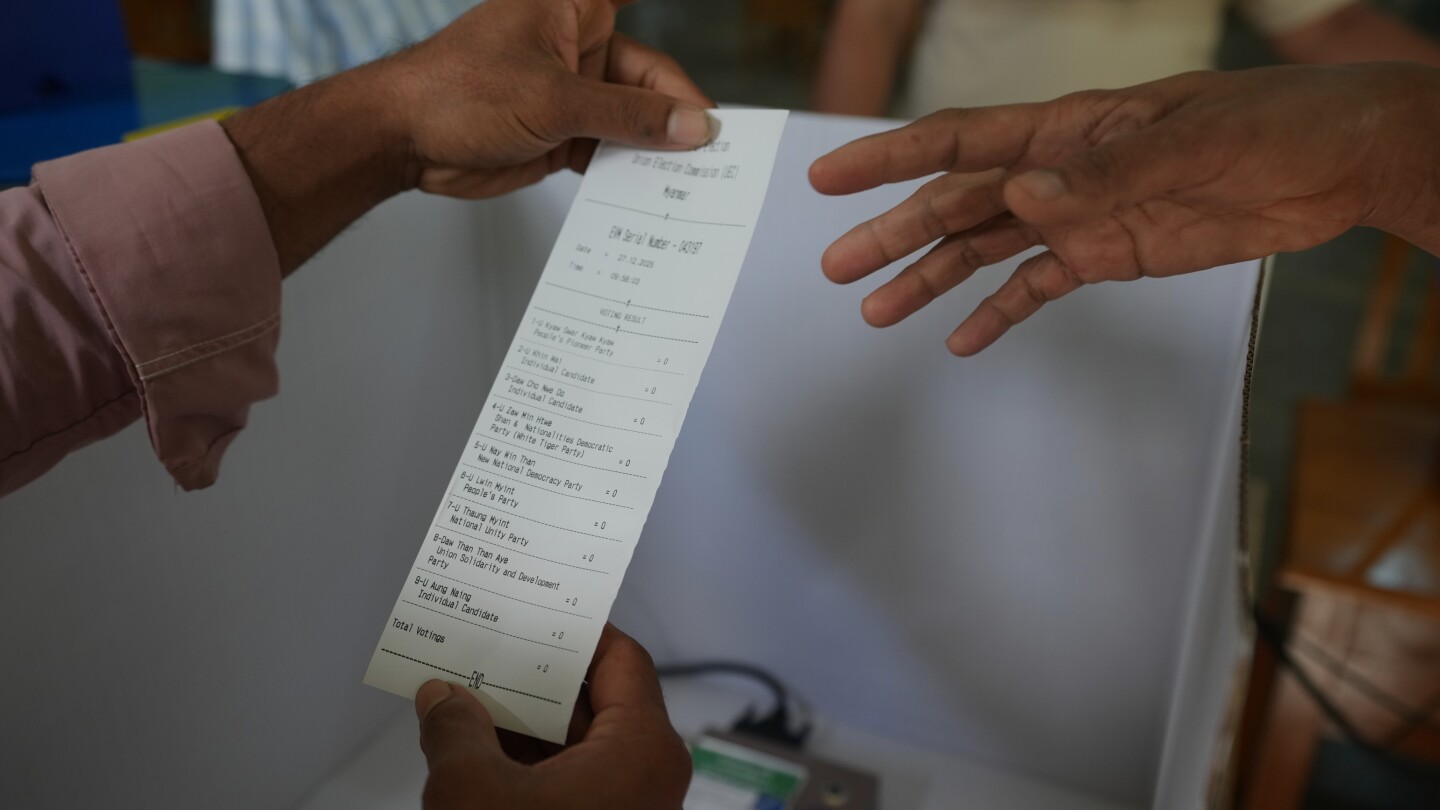
    YANGON, Myanmar — Election officials conducted final preparations across polling stations in Myanmar’s capital on Saturday, testing voting equipment and arranging facilities ahead of Sunday’s controversial general election. The electoral exercise, conducted under military supervision, represents the country’s first voting process in five years since the armed forces seized power in 2021.

    The multiphase election, scheduled to continue with subsequent rounds on January 11 and January 25, has been promoted by the ruling junta as a restoration of democratic governance. However, international observers and human rights organizations have uniformly dismissed the process as fundamentally flawed, citing extensive evidence of voter suppression, media censorship, and the exclusion of opposition parties.

    Myanmar’s political landscape remains fractured by ongoing civil conflict that erupted following the military’s overthrow of Aung San Suu Kyi’s democratically elected government. The widespread armed resistance has rendered voting impossible in numerous contested regions, further undermining the election’s credibility. Critics argue that the military administration seeks to leverage the electoral process to manufacture legitimacy for its authoritarian rule rather than facilitate genuine democratic transition.

    The election commission’s technical preparations proceeded under tight security in Yangon, where photographers documented officials testing voting machines at a converted school polling station. Despite these visible preparations, the voting process excludes millions of displaced citizens and occurs amid documented human rights abuses perpetrated by military forces against civilian populations.

  • World’s longest expressway tunnel opens to traffic, crossing Tianshan Mountains

    World’s longest expressway tunnel opens to traffic, crossing Tianshan Mountains

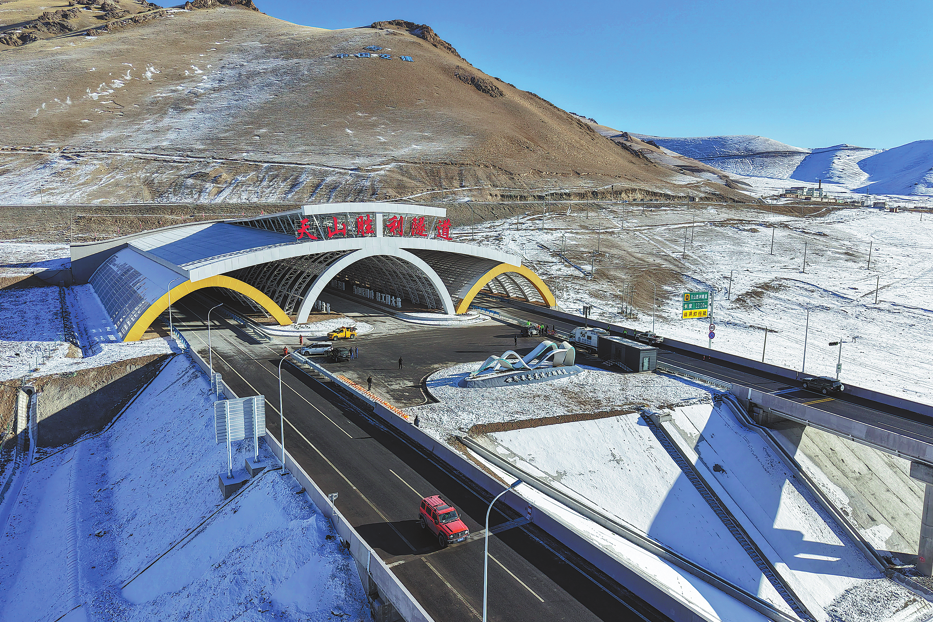
    China has officially opened the world’s longest expressway tunnel, marking a monumental achievement in infrastructure engineering. The Tianshan Shengli Tunnel, stretching 22.13 kilometers through the formidable Tianshan Mountains in Xinjiang Uygur Autonomous Region, began operations on December 27, 2025, as the centerpiece of a newly completed 324.7-kilometer expressway connecting regional capital Urumqi with Yuli county.

    This engineering marvel transforms what was previously a treacherous several-hour mountain crossing into a smooth 20-minute journey. The Urumqi-Yuli Expressway dramatically reduces travel time between Urumqi and Korla from seven hours to just three and a half, while effectively bridging northern and southern Xinjiang for the first time with high-speed connectivity.

    Construction of the $6.66 billion project commenced in April 2020 under extreme conditions. Engineers from China Communications Construction Co faced formidable challenges including altitudes nearing 3,000 meters, temperatures plunging to -42°C, high seismic activity, and complex geological fault zones. The tunnel reaches its deepest point at 1,112 meters beneath the mountain ridge, while its longest shaft descends over 700 meters—setting a new world record.

    The project incorporated cutting-edge technologies and innovative solutions in ultra-long tunnel surveying, design, construction techniques, and intelligent safety systems. These advancements establish new global standards for tunnel engineering in extreme environments.

    Beyond its technical achievements, the expressway serves as a critical transportation artery linking major domestic routes including the G7 Beijing-Urumqi Expressway and G30 Lianyungang-Horgos Expressway. It further connects to international trade corridors such as the New Eurasian Land Bridge and China-Central Asia-West Asia Economic Corridor.

    The infrastructure development specifically enhances connectivity within the China (Xinjiang) Pilot Free Trade Zone, reducing logistics costs and accelerating the flow of energy, manufactured goods, and agricultural products across the region. Environmental considerations were prioritized throughout construction, with dedicated wildlife passages, herder underpasses, and special protective measures implemented for water-source protection zones and national forest parks along the route.

    Initial access is currently granted to public vehicles excluding medium and heavy-duty trucks, with formal trial operations scheduled to commence on January 1, 2026.

  • Taiwan lawmakers vote to pass motion to impeach Lai

    Taiwan lawmakers vote to pass motion to impeach Lai

    In a significant political development, opposition lawmakers in Taiwan have successfully advanced impeachment proceedings against regional leader Lai Ching-te. The motion cleared its initial legislative hurdle on Friday when the island’s legislative body voted 60-51 in favor of proceeding with the case, surpassing the required majority threshold.

    The impeachment initiative, jointly proposed by the Chinese Kuomintang (KMT) and Taiwan People’s Party (TPP) on December 19, stems from Lai’s administration refusing to enact a legislatively approved amendment to the government revenue allocation plan on December 15. The revised legislation would have distributed a larger share of government revenue to local administrations, marking the first instance in Taiwan’s political history where a leader has declined to implement a law passed by the legislature.

    According to the established timetable, the process will continue with public hearings scheduled for January 14-15, followed by review meetings on January 21-22 and May 13-14. During these sessions, Lai will be required to respond to questioning from legislative representatives, with the final impeachment vote set for May 19.

    The political movement has gained substantial public support, with an online petition calling for Lai’s impeachment reportedly accumulating over 8 million signatures since its launch on December 18.

    Beijing has formally commented on the situation through State Council Taiwan Affairs Office spokesman Peng Qing’en, who criticized Lai for “stubbornly adhering to a ‘Taiwan independence’ stance” and alleged that his actions “run counter to the public will.” Peng further accused the administration of undermining democratic principles, employing judicial mechanisms to suppress political opposition, and provoking political strife for personal gain.

    Current legislative composition shows 113 representatives, with the KMT holding 52 seats, Lai’s Democratic Progressive Party controlling 51, the TPP maintaining 8 seats, and 2 independents. For ultimate success, the impeachment motion would require endorsement by at least half of all lawmakers and approval by a two-thirds majority before advancing to judicial review.

  • Thailand and Cambodia agree ceasefire after weeks of deadly clashes

    Thailand and Cambodia agree ceasefire after weeks of deadly clashes

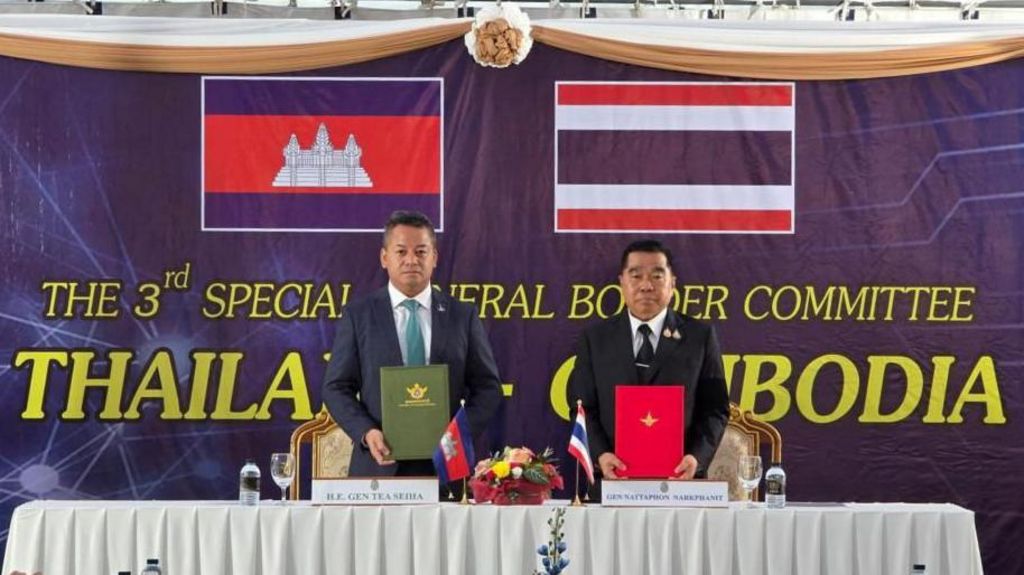
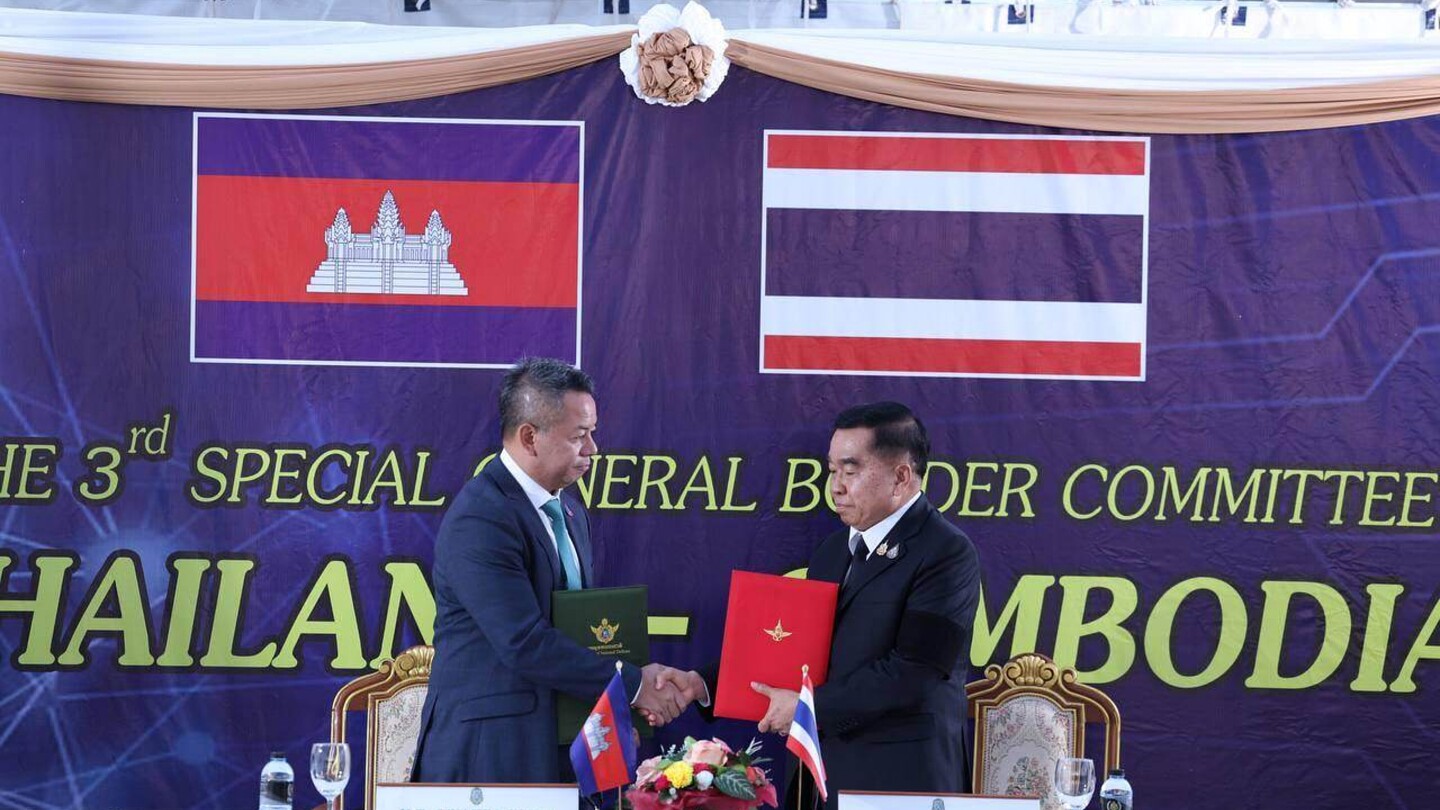
    In a significant diplomatic breakthrough, Thailand and Cambodia have announced an immediate cessation of hostilities following weeks of intense border conflicts that resulted in substantial casualties and mass displacement. The agreement was formalized through a joint statement issued by defense ministers Tea Seiha of Cambodia and Natthaphon Narkphanit of Thailand after emergency negotiations at a border checkpoint in Chanthaburi province.

    The ceasefire, which took effect at noon local time (05:00 GMT) on Saturday, mandates both nations to freeze all military movements and facilitate the safe return of civilians to border regions. The accord stipulates that if the truce holds for 72 consecutive hours, Thailand will release 18 Cambodian soldiers currently in detention.

    The joint declaration outlines specific de-escalation measures, including the cessation of “attacks on civilians, civilian objects and infrastructures, and military objectives of either side.” It explicitly prohibits unprovoked firing or advancement of troops toward opposing positions.

    This resolution references the spirit of the Kuala Lumpur Declaration, a previous ceasefire agreement brokered in October with involvement from Malaysian mediators and U.S. President Donald Trump. That earlier accord, dubbed the “Kuala Lumpur Peace Accords,” had mandated weapon withdrawals from disputed territories and established monitoring mechanisms before collapsing earlier this month.

    The recent conflict escalation began when Thailand reported responding to Cambodian fire in Si Sa Ket province, resulting in two Thai soldiers injured. Cambodia countered that Thai forces initiated aggression in Preah Vihear province. Hostilities intensified throughout December, culminating in Thailand conducting airstrikes on Friday that Cambodia described as “indiscriminate attacks” on civilian areas.

    Historical tensions between the Southeast Asian neighbors date back over a century, with notable escalation occurring in May when a Cambodian soldier was killed. July witnessed five days of intense fighting that claimed dozens of lives and displaced thousands before the October ceasefire temporarily halted violence.

  • Thailand and Cambodia sign new ceasefire agreement to end border fighting

    Thailand and Cambodia sign new ceasefire agreement to end border fighting

    BANGKOK — In a significant diplomatic breakthrough, Thailand and Cambodia formalized a ceasefire accord on Saturday, effectively terminating weeks of intense military confrontation along their disputed border region. The pact, which became operational at noon local time, establishes stringent measures to prevent further escalation.

    The agreement explicitly prohibits all military movements and bans any incursions into either nation’s airspace for combat purposes. This provision holds particular significance given Thailand’s acknowledged use of airstrikes against Cambodian positions, with the most recent offensive occurring just hours before the ceasefire implementation, as confirmed by Cambodia’s defense ministry.

    A pivotal component of the arrangement mandates Thailand’s repatriation of 18 Cambodian soldiers detained since July’s initial hostilities, contingent upon the ceasefire remaining intact for 72 consecutive hours. The prisoners’ release had emerged as Cambodia’s primary negotiating objective throughout the discussions.

    Both nations have reaffirmed their commitment to previous de-escalation frameworks, including the July ceasefire mediated by Malaysia under substantial international pressure. That initial agreement gained momentum after U.S. President Donald Trump threatened trade sanctions against both countries unless they pursued peaceful resolution. The terms were further elaborated during an October regional summit in Malaysia attended by Trump.

    Despite these earlier diplomatic efforts, bilateral relations deteriorated through aggressive propaganda campaigns and persistent low-level border incidents throughout autumn. This friction culminated in early December with a severe outbreak of large-scale combat operations, necessitating the current reinforced ceasefire agreement.

  • Millions of Afghans face hunger as aid cuts deepen a humanitarian crisis

    Millions of Afghans face hunger as aid cuts deepen a humanitarian crisis

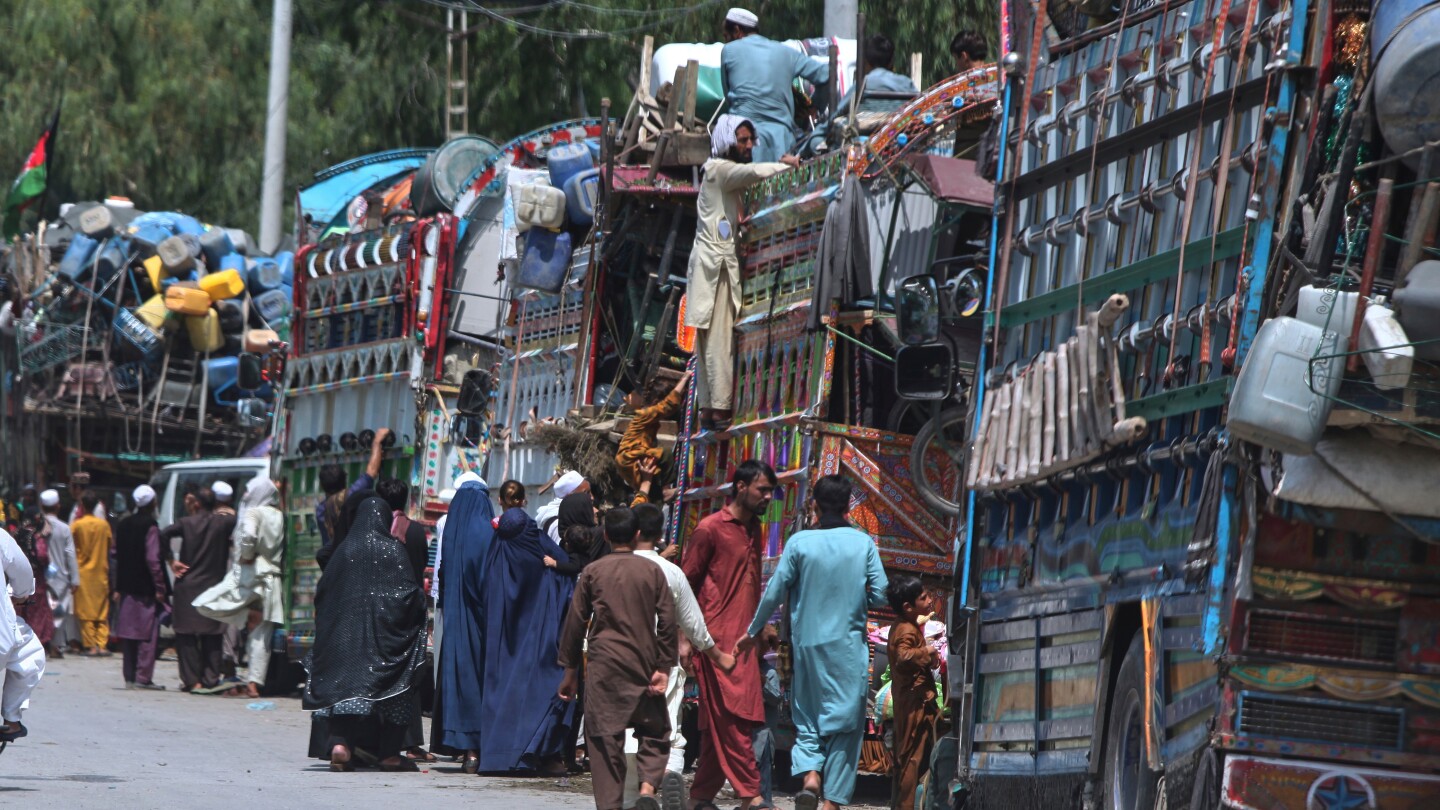
    KABUL, Afghanistan — A severe humanitarian catastrophe is unfolding across Afghanistan, where millions of citizens face extreme hunger and destitution following drastic cuts to international aid. The crisis has been exacerbated by a collapsing economy, recurrent natural disasters, and the mass return of refugees, creating a perfect storm of suffering as the harsh winter sets in.

    Rahimullah, a 29-year-old former soldier, epitomizes the struggle. After being deported from Pakistan, he now sells socks on the streets of Kabul, earning a meager $4.50 to $6 daily to support his family of five. His situation is precarious. ‘If I were to face a serious illness,’ he lamented, ‘it would be very difficult for me to handle because I don’t have any extra money.’ His plight is shared by an estimated 22.9 million people—nearly half the population—who required humanitarian assistance in 2025, according to the International Committee of the Red Cross.

    The World Food Program (WFP) issued a dire warning last week, stating that over 17 million people are now confronting crisis levels of hunger this winter, a staggering increase of 3 million from the previous year. This alarming surge is directly linked to the suspension of critical aid programs, including those previously funded by the United States. Tom Fletcher, the U.N. humanitarian chief, informed the Security Council that this winter marks ‘the first in years with almost no international food distribution.’ Consequently, aid reached only about 1 million of the most vulnerable people during the 2025 lean season, a drastic drop from the 5.6 million assisted the year before.

    Compounding the emergency are ‘overlapping shocks,’ as described by Fletcher. Afghanistan has been battered by two deadly earthquakes, severe droughts, and an unprecedented influx of returning refugees. The Ministry of Refugees and Repatriation Affairs reported that 7.1 million Afghan refugees have returned over the past four years. This massive return has strained resources to the breaking point, causing rents to skyrocket and further impoverishing families like Rahimullah’s, who now faces eviction after his rent nearly doubled.

    The Taliban government’s draconian restrictions on women have further crippled household economies. Rahimullah’s wife, once a teacher, is now barred from employment. This policy has had a devastating nationwide impact, depriving countless families of a vital source of income and pushing them deeper into poverty.

    In the northern province of Badakhshan, the cold winter intensifies the misery. Sherin Gul, a mother of ten, described the desperate situation her family endures. With her husband too weak to work and a ban preventing her from her former job as a cleaner, the family relies solely on her 23-year-old son’s sporadic construction work—which halts entirely in the snow. ‘There have been times when we have nothing to eat at night,’ she revealed. ‘My little children have fallen asleep without food… crying.’

    The U.N. appeals for urgent support, warning that with reduced donor contributions, life-saving assistance will contract further in 2026 just when needs are rising most acutely. The convergence of economic collapse, natural disaster, and policy-driven unemployment has created one of the world’s most severe humanitarian emergencies, leaving millions to face the winter with no safety net.

  • UAE strongly condemns deadly blast at Syria mosque, rejects all forms of violence

    UAE strongly condemns deadly blast at Syria mosque, rejects all forms of violence

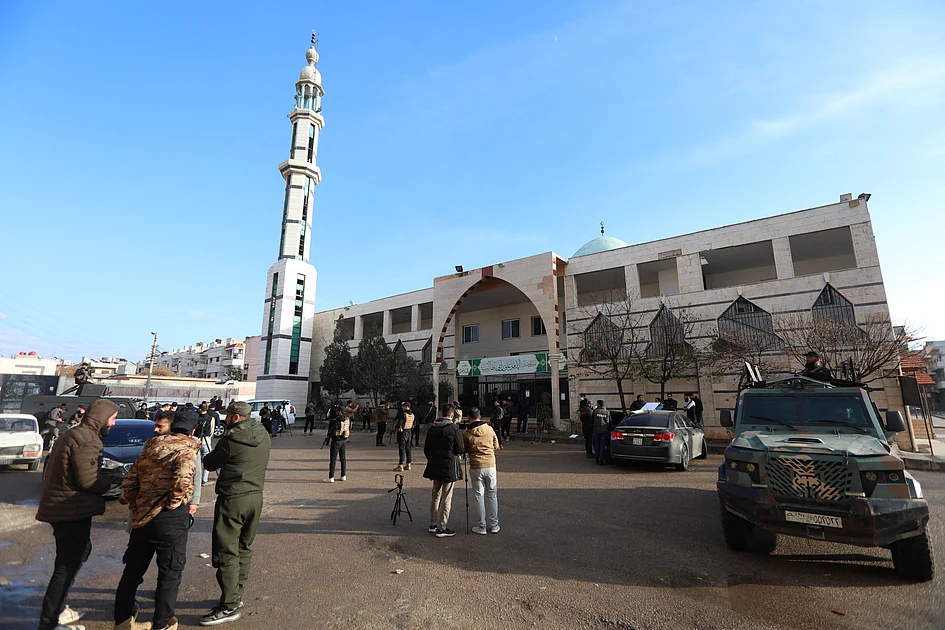
    The United Arab Emirates has issued a forceful condemnation of a lethal bombing that struck a mosque in Homs, Syria, during Friday prayers. The attack, which resulted in significant civilian casualties, has been met with international reproach from the Gulf nation.

    According to reports from the Syrian state news agency SANA, the explosion claimed eight lives and left at least eighteen individuals wounded. Syrian Health Ministry official Najib al-Naasan indicated these casualty figures were preliminary and subject to increase. Local official Issam Naameh confirmed to Reuters that the blast occurred during the congregation’s noon prayers.

    In an official statement, Afra Al Hameli, Director of Strategic Communications at the UAE’s Ministry of Foreign Affairs, articulated the nation’s position: “In the strongest terms, the UAE denounced the terrorist attack that took place inside a mosque in Homs, central Syria, which resulted in the death and injury of a number of innocent civilians.” The Ministry emphasized its unequivocal rejection of all manifestations of violence and terrorism that seek to destabilize regional security.

    The UAE extended profound condolences and sympathy to the bereaved families, the Syrian government, and its people, while also expressing wishes for the swift recovery of those injured in the assault.

    Responsibility for the attack has been claimed by Saraya Ansar al-Sunnah, an ultra-conservative Sunni Muslim Syrian faction, which announced its involvement through Telegram channels. This same group previously claimed responsibility for a suicide bombing at a Damascus church in June that resulted in twenty fatalities.

  • Wickets continue to fall in the Ashes at the MCG: Australia is 6 down in its 2nd innings

    Wickets continue to fall in the Ashes at the MCG: Australia is 6 down in its 2nd innings

    MELBOURNE, Australia — In a stunning reversal of fortunes, England’s bowling attack staged a remarkable resurgence on Day 2 of the fourth Ashes Test at Melbourne Cricket Ground, reducing Australia to a precarious 98-6 in their second innings by lunchtime Saturday.

    The dramatic collapse came after Australia had dominated the opening day, skittling England for a mere 110 runs. The match has witnessed an extraordinary 26 wickets falling across just four sessions of play, highlighting the intensely bowler-friendly conditions.

    England’s fightback was spearheaded by their pace attack, with Josh Tongue continuing his impressive form from Friday’s performance where he claimed a career-best 5-45. The English bowlers exploited a pitch that has drawn criticism from cricket legends including Michael Vaughan, Stuart Broad, Brett Lee, and Mark Waugh, who collectively described the surface as offering excessive sideways movement.

    Australia’s innings began unraveling early Saturday after resuming at 4-0. The hosts suffered two quick losses as Gus Atkinson removed Scott Boland (6) caught behind, while captain Ben Stokes struck in his first over, clean bowling Jake Weatherald (5) who offered no shot.

    The pressure intensified as Marnus Labuschagne (8) fell to Tongue’s bowling at 61-3, followed by the crucial dismissal of Travis Head (46) who was bowled by Brydon Carse at 82-4. The collapse continued with Usman Khawaja departing for a duck and Alex Carey (4) caught at second slip.

    With Steve Smith (16*) and Cameron Green (6*) at the crease, Australia holds a 140-run overall lead but faces significant challenges in setting a substantial target on this unpredictable pitch. The match situation remains delicately poised as both teams battle not only each other but also the demanding playing conditions.

  • Israeli reservist rams vehicle into Palestinian man praying in West Bank

    Israeli reservist rams vehicle into Palestinian man praying in West Bank

    In a disturbing incident in the occupied West Bank on Thursday, an Israeli reservist soldier intentionally drove his vehicle into a Palestinian man engaged in roadside prayers. The attack occurred after the soldier had previously discharged his weapon in the vicinity, according to official military statements.

    The Israeli Defense Forces confirmed receiving footage showing ‘an armed individual running over a Palestinian individual.’ Military authorities characterized the reservist’s actions as constituting ‘a severe violation of his authority,’ resulting in immediate termination from service and confiscation of his weapon. Israeli media outlets reported the perpetrator is currently under house arrest pending further investigation.

    Video evidence broadcast on Palestinian television and authenticated by Reuters depicts a civilian-clad individual with a shoulder-slung firearm operating an off-road vehicle that deliberately strikes the praying victim. The Palestinian man received medical evaluation at a local hospital but was ultimately determined to be uninjured and has since returned home.

    This incident occurs against a backdrop of escalating violence in the region. United Nations documentation reveals 2025 as one of the most violent years recorded regarding Israeli civilian attacks against Palestinians in the West Bank, with over 750 documented injuries. Between October 7, 2023, and October 17, 2025, more than a thousand Palestinians lost their lives in the territory, predominantly during security operations with additional casualties resulting from settler violence. During this same timeframe, Palestinian attacks resulted in 57 Israeli fatalities.

    The violence continued into Friday with separate incidents, including a Palestinian assailant killing two individuals in northern Israel, according to police reports. Israeli law enforcement authorities have not provided immediate commentary regarding the reservist incident when contacted by Reuters.

  • India’s first gene-edited sheep just turned one. How’s it doing?

    India’s first gene-edited sheep just turned one. How’s it doing?

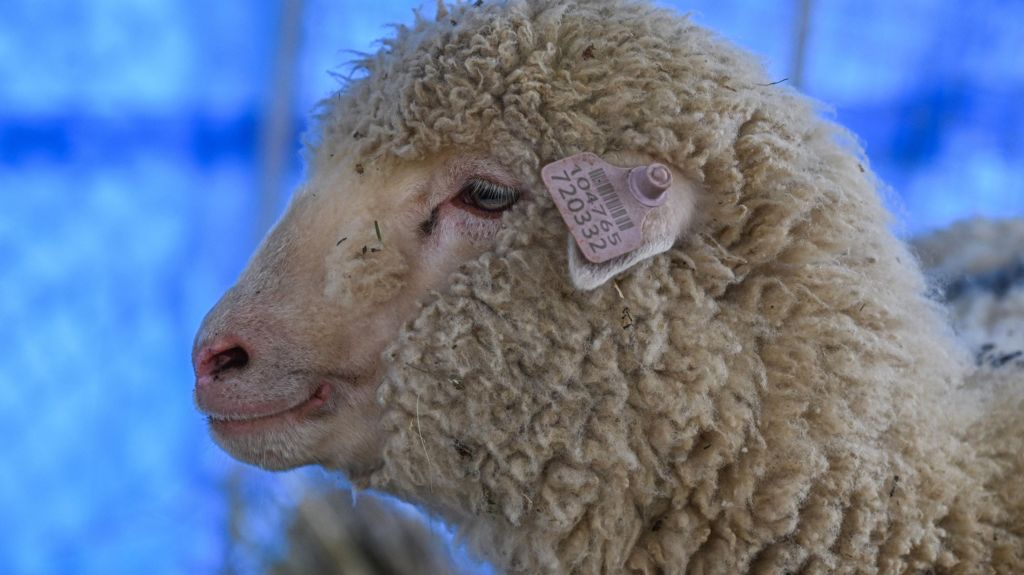
    In a landmark achievement for Indian genetic research, the nation’s inaugural gene-edited sheep has successfully reached its first year of development. The animal, named Tarmeem (Arabic for ‘modification’), was born on December 16, 2024, at Sher-e-Kashmir Agricultural University in Srinagar, Indian-administered Kashmir, where it resides under controlled conditions alongside its non-edited twin sister.

    The research team employed CRISPR-Cas9 technology—a revolutionary gene-editing system—to precisely modify the myostatin gene, which naturally limits muscle development in mammals. Dr. Suhail Magray, a key researcher on the project, explained the process: ‘We extracted embryos from pregnant sheep and performed targeted gene editing before transferring them to foster recipients. After 150 days of gestation, the edited lambs were born.’

    Professor Riaz Shah, dean of veterinary sciences and principal investigator, reported that Tarmeem demonstrates normal physiological development with a notable 10% increase in muscle mass compared to its non-edited twin. ‘We anticipate further muscle development as the animal matures,’ Shah noted, adding that the team has implemented rigorous monitoring protocols to evaluate long-term health outcomes.

    This breakthrough culminates seven years of dedicated research by an eight-member team that initially faced significant challenges. The researchers attempted multiple strategies before achieving success in December 2024, with only one successful gene-editing outcome from five live births following seven IVF procedures.

    The scientific community highlights the potential agricultural implications of this advancement. Professor Nazir Ahmad Ganai, the university’s vice-chancellor, emphasized that gene-editing could address Kashmir’s substantial mutton deficit—the region consumes approximately 60,000 tonnes annually while producing only half that amount. ‘By increasing body weight by up to 30%, this technology could enable more efficient meat production with fewer animals,’ Ganai explained.

    While CRISPR technology—co-developed by Nobel laureates Emmanuelle Charpentier and Jennifer Doudna—has revolutionized medical research globally, its application in agriculture remains subject to regulatory scrutiny. The Indian research team has submitted proposals for government funding and approval to scale this technology for broader agricultural implementation.

    Globally, nations including Argentina, Australia, Brazil, Japan, and the United States have already incorporated gene-edited animals and crops into their agricultural systems. The United Kingdom is poised to permit gene-edited foods beginning next year, while the European Union recently moved to reduce regulatory barriers for such products.

    Despite ethical debates surrounding genetic modification, scientists distinguish between gene editing (modifying existing genes) and genetic modification (introducing foreign genes). As India evaluates whether to classify Tarmeem as a natural genetic variant, researchers remain optimistic about CRISPR’s potential to transform sustainable food production nationwide.