标签: Asia

亚洲

  • Industry strives to go ‘zero carbon’

    Industry strives to go ‘zero carbon’

    China has launched a comprehensive national strategy to revolutionize its industrial landscape through the systematic development of zero-carbon manufacturing facilities. This initiative represents a critical component of the nation’s broader climate objectives to achieve carbon peak before 2030 and carbon neutrality by 2060.

    The policy framework, collaboratively issued by five governmental bodies including the Ministry of Industry and Information Technology (MIIT), outlines a methodical, phased approach to industrial decarbonization. The strategy prioritizes sectors with urgent emission reduction requirements, high electricity dependency, and technically feasible pathways toward carbon minimization.

    Contrary to terminology suggesting absolute zero emissions, the ‘zero-carbon factory’ concept emphasizes continuous improvement toward near-zero emissions through technological innovation, structural adjustments, and management optimization within existing economic and technical constraints.

    The implementation will commence with pilot programs in 2026 across strategic industries including automotive manufacturing, lithium battery production, photovoltaics, electronics, and computing infrastructure. By 2027, authorities expect to establish numerous model facilities, with subsequent expansion to traditionally energy-intensive sectors like steel, nonferrous metals, petrochemicals, and textiles by 2030.

    Professor Tian Jinping of Tsinghua University’s School of Environment emphasized that this initiative constitutes “the country’s top-level design and comprehensive framework” for industrial transformation. The core objective aligns green technology adoption with enhanced operational efficiency, reduced pollution, and increased productivity, ultimately strengthening China’s position within global supply chains.

    The guideline specifies concrete implementation pathways including establishing comprehensive carbon accounting systems, developing industrial green microgrids, and integrating next-generation information technologies. This systematic approach rests on three foundational pillars: renewable energy infrastructure, low-carbon technical processes, and intelligent management systems.

    This national effort builds upon substantial existing progress. By the end of 2025, China had established 6,430 national-level green factories, representing 20% of manufacturing output value compared to just 9% in 2020. Provincial governments, particularly in economic powerhouses like Jiangsu, Zhejiang, and Guangdong, have implemented supportive policies including financial incentives such as Kunshan’s 1 million yuan reward for certified zero-carbon facilities.

    Corporate engagement matches governmental ambition. Approximately 13,000 businesses globally have joined the ‘Race to Zero’ campaign, with over 2,300 major corporations establishing explicit net-zero targets. Chinese manufacturers like Hisense have committed to operational carbon neutrality by 2050.

    This industrial transformation forms part of a global movement, with 145 countries and regions representing 77% of global emissions having announced or considered carbon neutrality targets. China’s systematic approach to industrial decarbonization demonstrates how environmental objectives can synergize with economic competitiveness and technological advancement.

  • AirAsia accused by artist for allegedly using his work without consent

    AirAsia accused by artist for allegedly using his work without consent

    Lithuanian-born artist Ernest Zacharevic, a long-term resident of Malaysia, has initiated legal proceedings against budget carrier AirAsia and its parent company Capital A Berhad for alleged copyright infringement. The dispute centers on the unauthorized reproduction of his iconic 2012 street mural “Kids on Bicycle” on an aircraft livery in late 2024.

    Zacharevic, renowned for his transformative public artworks in Penang, discovered the infringement in October 2024 when he observed an AirAsia jet featuring artwork strikingly similar to his celebrated mural. The piece, originally created for a local festival, depicts two laughing children on an actual bicycle incorporated into the painting and has become a major tourist attraction in George Town’s heritage district.

    The artist immediately raised concerns through social media channels, tagging the airline and demanding discussions regarding the artwork’s commercial use. Following his public outcry, AirAsia removed the contested livery but subsequent negotiations failed to yield a settlement agreement.

    Court documents reveal this incident represents not the first alleged infringement by the airline. Zacharevic claims previous unauthorized use of his artwork on food delivery bags and references past discussions in 2017 regarding potential commissioned work for aircraft liveries and office murals. These negotiations allegedly made the airline fully aware of his professional rates and copyright protections.

    The lawsuit contends that AirAsia “wilfully infringed the plaintiff’s copyright and moral rights” by reproducing his signature work without consent or licensing arrangements. Zacharevic emphasizes that his creation represents years of professional training and artistic labor rather than merely cultural or geographical references.

    As Asia’s largest low-cost carrier operating over 200 aircraft to more than 100 destinations, AirAsia’s brand visibility amplifies the significance of this copyright dispute. The airline recently announced plans to resume London flights via Bahrain after a decade-long absence from the British market.

    Zacharevic has left compensation determination to the courts while maintaining his position that the artwork’s distinct artistic value deserves proper recognition and protection under intellectual property law.

  • Longer Spring Festival break fuels travel boom

    Longer Spring Festival break fuels travel boom

    China’s extended nine-day Spring Festival holiday has catalyzed an extraordinary surge in domestic and international travel, marking the longest break in recent years and significantly altering travel patterns nationwide. According to comprehensive data from the China Association of Travel Services and leading travel agency Tuniu, the prolonged vacation period has directly correlated with increased travel duration, with tourists now averaging 5.9 travel days—a substantial 1.1-day increase compared to previous years.

    The travel phenomenon manifests in distinct waves, with initial departures commencing mid-week and reaching peak intensity during the holiday’s opening days. Qi Chunguang, Vice-President of Tuniu, indicates that sightseeing and entertainment travel will climax on February 18th, following traditional family reunion activities.

    Domestically, destinations offering authentic cultural experiences have gained remarkable popularity. Fuzhou in Fujian province emerged as a top-five hotel booking destination for the first time, largely driven by its centuries-old ‘youshen’ (Parade of the Gods) ritual. This cultural spectacle, featuring elaborate deity processions to ward off evil spirits, has propelled hotel bookings by over 80% compared to last year’s holiday period.

    Similarly, Huangshan in Anhui province has witnessed a 150% surge in accommodations reservations, attributed to its captivating fish-shaped lantern exhibitions and interactive lantern-making activities. The destination’s appeal is exemplified by travelers like Wang Lixin from Zhengzhou, who booked a four-day family excursion after discovering the city’s visual charms through social media platform Xiaohongshu.

    Climate-based travel preferences reveal intriguing regional patterns: northern residents seek warmer southern climates in provinces like Hainan and Guangdong, while southern tourists increasingly venture northward for winter experiences in ice and snow destinations.

    Internationally, the extended holiday has dramatically boosted overseas travel. Traditional favorites Thailand, South Korea, and Malaysia remain popular for their perceived value, while previously niche destinations like Türkiye and Uzbekistan have experienced exponential growth following visa-free policies for Chinese passport holders. Türkiye’s 90-day visa-free access, announced in January, has resulted in a 150% increase in holiday bookings, while Uzbekistan witnessed a fourfold surge in Chinese tourist reservations.

    The National Immigration Administration projects daily cross-border movements exceeding 2.05 million during the holiday period, representing a 14.1% year-over-year increase, with outbound traffic peaking on the holiday’s commencement and inbound peaks anticipated during the concluding days.

  • Festive visit to Beijing’s Longfusi highlights traditions, renewal

    Festive visit to Beijing’s Longfusi highlights traditions, renewal

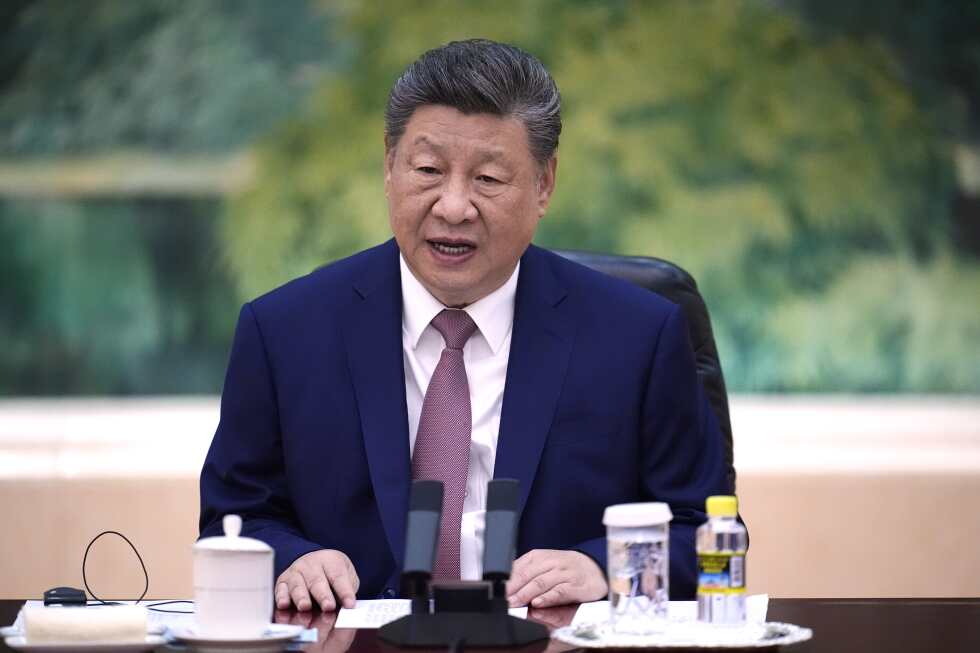
    The ancient stone-paved lanes of Beijing’s Longfusi commercial district came alive with festive energy days before Spring Festival, adorned with swaying red lanterns and filled with the aromatic blend of traditional pastries, pickles, and freshly prepared snacks. This historic neighborhood became the focus of national attention when President Xi Jinping conducted an inspection tour through its bustling holiday market, highlighting the significance of preserving cultural heritage while embracing innovation.

    At Beijing Daoxiangcun’s flagship store, manager Cao Siyuan recounted the President’s engagement with traditional pastry artisans. “He shared childhood memories of purchasing pastries here and showed genuine interest in our culturally-inspired new developments,” Cao noted. President Xi observed master bakers creating traditional confections, examined festive gift selections, and purchased several New Year snacks while encouraging the preservation and strengthening of Beijing’s time-honored brands.

    The visit triggered a remarkable surge in visitor numbers, with many customers seeking to experience the festive specialties firsthand. Certain products gained immediate popularity, requiring increased production to meet holiday demand. The brand has successfully merged tradition with innovation, creating pastries shaped like musical instruments, ancient clothing, and Beijing landmarks that allow tourists to take home edible souvenirs of the city’s scenery.

    At Liubiju’s pickle booth, a 590-year-old establishment, senior technician Chen Jie described the President’s detailed inquiry into their heritage products. Xi, who revealed he also consumes Liubiju pickles, examined intangible cultural heritage items including sweet sauce cucumbers and handcrafted sugar garlic—a delicacy requiring approximately 150 days and eight manual procedures to complete. His description of their products as ‘premium pickles’ represented significant recognition for the brand.

    The Fengnian Guanchang store demonstrated how traditional Beijing snacks evolve while maintaining authenticity. Manager Shi Huanping explained how their signature dish—a sweet potato starch creation with crispy exterior and tender interior—has been complemented with handmade desserts like almond tofu and pea flour cakes to attract younger demographics. “Being time-honored doesn’t mean standing still. It means adapting while preserving what matters most,” Shi emphasized.

    Traditional paper handicraft inheritor Li Mei experienced a breakthrough moment demonstrating her revitalized paper flipping flowers craft. Through material and design innovations, she has expanded playable variations from few to nearly twenty, making the tradition more colorful and appealing to children. “Tradition survives when it evolves,” Li stated, reflecting the district’s overarching philosophy.

    Beijing Enamel Factory’s general manager Dong Yanna discussed balancing handcrafted cloisonné traditions with creative products for younger audiences, such as Year of the Horse refrigerator magnets that have become bestsellers. This approach aligns with the transformation witnessed by Gao Tianliang of Beijing Xinlongfu Cultural Investment Co, who has seen Longfusi evolve from a quiet area into a vibrant cultural-commercial hub since 2014.

    The presidential visit emphasized the successful integration of traditional culture with modern urban life, creating a model for cultural preservation that maintains warmth of tradition while embracing contemporary commercial vitality.

  • Vital role of family virtues in governance

    Vital role of family virtues in governance

    President Xi Jinping’s personal narrative of a hand-stitched mattress, meticulously patched by his mother, serves as a powerful symbol of frugality and familial devotion that continues to inform China’s governance philosophy. This humble bedding artifact, preserved since his youth in rural Shaanxi, represents more than material practicality—it embodies the intergenerational transmission of core values that shape leadership character.

    The philosophical connection between household governance and national stability finds deep roots in Chinese tradition, exemplified by Xi’s reference to Tang Dynasty poetry depicting maternal devotion through needlework. This historical continuum underscores what scholars identify as China’s unique social structure where kinship forms the foundational layer of national governance. Professor Wang Fang of Shanghai Academy of Social Sciences notes that family education operates as a moral instruction process where values become institutionalized through conduct and intergenerational transmission.

    This principle manifests concretely in initiatives like the National Model Families recognition program, which has honored approximately 1,600 families over the past decade. The 2016 designation of family values as both moral strength and intergenerational legacy coincided with legislative action through the Family Education Promotion Law, creating policy frameworks for virtue cultivation.

    The historical precedent of Liuchi Alley in Anhui province demonstrates practical application. For three centuries, this Qing Dynasty corridor has memorialized how neighboring families resolved boundary disputes through mutual concession—each retreating their walls by one meter. President Xi’s October 2024 visit emphasized translating this historical model of humility into contemporary conflict resolution mechanisms, now promoted nationwide as the “Liuchi Mediation Method.”

    Academic perspectives from Shandong University’s Professor Yang Chaoming conceptualize family-national governance as an organic whole: harmonious families produce virtuous citizens, reducing public governance costs while sound national policies reciprocally support household stability through social services.

    The anti-corruption dimension reveals particular significance. President Xi frequently references the 1963 incident involving Jiao Yulu, who disciplined his son for exploiting official privilege and established the “Ten Don’ts” integrity code. This contrasts sharply with corruption cases where familial collusion enables systemic abuse. Peking University’s Professor Zhou Liangshu identifies eroded family values as a primary cause of disciplinary violations, while robust family culture serves as a critical “firewall” against corruption.

    The institutionalization of this philosophy reached its apex in October 2022 when strengthening family ties, values and traditions was incorporated into the 20th National Congress report—elevating family governance from private matter to national strategy.

  • Beijing upset as Dutch court blocks Wingtech bid to recontrol Nexperia

    Beijing upset as Dutch court blocks Wingtech bid to recontrol Nexperia

    China has formally called upon the Dutch government to proactively resolve the escalating semiconductor dispute involving Nexperia, following a Dutch court’s decision to investigate alleged mismanagement by Chinese parent company Wingtech Technology. The diplomatic confrontation highlights growing tensions in global chip supply chains.

    Chinese Foreign Ministry spokesperson Lin Jian asserted Thursday that “the root cause of the Nexperia issue is the improper administrative intervention of the Dutch side in business operations.” He emphasized that Netherlands must “create enabling conditions for companies to resolve internal disputes” while maintaining stability in global semiconductor supply chains. Beijing pledged continued support for Chinese companies protecting their lawful rights and interests.

    The diplomatic demand follows the Enterprise Chamber of the Amsterdam Court of Appeal’s decision to investigate Nexperia’s corporate governance while maintaining the suspension of CEO Zhang Xuezheng, Wingtech’s founder. The court identified multiple governance concerns including conflicts of interest, unilateral strategy changes without internal consultation, violation of agreements with Dutch authorities, and restriction of European managers’ powers.

    Financial repercussions have already emerged, with China Chengxin International Credit Rating downgrading Wingtech’s long-term credit rating from AA- to A with negative outlook, citing significant operational and financial impacts from losing control over Nexperia.

    Wingtech expressed “profound disappointment and strong dissatisfaction” with the Dutch court’s ruling, calling it “self-contradictory and logically flawed.” The company argued the current interim management cannot conduct effective investigations and instead demanded investigation into Nexperia’s interim management.

    The dispute originated in September 2025 when Washington tightened sanctions rules, prompting Dutch intervention under its Goods Availability Act. Although the Netherlands ended direct control in November, Zhang remains barred from leadership. Nexperia’s current interim leadership, including CEO Stefan Tilger, continues operations despite the challenges.

    Industry analysts suggest the hardened Dutch position reflects broader geopolitical alignments, with the new Dutch cabinet featuring several China-hawk officials including Trade Minister Sjoerd Sjoerdsma (sanctioned by China in 2021) and Infrastructure Minister Vincent Karremans (previously involved in Nexperia intervention).

    With Wingtech projecting massive 2025 losses of 9-13.5 billion yuan ($1.25-1.88 billion), the company has initiated legal proceedings that could lead to an $8 billion international arbitration case if not resolved by April 2026. Meanwhile, Nexperia China has begun supply chain restructuring, establishing Dongguan as its global headquarters and implementing data security measures in European operations.

  • Cross-Strait New Year vibes: Shared traditions, shared celebrations

    Cross-Strait New Year vibes: Shared traditions, shared celebrations

    In a vibrant display of cultural unity, residents from both sides of the Taiwan Strait recently converged in Fuzhou for a special Chinese New Year bazaar, demonstrating how traditional celebrations continue to bridge geographical and political divides. The event showcased the deep-rooted connections maintained through shared customs and festive practices that transcend boundaries.

    The gathering featured heartfelt exchanges of family stories and joyful celebratory moments, creating an atmosphere of warmth and mutual understanding. Participants engaged in various traditional activities that highlighted the common cultural heritage enjoyed across the Strait, emphasizing that the spirit of reunion remains powerful enough to overcome any physical distance.

    This cross-strait cultural exchange occurs alongside numerous other Spring Festival celebrations throughout China, including Beijing’s Dongcheng district decorations, the debut of 30 panda cubs born in 2025, and illuminated lantern festivals in Datong. These simultaneous celebrations demonstrate the widespread cultural significance of the Lunar New Year period throughout Chinese communities worldwide.

    The event in Fuzhou represents ongoing people-to-people connections that continue to flourish despite political complexities, serving as a reminder of the enduring cultural bonds that unite communities across the Strait through shared traditions and celebrations.

  • Mosque gunman wanted online fame. A muted court hearing shows how New Zealand has tried to curb that

    Mosque gunman wanted online fame. A muted court hearing shows how New Zealand has tried to curb that

    WELLINGTON, New Zealand — New Zealand’s judicial system conducted a deliberately subdued hearing this week for the nation’s most notorious criminal, Brenton Tarrant, who sought to retract his guilty pleas for the 2019 Christchurch mosque massacres that claimed 51 Muslim worshippers’ lives.

    The Australian white supremacist’s appeal proceedings unfolded with remarkable restraint at the Court of Appeal in Wellington. Only nine journalists, nine lawyers, and essential court staff were present in the near-empty courtroom, with the public gallery deliberately kept vacant. This calculated minimalism reflects New Zealand’s systematic approach to denying Tarrant the platform and notoriety he previously sought through his racially motivated violence.

    Tarrant, 35, currently serving life imprisonment without parole, claimed through video conference from Auckland Prison that his 2020 guilty pleas to charges of terrorism, murder, and attempted murder were “irrational” admissions made during a “nervous breakdown” induced by his solitary confinement conditions.

    Crown lawyers Barnaby Hawes and Madeleine Laracy presented compelling counterarguments, emphasizing that multiple mental health experts had previously determined Tarrant fit to enter pleas. They characterized the defendant as “an unreliable witness” whose narrative should be “treated with caution.” The prosecution highlighted the overwhelming evidence against Tarrant, including his own livestreamed recording of the attacks, which made a guilty verdict inevitable regardless of trial proceedings.

    Notably absent from the weeklong hearing was any substantive discussion of Tarrant’s white supremacist ideology or the detailed motivations behind his attacks. This omission reflects New Zealand’s broader strategy of suppressing the dissemination of his hateful manifesto and violent imagery, which remain legally prohibited throughout the country.

    The judicial approach stands in stark contrast to other high-profile trials of racist murderers, such as Norway’s extensive coverage of Anders Breivik, whom Tarrant cited as an inspiration. New Zealand’s justice system has implemented measures to minimize public exposure to the shooter, with even news organizations practicing restrained reporting by limiting mentions of his name.

    Crown lawyers emphasized that continuing legal proceedings cause “immense distress” to survivors and victims’ families, hindering their healing process. A three-judge panel will deliver its decision within the coming months, with 90% of appeals court judgments typically issued within three months of hearing conclusion.

    If unsuccessful in revoking his guilty pleas, Tarrant’s case will return to the appeals court for a separate hearing challenging his life sentence without parole.

  • Who is Tarique Rahman, set to become Bangladesh’s next PM?

    Who is Tarique Rahman, set to become Bangladesh’s next PM?

    Tarique Rahman stands on the brink of assuming Bangladesh’s premiership after his Bangladesh Nationalist Party (BNP) clinched a decisive parliamentary majority in the recent general election. The 60-year-old scion of Bangladesh’s influential Zia political dynasty now prepares to lead the nation following a victory that marks a significant shift in the country’s political landscape.

    Rahman’s ascent to power culminates a complex political journey characterized by familial legacy, controversy, and personal tribulation. His elevation to BNP chairman occurred mere weeks before the national polls, succeeding his mother Khaleda Zia—the nation’s first female prime minister—following her recent passing. The Zia family has remained a dominant force in Bangladeshi politics for decades, with both parents having previously governed the country.

    Rahman’s political initiation commenced in 2001 during his mother’s second premiership, though his rapid promotion within party ranks drew immediate accusations of nepotism from opposition forces. His tenure has been shadowed by persistent allegations of corruption and authoritarian leadership styles, with critics labeling him a party ‘hatchet man’ responsible for enforcing discipline.

    The new leader’s path included significant personal challenges: his 2007 arrest under a military-backed caretaker government, allegations of torture during detention, and subsequent 17-year exile in London. During this period, Rahman faced multiple in absentia convictions including charges related to a deadly 2004 grenade attack on a political rally—all of which were eventually overturned.

    Despite physical absence, Rahman maintained substantial influence over BNP strategy and operations, assuming de facto leadership after his mother’s 2018 imprisonment. His December 2025 return to Bangladesh preceded his formal election as party chairman in January, a transition some analysts deemed inevitable given the family’s entrenched political position.

    While some dismiss dynasty politics as irrelevant to effective governance, observers note that Rahman’s true test will be transitioning from party leadership to national statesmanship. Having experienced both the brutal realities of Bangladeshi politics and extended political exile, his capacity to transform personal experience into effective national leadership remains the critical question facing the nation.

  • Australia wins the toss and fields against Zimbabwe at the T20 World Cup

    Australia wins the toss and fields against Zimbabwe at the T20 World Cup

    COLOMBO, Sri Lanka — Australia’s cricket team made strategic adjustments to its lineup as it faced Zimbabwe in a highly anticipated T20 World Cup match on Friday. Captain Mitchell Marsh, who had been sidelined with a testicular injury sustained during pre-match net practice, continued his recovery process while Travis Head retained leadership duties for the encounter.

    The Australian squad implemented two significant changes from their opening victory against Ireland. Middle-order batsman Tim David returned to active play following hamstring rehabilitation that had excluded him from the Big Bash League, replacing Cooper Connolly. Simultaneously, fast bowler Xavier Bartlett made way for Ben Dwarshuis in the bowling department.

    Zimbabwe, fresh from their commanding eight-wicket triumph over Oman, correspondingly adjusted their roster with two modifications. Veteran batsman Brendan Taylor, who retired hurt during the initial match, was substituted by wicketkeeper-batter Tadiwanashe Marumani. The team management opted to rest pace bowler Richard Ngarava, introducing Tony Munyonga into the playing eleven.

    This confrontation marked the first T20 World Cup meeting between the nations since Zimbabwe’s memorable five-wicket upset against Australia during the tournament’s inaugural 2007 edition. The historical context added significance to the Group B encounter as both teams sought to strengthen their positions in the competition.

    Later Friday fixtures featured associate nations in Group D and Group A matches. The United Arab Emirates pursued their first tournament victory against Canada in New Delhi, while the United States, having previously fallen to India and Pakistan, confronted the Netherlands in Chennai.

    Lineups:
    Zimbabwe: Brian Bennett, Tadiwanashe Marumani, Dion Myers, Sikandar Raza (captain), Ryan Burl, Tony Munyonga, Tashinga Musekiwa, Brad Evans, Wellington Masakadza, Graeme Cremer, Blessing Muzarabani.
    Australia: Travis Head (captain), Josh Inglis, Cameron Green, Tim David, Glenn Maxwell, Marcus Stoinis, Matt Renshaw, Ben Dwarshuis, Nathan Ellis, Matt Kuhnemann, Adam Zampa.