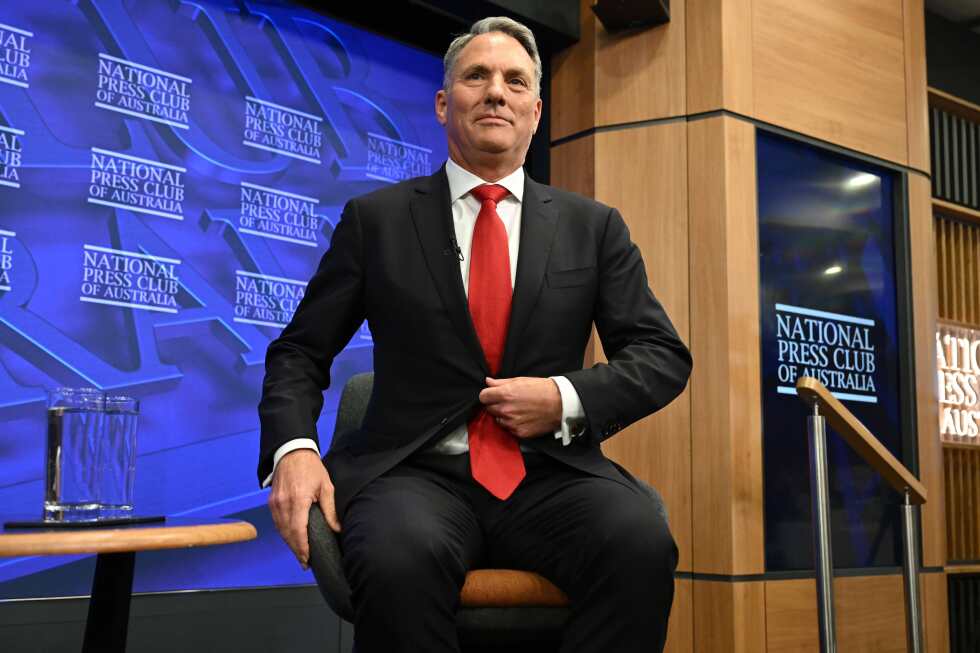
CANBERRA, MELBOURNE – Amid escalating regional and global tensions sparked by the recent conflict between the U.S.-Israel coalition and Iran, Australia has announced the largest peacetime expansion of defense investment in the nation’s modern history, according to Defense Minister Richard Marles, who spoke to reporters Thursday. Marles used the announcement of the two-year defense strategy update to reveal the federal government plans to inject an extra AU$53 billion (US$38 billion) into defense programs over the coming 10 years, setting a clear timeline to lift Australia’s defense budget from its current 2.8% of gross domestic product to 3% by 2033. This milestone spending shift comes as the nation confronts what Marles described as the most unstable and dangerous strategic environment it has faced since the conclusion of World War II. When pressed to quantify how the February strikes targeting Iran by the United States and Israel have worsened Australia’s security risks, Marles declined to give a definitive measure, but emphasized that the conflict has already upended long-standing global security dynamics. “I don’t think anyone could honestly answer that question,” Marles told reporters. “It greatly complicates the global strategic landscape. The world feels less safe.” Despite these heightened risks, Marles reaffirmed Australia’s backing for the international goal of preventing Iran from developing a deployable nuclear weapons capability. Marles pushed back on speculation that the dramatic spending increase is a reaction to pressure from the administration of U.S. President Donald Trump, noting the U.S. Pentagon’s January National Defense Strategy publicly pressured American allies to take greater ownership of their own regional security. He stressed that all defense resourcing decisions are being made independently by the Australian government, pointing to the expansion as the outcome of the current administration’s long-term planning rather than external pressure. “What that has yielded to date is, under our government, the biggest peacetime increase in defense spending that our nation has seen,” Marles said. The updated strategy centers on boosting Australian defense self-reliance – a priority Marles clarified is not equivalent to pursuing full military self-sufficiency, nor does it signal a retreat from Australia’s long-standing alliance commitments. “This is not about jettisoning alliance relationships. To the contrary, alliances, especially with the United States, will always be fundamental to Australia’s defense,” Marles said. The cornerstone of Australia’s long-term defense modernization is the AUKUS partnership, a trilateral security agreement with the U.S. and United Kingdom that will deliver a fleet of at least eight nuclear-powered submarines to the Royal Australian Navy. The massive submarine project, the largest defense acquisition in Australian history, is projected to cost between AU$268 billion (US$193 billion) and AU$368 billion (US$264 billion) over its 30-year lifecycle.
标签: Asia
亚洲
-
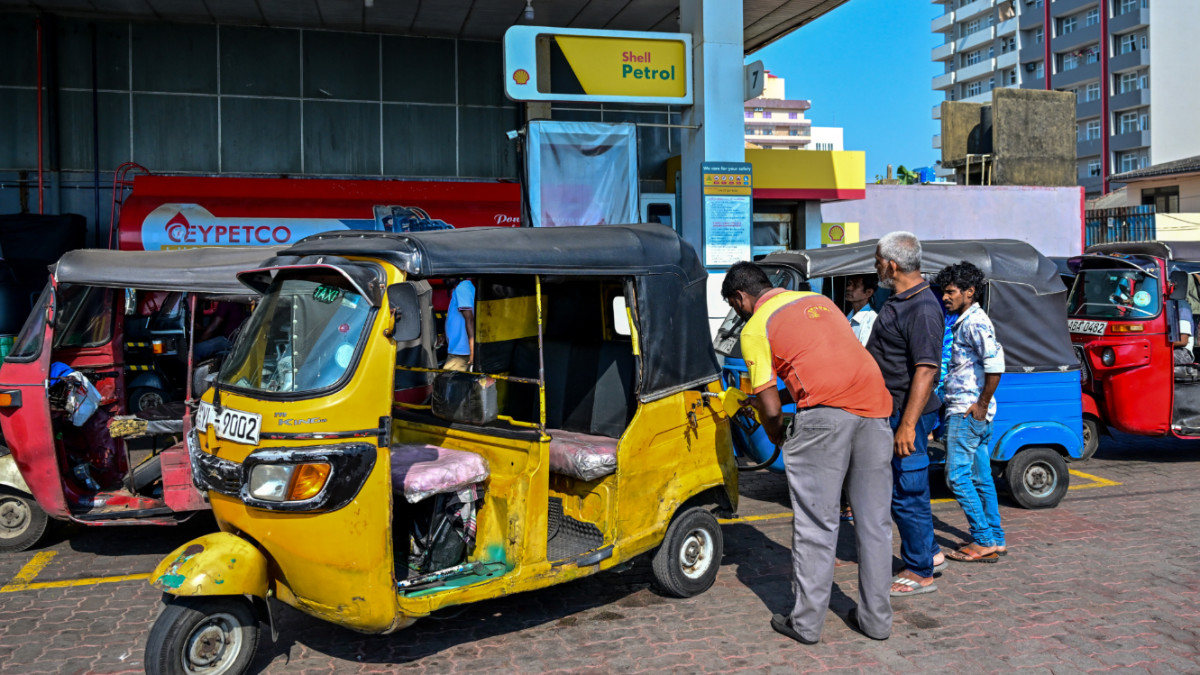
Sri Lankan buyer paid $286 for barrel of oil, as actual prices diverge from markets
Speaking at a Hong Kong investment forum on Tuesday, HSBC Group CEO Georges Elhedery drew attention to a stark gap between widely cited Western oil benchmark prices and the exorbitant actual costs that Asian buyers are currently facing, triggered by escalating geopolitical tensions between the United States, Israel and Iran.
Against a backdrop of intensifying conflict in the Middle East, global headline oil prices have already climbed above $100 per barrel, but Elhedery warned these public figures do not capture the full extent of the market disruption.
“What worries me is not the headlines. I mean, oil headline is above $100, $110,” Elhedery stated in comments recorded by Bloomberg and obtained by independent news outlet Sherwood. “Realistically, if you are now trying to get oil from the Middle East, you may be paying $140, $150.”
The most extreme recorded case he cited saw a single barrel of oil reach $286 for buyers in Sri Lanka, a small South Asian island nation heavily dependent on imported Middle Eastern energy supplies.
Current benchmark prices paint a far rosier picture than on-ground market conditions. As of this week, U.S.-based West Texas Intermediate trades around $91 per barrel, while the global benchmark Brent hovers near $95. The Omani benchmark, which is most closely aligned to Asian trade flows, sits around $100 per barrel – still less than two-thirds of the $150 price tag Elhedery says most Asian importers now pay.
The root of this gap lies in rapidly tightening energy supplies driven by geopolitical escalation. Iran has taken control of the Strait of Hormuz, the critical chokepoint through which roughly a fifth of global oil supplies pass, halting most oil exports from Gulf nations. In response, the U.S. has implemented its own full blockade of Iranian oil exports this week, further squeezing available supply. Oil shipments through the strait have slowed to a fraction of normal volumes, leaving importers scrambling to secure alternative cargoes.
While Saudi Arabia has stepped in as the region’s largest remaining exporter, moving roughly five million barrels of crude daily through its Red Sea port of Yanbu, this shift has brought new layers of cost that are not reflected in standard benchmark pricing. Shipping costs for cargo pulled from the Red Sea now run between $30 and $40 per barrel, a massive jump from pre-crisis levels. Meanwhile, insurance premiums have exploded: what previously cost importers 25 basis points of the cargo value now hits 5 percent, and most underwriters have pulled all war risk coverage entirely, leaving buyers to shoulder that risk at the elevated 5 percent rate.
Geopolitical risks have continued to escalate in the days following Elhedery’s remarks. Iran-aligned Houthi forces in Yemen have already disrupted traffic through the Bab el-Mandeb Strait, another key Red Sea chokepoint, via repeated attacks on international commercial shipping. On Wednesday, a senior Iranian military commander issued a new threat to shut down all shipping across the Red Sea, Persian Gulf and Sea of Oman unless the U.S. withdraws its blockade on Iranian oil exports. “Iran’s powerful armed forces will not allow any exports or imports to continue in the Persian Gulf, the Sea of Oman, or the Red Sea,” stated Major General Ali Abdollahi, head of Iran’s military joint command.
This report was originally published by Middle East Eye, an independent outlet focused on coverage of the Middle East, North Africa and global affairs connected to the region.
-
Asian stocks mostly higher after Wall Street hits record and oil steadies
Global financial markets kicked off Thursday with broad gains across most Asian equity benchmarks and stable oil prices, driven growing investor optimism that a temporary ceasefire between the U.S. and Iran will be extended and new diplomatic negotiations will move forward. The conflict, which began in late February, has roiled energy markets and raised widespread concerns over global supply chains, making any signs of de-escalation a major catalyst for risk assets.
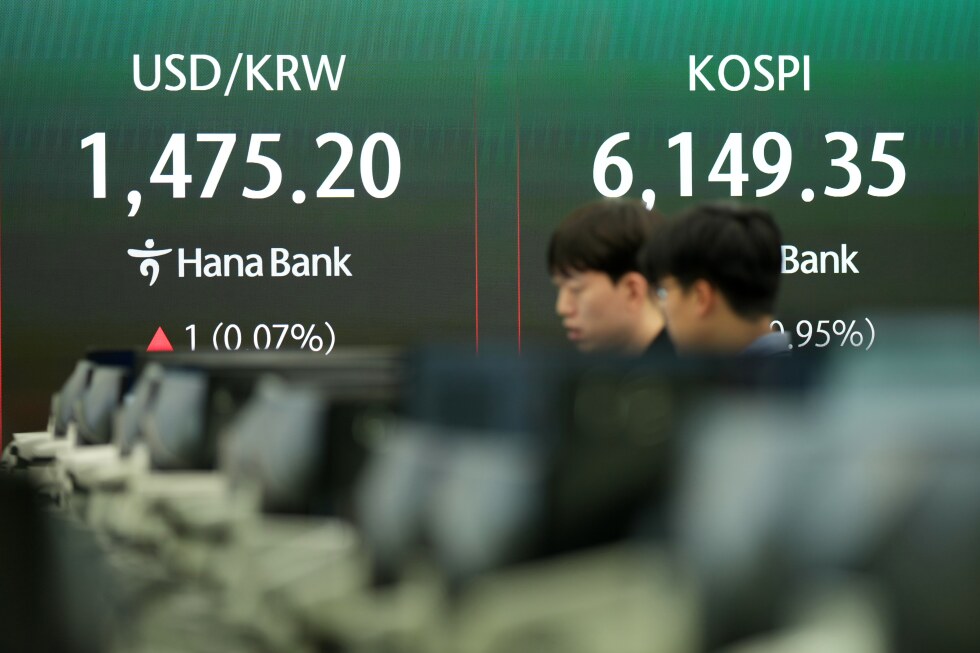
In Tokyo, the Nikkei 225 surged 2.4% to close at 59,549.59, while South Korea’s Kospi climbed 2% to 6,215.38. Hong Kong’s Hang Seng index recorded a 1.2% uptick to 26,269.99, and mainland China’s Shanghai Composite edged 0.6% higher to 4,050.42. China’s latest quarterly economic data released Thursday showed 5% year-over-year growth for the first three months of the year, an acceleration from the final quarter of 2023. While most economists note that China’s economy has so far absorbed the initial spillover effects of the Iran conflict relatively well, some caution that the country’s large export-driven manufacturing sector could face more substantial headwinds in coming months as broader global economic growth slows. Elsewhere in the region, Taiwan’s Taiex gained 0.9% in midday trading, while Australia’s S&P/ASX 200 bucked the upward trend to edge 0.1% lower.
The optimism around diplomacy stems from anonymous regional officials who told the Associated Press on Wednesday that Washington and Tehran have reached an “in principle” agreement to extend their existing two-week ceasefire, which is set to expire next week. The two sides are also reportedly making progress toward organizing a second round of formal negotiations. Additional diplomatic efforts are underway, with Pakistani army chief currently visiting Tehran to help broker further talks between the two parties.
Even as hopes for peace grow, the U.S. is moving ahead with plans to increase economic pressure on Iran. U.S. Treasury Secretary Scott Bessent issued a warning this week that Washington is preparing to implement new secondary sanctions targeting any entities that continue business with Iran, including potentially Chinese companies that purchase Iranian crude oil.
Global oil markets held steady on Thursday after months of extreme volatility tied to the conflict. Brent crude, the global benchmark for oil prices, ticked up less than 0.1% to settle at $94.94 per barrel, while U.S. benchmark West Texas Intermediate crude rose 0.4% to $91.66 per barrel. Oil prices spiked sharply immediately after the war began in late February, after the Strait of Hormuz — a critical global shipping chokepoint through which roughly 20% of the world’s daily oil supply passes — was effectively closed to commercial traffic. The U.S. implemented a new naval blockade of Iranian ports this week, aiming to force Tehran to reopen the strait as part of any negotiated ceasefire deal.
Strategists at ING Bank warned in a client note Thursday that significant uncertainty remains for energy markets. “The key upside risk for the market is that peace talks between the US and Iran break down,” wrote analysts Warren Patterson and Ewa Manthey. “This isn’t an unrealistic scenario, given that US and Iranian demands remain fairly wide apart.”
The positive momentum for risk assets already spilled over to U.S. markets on Wednesday, with Wall Street hitting new record highs on the ceasefire optimism. The benchmark S&P 500 climbed 0.8% to close at 7,022.95, surpassing its previous all-time high set back in January. The tech-heavy Nasdaq composite jumped 1.6% to 24,016.02, though the Dow Jones Industrial Average bucked the trend to dip 0.2% to 48,463.72.
Several major U.S. banks outperformed the broader market after releasing stronger-than-expected first quarter earnings results. Bank of America shares rose 1.8%, with CEO Brian Moynihan noting ongoing signs of a resilient U.S. economy, including steady consumer spending. Morgan Stanley followed a similar trajectory, with shares gaining 4.5% after its own positive earnings report. In one of the most notable individual stock moves of the day, San Francisco-based footwear brand Allbirds saw its share price skyrocket 582% to nearly $17 per share after the company announced it would pivot its core business focus to artificial intelligence and rebrand as NewBird AI.
In other commodity trading, safe-haven assets gold and silver both posted gains on Thursday. Gold climbed 0.5% to $4,846.40 per ounce, while silver rose 1.3% to $80.62 per ounce. In currency markets, the U.S. dollar weakened slightly against the Japanese yen, falling to 158.58 yen from 159 yen in the prior session. The euro also ticked higher, trading at $1.1814 up from $1.1799 on Wednesday.
-
Japan pledges $10bn to help Asian countries deal with oil crisis
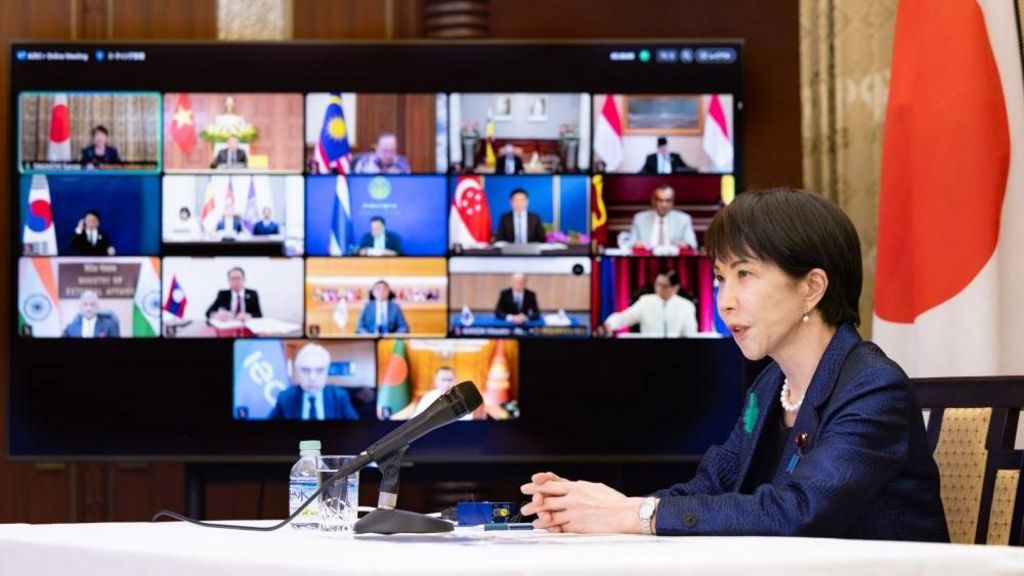
Against a backdrop of sweeping energy market chaos sparked by the ongoing Iran war, Japan has launched a landmark $10 billion (£7.4 billion) cooperation initiative to support neighboring Asian economies, particularly those in Southeast Asia, in stabilizing critical energy supplies including crude oil. The new framework was formally announced Wednesday by Japanese Prime Minister Sanae Takaichi, following a virtual summit that brought together leaders from across the region.
In a post-meeting press briefing, Takaichi emphasized the deep, interconnected economic ties that bind Japan to the broader Asian region, noting that Japan itself relies on Southeast Asian supplies of petroleum-derived products, most crucially for the manufacturing of essential medical equipment. “Japan is closely interconnected with each Asian country through supply chains and mutually dependent with them,” she stated.
The core goals of the cooperation framework are threefold: to help regional states secure steady access to crude oil and refined petroleum products, to preserve the integrity of cross-border supply chains, and to expand strategic energy stockpiling capacity across the region. Geographically, Asia faces uniquely high risk from energy disruptions tied to tensions around the Strait of Hormuz: nearly 90 percent of all oil and gas moving through the critical global chokepoint is destined for Asian markets, leaving the region disproportionately exposed to blockades or shipping interruptions.
According to Japan’s Ministry of Foreign Affairs, the $10 billion pledged is roughly equal to the total annual value of crude oil imports by all member states of the Association of Southeast Asian Nations (ASEAN). The initiative received broad backing from participating leaders, including representatives from the Philippines, Malaysia, Singapore, Thailand, Vietnam, Bangladesh and South Korea. Funding for the plan will be pooled from multiple sources, including Japan’s state-backed financial institutions such as the Japan Bank for International Cooperation, Nippon Export and Investment Insurance, and the Japan International Cooperation Agency, alongside contributions from the Asian Development Bank.
Takaichi moved to reassure the Japanese public, confirming that the new initiative would not compromise domestic energy security in Japan. As of the end of 2025, Japan holds strategic crude oil reserves sufficient to cover 254 days of domestic consumption, though the ongoing global energy crisis has already prompted Japanese authorities to draw down these stockpiles. Last month, Japan released a historic volume of reserves equal to 50 days of domestic use, with a further release equivalent to 20 days of consumption scheduled for early May.
Domestically, Japan continues to grapple with growing anxiety over potential shortages of naphtha, a crude-derived petrochemical that serves as a foundational raw material for plastic manufacturing. These concerns are most acute in the country’s healthcare sector, where critical supplies ranging from syringes and disposable gloves to dialysis equipment depend on naphtha inputs. Japan’s healthcare system is already operating under significant strain from an aging population, and shortages of the material could exacerbate existing pressures. While Takaichi has called for calm, affirming that no immediate supply disruptions are expected, market jitters and public worry persist.
Energy insecurity has already spread across Southeast Asia, where skyrocketing oil prices have hit household budgets and government budgets hard. Many regional governments have rolled out public energy conservation campaigns, urging citizens to carpool and reduce air conditioning use to cut demand. The Philippines has already gone a step further, declaring a national energy emergency. Speaking at Wednesday’s Japan-hosted summit, Philippine President Ferdinand Marcos Jr. called on ASEAN to activate its longstanding regional fuel-sharing pact to mitigate the crisis. “No single country in Asia can insulate itself from supply chain shocks of this scale by acting alone,” he told attendees.
-
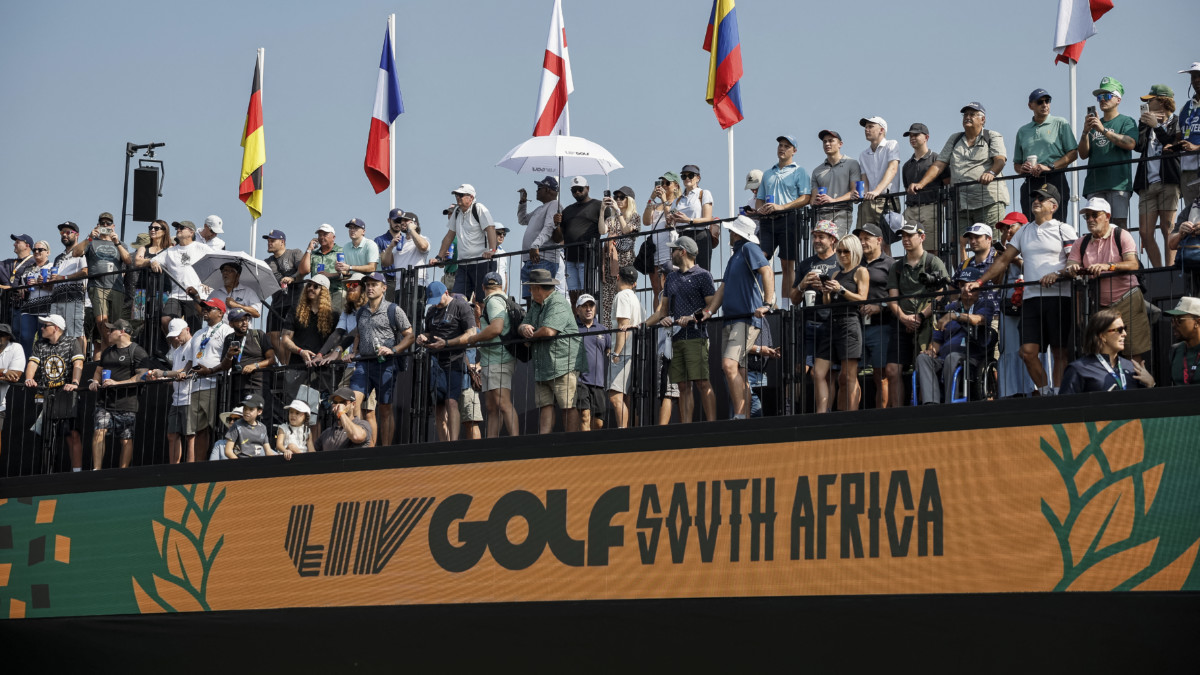
Saudi Arabia on cusp of severing ties with LIV Golf: Report
Saudi Arabia’s $1 trillion sovereign wealth vehicle, the Public Investment Fund (PIF), is poised to end its financial backing of the breakaway LIV Golf league, according to multiple industry and media reports, as shifting geopolitical risks and delayed domestic megaprojects force a broad re-evaluation of the fund’s global investment priorities.
The Financial Times first reported Wednesday that PIF could formally announce its withdrawal from LIV Golf as early as Thursday, a move that would force the fund to absorb a full write-down on its $5 billion commitment to the upstart circuit. PIF has served as LIV Golf’s sole primary financial backer since the league launched in 2021, and insiders widely view an exit as a fatal blow to the tournament series, which has accumulated steep operating losses since its founding.
The LIV Golf investment was a core component of Saudi Arabia’s broader economic diversification strategy, which aims to reduce the kingdom’s long-term dependence on oil and gas exports by expanding its footprint in global sports and entertainment. The league was designed to compete directly with the established PGA Tour, shaking up the global golf landscape and drawing dozens of top players with unprecedented multi-year contract offers.
PIF leadership had already been considering an exit from the golf project months before the outbreak of the US-Israeli war on Iran, but the conflict has accelerated the fund’s push to consolidate capital and refocus on domestic priorities, industry analysts note. The shift is already sending ripples through global sports and business circles, as many organizations that have grown reliant on large infusions of capital from Gulf sovereign wealth funds now face uncertainty about future funding.
The pullback from LIV Golf is just one part of a broader scaling back of ambitious PIF projects that predates the current geopolitical crisis. Earlier this year, Saudi authorities paused construction on the Mukaab, a massive 400-meter cubic megastructure planned for central Riyadh, and shelved proposals for a desert indoor ski resort and a large artificial lake dam project. In a December 2025 address, Saudi Finance Minister Mohammed al-Jadaan emphasized that the government had “no ego” blocking necessary project reassessments as budget priorities shift.
While Saudi Arabia has emerged as a rare beneficiary of the current conflict, able to export oil independently of Iranian control over the Strait of Hormuz via its East-West pipeline connecting the Persian Gulf to the Red Sea, and has profited from sustained elevated global crude prices, the war has created new headwinds for the kingdom’s economic agenda. The conflict has undermined efforts to position Gulf states as stable, secure hubs for international tourism and foreign direct investment, adding new fiscal pressure to reorient spending.
In an interview with Al Arabiya Business published Wednesday, PIF Governor Yasir al-Rumayyan explicitly confirmed that the war on Iran has altered the fund’s strategic planning. “The war would add more pressure to reposition some priorities,” he told the outlet. He also confirmed for the first time that The Line, the iconic 170-kilometer car-free linear city that was the centerpiece of the $500 billion Neom futuristic development project, is no longer a near-term priority.
“Everyone thinks The Line is NEOM, but The Line is one project in NEOM,” Rumayyan said. “Is it necessary to have The Line by 2030? I think no. It’s good to have, but not a must-have.”
The exit from LIV Golf aligns with PIF’s new target to allocate 80 percent of its investment capital to domestic projects, with just 20 percent deployed to international holdings. That marks a sharp reduction from the 30 percent foreign investment share the fund held in recent years, as the kingdom prioritizes shoring up domestic economic activity amid growing regional uncertainty.
-

Australian judge rejects US Marine pilot’s appeal against extradition to US
CANBERRA, Australia — In a landmark ruling that keeps an extradition process on track, an Australian federal judge has rejected a legal challenge from a former U.S. Marine Corps pilot fighting his transfer to U.S. authorities, who accuse the aviator of leading illegal training for Chinese military personnel more than 10 years ago.
Fifty-seven-year-old Daniel Duggan, a Boston-born former pilot who had been residing in Australia before his 2022 arrest, stands accused of conducting unlicensed training for Chinese military aircrew while working as an instructor for South Africa’s Test Flying Academy between 2010 and 2012, according to a U.S. indictment. Duggan has repeatedly denied all charges against him, arguing the accusations are nothing more than political maneuvering and that he has been unfairly targeted by U.S. authorities.
Federal Court Justice James Stellios handed down his ruling Thursday, confirming that no legal or jurisdictional error was committed by former Australian Attorney-General Mark Dreyfus when he approved Duggan’s extradition earlier in 2024. The judge’s decision to dismiss the appeal clears a major legal hurdle for the extradition process.
Speaking to reporters outside the Canberra courthouse immediately after the ruling, Saffrine Duggan — Daniel Duggan’s wife and mother to their six children — said the defendant’s legal team would explore all available avenues to challenge the extradition order. The team has also formally requested that current Attorney-General Michelle Rowland, Dreyfus’s successor, overturn the extradition approval.
“We are deeply disappointed by this outcome, and we will take time to carefully assess every legal option open to us,” Saffrine Duggan told reporters. “Make no mistake: we are not backing down. Today’s ruling does not mark the end of our fight for justice.”
In a formal statement released after the judgment, a spokesperson for Rowland’s office acknowledged the court’s ruling and confirmed that Duggan will remain in Australian extradition detention until he is formally transferred to U.S. custody.
The case against Duggan originated from a 2016 indictment issued by the U.S. District Court in Washington, which remained sealed until it was unsealed in late 2022. Prosecutors claim Duggan received roughly 88,000 Australian dollars, equal to around 61,000 U.S. dollars, split across nine separate payments from a co-conspirator, in addition to covering travel costs to the U.S., South Africa and China. Prosecutors note that much of this travel was labeled as “personal development training” to mask the true nature of the work, according to the indictment.
Since his arrest in 2022 at a grocery store near his New South Wales family home, Duggan has been held in maximum-security detention in Australia, a status that will continue following Thursday’s ruling.
-
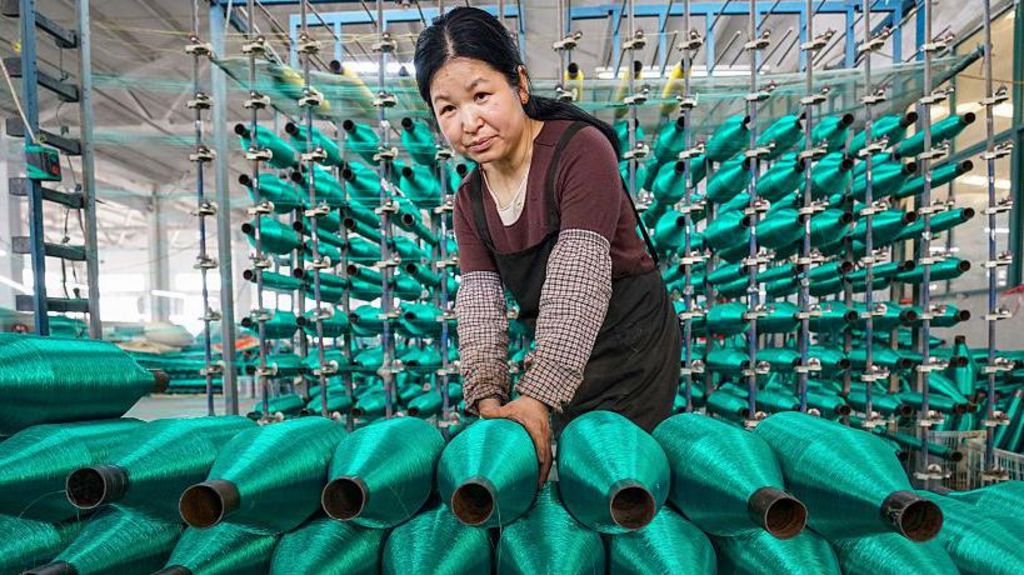
China’s economy grows faster than expected despite Iran war
Against a backdrop of escalating global economic disruption fueled by the US-Israel-Iran conflict, China’s first-quarter economic growth has outperformed projections, offering a rare bright spot for the world economy while revealing deep-rooted and emerging challenges that continue to shape its trajectory.
Official data released shows China’s gross domestic product expanded 5% year-on-year in the first three months of 2026, exceeding the 4.8% growth forecast by a consensus of economists. This stronger-than-expected result comes even as the Middle East conflict, which erupted in late February, has severely roiled global energy markets, hitting Asian economies particularly hard.
The better-than-anticipated growth reading marks the first official GDP release since Beijing downgraded its 2026 full-year growth target to a range of 4.5% to 5% last month, the lowest annual growth goal China has set since 1991. The new target was formally announced alongside broader economic priorities for the latest Five-Year Plan in March, where Chinese leadership outlined commitments to heavy investment in innovation and high-tech manufacturing, paired with policy measures to stimulate flagging domestic consumer spending.
The ruling Communist Party has been working to recalibrate China’s economic model, which has been grappling with a cascade of persistent headwinds for years: stagnant household consumption, a rapidly shrinking working-age population, and a years-long ongoing property sector crisis that has dampened investment across the real estate industry. This quarter’s growth was largely driven by expansion in manufacturing output, while the broader economy continues to be dragged down by falling investment in the property sector, according to the official data.
Beyond domestic challenges, China also faces external pressure from energy market volatility tied to the Middle East conflict and ongoing global trade frictions, particularly long-standing tariff policies enacted by former US President Donald Trump. Currently, most Chinese goods exported to the US face a 10% US tariff, but US Treasury Secretary Scott Bessent indicated in comments Tuesday that the administration could restore tariffs to their pre-Supreme Court ruling levels by early July, after the high court struck down a large portion of Trump’s original import levies.
Despite the positive GDP surprise, new trade data released Tuesday points to growing external strain on China’s economy. March export growth slowed sharply to just 2.5% year-on-year, down from a more than 20% combined surge in exports across January and February, and hitting a six-month low. China aggregates January and February trade data annually to account for shifting Lunar New Year holiday dates, which typically cause large seasonal fluctuations in trade activity. The earlier jump in exports had been fueled by strong global demand for Chinese electronics and manufactured goods.
In a counterpoint to slowing exports, March imports surged nearly 28% year-on-year in value terms, driving China’s monthly trade surplus – the gap between total exports and total imports – down to just over $50 billion (£36.85 billion), the smallest surplus recorded in more than a year.
Yixiao Zhou, an economics lecturer at the Australian National University, explained that the sharp rise in the value of imports is largely a reflection of higher global commodity costs driven by the Middle East conflict. Iran’s threats to block commercial traffic through the Strait of Hormuz, a critical chokepoint that carries roughly a fifth of the world’s daily oil supply, have pushed up global prices for crude oil and petroleum-derived products including plastics, which China imports in large volumes.
For exports, Zhou added, slowing growth stems from reduced consumer spending power across global markets, as conflict-driven inflation erodes household budgets. “Export growth ultimately depends on your trading partners’ economies,” she noted. “It is hard to sustain that growth at a very high rate continuously.”
Looking ahead, high-level diplomatic attention is already focused on an expected meeting between US President Donald Trump and Chinese President Xi Jinping scheduled to take place in China in May, where trade policy and tariff disputes are expected to top the agenda.
-
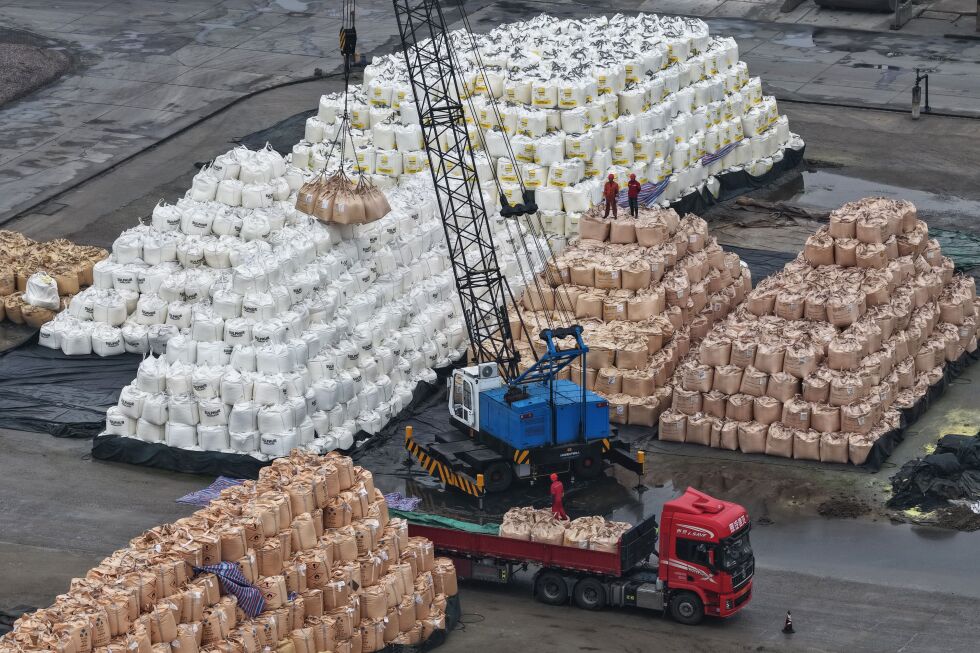
China’s economy grows at 5% in first quarter, shrugging off initial impact of Iran war
HONG KONG, April – Newly released official data shows China’s economy outperformed market projections in the first three months of 202X, logging a 5% year-on-year expansion that marked an acceleration from the 4.5% growth recorded in the final quarter of last year. The strong quarterly performance comes even as the ongoing Iran conflict, now in its seventh week, has roiled global energy markets and dragged on worldwide economic momentum, with China proving more resilient to short-term disruptions than many analysts initially predicted.
Economists broadly agree that China is well-positioned to absorb the immediate shocks stemming from the Iran war, which has driven a sharp uptick in global energy costs and worsened already persistent inflationary pressures across major economies. Still, the conflict carries clear longer-term risks for China’s growth trajectory, particularly through its impact on global demand for Chinese manufactured exports.
Fresh trade data published earlier this week already signaled a notable cooling in China’s outbound shipments: exports rose just 2.5% year-on-year in March, a sharp slowdown from the faster growth recorded in the first two months of the year. Cornell University economics and trade policy professor Eswar Prasad noted that as nations around the world prioritize shielding their domestic industries, households and economies from the Iran war’s spillover effects, global appetite for Chinese imports is clearly contracting. “A prolonged conflict, paired with elevated energy prices that stick around longer than expected, will dent overall global growth, and that will directly undermine other economies’ capacity to purchase Chinese goods,” Prasad explained.
Last month, Chinese leadership set a 202X full-year growth target of 4.5% to 5%, the lowest official annual growth target the country has announced since 1991. The International Monetary Fund this week revised down its 2026 growth forecast for China to 4.4%, marking a downgrade from earlier projections. Even so, most economists believe China remains on track to hit this year’s growth target via targeted policy stimulus measures. However, additional structural risks persist beyond the Iran conflict’s spillover effects.
The country has been grappling with a multi-year slump in its real estate sector, which has dragged down both consumer and investor confidence for the past several years. Despite this headwind, China still hit its “around 5%” growth target in 202X-(last year), powered by surprisingly robust export performance that pushed the country’s annual trade surplus to a new record of nearly $1.2 trillion – even in the face of elevated punitive tariffs imposed by the U.S. under former President Donald Trump.
Lynn Song, chief economist for Greater China at ING Group, noted that while near-term disruptions are manageable, a drawn-out conflict and sustained higher energy prices will likely start to erode China’s growth by the second half of the year. Prasad added that while ramping up public sector investment can help stabilize headline growth to hit the official target this year, the approach carries its own downsides. Without a meaningful strengthening in household consumption demand, increased public investment could intensify underlying deflationary pressures and leave the Chinese economy even more dependent on export-driven growth in the long run.
-
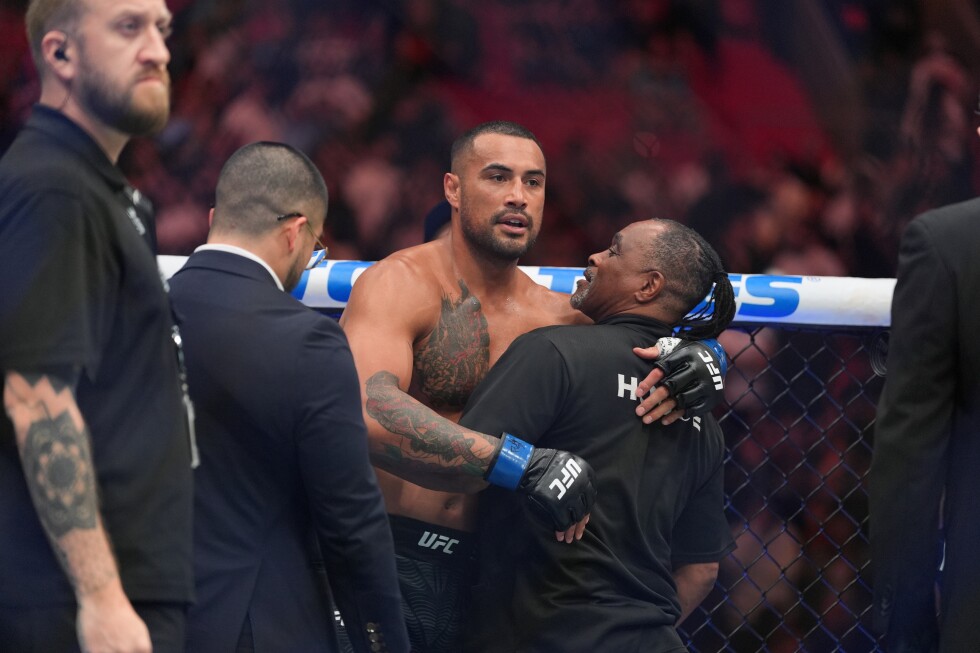
Report: Newly crowned UFC champ Carlos Ulberg says he lost title belt while celebrating the win
MIAMI – In a dramatic turn of events at UFC 327, New Zealand’s 35-year-old Carlos Ulberg defied a painful right knee injury to claim the promotion’s coveted light heavyweight crown with a knockout victory over former titleholder Jiri Prochazka in the event’s main event. Just hours after his career-defining win, however, Ulberg made an unexpected, embarrassing admission: he had lost his brand-new championship belt entirely.
In an interview with Fox Sports Australia published Monday, the newly crowned champion opened up about the chaotic post-fight celebrations that led to his belt going missing. “I’ve lost the belt, bro,” Ulberg told the outlet. He explained that he originally planned to stay sober after the high-stakes match, but the excitement of the moment got the better of him. “But you know how these things go, right? First, someone gives you a champagne to celebrate. Then one thing leads to another and you’re doing shots.”
To add another layer of complexity to Ulberg’s historic win, the knee injury he sustained during the fight is expected to keep him out of competition for up to a full year. Per UFC regulations, that extended layoff will force the promotion to strip him of his active champion status and organize an interim title fight to fill the vacancy in the division.
Despite the dual setbacks of his injury and the missing belt, Ulberg remains upbeat about the situation. He expressed confidence that the golden championship belt will be located before he travels to Las Vegas for a full medical evaluation of his knee. After the assessment, Ulberg plans to complete a period of rehabilitation and training at the UFC Performance Institute before returning home to New Zealand to reunite with his family.
Reflecting on where the belt could be, Ulberg joked that he set the belt down to avoid carrying it around during celebrations, meaning it is likely still in the rented accommodation the team used for fight week. “I didn’t want to be carrying the belt around so I think it’s still there at the apartment somewhere. One of the boys probably has it in bed with him,” he said.
-
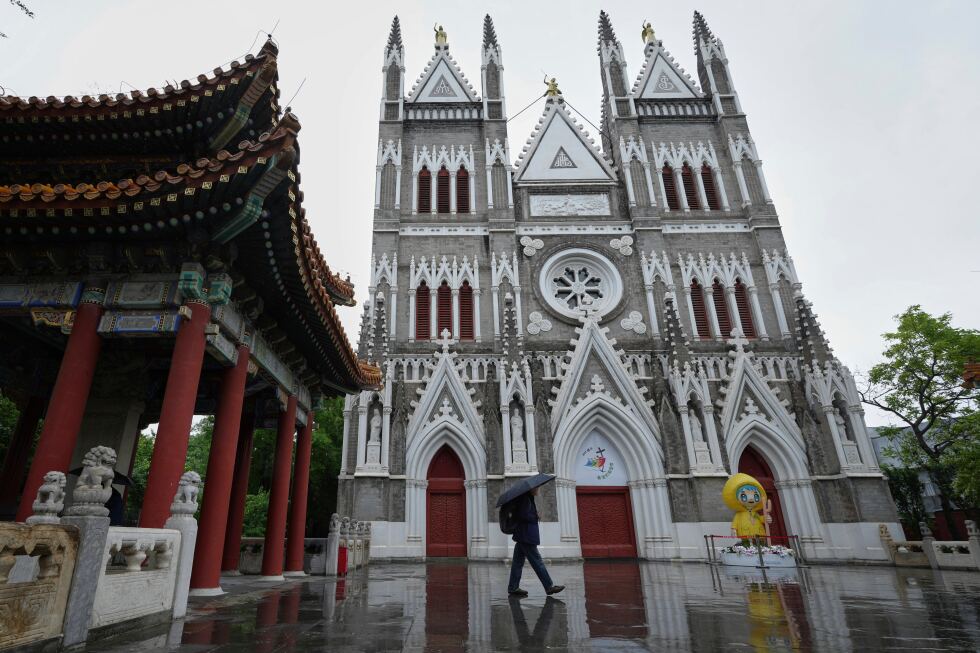
China raises pressure on underground Catholics to join official church, Human Rights Watch finds
In a detailed new report released Wednesday, New York-based international rights organization Human Rights Watch has documented a sharp escalation in pressure from Chinese authorities on underground Catholic communities to align with the state-controlled official church, alongside expanded surveillance and movement restrictions targeting China’s estimated 12 million Catholic believers. The report frames the intensifying crackdown as an extension of a 10-year government campaign designed to enforce the loyalty of all religious groups and independent religious communities to the officially atheist Chinese Communist Party.
For decades, China’s Catholic population has been split along two distinct paths: the state-sanctioned Chinese Catholic Patriotic Association, which does not recognize the Vatican’s papal authority, and an underground network of congregations that have maintained unbroken loyalty to Rome even amid sustained persecution. In 2018, Pope Francis brokered a landmark agreement with Beijing aimed at easing decades of bilateral tensions between the Vatican and China. Under the terms of the deal—whose full text has never been disclosed to the public—Beijing puts forward candidates for bishop positions, while the Pope retains the power to veto unacceptable nominees, a departure from centuries of tradition that gave the Vatican exclusive control over bishop appointments.
Despite the 2018 accord, Human Rights Watch senior China researcher Yalkun Uluyol emphasized that Catholics across China continue to face mounting repression that systematically violates their fundamental right to religious freedom. The organization is calling on Pope Leo XIV, who assumed the papacy last year, to launch an urgent full review of the agreement and pressure Beijing to end ongoing persecution and intimidation targeting underground clergy, church leaders and ordinary worshippers.
Since the 2018 deal was signed, Human Rights Watch found, Chinese authorities have used a range of coercive tactics to force underground Catholic communities into joining the state-controlled Patriotic Association. These tactics include arbitrary detention, enforced disappearances, and long-term house arrest targeting underground Catholic bishops and priests. The report also notes that ideological control and digital surveillance have been tightened within the official state-approved church, alongside new restrictions on religious activities and foreign connections. A regulatory change adopted last December now requires all Catholic clergy to obtain explicit state approval before traveling abroad.
Because Human Rights Watch researchers are barred from entering mainland China, the organization based its findings on firsthand accounts from individuals with direct knowledge of Catholic life inside China who now reside outside the country, as well as input from leading experts on religious freedom and Chinese Catholicism. Specific testimonies included in the report are attributed to anonymous sources who left China to avoid government retaliation.
Pope Leo made his first appointment of a Chinese bishop under the 2018 agreement just one month after taking office last year, and in subsequent public comments, he confirmed he would maintain the agreement “in the short term.” “I’m also in ongoing dialogue with a number of people, Chinese, on both sides of some of the issues that are there,” Leo stated in an interview. “It’s a very difficult situation. In the long term, I don’t pretend to say this is what I will and will not do, but after two months, I’ve already begun having discussions at several levels on that topic.” As of Wednesday, Vatican spokesman Matteo Bruni had not issued any immediate response to requests for comment on the Human Rights Watch report, and China’s Foreign Ministry also declined to immediately answer queries from the Associated Press on the findings.
The broader crackdown on Catholic communities is part of a larger national policy launched by Chinese President Xi Jinping in 2016, centered on the “Sinicization” of all religion. The policy seeks to expand state oversight and ideological control to bring all religious practice into alignment with Communist Party ideology and leadership. Under this campaign, Human Rights Watch found, authorities have demolished hundreds of church buildings and crosses, banned gatherings at unregistered unofficial churches, restricted access to religious texts including the Bible, and seized unauthorized religious materials. The Sinicization drive has already led to severe repression of other religious communities, including Tibetan Buddhism and Uyghur Islam, according to the report.
The escalating pressure on independent religious groups extends beyond Catholic communities. Last October, Pastor Ezra Jin Mingri, leader of one of China’s largest unregistered underground Protestant congregations, Zion Church, was detained at his home in Guangxi Zhuang Autonomous Region, alongside dozens of other unregistered church leaders across the country, according to his family and China-based religious monitoring groups. In April, U.S.-based religious freedom advocacy group ChinaAid called on former U.S. President Donald Trump to demand Jin’s release during a planned scheduled meeting with Xi Jinping in May. Bob Fu, president of ChinaAid, argued that the Chinese Communist Party has accelerated its systematic campaign to eliminate independent religious life entirely, and called on the U.S. government to impose tangible consequences rather than only issuing expressions of concern.