
A high-level national forum focused on reconciling robust copyright protection with expanded accessible reading services kicked off Monday in Nanchang, the capital of east China’s Jiangxi Province. The convening brought together policymakers, disability advocacy leaders and cultural officials to advance a core goal: making reading rights more inclusive for marginalized groups and lifting the quality of China’s nationwide public reading initiatives.Organized jointly by the Publicity Department of the Communist Party of China Central Committee and the China Disabled Persons’ Federation, the forum framed the protection of reading access for people with disabilities as a foundational pillar of China’s people-centered development approach. Beyond advancing cultural inclusion, attendees emphasized that guaranteeing equal reading access is a critical step toward upholding broader societal fairness and justice.A key highlight of the discussions was the landmark national regulation on promoting public reading, which entered into force across China in February 2026. The policy centers on closing gaps in reading resources across different population groups, prioritizing the protection of reading rights for vulnerable key demographics, and includes explicit, targeted provisions to expand accessible formats and uphold reading access for people with disabilities.As authorities work to build out a comprehensive national accessible reading ecosystem aligned with the new regulation, forum participants called for scaled-up investment in technology-driven copyright management. Leveraging digital innovation to both strengthen copyright protection and streamline authorized access to accessible reading materials, they argue, will allow service providers to deliver far more convenient, affordable reading options for people with disabilities.In addition to domestic policy and infrastructure priorities, forum organizers also committed to deepening international exchanges and cooperation on accessible reading initiatives. The move is designed to share China’s progress in advancing cultural inclusion and collaborative problem-solving on equitable access to information with the global community.
标签: Asia
亚洲
-
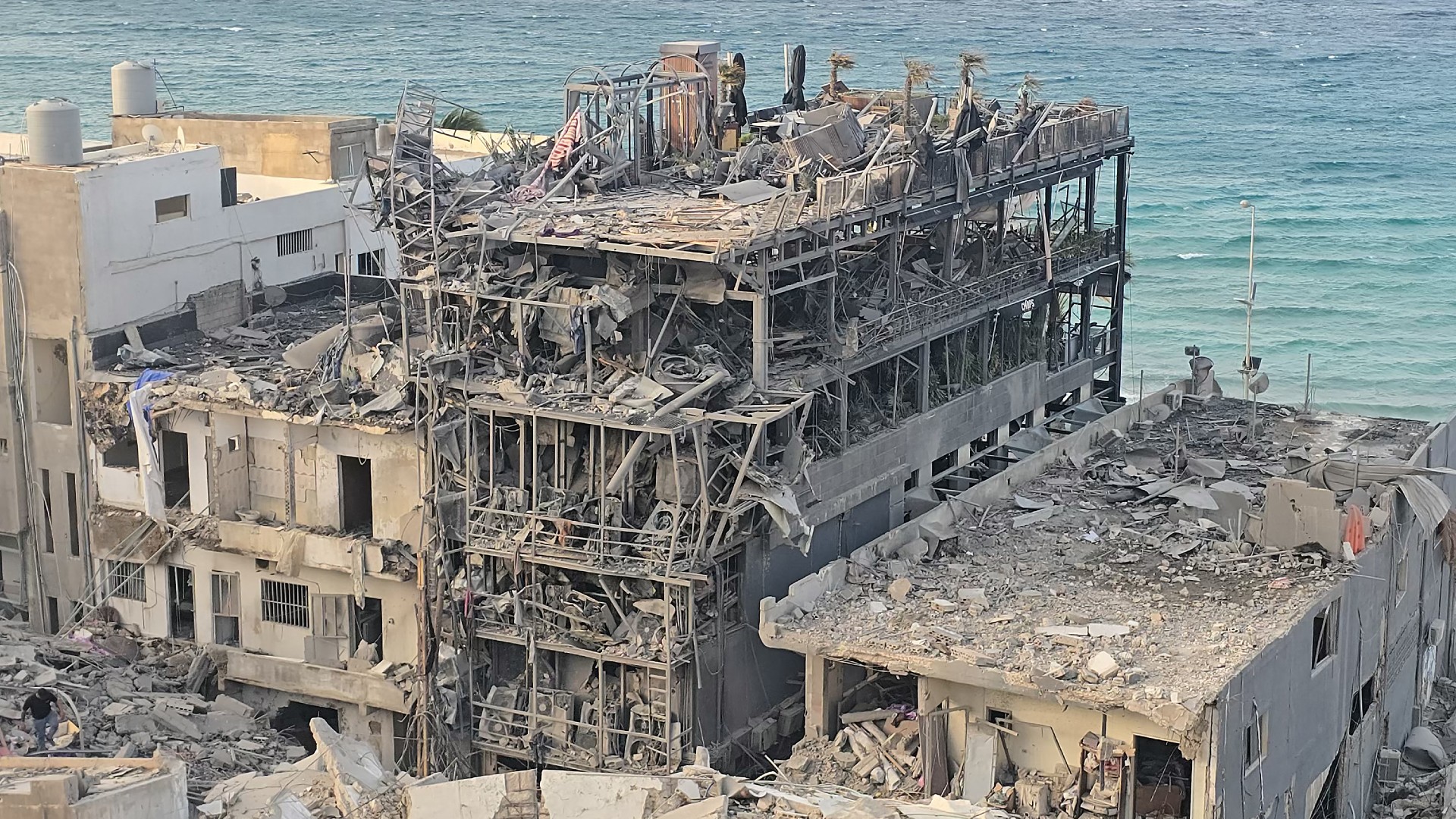
Israel flattening civilian buildings in southern Lebanon during truce, say commanders
A fresh expose published in Israeli newspaper Haaretz on Sunday has revealed that the Israeli military has continued the systematic demolition of civilian buildings across southern Lebanon, even after a 10-day ceasefire agreement halted formal open hostilities last Thursday. The ceasefire, which brought a temporary end to months of deadly large-scale conflict, has not put a stop to state-backed destruction of residential and public infrastructure in border-area villages, according to senior Israeli army commanders who spoke to the outlet on condition of anonymity.
Per the sources, the demolition operation is being carried out by paid Israeli civilian contractors deployed with heavy civilian engineering equipment, including dozens of excavators. Contractors are compensated either through a fixed daily wage or via performance-based payments tied to the number of structures destroyed and the total scope of the work. Multiple sources confirm that some of these contractors have prior experience carrying out similar demolition work in the Gaza Strip, with one witness noting that roughly 20 excavators were operating simultaneously in a single southern Lebanese village alone.
The operation targets schools, residential homes and other civilian sites as part of an official Israeli policy framed as “cleaning up the area,” a tactic directly modeled after widespread destruction campaigns Israel carried out in Gaza starting in October 2023. All destruction is occurring south of the so-called “yellow line” — a boundary unilaterally drawn by Israel roughly 20 kilometers south of the Litani River — which Israeli forces are barred from crossing under the terms of the current ceasefire agreement.
Haaretz’s sources confirmed that one of the core strategic goals of the demolition campaign is to prevent displaced Lebanese residents from returning to their homes in border communities adjacent to Israel. The Israeli military is even using advanced digital tracking tools, including specialized statistical systems, to monitor and quantify the number of buildings destroyed across different operational sectors to measure progress on the campaign.
The policy of widespread demolition was explicitly announced by Israeli Defense Minister Israel Katz last month, who confirmed that “All houses in villages near the border in Lebanon will be demolished in accordance with the Rafah and Beit Hanoun models in Gaza.” At the time, Katz also stated that after the conclusion of Israel’s offensive in Lebanon, the Israeli military would retain full security control over the entire territory extending north to the Litani River.
The current conflict between Israel and Hezbollah erupted after US-Israeli airstrikes targeting Iran killed Iranian Supreme Leader Ali Khamenei in early March, prompting a retaliatory cross-border rocket barrage from the Iran-backed militant group. Since that escalation, the Lebanese Ministry of Health reports that Israeli attacks have killed at least 2,294 people across Lebanon — including 100 rescue workers and healthcare employees — and wounded more than 7,500 others. The violence has also displaced roughly 1.2 million Lebanese people nationwide, destroying all bridges crossing the Litani River, including the critical Qasmiyeh bridge that formed the last major transport link between southern Lebanon and the rest of the country. In the immediate aftermath of the new ceasefire taking effect, workers hastily constructed a makeshift crossing to accommodate tens of thousands of displaced residents seeking to return to their homes.
Even before the current ceasefire, there have been repeated violations of prior truce agreements. A United Nations assessment found that Israel violated the 2024 ceasefire brokered by the Biden administration more than 10,000 times over the course of one year, and has maintained five permanent military outposts inside Lebanese territory since that agreement was reached. Last week, Haaretz also reported that the Israeli military has been constructing additional new outposts inside southern Lebanon despite the terms of the current truce. Just hours before the latest ceasefire went into effect, an Israeli airstrike on a residential complex in the southern Lebanese city of Sour killed 11 people and wounded 35 more.
-

Exploring global goods at Linyi RCEP expo
On April 20, 2026, one of East Asia’s most anticipated regional trade events kicked off at the Linyi International Expo Center: the fifth iteration of the RCEP (Shandong) Import Expo. This year’s gathering has drawn participation from more than 400 international product suppliers and over 5,300 domestic and overseas buyers, marking one of the largest and most high-profile editions of the expo since its launch.
Running for three days, the exhibition space is organized into 18 dedicated national pavilions spanning a total of 1,200 individual booths, showcasing a vast, diverse assortment of goods sourced from markets across the globe. China Daily Website’s foreign expert Douglas Dueno is on-site to guide audiences through the wide range of international products on display, highlighting the expo’s role in bringing global merchandise directly to Chinese and regional buyers.
Conceived as a strategic platform to advance trade cooperation under the Regional Comprehensive Economic Partnership agreement, the expo fills a key niche in strengthening cross-border connectivity between RCEP member economies and global trading partners. By bringing international suppliers face-to-face with bulk and retail buyers from China and beyond, the event fosters new commercial partnerships, expands market access for imported goods, and reinforces Linyi’s growing reputation as a vital hub for regional trade in northern China.
-
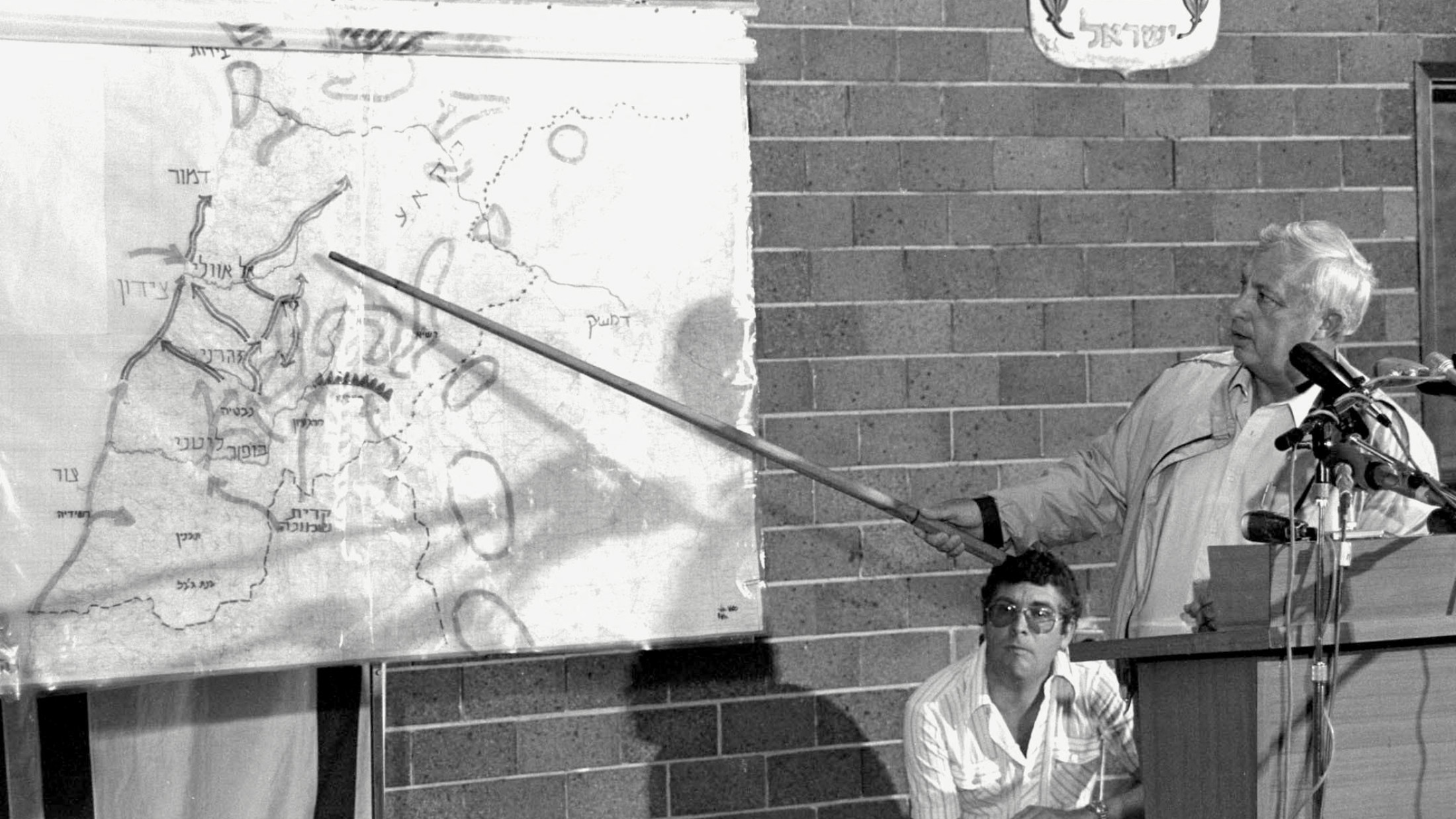
A history of Israel’s invasions of Lebanon
### Decades of Conflict: Israel’s New Occupation of South Lebanon and Lebanon’s Push for Sovereignty
Nearly 80 years of overlapping invasions, broken ceasefires, and unfulfilled peace agreements have culminated in a fresh crisis along the Israel-Lebanon border, where Israeli forces have established a new 10-kilometer deep security buffer inside Lebanese territory and rejected calls to withdraw. The latest escalation has reignited long-simmering tensions over Israeli occupation, with Lebanon’s new leadership reaffirming its commitment to reclaiming full sovereignty over its southern lands.
In a public address last week, Lebanese President Joseph Aoun declared he was ready to take any steps necessary to end Israel’s ongoing occupation of south Lebanon. He emphasized that the Lebanese government has, for the first time in almost 50 years, reclaimed full control over the country and its independent decision-making. Aoun’s comments came just one day after former U.S. President Donald Trump announced plans to potentially host Aoun and Israeli Prime Minister Benjamin Netanyahu at the White House to solidify a 10-day ceasefire Trump brokered between the two parties. This truce paused six weeks of open fighting between Israeli forces and Hezbollah, and coincided with the first direct bilateral talks between Israeli and Lebanese ambassadors in Washington since 1993.
The current crisis traces its origins to a large-scale Israeli air campaign launched on March 2, 2026, followed rapidly by a full ground invasion of southern Lebanon. Official casualty figures document more than 2,290 people killed, over 7,500 wounded, and 1.2 million Lebanese displaced – a full 20 percent of the country’s total population. Upon launching the ground incursion, Israeli officials announced plans to hold large swathes of southern Lebanon and barred displaced Lebanese residents from returning to their homes. For weeks, Israeli forces have systematically demolished entire border villages, using bulldozers to clear structures and rigging remaining homes with explosives for large-scale controlled detonations. Even after the ceasefire officially took effect, Israeli troops continued offensive operations, carrying out additional demolitions, artillery strikes, and land-clearing work in multiple border areas in direct violation of the truce terms.
Over the weekend following the ceasefire, the Israeli military announced it had established a new “Yellow Line” roughly 10 kilometers inside Lebanese territory, a separation barrier modeled after the buffer zone Israel created in Gaza between Israeli-held areas and Hamas-controlled territory. In public remarks, Prime Minister Benjamin Netanyahu confirmed that Israeli forces would remain permanently in the reinforced security buffer, stating: “This is a security strip ten kilometers deep, which is much stronger, more intense, more continuous and more solid than what we had previously. That is where we are and we are not leaving.”
To contextualize the current standoff, independent outlet Middle East Eye has traced the long history of Israeli incursions into Lebanon dating back to the founding of the Israeli state in 1948. One day after Israel declared independence in historic Palestine on May 14, 1948, Lebanon joined a coalition of Arab states including Syria, Egypt, Jordan, and Iraq in military intervention, responding to the mass displacement of hundreds of thousands of Palestinian people by Zionist paramilitary groups. Approximately 750,000 Palestinians were displaced in the period surrounding Israel’s founding, and around 100,000 of those refugees resettled in Lebanon.
Lebanese forces played only a limited role in the 1948 war, but by the end of October that year, Israeli troops had crossed into Lebanon and occupied 15 southern villages. In the village of Hula, Israeli forces carried out a documented massacre, gathering between 34 and 58 civilians in a single building before detonating explosives that killed everyone inside. Israel later withdrew from these 1948 occupied villages under a UN-brokered armistice agreement signed with Lebanon in March 1949, which marked the end of the first Arab-Israeli War and the defeat of the Arab coalition.
Unlike 1948, Lebanon did not participate in the 1967 Six-Day War, in which Israel seized East Jerusalem, the West Bank, Gaza, Egypt’s Sinai Peninsula, and Syria’s Golan Heights from a coalition of Arab states. In the wake of its 1967 victory, Israel withdrew from the 1949 armistice agreements it had signed with Lebanon and other Arab states, and proceeded to occupy the strategic Chebaa Farms area of southern Lebanon, a territory it continues to hold to this day. The 1967 defeat of Arab states also catalyzed the rise of the Palestine Liberation Organization (PLO), a coalition of Palestinian factions dedicated to armed struggle to reclaim Palestinian territory. By 1971, Lebanon had become the PLO’s main base of operations, with Palestinian fighters launching intermittent strikes against Israel from south Lebanon. The PLO’s growing influence also made it a key actor in the Lebanese Civil War that broke out in 1975.
In March 1978, Israel launched its first large-scale invasion of southern Lebanon aimed at pushing PLO fighters north of the Litani River. The offensive killed roughly 1,000 Lebanese and Palestinian people, most of them civilians, along with 18 Israeli soldiers. Under international pressure following the passage of UN Security Council Resolution 425, Israel withdrew from most of southern Lebanon by June 1978. The resolution established the United Nations Interim Force in Lebanon (UNIFIL), tasked with verifying Israeli withdrawal and helping the Lebanese government reassert its authority in the south. Despite this, Israel transferred control of occupied territories to a pro-Israel proxy militia rather than returning full control to the Lebanese army, and the PLO retained positions south of the Litani River.
Israel launched a second, far larger invasion in June 1982, codenamed “Operation Peace for Galilee,” which advanced all the way to the Lebanese capital Beirut and occupied the city by September. The invasion killed an estimated 19,000 Lebanese and Palestinian people, most of them civilians, and forced the entire PLO leadership and thousands of fighters to evacuate Lebanon. Israel’s rapid military reshaping of Lebanese politics brought its ally Bachir Gemayel to the presidency, but Gemayel was assassinated just weeks after taking office. His brother Amin succeeded him, and his new government entered U.S.-brokered negotiations with Israel that concluded with a 1983 agreement aimed at securing Israeli withdrawal. The agreement ended the formal state of belligerency between the two states but stopped short of being a full peace treaty, and faced fierce opposition from major Lebanese factions including the Shia Amal Movement and Progressive Socialist Party, which were backed by Syria – a power that had maintained troops in Lebanon since 1976 and viewed the agreement as a threat to its regional influence. Opponents argued the deal undermined Lebanese sovereignty by granting Israel extraordinary security arrangements in the south. Backed by Damascus, the opposition factions launched an armed uprising that seized control of West Beirut in 1984, forcing Gemayel to scrap the agreement and align his government more closely with Syria.
While Israel withdrew from Beirut and the Chouf Mountains, it retained control of all of southern Lebanon. A new round of bilateral withdrawal talks held in Naqoura between 1984 and 1985 failed to reach a compromise. Amid ongoing guerrilla attacks and mounting casualties, Israel approved a unilateral partial withdrawal in 1985, pulling out of major population centers including Saida, Nabatieh, and Sour but retaining control of a narrow border strip that it labeled a “security zone.”
After the end of the Lebanese Civil War in 1990, Syria emerged as the dominant power in Lebanese politics, and Beirut aligned its negotiation position with Damascus under what became known as the “unity of tracks” framework. Under this approach, Lebanon refused any separate peace deal and called for a comprehensive agreement that would require Israel to withdraw simultaneously from southern Lebanon and Syria’s Golan Heights, which Israel had occupied since 1967. Lebanon and Syria joined the U.S.- and Soviet-sponsored Madrid Peace Conference in 1991, and bilateral talks between Lebanon and Israel resumed in Washington in 1993 – the first such talks in decades – but produced no meaningful progress.
Throughout the 1990s, Hezbollah, the Shia resistance group formed in 1982 in response to the Israeli invasion, ramped up its guerrilla campaign against Israeli occupation positions and the pro-Israel South Lebanon Army (SLA) militia. By 1999, the SLA had withdrawn from dozens of villages in the Jezzine region, and in May 2000, the Israeli army completed a full withdrawal from southern Lebanon, ending 18 years of continuous occupation. Under UN supervision, Lebanon and Israel agreed to a withdrawal boundary called the Blue Line, though the formal international border between the two countries has never been fully demarcated. Israel retained control of the Chebaa Farms and Kfar Shouba Hills, and Hezbollah continued periodic strikes against Israeli positions in those contested areas. The 2000 withdrawal also broke the “unity of tracks” framework with Syria, as Israel continued to hold the Golan Heights after failed peace talks between the two countries brokered by U.S. President Bill Clinton earlier that year.
The next major escalation came in 2006, when Hezbollah carried out a cross-border raid that abducted two Israeli soldiers, intending to exchange them for Samir al-Qontar, a Lebanese prisoner held by Israel since 1979. Israel responded with a 33-day large-scale war that included another ground invasion of southern Lebanon. The conflict killed roughly 1,200 Lebanese, most of them civilians, and 160 Israelis, most of them soldiers. Israel failed to achieve its stated goals of releasing the two soldiers and dismantling Hezbollah, and the war ended under UN Security Council Resolution 1701, which ordered a cessation of hostilities, expanded UNIFIL’s mandate to monitor the truce, and called for the disarmament of all non-state armed groups in Lebanon. Israel withdrew from most of the territory it occupied during the 2006 war, retaining only control of part of the village of Ghajar in addition to its ongoing hold on Chebaa Farms and Kfar Chouba Hills. Hezbollah retained its arsenal but moved most of its operations underground, and in 2008, Israel released Qontar in exchange for the remains of the two abducted soldiers.
The current round of conflict began in October 2023, when Hezbollah opened fire on northern Israel in solidarity with Hamas after Hamas’s October 7 attack on southern Israel. For nearly a year, the two sides exchanged intermittent cross-border fire, before Israel launched a full-scale ground invasion and air campaign targeting Hezbollah in October 2024. A ceasefire brokered by France and the United States went into effect that November, which required Israel to withdraw from all occupied Lebanese territory within two months and required the Lebanese government to dismantle Hezbollah infrastructure south of the Litani River. While Lebanon completed the first phase of its obligations, Israel retained control of five military positions inside Lebanon and continued carrying out strikes across the country.
Today, as Israeli forces dig in to maintain their new 10-kilometer buffer zone, Lebanon’s leadership remains firm in its demand for a full end to occupation, marking a new chapter in one of the Middle East’s longest-running unresolved conflicts.
-

Lanzhou lily takes nine years to grow, expands into global markets
In a sunbaked, freshly harvested field on the outskirts of Lanzhou, the capital of northwestern China’s Gansu province, 54-year-old veteran lily farmer Jin Yougang kneels in dark loamy soil, gently prying apart a plump, ivory-hued bulb he has just unearthed. “This isn’t the bitter ornamental lily most people know,” Jin explains, brushing flecks of dirt from the layered scales. “Lanzhou lily is naturally sweet — crisp enough to eat fresh, just like a piece of fruit.”
Jin makes his home in Agan Town, Qilihe District, a region celebrated as the most ecologically ideal growing area for this unique crop, which thrives in the district’s cool, well-drained loess soil and dramatic diurnal temperature shifts. In 2025 alone, Qilihe District’s total Lanzhou lily output hit 33,000 metric tons, with a total output value reaching 1 billion yuan, equal to roughly $140 million.
Widely acclaimed as the only naturally sweet edible lily in China — and potentially the entire world — the Lanzhou lily’s one-of-a-kind flavor and delicate texture come at a remarkable cost of time. Unlike common agricultural crops that reach maturity in a single growing season, the journey from a tiny bulblet to a harvest-ready, full-sized Lanzhou lily takes up to nine full years. Local growers summarize this patient process in a simple proverb: “Three years to sprout, three years to grow, three years to mature.”
With more than four centuries of documented cultivation history rooted in local agricultural tradition, the Lanzhou lily has evolved far beyond a small regional specialty. Today, it has grown into a robust, multi-billion-yuan industry that sustains the livelihoods of tens of thousands of rural farming households across Gansu. A wide range of value-added products — from dried lily slices for traditional Chinese cuisine to lily-infused health supplements and snacks — have pushed the total national market value of the Lanzhou lily industry over 6.1 billion yuan, according to new data from the Qilihe District Agricultural Industrialization Office. What is more, the premium crop has expanded beyond China’s borders, finding loyal consumers in export markets including Japan, South Korea, the United States, and multiple countries across Southeast Asia, as international demand for unique, high-quality Chinese agricultural goods continues to climb.
Yet alongside growing global demand and rising market opportunities, the industry faces pressing structural challenges. Decades of reliance on traditional propagation methods have led to gradual variety degradation, with bulbs accumulating pathogens over generations that drag down both product quality and overall crop yield. To address these bottlenecks and support the industry’s long-term growth, local agricultural experts have turned to cutting-edge propagation technology to revitalize the iconic crop.
“Through lab-based propagation techniques such as virus-free seedling cultivation, we remove harmful pathogens from Lanzhou lily germplasm, then purify and rejuvenate the stock to restore the crop’s natural vitality,” explained Li Bin, a senior agronomist at the Qilihe District Agricultural Technology Extension Station. “This process improves overall bulb quality and lays a solid foundation for the industry’s shift toward high-end, value-focused development.”
Li added that researchers are combining both sexual and asexual breeding strategies, paired with rapid propagation protocols, to systematically upgrade the Lanzhou lily variety. “By integrating these different methods, our goal is to build a far more stable and efficient cultivation system that meets the needs of large-scale commercial production,” he said.
Most notably, optimized propagation systems could cut the crop’s notoriously long growing cycle from nine years down to approximately six — without sacrificing the signature sweetness and dense nutritional profile that makes Lanzhou lily so sought-after. “Our ultimate goal is to leverage agricultural technology to boost both quality and productivity,” Li noted. “That means higher incomes for local farmers, and a consistent, premium product for consumers around the world.”
-
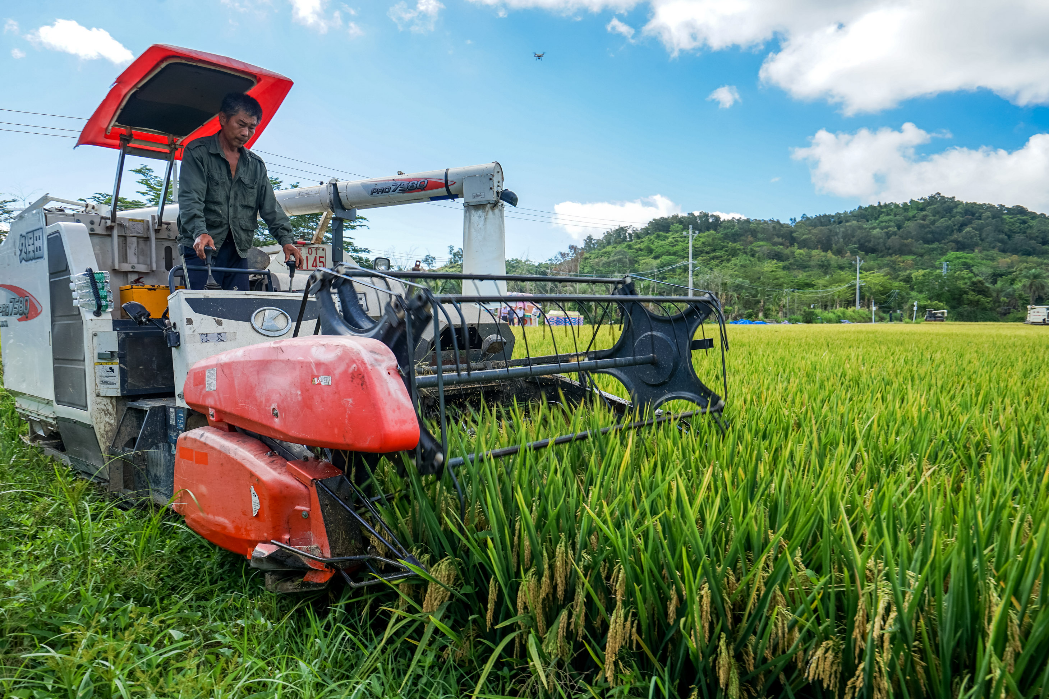
China forecasts higher grain output, lower soybean imports in 2026
Released on April 20, 2026, the latest China Agricultural Outlook (2026–35) report has laid out a clear trajectory for the country’s agricultural sector over the coming decade, projecting modest growth in domestic grain output this year alongside a rare drop in imports of key bulk agricultural commodities such as soybeans.
According to the report, which is compiled annually by the agricultural market analysis and early-warning team of China’s Ministry of Agriculture and Rural Affairs, China’s total grain output is set to reach 716 million metric tons in 2026, marking a 0.2 percent year-on-year increase. Driven by ongoing gains in crop productivity, national average grain yield is expected to cross the 6,000 kilograms per hectare threshold this year, while output of oil-bearing crops will climb 2.6 percent to hit 42.04 million tons.
“Large-scale improvements in crop productivity will continue to support stable grain supply,” noted Xu Shiwei, director of the Ministry of Agriculture and Rural Affairs’ key laboratory for agricultural monitoring and early warning technology. This domestic production growth is translating to a shifting trade landscape: the report forecasts a 6.1 percent year-on-year decline in soybean imports for 2026, the first such drop recorded in recent years. Other major agricultural imports are also set to shrink, with pork imports projected to fall 8.2 percent and dairy imports down 4.1 percent. At the same time, exports of China’s competitive high-value agricultural products are expanding, with 2026 vegetable exports forecast to rise 6.4 percent and fruit exports up 5 percent.
Even with these projected import declines, the report emphasizes that global agricultural markets will remain an important complementary source of supply for China. Imports of products such as poultry, for example, are still expected to climb this year.
The report also frames the strengthening of domestic production as a strategic response to growing global uncertainty. Li Ganqiong, head of the agricultural monitoring and early-warning research center at the Chinese Academy of Agricultural Sciences, pointed to rising geopolitical risks, including ongoing conflicts in the Middle East, that have driven up global energy prices, fertilizer costs and international shipping expenses. These disruptions have increased volatility in global agricultural production and trade, creating heightened risks to global food security, Li explained. Strengthening domestic output, he added, remains a critical buffer against these external shocks.
Looking ahead to 2035, the report projects steady long-term growth in China’s grain output, which is forecast to reach 733 million tons by 2030 and 753 million tons by 2035. Over the coming decade, average grain yield per hectare is expected to increase by 6.3 percent. National grain consumption is projected to grow slowly before peaking at 842 million tons around 2032, after which it will stabilize and see a gradual decline.
As domestic productivity and international competitiveness of China’s agricultural sector continue to improve, the country’s reliance on imports for major agricultural commodities will gradually decrease, Xu said. By 2035, total grain imports are projected to fall to 115 million tons, a 25.5 percent drop from the 2023–2025 average. Soybean imports will decline to 82.55 million tons over the same period, a 21.5 percent reduction from recent averages.
The report also lays out long-term projections for other key agricultural sectors. China’s dairy industry will see steady expansion, with domestic milk production forecast to reach 45.07 million tons by 2030 and 51.17 million tons by 2035, an average annual growth rate of 2 percent, driven by rising consumer demand for fresh milk and growing use of cheese and butter in processed foods. The pork sector, by contrast, will see a gradual production decline over the next decade as it transitions from rapid expansion to a focus on higher-quality, more efficient production, with output reaching 55.11 million tons by 2035, an average annual decline of roughly 0.5 percent.
First launched in 2014, the annual China Agricultural Outlook report has become a foundational reference for tracking Chinese agricultural trends, supporting market forecasting and informing national agricultural policy planning, the ministry noted.
-
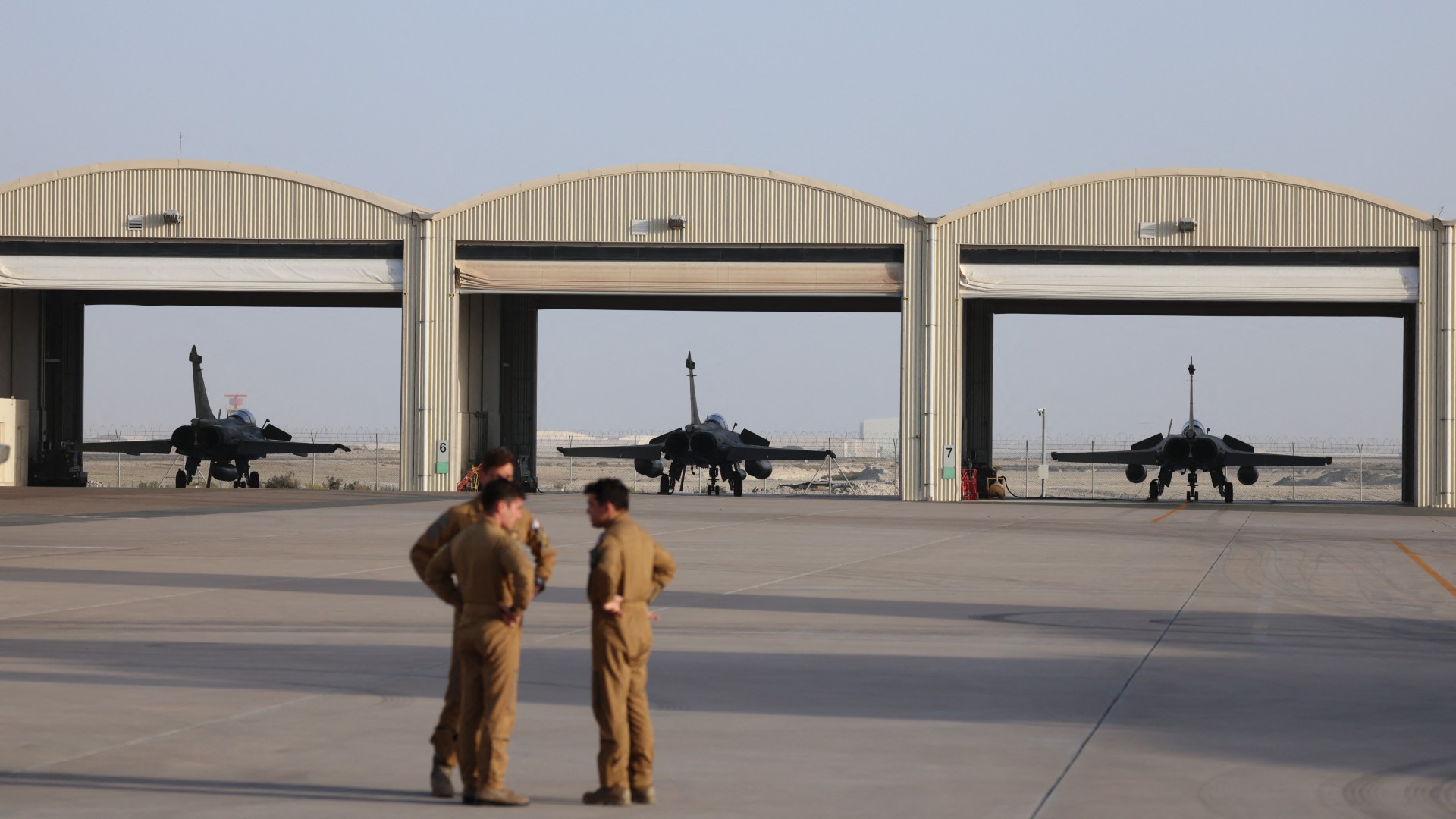
Senior UAE scholar says US bases are ‘a burden and not a strategic asset’
Against a backdrop of escalating regional conflict that has inflicted severe economic and security damage on the United Arab Emirates, a senior Emirati academic with close ties to the country’s leadership has sparked renewed debate over the future of U.S. military presence in the Gulf by calling on Abu Dhabi to shutter all American bases, arguing they have become a liability rather than a strategic advantage.
Abdulkhaleq Abdulla, one of the UAE’s most prominent public scholars, first shared the position in an interview with Reuters, before doubling down on the claim in a post on the social platform X on Sunday evening. Abdulla argued that the UAE has evolved beyond its reliance on U.S. security guarantees, pointing to the country’s capable defense against waves of Iranian attacks in recent months. “The UAE no longer needs America to defend it, as it has proven during the Iranian aggression that it is capable of defending itself with distinction,” Abdulla wrote. He added that the UAE’s only remaining priority for its defense partnership with Washington is access to the United States’ most advanced military hardware, not permanent basing for foreign troops. “Therefore, it is time to think about closing the American bases, as they are a burden and not a strategic asset,” he concluded.
The proposal comes amid a wider reevaluation of U.S. military posture across the Middle East. According to data from the Council on Foreign Relations, the U.S. maintains at least 19 military sites across the region, eight of which are classified as permanent installations. Prior to the outbreak of the current regional war, U.S. defense officials estimated there were roughly 40,000 American troops deployed across the Middle East. Around 3,500 of those personnel are stationed in the UAE, which hosts the strategic al-Dhafra Air Base, a joint facility used by the U.S., UAE, and French militaries.
The current conflict, which began on February 28 with joint Israeli and U.S. strikes on Iran, has triggered retaliatory attacks from Tehran targeting Israel and Gulf states that support Washington’s regional agenda. The UAE has borne the brunt of these retaliatory strikes, facing hundreds of drone and missile attacks since the war began. By late March, Iranian forces had launched 398 ballistic missiles, 1,872 drones, and 15 cruise missiles targeting positions across the UAE.
While the vast majority of incoming projectiles have been intercepted by UAE defense systems, falling debris has still caused damage to key civilian and economic infrastructure in major Emirati cities including Abu Dhabi and Dubai. Affected sites include iconic landmarks such as the Burj Al Arab hotel and the Palm Jumeirah development, as well as critical infrastructure like Dubai International Airport and the Fujairah oil industrial zone.
Beyond physical damage, the wave of attacks has triggered the UAE’s most severe economic crisis in decades. The country’s economy is built largely on four sectors that are acutely vulnerable to security instability: tourism, real estate, logistics, and international finance. Over the past few weeks, combined market capitalization on the Dubai and Abu Dhabi stock exchanges has fallen by more than $120 billion. More than 18,400 commercial flights to and from Emirati airports have been canceled as airlines reroute services to avoid the conflict zone. By the end of March, Dubai’s key real estate index had dropped by at least 16% since the start of the war, erasing billions of dollars in property value as investor and buyer confidence plummeted.
This report was originally published by Middle East Eye, a media outlet that provides independent, on-the-ground coverage of the Middle East, North Africa, and broader global affairs.
-
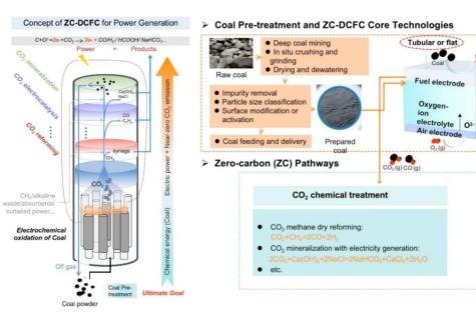
Chinese researchers propose near-zero-emission coal power technology
As global energy systems grapple with the dual challenge of meeting rising power demand and cutting greenhouse gas emissions, a team of Chinese researchers has introduced a groundbreaking new approach to coal-based power generation that promises near-zero carbon dioxide output. The innovation, led by Xie Heping, an academician of the Chinese Academy of Engineering and professor at Shenzhen University, was officially published in the academic journal *Energy Reviews* on Thursday, according to an official statement released on the university’s website.
Traditional coal-fired power generation relies on thermal combustion to heat water into steam, which then drives turbines to produce electricity. This centuries-old approach is inherently inefficient, and it releases massive volumes of carbon dioxide that drive climate change. By contrast, the new zero-carbon-emission direct coal fuel cell (ZC-DCFC) technology skips the combustion step entirely. Instead, it converts the chemical energy stored in coal directly into electrical power through a controlled electrochemical oxidation reaction, eliminating the carbon emissions associated with burning fuel.
For decades, coal has remained the backbone of global energy supply, meeting roughly one-third of the world’s total energy demand even as renewable energy capacity expands rapidly. Current leading advanced coal power technologies, such as Integrated Gasification Combined Cycle (IGCC), top out at energy conversion efficiencies of around 45 percent, and still produce more than 800 grams of CO2 for every kilowatt-hour of electricity generated, according to the research team’s analysis.
The research team began developing the ZC-DCFC concept in 2018, and over eight years of iterative development, they have delivered key breakthroughs in three critical areas: high-performance reaction materials, specialized pre-treatment for coal fuel, and optimized electrode design that enables stable, efficient power output. Beyond cutting emissions, the technology opens new possibilities for utilizing coal resources that were previously considered uneconomical or high-impact to develop. As easily accessible shallow coal reserves are gradually depleted around the world, the innovation could unlock deep underground coal deposits while transforming coal from a major climate liability into a fundamentally cleaner energy source to support the global energy transition.
-

Live stream for good, prosperity for Xinjiang
Launched in 2022, the Taste Xinjiang brand has emerged as a transformative force in connecting the northwestern Chinese region’s rich agricultural resources to domestic and global consumers, built on a core commitment to product quality and sustainable development. Far more than a commercial label for local farm goods, the initiative has evolved into a key driving force behind rural revitalization and inclusive economic growth across Xinjiang, opening new income streams for smallholder farmers and rural communities that previously faced limited access to outside markets.
At the heart of Taste Xinjiang’s success is its innovative integration of e-commerce livestreaming, a digital sales model that has revolutionized rural retail across China in recent years. By showcasing regional specialties directly from farmlands and production sites to online audiences, the brand has cut out intermediary layers, boosted profit margins for local producers, and helped build a reputation for Xinjiang’s premium agricultural products, from cotton and fragrant grapes to handcrafted snacks and organic nuts.
As of 2025, official data highlights the remarkable scale of the brand’s achievements through livestream e-commerce, marking three years of steady growth since its founding. The initiative has not only strengthened Xinjiang’s agricultural sector competitiveness but also aligned with national development goals to lift rural communities out of poverty and achieve shared prosperity, demonstrating how digital innovation can create tangible, long-term benefits for underdeveloped regional economies.
-

El Nino likely to form in coming months, raise global heat risk: China climate center
A new El Niño event, defined by anomalously warm sea surface temperatures across the central and eastern equatorial Pacific, has a high likelihood of developing in the coming months, potentially intensifying to moderate or stronger levels by the end of 2026, according to China’s National Climate Center. This development will amplify the risk of elevated global temperatures and an increase in extreme weather events across the planet.
Recent ongoing monitoring from the center confirms that sea surface temperatures in the key equatorial Pacific region have continued a steady upward trend, a defining early indicator that El Niño is already in the early stages of formation. Projections from the center indicate the Pacific will transition into official El Niño conditions around May 2026, with a moderate or stronger event expected to take shape between summer and autumn, persisting at minimum through the end of the calendar year.
The forecast comes amid widespread viral online speculation claiming the world could face the most intense El Niño event in 140 years, paired with predictions of unprecedented record-breaking global heat this year that has drawn broad public concern. However, Chen Lijuan, chief forecaster at the National Climate Center, emphasized that it is far too early to confirm that 2026 will see all-time high global temperatures.
“Taking into account the well-documented lagging effect of El Niño, it remains premature to conclude that the planet will hit a new extreme heat record this year. That said, the associated risks are clearly increasing,” Chen explained.
El Niño forms when sea surface temperatures across large swathes of the tropical Pacific rise far above long-term average levels. This ocean warming releases massive quantities of heat stored deep in the ocean into the atmosphere, driving a measurable rise in global average temperatures. When this additional warming overlays the long-term, human-caused trend of global warming, it makes heat waves more frequent, more intense, and longer-lasting, the center noted.
The full warming impact of an El Niño event typically emerges with a delay, with peak influence most often felt in the calendar year following the event’s formation. “For this reason, we cannot yet confirm whether 2026 will see record-breaking heat,” Chen added.
Wang Yaqi, a senior engineer at the National Climate Center, pointed out that stronger El Niño events carry far-reaching negative impacts across global economies, energy infrastructure, and public health, as they are closely linked to more frequent extreme heat, severe droughts, and intense heavy rainfall events. For example, extreme flooding triggered by intense El Niño-driven rainfall can force hydropower facilities to reduce generation or shut down entirely, while prolonged drought conditions can also cut electricity output sharply across multiple generation types.
In the public health sector, shifts in rainfall and temperature patterns tied to El Niño can increase the transmission rate of a range of infectious diseases. Additionally, drought and sustained extreme heat raise the risk of destructive wildfires in vulnerable regions, Wang explained.
Crucially, the risks associated with El Niño do not stem from the climate pattern alone. Instead, harmful impacts typically emerge from the interaction of multiple overlapping climate factors, with El Niño acting as a triggering event within a broader climate system already altered by long-term global warming.
Climate science confirms that for every 1 degree Celsius increase in global average atmospheric temperature, the maximum moisture capacity of the air rises by roughly 7 percent. This basic physical effect means higher temperatures accelerate evaporation, worsening drought conditions in dry regions, while also increasing the probability of extreme rainfall and destructive flooding when precipitation does occur.
Looking ahead, the combination of long-term background global warming and additional warming driven by El Niño will raise the likelihood of compound extreme weather events, including more intense heat waves and abrupt, destructive shifts between prolonged drought and sudden heavy rainfall, Wang concluded.