标签: Asia

亚洲

  • S.H. Kim faces return to South Korea even if he qualifies for the Masters

    S.H. Kim faces return to South Korea even if he qualifies for the Masters

    PONTE VEDRA BEACH, Fla. – While the Valero Texas Open typically represents the final gateway to the Masters for PGA Tour professionals, for South Korean golfer S.H. Kim, the tournament marks an entirely different threshold – the expiration of his travel visa and impending mandatory military service in his home country.

    Kim, who earned his PGA Tour card for the second time by finishing eighth on the Korn Ferry Tour points list, faces a career-defining moment at the Texas Open from April 2-5. Despite receiving a 90-day travel extension at the start of the year, the 27-year-old golfer must return to South Korea immediately following the tournament regardless of his performance, interrupting his professional golf career during what many consider an athlete’s prime competitive years.

    “I’m playing until Valero,” Kim stated through a translator. “Anything after that is a lot of factors going into play. I might come back again this year. First I have to go back to Korea.”

    The PGA Tour is actively developing a strategic plan to support Kim’s unique situation. Tour officials are finalizing arrangements that would grant Kim a medical extension while allowing him to compete on the Korea PGA circuit during weeks he would be ineligible for PGA Tour events (majors and signature tournaments). This approach aims to maintain his competitive edge ahead of September’s Asian Games, where a gold medal victory – either individually or as part of a team – would exempt him from military service requirements.

    Kim’s predicament reflects a challenging pattern for South Korean golfers. Previous professionals like Sangmoon Bae and Seung-yul Noh experienced significant career declines following their mandatory military service, with Noh’s return coinciding with the disruptive COVID-19 pandemic.

    The Asian Games have emerged as a critical opportunity for South Korean athletes, with professionals participating for the first time in 2023 (delayed one year due to pandemic restrictions). That year, Sungjae Im and Si Woo Kim teamed with two amateurs to secure team gold by a staggering 25-shot margin.

    Currently, Tom Kim and S.H. Kim rank as the leading South Korean players in the world ranking still facing conscription. While team selection remains undetermined, S.H. Kim expressed hope for inclusion, recognizing that only a gold medal achievement could facilitate his return to the PGA Tour this fall.

    The military service exemption stakes extend beyond the Asian Games, with Olympic medals also providing exemption eligibility. This heightened significance explains why Tom Kim expressed such disappointment after falling four shots short of bronze medal contention at the 2024 Paris Games.

    As Kim prepares for his final PGA Tour start before returning to South Korea, his situation highlights the complex intersection of international sports, national service requirements, and athletic career trajectories that extend far beyond typical tournament competition.

  • Former senior Chinese legislator indicted for taking bribes

    Former senior Chinese legislator indicted for taking bribes

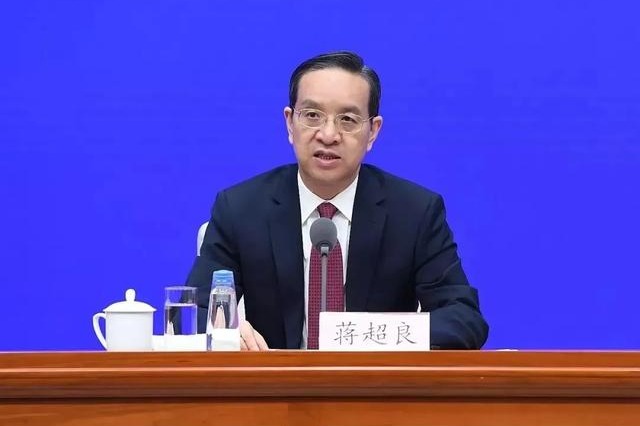
    In a significant development in China’s ongoing anti-corruption campaign, Jiang Chaoliang, a former high-ranking member of the National People’s Congress Standing Committee, has been formally indicted on bribery charges. The Supreme People’s Procuratorate announced on Tuesday that Jiang will face trial in Nanjing Intermediate People’s Court following a comprehensive investigation into his activities.

    The indictment alleges that Jiang exploited multiple positions of authority, particularly within China’s financial sector, to provide unlawful advantages to others in exchange for substantial monetary benefits and valuable gifts. The case represents one of the most prominent corruption proceedings against a senior legislative official in recent years.

    This legal action follows Jiang’s October 2025 expulsion from the Communist Party of China and dismissal from all public offices after investigators uncovered evidence of serious disciplinary and legal violations. The Nanjing municipal procuratorate, acting under directives from China’s highest prosecutorial authority, has completed its review and formally submitted the case to the judicial system.

    The prosecution underscores China’s continued commitment to its extensive anti-graft initiative, which has targeted officials at all government levels. Jiang’s case demonstrates the particular focus on financial sector corruption and the determination to pursue cases regardless of an official’s former status or political standing.

    Legal experts anticipate that the trial will proceed under standard judicial protocols, with the court expected to examine extensive evidence regarding the alleged bribery activities. The case marks another milestone in China’s systematic approach to addressing corruption within its political and financial systems.

  • Latest Beauty of Tianjin video showcases city’s urban spaces, aesthetic

    Latest Beauty of Tianjin video showcases city’s urban spaces, aesthetic

    A compelling new visual production from China Daily’s Tianjin Bureau has unveiled the multifaceted urban landscape of Tianjin, demonstrating how the municipality seamlessly blends historical preservation with contemporary design. The latest chapter in the ongoing ‘Beauty of Tianjin’ series presents an artistic journey through the city’s diverse public spaces, from centuries-old cultural landmarks and traditional streets to innovative creative districts and soaring modern skyscrapers.

    Through meticulously captured cityscape panoramas and detailed architectural examinations, the video documentation reveals Tianjin’s distinctive urban character. The production highlights how carefully designed public spaces—including revitalized parks, pedestrian-friendly thoroughfares, and culturally significant sites—contribute to the city’s unique aesthetic identity.

    The visual narrative creates a portrait of a dynamically evolving metropolis where historical preservation and modern innovation coexist in architectural harmony. This presentation offers viewers both local and international an immersive experience of Tianjin’s urban transformation, showcasing how the city has maintained its cultural heritage while embracing contemporary design principles that enhance quality of urban life.

    The production represents part of China Daily’s ongoing effort to document and showcase China’s urban development stories through multimedia storytelling, with contributions from journalist Ma Yucong complementing the visual presentation.

  • Sam Kerr lifts Australia past China 2-1 and into the Women’s Asian Cup final

    Sam Kerr lifts Australia past China 2-1 and into the Women’s Asian Cup final

    In a thrilling semifinal clash at the Women’s Asian Cup, Australia secured a hard-fought 2-1 victory against defending champions China on Tuesday in Perth. The match reached a tense deadlock in the second half before veteran Chelsea striker Sam Kerr delivered the decisive blow in the 58th minute. Kerr initiated the attacking movement from midfield before finishing with a precise left-foot strike from an acute angle, breaking the 1-1 halftime tie.

    The host nation established an early advantage when Caitlin Foord capitalized on a well-executed team effort in the 17th minute. The scoring sequence began with Mary Fowler combining with Ellie Carpenter on the right flank, culminating in Fowler’s cutback pass that Foord converted with clinical precision.

    China demonstrated resilience by equalizing in the 26th minute through Zhang Linyan’s penalty conversion. Zhang earned the spot-kick after capitalizing on a defensive error and drawing a foul from Australian goalkeeper Mackenzie Arnold inside the penalty area.

    Australia now advances to the championship match against the winner of Wednesday’s semifinal between Japan and South Korea, seeking their first continental title since 2010. All four semifinalists have automatically qualified for the expanded 2027 Women’s World Cup, while quarterfinalists will compete in playoffs for two additional guaranteed spots.

    In related developments, Iranian players Fatemeh Pasandideh and Atefeh Ramezanisadeh, who remained in Australia under protection visas following their team’s group-stage elimination, have joined training sessions with Brisbane Roar’s professional club. Social media images showed the athletes integrated with the women’s elite squad, marking their first public appearance since receiving asylum status.

  • Lukas prizes honor books on homelessness, the US Census and ancient India

    Lukas prizes honor books on homelessness, the US Census and ancient India

    The prestigious J. Anthony Lukas Prize Project has announced its 2024 laureates, recognizing exceptional nonfiction works that tackle profound social issues through rigorous research and narrative excellence. Administered through a partnership between Columbia Journalism School and Harvard University’s Nieman Foundation, these awards continue their tradition of celebrating investigative depth and literary merit.

    Jeff Hobbs received the Lukas Book Prize, accompanied by a $10,000 award, for his work ‘Seeking Shelter: A Working Mother, Her Children, and a Story of Homelessness in America.’ The selection committee praised the book for its compassionate examination of housing insecurity and its human impact on American families, highlighting its combination of meticulous research with compelling storytelling.

    The Mark Lynton History Prize, also carrying a $10,000 award, was presented to William Dalrymple for ‘The Golden Road: How Ancient India Transformed the World.’ The work received recognition for its groundbreaking exploration of India’s historical influence on global civilization, demonstrating both scholarly depth and narrative elegance.

    This year’s Lukas Work-in-Progress Awards, each providing $25,000 to support authors during their writing process, were granted to two distinctive projects: danah boyd for ‘Data Are Made, Not Found: A Story of Politics, Power, and the Civil Servants Who Saved the U.S. Census,’ which examines the bureaucratic challenges and political pressures surrounding the national census, and Karim Zidan for ‘In the Shadow of the Cage,’ a work whose subject matter continues the Lukas tradition of addressing complex social themes.

    Established in 1998 to honor the legacy of Pulitzer Prize-winning journalist J. Anthony Lukas, these awards have previously celebrated literary luminaries including Robert Caro, Isabel Wilkerson, and Jill Lepore, maintaining their position among the most distinguished recognitions in nonfiction literature.

  • Bridge as witness: Following journalist Du Juan’s 22-year journey through Beijing’s pulse

    Bridge as witness: Following journalist Du Juan’s 22-year journey through Beijing’s pulse

    For over two decades, the architectural landmarks spanning Beijing’s waterways have silently documented the remarkable evolution of China’s capital through the unique perspective of journalist Du Juan. Her professional journey, intricately intertwined with the city’s development, offers a compelling narrative of urban transformation and personal growth.

    Beginning her career during a period of rapid modernization, Du Juan has utilized Beijing’s bridge network—from the historical Xizhimen crossing to the contemporary marvels of Guomao and the expanding infrastructure in Tongzhou—as both physical landmarks and metaphorical devices to frame her reporting. These structures have served as constant witnesses to the city’s accelerating pace, facilitating movement while simultaneously connecting communities across generations.

    Through her extensive body of work, Du has captured the essence of Beijing’s socioeconomic changes, documenting how infrastructure development has shaped urban life, influenced cultural practices, and redefined the relationship between citizens and their environment. Her reporting provides a nuanced chronicle of how the city has balanced preservation with progress, maintaining cultural identity while embracing modernization.

    The bridges themselves tell a parallel story of engineering achievement and urban planning, representing the intersection of tradition and innovation that characterizes contemporary Beijing. From their architectural designs to their functional adaptations, these structures mirror the city’s journey toward becoming a global metropolis while retaining its historical significance.

    Du’s longitudinal perspective offers invaluable insights into the human experience within a rapidly transforming urban landscape, making her work not just a personal professional history but a significant document of urban development in 21st century China.

  • Asia braces for sweeping tariffs

    Asia braces for sweeping tariffs

    Multiple Asian economies are preparing for significant trade disruptions following the United States’ initiation of extensive Section 301 investigations, which could result in substantial tariffs on critical export sectors. This development comes in the wake of a landmark US Supreme Court decision on February 20 that declared “reciprocal tariffs” unlawful under current trade legislation.

    The investigations leverage Section 301 of the US Trade Act of 1974, which empowers the Office of the US Trade Representative (USTR) to examine allegedly unfair foreign trade practices. Upon identifying violations, the US government can implement tariffs or other trade restrictions to compel policy changes from trading partners.

    Malaysian Investment, Trade and Industry Minister Johari Ghani identified several vulnerable sectors including electrical and electronics, oil and gas, and plantation commodities such as palm oil. He emphasized that the Supreme Court ruling necessitates specific justification for tariffs rather than blanket impositions, stating that “if they claim it is due to trade surplus, they must specify the industry involved.”

    The USTR has launched two major investigations targeting 16 trading partners—including China, the European Union, Norway, Singapore, Cambodia, Indonesia, Malaysia, Bangladesh, Mexico, Japan and India—alleging structural excess capacity in manufacturing. A subsequent probe targets 60 economies over forced labor allegations.

    Singapore’s Ministry of Trade and Industry has challenged the factual basis of the investigations, noting significant discrepancies in trade data. While the USTR cited a $27 billion bilateral trade surplus for Singapore in 2024, official data from the US Bureau of Economic Analysis indicates Singapore actually maintained a trade deficit of approximately $27 billion with the United States.

    The investigations have drawn strong criticism across Asia. South Korea’s minor progressive Jinbo Party spokeswoman Son Sol condemned “the US’ unilateral act of aggression that shatters international trade order,” noting that the probes target key Korean sectors including automotive and semiconductor industries.

    Analysts from Singapore’s DBS Bank characterize the Section 301 moves as a “plan B” for the US administration following the Supreme Court’s rejection of reciprocal tariffs. The bank notes this approach aims to establish a more durable legal foundation for tariffs ahead of the July expiration of temporary global tariff measures.

    For smaller economies like Cambodia, where nearly 40% of exports destination is the US, the investigations highlight the urgent need for more resilient export strategies. Arnaud Darc, chairman of hospitality company Thalias, observed that “small economies rarely get to choose the moment their structural assumptions are tested.”

    In response to the trade pressure, South Korea’s National Assembly recently passed special legislation enabling $350 billion in US investments, fulfilling a commitment made previously in exchange for reduced tariffs. Trade Minister Yeo Han-koo emphasized that fulfilling investment promises represents the most effective approach to stabilizing tariff conditions.

  • China builds comprehensive groundwater monitoring system

    China builds comprehensive groundwater monitoring system

    China has successfully implemented a sophisticated nationwide automated groundwater monitoring infrastructure, representing a major advancement in environmental resource management. According to an announcement from the Ministry of Water Resources, this comprehensive system features extensive coverage across diverse groundwater types, complete monitoring parameters, and utilizes cutting-edge technology.

    Groundwater serves as an indispensable resource for China’s economic and social development while functioning as a strategic asset for maintaining ecological health. Between 2015 and 2020, Chinese authorities established more than 20,000 national-level groundwater monitoring stations, creating an integrated network capable of real-time surveillance and early warning capabilities specifically designed to combat groundwater over-extraction.

    The ministry reported significant environmental improvements resulting from sustained management efforts, including strict extraction controls and comprehensive protection measures. By the conclusion of 2025, groundwater levels across northern China demonstrated substantial recovery compared to 2020 benchmarks. Monitoring data revealed particularly impressive gains in managed areas, with shallow groundwater levels rising by an average of 3.76 meters and deep groundwater levels increasing by an average of 7.65 meters.

    This achievement represents a milestone in China’s environmental protection initiatives, demonstrating how technological innovation combined with rigorous policy implementation can produce measurable improvements in natural resource conservation. The automated system’s real-time capabilities provide unprecedented visibility into groundwater dynamics, enabling more responsive management of this critical environmental resource.

  • Sour soup from Guizhou makes a splash overseas too

    Sour soup from Guizhou makes a splash overseas too

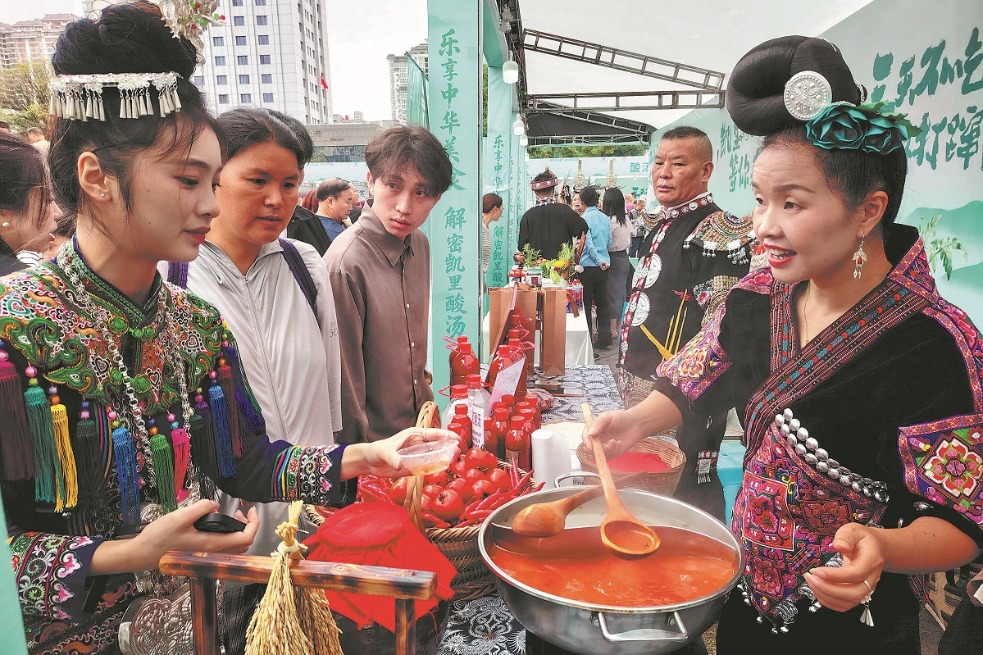
    What begins as an unfamiliar aroma evolves into an addictive culinary experience for those who dare to taste it. Kaili sour soup, a vibrant red delicacy from China’s Guizhou province, is captivating international palates while driving substantial economic growth in its native region.

    This traditional fermented soup, with roots stretching back over a millennium in the Qiandongnan Miao and Dong autonomous prefecture, represents both cultural heritage and culinary innovation. The signature red variation derives from natural fermentation of wild tomatoes (maolaguo) while the white version originates from rice. Blended with chili and litsea cubeba spices, the slow aging process yields a complex flavor profile—initially sour and spicy with a refreshing, subtly sweet finish.

    Deputy Zheng Peikun of the 14th National People’s Congress explains the historical context: ‘The tradition stems from times when salt was scarce, leading locals to develop fermentation techniques for seasoning. The saying goes: Three days without sour, and you’ll walk unsteady for sure.’

    Beyond its cultural significance as intangible cultural heritage, sour soup has evolved into an economic powerhouse. The Qiandongnan sour soup industry chain reached 8.15 billion yuan ($1.18 billion) in 2025, representing a staggering 221.4% year-on-year increase. This growth extends beyond China’s borders, with companies like Guizhou Yumeng Food Group exporting soup bases and instant rice noodles to Vietnam, Thailand, South Korea, Australia, the United States, Canada, and Spain, achieving 4.2 million yuan in export value.

    The international expansion continues through multiple channels. Restaurants featuring Guizhou sour soup have emerged in New York, Ho Chi Minh City, Bangkok, Phnom Penh, Kuala Lumpur, Madrid, and Melbourne. In Silicon Valley, restaurant operator Chen Yuzhu reports sour soup dishes as menu favorites. Innovative culinary fusions include sour soup-flavored spaghetti developed in collaboration with Milanese restaurants.

    During the recent National People’s Congress sessions, representatives highlighted the dish’s potential. NPC deputy Zhang Jizhi emphasized its health benefits as a natural source of probiotics and antioxidants that stimulate appetite and aid digestion. Provincial Party Secretary Xu Lin noted its visual appeal and refreshing qualities, advocating for broader national accessibility.

    The movement has gained organic momentum through events like the Village Super League soccer tournament, where foreigners’ initial hesitation transforms into enthusiastic adoption after tasting. Industry leaders like Chen Yang of Qiandaren Restaurant, which expanded to Ho Chi Minh City in January, recognize the dual appeal: satisfying homesick Chinese communities while aligning with local flavor preferences.

    With government support and growing international recognition, this traditional fermented soup appears poised for continued global expansion, carrying with it centuries of culinary wisdom and economic opportunity.

  • Scientists discover ‘baby star clusters’, offering new evidence for star formation

    Scientists discover ‘baby star clusters’, offering new evidence for star formation

    In a landmark astronomical discovery, researchers from China West Normal University have identified two exceptionally young star clusters located approximately 45,000 light-years from Earth in the peripheral regions of the Milky Way galaxy. Designated as Emei-1 and Emei-2, these celestial formations represent what scientists are calling ‘baby star clusters’ due to their remarkably recent emergence in cosmic terms.

    The findings, published in the prestigious journal Nature Astronomy, reveal that these clusters originated approximately 11 million years ago from a violent collision between two dense gas clumps within a high-velocity gas cloud streaming toward our galaxy. Associate Professor He Zhihong, the paper’s lead author, explained that the intense pressure generated by this cosmic impact created an extremely compressed environment that triggered the star formation process.

    What makes this discovery particularly significant is its challenge to conventional astronomical understanding. Previously, astronomers observing high-velocity clouds could detect only gaseous matter without any stellar components. The Emei clusters provide the first concrete evidence that such clouds can indeed foster star birth under specific extreme conditions, fundamentally altering scientific perspectives on stellar formation locations.

    Additionally, this breakthrough offers direct observational support for the theoretical framework suggesting that the Milky Way grows and nurtures new stars by accreting fresh gas from its intergalactic surroundings. The clusters’ distinctive blue coloration and exceptional brightness – characteristics of very young stars – further confirm their status as cosmic ‘newborns’ in the vast timeline of the universe.