标签: Asia

亚洲

  • Former Apple Daily staff plead for lighter sentences in landmark Hong Kong national security case

    Former Apple Daily staff plead for lighter sentences in landmark Hong Kong national security case

    In a pivotal courtroom proceeding that has drawn international scrutiny, former executives of the defunct pro-democracy publication Apple Daily appealed for reduced sentences on Tuesday. The case represents a critical juncture for assessing media freedoms in Hong Kong, once celebrated as Asia’s premier bastion of press liberty.

    The defendants, who entered guilty pleas in 2022 to conspiracy charges involving collusion with foreign entities, acknowledged participating in coordinated efforts with former media magnate Jimmy Lai to solicit international sanctions and hostile actions against Hong Kong and China. While Lai maintained his innocence throughout the proceedings, his December conviction heightened global concerns regarding the erosion of press freedoms under the national security framework.

    Government representatives have consistently reframed the narrative, asserting that the case fundamentally concerns national security violations rather than media suppression. Officials contend that the defendants systematically exploited journalistic activities as cover for actions detrimental to Chinese and Hong Kong interests.

    Six former Apple Daily executives face sentencing determinations, including publisher Cheung Kim-hung, associate publisher Chan Pui-man, and editor-in-chief Ryan Law. Several provided testimony during the extensive 156-day trial proceedings. The national security legislation stipulates penalties ranging from three years to life imprisonment for collusion convictions, though cooperative defendants may receive sentence reductions.

    During Tuesday’s hearing, defense counsel Marco Li advocated for Chan Pui-man’s sentence to be halved, citing her limited involvement, prompt guilty plea, and prosecutorial cooperation. The court learned that Chan remained professionally constrained due to health complications and financial pressures despite ethical reservations about certain organizational practices.

    The proceedings unfolded amid poignant personal circumstances, with Chan’s husband Chung Pui-kuen—a former senior editor at the shuttered Stand News—observing from the public gallery while serving a 21-month sentence for sedition.

    Apple Daily’s historical context reveals its evolution from a 1995 founding through its rise as an influential publication known for investigative reporting and animated video content. The newspaper’s openly critical stance toward Hong Kong and Chinese authorities garnered substantial pro-democracy readership, particularly during the 2019 anti-government protests when it published content supporting demonstration movements.

    Beijing’s implementation of the national security law triggered a series of enforcement actions against the publication, including arrests of key figures, asset freezes, and police operations that culminated in Apple Daily’s June 2021 closure. Its final edition achieved unprecedented circulation of one million copies.

    In their December ruling, three government-appointed justices determined that Lai had instrumentalized the newspaper as a vehicle for advancing his political objectives both before and after the security law’s enactment. Concurrent sentencing arguments for Lai, Cheung, and two non-Apple Daily activists proceeded Monday, with Lai exchanging emotional gestures with supporters during Tuesday’s courtroom appearance.

  • Gaza ‘board of peace’ will hold first meeting at Davos, Palestinian American intermediary says

    Gaza ‘board of peace’ will hold first meeting at Davos, Palestinian American intermediary says

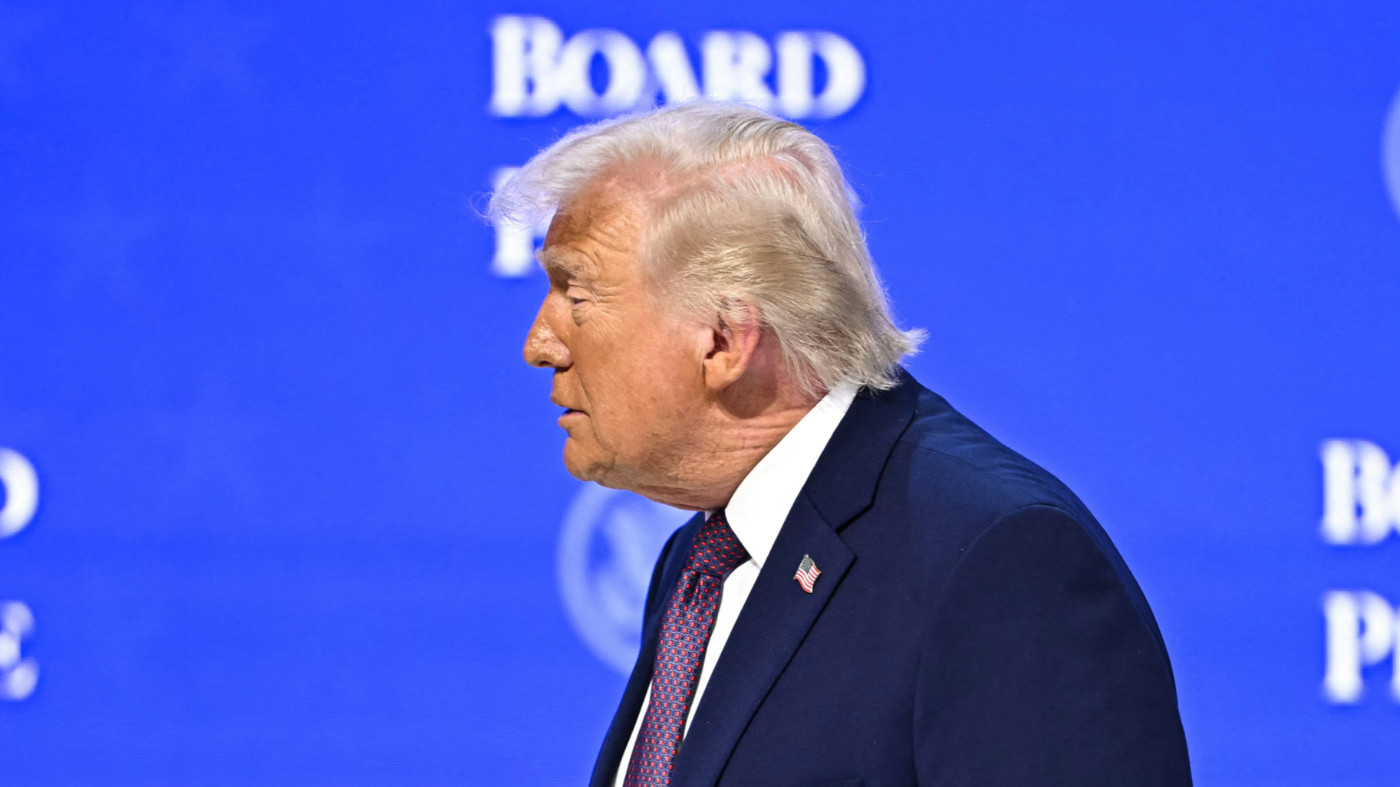
    A US-mediated Gaza peace initiative is poised for formal unveiling next week, with its inaugural session scheduled during the Davos Economic Forum. According to Bishara Bahbah, a Palestinian-American mediator with established connections to the Trump administration, the newly formed ‘Gaza Peace Council’ will convene on the sidelines of the international gathering in Switzerland later this month.

    Bahbah, who previously facilitated communications between Hamas and the White House and led the ‘Arab Americans for Trump’ coalition, disclosed these developments via social media. His instrumental role included negotiating the release of US-Israeli citizen Edan Alexander in May 2025.

    This diplomatic movement occurs alongside signs of progress for President Trump’s previously stalled peace initiative. The initiative has gained momentum with the appointment of Nickolay Mladenov, former United Nations Middle East envoy and Bulgarian diplomat, as the board’s executive director. Currently based in the UAE, Mladenov recently engaged in high-level discussions with Israeli Prime Minister Benjamin Netanyahu and Palestinian Authority Vice President Hussein al-Sheikh.

    The peace board’s structure will feature President Trump alongside other global leaders at its helm, operating in coordination with a committee of Palestinian technocrats in Gaza. Bahbah indicated that foundational entities responsible for overseeing Gaza’s reconstruction are expected to be established within thirty days, with Palestinian factions anticipated to meet in Cairo to announce an independent technocratic committee.

    Despite a ceasefire agreement brokered in October, the situation remains precarious with documented Israeli violations resulting in hundreds of Palestinian casualties. The UN Security Council’s November mandate for an international stabilization force faces implementation challenges, as potential contributing nations express reluctance to operate between Hamas and the Israeli military.

    Complicating matters further, Israel has moved to withdraw recognition from international aid organizations operating in Gaza, alleging hostility. This contradicts the US-guaranteed ceasefire agreement, which specifically ensured unimpeded aid delivery through UN agencies and the reopening of the Rafah border crossing—a commitment that remains unfulfilled.

  • Former Navy sailor sentenced to 16 years for selling information about ships to Chinese intelligence

    Former Navy sailor sentenced to 16 years for selling information about ships to Chinese intelligence

    A federal court in San Diego has delivered a substantial prison sentence to a former U.S. Navy engineer convicted of espionage for China. Jinchao Wei, 25, received a 200-month (16.6-year) prison term following his August conviction on six counts of transmitting sensitive military intelligence to Chinese operatives.

    Court documents reveal Wei, who served as an engineer aboard the amphibious assault ship USS Essex, systematically provided classified technical manuals and operational details to an intelligence officer posing as a naval enthusiast. The elaborate scheme unfolded over 18 months beginning in 2022, during which Wei transferred approximately 60 technical manuals covering weapons control systems, aircraft operations, and deck elevators—all containing export control warnings.

    Despite acknowledging suspicions about his contact’s true identity, Wei continued the relationship after moving communications to an encrypted platform he believed offered greater security. Evidence presented at trial showed he received over $12,000 in compensation for providing photos, videos, and real-time location data concerning Navy vessels, including detailed information about the Essex’s defensive capabilities.

    The case represents one of several recent prosecutions highlighting concerns about Chinese intelligence operations targeting U.S. military secrets. In a related case, Wenheng Zhao, another California-based sailor, received a two-year sentence after pleading guilty to similar charges.

    Before sentencing, Wei submitted a letter to the court expressing remorse, attributing his actions to ‘introversion and loneliness’ that clouded his judgment. The USS Essex, capable of transporting over 2,000 Marines during amphibious assaults, represents critical U.S. naval power projection capabilities that foreign intelligence services actively seek to understand.

  • Asian shares mostly rise and Tokyo hits a record, tracking fresh highs on Wall Street

    Asian shares mostly rise and Tokyo hits a record, tracking fresh highs on Wall Street

    Asian financial markets experienced a broad upswing on Tuesday, with Japan’s benchmark index leading the charge following record-breaking performances on Wall Street. The trading session saw mixed movements in U.S. futures and moderate gains in oil prices.

    Japan’s Nikkei 225 index soared dramatically, climbing 3.1% to reach an unprecedented intraday peak of 53,814.79 as markets reopened after a national holiday. This remarkable surge was primarily fueled by substantial advances in technology stocks. Leading the rally, semiconductor testing equipment manufacturer Advantest witnessed an impressive 8.5% jump, while chip producer Tokyo Electron advanced 8.3%. Conglomerate SoftBank Group also contributed significantly to the market optimism with a 4.3% gain.

    Market analysts are closely monitoring political developments in Japan, where Prime Minister Sanae Takaichi is reportedly considering calling a snap election. This strategic move would potentially strengthen her administration’s mandate for implementing expanded government spending policies.

    Other Asian markets demonstrated varied performance. Hong Kong’s Hang Seng Index progressed 1% to reach 26,877.01, bolstered by the spectacular debut of Chinese chip designer GigaDevice Semiconductor, which skyrocketed 54% in early trading. Meanwhile, China’s Shanghai Composite experienced a marginal decline of less than 0.1%, settling at 4,163.84.

    South Korea’s Kospi achieved fresh intraday records with a 0.6% increase to 4,651.67. Australia’s S&P/ASX 200 advanced 0.8% to 8,830.60, and Taiwan’s Taiex rose 0.5%. India’s Sensex presented a contrasting picture, declining 0.3% amid regional optimism.

    The market enthusiasm occurred against the backdrop of ongoing tensions between U.S. President Donald Trump and Federal Reserve Chair Jerome Powell. Investors appeared to balance concerns about potential erosion of Fed independence against expectations that presidential pressure might accelerate interest rate reductions. The Justice Department’s subpoena of the Fed regarding Powell’s testimony about headquarters renovations has further complicated this relationship.

    Monday’s trading concluded with Wall Street achieving new milestones: The S&P 500 gained 0.2% to reach 6,977.27, the Dow Jones Industrial Average edged up 0.2% to 49,590.20, and the Nasdaq composite rose 0.3% to 23,733.90.

    In corporate developments, Alphabet Inc. (Google’s parent company) saw its market valuation exceed $4 trillion following Apple’s announcement of integrating Google’s Gemini technology to enhance its Siri virtual assistant. Conversely, credit card companies faced significant losses after President Trump proposed implementing a one-year, 10% cap on credit card interest rates, potentially impacting industry profitability. Synchrony Financial dropped 8.4%, Capital One Financial declined 6.4%, and American Express decreased 4.3%.

    Commodity markets showed mixed activity with gold prices dipping 0.2% while silver advanced 0.8%. Currency markets witnessed the dollar strengthening to 158.72 yen from 158.07 yen, trading near yearly highs, while the euro slightly weakened to $1.1666 from $1.1667.

  • This Week in Golf: DP World Tour launches 2026 with Invitational Open at the Creek

    This Week in Golf: DP World Tour launches 2026 with Invitational Open at the Creek

    The international golf calendar commences its 2026 campaign with significant focus directed toward the Middle East as three major tours resume competitive play. Dubai Creek Golf & Yacht Club serves as the prestigious venue for the DP World Tour’s season-opening Dubai Invitational, marking both the inaugural event of the International Series and the fifth tournament in an expansive 42-event season spanning 2025-2026.

    Tournament dynamics feature a distinctive Pro-Am format, with 60 professionals partnering with 60 amateur competitors across the initial three rounds before professionals contend individually in the final round. The field boasts exceptional star power with headline participants including world-class athletes Rory McIlroy and Dubai resident Tommy Fleetwood, who finished first and second respectively in the event’s previous edition.

    Parallel tour activities see the PGA Tour initiating its season at the Sony Open in Hawaii following delayed scheduling caused by irrigation complications at originally planned venues. Simultaneously, the Korn Ferry Tour launches with an unconventional Sunday start at the Bahamas Great Exuma Classic, featuring promising Dubai-born contender Rayhan Thomas.

    The competition welcomes several players returning from injury layoffs throughout 2025, including Paul Waring, Richard Mansell, Johannes Veerman, Julien Guerrier, Ewen Ferguson, Thorbjørn Olesen, and Tom McKibbin. Local knowledge may provide competitive advantage for the substantial contingent of Dubai-based professionals who have utilized regional practice facilities for pre-tournament preparation.

    As a special event on the DP World Tour calendar, the invitational features a restricted professional field alongside numerous UAE-based amateur participants. Tournament organizers encourage amateur competitors to embrace the experience without excessive pressure, emphasizing the recreational spirit of the event. Admission remains complimentary throughout all four tournament days, with additional information available through official DP World Tour digital platforms.

  • Trump Organization and Saudi developer unveil $10bn in projects

    Trump Organization and Saudi developer unveil $10bn in projects

    The Trump Organization has significantly expanded its partnership with Saudi Arabian real estate developers through two major projects valued collectively at approximately $10 billion. This expansion represents one of the family business’s most substantial international ventures during Donald Trump’s political career.

    Dar Global, a subsidiary of the Saudi development giant Dar al-Arkan with close government ties, officially launched Trump Plaza Jeddah on Monday. The $1 billion project will feature luxury apartments, premium office spaces, exclusive townhouses, and a private park. According to company statements, the development aims to create a ‘carefully curated urban ecosystem’ targeting global residents seeking premium living and working spaces in Jeddah.

    Simultaneously, the Trump Organization and Dar al-Arkan revealed plans for a separate massive golf resort spanning 2.6 million square meters in Diriyah, located outside Riyadh. This historic area, recognized as a UNESCO World Heritage Site and the ancestral home of the Saudi royal family, is undergoing a comprehensive $63 billion transformation into a luxury destination.

    Eric Trump, representing the family business, emphasized the organization’s ‘commitment to world-class quality and iconic design’ through these ventures. He specifically noted the Trump family’s ‘confidence in Jeddah as a dynamic, globally relevant city.’

    These developments coincide with Saudi Arabia’s broader economic strategy to attract foreign investment across multiple sectors, including real estate. In January, the kingdom announced policy changes allowing non-Saudis to purchase property in major cities like Riyadh and Jeddah, signaling a significant shift in its approach to foreign ownership.

    The Trump Organization operates internationally primarily through licensing agreements, where foreign developers pay substantial fees for the right to use the Trump brand. According to financial reports, Dar Global’s licensing arrangement generated $21.9 million for the Trump family business last year alone.

    These business dealings have drawn scrutiny due to their timing amid Donald Trump’s political activities. While the former president has denied personally benefiting from his family’s international ventures, critics have raised concerns about potential conflicts of interest given his political connections to Gulf governments.

    The Saudi partnership represents the Trump Organization’s most significant overseas collaboration, with additional projects underway in Oman (a golf course and luxury hotel), Qatar (Trump International Golf Club and villas), and the UAE (an 80-story Trump hotel featuring ‘the highest outdoor pool in the world’).

  • Japan-South Korea summit to discuss economy and regional challenges

    Japan-South Korea summit to discuss economy and regional challenges

    In a significant diplomatic move, South Korean President Lee Jae Myung touched down in Japan on Tuesday for a crucial summit with Japanese Prime Minister Sanae Takaichi. The high-stakes meeting, set against the backdrop of Nara’s ancient capital, represents a concerted effort to strengthen bilateral relations at a time when Tokyo faces escalating tensions with Beijing.

    The carefully orchestrated summit carries substantial political implications for Prime Minister Takaichi, who currently enjoys robust approval ratings despite her party holding a majority in just one parliamentary chamber. Political analysts suggest the meeting could provide strategic advantage amid growing speculation about a potential snap election aimed at consolidating parliamentary power.

    Nara, selected as the summit venue, serves as both symbolic and practical backdrop to the diplomatic engagement. The ancient city, renowned for its sacred deer population and UNESCO World Heritage sites, will host the leaders at Horyu Temple—an architectural marvel dating to the late 7th century that exemplifies the historical cultural exchange between Japan and the Korean Peninsula.

    This diplomatic engagement occurs against a complex geopolitical backdrop. Modern Japan-South Korea relations remain shadowed by historical tensions stemming from Japan’s 1910-1945 colonial rule of Korea, yet both nations have recently demonstrated willingness to transcend historical grievances in favor of pragmatic cooperation.

    Prime Minister Takaichi’s preparatory social media post captured the summit’s intended spirit: “I hope to further push forward Japan’s relations with South Korea in a forward-looking way as we meet in the ancient capital of Nara with more than 1,300 years of history.”

    The talks will address pressing regional security concerns, including China’s growing assertiveness and North Korea’s nuclear advancements. Both leaders face the additional challenge of navigating the unpredictable diplomacy of the Trump administration while responding to U.S. pressure to increase defense expenditures.

    Notably, the summit follows President Lee’s recent Beijing visit, where he engaged with Chinese leader Xi Jinping amid China’s escalating economic pressure against Japan. While acknowledging South Korea’s limited capacity to mediate between its neighbors, Lee emphasized the equal importance of relations with both Japan and China.

    Trade discussions will feature prominently, with South Korea seeking Japanese support for joining the Comprehensive and Progressive Agreement for Trans-Pacific Partnership. This would necessitate lifting import restrictions on products from Fukushima and adjacent prefectures—a sensitive issue given South Korean public health concerns dating to the 2011 nuclear disaster.

    Security cooperation under a U.S.-included trilateral framework remains another priority, though President Lee emphasized that “deep mutual trust” constitutes the foundational requirement for meaningful collaboration.

    Despite early concerns about potential ideological clashes between the left-wing South Korean leader and Japan’s security hawk prime minister, both administrations have demonstrated surprising willingness to prioritize practical cooperation over historical differences. Media reports suggest possible humanitarian collaboration regarding the recovery of remains from a 1942 mining accident that claimed 180 lives, predominantly Korean forced laborers.

  • Global breakthroughs and redemption stories shape LIV Golf Promotions’ 2026 wild cards

    Global breakthroughs and redemption stories shape LIV Golf Promotions’ 2026 wild cards

    The 2026 LIV Golf Promotions event at Florida’s Black Diamond Ranch culminated in a dramatic showcase of athletic excellence and personal redemption, ultimately determining the final three wild card selections for the upcoming season. Canadian golfer Richard T. Lee delivered a masterclass in consistency, dominating the field with a staggering 21-under-par total to secure a five-stroke victory and become the first Canadian to earn a spot in the LIV Golf League.

    Lee’s performance was characterized by relentless precision, carding rounds of 64, 66, 64, and 65 throughout the knockout stages and final shootout. His commanding lead established a formidable benchmark for the competition.

    Sweden’s Bjorn Hellgren authored a spectacular Sunday comeback, battling back from outside the top ten with a course-record-tying 64. Fresh off his victory at the Saudi Open, Hellgren demonstrated remarkable composure under pressure, opening with consecutive birdies and closing with four birdies in his final six holes to secure his position.

    The most narrative-rich qualification belonged to American Anthony Kim, who completed a remarkable professional resurgence. After returning from a 12-year retirement in 2024 only to face relegation, Kim’s persistent dedication to rebuilding his game culminated in his third season earning LIV Golf wild card status. His journey reflects profound personal determination amid significant professional challenges.

    These three qualifiers join International Series winners Scott Vincent and Yosuke Asaji to complete the five-player wild card group. All will compete throughout LIV Golf’s 13-event regular season, commencing with the February 4-7 season opener in Riyadh. Additionally, all top-ten finishers at Promotions earned playing privileges on the Asian Tour’s International Series for 2026.

  • The foreign intervention Iranians want is the lifting of sanctions, experts say

    The foreign intervention Iranians want is the lifting of sanctions, experts say

    A panel of Middle East scholars convened by the Quincy Institute for Responsible Statecraft has analyzed the ongoing protests in Iran, revealing complex dynamics that challenge Western perceptions. The demonstrations, now entering their third week with over 190 confirmed fatalities according to Iran Human Rights, stem primarily from domestic economic pressures rather than calls for foreign intervention.

    Mohammad Ali Shabani, editor of Amwaj newsmagazine, emphasized that most Iranians seek relief from crippling U.S. sanctions rather than regime change through external forces. “The vast majority of Iranians would welcome a deal that lifts the shadow of war and invites the removal of sanctions,” Shabani stated, noting that sanctions have paradoxically extended the Islamic Republic’s survival by hollowing out the middle class that could drive organic political change.

    European Council on Foreign Relations expert Ellie Geranmayeh highlighted the overlooked existence of Iran’s civil society, which has not advocated for foreign military strikes. She pointed to the government’s historical pattern of offering “gifts to the people” following major upheavals, such as subsidy maintenance after 2019 economic protests and social flexibility after the 2022 Women, Life, Freedom movement. However, Geranmayeh cautioned that current options appear more limited as “the system may have hit a ceiling under the current supreme leader.”

    Johns Hopkins professor Vali Nasr characterized the protests as a “genuine eruption of popular anger” but noted their lack of leadership and organization makes sustained momentum challenging. He dismissed claims that Reza Pahlavi, the exiled son of Iran’s deposed shah, directs the movement, stating he “came in late” without setting the agenda.

    The analysis revealed concerning external factors, with the Trump administration openly considering military options. Experts warned that such threats empower hardliners and trigger brutal crackdowns. Shabani noted the complex reality: while dismissing all unrest as foreign plots echoes regime rhetoric, ignoring explicit interventionist statements from U.S. and Israeli officials represents naivete.

    The situation has turned increasingly violent, with Iranian authorities reporting 25 mosques and 20 banks torched, plus approximately 100 security force deaths. This has created a two-way confrontation that risks alienating citizens who fear Syria-like collapse despite sharing protest grievances.

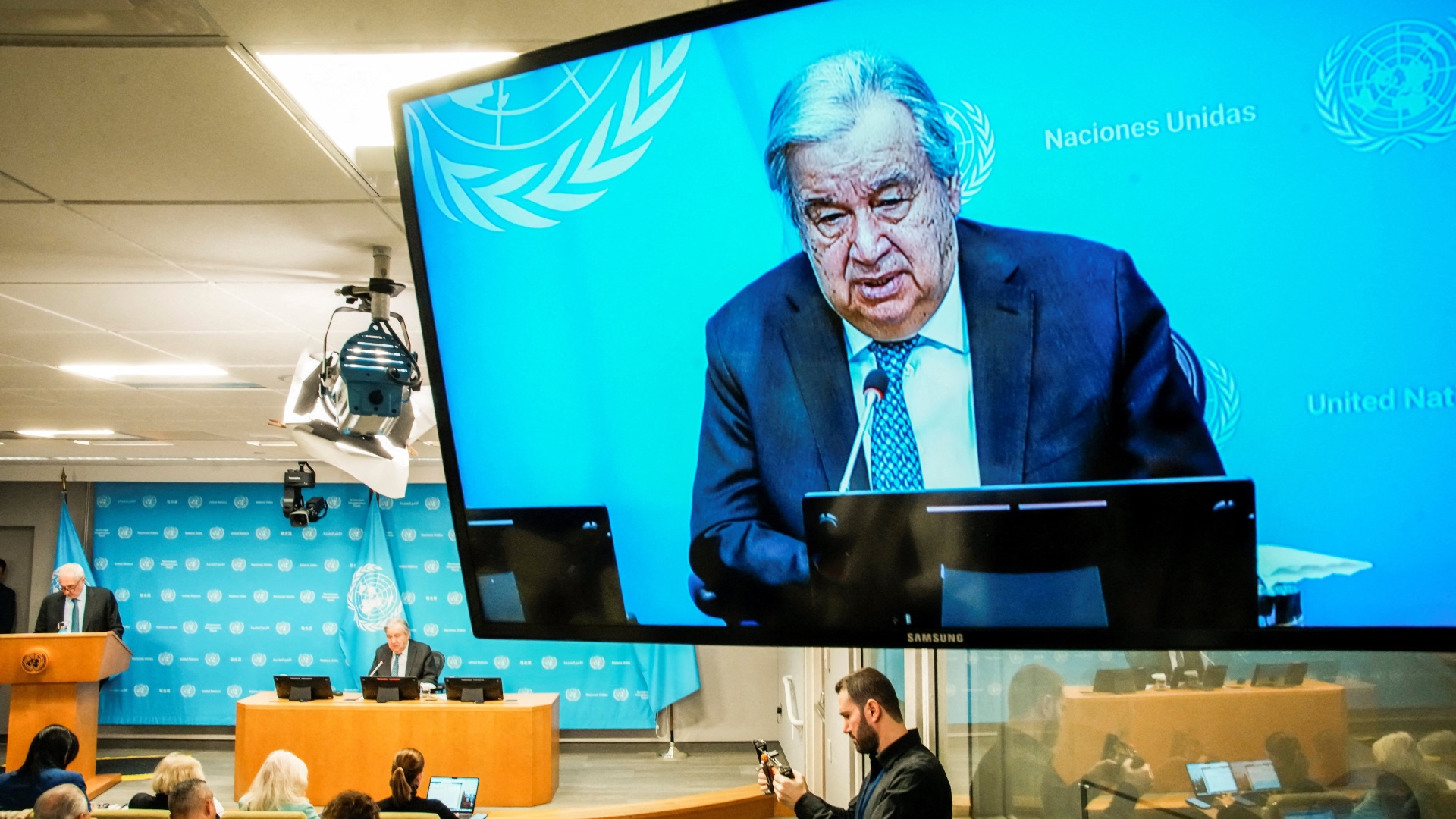
    As Iran entered its fourth day of a near-total internet blackout, UN Secretary General Antonio Guterres expressed concern about violence and excessive force, calling for restraint and internet restoration. The White House confirmed discussions with Elon Musk about Starlink access while maintaining that military options remain under consideration.

  • US may provide up to $2bn for Israeli tanks: Report

    US may provide up to $2bn for Israeli tanks: Report

    Newly disclosed documents indicate the United States is considering a substantial $2 billion military assistance package to support Israel’s armored vehicle production capabilities. According to reports from Haaretz newspaper, this funding would facilitate the establishment of a new armored vehicle manufacturing plant within Israel, significantly enhancing the nation’s military industrial capacity.

    The proposed investment would supplement America’s existing annual military aid of $3.8 billion to Israel, which operates under a decade-long bilateral agreement. The initiative specifically targets Israel’s “Armored Vehicle Acceleration Project,” a comprehensive five-year plan designed to expand Israel’s inventory of armored vehicles while accelerating production rates of Merkava battle tanks and both Namer and Eitan armored personnel carriers—all domestically developed military platforms.

    US Army Corps of Engineers presentations from October and November reveal potential American involvement in financing, planning, design, and construction phases of this strategic project. One presentation referenced exploration of “a multibillion-dollar Joint Systems Manufacturing Center (JSMC) project” as a “pivotal next step” for the program.

    This development occurs against the backdrop of substantial additional military support provided to Israel following the October 2023 attacks. According to Quincy Institute data, the US has delivered $21.7 billion in direct military assistance during the subsequent two years, excluding tens of billions in committed arms sales for future delivery.

    The potential $2 billion allocation may generate political controversy among certain factions advocating “America First” policies. The US Army has stated it currently maintains no formal JSMC program with Israel, directing inquiries regarding potential defense ministry programs to Israeli authorities.