A significant explosion triggered a massive blaze in the historic center of Utrecht, one of the Netherlands’ principal urban centers, on Thursday afternoon, resulting in at least four confirmed injuries. Emergency services rushed to the scene following the detonation, which ignited a ferocious fire that continued to rage for hours. Local municipal authorities confirmed to national broadcaster NOS that an emergency field hospital was rapidly established near the incident site to treat casualties and assist emergency responders. As of 4:30 PM GMT, the fire remained uncontained, with intense flames and structural instability preventing firefighters from entering the affected building to conduct search and rescue operations. The precise number of potential individuals still inside the structure remains unknown due to the ongoing dangers. Municipal officials have stated that the definitive cause of the explosion is currently under investigation, with no immediate determination available. The incident has drawn a substantial emergency response, with multiple fire crews, paramedics, and police units deployed to secure the area and provide assistance.
标签: Asia
亚洲
-

Iraq says will not allow use of its territories, airspace to threaten any country
In a significant geopolitical declaration, the Iraqi government has formally prohibited the utilization of its sovereign territories and airspace for conducting hostile operations against any neighboring countries. This decisive stance emerges amidst escalating regional tensions between the United States and Iran, particularly following Tehran’s severe response to widespread anti-government protests that commenced in late December.
The Coordination Framework, Iraq’s predominant political coalition, issued an official statement through the state news agency (INA) explicitly rejecting any attempts to transform Iraqi land into a launching platform for military strikes. The statement emphasized that such actions would constitute a gross violation of Iraq’s national sovereignty and potentially entangle the nation in destructive conflicts that contradict both its security interests and the welfare of its citizens.
Beyond sovereignty concerns, Iraqi authorities highlighted the region’s precarious economic condition, noting that additional military confrontations would be unsustainable given existing financial challenges and declining oil revenues. These economic pressures already create significant hardships for regional populations and jeopardize overall stability.
Reaffirming its commitment to peaceful resolution mechanisms, Iraq endorsed diplomatic and political approaches as the most effective methodology for crisis management. The government position maintains that dialogue preserves national sovereignty while protecting regional populations from the devastating consequences of armed conflict.
-

How realistic is India’s quest for magnets made of rare earths
India has launched an ambitious 73-billion-rupee ($800 million) strategic initiative to establish domestic production of rare earth magnets, aiming to reduce its critical dependence on Chinese supplies in this vital segment of the global supply chain. Approved in November 2025, this comprehensive scheme represents India’s calculated response to vulnerabilities exposed during recent trade tensions with China, which temporarily disrupted supplies to automotive and electronics manufacturers.
These powerful permanent magnets serve as essential components across multiple high-tech industries, including electric vehicles, wind turbines, smartphones, medical imaging equipment, and defense systems. Rather than attempting to develop a complete rare earth ecosystem—an enormously complex and capital-intensive undertaking—India is strategically focusing on magnet production as the most efficient path toward achieving meaningful self-reliance.
The program offers capital investment and sales-linked incentives to selected manufacturers targeting annual production of 6,000 tonnes within seven years. This production target aligns with projected domestic demand, which government officials anticipate will double within the next five years. Currently, India imports 80-90% of its magnets and related materials from China, which maintains overwhelming dominance with over 90% of global rare earth processing capacity. Official data reveals India imported approximately $221 million worth of these critical components in 2025 alone.
Despite substantial financial commitment, industry experts emphasize that monetary investment alone cannot guarantee success. India faces significant technological hurdles, as countries like Japan, South Korea, and Germany have spent decades refining their magnet production capabilities. Neha Mukherjee of Benchmark Mineral Intelligence notes: “This initiative represents a positive directional step, but merely a beginning. India will require strategic international partnerships to import technology, develop workforce expertise, and ultimately build indigenous capabilities.”
Raw material availability presents another formidable challenge. Although India possesses the world’s third-largest rare earth reserves (approximately 8% of global total), it accounts for less than 1% of worldwide mining output. Most reserves exist in coastal sands across Kerala, Tamil Nadu, Odisha, Andhra Pradesh, Maharashtra, and Gujarat. Currently, only one operational mine exists in Andhra Pradesh, whose output was predominantly exported to Japan until recent government intervention to prioritize domestic needs.
Furthermore, India’s mineral profile complicates production ambitions. While the nation has surpluses of lighter rare earth elements like neodymium, it lacks extractable quantities of heavier elements including dysprosium and terbium—critical components for high-performance magnets. This imbalance raises fundamental questions about whether domestically manufactured magnets might still rely on Chinese raw materials.
Competitive pricing represents another crucial consideration. Chinese magnets benefit from established economies of scale and lower production costs. Unless Indian manufacturers can achieve comparable pricing through government support and efficiency gains, imported magnets may continue dominating the market. Some experts suggest extending incentives to magnet purchasers alongside manufacturers to stimulate domestic adoption.
India joins a growing global movement seeking alternatives to Chinese rare earth dominance. The European Union, Australia, and other nations have launched similar initiatives following supply disruptions. As EY India specialist Rajnish Gupta observes: “The timing of China’s export controls surprised many nations, highlighting shared vulnerabilities in critical supply chains.”
Despite the multifaceted challenges, the program signifies India’s serious commitment to developing strategic autonomy in this crucial technological domain. As Dr. PV Sunder Raju of the National Geophysical Research Institute emphasizes: “Strong research and development foundations are essential—simply allocating funds cannot guarantee viable production.” Research facilities including a recently inaugurated unit at the Bhabha Atomic Research Centre and public-private partnerships aiming for 5,000-tonne annual production by 2030 demonstrate progress, though neither has yet reported commercial output.
The initiative’s success will ultimately depend on India’s ability to simultaneously master complex technologies, secure reliable material inputs, achieve competitive scale, and develop entire supply chain ecosystems. While the path forward remains challenging, as Mukherjee concludes: “If capacity scaling doesn’t occur, dependency persists. China continues expanding production—India must match this growth trajectory to achieve meaningful independence.”
-

Indian embassy issues safety advisory for its nationals in Israel amid regional tensions
The United States has implemented a new sanctions regime targeting senior Iranian officials believed to be responsible for the violent suppression of nationwide protests. This decisive action represents a significant escalation in diplomatic pressure against Tehran’s human rights record.
Concurrently, the Israeli Defense Forces conducted precision military strikes against multiple Hezbollah positions across southern Lebanon. The operations targeted what military officials described as terrorist infrastructure and launch sites that pose an immediate threat to Israeli security.
These parallel developments reflect the continuing volatility in Middle Eastern geopolitics, where internal civil unrest and cross-border tensions frequently intersect. The U.S. Treasury Department specifically identified several high-ranking figures within Iran’s security apparatus for their roles in quelling dissent through excessive force. Asset freezes and travel bans have been imposed on these individuals, effectively cutting them off from the global financial system.
Meanwhile, the Israeli military operations represent the most substantial engagement along the Lebanon-Israel border in recent months. Military analysts suggest these strikes constitute a proactive response to heightened threat levels from the Iran-backed militant group, which continues to maintain substantial arsenals along Israel’s northern frontier.
The geopolitical implications of these simultaneous actions highlight the complex interplay between domestic governance issues and regional security dynamics. Both developments underscore the ongoing proxy conflicts and ideological divisions that continue to shape the Middle East’s strategic landscape.
-

Wearable robots, newborn screening: How AI is transforming lives in the UAE
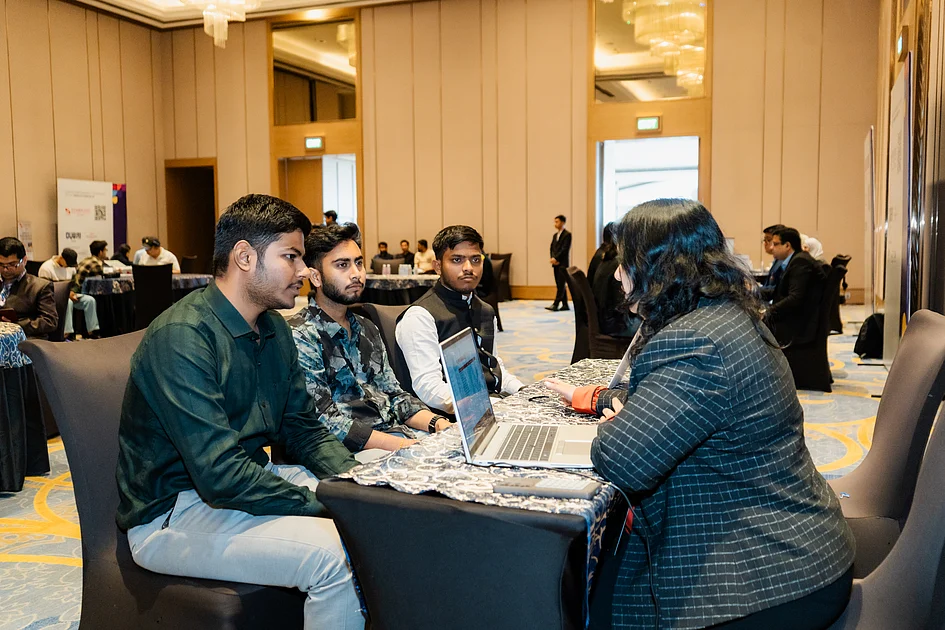
The United Arab Emirates is emerging as a global hub for transformative artificial intelligence applications, with groundbreaking initiatives in healthcare and bionic technology demonstrating the technology’s life-changing potential. At the forefront of this revolution is an AI-enabled genetic screening program for newborns, implemented in 2025, that identifies rare conditions during an infant’s first weeks of life—long before symptoms manifest. This proactive approach has already yielded remarkable success stories, with three cases identified in the program’s inaugural month alone, fundamentally altering medical outcomes from potential lifelong illness to healthy futures.
Ebtesam Almazrouei, CEO of AIE3 and chairperson of the UN’s AI for Good Impact Initiative, highlighted these achievements during the Dubai International Project Management Forum, emphasizing how AI, big data analytics, and machine learning represent innovation at its finest for healthcare services and medical research.
The technological showcase extended to wearable robotics, with MIT Media Lab Professor Hugh Herr presenting revolutionary brain-connected bionic limbs. These advanced prosthetics enable users to think, control, and feel sensory feedback from robotic limbs through electromechanical-biological fusion. Herr, a bilateral amputee who relies on bionics himself following a climbing accident, predicts that bionic hands will soon surpass the strength of biological counterparts.
Despite these extraordinary advancements, forum participants unanimously stressed the imperative of robust safeguards. Mohamed Al Kuwaiti, head of the UAE Government Cyber Security Council, outlined the nation’s approach to AI governance as an enabler of trust rather than a barrier. Emphasizing that “the first line of defence is still the people,” he detailed comprehensive cybersecurity strategies addressing evolved threats in cybercrime, cyberterrorism, and cyber warfare, with particular focus on protecting critical healthcare and energy infrastructure.
The forum, which gathered hundreds of international experts, also addressed regional talent development needs. Hanny Alshazly of the Project Management Institute noted the anticipated requirement for approximately 600,000 project management professionals in the MENA region by 2035, highlighting ongoing efforts to elevate standards and support community development in partnership with leadership.
-

US appeals court opens door to re-arrest Palestinian activist Mahmoud Khalil
A federal appeals court delivered a significant ruling on Thursday that could reignite the contentious legal battle surrounding Palestinian activist and green card holder Mahmoud Khalil. The Third Circuit Court of Appeals determined in a 2-1 decision that the district court judge who ordered Khalil’s release from immigration detention in June lacked proper jurisdiction over the deportation proceedings.
The ruling represents a substantial victory for the Trump administration while creating immediate uncertainty for Khalil’s immigration status. Although the decision doesn’t immediately reactivate detention orders, it opens the possibility of re-arrest once the ruling takes formal effect, pending potential appeals from Khalil’s legal team.
Central to the case are fundamental questions about free speech protections for non-citizens, particularly permanent legal residents. Khalil, who served as a lead negotiator during the Gaza war encampments at Columbia University in spring 2024, was arrested by ICE officers on March 8, 2025, despite not personally participating in the protests. He was transferred to a Louisiana detention facility 1,300 miles from his home, separating him from legal counsel and his pregnant wife.
During his 104 days in ICE custody, Khalil missed both the birth of his first child and his Columbia University graduation ceremony. The government’s deportation efforts relied on a rarely invoked provision of immigration statute—the “foreign policy ground”—with Secretary of State Marco Rubio determining that Khalil’s protected speech allegedly compromised compelling U.S. foreign policy interests.
Legal experts expressed concern that the appeals court declined to address First Amendment arguments while focusing solely on jurisdictional grounds. Bobby Hodgson, deputy legal director at the New York Civil Liberties Union, stated the decision “undermines the role federal courts must play in preventing flagrant constitutional violations.”
Khalil’s legal team is currently reviewing multiple appellate options, including seeking en banc review by the full Third Circuit court. The activist vowed to continue his legal fight, stating: “The door may have been opened for potential re-detainment down the line, but it has not closed our commitment to Palestine and to justice and accountability.”
-

Kuwait army concludes emergency drill for radioactive, biological, chemical incidents
The United States has implemented a new wave of sanctions targeting senior Iranian officials implicated in the violent suppression of domestic protests, according to an announcement from the Treasury Department. The sanctions specifically name multiple high-ranking leaders within Iran’s security apparatus and morality police units, freezing any U.S.-based assets and prohibiting American entities from conducting business with them.
Concurrently, the Israeli Defense Forces conducted precision airstrikes against Hezbollah operational sites across southern Lebanon. Military spokespersons confirmed the strikes targeted weapons depots, observation posts, and command centers belonging to the Iranian-backed militant group. The operations were characterized as defensive measures against perceived imminent threats along Israel’s northern border.
The dual developments highlight escalating tensions in the Middle East, where Iran’s internal governance conflicts intersect with its regional proxy warfare strategies. Washington’s sanctions reflect continued pressure on Tehran’s human rights record, while Israel’s military actions demonstrate ongoing security concerns regarding Iranian-sponsored militant activities near its borders.
Regional analysts note these simultaneous actions represent the complex multidimensional nature of Middle Eastern conflicts, where domestic governance issues frequently intertwine with international security concerns. The United States and Israel maintain coordinated strategies regarding Iranian influence, though officials stress these specific actions were independently timed.
-

Christian schools in Jerusalem suspend classes to protest at Israeli restrictions
Christian educational institutions in Jerusalem have initiated a significant escalation of protest measures, including widespread class suspensions and a comprehensive strike. This decisive action represents a forceful rejection of Israeli administrative policies that school administrators characterize as arbitrary and disruptive to their educational operations.
The catalyst for this educational crisis emerged when Israeli authorities implemented stringent restrictions on work permit renewals for educators residing in the West Bank. This bureaucratic intervention has created substantial staffing shortages, directly compromising the educational experience for thousands of students across Jerusalem’s Christian school system.
According to institutional data, these 15 Christian schools collectively educate more than 12,000 students while employing 820 educational professionals. Among these, 235 teachers holding West Bank identification cards issued by the Palestinian Authority have been particularly affected. These educators traditionally secured access through entry permits renewed at each academic term’s commencement.
At the beginning of the current term, the Israeli Civil Administration implemented a new permit protocol: outright denial for some educators, placement under administrative review for others, and issuance of restricted third-category permits valid only for specific weekdays for the remainder.
Ibrahim Faltas, Principal of Terra Sancta School in Jerusalem, revealed to Middle East Eye that the majority of West Bank teachers now lack comprehensive permits, specifically prohibiting their entry into Jerusalem on Saturdays—a regular school day within the Christian educational calendar. Faltas emphasized this represents an unprecedented administrative approach, noting that despite official assurances of resolution, numerous educators continue facing permit denials.
“The operational challenge is profound,” Faltas explained. “These West Bank teachers bring over two decades of invaluable classroom experience that cannot be readily replaced. Furthermore, we are confronting the potential economic devastation of 235 families whose livelihoods are now imperiled.”
Beyond their educational excellence, Jerusalem’s Christian schools maintain historical significance as among the city’s most prestigious institutions, maintaining affiliations with all Christian denominations in Jerusalem without exception.
Reverend Munther Ishaq, Pastor of the Evangelical Lutheran Church in Bethlehem, characterized the timing as revealing governmental hypocrisy. “While presenting themselves as protectors of Christian communities, they simultaneously undermine Christian education through permit restrictions,” he stated. Ishaq condemned the permit system as fundamentally unacceptable, arguing it perpetuates occupation dynamics and systemic injustice.
“The suggestion that military-issued permits constitute some form of generosity is offensive,” Ishaq continued. “We are indigenous people with two millennia of continuous worship in this land. Now we must secure military authorization to teach in schools that predate the Israeli state itself.”
Reverend Ishaq interpreted these developments as evidence of systematic targeting of Christian presence in Jerusalem, part of broader efforts to reshape the city’s religious character through Judaization policies.
Education analysts note this crisis occurs within a context of systematic challenges facing Jerusalem’s educational sector. These include forced curriculum changes, financial pressures through funding mechanisms, operational licensing complications, and infrastructure neglect resulting in severe classroom shortages.
According to the Faisal Husseini Foundation, which specializes in Jerusalem education statistics, the city requires approximately 80 new classrooms annually to accommodate population growth. Israeli authorities typically provide fewer than half this number, creating a cumulative deficit exceeding 10,000 school places.
Fakhri Abu Diab, a Jerusalem affairs researcher, argues Israel pursues a coordinated strategy to control educational content and institutional administration. “The ultimate objective appears to be reshaping student mentality and cultural awareness,” Abu Diab suggested. “This constitutes a comprehensive campaign against Arab educational culture throughout Jerusalem.”
-

Technocratic committee overseeing Gaza transition revealed
A newly formed technocratic committee tasked with overseeing Gaza’s transitional governance has been revealed, marking a significant development in the implementation of the ceasefire agreement to end hostilities in the region. The 15-member Palestinian committee will be led by Ali Shaath, former Palestinian deputy minister for planning, with oversight provided by Bulgarian diplomat Nickolay Mladenov, the former UN Middle East peace coordinator.
The committee’s formation follows Egypt’s Wednesday announcement that most Palestinian factions had reached consensus to support this technocratic governance structure, facilitating the second phase of the Gaza ceasefire plan. Mladenov is reportedly positioned to serve as high representative of a Donald Trump-led ‘Board of Peace’ responsible for monitoring the agreement’s implementation.
The committee features specialized appointments including Omar Shamali (Communications), Abdul Karim Ashour (Agriculture), Aed Yaghi (Health), and Aed Abu Ramadan (Industry and Economy). Additional appointments encompass Jabr al-Daour (Education), Bashir Al-Rayes (Finance), Ali Barhoum (Water and Municipalities), Hanaa Tarzi (Relief and Solidarity), and Adnan Salem Abu Warda (Judiciary). Completing the roster are Rami Tawfiq Helles (Endowments and Religious Affairs), Osama Hassan Al-Saadawi (Housing and Public Works), and Samira Helles (Energy and Transportation).
Notably, Hamas and Islamic Jihad have expressed agreement ‘to support the mediators’ efforts in forming the Palestinian National Transitional Committee to administer the Gaza Strip.’ Committee members were instructed to maintain confidentiality about their appointments to allow former President Trump to formally announce the initiative, according to Al-Araby Al-Jadeed reports.
The committee is expected to comprise Gaza-based figures with no political faction affiliations. Egypt is likely to host the committee’s inaugural meeting, with sources indicating coordination with Israeli authorities to facilitate travel for Gaza-based members. At least four prospective members have remained in Egypt since the conflict began.
The ceasefire agreement, which took effect in October, has faced implementation challenges due to continued hostilities. Palestinian health authorities report over 71,400 fatalities and 171,000 injuries since the conflict’s onset, with nearly 450 additional Palestinians killed since October amid ongoing restrictions on humanitarian aid access.
-

New Oceania soccer competition has a 2029 Club World Cup spot as the winner’s reward
A groundbreaking chapter in Pacific football commences this Sunday as Vanuatu United clashes with Fiji’s Bula FC in Auckland, marking the inaugural match of the Oceania Football Confederation Pro League. This revolutionary competition brings together eight elite clubs from seven Pacific nations—New Zealand, Tahiti, Papua New Guinea, Solomon Islands, Australia, Fiji, and Vanuatu—committing to an intensive schedule of至少 17 matches over three months.
The league addresses a critical void in Oceania’s football infrastructure, where individual nations have historically struggled to sustain professional domestic competitions. Stuart Larman, the league’s project manager, emphasized to Associated Press that this development eliminates the OFC’s distinction as the only FIFA confederation without a professional league among its members. ‘Players will now experience a substantial increase in highly competitive matches annually,’ Larman noted, ‘creating a professional environment that will accelerate career progression.’
The competition structure unfolds in two distinct phases: an initial round-robin stage where each team plays seven opponents twice across five host nations, followed by a grouping phase in New Zealand where the top eight teams split into two brackets. The ultimate prize includes qualification for the 2029 FIFA Club World Cup, offering both prestige and significant financial incentives.
Beyond competitive implications, the league promises to elevate technical standards across Oceania. Rob Sherman, head coach of Auckland-based South Island United, observes that ‘while New Zealand players are technically gifted, exposure to higher competitive standards will undoubtedly accelerate talent development.’
The venture also represents an economic innovation, pooling broadcasting and sponsorship resources across small markets. League organizers acknowledge expansion possibilities, contingent upon establishing strong organizational foundations at existing clubs. This model has already inspired similar cross-border discussions in the Baltic region and Southeast Asia, demonstrating how smaller football nations might leverage collective resources to compete on global stages.