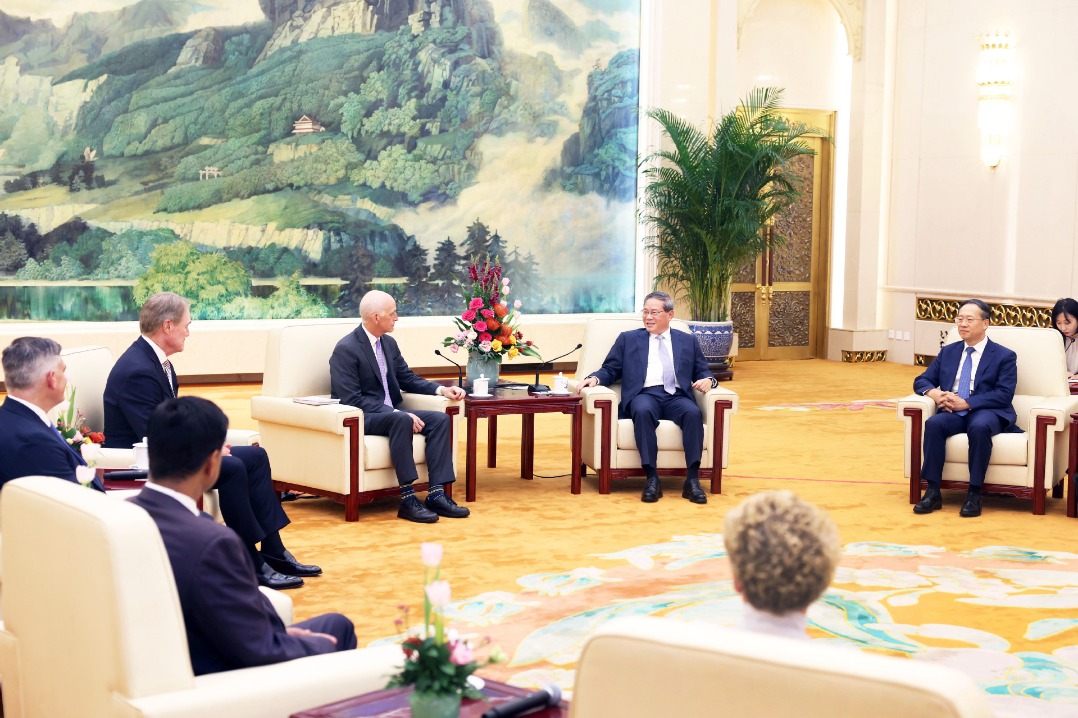
A recent visit by a US congressional delegation to China has been hailed as a significant step toward rebuilding trust and fostering dialogue between the two nations. Led by Representative Adam Smith, the top Democrat on the House Armed Services Committee, the delegation engaged in high-level meetings with Chinese leaders, including Premier Li Qiang, top legislator Zhao Leji, Vice-Premier He Lifeng, Foreign Minister Wang Yi, and Defense Minister Dong Jun. This marked the first such visit by US House lawmakers since 2019. The trip followed a constructive phone call between Chinese President Xi Jinping and US President Donald Trump, signaling a mutual desire to ease strained relations. During the meetings, Zhao Leji emphasized the importance of strengthening exchanges between the National People’s Congress and the US Congress, inviting more American lawmakers to visit China. Smith, speaking at a press briefing, highlighted the global significance of the US-China relationship, calling it the most consequential for the coming decades. He acknowledged natural disagreements but stressed the need for mechanisms to manage them. Analysts view the visit as a positive start, with institutionalized dialogue between legislatures benefiting both nations. Experts like Lyu Xiang and Li Haidong noted that such engagements foster a more objective understanding of China and underscore the strategic leadership of the two heads of state in guiding bilateral relations. A stable US-China relationship, they argue, aligns with the interests of both countries and the international community.
标签: Asia
亚洲
-
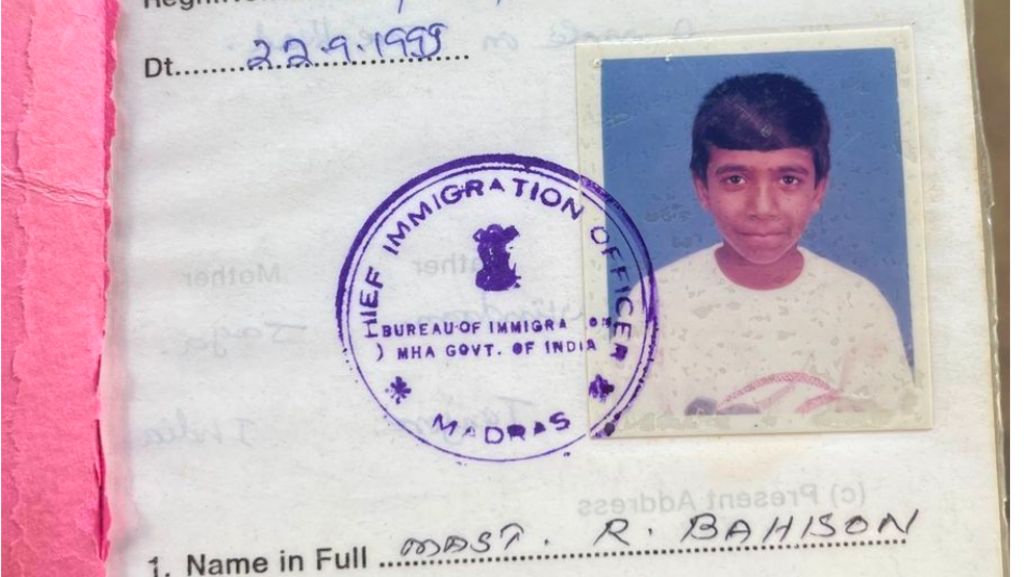
Born in India, but not Indian: ‘Stateless’ man fights for citizenship
Bahison Ravindran, a 34-year-old web developer born in Tamil Nadu, India, to Sri Lankan refugee parents, has found himself in a legal limbo after being declared ‘stateless’ by Indian authorities. Despite holding an Indian passport and various government-issued identity documents, Ravindran was arrested in April for possessing an ‘invalid’ passport. Authorities cited a 1987 amendment to India’s citizenship law, which mandates that at least one parent must be an Indian citizen for a child born after July 1, 1987, to qualify for citizenship by birth. Ravindran, born in 1991, was unaware of this rule and has since applied for citizenship through naturalisation. His case highlights the struggles of thousands of Sri Lankan Tamil refugees in India, many of whom fled during the island nation’s civil war in the 1980s. Over 90,000 Sri Lankan Tamils reside in Tamil Nadu, with more than 22,000 born in India after 1987 facing similar citizenship challenges. India’s refusal to sign the 1951 UN Refugee Convention and the exclusion of Sri Lankan Tamils from the 2019 Citizenship Amendment Act (CAA) have exacerbated their plight. Ravindran, who recently married a Sri Lankan woman, hopes his case will prompt a resolution. His lawyer, Sandesh Saravanan, argues that Ravindran’s passport was issued after police verification, yet the Foreigners Regional Registration Office (FRRO) flagged his parents’ origins, leading to his arrest. The Madras High Court has temporarily barred authorities from taking coercive action until the next hearing on October 8. Ravindran’s story underscores the broader issue of statelessness among Sri Lankan Tamil refugees in India, a problem that remains unresolved despite political promises.
-

In pictures: India’s Kolkata sees worst rains in 39 years
Kolkata, the capital of India’s West Bengal state, is reeling from its heaviest rainfall in nearly four decades, resulting in widespread flooding, loss of life, and significant disruptions to daily life. The torrential downpour, which brought 251.4mm of rain in less than 24 hours, marks the city’s most severe deluge since 1986 and ranks as the sixth-highest single-day rainfall in the region over the past 137 years. The extreme weather, attributed to a low-pressure system over the north-east Bay of Bengal, has claimed at least 10 lives, with nine fatalities caused by electrocution in stagnant water. Residential areas and businesses across the city and its suburbs have been severely affected by waterlogging, with key roads submerged and train services halted, forcing commuters to navigate knee-deep floodwaters. The timing of the disaster is particularly unfortunate, as it coincides with Durga Puja, the region’s most significant annual festival, which draws tens of thousands of worshippers. Temporary temples, known as pandals, erected for the celebrations have also been inundated, dampening the festive spirit. West Bengal Chief Minister Mamata Banerjee expressed her shock at the unprecedented rainfall and pledged compensation for the victims’ families. Authorities have taken precautionary measures, including cutting power in affected areas to prevent further electrocution incidents. Efforts to restore normalcy are underway, but with more rain forecasted in the coming days, the city remains on high alert.
-
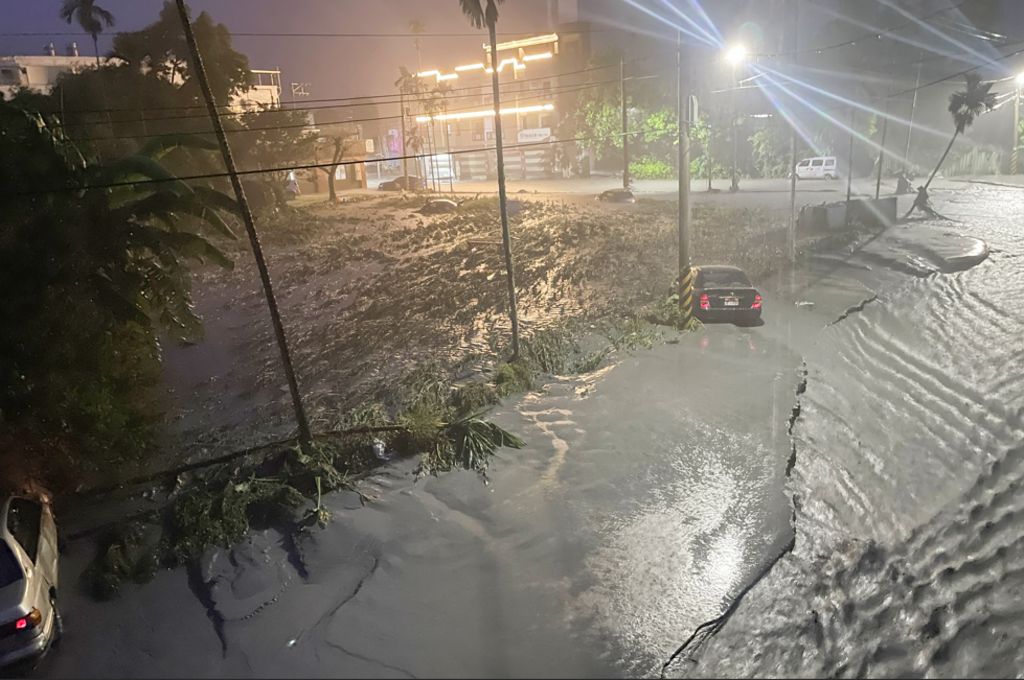
Typhoon bursts Taiwan lake as strongest storm barrels towards China
Super Typhoon Ragasa, the most powerful storm of 2025, has wreaked havoc across Taiwan and is now poised to strike southern China, prompting mass evacuations and widespread disruptions. In eastern Taiwan, the typhoon caused a mountain lake to burst its banks, leading to catastrophic flooding in Hualien County. At least 14 people have died, while 263 others remain trapped or missing. Rescuers are working tirelessly to reach affected areas, but the situation remains dire. The typhoon, equivalent to a Category 5 hurricane, has already unleashed wind gusts of up to 285 km/h (177 mph) and triggered severe flooding, landslides, and storm surges. In Hualien, a bridge was destroyed, trees uprooted, and cars submerged as floodwaters surged through the region. Deputy Chief of Hualien County Fire Department, Lee Lung-sheng, described water levels rising as high as the second floor of buildings in some areas. Meanwhile, Taiwan has recorded nearly 60 cm (24 inches) of rainfall in its eastern regions, with ferry services suspended and over 100 international flights canceled. As Ragasa approaches China’s Guangdong province, authorities have evacuated 370,000 people and issued warnings of a ‘catastrophic’ storm surge of up to five meters. Hong Kong has raised its typhoon warning to the maximum level 10, with supermarkets stripped bare as residents prepare for the storm’s impact. Hong Kong International Airport anticipates significant flight disruptions, with over 500 Cathay Pacific flights canceled. The typhoon, dubbed the ‘King of Storms’ by China’s meteorological agency, is expected to move towards northern Vietnam, potentially affecting millions. In the Philippines, Ragasa has already claimed one life and forced the evacuation of thousands. Experts warn that climate change is intensifying tropical storms, leading to higher wind speeds, heavier rainfall, and increased coastal flooding risks. As Ragasa continues its destructive path, the region braces for further devastation.
-

Bollywood stars fight for personality rights amid deepfake surge
In a growing battle against the misuse of artificial intelligence (AI), Bollywood celebrities are taking legal action to protect their personality rights. Aishwarya Rai Bachchan, Karan Johar, and Abhishek Bachchan are among the high-profile figures who have approached the Delhi High Court to safeguard their identities from unauthorized exploitation, including deepfakes, fake profiles, and unauthorized merchandising. Personality rights, also known as publicity rights, ensure individuals have control over the commercial use of their name, image, voice, and other unique attributes. While India lacks a dedicated law for these rights, courts rely on common law and other legal frameworks, such as copyright and intellectual property laws, to address violations. Recent cases, including Anil Kapoor’s lawsuit over the misuse of his catchphrase ‘jhakaas’ and Jackie Shroff’s legal victory to protect his nicknames, highlight the increasing challenges posed by technology. Legal experts argue that India’s current system, which ties personality rights to privacy rights under Article 21 of the constitution, falls short compared to countries like the US, where such rights are codified and can even be inherited. The rise of AI-generated content, such as deepfakes, has further complicated the issue, with celebrities like Scarlett Johansson also raising concerns globally. While some advocate for codifying personality rights in India to provide clearer protections and deterrence, others believe the flexibility of existing laws allows for broader interpretation. As technology continues to evolve, the need for robust legal safeguards and public awareness about personality rights has never been more critical.
-
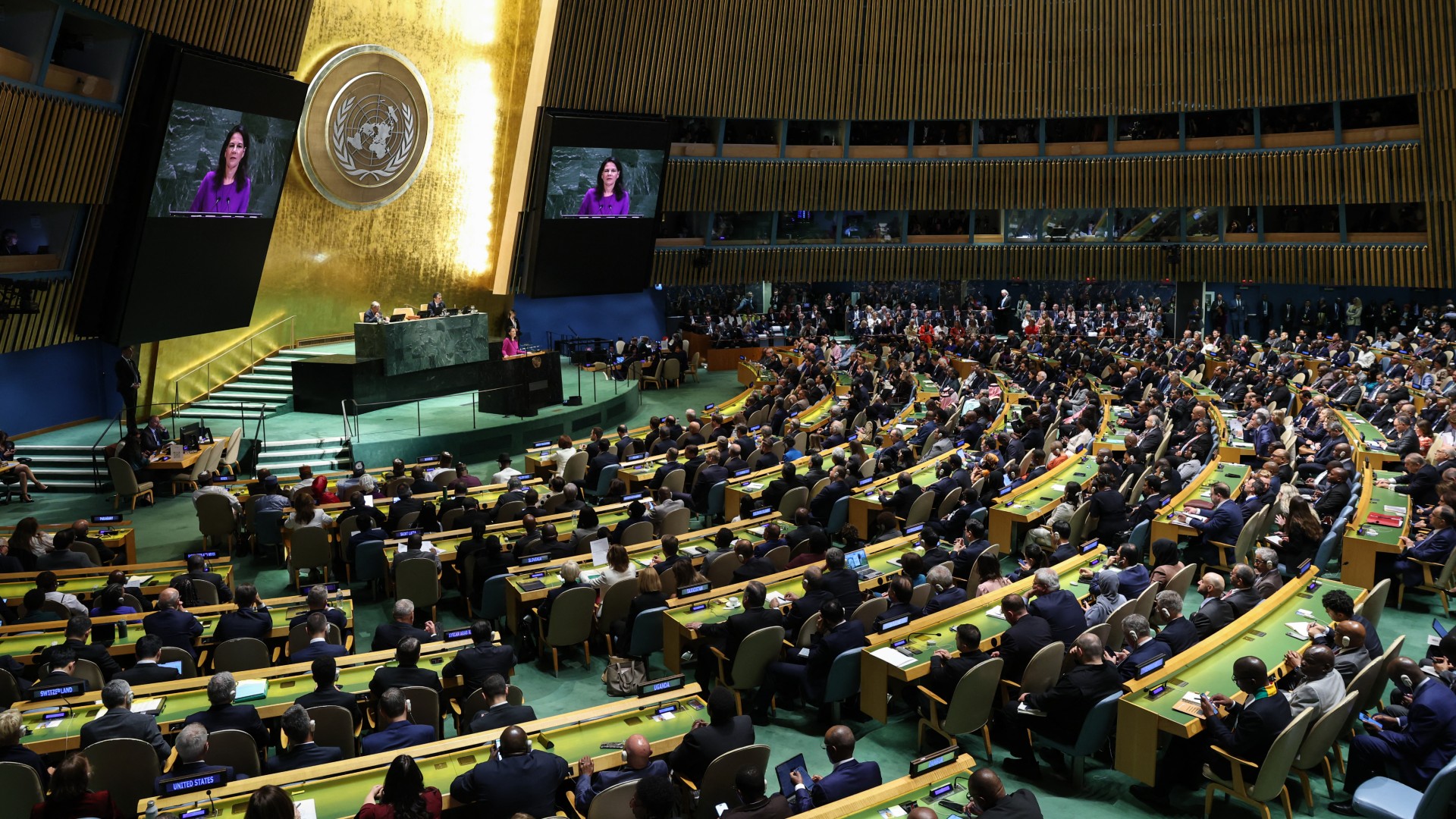
UN General Assembly 2025: Which Middle East leaders are speaking and when?
This week, New York City becomes the epicenter of global diplomacy as world leaders assemble for the 80th United Nations General Assembly (UNGA) debate. The gathering, marking eight decades of international collaboration, unfolds against a backdrop of escalating global conflicts and internal financial struggles within the UN. Over 150 heads of state and government are set to address the assembly, with Middle Eastern leaders expected to spotlight Israel’s actions in Gaza and its regional confrontations. The event, renowned for attracting political heavyweights, kicked off with US President Donald Trump articulating his global vision and critiquing the perceived decline of international institutions. Turkish President Recep Tayyip Erdogan, alongside leaders from Jordan and Qatar, also took the stage. The UNGA, a cornerstone of the UN, oversees critical functions such as admitting new members, selecting non-permanent Security Council members, and contributing to the election of the UN Secretary-General. It also grants observer status to entities like Palestine and the European Union. This year’s theme, ‘Better together: 80 years and more for peace, development and human rights,’ may be overshadowed by national agendas, particularly from Middle Eastern leaders. The assembly’s schedule, running from 9am to 9pm EST, is packed with speeches, though adherence to the 15-minute limit is often lax, a tradition famously exemplified by Fidel Castro’s four-hour address in 1960. The event’s dynamic nature means the speaking order is subject to change, with leaders from across the globe, including Indonesia, South Africa, France, and China, slated to contribute their perspectives. The UNGA continues to serve as a vital platform for addressing pressing global issues, despite the challenges it faces.
-
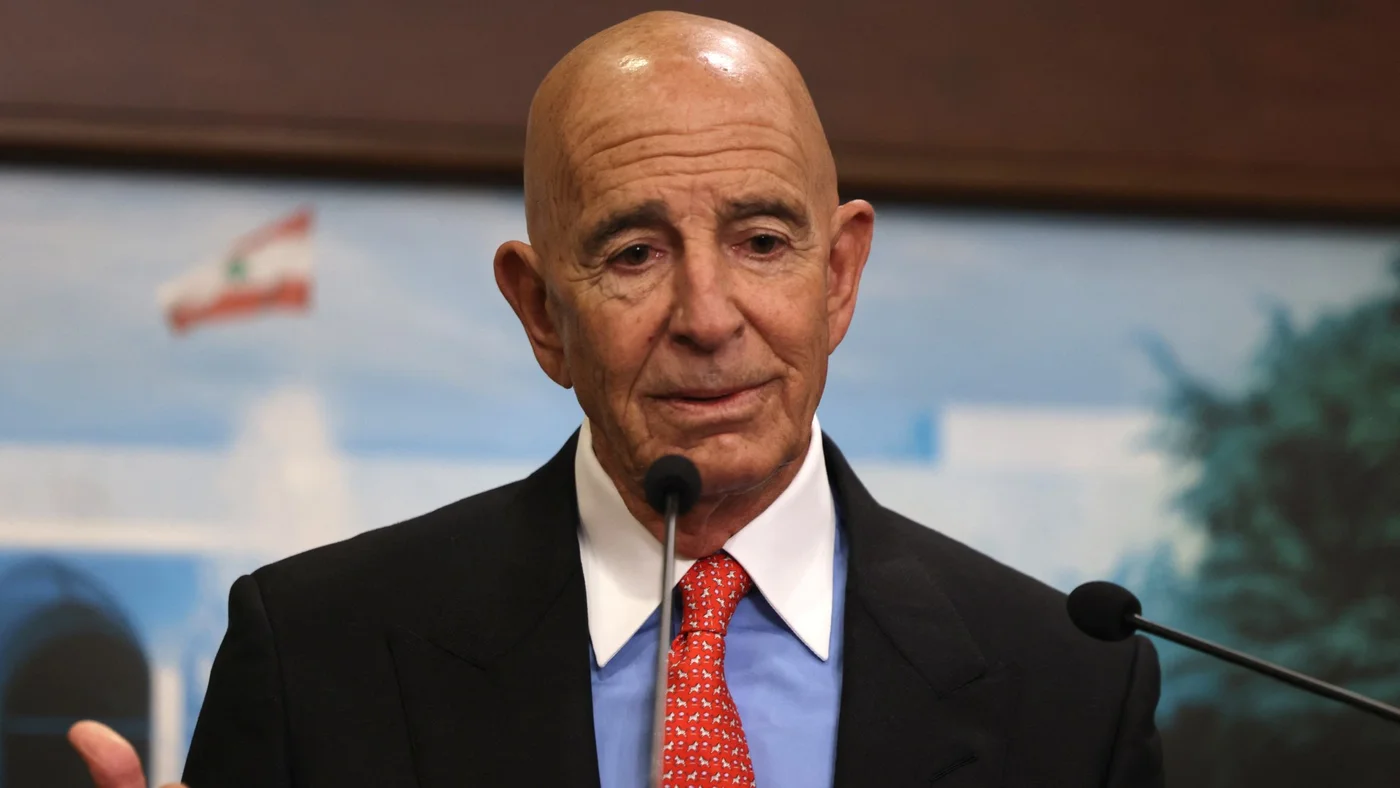
Ten things Tom Barrack said in wild interview on Israel, Lebanon and Muslims
In a revealing interview with The National, Tom Barrack, the US Special Envoy to Syria and Ambassador to Turkey, offered a candid assessment of the Middle East’s geopolitical landscape and US foreign policy. Barrack, who has Lebanese heritage and has served as President Donald Trump’s envoy since May, described regional peace as ‘an illusion’ and criticized Israel’s aggressive actions, including its strikes on Syria, Lebanon, and Tunisia. He also addressed the recent Israeli attack on Qatar, calling it ‘not good’ and revealing that groups like Hamas and the Taliban are in Doha at America’s request. Barrack emphasized that the US administration is stepping back from direct intervention, focusing instead on counterterrorism cooperation while maintaining a special relationship with Israel, which receives $4-5 billion in annual subsidies. He dismissed the idea of a Palestinian state, arguing that the global community lacks the commitment to enforce it. Barrack also highlighted the challenges of disarming Hezbollah in Lebanon, noting the group’s financial and military strength, funded by Iran. He expressed concern over the Gaza conflict, calling it ‘unsettling’ and questioning why neighboring Arab countries won’t take in Palestinians. Barrack concluded by expressing distrust in all regional actors, including Israel, and hinted at the possibility of further US or Israeli action against Iran to stabilize the region.
-
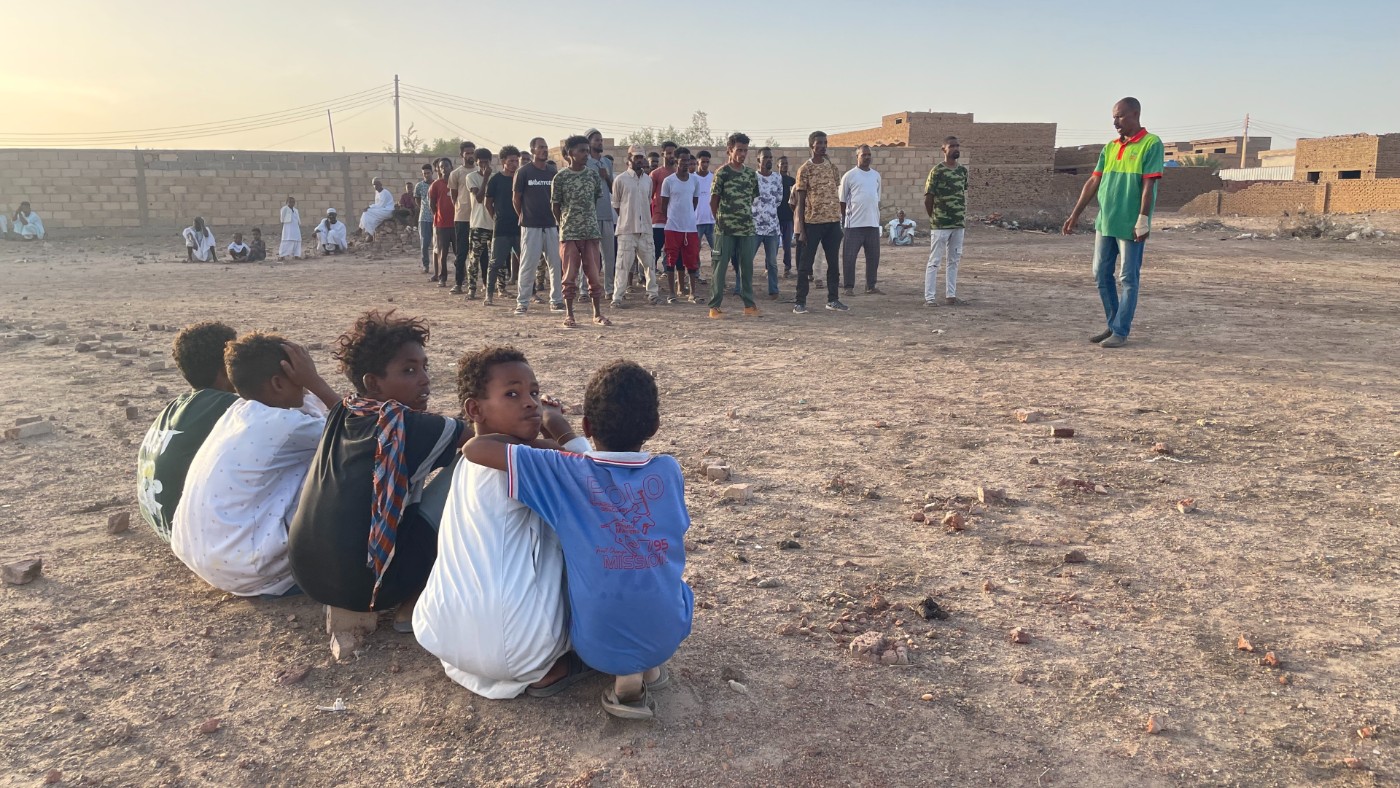
Sudan PM visits village following MEE coverage of fight against RSF
In a historic move, Sudanese Prime Minister Kamil Idris visited the village of al-Tekeina in al-Jazira state on August 30, 2025, marking the first visit by a senior Sudanese official in over six decades. The visit followed extensive coverage by Middle East Eye (MEE) of the village’s struggles against the Rapid Support Forces (RSF), a paramilitary group accused of committing genocide. During his visit, Idris pledged to implement widespread reforms, including infrastructure development, improved public services, and political representation for the villagers. Al-Tekeina, located 70 kilometers south of Khartoum, had been neglected by the central government for years, forcing residents to defend themselves against the RSF using weapons and tactics learned from YouTube tutorials. The village’s resistance committee, led by Magd Omer Ibrahim, played a pivotal role in organizing the defense and advocating for the community’s needs. Idris’s delegation, which included ministers and the governor of al-Jazira, promised to reconstruct roads, maintain water and electricity stations, build a technical college, drill wells, and expand healthcare facilities. Villagers credited media coverage, particularly by MEE, for drawing government attention to their plight. The visit was seen as a moral restitution for the sacrifices made by the villagers, who had been abandoned by the Sudanese Armed Forces (SAF) during the conflict. The war in Sudan, which began in April 2023, has displaced nearly 12 million people and claimed at least 150,000 lives, making it one of the world’s worst humanitarian crises. The people of al-Tekeina hope that the promises made during the visit will bring lasting change to their community.
-

All is not lost for China in US TikTok deal
In a significant development in the ongoing US-China tech rivalry, Beijing has signaled its approval for American investors to take over TikTok’s operations in the United States. This move marks a rare thaw in the tense standoff between the two global powers, following a pivotal phone conversation between US President Donald Trump and Chinese President Xi Jinping on September 19, where the TikTok issue was reportedly a central topic.
-

‘Why does China prefer war?’ The K-drama line that infuriated the Chinese internet
South Korean actress Jun Ji-hyun, renowned for her breakout role in the 2001 romantic comedy *My Sassy Girl*, has found herself at the center of a heated controversy following her portrayal in the Disney+ spy romance series *Tempest*. In the show, Jun plays a diplomat investigating a deadly assassination, and a fictional line from her character—questioning China’s preference for war—has ignited outrage among Chinese social media users. Many have accused the series of misrepresenting China as belligerent, leading to calls for brands to sever ties with the actress. The backlash has reignited debates over China’s unofficial ban on South Korean entertainment, which has been in place since 2016 following South Korea’s deployment of a US anti-missile system. While recent months saw signs of easing tensions, with some South Korean performers returning to China, the *Tempest* controversy has fueled renewed support for the ban. Social media users have also criticized other aspects of the series, such as scenes depicting China’s Dalian city with dilapidated buildings and a table setting resembling the Chinese flag. Jun’s agency has clarified that her brand campaigns concluded before the show’s release, but Chinese consumers have continued to pressure brands like La Mer, Louis Vuitton, and Piaget to distance themselves from her. Despite some defending Jun, arguing she did not write the controversial line, the backlash has overshadowed such sentiments. The incident highlights the fragile state of cultural exchanges between China and South Korea, with the future of K-pop and K-dramas in China remaining uncertain.