标签: Asia

亚洲

  • Regional escalation casts shadow on Gaza ceasefire

    Regional escalation casts shadow on Gaza ceasefire

    The delicate Gaza ceasefire agreement faces mounting pressure as recent military actions by Israel and the United States against Iranian targets raise serious questions about regional stability and diplomatic commitments. Analysts warn that this escalation exposes fundamental contradictions in Washington’s Middle East policy while undermining its credibility as a peace mediator.

    According to security experts, the coordinated strikes have introduced a dangerous new dimension to an already volatile region. Sujata Ashwarya, professor at Jamia Millia Islamia University’s Centre for West Asian Studies, noted that these actions ‘deepen the strategic contradiction at the heart of Washington’s regional policy,’ making it increasingly difficult to sustain credible Gaza diplomacy while expanding direct military engagement.

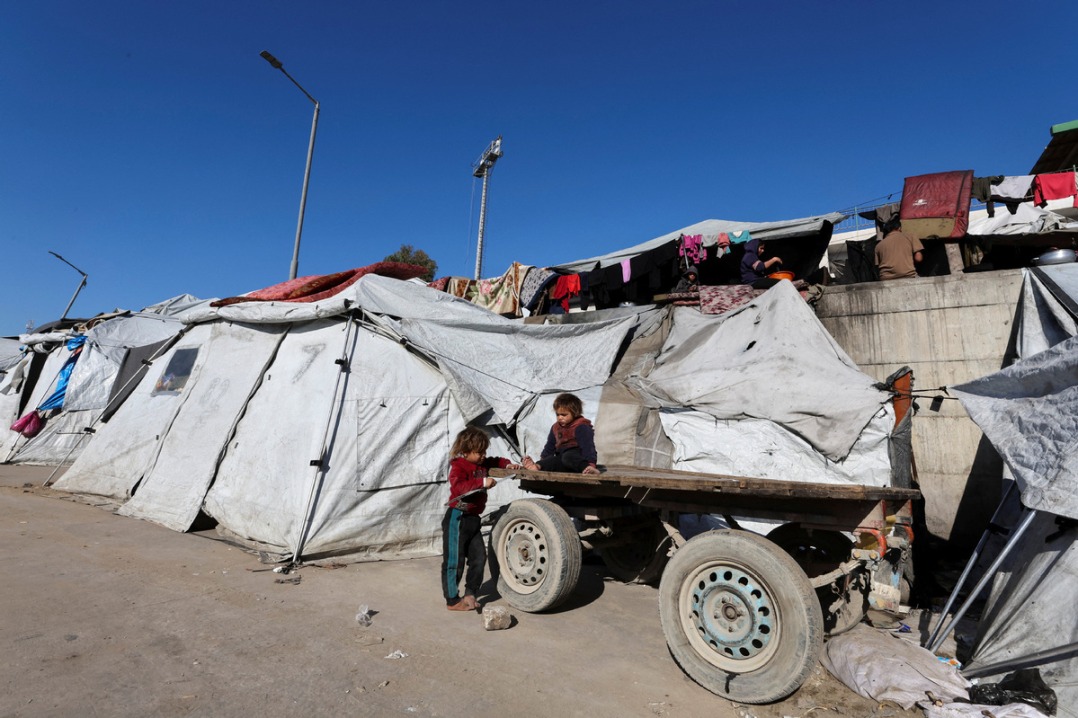
    The immediate consequences have materialized through the closure of critical border crossings into Gaza, including the vital Rafah crossing. Israel’s COGAT military body announced ‘several necessary security adjustments’ implemented on Sunday, claiming the closures would not affect humanitarian conditions—a statement contradicted by experts who warn that humanitarian concerns are becoming collateral damage in broader escalation.

    Gulf Arab states now find themselves in a precarious position, as their hosting of US military assets makes them vulnerable to Iranian retaliation despite not seeking conflict. The situation creates particular challenges for these nations as they attempt to balance security partnerships with regional de-escalation efforts.

    The political landscape has been further complicated by the killings of Iranian leadership figures, creating uncertainty about succession and internal stability rather than strategic clarity. For Palestinians, the renewed escalation risks pushing Gaza further down the international agenda precisely when humanitarian emergencies are becoming more acute.

    While some analysts, including Elie Al Hindy of the American University in the Emirates, believe the situation is unlikely to escalate into broader regional conflict, the cumulative effect has been to make the Gaza ceasefire increasingly fragile and highlight the complex challenges facing international diplomacy in the region.

  • Lantern Festival in Luoyang: Through lens of a poem

    Lantern Festival in Luoyang: Through lens of a poem

    The timeless verses of ‘The Lantern Festival Night — to the tune of Green Jade Table’ continue to resonate through centuries as China celebrated the traditional Lantern Festival on March 3, 2026. This cultural masterpiece, composed during ancient times, serves as both historical record and artistic inspiration for contemporary celebrations in Luoyang, one of China’s ancient capitals.

    The festival, observed on the 15th day of the first lunar month, transforms the historic city into a living tableau of the poem’s vivid imagery. Through multimedia presentations and cultural exhibitions, visitors experienced the romantic and vibrant scenes depicted in the classical work, bridging the gap between ancient literary tradition and modern cultural practice.

    Luoyang’s celebration exemplifies China’s ongoing efforts to preserve and revitalize traditional cultural expressions. The integration of classical poetry with visual media demonstrates innovative approaches to cultural education, allowing both domestic and international audiences to appreciate China’s rich literary heritage in an immersive format.

    The event forms part of broader nationwide celebrations marking the conclusion of the Spring Festival period, with various regions hosting distinctive activities that blend traditional customs with contemporary interpretations. This cultural phenomenon occurs alongside significant political events, including the convening of China’s National People’s Congress and Chinese People’s Political Consultative Conference sessions.

  • Meet ‘Dasheng’: A system-level scientific AI agent

    Meet ‘Dasheng’: A system-level scientific AI agent

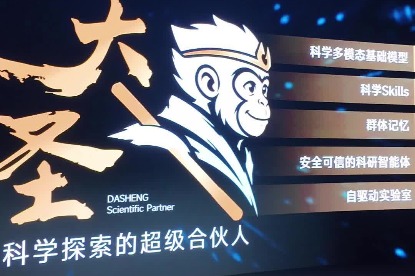
    Shanghai, March 1, 2026 – In a landmark development for artificial intelligence research, the Shanghai Academy of AI for Science and Fudan University have jointly launched a significantly upgraded version of their NovaInspire platform, featuring the groundbreaking scientific AI agent ‘Dasheng’. Named after the legendary Monkey King from Chinese mythology, this system represents a quantum leap in AI capabilities for scientific discovery.

    The Dasheng AI agent integrates multiple cutting-edge technologies including multimodal foundation models, long-term collective memory systems, and expert-level scientific capabilities within a secure, trustworthy framework. What distinguishes Dasheng from conventional AI systems is its capacity for multi-threaded processing and continuous autonomous evolution, enabling it to tackle complex, real-world scientific problems that have previously challenged researchers.

    This system-level scientific partner incorporates self-driving laboratory capabilities, allowing for unprecedented automation in experimental processes and data analysis. The integration of these advanced features positions Dasheng as a transformative force in research methodology, potentially accelerating breakthroughs across multiple scientific disciplines from materials science to pharmaceutical development.

    The development team emphasizes that Dasheng represents more than just incremental improvement – it constitutes a fundamental paradigm shift in how scientific research can be conducted. By combining artificial intelligence with laboratory automation, the system creates a continuous cycle of hypothesis generation, experimentation, and analysis that operates with minimal human intervention.

    This announcement comes at a time when global competition in artificial intelligence research has intensified, with multiple nations and corporations investing heavily in next-generation AI systems. The successful development of Dasheng demonstrates China’s growing capabilities in advanced AI research and its application to scientific challenges.

  • China issues guidelines to boost recycling, utilization of solar modules

    China issues guidelines to boost recycling, utilization of solar modules

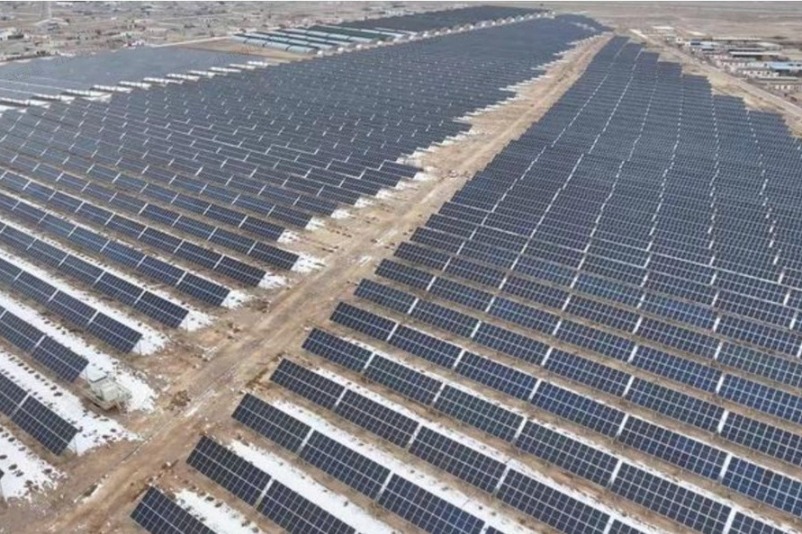
    In a significant move toward sustainable energy management, China has launched comprehensive national guidelines to establish a robust ecosystem for recycling and reusing decommissioned solar photovoltaic (PV) modules. The Ministry of Industry and Information Technology, in coordination with five other governmental bodies, introduced the framework on Tuesday to address the impending surge of retired solar equipment expected from the nation’s massive renewable energy expansion.

    The newly released directives outline a multi-faceted approach to building system-level capacity for handling end-of-life PV components. Central to the strategy is the enhancement of green manufacturing standards for solar modules, increased incorporation of recycled materials in production, and the development of improved scrap assessment protocols alongside advanced testing methodologies.

    Technological innovation forms the cornerstone of China’s recycling initiative. The guidelines emphasize critical breakthroughs in several key areas including surface-structure dismantling techniques, high-efficiency separation of laminated components, and advanced material extraction processes. These technological advancements will enable the broader application of recycled PV-derived products across multiple industrial sectors such as metal smelting, equipment manufacturing, and construction materials.

    The policy framework establishes concrete targets, including achieving cumulative comprehensive utilization of retired PV modules reaching 250,000 tonnes by 2027. By 2030, China aims to realize substantial upgrades in recycling technology and equipment, strengthen industrial innovation capabilities, and expand application scenarios for recycled products. The long-term vision includes creating a tightly coordinated upstream-downstream supply chain with rationally distributed capacity布局 capable of handling large-scale retirements of solar infrastructure.

    Additionally, the guidelines call for the development of comprehensive technical standards for green design and utilization of PV modules while fostering a cohort of leading enterprises specializing in end-of-life solar component processing. This strategic move positions China at the forefront of circular economy practices within the global renewable energy sector.

  • Shanxi NPC deputies arrive in Beijing

    Shanxi NPC deputies arrive in Beijing

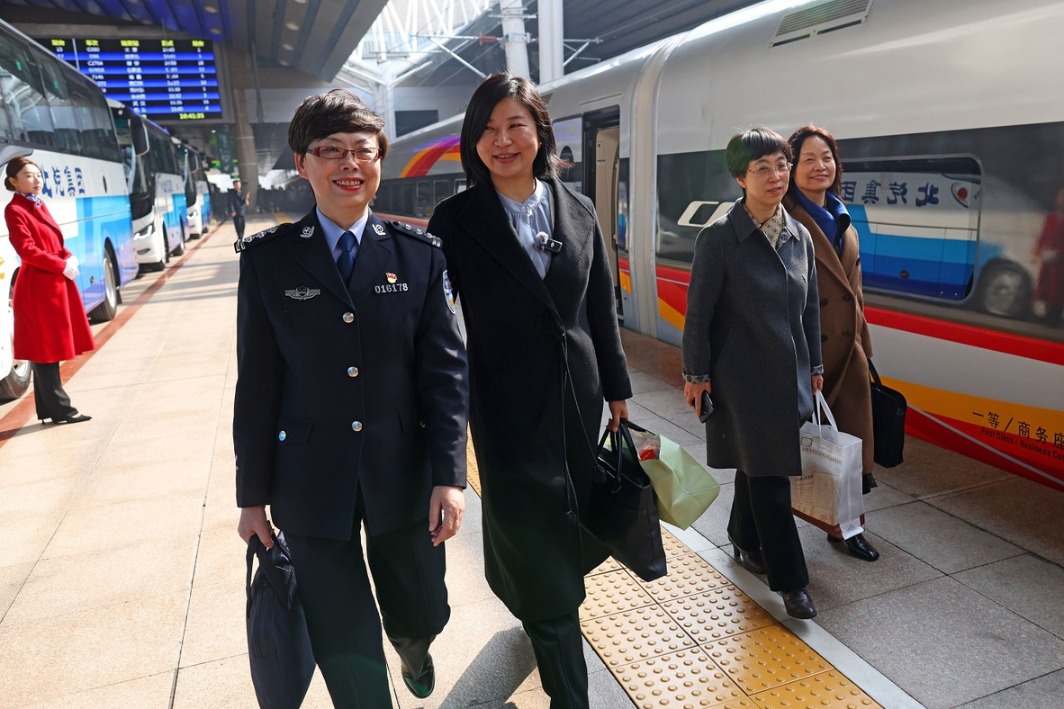
    BEIJING – Delegates from Shanxi province formally arrived in the Chinese capital on Tuesday, March 3rd, 2026, marking their participation in the upcoming Fourth Session of the 14th National People’s Congress (NPC). The arrival signals the commencement of one of China’s most significant annual political events, where legislative agendas and national policies are set for the forthcoming year.

    The delegation, representing millions of constituents from the resource-rich northern province, traveled to Beijing to contribute to deliberations on critical national issues. Their attendance at the NPC, China’s top legislative body, underscores the province’s role in the nation’s governance framework. The session is anticipated to address a comprehensive range of topics, from economic development strategies and environmental initiatives to social welfare enhancements.

    Photographic documentation captured the deputies’ arrival, highlighting the organized and formal nature of the event. The NPC serves as a pivotal platform for integrating regional perspectives into national policy-making, ensuring that local interests from across China, including those of Shanxi, are represented at the highest level of government. The outcomes of this session are expected to have substantial implications for national legislation and the strategic direction of the country’s development.

  • New study proposes scientific basis for improving concrete reinforcement in desert environments

    New study proposes scientific basis for improving concrete reinforcement in desert environments

    A groundbreaking study from Chinese researchers has overturned conventional wisdom about sandstorm damage, revealing that moderate wind and sand erosion can actually enhance the structural integrity of concrete surfaces in desert environments. The collaborative research between the Northwest Institute of Eco-Environment and Resources (NIEER) under the Chinese Academy of Sciences and Lanzhou Jiaotong University provides a scientific basis for improving reinforcement methods for infrastructure in arid regions.

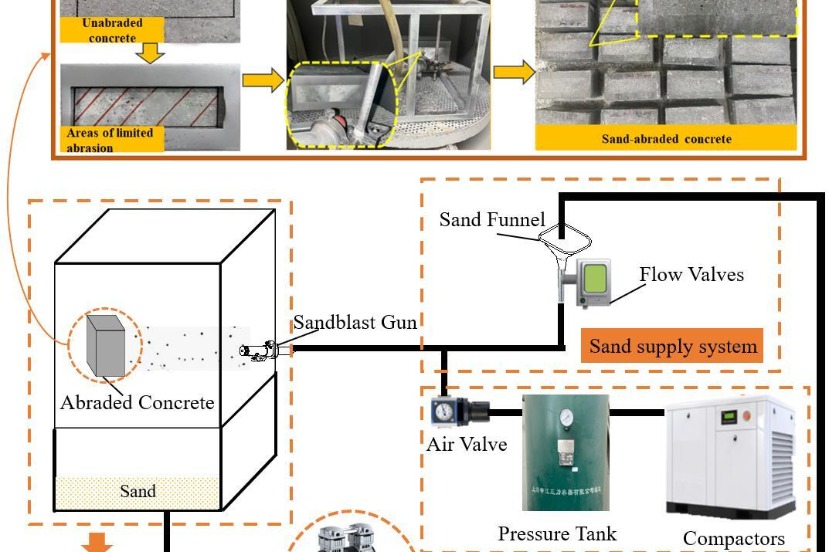
    Published in the prestigious journal Composites Part B: Engineering, the study investigated the interface performance of wind-and-sand-eroded concrete when reinforced with carbon fiber-reinforced polymer (CFRP). Unlike previous research that focused on ideal flat interfaces, this pioneering work simulated various wind-sand environments through mechanical testing and microscopic analysis.

    Lead researcher Liu Benli from NIEER explained the counterintuitive findings: “Moderate abrasion forms a microstructure conducive to the bonding of the reinforcing layer. In vivid terms, the process resembles a sculptor carving rough textures into stone for subsequent reinforcement.” The research demonstrated that wind and sand impact creates microscopic grooves on material surfaces, providing natural anchoring points for coatings and protective materials that significantly enhance interfacial bonding.

    The quantitative results were striking: sand erosion increased the interface ultimate bearing capacity of CFRP-concrete specimens by 31 percent and amplified surface roughness by a factor of 10 compared to uneroded specimens. The research team also developed predictive models for interfacial bearing capacity and bond-slip relationships that incorporate abrasion effects, showing strong alignment with experimental data.

    According to Zhang Kai, associate professor at Lanzhou Jiaotong University’s School of Civil Engineering, the study represents a significant advancement: “For the first time, we’ve achieved quantitative correlation between environmental conditions and interface performance. Engineers can now precisely predict material load-bearing capacity based on wind and sand intensity.” This breakthrough enables the scientific utilization of sandstorms as a ‘natural power’ to sustain infrastructure in desert regions, potentially transforming how engineers approach construction and maintenance in challenging environments.

  • Gallop towards luck with Fujian’s Lantern Festival

    Gallop towards luck with Fujian’s Lantern Festival

    The southeastern Chinese province of Fujian has reimagined its traditional Lantern Festival celebrations through a groundbreaking digital initiative featuring animated mascots Fu Fu Zai and Hua Hua Mei. These charismatic characters, accompanied by the symbolic Lucky Horse, guide participants through an immersive virtual journey across six culturally significant Fujian landmarks where lantern displays illuminate the night skies.

    This innovative approach to cultural preservation combines cutting-edge digital storytelling with time-honored traditions, allowing global audiences to experience Fujian’s rich cultural heritage remotely. The interactive experience showcases elaborate lantern installations at historically important sites while maintaining the communal spirit of the ancient festival through digital means.

    The initiative represents a significant evolution in how traditional Chinese festivals are celebrated and shared in the digital era, demonstrating how technology can enhance rather than replace cultural practices. By creating accessible virtual experiences, organizers have expanded the festival’s reach beyond physical boundaries while preserving the authentic atmosphere of lantern-viewing gatherings that have characterized the celebration for centuries.

    This digital transformation of traditional festival activities reflects broader trends in cultural preservation and technological integration within Chinese society, offering new models for celebrating heritage while adapting to contemporary technological landscapes.

  • What China’s response to the U.S. attack on Iran says about its foreign policy

    What China’s response to the U.S. attack on Iran says about its foreign policy

    As military tensions escalated between the United States, Israel, and Iran, China maintained a characteristically measured diplomatic stance. Following initial hostilities, Beijing’s Foreign Ministry expressed “profound concern” while advocating for immediate ceasefire and renewed dialogue. Foreign Minister Wang Yi subsequently characterized the strikes as “unacceptable” while reinforcing calls for peaceful resolution through diplomatic channels.

    This response pattern reflects China’s established approach to international conflicts—verbal condemnation without direct intervention. Analysts note Beijing’s strategic prioritization of long-term interests over immediate geopolitical engagement. Particularly significant is the anticipated state visit by U.S. President Donald Trump scheduled for early April, which Chinese leadership views as more consequential than Middle Eastern hostilities.

    Despite China’s growing military capabilities—including joint exercises with Iran and its first overseas military base in Djibouti—experts confirm Beijing remains reluctant to project power beyond its immediate periphery. The country has demonstrated diplomatic ambition through mediating the 2023 Iran-Saudi Arabia rapprochement, but avoids military entanglements, viewing U.S. interventions in Afghanistan and Iraq as cautionary examples.

    Energy security considerations further complicate China’s position. As Iran’s largest oil importer (approximately 1.4 million barrels daily, representing 13% of seaborne imports), China has nonetheless developed substantial resilience through diversified suppliers and strategic reserves. Analysts indicate potential disruptions would have marginal short-term impact, with Russian crude offering readily available alternatives.

    More concerning to Beijing are potential disruptions to Strait of Hormuz transit routes and attacks on LNG facilities in Gulf states, as demonstrated by QatarEnergy’s production halt following recent attacks. While China possesses defense trade relationships with Iran, including missile technology transfer, experts unanimously dismiss possibilities of direct military assistance, citing Beijing’s overwhelming interest in avoiding confrontation with the United States and its allies.

  • Chinese researchers create neural network for modeling human concept formation

    Chinese researchers create neural network for modeling human concept formation

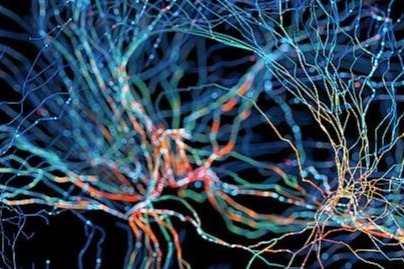
    A team of Chinese researchers has achieved a significant milestone in artificial intelligence by developing an innovative neural network capable of simulating human concept formation. The breakthrough, detailed in a recent publication in Nature Computational Science, represents a fundamental advancement in understanding how AI can form abstract concepts from raw sensory data such as visual and auditory inputs.

    The research collaboration between the Institute of Automation of the Chinese Academy of Sciences and Peking University has produced CATS Net (Concept-Abstraction Task-Solving Network), a novel framework that addresses critical limitations in current AI systems. Unlike conventional large language models that rely exclusively on pre-existing linguistic data, this new architecture enables spontaneous concept generation through experiential learning.

    CATS Net operates through two integrated modules: a concept-abstraction component that processes sensory information, and a task-solving module that performs specific functions including recognition and judgment tasks. This dual-structure approach allows the system to autonomously develop an extensive “concept space” – a structured repository of abstract representations that mirrors human cognitive organization.

    Remarkably, the framework enables knowledge transfer between different AI systems through aligned concept spaces, eliminating the requirement for retraining on raw data. This capability closely parallels human communication patterns where shared conceptual understanding facilitates efficient information exchange.

    Through comprehensive brain imaging studies, the research team demonstrated that CATS Net’s conceptual organization aligns closely with human cognitive and linguistic patterns. The neural activity patterns observed during the network’s operation show significant correspondence with concept-processing regions in the human brain, suggesting the model not only mimics but potentially illuminates the computational mechanisms underlying human concept formation.

    This research provides unprecedented insights into both artificial intelligence development and fundamental neuroscience, offering new pathways for creating AI systems that learn and reason more like humans while advancing our understanding of cognitive processes.

  • NPC deputy dedicated to rural vitalization

    NPC deputy dedicated to rural vitalization

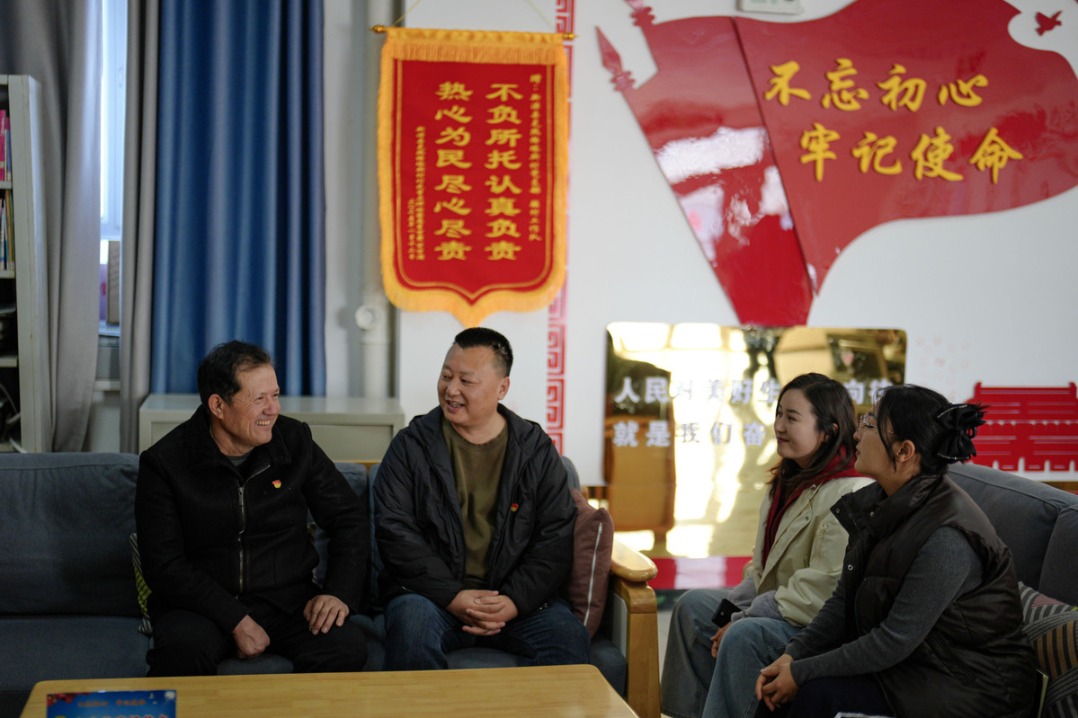
    In the remote highlands of Xinyuan County within China’s Ili Kazak Autonomous Prefecture, NPC deputy Musajan Khairat exemplifies grassroots leadership in rural revitalization. The skilled welder and blacksmith has transformed from a local artisan into a national policymaker, leveraging his position to address critical infrastructure needs in northwestern China’s agricultural communities.

    Khairat’s journey began after junior high school when he mastered metalworking techniques and established a welding workshop. Recognizing the transformative power of vocational skills, he initiated free training programs for fellow villagers, creating sustainable income opportunities in a region where economic mobility remains challenging.

    His legislative impact emerged when farmers consistently reported irrigation difficulties and transportation obstacles in the ravine-dotted terrain. Responding to these concerns, Khairat formulated a detailed proposal for high-standard farmland development that gained traction during national legislative sessions. This initiative culminated in the implementation of advanced drip irrigation systems and comprehensive field modernization projects throughout Xinyuan County.

    The infrastructure enhancements have yielded measurable benefits: reduced water consumption through precision irrigation, improved road access for agricultural transportation, and stabilized income growth for local farming families. Khairat’s dual approach—combining hands-on skill development with policy advocacy—demonstrates how grassroots representatives can bridge community needs with national development priorities.

    As China continues its rural revitalization campaign, Khairat’s work offers a model for region-specific solutions that address both immediate economic needs and long-term agricultural sustainability. His upcoming participation in the national legislative session will focus on expanding these successful initiatives to other mountainous regions facing similar agricultural challenges.