
In a compelling dialogue with China Daily, Zhang Tongdao, the visionary director behind the documentary *The Sisters of Baima Tibetan*, and Vikram Channa, a renowned documentary producer, delved into the intricacies of nurturing cultural creativity. Their conversation shed light on the profound societal and cultural shifts captured in Zhang’s documentary, which meticulously follows the lives of four sisters over a span of 24 years. The film not only serves as a historical archive but also as a testament to the transformative power of storytelling. Both Zhang and Channa emphasized the importance of authentic narratives and innovative approaches in fostering cultural creativity. They highlighted the role of documentaries in bridging cultural gaps and fostering global understanding. Their insights underscored the necessity of preserving cultural heritage while embracing modernity, offering a roadmap for future creators to inspire and engage audiences worldwide.
标签: Asia
亚洲
-
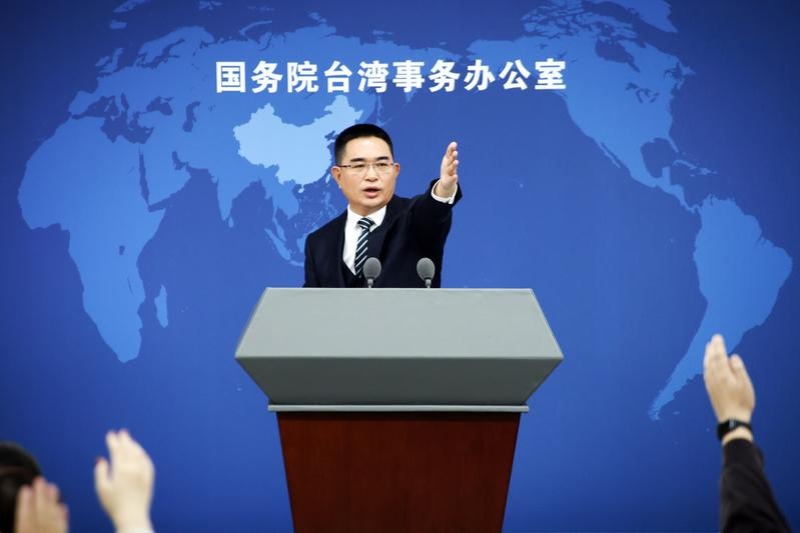
Beijing protests new US arms sale to Taiwan
China has issued a stern protest against the United States following the announcement of a new arms sale to Taiwan, labeling the move as a severe violation of its sovereignty and security interests. Chen Binhua, spokesperson for the State Council Taiwan Affairs Office, emphasized that the sale, which includes aircraft parts worth approximately $330 million, sends a dangerous signal to ‘Taiwan independence’ separatists. He reiterated China’s unwavering opposition to such transactions, urging the US to adhere to the one-China principle and the three US-China joint communiques, particularly the August 17 Communique. Chen warned that the actions of Taiwan’s Democratic Progressive Party (DPP) authorities, under the leadership of Lai Ching-te, have exacerbated tensions by pursuing military expansion and relying on external forces. He described Taiwan as being pushed toward becoming a ‘powder keg,’ jeopardizing the safety and well-being of its residents. Chen asserted that China would take all necessary measures to safeguard its national sovereignty, security, and territorial integrity, declaring that any path toward ‘Taiwan independence’ is doomed to fail.
-
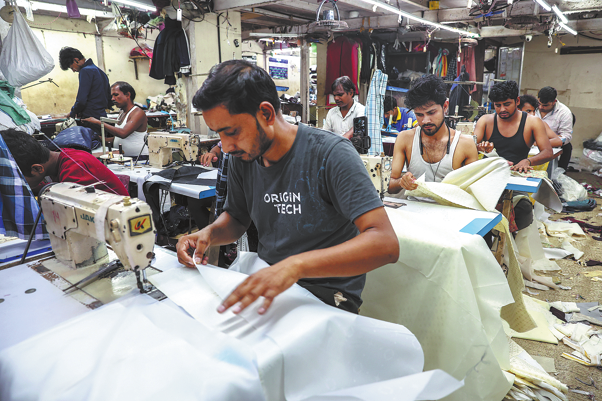
India’s relief measure seen as helpful for exporters, insiders say
In a significant move to bolster its export sector, the Indian government has unveiled a comprehensive relief package exceeding $5 billion. Announced late on Wednesday and approved by the federal cabinet chaired by Prime Minister Narendra Modi, the initiative aims to mitigate the adverse effects of US-imposed tariffs and strengthen India’s export ecosystem. The package includes collateral-free loans worth $2.3 billion and a six-year disbursement of $2.82 billion through the Export Promotion Mission (EPM), a program designed to enhance export competitiveness, particularly for micro, small, and medium enterprises (MSMEs), first-time exporters, and labor-intensive sectors. Information and Broadcasting Minister Ashwini Vaishnaw emphasized that the EPM represents a strategic shift from fragmented schemes to a unified, outcome-based mechanism capable of swiftly addressing global trade challenges and evolving exporter needs. The move comes as Indian exporters grapple with a 50 percent tariff imposed by the US, including a 25 percent punitive levy over India’s purchase of Russian oil, which has significantly impacted sectors like textiles, jewelry, leather goods, and chemicals. Industry leaders and trade organizations have welcomed the relief measures, with the Federation of Indian Export Organisations President SC Ralhan praising the EPM for its pragmatic and forward-looking vision. Similarly, the Confederation of Indian Textile Industry Chairman Shri Ashwin Chandran highlighted the potential for the textile and apparel sector to become globally competitive and create better-quality jobs. The timing of the package is particularly crucial for the seafood industry, which is facing its most challenging phase, according to Seafood Exporters Association of India President Pawan Kumar G. While the EPM is seen as a positive step, its success will hinge on the swift issuance of detailed guidelines, adequate funding, and robust coordination mechanisms, as noted by Global Trade Research Initiative founder Ajay Srivastava. Meanwhile, US President Donald Trump has indicated that his administration is working on a ‘very different deal’ with India, signaling ongoing negotiations between the two nations.
-
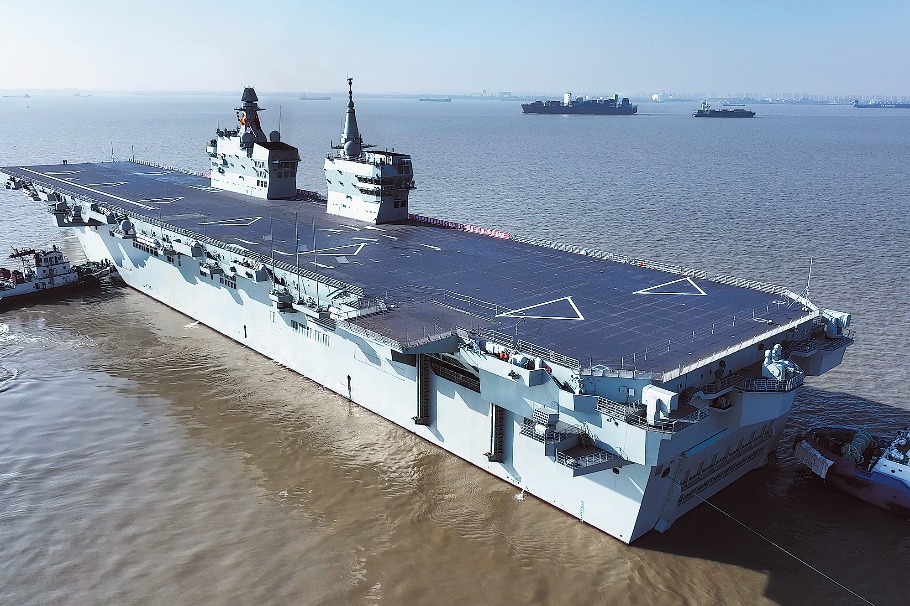
CNS Sichuan sets off on maiden sea trial
China’s first Type 076 amphibious assault ship, the CNS Sichuan, embarked on its inaugural sea trial on Friday, marking a significant milestone in the nation’s naval capabilities. The vessel departed from Hudong-Zhonghua Shipbuilding in Shanghai at approximately 9 a.m., as announced by the People’s Liberation Army Navy (PLAN). This trial aims to evaluate the ship’s electric and propulsion systems, following the completion of mooring tests and hardware installations. The CNS Sichuan, with a hull code of 51, is the lead ship in the Type 076 class, boasting a displacement of over 40,000 metric tons. It features a dual-island superstructure, a first for Chinese naval vessels, designed to enhance aviation operations. The ship is equipped with an electromagnetic catapult, enabling it to launch fixed-wing aircraft and drones, a capability previously seen only on the CNS Fujian aircraft carrier. Upon commissioning, the CNS Sichuan will support a range of missions, including amphibious landings, airstrikes, and airborne operations. A senior shipbuilding industry researcher noted that the maiden voyage is primarily to test the ship’s self-propulsion and system reliability, with future trials planned to assess the electromagnetic catapult’s performance. The PLAN currently operates four Type 075 amphibious assault ships, each capable of carrying helicopters, landing craft, and armored vehicles.
-
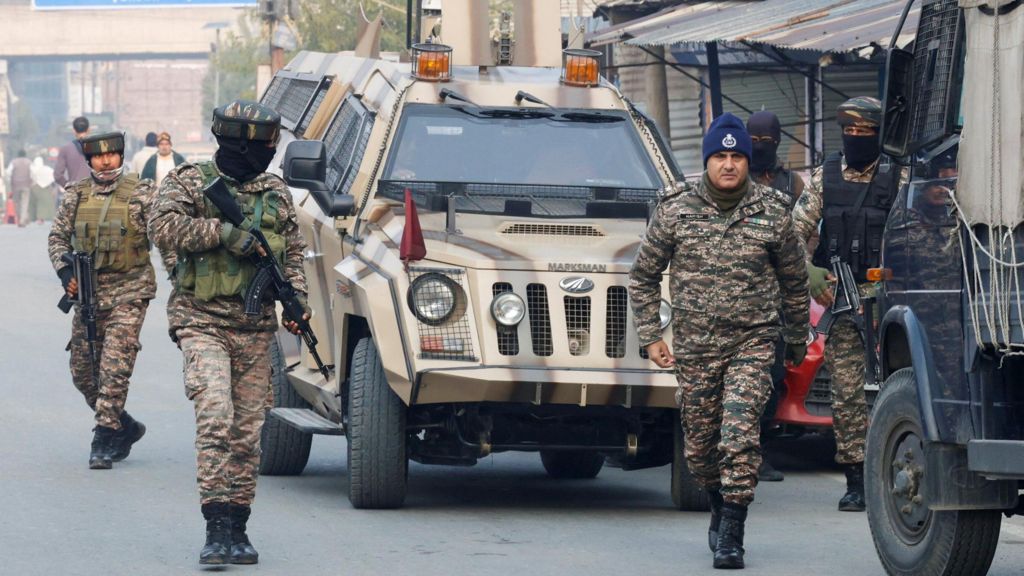
Nine killed in accidental blast at police station in Indian-administered Kashmir, officials say
A tragic incident unfolded at the Nowgam police station in Indian-administered Kashmir on Friday evening, resulting in the deaths of nine individuals and injuring 32 others. The explosion occurred when a stockpile of confiscated explosives, seized earlier in the week from Faridabad in Haryana, accidentally detonated. The explosives were reportedly being prepared for forensic examination at the time of the mishap. According to Nalin Prabhat, the region’s director general of police, the detonation happened around 23:20 local time (17:50 GMT) due to an ‘extremely unfortunate’ handling error. The police station suffered extensive damage, and nearby buildings were also affected. Witnesses described a scene of devastation, with vehicles engulfed in flames and debris scattered across the area. Some body parts were even found in houses located 100-200 meters away from the blast site. Most of the victims were police officers, forensic personnel, crime scene photographers, and a tailor who was present at the station. Manoj Sinha, the Lieutenant Governor of the region, expressed his condolences and announced an investigation into the incident. He emphasized the need to determine the cause of the accidental explosion and extended his sympathies to the bereaved families. This incident follows a recent car blast in Delhi, which the government has labeled a ‘terror incident,’ raising concerns about safety and security in the region.
-
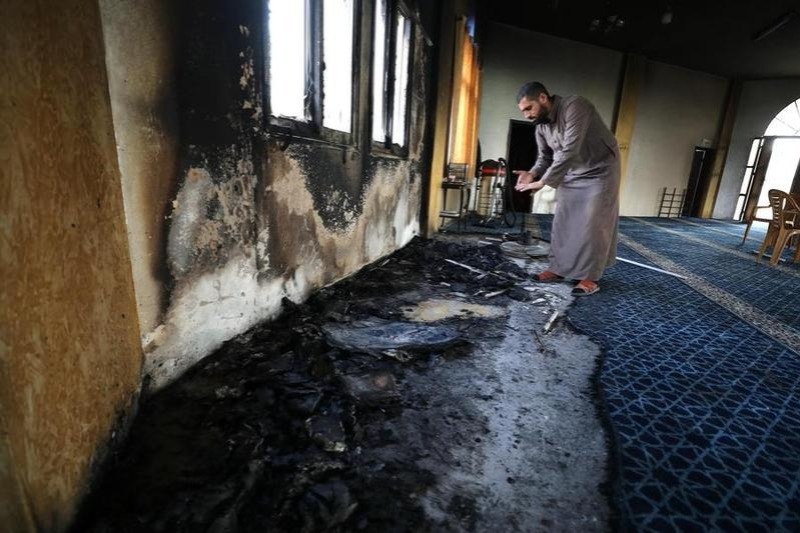
Arson attacks on mosque denounced
The international community, spearheaded by the United Nations, has vehemently condemned the recent arson attack on the Hajjah Hamidah mosque in the West Bank. This incident, which occurred in the early hours of Thursday, marks the latest in a series of escalating violent acts in the region. UN Secretary-General Antonio Guterres’ spokesman, Stephane Dujarric, expressed profound dismay at the actions of Israeli settlers responsible for the attack, labeling such assaults on places of worship as utterly unacceptable. The Palestinian Ministry of Foreign Affairs and Expatriates has accused the Israeli government of fostering a climate of impunity that encourages settler violence, aimed at displacing Palestinians and solidifying colonial occupation. Jordan has called for the international community to fulfill its legal and moral obligations to address these transgressions. Meanwhile, European nations, including Spain, Germany, and Switzerland, have urged Israel to halt the violence and ensure justice for the perpetrators. The intensifying unrest in the West Bank is increasingly seen as a threat to the fragile ceasefire brokered by the United States, with fears that such incidents could derail peace efforts in Gaza. Experts warn that the situation in Gaza, the West Bank, and East Jerusalem is interconnected, with violence in one area inevitably spilling over into others. The UN has also highlighted the challenges in scaling up humanitarian responses in Gaza as winter approaches, despite some progress in healthcare improvements.
-
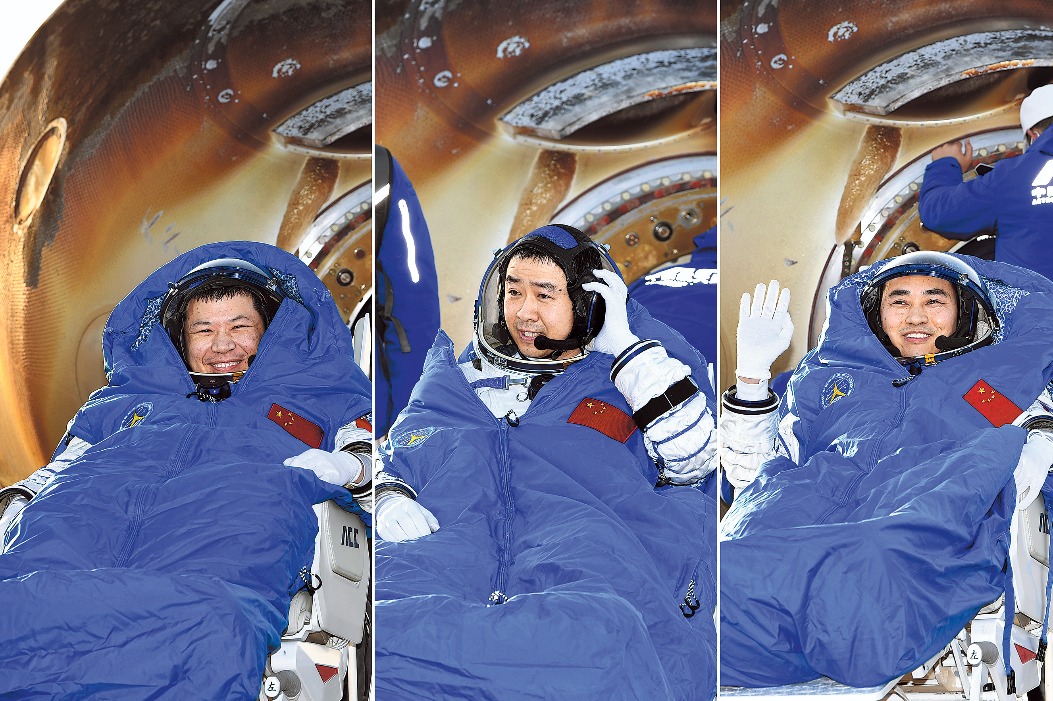
Crew of Shenzhou XX returns
The Shenzhou XX mission crew, consisting of Senior Colonel Chen Dong, Colonel Chen Zhongrui, and Colonel Wang Jie, successfully returned to Earth on Friday afternoon after an extended stay aboard the Tiangong space station. The astronauts landed at the Dongfeng Landing Site in Inner Mongolia at 4:40 pm, following a five-hour journey from space. Their return was delayed by nine days due to suspected space debris damage to the Shenzhou XX spaceship’s viewport window. Upon landing, ground recovery personnel from the Jiuquan Satellite Launch Center conducted safety checks and a preliminary health assessment before assisting the crew out of the capsule. The astronauts shared their experiences in a live broadcast with China Central Television, expressing pride in their mission and gratitude for the support that ensured their safe return. Chen Dong emphasized the challenges of space exploration, while Wang Jie highlighted the importance of continued dedication to this endeavor. The Shenzhou XX crew, representing China’s 15th manned spaceflight, spent 204 days in space, completing four spacewalks and numerous scientific tasks. Their return was rescheduled after engineers conducted thorough safety assessments, ultimately deciding to use the Shenzhou XXI spaceship’s reentry capsule for their journey back. The China Manned Space Agency announced plans to launch the Shenzhou XXII spaceship to dock with the Tiangong space station in the near future.
-
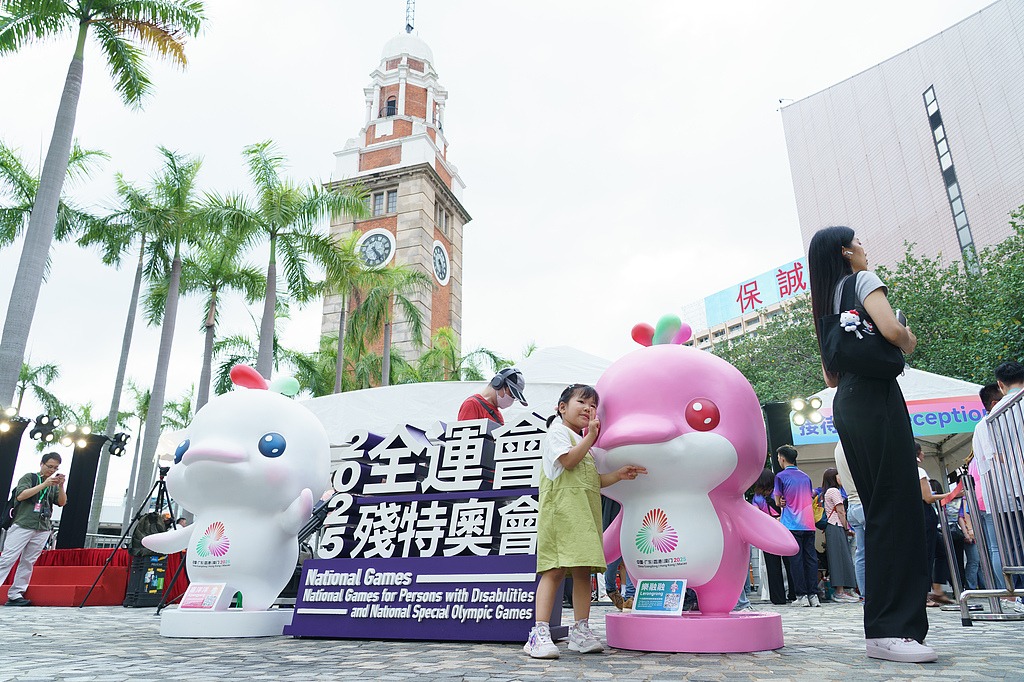
Sports fever sparks spike in tourism in Hong Kong
The 15th National Games, co-hosted by Hong Kong, Guangdong, and Macao from November 9 to 21, has ignited a tourism surge in the Hong Kong Special Administrative Region. The city is hosting elite sporting events, including basketball, track cycling, triathlon, and golf, drawing significant crowds and boosting local businesses. Industry insiders report a notable increase in hotel bookings, attraction visits, and sales of official merchandise since early November. Timothy Chui, executive director of the Travel Industry Council of Hong Kong, noted that citywide hotel occupancy reached approximately 70% by mid-November, marking a year-on-year rise. Christina Cheng, general manager of the Fullerton Ocean Park Hotel Hong Kong, highlighted that around 35% of their guests are from the Chinese mainland, expressing optimism that the tourism boost will extend beyond the event period. The Hong Kong Tourism Board estimates the games will attract over 100,000 additional visitors. Travel operators have expanded services to include transportation, non-competition itineraries, and centralized hotel reservations, with China Travel Service (Hong Kong) offering combo tickets linking events to local attractions. Secretary for Culture, Sports and Tourism Rosanna Law Shuk-pui emphasized the games’ role in deepening integration across the Greater Bay Area, with Guangdong agencies promoting multi-destination tours. Official merchandise, blending mascot designs with local cultural elements, has also seen brisk sales. Law underscored the broader economic impact, stating that the event activates the entire value chain, from staging and security to catering and retail, supporting thousands of jobs and showcasing Hong Kong’s tourism appeal through live broadcasts.
-
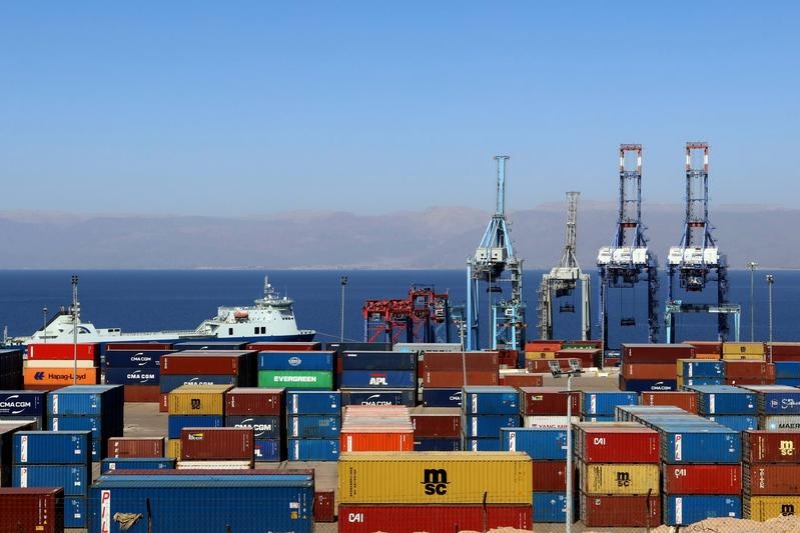
China tops trade partners in Gulf region
China has emerged as the Gulf region’s leading trading partner, surpassing Western nations for the first time in 2024, according to a report released by London-based think tank Asia House. The study reveals that trade between China and the six Gulf Cooperation Council (GCC) countries—Bahrain, Kuwait, Oman, Qatar, Saudi Arabia, and the United Arab Emirates—grew by 14.2% to reach $257 billion in 2024. This figure exceeds the combined trade volumes of the Gulf with the United States, the United Kingdom, and Eurozone countries, which declined by 4% to $256 billion during the same period. The report, titled *The Middle East Pivot to Asia*, forecasts that Gulf-China trade will expand further, reaching $375 billion by 2028, with the gap widening to $75 billion. Freddie Neve, the report’s author, emphasized that Gulf economies are deepening ties with Asia faster than with any other region amid global trade disruptions. Energy imports from the Gulf remain a cornerstone of this relationship, supported by long-term energy agreements and Gulf investments in China’s downstream refining and petrochemical sectors. The broader Gulf-Asia trade surged to $516 billion in 2024, marking a 14.4% increase and nearly doubling Gulf-West trade volumes. Asia House CEO Michael Lawrence noted that economic, diplomatic, and commercial ties have reached a pivotal inflection point. The report also highlights the growing integration of Gulf and Asian financial markets, increased cross-border capital flows, and the potential rise of renminbi-denominated trade, which could enhance the Gulf states’ geopolitical strategies and reduce trade costs.
-

Offices boost participation of public in shaping laws
In a significant move to democratize the legislative process, China has established 54 legislative outreach offices across the country, gathering over 66,000 public suggestions, with more than 3,500 incorporated into laws. These offices, initiated by the National People’s Congress (NPC) Standing Committee’s Legislative Affairs Commission, aim to bridge the gap between national legislation and the public, ensuring that laws reflect the people’s needs and concerns.