
Rory McIlroy has once again solidified his dominance in the world of golf by securing the DP World Tour’s Race to Dubai championship for the seventh time, marking his fourth consecutive win. However, the world No.2 narrowly missed out on the $10 million Tour Championship title, losing to England’s Matt Fitzpatrick in a dramatic playoff at the Earth course of Jumeirah Golf Estates. Fitzpatrick sealed the victory with a birdie on the 72nd hole, finishing at 18-under par. McIlroy, despite a sensational eagle on the same hole, found the water with his tee shot in the playoff, handing Fitzpatrick the win. This triumph marks Fitzpatrick’s third DP World Tour Championship title and his 10th DP World Tour victory overall, propelling him to No.24 in the Official World Golf Ranking. Meanwhile, McIlroy’s achievement moves him past the legendary Seve Ballesteros and brings him within one title of Colin Montgomerie’s all-time record of eight Order of Merit titles. Other notable performances included England’s Tommy Fleetwood and Laurie Canter, Sweden’s Ludvig Aberg, and Denmark’s Rasmus Neergaard-Petersen, who tied for third place at 17-under par.
标签: Asia
亚洲
-
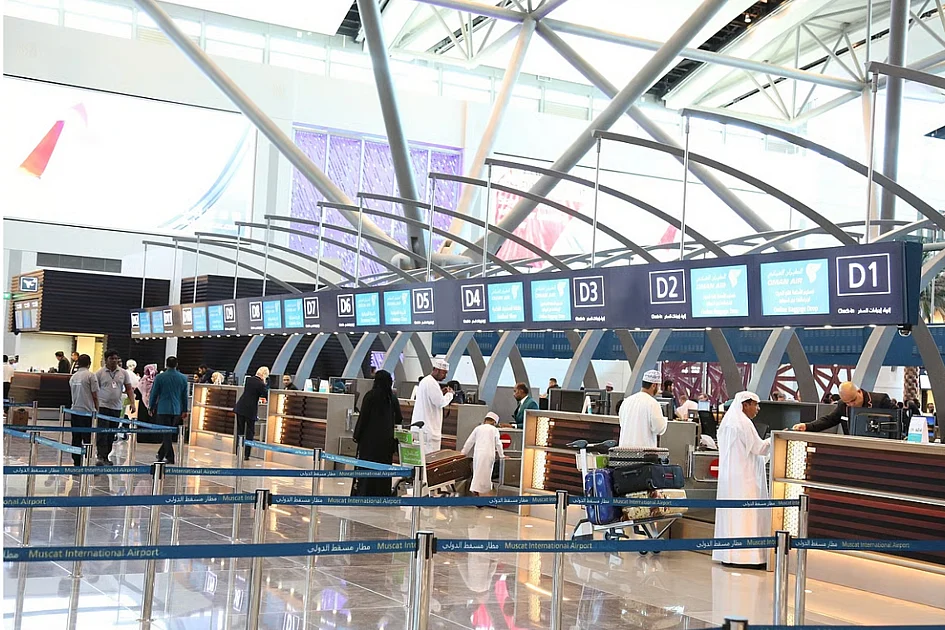
Oman Airports becomes world’s first to launch WiFi 7 technology
Oman Airports has achieved a groundbreaking milestone by becoming the first airport operator globally to fully deploy WiFi 7 technology across its facilities. This advanced upgrade, developed in collaboration with Huawei, promises passengers ultra-fast internet speeds, enhanced security, and a seamless digital experience tailored to the needs of modern travelers. The implementation of WiFi 7 marks a significant leap in airport connectivity, offering gigabit-plus performance, quick downloads, and smooth streaming on compatible devices. This innovation is particularly timely as Gulf states prepare to introduce the GCC’s new ‘one-stop’ travel system, which will streamline immigration and security checks for Gulf citizens by processing all formalities at the departure airport. WiFi 7’s capabilities, including the ability to utilize the 6GHz, 5GHz, and 2.4GHz bands simultaneously, ensure reduced latency, congestion-free peak hours, and reliable connections for biometric systems and e-gates. With stronger encryption and higher bandwidth, WiFi 7 also facilitates the secure and rapid transfer of passenger data, essential for the new travel model. Oman’s adoption of this technology positions its airports as future-proofed hubs, ready to handle the increased network demands of the region’s evolving aviation landscape.
-

When Salman Khan set Qatar buzzing with excitement
Bollywood megastar Salman Khan brought unparalleled energy and excitement to Qatar this weekend with his debut performance of DaBangg The Tour Reloaded. The event, held in a packed arena, was a dazzling showcase of nostalgia, dance, comedy, and star power, reaffirming Khan’s global appeal and the unwavering devotion of his fans, affectionately known as ‘Bhaijaan’ enthusiasts. The evening was a testament to his enduring charisma and ability to captivate audiences worldwide. Khan took the stage with his trademark confidence, delivering electrifying performances of his greatest hits, including ‘Oo Jaane Jana,’ ‘Jumme Ki Raat’ from ‘Kick,’ ‘Pandey Jee Seeti’ from ‘Dabangg,’ and ‘Sajan Radio’ from ‘Tubelight.’ Each iconic hook step sent the crowd into a frenzy, with cheers reverberating throughout the venue. In a touching tribute to Children’s Day, Khan invited young fans on stage, dancing with them as the audience erupted in applause. The star-studded lineup of the DaBangg Tour added even more glamour to the night, with Jacqueline Fernandez, Tamannaah Bhatia, Prabhu Deva, Sunil Grover, Stebin Ben, and Maniesh Paul joining Khan for duets, dance routines, and comedic segments. A standout moment came from Sunil Grover, who had the audience in stitches with his spot-on mimicry of Khan’s mannerisms and famous dialogues. Following the spectacular event, Khan returned to Mumbai, where he is currently working on Apoorva Lakhia’s upcoming film ‘Battle of Galwan,’ slated for release in 2026.
-

Oman: Three arrested for luring woman to hotel under fake job offer, human trafficking
In a significant crackdown on human trafficking, Omani authorities have apprehended three individuals of Asian nationality for allegedly luring a woman into a hotel under the guise of a fake job offer. The suspects, who were promoting fraudulent job vacancies, coerced the victim into engaging in activities contrary to public morals, according to the Sultanate’s police. The arrests were announced on Sunday, November 16, 2025, as part of ongoing efforts to combat human exploitation in the region. Legal proceedings are currently underway against the accused, with the Royal Police ensuring that all necessary procedures are meticulously followed. Oman’s Anti-Trafficking Law imposes stringent penalties for such crimes, including a minimum of three years imprisonment and a fine of OMR 5,000, escalating to a maximum of 15 years imprisonment and a fine of OMR 100,000 in aggravated cases. Aggravated circumstances include crimes involving minors, organized criminal gangs, or transnational operations. The law explicitly defines exploitation to encompass illegal practices such as prostitution, sexual exploitation, forced labor, and organ removal. Additionally, the legislation mandates special care protocols for victims during investigations, underscoring Oman’s commitment to safeguarding human rights and combating trafficking.
-
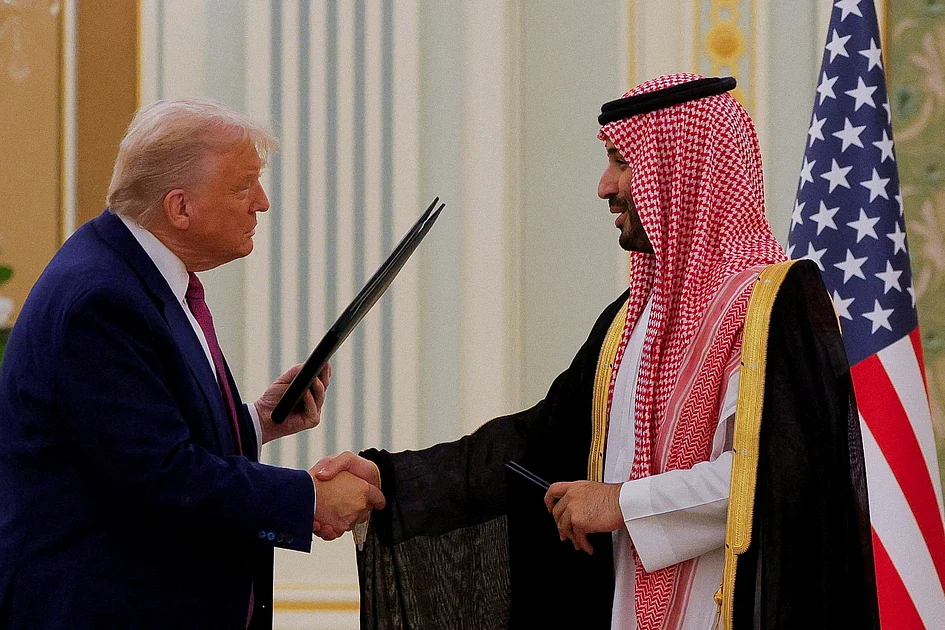
Trump is considering F-35 fighter jet deal with Saudi during Crown Prince’s visit
US President Donald Trump is reportedly considering a significant deal to supply Saudi Arabia with F-35 stealth fighter jets, manufactured by Lockheed Martin. The potential agreement is set to be discussed during Saudi Crown Prince Mohammed bin Salman’s official working visit to the White House on November 18, where the two leaders are expected to sign economic and defense agreements. Trump hinted at the deal during a conversation with reporters aboard Air Force One, stating, ‘They wanna buy a lot of jets,’ and added that Saudi Arabia is interested in purchasing more than just the F-35s. The visit is seen as a strategic move to strengthen bilateral ties, with Trump emphasizing that it is ‘more than a meeting, we’re honouring’ Saudi Arabia. However, the potential sale has raised concerns among US defense officials, with a Pentagon intelligence report warning that China could gain access to the F-35’s advanced technology if the deal proceeds. Additionally, Trump expressed hope that Saudi Arabia would soon join the Abraham Accords, which have normalized relations between Israel and several Muslim-majority nations, though Riyadh has been hesitant without a clear roadmap for Palestinian statehood.
-

Saudi Arabia reduces salary premiums for foreign talent, recruiters say
Saudi Arabia is recalibrating its approach to attracting foreign talent, reducing the once-generous salary premiums that lured skilled professionals to sectors like construction and manufacturing. This shift aligns with the kingdom’s broader economic transformation under Vision 2030, which aims to diversify its economy away from oil dependence and foster growth in industries such as tourism, real estate, mining, and financial services. Recruiters report that foreign workers can no longer expect the 40% to 100% salary premiums that were common earlier this decade, as companies now adopt more restrained compensation packages. This change reflects a strategic pivot towards sectors like artificial intelligence (AI), logistics, and mining, which are seen as offering better returns compared to infrastructure-heavy megaprojects like NEOM and Trojena. These ambitious projects, while central to Saudi Arabia’s long-term vision, have faced delays and execution challenges, further prompting a rationalization of spending. Lower oil prices and a widening fiscal deficit have also pressured public finances, leading to a slowdown in recruitment and more cost-conscious hiring practices. Despite these adjustments, Saudi Arabia remains an attractive destination for professionals outside the Gulf region, where job markets are tighter and growth is slower. The kingdom has also accelerated labor market reforms, boosting the proportion of Saudi citizens in the private sector and increasing competition for jobs. Unemployment among Saudis is at a historic low, and the number of citizens in private-sector roles has grown by 31% since 2016. To remain competitive, companies must now offer predictable compensation packages that reflect living costs, family-friendly lifestyles, and alignment with the kingdom’s transformative goals.
-
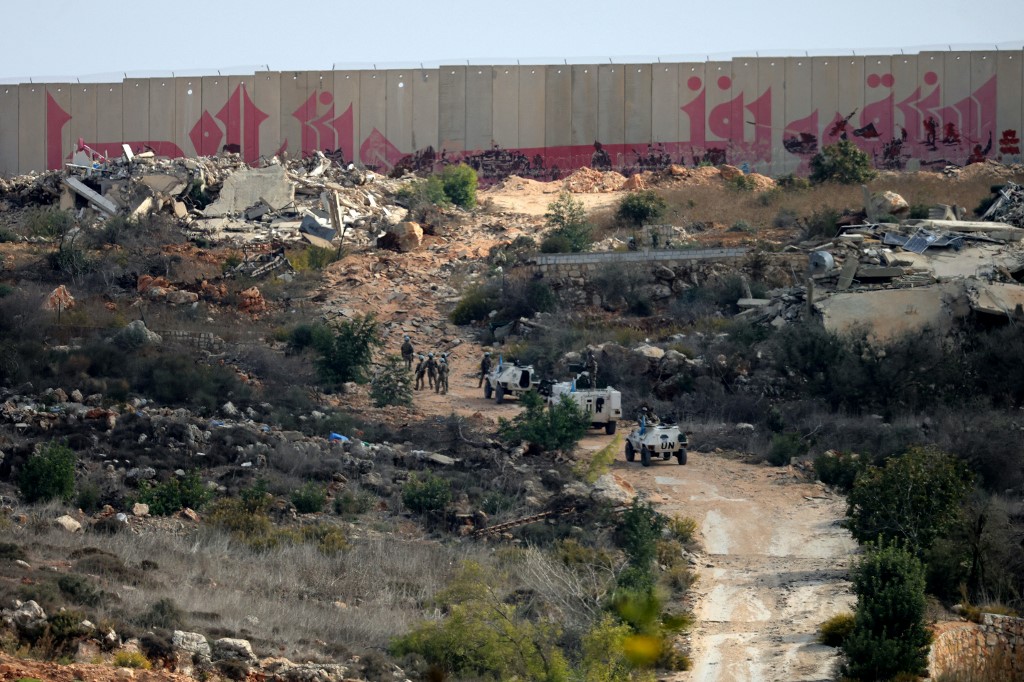
Lebanon to complain to UN over Israel wall-building in south
The Lebanese government is preparing to lodge a formal complaint with the United Nations over allegations that Israel is constructing a wall in occupied territory along the southern border. The United Nations Interim Force in Lebanon (Unifil) reported on Friday that the Israeli army had built walls near the UN-demarcated Blue Line in south Lebanon. While Israel has denied these claims, Lebanese President Joseph Aoun directed officials on Sunday to submit an urgent complaint to the UN Security Council, accusing Israel of building a concrete wall that encroaches on Lebanese territory beyond the Blue Line.
Unifil’s recent investigations revealed that a concrete T-wall erected by the Israeli army southwest of Yaroun crossed the Blue Line, making over 4,000 square meters of Lebanese land inaccessible to its citizens. An Israeli military spokesperson countered these allegations, asserting that the wall does not cross the Blue Line and that its construction began in 2022 as part of measures to strengthen the northern border following the Gaza conflict.
Tensions remain high nearly a year after the ceasefire between Israel and Hezbollah, with Israeli forces continuing near-daily bombardments in southern Lebanon and occupying at least five areas. Since November 27, 2024, over 300 people, including more than 100 civilians, have been killed in Israeli strikes. The situation underscores the ongoing volatility in the region and the challenges of maintaining peace along the contested border.
-
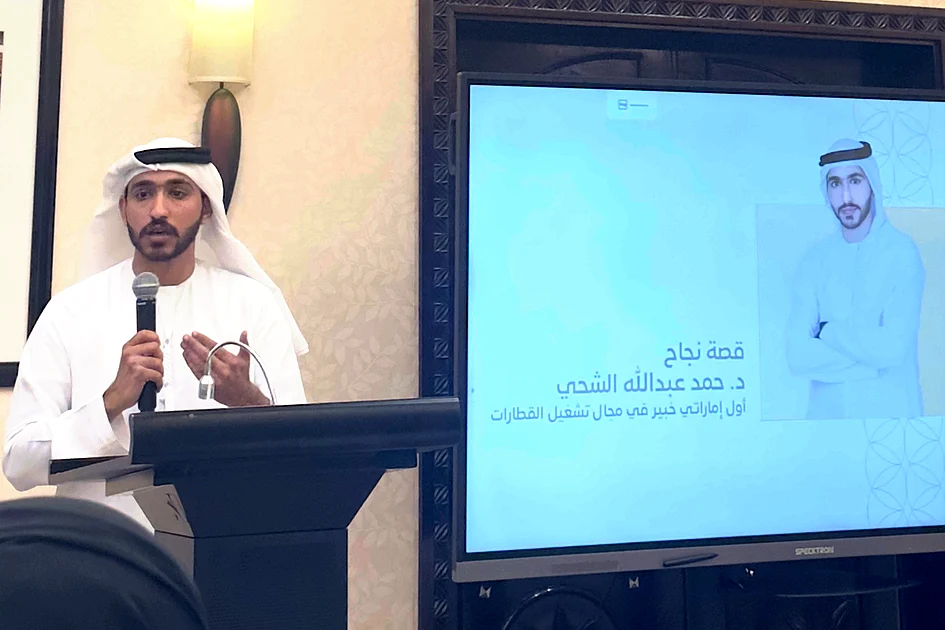
Selling Nol cards, running Dubai Metro: Meet one of UAE’s first senior Emirati rail operators
Hamad AlShehhi’s career trajectory is a testament to determination and ambition. Starting as a station agent at Dubai Metro, he has risen to become one of the UAE’s first senior Emirati rail operators, breaking barriers in a highly technical field. His journey began shortly after completing national service, when he noticed the lack of Emirati representation in specialized train operations. Motivated by this gap, Hamad resolved to become the first Emirati duty manager in train control. His dedication led him to master complex rail systems, gain trust, and eventually take on the responsibility of operating depot trains—a role rarely entrusted to newcomers. After a year without operational errors, he advanced to mainline operations, becoming a certified trainer and assessor. Today, Hamad serves as a senior controller in the Operations Control Centre, mentoring 14 national employees, including five Emirati women. His achievements have been recognized at the Nafis Awards, where he won second place in 2024 and first place in the Specialized Jobs category in 2025. Hamad’s story was shared during the graduation ceremony for participants of Ras Al Khaimah’s “Estaed” programme, an initiative aimed at upskilling Emirati talent for the modern workplace. Dr. Tamer Elkordy, a training expert, emphasized the importance of emotional intelligence in the programme, which focuses on shifting mindsets and building competencies. Participants like Ayman Ahmed and Aisha Nasser Al Teneiji highlighted the programme’s impact on their confidence, communication skills, and job readiness. The “Estaed” programme, organized by the Human Resources Department in collaboration with institutional partners, offers training in technical skills, professional communication, emotional intelligence, data analysis, artificial intelligence applications, and English language proficiency. It reflects Ras Al Khaimah’s commitment to equipping Emirati talent with contemporary skills and fostering professional growth.
-
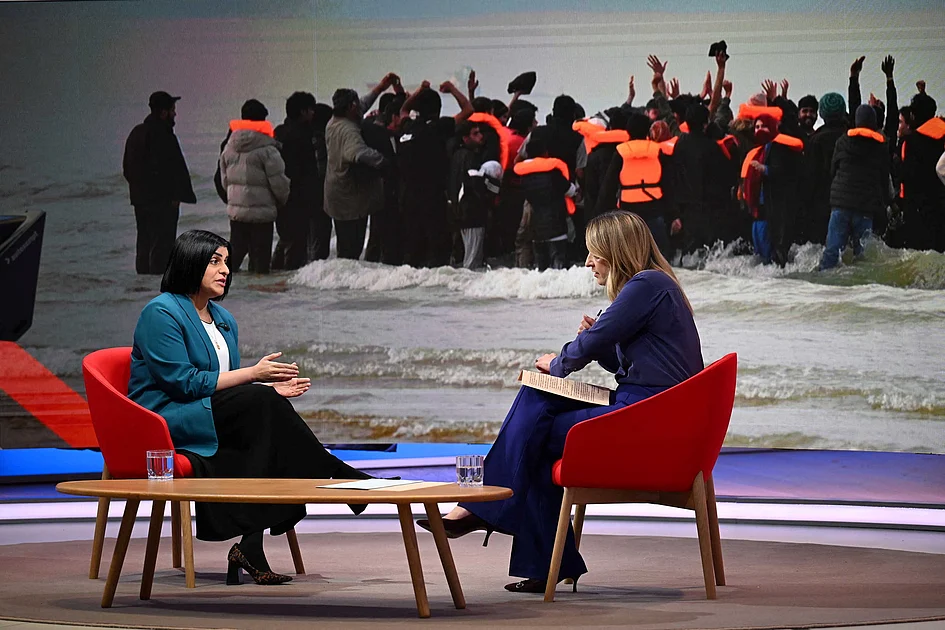
UK to cut protections for refugees under asylum ‘overhaul’
The UK government has unveiled a sweeping overhaul of its asylum system, aiming to drastically reduce protections for refugees and curb irregular immigration. Announced by the Labour government late Saturday, the new measures are modeled on Denmark’s stringent asylum policies and include cutting the length of refugee status from five years to 30 months, subject to regular reviews. Refugees will also face a 20-year wait before applying for long-term residency, up from the current five-year period. Additionally, automatic benefits for asylum seekers will be revoked, with support becoming discretionary and contingent on factors such as employment status and criminal record. Interior Minister Shabana Mahmood described the reforms as the ‘largest overhaul of asylum policy in modern times,’ intended to make the UK less attractive to irregular migrants and facilitate the removal of those already in the country. The move comes amid record-high asylum claims, with 111,000 applications recorded in the year to June 2025. The government is also under pressure to address the surge in Channel crossings, which have fueled the popularity of the anti-immigrant Reform UK party. Critics, including Refugee Council CEO Enver Solomon, argue that the measures will not deter migration and could harm refugees seeking safety and stability in the UK.
-

Prithviraj Sukumaran plays a sandalwood smuggler in ‘Vilayath Buddha’
The highly anticipated Malayalam film ‘Vilayath Buddha,’ starring Prithviraj Sukumaran, has unveiled its gripping trailer, setting the stage for a cinematic experience rich in drama and emotion. Directed by Jayan Nambiar, the film is set against the lush backdrop of the iconic sandalwood forests of Marayoor in south India. The trailer introduces Sukumaran as Double Mohanan, a complex character embroiled in the illicit world of sandalwood smuggling. The narrative weaves together themes of revenge, rivalry, and romance, promising a compelling storyline. The trailer also highlights the intense confrontation between Sukumaran and Shammi Thilakan’s character, hinting at a powerful on-screen clash. Supporting roles are played by Anu Mohan, Rajashri Nair, and Teejay Arunasalam, adding depth to the ensemble cast. The film’s music, composed by Jakes Bejoy, and the cinematography by Arvind Kashyap and Renadive, further elevate its visual and auditory appeal. ‘Vilayath Buddha’ is set to release worldwide on November 21, 2025. Meanwhile, Sukumaran continues to expand his repertoire, with a role in SS Rajamouli’s upcoming film ‘Varanasi,’ starring Mahesh Babu and Priyanka Chopra Jonas, slated for a 2027 release.