
The 99 Dragon Pools, nestled within the Laojun Mountain National Park in Lijiang, Yunnan province, have unveiled their most breathtaking autumn spectacle. As the season transitions, the high-altitude basins are adorned with drifting clouds and mist, resembling a delicate white scarf draped over the landscape. The pools, often referred to as the heart of Laojun Mountain, shimmer like vivid blue-green gems embedded within the ancient forests. The surrounding foliage, now ablaze with autumnal hues, casts a mesmerizing reflection on the crystal-clear waters, creating a scene of unparalleled natural beauty. This annual transformation attracts nature enthusiasts and photographers alike, eager to capture the serene and poetic ambiance of this unique location.
标签: Asia
亚洲
-

Ice-and-snow tourism scenic area opens in NE China
China Snow Town, a premier ice-and-snow tourism destination in Heilongjiang Province, officially opened its doors to visitors on November 17, 2025. Located in Mudanjiang City, the scenic area has curated over 30 cultural and tourism activities, blending traditional folk customs, modern performances, and cutting-edge light shows to create an immersive winter experience. The region, known for its extended snow season, witnessed its first snowfall on October 17 this year, six days earlier than in 2024. With snow depths reaching up to 2 meters during peak season, the area attracts global tourists, drawing a record 1.45 million visitors last winter. Heilongjiang’s ice-and-snow economy has become a significant contributor, achieving a market value of 266.17 billion yuan ($37.6 billion) in 2024, with tourism alone accounting for 182.33 billion yuan. China’s ambitious plan to develop its ice-and-snow economy aims for a total market value of 1.2 trillion yuan by 2027 and 1.5 trillion yuan by 2030, positioning it as a key driver of economic growth.
-

Tom Cruise promises support for cinema as he accepts honorary Oscar
In a star-studded ceremony celebrating his illustrious career, Tom Cruise was awarded an honorary Oscar, recognizing his contributions to cinema spanning over four decades. The 63-year-old actor, a four-time Oscar nominee but never a winner, was honored for his iconic roles in films such as ‘Risky Business,’ the ‘Top Gun’ series, and the ‘Mission: Impossible’ franchise. The event, held on Sunday, also saw director Alejandro Inarritu praising Cruise’s precision and dedication, emphasizing that his talent extends far beyond the daring stunts he is renowned for. Cruise, in his acceptance speech, reflected on his lifelong passion for cinema, recounting how childhood experiences in theaters inspired him to pursue a career in filmmaking. ‘Making films is not what I do. It’s who I am,’ he declared, vowing to continue supporting the art form and nurturing new voices in the industry. The gala also honored Dolly Parton with the Jean Hersholt Humanitarian Award for her philanthropic work, including her efforts to provide millions of books to children. Other recipients included Debbie Allen and Wynn Thomas, celebrated for their contributions to the arts.
-

High-speed rail linking China’s old revolutionary base with Xi’an begins trial operation
A groundbreaking high-speed railway connecting Xi’an, the capital of Shaanxi province, with Yan’an, a city of immense historical significance, has officially entered its trial operation phase. This marks a pivotal step toward the full operational launch of the 299.8-kilometer line, designed to travel at speeds of up to 350 kilometers per hour. The trial run began on Monday morning with the departure of test train 55302 from Xi’an, transitioning from joint debugging and testing to operational simulations. Once fully operational, the railway will reduce travel time between the two cities from 2.5 hours to approximately one hour. Yan’an, known as the revolutionary base of the Communist Party of China from 1937 to 1947, holds a special place in the nation’s history. This project not only enhances regional connectivity but also underscores the modernization of transportation infrastructure in northern Shaanxi. The high-speed rail is expected to boost economic development, tourism, and cultural exchange in the region, further integrating Yan’an into the broader national network.
-

Top US admiral says he’s watching China’s rapid naval buildup closely
In a significant address during his 10-day tour of the Asia-Pacific region, U.S. Admiral Daryl Caudle expressed admiration for China’s burgeoning shipbuilding capabilities while underscoring the critical importance of American alliances with Japan and South Korea. Speaking in Tokyo on Monday, Caudle described China’s naval expansion as ‘impressive,’ particularly highlighting the recent commissioning of its latest aircraft carrier, Fujian, and the sea trials of its advanced amphibious assault ship. Despite China’s numerical advantage in total ships, the U.S. Navy maintains superiority in key vessel categories such as aircraft carriers and amphibious assault ships. Caudle emphasized that China’s global deployment of these assets remains a concern for U.S. strategic interests. However, he reassured that the combined naval capabilities of the U.S. and its regional allies, including Japan, South Korea, and Australia, form a formidable counterbalance. Caudle’s visit coincides with heightened tensions between Japan and China, as Japan’s new conservative Prime Minister has suggested a potential military response to any Chinese aggression toward Taiwan. Earlier in the day, Caudle toured the U.S. Navy base in Yokosuka and a local shipbuilding facility, reiterating the U.S. commitment to bolstering its shipbuilding capacity through collaboration with Japan and South Korea. He also described South Korea’s recent agreement to develop a nuclear-powered submarine as ‘very nascent,’ while noting Japan’s interest in similar technology, which may face public opposition due to the nation’s historical trauma and non-nuclear principles.
-

Bangladeshi ex-PM Hasina sentenced to death for crackdown on student uprising
In a landmark ruling on Monday, a Bangladesh court sentenced former Prime Minister Sheikh Hasina to death for crimes against humanity, marking a pivotal moment in the nation’s turbulent political landscape. The verdict, delivered by Judge Golam Mortuza Mozumder in Dhaka, found Hasina guilty on three counts, including incitement, ordering killings, and failing to prevent atrocities during a deadly crackdown on a student-led uprising that led to her ousting in August 2024. The court also sentenced former Interior Minister Asaduzzaman Khan Kamal, a fugitive, to death on four counts of similar crimes. Former police chief Chowdhury Abdullah Al-Mamun, who pleaded guilty, received a five-year prison term. The trial, conducted in absentia, detailed how Hasina allegedly ordered mass killings, with the United Nations estimating up to 1,400 deaths during the crackdown. Hasina, 78, has dismissed the trial as a ‘jurisprudential joke’ and refused to recognize the court’s authority. The verdict, broadcast live on national television, has intensified political tensions ahead of elections scheduled for February 2026. Security forces were on high alert in Dhaka, with armoured vehicles deployed across the city following recent bombings targeting government-linked buildings and religious sites. Hasina remains defiant, warning that the interim government’s ban on her Awami League party is exacerbating the political crisis in the country of 170 million people.
-

Tenable named a leader in the 2025 Gartner Magic Quadrant for Exposure Assessment Platforms
Tenable (NASDAQ: TENB), a leading exposure management company, has been recognized as a Leader in the inaugural 2025 Gartner Magic Quadrant for Exposure Assessment Platforms. The company achieved the highest position for Ability to Execute and was placed furthest to the right for Completeness of Vision. This recognition underscores Tenable’s leadership in the rapidly evolving cybersecurity landscape. Additionally, Tenable was named a Leader in both the IDC MarketScape: Worldwide Exposure Management 2025 Vendor Assessment and The Forrester Wave: Unified Vulnerability Management, Q3 2025. Tenable’s mission is to help organizations understand and mitigate risk by providing a comprehensive view of vulnerabilities across modern attack surfaces, including AI, cloud, IT, identity, third-party systems, web applications, and operational technology (OT). The Tenable One Exposure Management Platform offers organizations actionable insights to identify and address exposures swiftly. Mark Thurmond, co-CEO of Tenable, emphasized the significance of this recognition, stating, ‘Being named a Leader in the first Gartner Magic Quadrant for Exposure Assessment Platforms validates our proactive approach to cybersecurity. We’ve moved beyond reactive measures to help customers stay ahead of threats.’ Tenable’s platform integrates risk-based analytics and over 300 ecosystem integrations, trusted by more than 44,000 organizations globally. The company’s focus on Continuous Threat Exposure Management (CTEM), a framework introduced by Gartner, has positioned it as a pioneer in the shift from vulnerability management to exposure management. Thurmond added, ‘In an era where AI is weaponized, detection and response alone are insufficient. Exposure management provides a preemptive, holistic view of the attack surface, and Tenable One is uniquely equipped to deliver this.’
-

Philippine President Marcos Jr rejects drug use accusations by his sister
In a dramatic turn of events, Philippine Senator Imee Marcos, the estranged sister of President Ferdinand Marcos Jr., publicly accused him on Monday of being a long-term drug addict. She claimed his alleged cocaine dependence has led to governance issues, including widespread corruption. These allegations, however, were swiftly dismissed by the president’s spokesperson, Claire Castro, who labeled them as recycled and baseless. Castro suggested that Senator Marcos’ accusations might be a desperate attempt to divert attention from ongoing investigations into a corruption scandal involving flood control projects, which could implicate her allies in the Senate. Castro urged the senator to support the president’s anti-corruption efforts rather than shielding those under scrutiny. The scandal, which has sparked public outrage, involves allegations that influential members of Congress and the Senate received kickbacks from construction companies awarded lucrative contracts for substandard or incomplete flood-control projects. This issue is particularly sensitive in the Philippines, a country frequently ravaged by deadly floods and typhoons. Senator Marcos, a high-profile ally of former President Rodrigo Duterte, a vocal critic of Marcos Jr., made the accusations during a speech at a rally organized by a religious group in Manila. She claimed the president’s drug addiction began during their father’s presidency and has persisted, affecting his health and governance. She also alleged that the president’s wife and children are drug users, though no evidence was provided. The senator’s relationship with her brother has reportedly been strained since he assumed the presidency in 2022. In response to the senator’s claims, Castro criticized her for not addressing Duterte’s past admission of using fentanyl, a powerful opioid, and his alleged links to corruption. The political tension between the Marcos and Duterte families continues to escalate, with Vice President Sara Duterte, Rodrigo Duterte’s daughter, being one of the most vocal critics of the current administration. The accusations and counter-accusations highlight the deepening political divide in the Philippines, as the nation grapples with corruption and governance challenges.
-
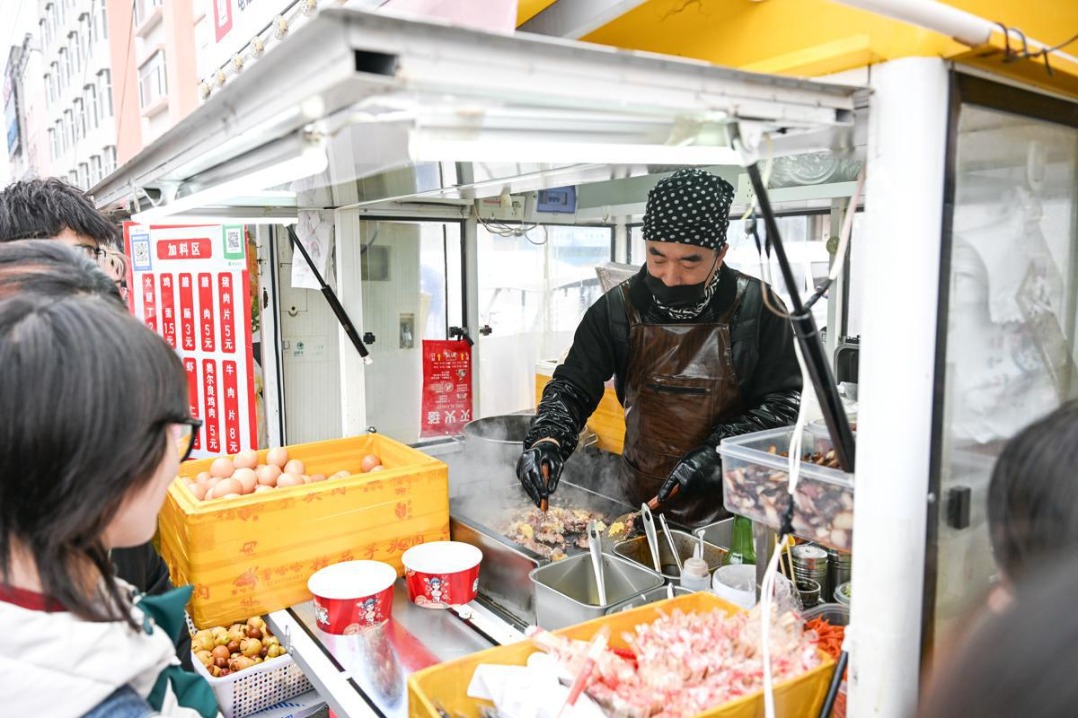
Single father’s egg-fried rice stall becomes campus hit in Jilin
A modest egg-fried rice stall near Jilin Normal University in Siping, Jilin province, has recently become a sensation among students. The stall, run by middle-aged single father Li Bin, has garnered attention for its delicious and affordable offerings. Li, who prepares the dish with the same care he would for his own daughter, emphasizes the importance of providing quality food to the students. His dedication and culinary skills have turned the stall into a beloved campus hotspot. The heartwarming story of Li’s commitment to his craft and his customers has resonated widely, showcasing the impact of small businesses in fostering community connections.
-
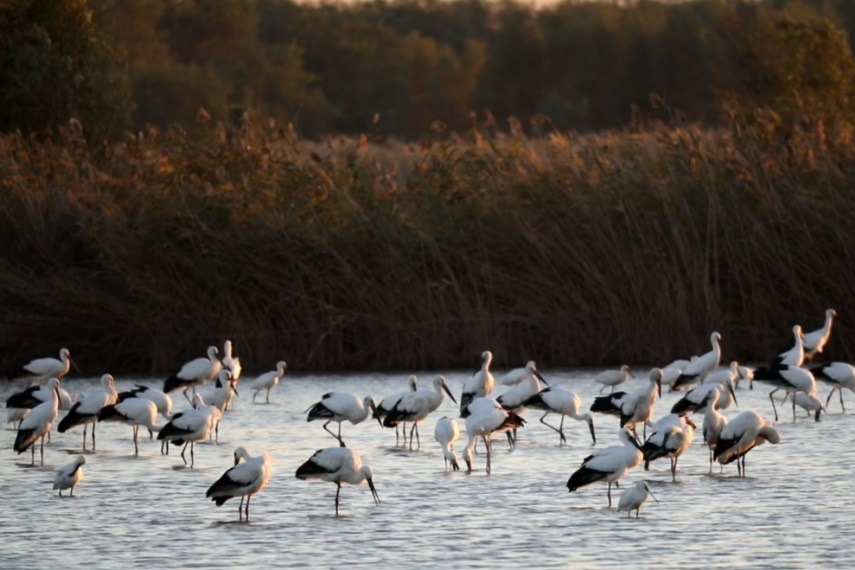
Qilihai Wetland records highs in migratory bird species and population
The Qilihai Wetland in Tianjin’s Ninghe district has witnessed a remarkable increase in both the diversity and population of migratory birds this year, according to local authorities. Monitoring data reveals that 308 bird species have been recorded so far, marking a significant rise of 50 species compared to 2021. Among the notable observations, over 3,000 Eurasian spoonbills were spotted during their autumn migration, doubling the typical count. Additionally, rare species such as the Oriental white stork and black-winged stilt were seen in unusually large numbers. Experts predict that the total number of migratory birds visiting the wetland this year will surpass 600,000. Situated along the East Asian-Australasian Flyway, the Qilihai Wetland is a critical stopover for migratory birds, offering a rich ecosystem of 183 wild plant species and 47 wild fish species that provide ample food resources. This surge in bird activity underscores the wetland’s ecological importance and its role in supporting biodiversity.