
Dubai’s Roads and Transport Authority (RTA) has unveiled a significant upgrade to the Nol Pay app, introducing a suite of new features designed to enhance user convenience and efficiency. The updated app now allows users to renew expiring cards, extend the validity of travel passes, and manage family members’ Nol cards with ease. Proactive notifications remind users to top up low balances, while instant top-ups and real-time balance enquiries ensure seamless transactions. Additionally, users can schedule automatic top-ups for family cards at predefined intervals and purchase travel passes instantly. The app also supports digitized Nol cards on Samsung and Huawei devices, enabling payments across public transport and retail outlets with a simple tap—without opening the app. This upgrade is part of RTA’s broader initiative to integrate Account Based Ticketing (ABT) technology, aligning the app’s interface with the unified digital ecosystem of RTA. By the end of 2024, over 33,000 digital cards had been sold, marking a 460% increase from the previous year, while app downloads surged to 1.5 million, reflecting a 150% year-on-year growth.
标签: Asia
亚洲
-

Sharjah: Man saved from drowning in open sea; rescue team honoured
In a dramatic rescue operation, the Sharjah Civil Defence Marine Rescue Unit saved a man from drowning during a routine patrol on November 17, 2025. The team encountered the individual in a life-threatening condition in the open sea and acted swiftly to bring him aboard their vessel. Immediate first aid was administered before the man was transported to specialized medical facilities for further treatment. The Director General of the Sharjah Civil Defense Authority, Colonel Youssef Obaid Harmoul Al-Shamsi, honored the rescue team for their high readiness and rapid response. This incident highlights the critical role of marine rescue units in ensuring public safety along the UAE’s coastlines. Authorities have been actively promoting beach safety, with Dubai Police recently increasing patrols and introducing summer training programs for school students to teach lifeguarding and rescue techniques. The public is also encouraged to volunteer in maritime safety initiatives, particularly during major events. Mamzar Beach, a shared area between Sharjah and Dubai, has witnessed several drowning incidents in recent years, underscoring the importance of vigilance and adherence to safety guidelines. The Sharjah Civil Defense Authority continues to emphasize the need for community involvement in preventing such tragedies.
-

A Chinese firm bought an insurer for CIA agents – part of Beijing’s trillion dollar spending spree
Since 2018, the United States has significantly tightened its laws to prevent foreign adversaries, particularly China, from investing in sensitive sectors such as semiconductors and telecommunications. This shift in policy was partly triggered by the 2015 acquisition of Wright USA, a small insurance company specializing in liability insurance for FBI and CIA agents, by China’s Fosun Group. The deal raised alarms in Washington due to Wright USA’s access to personal details of top U.S. intelligence officials. Although the transaction was legal, it highlighted the potential risks of Chinese state-backed investments in critical industries. This case, along with others, led to the Trump administration’s stricter investment regulations.
-

Fernandez, Gonzalez take top honours in Dubai Premier Padel P1
The Dubai Premier Padel P1 concluded its second edition with thrilling victories in both the women’s and men’s divisions. Claudia Fernandez and Bia Gonzalez clinched the women’s title, while Agustín Tapia and Arturo Coello emerged as champions in the men’s category. The event, held at the Hamdan Sports Complex, showcased world-class padel action in a transformed Olympic-sized pool arena, accommodating 8,000 enthusiastic spectators. Sheikh Mansoor bin Mohammed bin Rashid Al Maktoum, Chairman of the Dubai Sports Council, graced the finals, presenting medals and trophies to the winners. Ivan Modia, CEO of Gallop Global and Tournament Director, highlighted the event’s success, emphasizing Dubai’s growing reputation as a global hub for premier sporting events. The tournament, featuring top international stars, has set a new benchmark for padel in the MENA region and beyond, with plans already underway for next year’s edition.
-
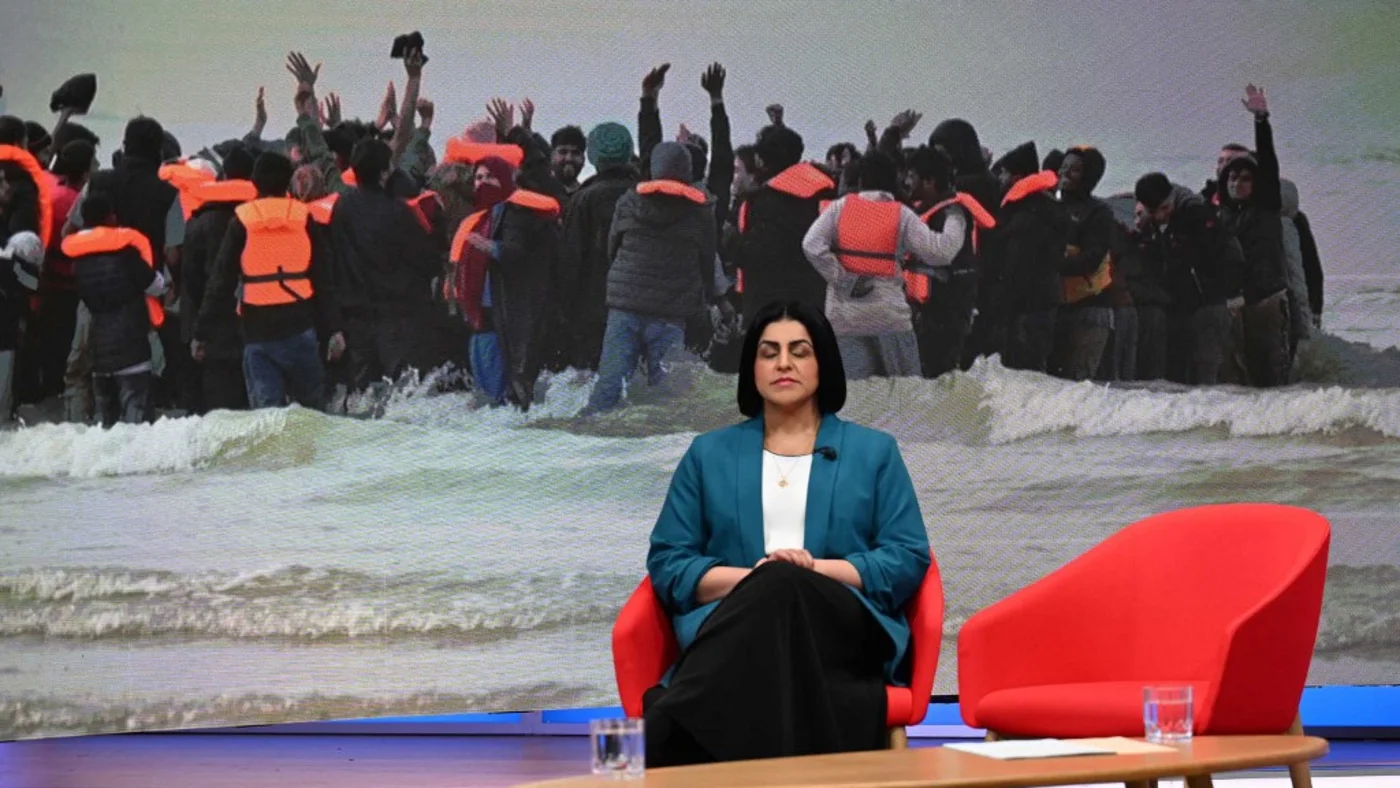
Corbyn and Polanski condemn UK’s plans to seize jewellery from asylum seekers
The UK Labour government’s proposed asylum reforms have sparked widespread condemnation from opposition politicians, who have labeled the measures ‘disgraceful,’ ‘dehumanising,’ and ‘disgusting.’ The reforms, which include seizing valuables from asylum seekers to cover processing costs, have drawn sharp criticism for their perceived harshness and resemblance to policies in Denmark. Home Office minister Alex Norris defended the plan, stating that asylum seekers with assets such as cars or e-bikes should contribute to their accommodation costs, though he clarified that personal heirlooms would not be confiscated. However, critics argue that the policy targets some of the world’s most vulnerable individuals. Green Party leader Zack Polanski, whose Jewish ancestors fled persecution in Latvia, called the proposals ‘chilling’ and reminiscent of darker historical chapters. Former Labour leader Jeremy Corbyn, now an independent MP, accused the government of implementing a ‘degrading’ agenda that mirrors far-right rhetoric. The reforms also include diplomatic sanctions on countries refusing to repatriate asylum seekers and periodic reviews of refugee status, even for families with young children. Labour MP Kim Johnson criticized the policy as a ‘misguided attempt to win votes’ by adopting divisive narratives, while independent MP Ayoub Khan urged the government to allow asylum seekers to work and address application backlogs instead. Critics argue that the reforms distract from pressing issues like poverty and inequality, with Johnson calling for accountability from the wealthiest rather than the most vulnerable. The controversy underscores growing tensions within the Labour Party and broader concerns about the treatment of asylum seekers in the UK.
-
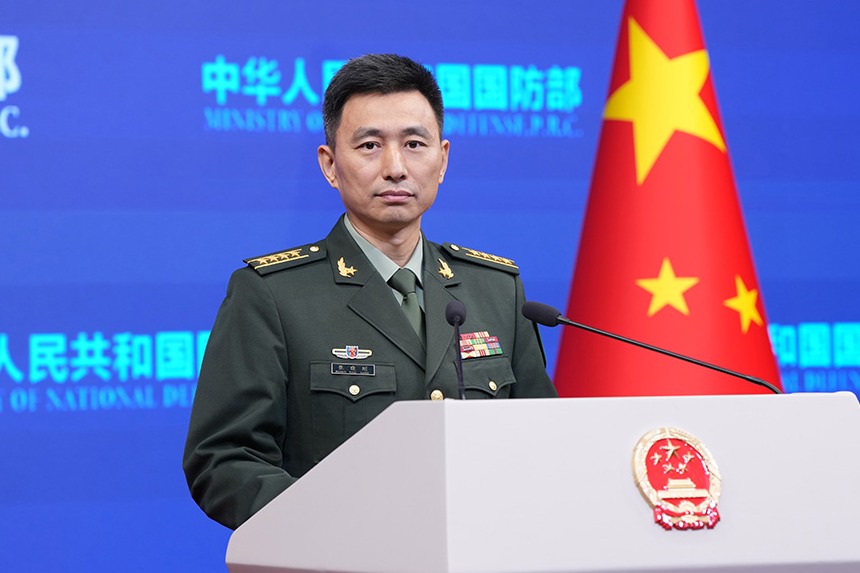
China strongly condemns US $330 million arms sale to Taiwan
China has issued a stern condemnation of the United States’ recent approval of a $330 million arms sale to Taiwan, labeling it a severe infringement on its sovereignty and a blatant interference in its internal affairs. The Chinese Ministry of National Defense expressed strong dissatisfaction and firm opposition to the sale, which was confirmed by the US Defense Security Cooperation Agency on Thursday. The sale includes non-standard spare and repair parts along with related equipment. Zhang Xiaogang, a spokesperson for the ministry, criticized the US for violating the one-China principle and the three China-US joint communiques. He emphasized that such actions undermine China’s security interests and send a wrong signal to Taiwan’s independence separatist forces. Zhang urged the US to cease arming Taiwan immediately to prevent further damage to China-US relations and military ties. He also warned Taiwan’s Democratic Progressive Party that relying on external forces for independence is futile and that China will take all necessary measures to protect its sovereignty and territorial integrity.
-

Transformation of healthcare in China’s Xizang region celebrated
The Xizang Autonomous Region has witnessed a transformative leap in its healthcare system, thanks to a robust medical aid initiative launched by China’s central government. Since 2015, over 2,400 medical professionals have been dispatched in 11 groups to hospitals across the region, marking a significant milestone in improving healthcare delivery in one of the country’s most geographically challenging areas. The program, initially introduced at the sixth central symposium on Xizang-related work in August 2015, initially focused on supporting the Xizang Autonomous Region People’s Hospital and seven municipal-level hospitals. By August 2021, the initiative expanded to include 13 county-level hospitals, further amplifying its impact. Tan Xiangdong, deputy director of Xizang’s health commission, highlighted the program’s focus on cultivating medical disciplines, nurturing local talent, and advancing high-altitude medical research. The results have been profound: the maternal mortality rate dropped from 108.86 per 100,000 in 2014 to 48 per 100,000 by 2020, while the infant mortality rate fell from 16.81 per 1,000 to 7.6 per 1,000 over the same period. Additionally, the average life expectancy in Xizang rose to 72.19 years by the end of 2020, representing the highest growth rate nationwide. This initiative underscores the central government’s commitment to equitable healthcare development and has set a benchmark for medical aid programs in remote regions.
-

China’s digital finance pivot: from clearing ground to rebuilding
China’s central bank, the People’s Bank of China (PBOC), has unveiled a comprehensive strategy for the future of digital finance, signaling a significant shift away from stablecoins towards a sovereign digital currency. The strategy, articulated by PBOC Governor Pan Gongsheng and Vice Governor Lu Lei, emphasizes a structural reset rather than regulatory tightening.
-

UAE announces holiday for public, private schools on 54th Eid Al Etihad
The United Arab Emirates has officially declared a holiday for both public and private schools in celebration of the 54th Eid Al Etihad. Students will enjoy a break on December 1 and 2, corresponding to Monday and Tuesday, with official working hours resuming on Wednesday, December 3, as confirmed by the Ministry of Education. This announcement grants most students a four-day holiday when combined with their regular weekend of Saturday and Sunday. In Sharjah, students will benefit from an extended five-day break, as the emirate observes Friday, Saturday, and Sunday as its weekend. Earlier in the day, the UAE government also announced a four-day paid holiday for private sector employees to commemorate National Day, now referred to as Eid Al Etihad. December 1 and 2 have been designated as paid holidays for private sector workers, allowing residents to enjoy a long weekend. A Cabinet resolution effective from January 1, 2025, permits the transfer of certain public holidays to the start or end of the week if they fall on a weekday. However, this resolution does not apply to Eid holidays unless specifically activated by a Cabinet decision. The unified holiday policy ensures that both public and private sector employees receive an equal number of breaks throughout the year.
-

Israel’s genocide in Gaza: Why are ultra-Orthodox Jews against conscription?
Israel’s military, stretched thin by its ongoing conflicts in Gaza, the West Bank, Lebanon, Iran, Yemen, and Syria, faces a deepening internal crisis over the conscription of ultra-Orthodox Jews, known as Haredim. Historically exempt from mandatory military service, the Haredim have become a focal point of societal and political tension following a June 2024 Supreme Court ruling that mandated their enlistment. This decision has sparked mass protests, with hundreds of thousands of Haredi men taking to the streets of Jerusalem in October 2025, marking one of the largest demonstrations in years. The issue has placed Israeli Prime Minister Benjamin Netanyahu in a precarious position, as his governing coalition relies heavily on ultra-Orthodox political parties. The Haredim, numbering around 1.3 million in Israel, represent 13% of the population and are known for their conservative lifestyle, strict adherence to religious laws, and reliance on government subsidies for their yeshivas (religious schools). While some Haredim support Israel’s military actions, others, like the Neturei Karta, oppose secular Zionism on religious grounds. The draft exemption, rooted in a 1948 policy by Israel’s first prime minister, David Ben-Gurion, has long been justified by the belief that Torah study contributes to national security. However, with the Israeli military facing troop shortages and public support for the exemption waning, the government has begun criminal proceedings against draft evaders. The crisis has exacerbated divisions within Netanyahu’s coalition, with ultra-Orthodox parties threatening to withdraw their support. As protests continue and political tensions escalate, the issue of Haredi conscription remains a critical challenge for Israel’s leadership and societal cohesion.