
India has emerged as a global leader in digital payments, transforming its financial landscape in less than a decade. At the heart of this revolution are two groundbreaking innovations: the Unified Payments Interface (UPI) and the RuPay card network. These systems have not only reshaped domestic commerce but are also challenging traditional financial powerhouses worldwide. UPI, launched in 2016, has become the world’s most successful real-time payment platform, processing over a trillion transactions annually. Its open architecture allows seamless integration with banks, fintech companies, and payment apps, enabling instant, secure, and low-cost transactions. Meanwhile, RuPay has disrupted the dominance of global credit card networks in India, capturing 60% of the domestic card market. Its affordability and sovereignty have made it a preferred choice for small businesses and consumers alike. Together, UPI and RuPay have created a unified payments ecosystem that is unparalleled in its inclusivity and efficiency. This transformation has brought over 500 million people into the formal financial system, empowering small businesses, farmers, and daily wage workers. Beyond India’s borders, UPI is gaining traction in countries like France, Singapore, and the UAE, offering a faster and cheaper alternative to traditional remittance systems. India’s digital payments revolution is not just a technological achievement; it is a strategic move toward financial sovereignty and global influence. As more nations adopt UPI and RuPay, India is laying the foundation for a new financial order that prioritizes inclusivity, affordability, and independence. The world is taking notice, and India’s leadership in digital payments is set to redefine the future of global finance.
标签: Asia
亚洲
-

Arsenal and Sobha Realty mark two years of partnership
Arsenal Football Club and Sobha Realty have marked the second anniversary of their groundbreaking partnership, showcasing a shared dedication to excellence in sports and beyond. Since their collaboration began in 2023, Sobha Realty has secured naming rights for the Sobha Realty Training Centre at London Colney and branding on Arsenal’s training kits. Over the past two years, the partnership has driven significant upgrades to the facility, including enhanced restaurant and dressing room spaces, a dedicated building for the women’s first team, a refurbished media centre, and new sauna and steam amenities. These improvements aim to foster an optimal environment for player preparation and recovery. The collaboration also birthed ‘The Art of Detail,’ a four-part series that delves into the meticulous work behind the scenes at the training centre, reflecting the partners’ shared values of precision, innovation, and continuous improvement. Ashish Parakh, Group Chief Sales & Marketing Officer at Sobha Realty, hailed the partnership as a ‘powerful synergy’ that transcends sports and real estate, emphasizing their commitment to creating spaces where talent flourishes. Juliet Slot, Arsenal’s Chief Commercial Officer, praised Sobha Realty’s role in supporting the club’s ambitions, expressing excitement for future achievements. As the partnership enters its third year, both parties aim to maintain the Sobha Realty Training Centre as a global benchmark for high-performance facilities while strengthening ties between football and luxury real estate.
-

How the viral Baby Shark video created a $400m business
In June 2016, Kim Min-seok, CEO of Pinkfong, approved the release of a 90-second children’s song, unaware it would become a global sensation. The song, ‘Baby Shark,’ amassed over 16 billion views on YouTube, making it the platform’s most-watched video ever. This viral hit not only captivated toddlers and irked adults worldwide but also transformed Pinkfong into a media powerhouse valued at over $400 million. On November 18, 2025, Pinkfong debuted on the South Korean stock market, with shares surging more than 9% on its first trading day. Founded in 2010 as SmartStudy, the company initially focused on digital content for children under 12. With just three employees, including Kim and CTO Dongwoo Son, the firm operated from a modest office. Over the years, Pinkfong underwent significant changes, shifting its focus to toddlers and creating simpler, educational content. The release of ‘Baby Shark’ in 2016 marked a turning point, generating half of the company’s revenue and paving the way for new content and merchandise. Despite facing a plagiarism lawsuit in 2019, Pinkfong successfully defended its position, arguing that ‘Baby Shark’ was derived from a public domain folk song. The company now employs 340 people, with offices in Tokyo, Shanghai, and Los Angeles. While ‘Baby Shark’ remains a cornerstone of Pinkfong’s success, the company is diversifying its portfolio with franchises like Bebefinn and Sealook. Kim Min-seok aims to expand Pinkfong’s offerings and establish it as a tech-driven content creator, leveraging data to shape future projects. However, the challenge lies in proving to investors that Pinkfong is more than a one-hit wonder.
-

Why students turn to ChatGPT instead of teachers, Dubai Future Forum reveals
A groundbreaking revelation at the Dubai Future Forum 2025 has shed light on the growing trend of students turning to generative AI tools like ChatGPT for academic assistance, often bypassing traditional teacher-student interactions. The forum, held from November 18 to 19, brought together over 2,500 participants and 200 speakers from around the globe to discuss the future of education and technology.
-

Taiwan tea maker seeks mainland ties at cross-Strait expo
The 17th Cross-Strait Tea Industry Expo, held in Wuyishan, Fujian Province, has become a platform for fostering connections between Taiwanese and mainland tea industries. Li Ya-chun, a fourth-generation tea maker from Taiwan, showcased his family’s renowned Tung-ting Oolong tea at the event, which ran for five days and concluded on Thursday. This marked Li’s first participation in the expo, where he engaged with mainland business professionals to explore collaboration opportunities and gain insights into local market trends. The expo, hosted in the birthplace of black and oolong teas, highlighted the deepening cultural and economic ties across the Taiwan Strait. This year’s Taiwan pavilion featured a record 200 booths, a 14.3% increase from the previous session. Li hails from Lugu, a major tea-growing region in Nantou, Taiwan, where the origins of Tung-ting Oolong tea trace back to Wuyi Mountain in Fujian. The tea’s history dates to the Qing Dynasty when Lin Feng-chi, a scholar from Lugu, brought Qingxin Oolong saplings from Wuyi Mountain to Taiwan. These saplings flourished in the Tung-ting area, evolving into the celebrated tea variety known today. Li emphasized the shared heritage of tea culture, noting that his family frequently exchanges knowledge with Fujian tea farmers. The expo also celebrated the 20th anniversary of cooperation between Wuyi Mountain and Taiwan’s Ali Mountain. Lai Yueh-tchien, a cross-Strait commentator, highlighted tea’s role as a cultural bridge, carrying shared memories and emotions. The event concluded with a cultural gala integrating tea heritage and modern technology, attended by 80 young tea professionals from both sides of the Strait.
-
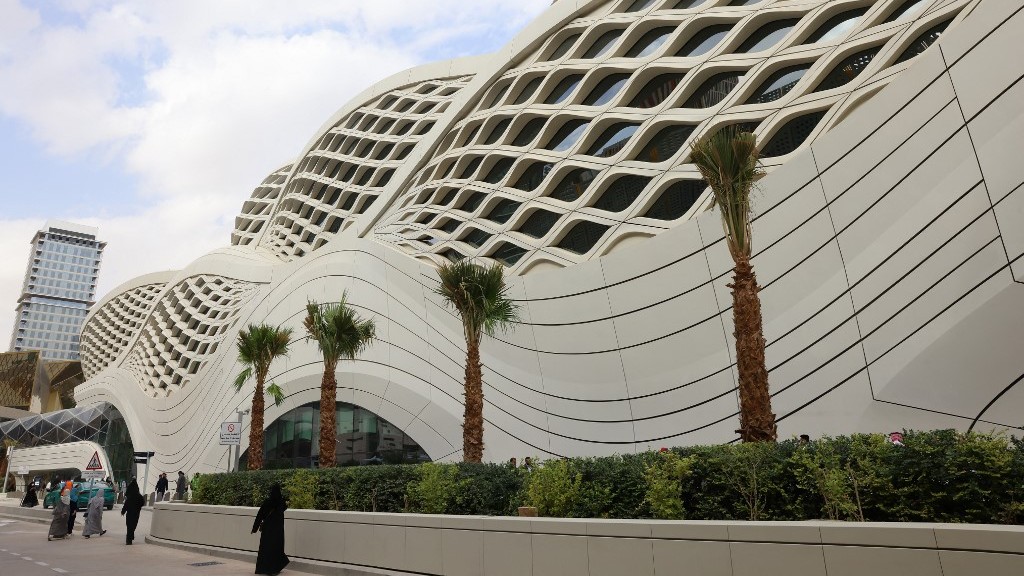
Riyadh Metro construction rife with migrant labour abuses, says Amnesty
A recent report by Amnesty International has shed light on the severe exploitation faced by migrant workers involved in Saudi Arabia’s key infrastructure projects, including the high-profile Riyadh Metro. The report, published on Tuesday, highlights the plight of workers from countries like India, Bangladesh, and Nepal, who endure excessive recruitment fees, low wages, unsafe working conditions, and inadequate housing, all under the oppressive kafala sponsorship system. Marta Schaaf, Amnesty’s programme director, stated that while the Riyadh Metro is celebrated as a cornerstone of the capital’s transport system, it is built on a decade of human rights abuses. Workers are charged exorbitant illegal fees, often forcing them into debt, and face long, grueling hours in unsafe environments for minimal pay. The report also criticizes the Saudi government for failing to enforce laws and multinational corporations for operating in an environment that restricts freedom of expression. With over 13 million migrant workers, constituting 42% of the population, the situation is expected to worsen as Saudi Arabia ramps up recruitment for Vision 2030 projects. Human Rights Watch has warned that the 2034 World Cup, likely to be hosted by Saudi Arabia, will be marred by pervasive rights violations. Despite limited reforms, the kafala system continues to leave workers vulnerable to abuse, with numerous reports of physical and sexual violence, confiscation of passports, and even deaths linked to poor working conditions. The Saudi government has denied these allegations, but rights organizations insist that many deaths are preventable workplace accidents. The report underscores the urgent need for systemic reforms to protect the rights of migrant workers in Saudi Arabia.
-

Stranger Things star Millie Bobby Brown becomes Yas Island’s brand ambassador
Millie Bobby Brown, the acclaimed star of Netflix’s global phenomenon ‘Stranger Things,’ has been appointed as the newest brand ambassador for Yas Island in Abu Dhabi. This announcement coincides with the launch of ‘Stranger Things: The Experience,’ an immersive and interactive attraction based on the hit series, marking its debut in the Middle East. The experience, which runs from November 14, 2025, to February 15, 2026, allows fans to step into the world of Hawkins, Indiana, and relive key moments from the show. Brown joins a prestigious roster of Hollywood celebrities who have represented Yas Island, including Ryan Reynolds, Jason Momoa, and Kevin Hart. Liam Findlay, CEO of Miral Destinations, emphasized the strategic timing of Brown’s appointment, noting the enduring popularity of ‘Stranger Things.’ The show’s fourth season ranked third globally on Netflix, amassing 140 million views within its first 91 days. With the fifth and final season set to premiere in three parts starting November 26, 2025, the collaboration aims to enhance Yas Island’s reputation as a premier entertainment destination. Home to attractions like Ferrari World and Warner Bros. World, Yas Island continues to solidify its position as a global hub for tourism and leisure. Findlay highlighted the initiative’s potential to elevate visitor experiences and attract international tourists, further strengthening Abu Dhabi’s appeal as a cultural and entertainment hotspot.
-

UN faces funding crisis as billions needed to feed world’s hungry
The United Nations’ World Food Programme (WFP) has issued a stark warning about a looming humanitarian crisis, as funding cuts threaten its ability to address global hunger. In a statement released on Tuesday, the WFP revealed that it may only be able to assist approximately one-third of the 318 million people projected to face severe hunger by 2026. The agency estimates that $13 billion is required to provide essential aid to 110 million of the most vulnerable individuals. However, current funding forecasts suggest it may receive only half of that amount. The WFP attributed the escalating crisis to a combination of factors, including conflict, extreme weather events, and economic instability, which have more than doubled the number of people experiencing acute hunger since 2019. The United States, historically the WFP’s largest donor, has significantly reduced its contributions under President Donald Trump, with other major donors, including several European nations, also scaling back their humanitarian budgets. The WFP’s 2026 Global Outlook report highlights a fragmented and underfunded global response, with aid now covering less than half of total needs. The report also notes a surge in attacks on aid workers, further complicating relief efforts. Last week, the WFP and the Food and Agriculture Organization (FAO) identified 16 ‘hunger hotspots’ worldwide, from Haiti to South Sudan, where funding shortfalls are exacerbating already dire conditions. The agencies have so far received only $10.5 billion of the $29 billion required to address the crisis.
-

Dubai: SUV overturns in multi-vehicle crash on busy Al Quoz road
A severe multi-vehicle collision on Sheikha Latifa bint Hamdan Street in Dubai’s Al Quoz area caused significant traffic disruptions on Tuesday afternoon. The accident involved an SUV that overturned and two sedans, leading to congestion that extended towards Sheikh Zayed Road. Emergency teams swiftly responded to the scene, deploying multiple ambulances to assist injured drivers and passengers. Authorities closed two lanes to manage the wreckage, forcing traffic to merge into a single lane. Debris from the damaged vehicles was scattered across the road, though no immediate reports of injuries or fatalities were confirmed. Rescue crews worked diligently to clear shattered glass and debris, aiming to restore normal traffic flow. Earlier in the day, another accident involving an SUV and a sedan occurred near Equity Metro Station, further complicating traffic conditions. Police were present at both scenes, directing vehicles and assisting motorists as tow trucks removed the damaged cars. These incidents highlight the challenges of managing traffic on Dubai’s busy roads, especially during peak hours.
-

What is so contentious about Shabana Mahmood’s new asylum reforms?
The British government has introduced a series of sweeping reforms to the asylum system, aiming to curb immigration and increase deportations. Announced by Home Secretary Shabana Mahmood in Parliament on Monday, the proposals have sparked fierce criticism from across the political spectrum, including former Labour leader Jeremy Corbyn and Green Party leader Zack Polanski. The reforms, influenced by Prime Minister Keir Starmer’s chief of staff Morgan McSweeney and Blue Labour founder Lord Maurice Glasman, mark a significant shift in Labour’s approach to immigration. Key measures include seizing assets from asylum seekers to cover processing costs, limiting annual asylum admissions to a few hundred initially, and making refugee status temporary with reviews every 30 months. Refugees will no longer be eligible for indefinite leave to remain after five years, instead waiting up to 20 years for permanent residency. Some asylum seekers will lose state benefits, while AI-driven technology will be trialled for age verification. The government also plans to reconsider human rights law, particularly Article 8 of the European Convention on Human Rights, in migration cases. These reforms come amid public discontent over immigration figures and the rise of Nigel Farage’s Reform UK, which has consistently topped opinion polls. Net migration dropped to 431,000 in 2024, down from 906,000 the previous year, due to reduced healthcare and student visas. Critics, including Corbyn and Polanski, have condemned the proposals as dehumanizing and divisive, accusing Labour of adopting far-right rhetoric. Mahmood, however, defends the reforms as necessary to restore moderate politics and control illegal migration, which she claims is tearing the country apart. Despite internal dissent, the government is unlikely to reverse course, with Mahmood emerging as a key figure in Labour’s shift to the right on immigration.