标签: Asia

亚洲

  • Marwan Barghouti brutally assaulted in Israeli prison, family told

    Marwan Barghouti brutally assaulted in Israeli prison, family told

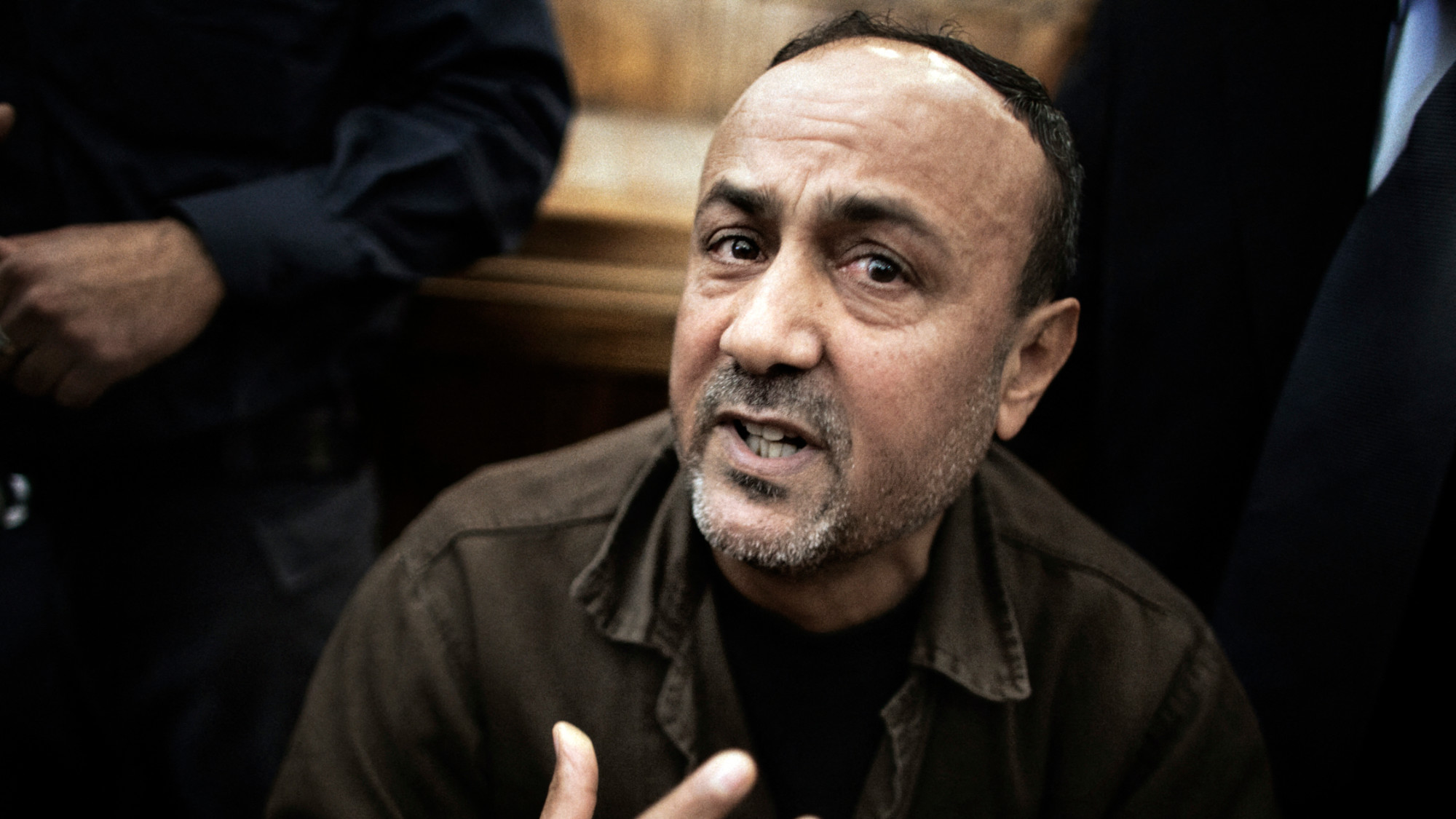
    Marwan Barghouti, a senior Palestinian political figure imprisoned by Israel, has reportedly suffered a brutal assault by prison authorities, with his family receiving alarming details about his condition. According to accounts relayed through a recently released prisoner, Barghouti sustained severe injuries including a partially severed ear, broken ribs, fractured fingers, and dental damage during multiple beating sessions. His son, Arab Barghouti, described the conveyed information as indicating an “extremely difficult and very dangerous” state.

    This incident is not isolated. A confidential source close to the Barghouti family revealed that the Fatah leader has been physically assaulted at least five times over the past two years, characterizing these actions as “a slow, gradual assassination attempt.” The attacks coincide with increasing threats from senior Israeli officials, including National Security Minister Itamar Ben Gvir, who was filmed visiting Barghouti’s cell in August while warning Israel would “obliterate” its opponents.

    Barghouti, who has been incarcerated since 2004 and is serving five life sentences plus 40 years for his role in attacks that killed five Israelis during the Second Intifada, has long been held in solitary confinement. His treatment has intensified alongside other prominent Palestinian detainees since October 2023. Despite his imprisonment, opinion polls consistently show Barghouti would likely win the Palestinian presidency by a significant margin if elections were held.

    The Palestinian Authority’s Commission of Detainees’ Affairs has gathered information corroborating the assault reports, yet according to sources, neither the PA nor Fatah leadership has taken meaningful action to intervene. This perceived abandonment has left the family in “complete shock and desperation,” with one source questioning how a senior Fatah official could be “left to face his fate alone.”

    This case unfolds against the backdrop of a massive detention campaign across the West Bank following the Gaza conflict initiation in October 2023. Current estimates indicate at least 9,250 Palestinians are held in Israeli prisons, with nearly half detained without charge or trial under administrative detention orders. Documentation shows record levels of systemic abuse and torture in Israeli custody, with at least 100 prisoner deaths reported under these conditions.

    International efforts to secure Barghouti’s release, including attempted negotiations by Egypt, Qatar, and Hamas as part of Gaza ceasefire discussions, have thus far been unsuccessful, with Israel subsequently removing his name from prisoner exchange lists.


  • India announces free e-visa for Russian citizens, set to begin soon

    India announces free e-visa for Russian citizens, set to begin soon

    In a significant diplomatic move, Indian Prime Minister Narendra Modi announced the imminent launch of a complimentary e-visa program for Russian citizens during a joint press conference with Russian President Vladimir Putin on Friday. The landmark initiative, set to commence operations shortly, will eliminate all processing fees for both individual travelers and tourist groups seeking to visit India.

    The newly established electronic visa system promises expedited processing within a 30-day timeframe, substantially streamlining entry procedures for Russian nationals. This hospitality enhancement coincides with President Putin’s first state visit to New Delhi since Russia’s military engagement in Ukraine commenced in 2022, signaling strengthened bilateral relations despite international pressures.

    Both nations concurrently agreed to diversify their economic engagement beyond traditional sectors of oil and defense equipment. The announcement comes amid ongoing trade negotiations between India and the United States regarding punitive tariffs imposed during the Trump administration, partially motivated by New Delhi’s continued energy purchases from Moscow.

    Russia has expressed ambitions to rectify trade imbalances by increasing imports of Indian goods, targeting bilateral trade volumes reaching $100 billion by 2030. India remains the world’s largest purchaser of Russian seaborne oil and military equipment, demonstrating resilient economic ties that have persisted through geopolitical tensions. The visa facilitation program represents a strategic effort to deepen people-to-people connections while reinforcing diplomatic and economic cooperation between these historically allied nations.

  • Chinese sailor forced to halt Antarctic expedition after robbery

    Chinese sailor forced to halt Antarctic expedition after robbery

    In a devastating blow to polar exploration, Chinese sailor Zhai Mo’s historic Antarctic circumnavigation attempt has been abruptly suspended following a brutal attack on his vessel while anchored in Papua New Guinea waters. The incident, which occurred despite prior security assurances from local authorities, has left the expedition’s sailing craft completely unseaworthy and forced an indefinite postponement of the ambitious 36,000-nautical-mile journey.

    The assault on ‘Zhai Mo No 1’ represents more than mere vandalism—it constitutes a systematic dismantling of the vessel’s operational capabilities. Upon returning from a mandatory customs clearance procedure in the capital city, Captain Zhai and his five crew members discovered their ship ransacked with critical navigation systems, engines, generators, and life-saving equipment either stolen or deliberately destroyed. In a particularly malicious act, perpetrators opened the vessel’s bottom valves, causing extensive flooding throughout all compartments.

    This expedition, which embarked from Shanghai’s Bailianjing wharf on October 10, aimed to achieve humanity’s first complete circumnavigation of Antarctica along the Antarctic Circle while promoting polar ecological conservation and maritime culture. The vessel had previously completed a successful Arctic Ocean circumnavigation, making its current state of disrepair particularly tragic.

    While local law enforcement has intercepted one boat involved in the raid and recovered some stolen equipment, multiple perpetrators remain at large with investigations ongoing. The Chinese embassy in Papua New Guinea has activated emergency protocols, coordinating with local authorities and the Chinese community to provide assistance to the stranded crew members, all of whom are confirmed safe despite the traumatic experience.

    The incident raises significant questions about maritime security in remote waters and represents a substantial setback for international polar exploration efforts. The team must now reevaluate their entire Antarctic mission while assessing whether the extensive damage to their vessel and equipment can be overcome for future expeditions.

  • French, Chinese artists revive industrial heritage in Hunan

    French, Chinese artists revive industrial heritage in Hunan

    In an extraordinary cross-cultural initiative, French and Chinese artists are jointly transforming the industrial legacy of Ningxiang’s former coal mining hub into a vibrant cultural destination. The collaborative effort between Avignon Higher School of Art and Chinese partners focuses on the Wumuchong International Art Zone, located in Meitanba—a town once dominated by coal extraction until the last mine closed in 2014.

    The project, launched in 2016, represents a conscious shift from industrial decline to cultural rejuvenation. Since cooperation began earlier this year, teams have been working to restore nine historical structures while maintaining their authentic materials and character. According to Hervé Giocanti, a conservation professor at ESAA, the approach goes beyond physical restoration: “First, we need to understand the history of this mine and its people.”

    This philosophical commitment led artists to conduct interviews with retired miners, weaving personal narratives and emotional connections into the restoration process. The French team also introduced innovative ecological solutions, including biochar technology that processes abandoned materials through anaerobic combustion, reducing pollution while creating outputs useful for both agriculture and art.

    French artist Sarah Venturi exemplified this sustainable approach by developing a unique pigment called “Meitanba Black” from recycled coal dust found on site. Professor Liu Ke of the Guangzhou Academy of Fine Arts, one of the project’s initiators, revealed that restoration will focus on two to three buildings annually. The vision includes integrating new constructions with preserved heritage, all utilizing advanced ecological technologies.

    Concurrently, efforts are underway to attract international artists for residencies lasting one to two months, fostering deeper cultural exchanges and collaborative relationships with local artists. This extended engagement aims to create genuine bonds between visiting artists and the Chinese community, transforming Meitanba into an internationally recognized eco-art zone.

  • New engineering academicians vow to advance scientific innovation

    New engineering academicians vow to advance scientific innovation

    In a significant ceremony held in Beijing on Friday, 71 newly elected members of the Chinese Academy of Engineering (CAE) formally received their certificates and committed to advancing scientific innovation and transforming research into practical applications. The event marked a pivotal moment in China’s scientific landscape, emphasizing the critical role of engineering excellence in national development.

    CAE President Li Xiaohong addressed the gathering, highlighting how this year’s academician selection process specifically aligned with national strategic priorities. ‘This election cycle emphasized driving the development of new quality productive forces through technological innovation, in keeping with contemporary requirements,’ Li stated. He encouraged the new academicians to take leadership roles in scientific innovation, contribute to strategic national research, and serve as exemplary figures in advancing China’s journey toward high-quality scientific self-reliance.

    The new members represent diverse engineering disciplines and shared their specialized commitments. Zhang Pengju from the Civil, Hydraulic and Architecture Engineering Division pledged to ‘promote the spirit of scientists and break through key core technologies,’ focusing on transforming engineering science into practical solutions that improve living environments in grassland regions and promote green urban-rural transformation.

    Lu Zhanyuan from the Agriculture Division emphasized the honor as recognition for all technological workers in frontier regions. He outlined pressing challenges including ‘ensuring food security, promoting green agricultural development, and overcoming bottlenecks in agricultural development in northern China’s farming-pastoral ecotone.’ Lu committed to focusing on farmland protection, water conservation, seed industry revitalization, and cultivating young scientific talents.

    A notable breakthrough in this year’s election was the inclusion of three researchers from private enterprises, signaling China’s commitment to cross-sector collaboration. Huang Xianbo, chief engineer at global advanced materials supplier Kingfa and member of the Chemical, Metallurgical and Materials Engineering Division, noted that ‘the primary concern for researchers in private enterprises is transitioning technological achievements into productive forces.’ He pledged enhanced cooperation with university and research institute scientists to conduct cutting-edge research, contributing to China’s development as a science and technology powerhouse.

    The ceremony followed last month’s announcement by both the Chinese Academy of Sciences and Chinese Academy of Engineering of their expanded ranks, adding 144 new domestic academicians and 51 international members.

  • Mainland says Taiwan’s Lai a ‘peace breaker’ and ‘troublemaker’

    Mainland says Taiwan’s Lai a ‘peace breaker’ and ‘troublemaker’

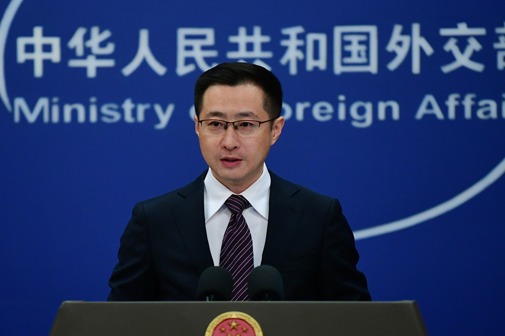
    The Chinese Foreign Ministry has formally characterized Taiwan’s leader Lai Ching-te as a ‘peace breaker’ and ‘troublemaker’ during a press briefing on Friday. Spokesperson Lin Jian issued the stern condemnation following Lai’s participation in The New York Times DealBook Summit, where he delivered pre-recorded remarks addressing the Taiwan Strait situation.

    Lin asserted that certain US media platforms have facilitated the dissemination of what he described as false ‘Taiwan independence’ narratives by providing a stage for Taiwanese authorities. This action, according to the ministry, constitutes a serious violation of both the one-China principle and the three foundational China-US joint communiques that have historically governed Sino-American relations.

    The spokesperson emphasized that such platforming sends dangerously misleading signals to separatist factions within Taiwan. Lin reiterated China’s firm opposition to these developments, characterizing Lai’s statements and actions as revealing his fundamental nature as an advocate for ‘Taiwan independence’ and his strategic attempts to pursue separation through American support.

    ‘Regardless of Lai’s rhetoric or maneuvers, these efforts represent futile attempts destined for failure,’ Lin stated categorically. The Foreign Ministry simultaneously called upon Washington to comprehensively honor commitments previously made by US leadership regarding the Taiwan question, highlighting the extremely sensitive nature of what China considers an internal matter.

  • New materials reinforce Nanjing war truth

    New materials reinforce Nanjing war truth

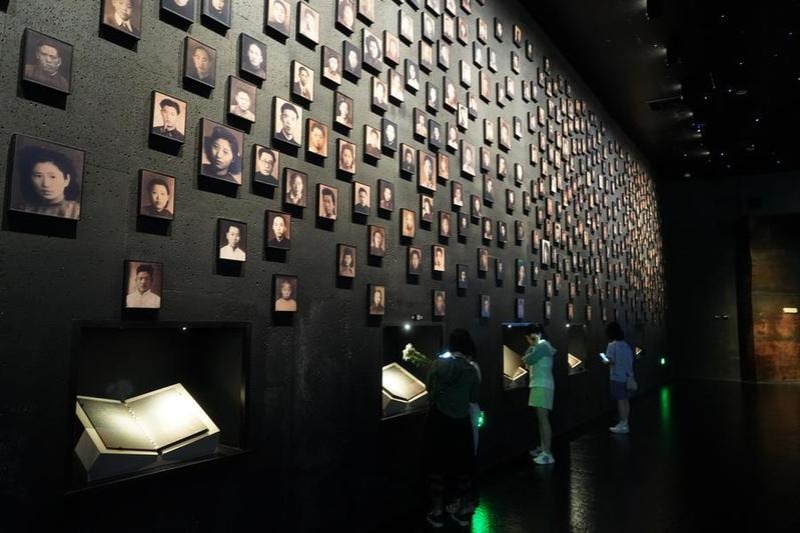
    In a significant development for historical documentation, the Memorial Hall of the Victims in Nanjing Massacre by Japanese Invaders has publicly revealed thirteen previously undisclosed sets of cultural artifacts and archival materials. This revelation coincides with the 88th anniversary commemorations of the tragic events that unfolded in Nanjing during 1937-1938.

    The comprehensive collection includes multiple categories of evidentiary materials: personal correspondence from Japanese military personnel, photographic documentation of post-occupation Nanjing, archival records of a Chinese military physician killed during the defense operations, an Imperial Japanese Army photographic album, and international publications in English and French detailing wartime atrocities.

    Among the most compelling evidence are two letters written by Japanese soldiers that provide firsthand perpetrator accounts of systematic executions. One particularly disturbing document, dated January 8, 1938, describes in graphic detail the daily execution of Chinese prisoners at a riverside location, with bodies disposed of in the Yangtze River. The soldier’s casual description of these acts as ‘very interesting’ and ‘so satisfying’ offers chilling insight into the psychological mindset of the perpetrators.

    Historical researchers have verified the authenticity of these documents through cross-referencing with previously published materials, including address information matching records in Japanese historical publications. According to Wang Weixing, research fellow at the Jiangsu Provincial Academy of Social Sciences, these letters constitute ‘ironclad evidence’ of Japanese military operations during the massacre period.

    The collection also features eight photographic images donated by Chinese citizens from Henan province, documenting key locations and events during the occupation period. These include images of architectural damage from artillery bombardment, the Japanese military’s formal entry ceremony, and engineering operations conducted during the siege.

    International perspectives are represented through publications including the November 22, 1938 edition of American magazine LOOK, which featured a exposé titled ‘Killing for Fun’ with photographic evidence of Japanese military conduct. Additional evidentiary value comes from French and English publications that document demographic information contradicting revisionist claims about Nanjing’s population at the time of occupation.

    Academic experts emphasize that these materials provide crucial third-party verification of historical events, particularly significant given ongoing attempts by certain factions to deny or minimize the scale of atrocities. The evidence directly counters arguments regarding population figures that have been used to question the established historical record.

    The memorial hall’s expanded collection strengthens the historical narrative through multiple evidentiary streams, ensuring that the memory of victims is preserved with factual accuracy and that future generations may access comprehensive documentation of these historical events.

  • Beijing court launches a groundbreaking initiative by appointing 21 retired judges as mediators

    Beijing court launches a groundbreaking initiative by appointing 21 retired judges as mediators

    In an innovative move for China’s judicial system, the Beijing Chaoyang District People’s Court has established a pioneering mediation unit composed entirely of retired legal professionals. On December 5, 2025, the court formally appointed 21 former judges to spearhead this groundbreaking initiative aimed at leveraging decades of judicial expertise for community dispute resolution.

    The newly formed team, drawing retired judges from Beijing and multiple provinces including Shandong, Guizhou, Hunan, Hubei, and Heilongjiang, represents the nation’s first specialized mediation corps of its kind. These legal veterans bring collective experience spanning hundreds of years in adjudication to their new roles as mediators.

    Their primary mission focuses on intercepting disputes before they escalate into formal litigation, addressing conflicts across diverse areas including employment disagreements, family property distribution, child support arrangements, and public utility concerns such as heating disputes. The court recently highlighted the team’s effectiveness by showcasing eight successfully mediated cases that demonstrated their capability in resolving complex community issues.

    Among the appointees is Hou Chunying, a retired judge from the very court now launching this initiative, who expressed enthusiasm about continuing her service to the community. ‘I’m delighted to have a new platform to continue my passion for serving the community with my legal expertise,’ Hou stated. ‘As a mediator, I can leverage my over 30 years of adjudication experience to assist the public in resolving disputes from a fresh perspective.’

    Complementing the judicial expertise, the team also incorporates two retired community committee leaders, enhancing its ability to connect with citizens and understand grassroots legal needs. This strategic combination of legal acumen and community insight aims to both address immediate disputes and foster broader public legal awareness.

    This initiative marks a significant evolution in China’s approach to judicial resource utilization and community governance, representing a novel model for engaging retired professionals in social conflict prevention and the promotion of rule-of-law principles at the grassroots level.

  • US firms continue to ‘grow, invest in China’

    US firms continue to ‘grow, invest in China’

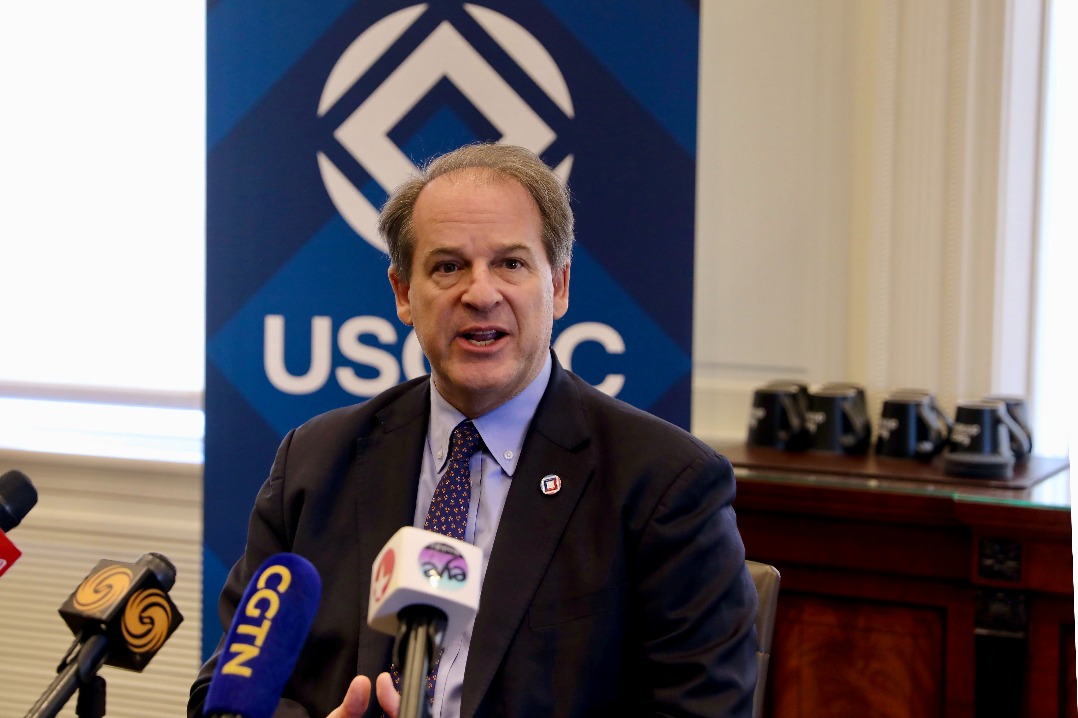
    Contrary to prevailing narratives of economic decoupling, American corporations are not only maintaining but expanding their substantial presence in China, according to Sean Stein, President of the US-China Business Council. Speaking to journalists in Washington on Wednesday during a meeting with a Chinese business delegation, Stein directly challenged what he termed the ‘myth’ of US corporate withdrawal from the Chinese market.

    Stein emphasized that despite media reports and political rhetoric suggesting otherwise, the reality on the ground reveals continued commitment to China operations. ‘American companies are somehow leaving the China market or stepping away from it. That is absolutely not the case,’ Stein stated unequivocally.

    The business leader’s comments come amid conflicting media narratives. While some outlets including The Wall Street Journal, Reuters and Forbes have documented instances of companies reducing exposure or reconsidering China strategies due to cost pressures, tariff implications and geopolitical risks, other publications such as Bloomberg, Politico and the New York Post have reported sustained US corporate engagement driven by market scale, supply chain depth and persistent consumer demand.

    Stein highlighted that many US companies have maintained operations in China for half a century and show no signs of departure. Rather than disengaging, these firms are implementing sophisticated ‘China-plus-one’ strategies—maintaining Chinese operations while simultaneously developing additional supply chain options elsewhere in Asia and beyond. This approach allows companies to benefit from China’s established manufacturing ecosystem while building resilience through regional diversification.

    Supporting Stein’s assessment, the US-China Business Council’s 2025 Member Survey released in July revealed that over 80% of American companies continue to invest in China to serve the local market. Notably, nearly all surveyed firms indicated that maintaining China operations remains essential for global competitiveness. The survey did acknowledge that some companies are recalibrating supply chains with expansions into Southeast Asia, India and Mexico—adjustments driven primarily by tariff considerations, rising input costs and the pursuit of operational resilience rather than wholesale departure from China.

  • ’10-hour wait’: UAE-India flights impacted by IndiGo’s massive cancellations

    ’10-hour wait’: UAE-India flights impacted by IndiGo’s massive cancellations

    India’s largest carrier IndiGo faces mounting operational challenges as massive flight cancellations and severe delays continue to disrupt travel between the United Arab Emirates and India for the fourth consecutive day. The airline canceled over 500 flights on Friday alone, creating a backlog that may require weeks to fully resolve.

    Passengers traveling between Dubai and Mumbai have borne the brunt of these disruptions, with some experiencing delays extending up to ten hours. Dubai resident Mohammed reported his brother’s 12:15 PM Thursday flight to Mumbai ultimately departed at approximately 10:00 PM that evening. Another traveler, Satish, arrived at Dubai International Airport Terminal 1 before 5:00 PM for a 7:00 PM flight only to face eventual cancellation, leaving him with limited rebooking options and visa complications.

    The scale of disruptions extends beyond the Mumbai route. A Dubai-Kozhikode flight scheduled for 3:20 AM Friday departed over eight hours late at 11:29 AM. Similarly, a Dubai-Ahmedabad flight originally set for 5:15 AM Friday was rescheduled for 3:00 PM—a nearly ten-hour delay.

    IndiGo issued a public apology on social media platform X, acknowledging ‘widespread disruption across IndiGo’s network and operations’ over the previous two days. The airline expressed regret to affected customers and industry stakeholders.

    The crisis stems primarily from new Flight Duty Time Limitations implemented by India’s Directorate General of Civil Aviation (DGCA). These regulations mandate 48 hours of weekly rest for pilots and cap weekly night landings at two, significantly reduced from the previous allowance of six. The changes respond to growing concerns about pilot fatigue but have created immediate operational challenges.

    In response to the ongoing disruptions, Indian media reports indicate the DGCA has issued notices to relax weekly rest requirements for crew members, suggesting regulatory flexibility to address the airline’s operational crisis.