The third Yellow River Estuary International Birdwatching Season in Dongying, Shandong Province, has become a beacon of ecological and cultural significance. Shahbaz Khan, Director of the UNESCO Regional Office for East Asia, emphasized the profound connection between humanity and nature showcased in this event. Speaking to China Daily on November 15, Khan lauded the Yellow River Delta as a critical sanctuary for migratory birds and a blueprint for sustainable habitat conservation. He also commended the festival’s cultural richness and its role in fostering ecological awareness among younger generations, describing it as a milestone in environmental stewardship. The event not only highlights the region’s natural beauty but also underscores the importance of preserving biodiversity for future generations. Dongying’s birdwatching season is more than an annual spectacle; it is a testament to the harmonious coexistence of people and nature, leaving a lasting legacy in the skies.
标签: Asia
亚洲
-

India: New Delhi car bomb accused appears in court
In a significant development following last week’s deadly car bomb attack in New Delhi, Indian anti-terrorism authorities presented suspect Amir Rashid Ali in court on Monday. Ali is accused of conspiring with Umar Un Nabi, the alleged suicide bomber, to orchestrate the terror attack that claimed multiple lives. The National Investigation Agency (NIA) stated that Ali facilitated the purchase of the vehicle used as an improvised explosive device (IED), while Nabi, a medical professor from Haryana, is believed to have carried out the attack. The blast occurred near a bustling metro station close to the historic Red Fort, a site of national significance. Prime Minister Narendra Modi condemned the attack as a ‘conspiracy’ and pledged to bring all perpetrators and their sponsors to justice. The death toll remains disputed, with the NIA reporting 10 fatalities and hospital sources indicating at least 12. The court has ordered Ali to be held in custody for 10 days as investigations continue. The incident has heightened tensions between India and Pakistan, with Indian officials issuing stern warnings to their neighbor. Army Chief General Upendra Dwivedi likened the recent cross-border conflict to a ‘trailer,’ suggesting that India is prepared for further escalation if provoked. The attack underscores the persistent threat of terrorism in the region and raises questions about the motives and networks behind the suspects.
-

China to maintain pressure on Japan over PM’s Taiwan comments
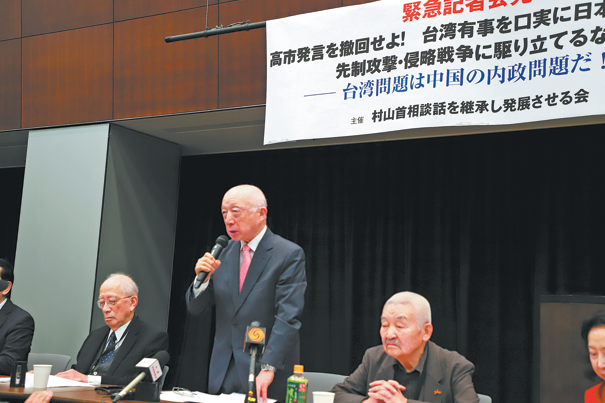
China has issued a stern warning to Japan, demanding the retraction of Prime Minister Sanae Takaichi’s controversial comments regarding Taiwan. Foreign Ministry spokeswoman Mao Ning emphasized during a press briefing on Monday that China will persist in making strong representations to Japan, urging immediate reflection on its actions. This development follows the arrival of Masaaki Kanai, a senior official from Japan’s Ministry of Foreign Affairs, in China. Kanai is expected to engage in discussions with Liu Jinsong, the director-general of the Department of Asian Affairs at China’s Foreign Ministry. The diplomatic friction underscores the sensitivity of Taiwan-related issues in Sino-Japanese relations, with China reiterating its firm stance on Taiwan as an inalienable part of its territory.
-

The deadly fungus Chinese scientists smuggled into the US
In a high-profile case that has drawn significant attention, Yunqing Jian, a 33-year-old Chinese plant scientist at the University of Michigan, pleaded guilty on November 12, 2025, to charges of smuggling and making false statements to the FBI. Jian, who was arrested in June 2025 along with another Chinese scientist, was accused of smuggling Fusarium graminearum, a crop-damaging fungus, into the United States. Under her plea agreement, Jian was sentenced to time served and is expected to be deported. In a statement to the court, she claimed her research was aimed at protecting crops from disease.
Fusarium graminearum, a well-known pathogen, poses significant risks to crops such as wheat, corn, and barley, causing Fusarium head blight, or scab. This disease can reduce crop yields by up to 45% in severe cases and has been responsible for substantial economic losses in the U.S., estimated at over $1 billion annually. The fungus also produces mycotoxins, which can harm both humans and livestock, leading to gastrointestinal damage, immune system issues, and nervous system inflammation.
The case has highlighted the strict regulations surrounding the import and movement of plant pathogens in the U.S., governed by the Plant Protection Act of 2000. Scientists must obtain permits from the USDA’s Animal and Plant Health Inspection Service (APHIS) to transport such pathogens, a process that can take up to six months. The goal is to prevent the introduction of new genetic material that could exacerbate crop damage.
Farmers combat Fusarium graminearum through integrated management strategies, including the use of fungicides, crop rotation, and planting resistant crop varieties. Researchers are also developing predictive models to forecast scab outbreaks, helping farmers apply fungicides at optimal times to minimize damage.
Jian’s case underscores the delicate balance between scientific research and biosecurity, raising questions about the ethical and legal responsibilities of scientists working with potentially harmful pathogens.
-

At least 98 Palestinian prisoners died in Israeli custody: Report
A staggering 98 Palestinian prisoners have died in Israeli detention since October 2023, with the actual number likely much higher, according to Physicians for Human Rights Israel (PHRI). The Guardian reported on Monday that most of these fatalities were civilians, with systematic torture and abuse being rampant in detention centers. Causes of death ranged from physical violence to medical neglect and malnutrition. Among the deaths, 52 occurred in military custody, all from the Gaza Strip, while 46 took place in Israel Prison Service (IPS) custody, including detainees from the West Bank and Palestinian citizens of Israel. PHRI compiled its findings from forensic reports, testimonies, eyewitness accounts, and official information requests. The report highlights that Israeli authorities have only provided detailed data for the first eight months of the conflict, revealing a mortality rate of one death every four days. Since May 2024, PHRI has identified an additional 35 deaths, but the true number is believed to be higher, especially as hundreds of Gazan detainees remain unaccounted for. Naji Abbas, PHRI’s director, emphasized that the reported figures do not represent the full picture, as many deaths remain undocumented. Allegations of extrajudicial killings, physical abuse, sexual assault, and starvation have surged since October 2023, with no legal proceedings or accountability for these deaths. PHRI warns that every Palestinian detainee is at risk, regardless of health or age, and accuses Israel of implementing a policy of forced disappearance and lack of transparency. Currently, an estimated 9,250 Palestinian prisoners are held across 23 facilities, excluding unaccounted detainees in military camps. PHRI condemned Israel’s violations of international law, making it nearly impossible to trace the fate of many detainees. Meanwhile, Israeli authorities claim to act in accordance with the law and investigate all deaths in custody.
-

Ming Dynasty stone street attracts visitors in Guizhou
Shiban Street, a historic stone-slab lane nestled in Duyun, Guizhou province, has become a captivating destination for visitors. This ancient pathway, dating back to the early Ming Dynasty (1368–1644), winds through rows of stilted wooden houses, offering a glimpse into China’s rich cultural heritage. The street’s undulating path follows the natural terrain, flanked by vibrant painted doors and windows. Local shops showcase traditional crafts, including Bouyei homespun cloth, Miao silverwork, and Shui embroidery, adding to the area’s allure. Historically, this mountain road served as the southern gateway to the city and was a vital part of an ancient route connecting Guizhou and Guangxi Zhuang Autonomous Region during the Ming and Qing (1644–1911) dynasties. Today, Shiban Street stands as a testament to the region’s enduring legacy, attracting tourists eager to explore its timeless charm.
-

Sheikh Hasina, former Bangladesh prime minister, sentenced to death
A Bangladeshi court has handed down a death sentence to former Prime Minister Sheikh Hasina in absentia, convicting her of crimes against humanity. The verdict stems from her alleged role in ordering a violent crackdown on a student-led uprising in July and August 2024, which resulted in significant casualties and the collapse of her government. The International Crimes Tribunal, comprising three judges, found Hasina guilty of incitement, issuing orders to kill, and failing to prevent atrocities during the protests.
-

Less fruits, banned items: Many Dubai school canteens fail on nutrition, audit finds
A recent audit conducted by Dubai Municipality has uncovered significant shortcomings in the nutritional quality of food offered in school canteens across the emirate. The audit, part of the My School Food campaign, examined over 7,000 food items across more than 200 schools, revealing a lack of fruit options and the use of banned ingredients in some cases. Hassa Al Sumaiti, Acting Head of the Applied Nutrition and Awareness Section, highlighted the disparity between schools offering healthy choices and those failing to meet basic nutritional standards. She emphasized the importance of fruits in daily nutrition and the need for stricter oversight to ensure compliance with dietary guidelines. The findings were discussed at the Dubai International Food Safety Conference, where Al Sumaiti stressed the long-term impact of school food on children’s health and academic performance. The audit is the first phase of a broader initiative to improve school food systems in Dubai, with pilot programs already underway in selected schools. The municipality plans to implement these improvements citywide, aiming to foster healthier eating habits and reduce the risk of obesity and chronic diseases among students. Additionally, the event honored students who participated in the school food hero competition, showcasing innovative ideas like AI-powered canteens to promote sustainability and nutrition.
-

Life imprisonment for ex-Heilongjiang official in bribery, embezzlement case
Li Xiangang, a former high-ranking official in Heilongjiang Province, has been sentenced to life imprisonment for bribery and embezzlement, as reported by China Central Television. The court also stripped Li of his political rights for life and confiscated all his personal property. The illicit gains from his crimes were forfeited to the state treasury, and the embezzled funds are to be returned to the affected organizations. From 2006 to 2024, Li exploited his various positions, including mayor and Party secretary of Shuangyashan city, secretary-general of the Heilongjiang Provincial Government, and deputy director of the Standing Committee of the Heilongjiang Provincial People’s Congress, to provide undue advantages to businesses and individuals in exchange for bribes totaling 117 million yuan ($16.46 million). Additionally, in 2009 and 2012, Li embezzled public assets worth over 1.68 million yuan through fraudulent property transactions. The court noted the severity of his crimes and their detrimental impact on public trust. However, due to Li’s confession, remorse, and restitution of illegal gains, he was granted a more lenient sentence. The case was publicly tried on May 22, with prosecutors presenting substantial evidence. Li admitted to his crimes in his final statement.
-

Samsung users report ‘unremovable’ Israeli bloatware AppCloud on devices
Samsung, the South Korean tech giant, is embroiled in a global controversy as users and cybersecurity experts raise alarms over pre-installed bloatware on its devices. The software in question, AppCloud, initially reported in Samsung Galaxy A and M series phones in West Asia and North Africa, has now been found in devices across Europe and South Asia. Users claim the app is unremovable without root access, the highest level of system control, raising significant privacy and ethical concerns.
AppCloud, linked to the Israeli firm ironSource, has been accused of secretly harvesting user data and lacking a transparent privacy policy. IronSource, now owned by American company Unity, has a notorious history of creating invasive programs that bypass user permissions and security checks. Despite being disabled, AppCloud persists on devices, reappears after updates, and can covertly install additional software.
Digital rights organization SMEX has highlighted these issues, noting that Samsung’s terms of service fail to address AppCloud or ironSource explicitly. In May, SMEX sent an open letter to Samsung, but the company has yet to respond. The issue has gained traction online, with users sharing screenshots of AppCloud’s extensive permissions, including full network access and the ability to download files without notification.
Cybersecurity experts warn that while AppCloud’s behavior doesn’t confirm it as classic spyware, its aggressive data collection and unremovable nature blur the line between ad-tech and surveillance. As the controversy grows, Samsung faces mounting pressure to address these privacy concerns and provide users with greater control over their devices.