标签: Asia

亚洲

  • Man sentenced to 4 years in landmark dog poisoning case

    Man sentenced to 4 years in landmark dog poisoning case

    In a groundbreaking legal ruling, a Beijing court has sentenced a 65-year-old man to four years imprisonment for dispersing lethal toxins in a residential community, resulting in the deaths of nine pet dogs. The Chaoyang District People’s Court delivered the verdict on Thursday against defendant Zhang, convicting him of employing hazardous substances in public spaces—marking the first criminal case of its kind in Beijing’s judicial history.

    The tragic incident occurred in September 2022 when eleven dogs were poisoned within a Chaoyang district residential complex. Nine animals succumbed to sodium fluoroacetate, an extremely toxic compound commonly used in rodenticides that proves fatal through minimal contact or ingestion. Among the victims was a 13-year-old West Highland white terrier belonging to Li, who described the pet as her closest companion through her most formative adult years.

    The case gained significant attention as Li resigned from her employment to pursue justice, eventually representing multiple pet owners during October 2023 court proceedings. While Zhang admitted to dispersing the poisonous substance, he provided ambiguous motivations for his actions, citing general antipathy toward dogs while disputing direct responsibility for the fatalities.

    Legal experts highlight the case’s significance in establishing precedent for animal welfare litigation and defining legal boundaries regarding public endangerment through unauthorized use of toxic materials. The defendant has indicated intentions to appeal the verdict to a higher judicial authority.
  • China’s ‘Jiutian’ large drone takes first flight, aims for versatile civil roles

    China’s ‘Jiutian’ large drone takes first flight, aims for versatile civil roles

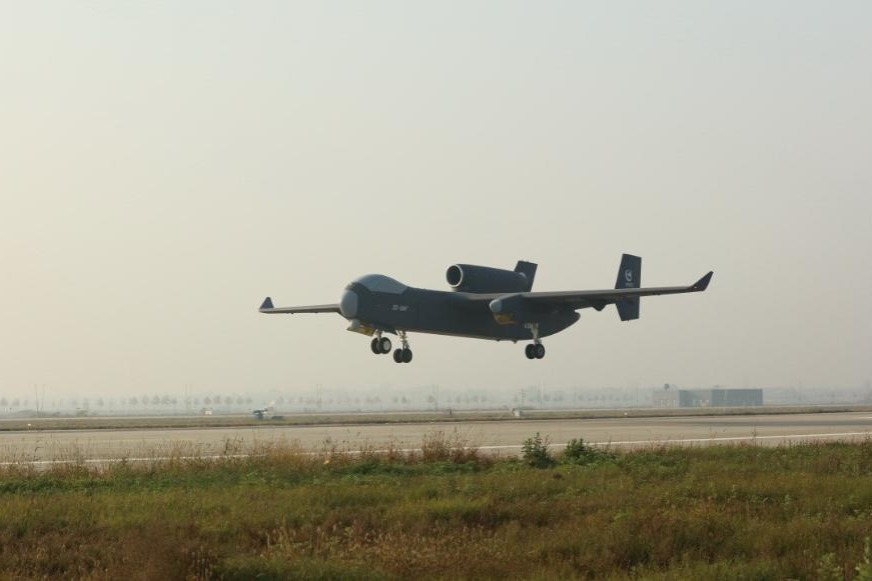
    China’s aviation sector has achieved a significant milestone with the successful inaugural flight of the ‘Jiutian,’ a large-scale unmanned aerial vehicle (UAV) developed by the state-owned Aviation Industry Corporation of China (AVIC). The demonstration took place on Thursday in Pucheng, located in Shaanxi province, marking a substantial advancement in the country’s indigenous drone capabilities.

    Engineered for exceptional performance metrics, the Jiutian drone features an impressive 16.35-meter length and a 25-meter wingspan. With a maximum takeoff weight of 16 tonnes, the aircraft can carry payloads up to 6,000 kilograms. Its operational specifications include an endurance of 12 hours and an extensive ferry range of 7,000 kilometers, enabling long-distance missions across diverse geographical regions.

    The UAV’s design incorporates advanced features including a high operational ceiling, broad speed range, and short takeoff and landing capabilities. These characteristics make it particularly suitable for challenging environments and various mission profiles. A key innovation is its modular payload system, which allows for rapid reconfiguration to address multiple civilian needs.

    Potential applications span critical sectors including precision logistics for delivering heavy cargo to remote areas, emergency communication support during disasters, comprehensive geographic surveying, and natural resource mapping. This versatility positions the Jiutian as a multi-role platform that could significantly enhance operational efficiency in fields requiring heavy-lift aerial capabilities without human pilot constraints.

    The development represents China’s growing expertise in high-end UAV technology and underscores the expanding applications of drone systems beyond military use into civilian and commercial domains, potentially creating new paradigms in transportation, emergency response, and resource management.

  • An airstrike on a hospital in a rebel-controlled area of Myanmar kills 34 and injures 80

    An airstrike on a hospital in a rebel-controlled area of Myanmar kills 34 and injures 80

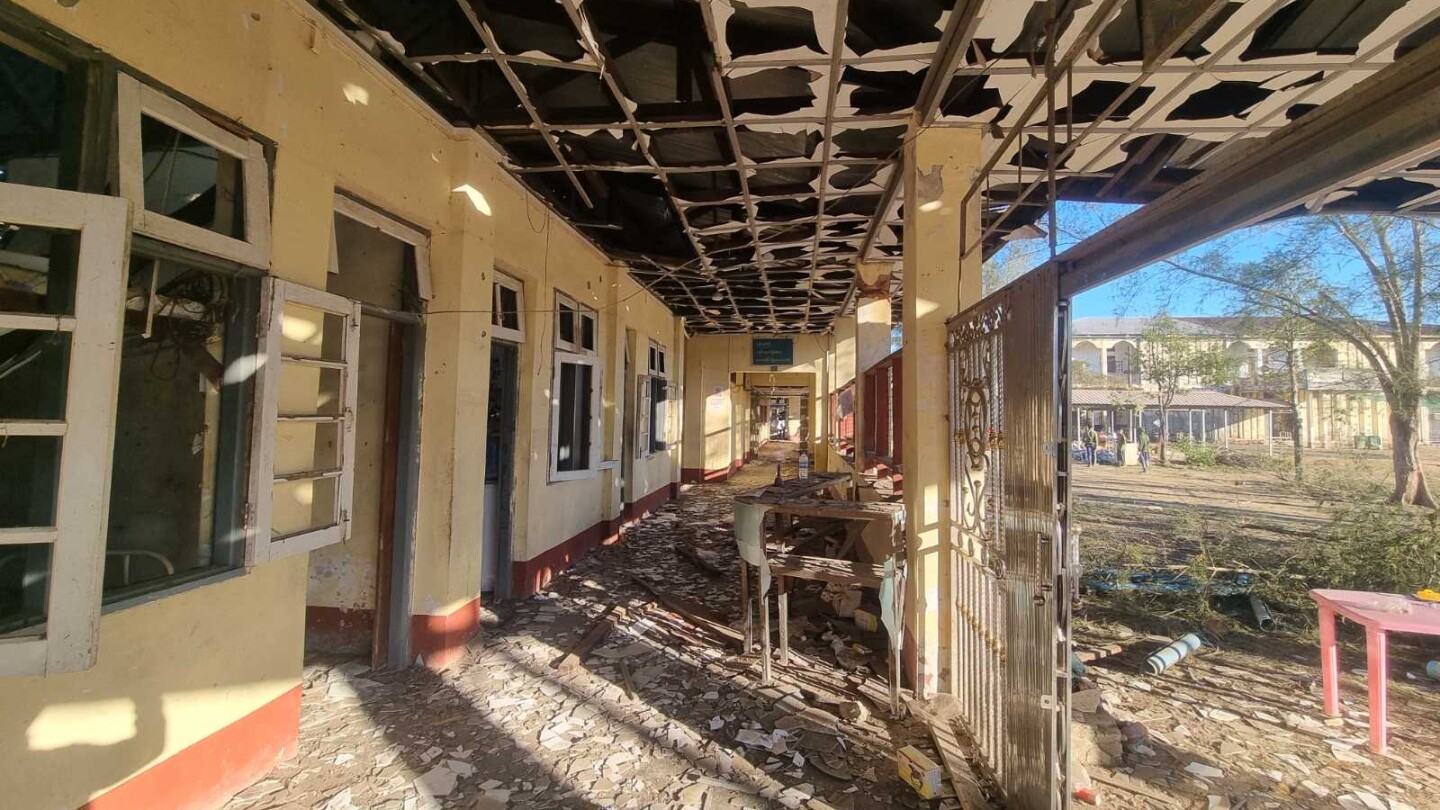
    In a devastating escalation of Myanmar’s ongoing civil conflict, a military airstrike has obliterated a critical hospital in Rakhine State, resulting in substantial casualties among patients and medical personnel. The assault occurred Wednesday evening in Mrauk-U township, an area under the control of the ethnic Arakan Army rebel force.

    According to verified reports from rescue workers and independent media outlets, the aerial bombardment killed 34 individuals—17 women and 17 men—while injuring approximately 80 others. Wai Hun Aung, a senior rescue services official in Rakhine, confirmed that a jet fighter deployed two bombs at 9:13 p.m., with one striking the hospital’s recovery ward and another landing adjacent to the main building. The attack reduced most of the medical facility to rubble and damaged nearby vehicles.

    This hospital had served as a vital healthcare lifeline for local communities after most medical facilities in Rakhine shuttered due to prolonged conflict. Doctors had recently regrouped in Mrauk-U to restore essential medical services when the strike occurred.

    The military junta that seized power in Myanmar’s 2021 coup has remained silent regarding the attack. Meanwhile, the shadow National Unity Government—formed by lawmakers barred from office—has strongly condemned the assault and called for international intervention to pressure the military regime.

    The Arakan Army, which captured Mrauk-U in February 2024, represents the armed wing of the Rakhine ethnic minority seeking autonomy from Myanmar’s central government. Their November 2023 offensive has secured 14 of Rakhine’s 17 townships, including a strategically significant regional army headquarters.

    This incident occurs against the backdrop of planned December 28 elections, which opposition groups decry as an attempt to legitimize military rule. The junta has intensified airstrikes against pro-democracy forces ahead of the polls, deepening Myanmar’s political crisis that began with the 2021 power grab.

  • 2 workers trapped in S. Korean construction site collapse

    2 workers trapped in S. Korean construction site collapse

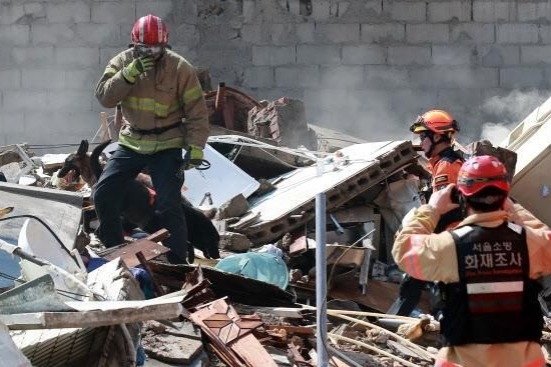
    Emergency response teams in Gwangju, South Korea, are conducting urgent rescue operations following the collapse of a steel structure at a library construction site on Thursday afternoon. The incident occurred at approximately 1:58 PM local time (0458 GMT) in the city located 270 kilometers south of Seoul.

    According to reports from Yonhap News Agency, two construction workers remain trapped beneath the collapsed framework. Fire and rescue authorities immediately deployed to the scene following the structural failure, though specific details regarding the workers’ conditions have not been disclosed.

    The collapse has raised immediate concerns about construction safety protocols at the developing site. Local officials have cordoned off the area while specialized teams work to stabilize the debris and extract the trapped individuals. The library project, part of the city’s urban development initiative, now faces scrutiny as investigators prepare to examine the causes behind the structural failure.

    This incident highlights ongoing challenges in construction safety within rapid development projects across South Korea. The response operation continues as rescue teams work against time to locate and extract the workers from the precarious situation.

  • Bangladesh to hold national elections in February, the first since 2024 mass uprising

    Bangladesh to hold national elections in February, the first since 2024 mass uprising

    Bangladesh’s Chief Election Commissioner A.M.M. Nasir Uddin announced Thursday that the nation’s next general elections will take place on February 12, marking a pivotal moment in the country’s political landscape eighteen months after the ousting of former Prime Minister Sheikh Hasina. The electoral timetable was formally disclosed during a nationally televised address, revealing that citizens will simultaneously participate in a referendum concerning proposed political reforms while electing 300 parliamentary representatives.

    The electoral process will commence with nomination filings from December 12-29, followed by a six-day review period. January 20 has been designated as the final date for candidate withdrawals. This election represents the thirteenth national vote since Bangladesh achieved independence from Pakistan in 1971 following a bloody liberation war.

    The political environment remains deeply fractured since the massive protests of July-August 2024 that precipitated Hasina’s removal from power. The former leader, now residing in exile in India, received a death sentence in November from a Bangladeshi court for crimes against humanity related to the unrest. Since August 8, 2024, an interim government led by Nobel Peace Prize laureate Muhammad Yunus has governed the nation, implementing a ban on all activities of Hasina’s Awami League party that effectively excludes the former ruling party from electoral participation.

    Reactions to the election announcement have revealed stark political divisions. The Bangladesh Nationalist Party (BNP), along with Islamist party Jamaat-e-Islami and the newly formed National Citizen Party, welcomed the electoral timeline. BNP Secretary General Mirza Fakhrul Islam Alamgir characterized the announcement as ‘a day of joy,’ expressing confidence that the election commission and government were committed to implementing the people’s democratic rights.

    Conversely, Hasina’s Awami League condemned the election as illegitimate, asserting that excluding the party that led Bangladesh’s independence movement would plunge the nation into profound crisis. The interim government under Yunus congratulated the election commission, describing the upcoming vote as consolidating Bangladesh’s ‘new trajectory’ following last year’s historic uprising.

    International human rights organizations have raised concerns about Bangladesh’s democratic transition, with Human Rights Watch and Amnesty International questioning the rule of law under the interim government and the fairness of Hasina’s trial. The nation remains polarized as it attempts to break from the dominance of two dynastic political camps—Hasina’s Awami League and the BNP led by ailing former Prime Minister Khaleda Zia—while addressing concerns about rising Islamist influence.

    The concurrent referendum addresses demands by political parties to legitimize the ‘July National Charter’ of political reforms, which currently lacks binding legal status. In Bangladesh’s parliamentary democracy of 170 million people, only parliament can amend the constitution, making the referendum’s outcome potentially significant for the country’s governance framework. Over 127.6 million registered voters are eligible to participate in both the electoral and referendum processes.

  • The Olympic spirit: a guiding light in everyday life

    The Olympic spirit: a guiding light in everyday life

    Beyond the medal ceremonies and record-breaking performances, the Olympic spirit serves as a profound life philosophy that guides individuals through everyday challenges. Recent reflections from elite athletes demonstrate how competitive values translate into personal growth and resilience.

    Chinese women’s field hockey team members have embraced what they term the ‘snow lotus spirit’ – a metaphor for thriving in adverse conditions, much like the flower that blooms in high-altitude harsh environments. Meanwhile, Olympic sailors have drawn parallels between navigating treacherous waters and managing life’s unpredictable circumstances, emphasizing how the same discipline required in competition helps them weather personal storms.

    These athletes consistently highlight three core Olympic principles that prove invaluable in daily life: mutual respect that builds stronger communities, perseverance that turns obstacles into opportunities, and the continuous drive for self-improvement that propels personal development. Their experiences reveal that the pursuit of being ‘higher, faster, stronger’ extends far beyond athletic achievement to encompass intellectual growth, emotional maturity, and character building.

    The timing of these reflections is particularly significant as global sports communities prepare for future Olympic games. They serve as a reminder that while the world watches extraordinary physical feats during competitions, the most enduring impact of the Olympic movement may be its ability to inspire ordinary people to embrace challenge, respect opponents, and pursue excellence in their daily endeavors.

  • Ambassadors promote China-Africa cooperation at lecture tour in Shanxi

    Ambassadors promote China-Africa cooperation at lecture tour in Shanxi

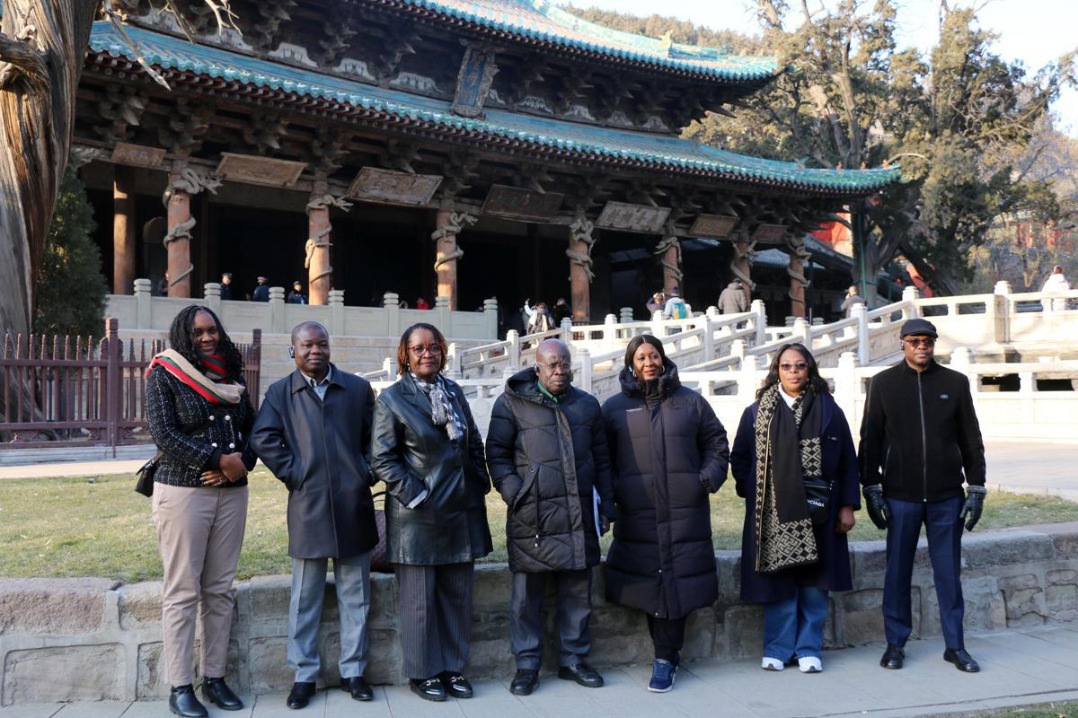
    TAIYUAN – In a significant diplomatic engagement, seven ambassadors from five African nations converged in Taiyuan for the “Lecture Tour by Ambassadors from African Countries · Shanxi 2025” event this Tuesday. This high-level forum served as a strategic platform to catalyze the high-quality development of Sino-African cooperation through concrete regional partnerships.

    The proceedings revealed substantial alignment between Africa’s developmental objectives and Shanxi’s economic transformation agenda. Namibian representative Bertha Amakali articulated her nation’s 35-year independence journey, emphasizing priorities in poverty reduction, economic self-sufficiency, and emerging energy sector development. She specifically outlined potential Chinese collaboration in energy infrastructure investment, technical capacity building, and long-term enterprise partnerships.

    Complementing these perspectives, Lu Xiangdong of the Chinese People’s Association for Friendship with Foreign Countries observed that African development priorities resonate strongly with Shanxi’s ongoing industrial modernization efforts. He emphasized that enhanced cultural and people-to-people exchanges would fundamentally strengthen bilateral relations.

    Economic data presented by Shanxi’s Department of Commerce Deputy Director Li Guorong demonstrated remarkable commercial momentum: provincial trade with Africa has surged from 5.25 billion yuan in 2020 to 11.17 billion yuan in 2024, achieving a 20.8% compound annual growth rate. The province has established commercial ties with over 50 African nations, with five countries individually exceeding 100 million yuan in trade volume.

    Burkina Faso’s Ambassador Daouda Bitie characterized Shanxi as a pivotal hub in practical China-Africa cooperation, citing particularly successful collaborations in energy development and vocational training. Zimbabwe’s Ambassador Abigail Shoniwa expressed admiration for Shanxi’s green transition and industrial diversification through innovation, noting parallel cultural richness between her nation and the Chinese province.

    The diplomatic delegation engaged in extensive field visits to Jinci Museum, Pingyao Ancient City, and several local enterprises, exploring synergistic opportunities in cultural tourism, green energy development, and technological exchange. According to Shanxi Foreign Affairs Office Director Dong Xiaolin, these exchanges form an integral component of the province’s broader internationalization strategy, which includes enhanced cultural understanding programs and exchange delegations.

    The event was jointly hosted by the Chinese People’s Association for Friendship with Foreign Countries and Shanxi’s foreign affairs authorities, representing a concerted effort to deepen Sino-African relations through provincial-level diplomacy.

  • China’s poverty alleviation achievements continuously consolidated, expanded in 2025

    China’s poverty alleviation achievements continuously consolidated, expanded in 2025

    China has successfully reinforced its monumental poverty eradication accomplishments throughout 2025, implementing robust measures to prevent large-scale relapse into economic hardship. According to Wednesday’s announcement from the Ministry of Agriculture and Rural Affairs, assistance policies have been executed with remarkable stability nationwide, effectively securing the foundational safeguards against a return to poverty.

    The comprehensive monitoring system identified and provided crucial support to over 7 million individuals deemed at risk of slipping back below the poverty threshold this year. This systematic approach has proven instrumental in maintaining the nation’s hard-won progress in livelihood improvement.

    Substantial enhancements have been achieved across essential social welfare domains including education accessibility, healthcare coverage, housing security, and clean drinking water provisions for previously impoverished populations. These developments represent critical components of China’s ongoing commitment to sustainable development.

    Industrial development in formerly impoverished regions continues to demonstrate vigorous growth. All 832 counties that have eliminated poverty have now cultivated between two to three distinctive leading industries, creating powerful economic drivers that stimulate local economies and provide stable employment opportunities.

    The employment landscape remains particularly strong, with over 30 million individuals who have escaped poverty maintaining stable employment. This workforce participation secures more than two-thirds of total household income for families that have transitioned out of economic hardship.

    Economic indicators further validate these achievements. During the first three quarters of 2025, rural residents in formerly impoverished counties recorded a per capita disposable income of 13,158 yuan (approximately $1,860), representing a growth rate that exceeded the national rural average by 0.5 percentage points.

  • US and Japan hold joint flight drills as China ups military activity near Japan

    US and Japan hold joint flight drills as China ups military activity near Japan

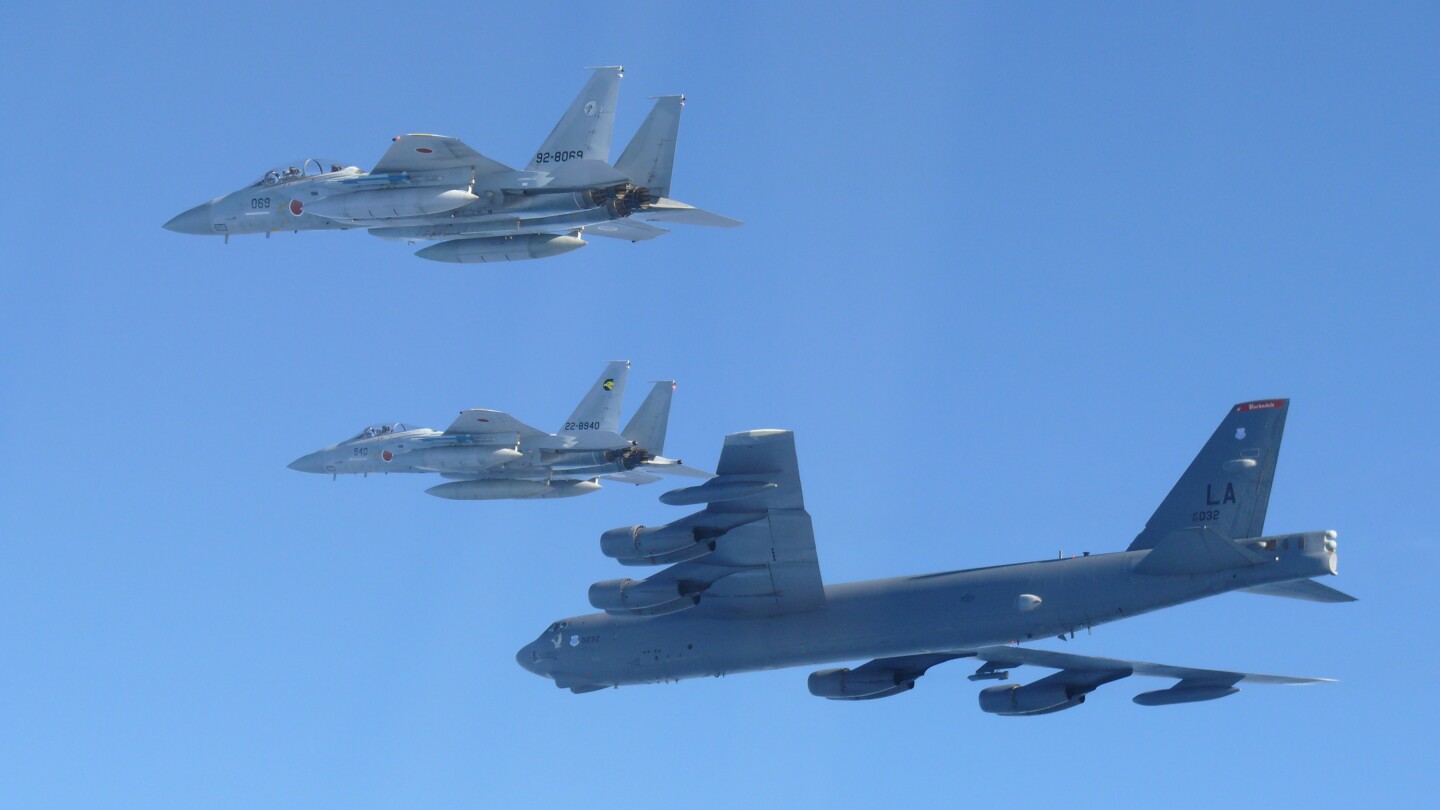
    In a significant display of military cooperation, United States strategic bombers and Japanese fighter jets conducted joint aerial exercises near Japan’s western airspace on Wednesday. The drills involved two U.S. B-52 strategic bombers alongside three Japanese F-35 stealth fighters and three F-15 jets, operating above waters between Japan and South Korea.

    The exercises occurred amidst escalating regional tensions, coming just one day after Chinese and Russian strategic bombers conducted coordinated flights around western Japan. While no airspace violations occurred during these flights, the incident prompted Tokyo to scramble fighter jets in response.

    Japanese defense officials characterized the joint drills as demonstrating the “strong resolve” between allied forces to “prevent unilateral attempts to change the status quo by force.” The Joint Staff statement emphasized that Japan’s security environment is “becoming even severer,” though they denied the exercises were a direct response to any specific incident.

    Tensions further intensified over the weekend when Japanese authorities reported that Chinese military aircraft had locked radar on Japanese jets—an action considered potential preparation for weapons deployment. Tokyo has formally protested to Beijing, demanding explanations and preventive measures, while China denied the allegations and instead accused Japanese aircraft of interfering with Chinese exercises.

    The situation prompted a high-level telephone discussion between Japanese Defense Minister Shinjiro Koizumi and U.S. counterpart Pete Hegseth early Friday. Both ministers expressed “serious concern” over actions increasing regional tensions, specifically noting that “China’s actions are not conducive to regional peace and stability.”

    Koizumi reaffirmed Japan’s commitment to maintaining robust surveillance and monitoring activities in surrounding airspace and waters. Washington concurrently emphasized its “unwavering” alliance with Japan amid the deteriorating security situation in the Indo-Pacific region.

    The geopolitical friction follows recent remarks by Japanese Prime Minister Sanae Takaichi suggesting possible military involvement if China were to take action against Taiwan—a self-governing island that Beijing claims as its territory.

  • Pakistan’s military sentences its former spy chief to 14 years in jail

    Pakistan’s military sentences its former spy chief to 14 years in jail

    In an unprecedented judicial development within Pakistan’s military establishment, former Inter-Services Intelligence (ISI) director Faiz Hameed has been sentenced to 14 years imprisonment by a military tribunal. The verdict concludes a 15-month legal process that marks the first court martial of an ISI chief in the nation’s history.

    The military court convicted Hameed on multiple serious charges including violation of state secrets under the Official Secrets Act, unauthorized political interference, misuse of authority and government resources, and actions detrimental to citizens’ welfare. The proceedings, conducted behind closed doors beginning August 12, 2024, were administered under the Pakistan Army Act.

    Hameed, who helmed the country’s premier intelligence agency from 2019 to 2021 during former Prime Minister Imran Khan’s administration, was widely recognized as a steadfast Khan loyalist. He opted for early retirement shortly after Khan’s removal through a parliamentary no-confidence motion in 2022.

    The military’s public relations division (ISPR) confirmed in an official communiqué that the defendant was afforded legal representation of his choice throughout the judicial process. The statement further clarified that Hameed retains the right to challenge the verdict through an appeal to Pakistan’s Supreme Court.

    Separately, investigations continue regarding Hameed’s alleged involvement in instigating political unrest, particularly concerning protests triggered by Imran Khan’s arrest on May 9, 2023. This aspect of the case remains under exclusive military jurisdiction and will be addressed through subsequent legal channels.

    The sentencing of someone who held what is considered Pakistan’s second-most powerful military position signals significant institutional repercussions within the country’s political-military framework.