
In a surprising turn of events, former President Donald Trump has seemingly retracted plans for the U.S. State Department to scrutinize and revoke visas for Chinese students studying in the United States. On June 11, 2025, Trump took to his social media platform, TruthSocial, to announce that Chinese students remain welcome in the U.S., stating their presence ‘has always been good with me!’ This declaration came weeks after Secretary of State Marco Rubio revealed intentions to review and potentially cancel visas for Chinese nationals with ties to the Chinese Communist Party or those pursuing studies in critical fields. The conflicting messages have left Chinese students and prospective applicants in a state of uncertainty. Historically, Chinese students have faced barriers to studying in the U.S., with efforts to restrict their access dating back decades. Since the late 1970s, millions of Chinese students have been granted visas to study in American universities, contributing significantly to the U.S. economy and academic institutions. However, the proposed visa restrictions have reignited concerns about anti-Chinese discrimination and the broader implications for U.S.-China relations. The Trump administration’s contradictory moves highlight the complexities of balancing national security interests with the benefits of international educational exchange.
标签: Asia
亚洲
-
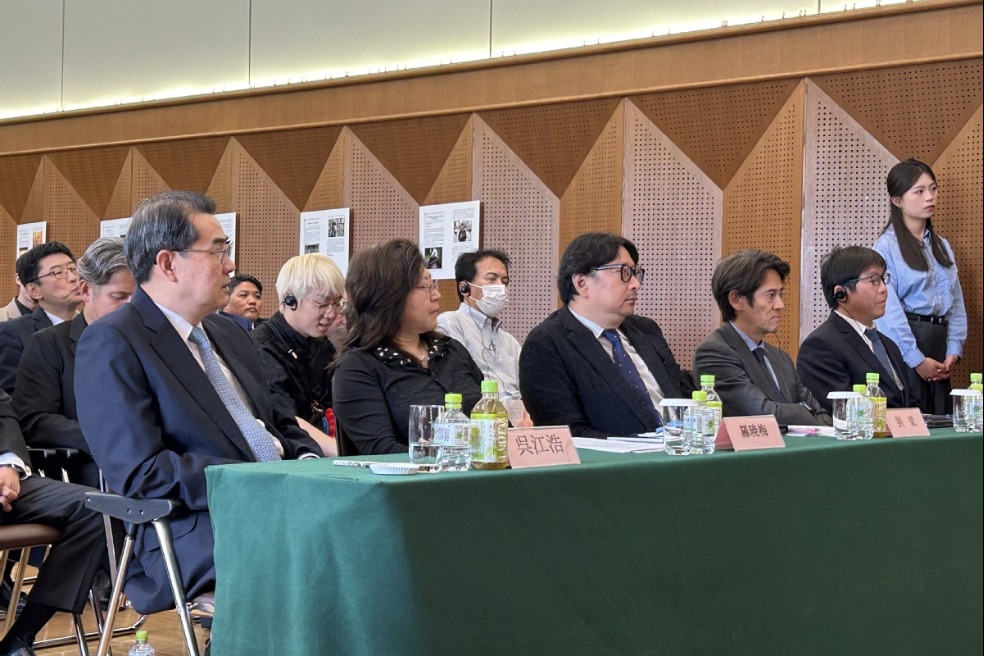
Chinese diplomat highlights importance of media in bilateral relations
Chinese Ambassador to Japan Wu Jianghao emphasized the critical role of media in enhancing mutual understanding and advancing bilateral relations during a China-Japan media salon hosted by the Chinese embassy in Tokyo on June 12. The event brought together media professionals and diplomats who advocated for objective, balanced, and fair reporting to foster deeper connections between the two nations. Ambassador Wu highlighted the media’s function as a bridge, urging thoughtful voices in both countries to contribute positively to the healthy and stable development of China-Japan relations. He also called for the effective use of social media to amplify these efforts. The high-level consultation mechanism on people-to-people and cultural exchanges between China and Japan, relaunched at the end of last year, aims to strengthen media and think tank cooperation to improve public opinion environments. Takeshi Hisanaga, an editorial writer at The Nishinippon Shimbun, expressed concern over the diminishing sense of closeness among Japanese citizens toward China, underscoring the need for improved media engagement.
-

Japan’s close-range reconnaissance a security threat, China says
China has raised concerns over Japan’s close-range reconnaissance activities, labeling them as a significant threat to maritime and airspace security. Foreign Ministry spokesman Lin Jian addressed the issue during a regular press briefing on Thursday, responding to reports that Japanese military patrol planes encountered Chinese fighter jets flying unusually close over the weekend. Lin emphasized that China’s military operations in the region are fully compliant with international law and practices. He stated that Japan’s reconnaissance activities against China’s routine military exercises are the primary cause of security risks. Lin urged Japan to cease such provocative actions. Meanwhile, China has confirmed the deployment of carrier strike groups led by the CNS Liaoning and CNS Shandong for training exercises in the Western Pacific, underscoring its commitment to maintaining regional stability. The defense departments of both nations have maintained communication through established channels to address the issue.
-
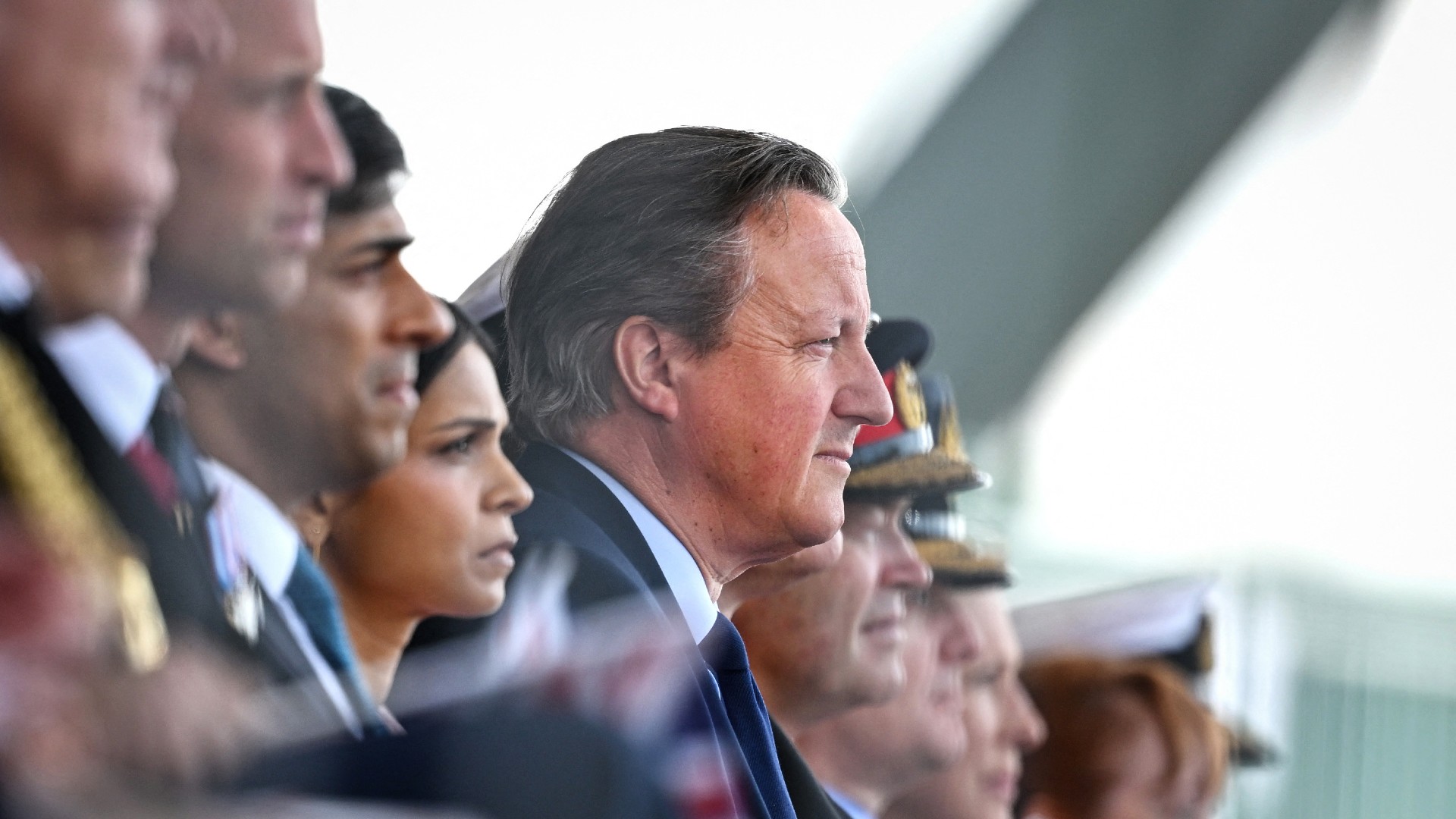
Could David Cameron be prosecuted for threatening the ICC?
International legal authorities have raised serious concerns about potential criminal liability for David Cameron, the United Kingdom’s former Foreign Secretary, following revelations about his alleged attempts to influence the International Criminal Court’s judicial processes. According to exclusive reporting from Middle East Eye, Cameron reportedly threatened Chief Prosecutor Karim Khan during an April 2024 telephone conversation, warning that Britain would withdraw from the Rome Statute and cease financial support if the court pursued arrest warrants for Israeli leaders.
UN Special Rapporteur on Palestine Francesca Albanese characterized such threats as clear obstruction of justice, stating the situation demonstrates ‘incredible audacity’ from someone in a position of power. Professor Sergey Vasiliev of the Open University of the Netherlands noted that if confirmed, Cameron’s actions would represent a crossing of legal boundaries and demonstrate profound disrespect for the ICC’s judicial independence.
The controversial exchange occurred while Prosecutor Khan’s team was preparing arrest warrants for Israeli Prime Minister Benjamin Netanyahu, Defense Minister Yoav Gallant, and three Hamas leaders. Despite Cameron’s intervention, the court formally approved the warrants six months later on November 21, charging Netanyahu and Gallant with war crimes and crimes against humanity in Gaza.
Legal experts cite Article 70 of the Rome Statute, which prohibits offenses against the administration of justice, including intimidating court officials to influence their duties. Professor Tom Dannenbaum of the Fletcher School of Law and Diplomacy explained that while the UK maintains the right to withdraw from the ICC, conditioning such action on specific prosecutorial decisions constitutes improper political pressure that undermines judicial independence.
The potential consequences for Cameron could include ICC arrest warrants and, if convicted, up to five years imprisonment in The Hague. Domestically, British law permits investigation under the ICC Act 2001 for obstruction of justice or misconduct in public office, offenses carrying maximum life sentences. However, experts note practical challenges including political considerations and possible functional immunity claims for actions taken in official capacity.
The development occurs amidst heightened tensions between the ICC and Western governments, including recent US sanctions against court officials and Prosecutor Khan’s current leave of absence pending unrelated misconduct investigations.
-
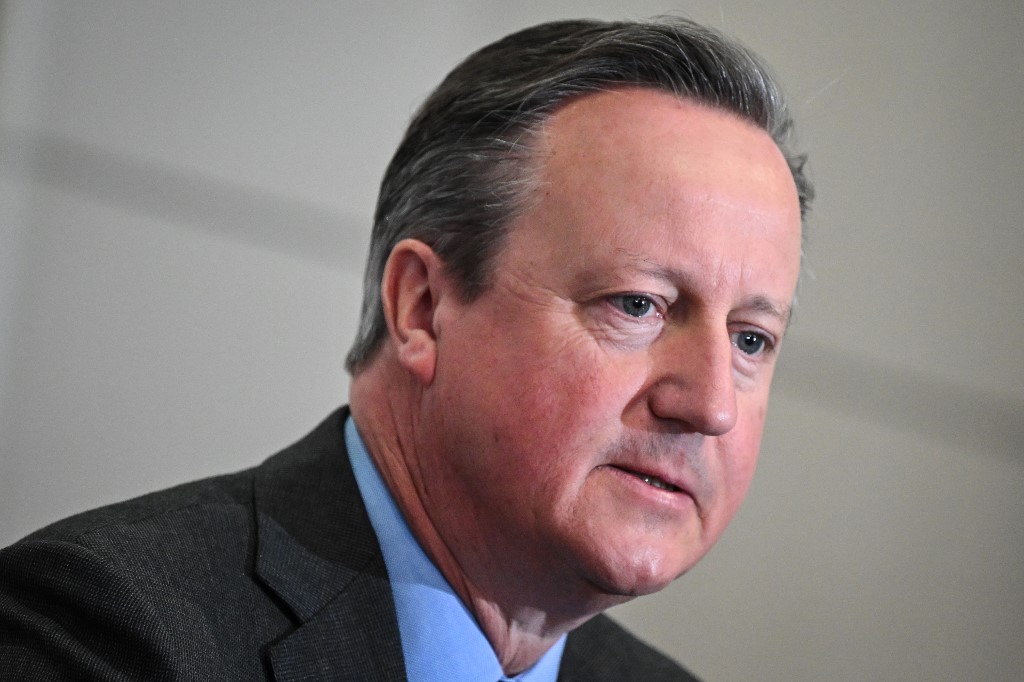
Exclusive: David Cameron threatened to withdraw UK from ICC over Israel war crimes probe
The British government secretly threatened to withdraw funding and membership from the International Criminal Court should it proceed with arrest warrants against Israeli leaders, according to exclusive revelations from Middle East Eye.
Former Prime Minister and then-Foreign Secretary David Cameron delivered this ultimatum during a heated April 2024 telephone exchange with ICC Chief Prosecutor Karim Khan. The confrontation occurred while Khan was on official duties in Venezuela, with Cameron warning that targeting Israeli leadership would be equivalent to “dropping a hydrogen bomb” on diplomatic relations.
Cameron explicitly stated that issuing warrants against Israeli Prime Minister Benjamin Netanyahu and Defense Minister Yoav Gallant would force the UK to “defund the court and withdraw from the Rome Statute” – the foundational treaty establishing the ICC. He argued that while prosecuting Russia for aggression against Ukraine was justified, targeting Israel during its self-defense operations following October 7 attacks was unacceptable.
The foreign secretary aggressively interrupted Khan throughout the conversation, claiming the warrants would create “profound implications” within British politics and his Conservative Party. He accused the prosecutor of singling out Israel while ignoring other nations like Iran.
Khan remained resolute despite the pressure, emphasizing that his office had engaged with Israel for three years without meaningful cooperation. He warned that UK withdrawal would signal the death of the rules-based international system, stating: “If this were to occur then we would have to accept that the rules-based system would be dead.”
The prosecutor later expressed surprise at the blunt nature of the threats, noting that similar pressure applied to a national prosecutor would potentially constitute a criminal offense. He described his disappointment that senior officials would “debase themselves and their nation” through such tactics.
The confrontation preceded Khan’s formal announcement of warrant applications on May 20, 2024, which also targeted Hamas leaders Yahya Sinwar, Ismail Haniyeh and Mohammed Deif. The Sunak government subsequently filed a formal objection challenging ICC jurisdiction over Israeli nationals, though the newly elected Labour government under Keir Starmer withdrew this objection in July.
The ongoing tension reflects broader international divisions regarding the ICC’s Palestine investigation, with the United States imposing sanctions on Khan and four ICC judges while freezing the prosecutor’s assets. The court continues to maintain its independence despite these pressures, recently ordering that any future warrants related to Palestine investigations remain confidential.
-
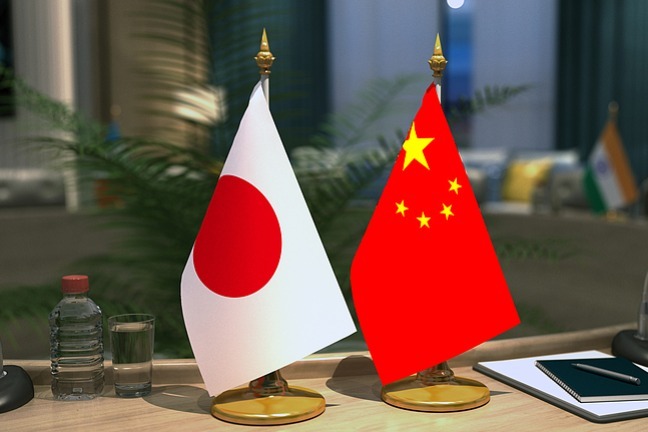
Wang: People-to-people ties can deepen China-Japan relations
Foreign Minister Wang Yi highlighted the importance of fostering people-to-people connections to enhance China-Japan relations during a meeting with Yohei Kono, president of the Japanese Association for the Promotion of International Trade (JAPIT), in Beijing on Wednesday. Wang emphasized that such engagements have historically played a crucial role in advancing bilateral ties and remain vital in the current geopolitical climate. He praised Kono for his unwavering commitment to promoting friendship between the two nations, even during challenging times. Wang also underscored the significance of remembering historical lessons, particularly as this year marks the 80th anniversary of the victory in the Chinese People’s War of Resistance Against Japanese Aggression and the World Anti-Fascist War. He echoed Japanese Prime Minister Shigeru Ishiba’s recent remarks on the importance of learning from history to avoid repeating past mistakes. Kono reaffirmed JAPIT’s dedication to fostering friendly cooperation and stressed that while history cannot be altered, the future can be shaped through collective efforts. The discussions also touched on strengthening trilateral cooperation and cultural exchanges among China, Japan, and South Korea, with both sides agreeing on the need to integrate industrial and supply chains to counter de-globalization challenges. They emphasized the importance of mutual understanding and friendship among the people of the three nations to promote regional peace, stability, and prosperity.
-
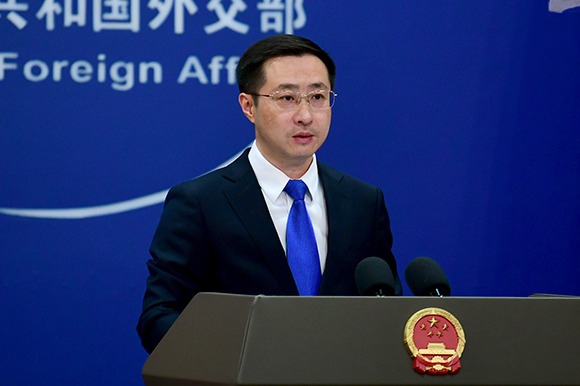
China hopes Japan will reflect on its historical crimes, adhere to path of peaceful development: FM spokesperson
In a recent statement, China has called on Japan to deeply reflect on its historical crimes, learn from the past, and steadfastly adhere to the path of peaceful development. This appeal was made by Chinese Foreign Ministry spokesperson Lin Jian during a routine press briefing on Wednesday. Lin’s remarks were in response to a recent statement by Japanese Prime Minister Shigeru Ishiba, who emphasized the importance of historical reflection and the avoidance of past war mistakes. Lin noted that China places significant importance on Ishiba’s position, recalling that during a meeting between Chinese and Japanese leaders in Lima, Peru, in November 2024, Ishiba had expressed Japan’s commitment to facing history squarely and looking toward a peaceful future. Lin stressed that adopting a correct historical stance, showing remorse, and apologizing for past aggressions are crucial for Japan’s reintegration into the international community. These actions not only affect the political foundation of China-Japan relations but also Japan’s relationships with its neighbors and its global image. Lin urged Japan to completely sever ties with any attempts to whitewash or obscure its history of aggression, take a responsible stance toward history, and commit to peaceful development through concrete actions to regain the trust of its Asian neighbors and the international community.
-
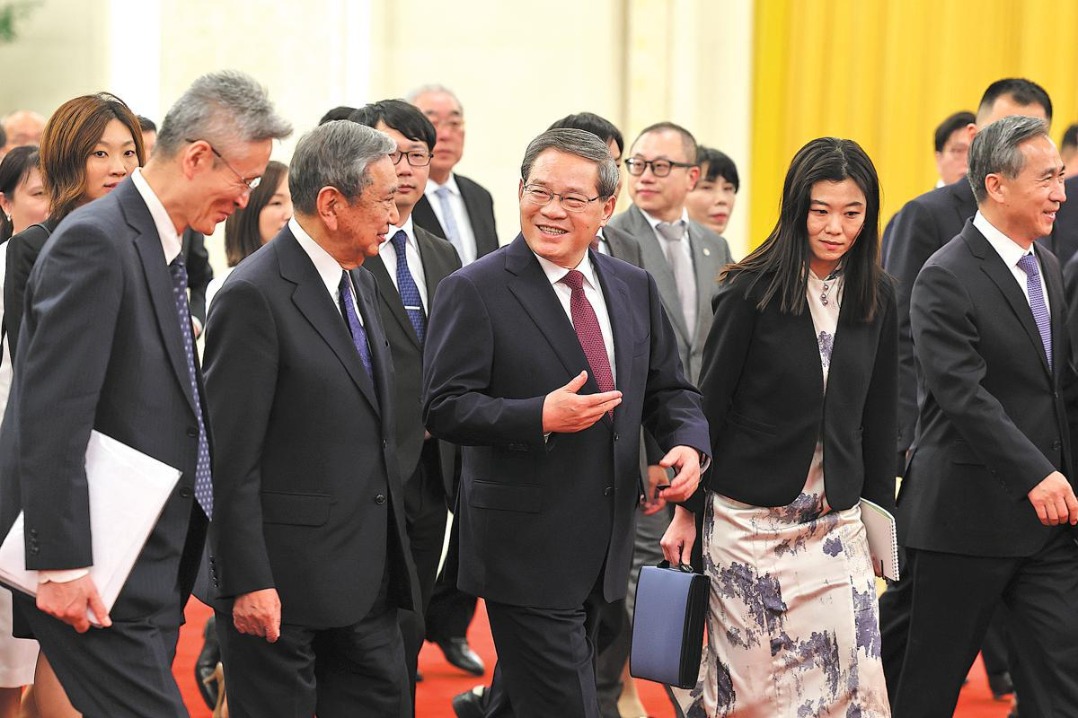
Li: Expand trade ties with Japan
Premier Li Qiang emphasized the importance of expanding trade and investment between China and Japan during a meeting with a Japanese business delegation in Beijing. The meeting, held at the Great Hall of the People, was led by Yohei Kono, president of the Japanese Association for the Promotion of International Trade. Premier Li highlighted the strategic and mutually beneficial relationship between the two nations, recalling the recent agreement between President Xi Jinping and Japanese Prime Minister Shigeru Ishiba to advance bilateral ties. He stressed the need for proactive actions to strengthen political mutual trust and people-to-people connections, urging both countries to manage differences constructively and promote stable bilateral relations. Premier Li also pointed out the challenges posed by the evolving international landscape and called for leveraging the industrial complementarity and technological expertise of both nations to explore new areas of cooperation, such as the digital economy, green economy, and biopharmaceuticals. He reaffirmed China’s commitment to high-standard opening-up and welcomed Japanese enterprises to expand their presence in China. The meeting followed the sixth China-Japan High-Level Economic Dialogue in Tokyo, where both sides reached a 20-point consensus to deepen economic cooperation. Kono acknowledged China as Japan’s most important economic partner and emphasized the need for enhanced communication to safeguard multilateralism and the free trade system. Since the normalization of diplomatic relations in 1972, bilateral trade has grown over 300-fold, with accumulated investment nearing $140 billion.
-

King’s College Cambridge to divest millions from ‘occupation’ and arms industry
In a landmark decision driven by sustained student activism, King’s College at the University of Cambridge has committed to divesting from the arms industry and companies implicated in occupations. The historic institution, established by Henry VI in 1441, announced this week that its governing body has approved adopting a comprehensive responsible investment policy by year’s end.
The college currently maintains £2.2 million ($2.94 million) in arms manufacturers including Lockheed Martin, Korea Aerospace, and BAE Systems as of March 2023. Under the new ethical framework, King’s will exclude companies engaged in activities ‘generally recognized as illegal or contravening global norms, such as occupation,’ specifically referencing Ukraine and Palestinian territories. The policy further prohibits investments in producers of military and nuclear weapons, internationally restricted weapons, and manufacturers of dedicated components for such weapons.
This decision makes King’s the first Oxford or Cambridge college to implement such measures, culminating months of organized protests by student groups. The college acknowledged the policy emerged from ‘wide-ranging discussions within the college about its investments and its values.’
Student organization King’s Cambridge 4 Palestine welcomed the move while criticizing its timing: ‘KC4P implore the university and other colleges to follow the example set by King’s, although the decision comes far too late for the thousands of Palestinians who have been starved, tortured and killed.’
The development occurs within a broader context of investment-related protests across Cambridge’s 31 autonomous colleges. Last May, student group Cambridge for Palestine established protest encampments demanding transparency and divestment from companies complicit in Israel’s Gaza operations. While the university committed in July to establishing Palestinian academic opportunities and an investment review working group, students resumed protests in November accusing the institution of ‘stalling.’
The controversy escalated in February when the university obtained a High Court order restricting Israel-Palestine protests on key sites until July’s end, prompting hundreds of students and staff to condemn the move as an ‘assault on freedom of expression.’
Separately, Middle East Eye revealed Trinity College, Cambridge’s wealthiest institution, maintained $78,089 in Elbit Systems, Israel’s largest arms company providing most drones and land equipment to the Israeli military. Despite student reports of intended divestment following months of protests, the college’s master insisted in November that Trinity had ‘no interest in divesting from arms companies,’ with recent freedom of information requests confirming continued weapons investments.
-
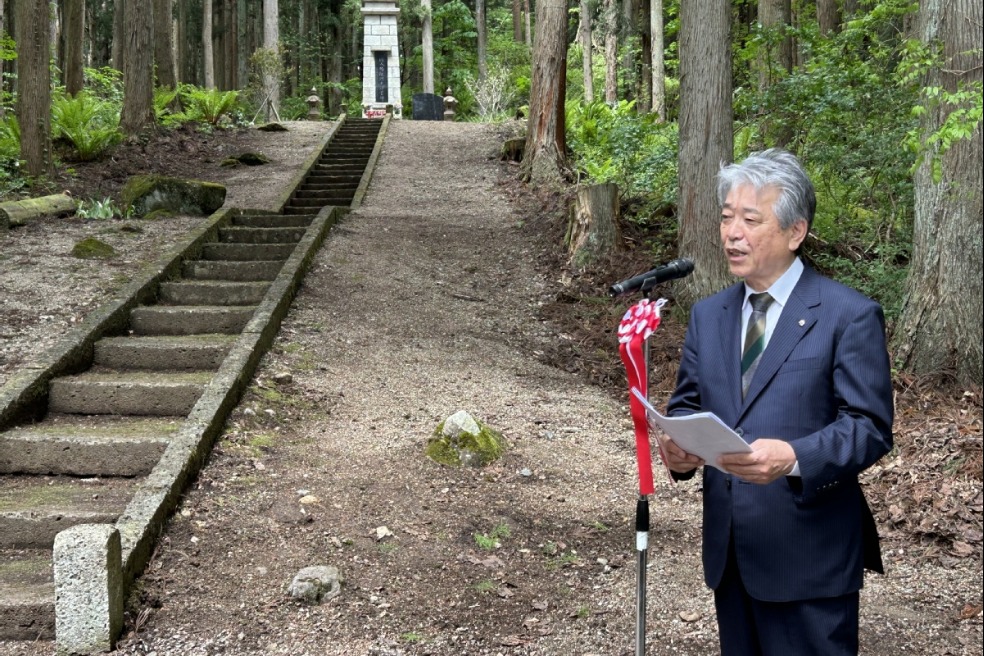
Fallen WWII Chinese laborers honored in Japan
In a poignant ceremony held in Inawashiro, Fukushima Prefecture, Japan, diplomats and advocates for Japan-China friendship gathered to honor the memory of Chinese laborers who perished during World War II. The event, which took place on May 18, marked the completion of the renovation of a monument dedicated to these fallen workers and included a commemorative tree-planting ceremony. Historical records reveal that near the end of WWII, approximately 40,000 Chinese individuals were forcibly brought to Japan, enduring brutal labor conditions and inhumane treatment, leading to the deaths of nearly 7,000 people. Among them, about 1,000 were sent to Fukushima, where 25 lost their lives due to persecution. The monument, initially unveiled in 1971 and expanded in 1988, underwent a significant renovation in 2023, supported by Japan-China friendship organizations. Cui Weilei, Chinese consul general in Niigata, emphasized the importance of remembering history not to perpetuate hatred but to learn from the past and foster a peaceful future. He urged Japan to reflect on its historical responsibilities and reject the revival of militarism. Hisashi Endou, president of the Fukushima Prefectural Japan-China Friendship Association, highlighted the spirit of gratitude and reconciliation, noting that the monument was built with the support of a repatriated Japanese POW. The ceremony also saw the participation of Shinji Oguma, a member of Japan’s House of Representatives, who stressed the significance of a strong Japan-China relationship for regional and global peace. Wang Jiangkun, a PhD graduate from the University of Aizu, expressed hope that younger generations would continue to build a future of understanding and cooperation between the two nations.