标签: Asia

亚洲

  • China issues regulation to promote public reading

    China issues regulation to promote public reading

    BEIJING – In a significant cultural development, China has formally established a comprehensive national framework to promote public reading through new legislation signed by Premier Li Qiang. The State Council decree, which will become effective on February 1, 2026, represents a strategic government effort to elevate the nation’s intellectual and cultural standards.

    The regulation specifically targets the enhancement of Chinese citizens’ moral, scientific, and cultural development while simultaneously advancing broader social civility objectives. This initiative forms an integral component of China’s ambitious project to cultivate a robust socialist culture nationwide.

    Key provisions within the legislation mandate substantial improvements in publishing quality standards, requiring the production of superior literary works across all genres. The regulation further outlines specific infrastructure requirements, calling for scientific planning and construction of public reading facilities while advocating for the harmonious integration of digital and traditional reading platforms.

    Digital reading services face new compliance requirements under the regulation, with providers obligated to implement strengthened content management systems and deliver premium digital content to readers. The legislation additionally establishes special provisions for underserved communities, directing targeted support to rural regions, former revolutionary bases, ethnic autonomous areas, border regions, and less-developed territories.

    The regulation incorporates specific accessibility measures designed to improve reading access for vulnerable demographics including minors, senior citizens, and people with disabilities, ensuring equitable access to reading resources across all segments of society.
  • Senior CPC official urges sound planning for 15th Five-Year Plan period

    Senior CPC official urges sound planning for 15th Five-Year Plan period

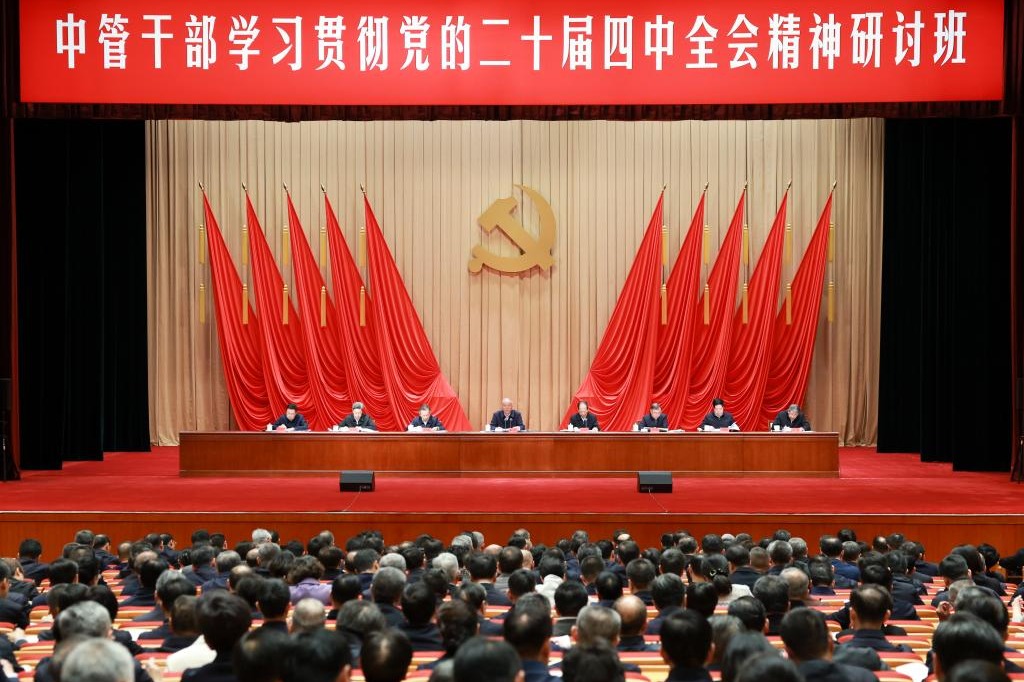
    In a significant address to high-ranking officials, senior Chinese leader Cai Qi has outlined the strategic priorities for China’s upcoming 15th Five-Year Plan (2026-2030), emphasizing the critical importance of comprehensive planning and implementation. The December 16th study session in Beijing brought together top officials to discuss the operationalization of directives from the recently concluded Fourth Plenary Session of the 20th Communist Party Central Committee.

    Cai Qi, who holds dual positions on the Standing Committee of the Political Bureau and the Secretariat of the CPC Central Committee, stressed the necessity of thoroughly understanding both the theoretical foundations and practical applications of the plenum’s decisions. The session specifically focused on translating these principles into actionable strategies for national development over the next five-year cycle.

    The address highlighted several core components essential for successful planning, including clear comprehension of development objectives, economic and social requirements, and multi-level implementation frameworks across various sectors. A recurring theme throughout the presentation was the imperative of maintaining strong centralized leadership under the Party Central Committee to ensure cohesive execution of national strategies.

    The Fourth Plenary Session, held in October 2025, had previously established the foundational Recommendations for the 15th Five-Year Plan, setting the stage for this current phase of detailed planning and preparation. This latest gathering represents a crucial step in moving from theoretical frameworks to concrete operational plans that will guide China’s development trajectory through the end of the decade.

  • Actions urged for ceasefire in border clashes

    Actions urged for ceasefire in border clashes

    The escalating military conflict along the Thailand-Cambodia border has entered a critical phase, with diplomatic efforts intensifying to halt hostilities that have resulted in significant civilian casualties and displacement.

    Artillery exchanges continued through Monday night into Tuesday morning, with Cambodian authorities reporting sustained attacks against Military Regions 4 and 5, particularly impacting Preah Vihear, Oddar Meanchey, Pursat, and Banteay Meanchey provinces. The human cost has been substantial, with Cambodian officials confirming 15 civilian fatalities and 76 injuries since the conflict reignited on December 7. The fighting has displaced approximately 126,508 families, equivalent to over 422,000 individuals.

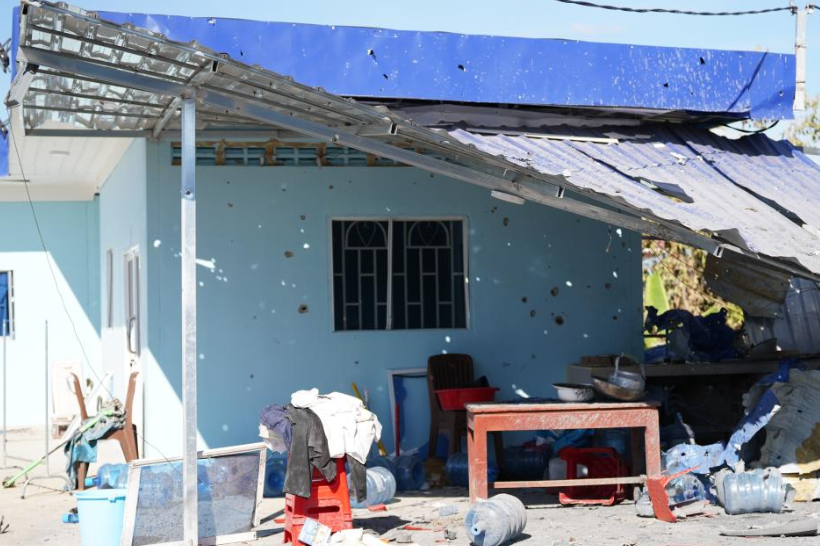
    Education has been severely disrupted, with 1,039 schools across six provinces forced to close, affecting nearly 10,000 teachers and over 242,000 students. In a particularly alarming incident, Thai artillery shells reportedly struck a primary school in Banteay Meanchey Province’s O’Beichoan commune, destroying buildings and food stalls within the school compound.

    Diplomatic channels have activated at multiple levels. Cambodian UN representative Keo Chhea addressed the UN Peacebuilding Commission in New York, emphasizing that peaceful resolution requires mutual trust and respect, while noting that dialogue becomes impossible when one nation “rejects dialogue, turns to the use of military force and ignores peace mechanisms.”

    Thailand’s Foreign Ministry, through deputy spokeswoman Maratee Nalita Andamo, maintained that ceasefire implementation “must be demonstrated through concrete actions” while reaffirming Thailand’s commitment to international law. “Thailand has no intention of escalating the situation. Our focus is on protecting national sovereignty, reducing potential threats and ensuring freedom of navigation,” she stated.

    China has emerged as a key diplomatic voice, with Foreign Ministry spokesman Guo Jiakun expressing profound sadness over casualties and offering heartfelt sympathies. Beijing emphasized that the immediate priorities remain ensuring ceasefire, ending hostilities, and protecting civilians. China supports direct bilateral dialogue and ASEAN-led mediation efforts within the regional framework.

    Meanwhile, Thailand’s National Security Council approved stricter maritime measures to prevent fuel and strategic supplies from reaching Cambodia, following discoveries of abnormally high fuel exports through the Chong Mek border checkpoint. Defense Minister Nattaphon Narkphanit characterized these measures as nonviolent, expressing confidence in a near-term resolution.

  • Old, polluted mining site thrives in a green avatar

    Old, polluted mining site thrives in a green avatar

    The Xikuangshan mining region in China’s Hunan province has undergone a remarkable ecological transformation, turning from a severely polluted industrial wasteland into a thriving green landscape that now attracts international visitors and academic researchers alike.

    For generations, this area in Lengshuijiang county was known as the ‘World Antimony Capital,’ having produced approximately one-third of China’s total antimony output and a quarter of global production over the past century. The industrial legacy came at tremendous environmental cost, with decades of intensive underground mining causing severe vegetation deterioration, air and water pollution, and ground subsidence that forced many residents to relocate.

    Eighty-three-year-old Xie Guoxiu, whose family has lived in the core mining area for generations, recalls the toxic conditions that once dominated the landscape. ‘We couldn’t grow vegetables in the yard and had to buy produce from distant urban areas,’ she remembered. ‘The pollution drove many neighbors away.’

    The turnaround began in 2006 when the Lengshuijiang city government launched a comprehensive environmental campaign. Early efforts focused on relocating residents from subsidence-affected areas, dredging polluted rivers, and building alternative water supply systems. The project gained significant momentum in 2013 when it was included in Hunan province’s ‘No. 1 Project’—a key initiative for comprehensive pollution treatment along the Xiangjiang River.

    Between 2018 and 2021, authorities invested over 300 million yuan ($42.6 million) in ecosystem restoration, successfully reviving 187 hectares of forest and 160 hectares of farmland. Today, abandoned mining sites have been replaced by photovoltaic power stations and wind farms, while once-denuded hills now feature lush forests, grasslands, and productive farmland.

    The area’s dramatic transformation has earned international recognition, including being showcased at the UN Convention on Biological Diversity (COP15) in 2021 as one of China’s typical ecological restoration cases. Earlier this year, Xikuangshan was selected as one of 20 exemplary cases under the UN Decade on Ecosystem Restoration, a global initiative jointly led by the UN Environment Programme and the Food and Agriculture Organization.

    The restored area now serves as a geological fieldwork base for students and researchers from numerous higher education institutions. According to Yi Shengxing, chief engineer at the Lengshuijiang Natural Resources Bureau, the project has evolved beyond pollution treatment to create a sustainable development model combining ecology, culture, and tourism.

    The success in Xikuangshan reflects broader progress across Hunan province, where officials have restored 9,298 hectares of historical mining sites—far exceeding the 14th Five-Year Plan target of 6,000 hectares. The region’s revival demonstrates how former industrial centers can successfully transition toward environmentally sustainable and economically viable futures.

  • Cluster of ancient stone city sites found in Yulin

    Cluster of ancient stone city sites found in Yulin

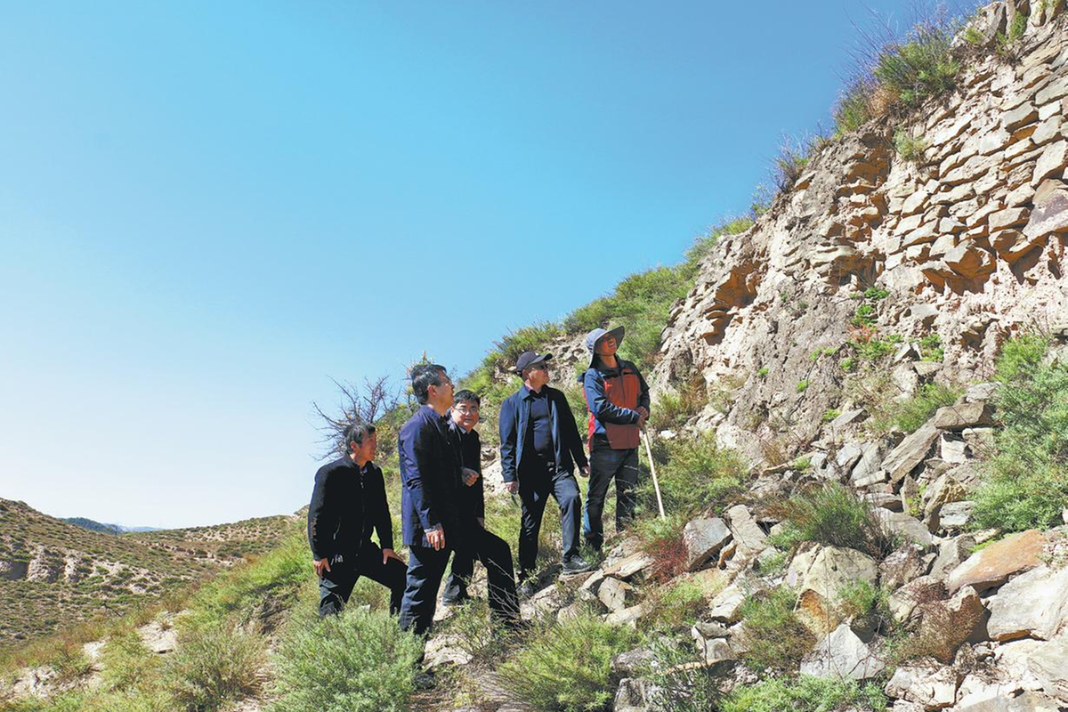
    Archaeologists have made a groundbreaking discovery in Northwest China’s Shaanxi province, unearthing a vast network of 573 ancient stone cities that date back approximately 4,800 to 3,800 years. This extraordinary find, resulting from six years of intensive survey work in the Yulin region, fundamentally reshapes our understanding of early Chinese civilization patterns and challenges long-held historical paradigms.

    The newly discovered urban centers, constructed between 2800 BC and 1000 BC, represent the largest and most sophisticated prehistoric stone city complex ever identified in northern China. According to Ma Mingzhi, associate researcher of Yulin’s cultural relics and archaeological survey team, these findings dramatically surpass previous records—before this survey, fewer than 200 prehistoric city sites had been documented nationwide, with only several dozen being stone constructions.

    The architectural sophistication reveals a clearly stratified society with hierarchical urban planning principles. Higher-status inhabitants occupied central zones with more complex defensive walls, while outer areas housed those of relatively lower status. These settlements, strategically positioned along riverbanks, served multiple functions including military defense, residential settlement, and religious ritual. The Shimao site features particularly remarkable stone carvings depicting divine faces, dragons, and snakes, alongside noble burial grounds and structures believed to be ancestral temples.

    This discovery effectively dismantles the traditional ‘Central Plains-centric theory’ of Chinese civilization development, demonstrating that northern Shaanxi served as a crucial cultural hub during the early Xia Dynasty (c. 21st-16th century BC). The scale of urbanization—with over 600 stone cities now identified across Shaanxi, Inner Mongolia, Shanxi, and Hebei provinces—corroborates ancient literary references to an ‘era of ten thousand states’ that historians previously considered potentially fictional.

    Professor Han Jianye from Renmin University of China notes that the construction timeline coincides with the legendary Yellow Emperor era, suggesting the region served as both a cultural core and a defensive prototype for what would eventually become the Great Wall. The sites demonstrate clear evolutionary progression, with settlements expanding in scale, spatial layouts growing more complex, and construction techniques advancing significantly over centuries of continuous use.

    Future research will focus on environmental support systems, handicraft production, regional economic development, and genetic analysis of population movements. These investigations promise to illuminate the material foundations that sustained this remarkable urban network and its interactions with contemporary ethnic groups, potentially rewriting our understanding of state formation processes in ancient East Asia.

  • Chinese family bonds withstand test of time

    Chinese family bonds withstand test of time

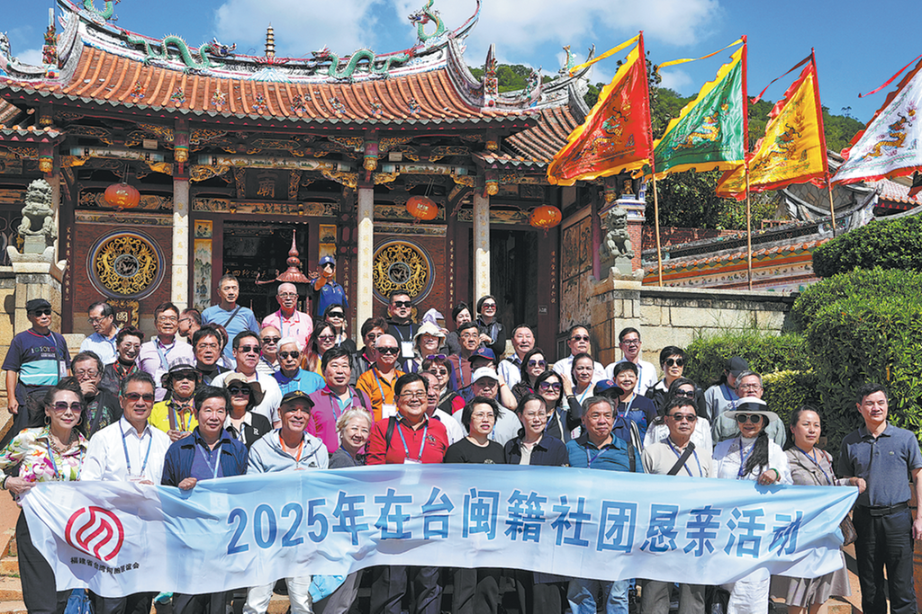
    The enduring strength of ancestral ties continues to bridge the Taiwan Strait, as generations of mainland descendants maintain profound connections to their familial origins. This cultural phenomenon demonstrates how blood relationships and shared heritage transcend political divisions and historical circumstances.

    Chen Chien-hsing, a 68-year-old Taiwan resident, embodies this timeless connection. As the son of a Kuomintang soldier who relocated to Taiwan in 1949, Chen has made multiple pilgrimages to his father’s hometown in Fuzhou, Fujian province. What began as a quest to understand his lineage has evolved into a profound personal identification with mainland China. “Chinese people inherently value family heritage and lineage,” Chen reflects. “This emotional bond naturally persists across generations.”

    Chen’s experience mirrors that of countless Taiwan residents, approximately 80% of whom trace their ancestry to Fujian province. The journey between Jinmen and Xiamen regularly carries passengers seeking to reconnect with their roots or visit relatives. Despite periods of separation, these cross-Strait connections remain fortified by shared dialects, culinary traditions, and folk beliefs, including the worship of maritime deities.

    The emotional weight of these connections becomes particularly poignant among aging veterans. Chen recounts the story of 97-year-old Huang Wei, who lost contact with his Guizhou family for nearly eight decades. Despite extensive efforts to facilitate a reunion, Huang’s deteriorating health prevented his final journey home—a fate shared by many elderly veterans who clung to hopes of returning to their birthplace.

    Genealogical records have proven instrumental in preserving these familial bonds. Lin Ming-cong, president of an association for relatives of Taiwan compatriots who resisted Japanese occupation, represents the prestigious Wufeng Lin family that migrated from Fujian during the Qing Dynasty. His ancestral home in Pinghe county, now a cultural heritage site, maintains meticulously preserved genealogical documents that have enabled family reunifications despite decades of separation.

    “Although the Strait temporarily divided families, clan exchanges continued and records were meticulously maintained,” Lin notes. His first meeting with mainland relatives felt instantly familiar: “We became deeply connected within minutes, despite never having met before.”

    These cultural and familial connections continue to shape identity across generations. Chen, now in his sixties, remains committed to fulfilling his father’s final wish to have his ashes returned to their ancestral home—a testament to the unbroken bloodline that continues to define cross-Strait relationships.

  • Minecraft challenge breathes new life into rich cultural past

    Minecraft challenge breathes new life into rich cultural past

    In an extraordinary fusion of gaming technology and cultural preservation, Minecraft enthusiasts across China are undertaking ambitious digital reconstruction projects that are captivating millions online. This innovative movement represents a groundbreaking approach to historical education and national memory.

    Twenty-four-year-old Qiu Zekai, operating under the online alias Qiuxiaoniuer, has emerged as a prominent figure in this digital renaissance. He dedicated two intensive months to meticulously recreating sections of the destroyed Yuanmingyuan, also known as the Old Summer Palace. His virtual restoration specifically focuses on the Xiyang Lou (Western-style mansions) and the magnificent Dashuifa (Great Fountains), achieving an architectural accuracy that has resonated deeply with viewers.

    The historical significance of this project stems from the palace’s tragic destruction by Anglo-French forces during the Second Opium War (1856-1860), an event that represents what Chinese historians refer to as the ‘century of humiliation.’ Among the countless treasures looted during this period were the twelve zodiac bronze animal heads that once adorned the palace’s water clock fountain. Qiu’s digital masterpiece symbolically reunites these scattered artifacts in their virtual original setting, creating what online communities have celebrated as a ‘cyber reunion’ of cultural heritage.

    The response to Qiu’s creation has been overwhelming, with his serene fly-through video accumulating millions of views across social media platforms. His Douyin following surged by 200,000 subscribers following the project’s release, bringing his total audience to 3.4 million engaged followers. Comment sections overflow with emotional responses praising this ‘patriotic romance of the young generation’ and appreciating the unique connection between historical awareness and contemporary digital culture.

    Parallel to Qiu’s achievement, another digital architect named Xia Caiquan has gained recognition for his breathtaking Minecraft reconstruction of Dunhuang’s Buddhist heavenly palace. These projects collectively demonstrate how sandbox gaming environments are evolving into platforms for cultural expression, historical education, and technological innovation.

    Beyond their visual appeal, these virtual reconstructions serve as interactive historical archives, allowing new generations to experience and understand cultural heritage that physical circumstances might otherwise keep inaccessible. This movement represents a significant shift in how digital natives engage with history, transforming passive learning into active creation and ensuring that important cultural narratives continue to evolve within contemporary technological contexts.

  • What to know about a Philippines region with militant history visited by Bondi Beach suspects

    What to know about a Philippines region with militant history visited by Bondi Beach suspects

    MANILA, Philippines — A joint Australian-Filipino investigation is scrutinizing a November 2023 trip to Mindanao by the father and son accused of perpetrating Sydney’s Bondi Beach massacre that left 15 dead. Australian authorities confirmed the attackers were inspired by the Islamic State group, citing seized evidence including IS flags from their vehicle.

    The Philippine Bureau of Immigration records show the suspects entered the country on November 1 and departed November 28, with Davao City in southern Mindanao as their final destination. Despite this travel history, Philippine National Security Adviser Eduardo Ano stated Wednesday that no evidence has emerged indicating the suspects received militant training during their stay. “There is no indicator or any information that they underwent training in Mindanao,” Ano told The Associated Press.

    This investigation revisits Mindanao’s complex history with Islamic militancy. Centuries of colonial rule and settlement transformed Muslims into a minority in the resource-rich region, sparking decades of intermittent conflict that claimed approximately 150,000 lives since the 1970s. The area once attracted foreign extremists including Umar Patek, the Indonesian Jemaah Islamiyah operative convicted for the 2002 Bali bombings that killed 202 people.

    Significant transformations occurred through peace processes: the 1996 accord allowed rebels to reintegrate into communities, while the 2014 agreement established broader Muslim autonomy in the Bangsamoro region, turning former rebel commanders into administrators and guardians against IS influence. Despite these developments, violent offshoots emerged including the U.S.-blacklisted Abu Sayyaf group, known for kidnappings, beheadings, and bombings before being largely neutralized by military operations.

    According to confidential Philippine security assessments viewed by AP, no foreign militant presence has been detected since 2023 following the neutralization of remaining groups. Sidney Jones, a prominent Southeast Asia security analyst, questioned why modern extremists would seek training in Mindanao given current conditions: “The level of violence in Mindanao is high, but for the last three years, it’s almost all been linked to elections, clan feuds, or other sources. If I were a would-be ISIS fighter, the Philippines would not have been my top destination.”

  • HK community strongly supports Lai’s conviction

    HK community strongly supports Lai’s conviction

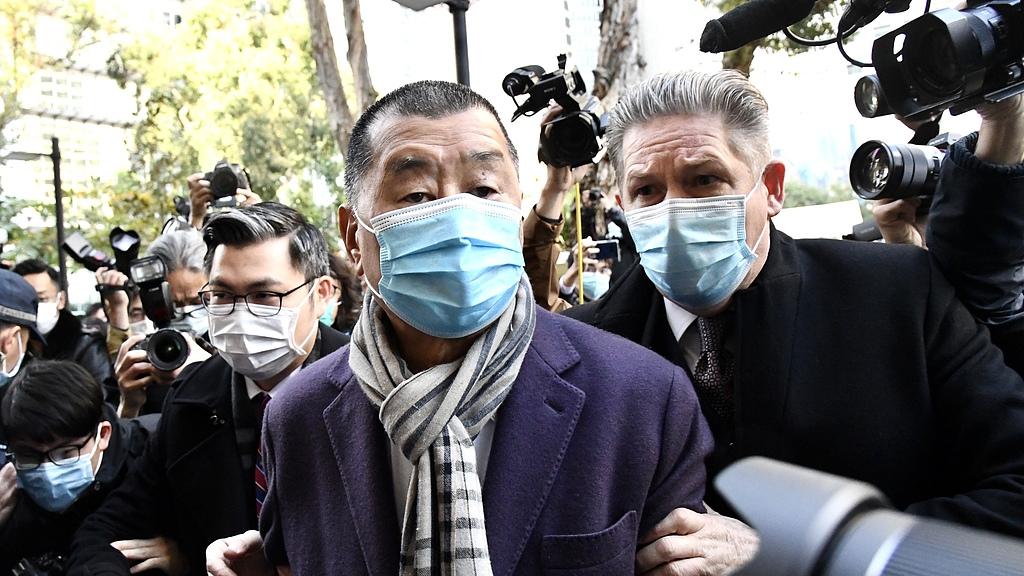
    Hong Kong’s political establishment and professional organizations have expressed resounding endorsement of the High Court’s verdict convicting media tycoon Jimmy Lai Chee-ying on national security charges, while simultaneously rejecting Western attempts to romanticize his actions as democratic advocacy.

    The judicial decision, delivered on Monday by a panel of three High Court judges, found Lai guilty on all three counts: two charges of conspiracy to collude with foreign forces to endanger national security and one count of conspiracy to publish seditious materials. Three corporations associated with Lai’s defunct Apple Daily media empire were similarly convicted on related national security charges.

    Leung Chun-ying, Vice-Chairman of China’s top political advisory body, characterized Lai’s portrayal as a democracy advocate by Western entities as fundamentally misleading. Through social media commentary, Leung asserted that Lai had systematically manipulated Hong Kong’s autonomous privileges under the Sino-British Joint Declaration and Basic Law to pursue de facto independence, thereby undermining Chinese sovereignty. “He might be ignorant… but definitely not innocent,” Leung stated, while highlighting the UK’s potential legal response to similar actions within its jurisdiction.

    The Hong Kong SAR government issued a formal statement condemning both the Hong Kong Journalists Association and certain foreign media outlets for employing democratic rhetoric to sanitize Lai’s criminal conduct. A government spokesperson emphasized that the case unequivocally involved criminal behavior disguised as journalistic activity, completely unrelated to press freedom protections.

    Security Secretary Chris Tang Ping-keung reinforced the principle of legal accountability, noting that foreign consular representatives had observed the transparent judicial proceedings firsthand. This assessment was corroborated by China’s Foreign Ministry Commissioner Office in Hong Kong, which detailed in a letter to foreign media how Lai’s legal and personal rights had been scrupulously maintained—including provision of timely medical care, accommodation of religious practices through specially arranged services, and solitary confinement implemented at his own request.

    Hong Kong’s legal community voiced strong institutional support, with both the Bar Association and Law Society affirming the verdict demonstrated judicial independence and professional adjudication based solely on legal merits and evidence. They noted that national security legislation exists in numerous jurisdictions worldwide, positioning Hong Kong’s legal framework within global norms.

  • Cross-Strait collaboration key to nation’s long-term well-being

    Cross-Strait collaboration key to nation’s long-term well-being

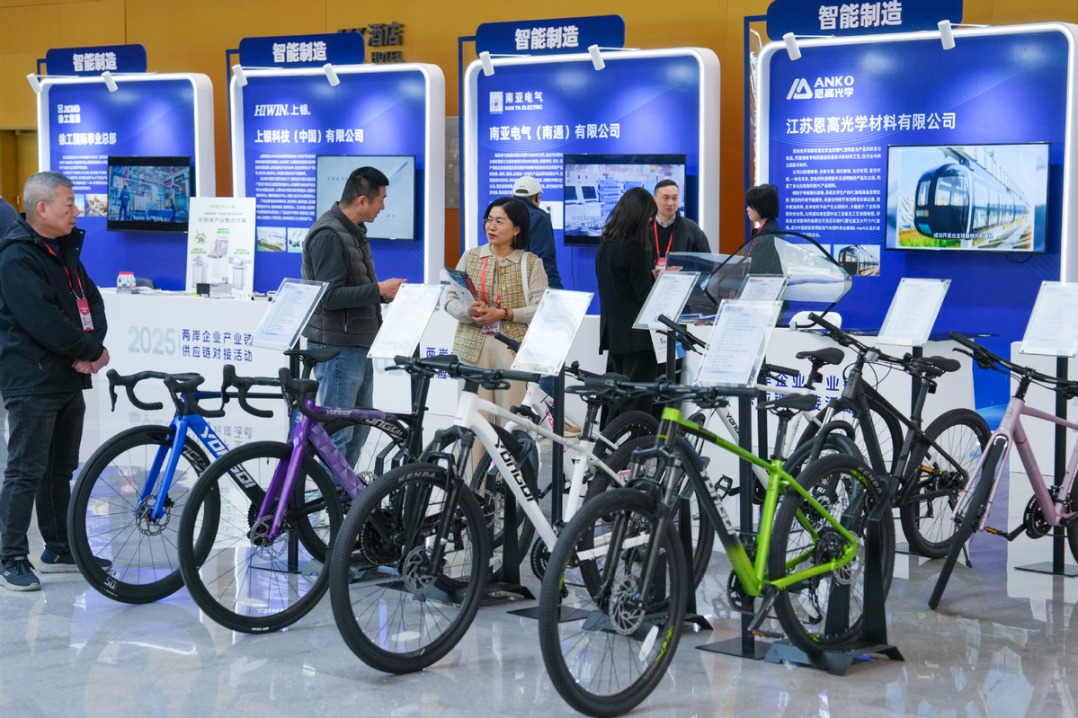
    NANJING—Senior Chinese official Wang Huning has emphasized that enhanced economic collaboration between mainland China and Taiwan is indispensable for national rejuvenation and common prosperity. Speaking at the 2025 Cross-Strait CEO Summit in Nanjing on December 16, the chairman of the Chinese People’s Political Consultative Conference National Committee articulated that businesses across the Strait must deepen cooperation to advance shared economic interests and fortify the Chinese nation’s future.

    Wang, a Standing Committee member of the CPC Central Committee Political Bureau, reinforced President Xi Jinping’s stance that China’s revitalization presents substantial opportunities for cross-Strait economic synergy. He asserted that compatriots on both sides are integral components of China’s national economy and would collectively benefit from a prosperous, powerful nation.

    The summit occurred amid strategic implementations following the CPC’s 20th Central Committee fourth plenum, which outlined developmental blueprints for the 15th Five-Year Plan (2026–2030). Wang characterized these designs as catalytic for cross-Strait relations, potentially injecting fresh momentum into economic cooperation and advancing peaceful reunification efforts.

    Taiwanese representatives echoed the sentiment. Liu Chao-hsuan, chairman of the summit’s Taiwan side, acknowledged the mainland’s enduring role as a critical production base and market for Taiwan businesses despite global economic volatility. He highlighted the summit’s adherence to the 1992 Consensus as a foundational principle for industrial collaboration.

    Corporate leaders provided ground-level perspectives. Fei Kuang-han, general manager of Kunshan Bonteck Precision Co, reported robust support for Taiwanese entrepreneurs in Jiangsu province, noting increasing long-term investments. Lee Cheng-hung, president of the Association of Taiwan Investment Enterprises on the Mainland, urged young Taiwanese to explore opportunities in e-commerce, digital economies, and artificial intelligence.

    Academic insights from Kao Chang, an honorary professor at Taiwan’s Dong Hwa University, underscored the inevitability of cross-Strait integration. He described Taiwan’s economy as inherently outward-looking and emphasized that mainland market forces would continue to drive collaborative growth despite international uncertainties.

    The event attracted approximately 800 participants, including entrepreneurs, scholars, and summit council members, all engaged in dialogues aimed at fostering industrial innovation and economic unity.