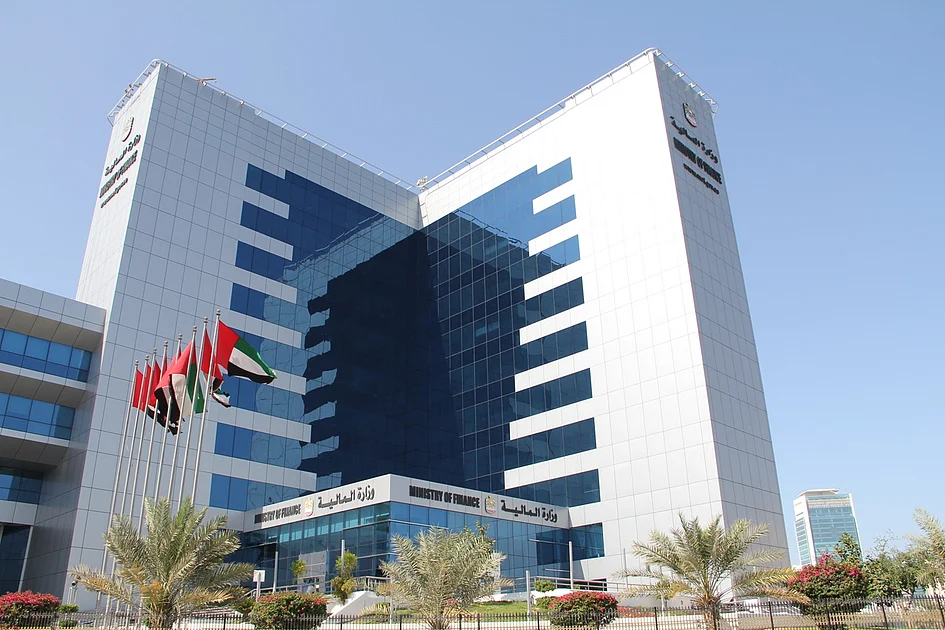
The United Arab Emirates (UAE) has solidified its position as a premier destination for the world’s affluent, with over 9,800 millionaires relocating to the country in 2025 alone, according to Henley & Partners. This migration is driven by the UAE’s investor-friendly policies, tax efficiency, and cutting-edge infrastructure, which have transformed Dubai into a global hub for luxury real estate. The city now rivals established markets like New York and London, attracting unprecedented demand for ultra-luxury properties. Amid this boom, Sunteck Realty Ltd, a leading Indian luxury developer, has announced its entry into the UAE market with the establishment of Sunteck International in Dubai. The company has unveiled an ambitious plan to invest Dh15 billion in UAE real estate projects over the next three years, signaling its long-term commitment to the region. Sunteck’s inaugural project, a prime land parcel in Downtown Dubai near the Burj Khalifa and The Dubai Mall, is set to redefine ultra-luxury living with contemporary design and branded residences in collaboration with global hospitality brands. Kamal Khetan, Chairman & Managing Director of Sunteck Realty Ltd, emphasized Dubai’s unique appeal, citing its unmatched growth potential and favorable pricing compared to other global cities. He highlighted the UAE’s attractiveness to high-net-worth individuals, noting that many are leaving Europe for the UAE. Khetan expressed confidence in Dubai’s real estate market, stating that it offers unparalleled volumes, pricing, and margins, making it the ideal location for Sunteck’s international debut.
标签: Asia
亚洲
-

Ethiopia volcano: Is acid rain possible after latest eruption? Effects explained
The Hayli Gubbi volcano in Ethiopia erupted on November 23, 2025, marking its first activity in nearly 12,000 years. The eruption released significant amounts of sulphur dioxide gas, which spread across parts of the Middle East on November 23 and 24. This event has raised concerns about the potential formation of acid rain in the region. UAE experts, including Shawkat Odeh from the International Astronomical Centre, have shared satellite images showing the dispersion of the gas. Ibrahim Al Jarwan from the Emirates Astronomical Society noted that the sulphur dioxide could react with atmospheric moisture, potentially leading to light acid rain in Oman and Yemen. However, Omani authorities have reported no immediate public health impacts or increased air pollutant concentrations. Acid rain, which includes precipitation with acidic components, forms when pollutants like sulphur dioxide or nitrogen oxides react with water, oxygen, and other chemicals in the atmosphere. This phenomenon can harm ecosystems, aquatic life, and vegetation, and may also pose health risks to humans, such as respiratory issues and eye irritation. While the situation is being closely monitored, no significant acid rain effects have been observed so far.
-

UAE and Japanese financial institutions buy big stakes in Indian banks
In a significant shift in India’s financial landscape, global financial institutions from the United Arab Emirates (UAE) and Japan are making substantial investments in Indian banks, capitalizing on the government’s relaxed restrictions on foreign shareholdings. Emirates NBD, Dubai’s largest lender, is poised to acquire a 60% stake in RBL Bank, a private Indian bank, for $3 billion, marking the largest cross-border acquisition in India’s financial sector. Earlier, Japan’s Sumitomo Mitsui Financial Group (SMFG) purchased a 24.2% stake in Yes Bank for $1.7 billion, becoming its largest shareholder. Meanwhile, Mitsubishi UFJ Financial Group (MUFG), Japan’s largest lender by assets, is finalizing deals to invest $4 billion in Indian financial institutions, including a 20% stake in Shriram Finance, a major credit solutions provider. These developments align with Indian Finance Minister Nirmala Sitharaman’s vision to create more ‘big banks.’ Foreign investments in India’s financial sector surged to $8 billion in 2025, up from $2.3 billion in the previous year. Concurrently, India and Israel are advancing a free trade agreement (FTA) to bolster economic and technological cooperation, with Israeli Prime Minister Benjamin Netanyahu emphasizing the strategic partnership. The UAE’s investments in India are also set to reach $100 billion across sectors, including a controversial mega-mall project in Kashmir. However, these moves have drawn criticism from activists, who accuse India of human rights violations in the region. The UAE’s financial networks have also been implicated in supporting militias in Sudan, raising ethical concerns. As global financial giants pivot towards India, the Reserve Bank of India’s easing of restrictions has further incentivized foreign investments in medium-sized banks.
-

Rebuilding to cost $70b: Gaza ‘survival’ at stake, UN warns
The United Nations has issued a stark warning about the dire situation in Gaza, emphasizing that the territory’s survival is at risk following years of conflict and destruction. According to a new report by the UN Trade and Development agency (UNCTAD), rebuilding Gaza will require over $70 billion and could span several decades. The report highlights an ‘unprecedented collapse’ of the Palestinian economy, driven by sustained military operations and severe restrictions on movement and trade. The UN describes the devastation as a ‘human-made abyss,’ with critical pillars of survival—food, shelter, and healthcare—severely compromised. The conflict, which began after Hamas’s attack on southern Israel in October 2023, has resulted in over 69,000 deaths in Gaza, according to UN-verified figures. The report underscores the cascading crises—economic, humanitarian, environmental, and social—that have pushed Gaza from de-development to ‘utter ruin.’ Even with optimistic projections of double-digit growth and substantial foreign aid, it could take decades for Gaza to return to pre-2023 welfare levels. UNCTAD calls for a comprehensive recovery plan, including coordinated international assistance, fiscal restoration, and measures to ease trade and investment constraints. The agency also advocates for a universal emergency basic income to address extreme impoverishment. Gaza’s economy contracted by 87% between 2023 and 2024, reducing its GDP per capita to $161, one of the lowest globally. The West Bank has also suffered significant economic decline due to violence, settlement expansion, and mobility restrictions, marking its worst economic downturn since UNCTAD began record-keeping in 1972.
-

B’Tselem: Settlers unpunished for 21 killings in West Bank ‘ethnic cleansing’
In the occupied West Bank, a disturbing pattern of unchecked violence by Israeli settlers against Palestinians has escalated over the past two years, with 21 fatal cases remaining unpunished. Human rights organization B’Tselem has labeled this as part of a broader campaign of ‘ethnic cleansing,’ exacerbated by a permissive military policy and the arming of thousands of settlers. Since October 2023, Israeli forces and settlers have killed over 1,004 Palestinians, including 217 minors, while in Gaza, the death toll has reached approximately 70,000, with 20,000 children among the victims. B’Tselem’s executive director, Yuli Novak, has decried the international community’s inaction, warning that the situation is deteriorating rapidly with no mechanisms in place to restrain Israel. Recent incidents include the killing of Abdul Raouf Ishtayeh near Nablus and Bara Khairy Ali Maali in Deir Jarir, highlighting the daily violence faced by Palestinians. Settler attacks, often documented on video, rarely lead to investigations, fostering a culture of impunity. Residents of Tulkarm describe living in constant fear, with increased checkpoints, violent raids, and economic hardships due to delayed tax revenues. Ameer Dawood of the Colonization and Wall Resistance Commission warns that without accountability, the violence will intensify, further destabilizing the region. The international community’s failure to intervene has allowed this crisis to deepen, with dire humanitarian and political consequences.
-

Malaysian scientists recruit bed bugs as crime scene sleuths
In a groundbreaking development, Malaysian scientists have transformed bed bugs, typically regarded as household nuisances, into invaluable forensic tools. Researchers from the Science University of Malaysia (USM) in Penang have discovered that tropical bed bugs (Cimex hemipterus) can retain human DNA for up to 45 days after feeding. This revelation positions the insects as potential crime-solving allies, capable of providing crucial evidence in criminal investigations.
-

Nissanka’s unbeaten 98 earns Sri Lanka first win in T20 tri-series
In a commanding display of cricketing prowess, Sri Lanka secured their first win in the T20 tri-series with a resounding nine-wicket victory over Zimbabwe on Tuesday. Opening batsman Pathum Nissanka was the star of the match, delivering an explosive unbeaten 98 off just 58 balls. His innings, studded with four sixes and 11 boundaries, propelled Sri Lanka to a comfortable 148-1, chasing down Zimbabwe’s modest total of 146-5 with 22 balls to spare. Nissanka’s aggressive yet calculated approach, particularly against Zimbabwe’s pace attack, set the tone for the match. He was well-supported by Kusal Mendis, who remained unbeaten on 25, as the duo forged an 89-run partnership off 64 balls. Zimbabwe’s bowlers struggled to contain the flow of runs, with Richard Ngarava and Brad Evans conceding 44 and 36 runs respectively. Earlier, Sri Lanka’s bowlers, led by Maheesh Theekshana (2-23) and Wanindu Hasaranga (2-23), restricted Zimbabwe’s batting lineup. Sikandar Raza’s 37 off 29 balls and Ryan Burl’s unbeaten 37 off 26 were the only notable contributions for Zimbabwe. With this win, Sri Lanka keeps their hopes alive for a spot in the final, which Pakistan has already secured. Sri Lanka must now defeat Pakistan in their upcoming match to advance, as Zimbabwe holds a superior net run-rate.
-

Taicang factory builds inclusivity
Nestled in the heart of Taicang, Jiangsu province, the Inclusion Factory stands as a beacon of hope and empowerment. This innovative workshop is not just a place of work but a sanctuary where individuals with intellectual and developmental disabilities, such as Down syndrome and autism, find purpose and belonging. Amid the rhythmic hum of machinery, these employees are crafting more than automotive parts—they are building confidence, fostering community, and reshaping their futures.
At the helm of this transformative initiative is Zhang Xingjuan, a dedicated training manager whose unwavering patience and personalized coaching have become the cornerstone of the factory’s success. Zhang, 53, reveals how her once-short temper has evolved into a profound sense of calm, thanks to the symbiotic relationships she has cultivated with her trainees. For many, mastering the required skills can take up to 100 sessions, but the journey is as rewarding as the outcome.
Parents of these employees, who once grappled with uncertainty about their children’s futures, now find solace and hope in the factory’s mission. The Inclusion Factory’s impact extends beyond its walls, attracting over 100 corporate partners who recognize the value of inclusive employment. This pioneering initiative demonstrates that with the right support, everyone has the potential to contribute meaningfully to society.
Qi Xinran contributed to this inspiring story.
-

Dubai office rents soar as commercial property continues to boom
Dubai’s commercial real estate market is experiencing an unprecedented surge, with office rents climbing to new heights and occupancy rates nearing record levels. According to the latest research from Chestertons Mena, the demand for premium office spaces, particularly in key hubs like DIFC, Business Bay, and Dubai Internet City, remains robust. These areas are highly sought after due to their advanced infrastructure, prestigious locations, and proximity to international business activities. The limited availability of Grade A office space has pushed occupancy levels to approximately 95%, with citywide office occupancy close to 92%. The average office rent in Dubai has reached around Dh 190 per square foot, marking a 22% year-on-year increase. This growth is driven by professional services firms, multinational relocations, and expanding regulated-sector businesses. Emerging micro-markets such as Jumeirah Lakes Towers (JLT), Barsha Heights, Dubai South, Mohammed bin Rashid City, and Dubai Harbour are also gaining traction, attracting tech companies, digital media operators, and e-commerce players. These areas offer competitive rates, scalable layouts, and excellent connectivity. Workplace preferences in Dubai are evolving, with a growing demand for turnkey, furnished offices with flexible leases, reflecting the shift to hybrid working models. Landlords are responding by offering shorter lease terms, plug-and-play fittings, and smart office environments. Wellness features such as natural light, biophilic design, high-grade air filtration, outdoor breakout areas, gyms, and cafés are becoming standard in modern commercial buildings. Technology integration, including digital room booking systems and high-definition video conferencing, is also on the rise. Investor interest in Grade A commercial assets is strong, driven by robust rental performance, supply constraints, and high occupancy rates. Chestertons forecasts that the tight supply environment for high-spec space will support rental stability in the coming years. The supply of new office space remains constrained, with only about 0.89 million square feet expected to be completed in 2025, increasing to 2.3 million square feet in 2026 and over 4.1 million square feet in 2027. However, much of this new space may already be pre-leased or absorbed before completion. Independent real estate sources, including Cushman & Wakefield and GulfBase, confirm the tight supply and strong pre-leasing activity, reinforcing upward pressure on rents and occupancy. By Q3 2025, Dubai’s overall office vacancy had fallen to around 7.5%, reflecting intense competition for premium space. Gross rental yields for prime office investments are estimated in the 7–8% range, highlighting the attractiveness of commercial real estate for long-term investors. In February 2025 alone, commercial real estate sales transactions grew by 18.2% year-on-year, with a total value of Dh 9.7 billion. This surge signals strong investor confidence in the sector’s long-term performance. Analysts conclude that Dubai’s commercial real estate market is undergoing a structural upshift, with tightening supply, rising rents, and strong investor conviction converging to create a rare opportunity for premium returns. This boom validates Dubai’s strategy as a global business hub and a driver of next-generation growth.
-

Alliance for thalassemia prevention and treatment launched in Thailand
In a significant stride towards combating thalassemia, the Southeast Asia Thalassemia Prevention Alliance (SEATPA) was officially launched in Chiang Mai, Thailand, on Monday. This groundbreaking initiative, spearheaded by BGI Group, a leading Chinese life sciences and genomics company, aims to eradicate preventable cases of this inherited blood disorder across Southeast Asia. Thalassemia, characterized by impaired hemoglobin synthesis and accelerated red blood cell destruction, poses a major public health challenge in the region due to its high prevalence. SEATPA’s mission is to foster cross-border collaboration, uniting countries, experts, and communities to enhance prevention and control efforts. The alliance will focus on capacity building, standardized training, technical unification, public awareness campaigns, and the sharing of expertise. Thailand’s Minister of Public Health, Pattana Promphat, emphasized the importance of regional cooperation in adapting modern medical technologies to local contexts and building a robust response to the disease. Wang Jian, co-founder and chairman of BGI Group, highlighted the necessity of global cooperation in precision medicine, stating that the alliance will bring advanced screening and treatment solutions to Southeast Asia, shifting the medical paradigm from passive treatment to active prevention. Piriya Cherdsatirakul, Vice-president of Chiang Mai University, lauded the alliance as a ‘significant milestone’ in improving the quality of life for thalassemia patients and offering new hope to the region.