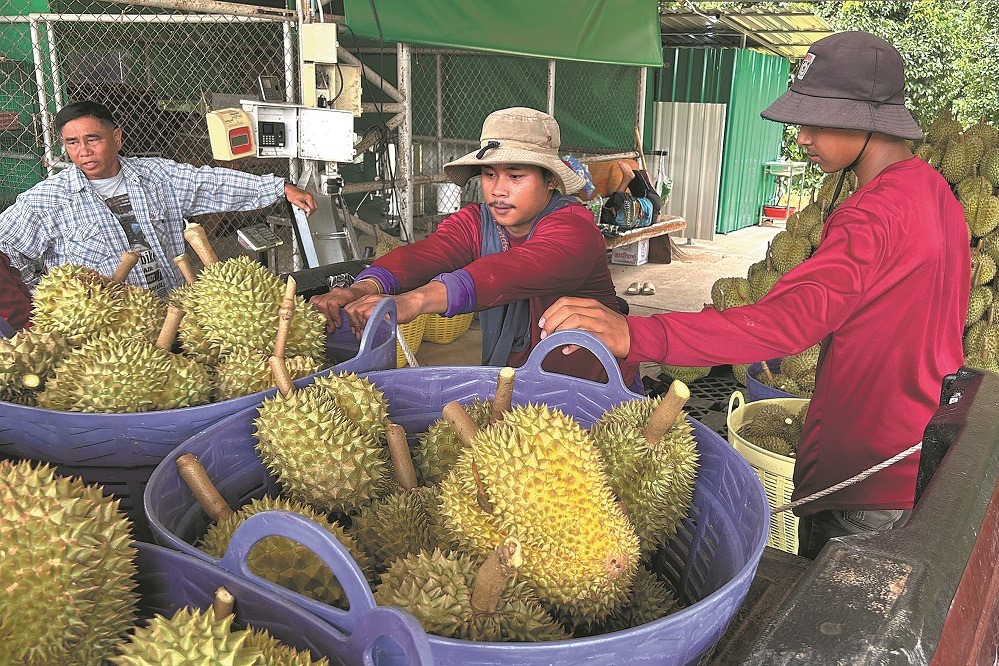
Once considered an acquired taste due to its pungent aroma, durian has emerged as a symbol of cultural and economic exchange between China and Thailand. Over the past decade, the spiky fruit has not only captivated Chinese consumers but also fostered deeper bilateral ties through trade and investment. Thailand, home to over 200 durian varieties, has become the primary supplier to China, accounting for 97.4% of its durian market. In 2024 alone, Thailand exported 833,000 metric tons of durian to China, valued at $3.7 billion. The fruit’s popularity has spurred online sales campaigns on platforms like Douyin and Taobao, while attracting Chinese investors to Thailand’s orchards and logistics sectors. However, the durian trade faced a significant setback earlier this year when Chinese customs detected Basic Yellow 2 (BY2), a harmful dye used to enhance the fruit’s appearance. This led to rejected shipments, investigations, and temporary export suspensions, causing financial losses for Thai farmers and raising concerns among Chinese consumers. The incident highlighted the need for stricter safety standards, traceability, and consumer education. Despite the challenges, the BY2 scandal prompted Thailand to upgrade its fruit industry, with increased government investment in testing and scientific farming. It also deepened Chinese consumers’ understanding of durian, paving the way for stronger partnerships. Beyond trade, durian has become a cultural bridge, reflecting shared values of respect for nature and traditional farming practices. As both nations continue to collaborate, the ‘king of fruits’ remains a testament to the evolving relationship between China and Thailand.
标签: Asia
亚洲
-
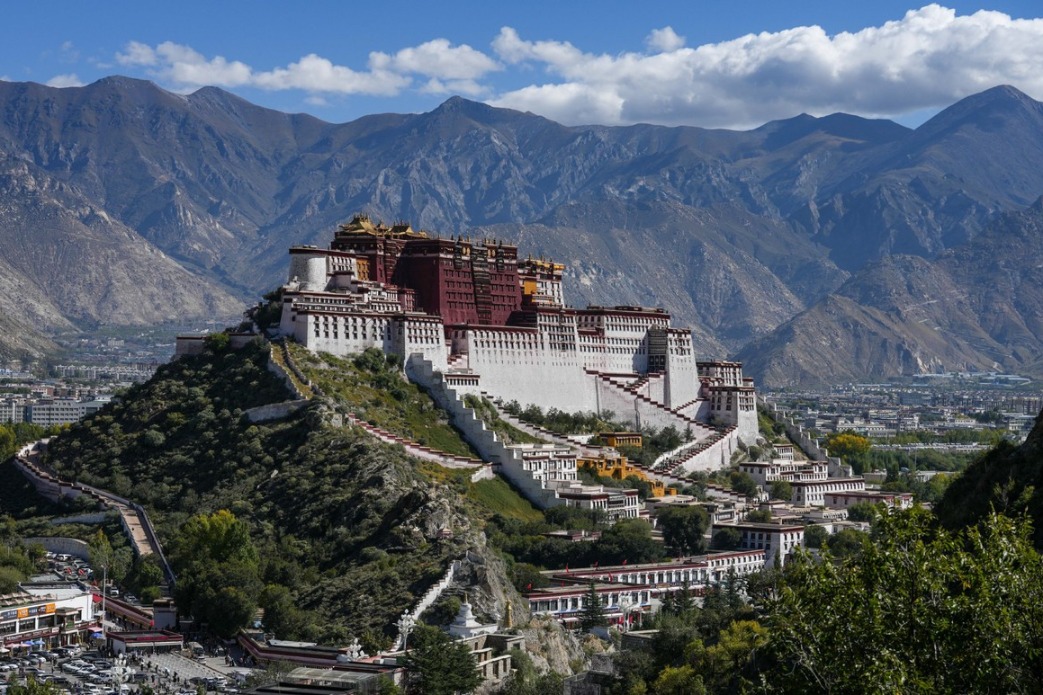
Annual Potala Palace makeover kicks off
In the heart of Lhasa, Xizang Autonomous Region, the annual restoration of the iconic Potala Palace has commenced, drawing hundreds of dedicated volunteers to its historic walls. This cherished tradition, which began on October 22, 2025, aligns with the start of the ninth month in the Tibetan calendar and serves as both a cultural celebration and a vital act of preservation. The week-long event, deeply rooted in generations of history, sees locals and experts alike come together to refresh the palace’s striking red, white, and yellow façade. Among the volunteers is Pema Wangyal, a Lhasa resident participating for the second time, who expressed the profound honor of contributing to the upkeep of this sacred site. The restoration process involves meticulously preparing natural pigments made from lime, milk, honey, sugar, saffron, and minerals, which are then applied to the palace’s massive walls using traditional methods. Volunteers, including skilled ‘spider-men’ who work on ropes to reach high areas, ensure every inch of the structure is revitalized. Ngakwang, a seasoned participant, highlighted the efficiency of modern equipment and teamwork, reducing the project’s duration from half a month to just a week. Organized by the Potala Palace Management Office, this initiative not only enhances the palace’s aesthetic but also protects its ancient walls from weathering and erosion. Built in the 7th century and reconstructed in the 17th century, the Potala Palace stands as Xizang’s largest and best-preserved palace complex, recognized as a UNESCO World Heritage site since 1994. For the community, this annual ritual is more than a physical restoration—it is a testament to their enduring connection to history and heritage.
-

HK residents urged to cast ballots
Hong Kong’s leaders and government officials have launched a vigorous campaign urging residents to participate in the upcoming Legislative Council election, scheduled for December 7, 2025. At the kick-off ceremony for the 2025 Legislative Council General Election, Chief Executive John Lee Ka-chiu emphasized the critical importance of electing ‘capable, responsible, and passionate lawmakers’ to shape the city’s future. The event was held just before the candidate nomination period began, marking the start of a pivotal electoral process that will see 90 lawmakers elected across geographical, functional, and Election Committee constituencies. Lee highlighted that Hong Kong is transitioning from stability to prosperity, with the government actively pursuing reforms, economic development, and improved livelihoods. He stressed that many policies require legislative approval and funding, making the election a decisive moment for the city’s progress. Lee called on all sectors of society, including public and private organizations and patriotic groups, to encourage voter participation. He also assured that civil servants, as the city’s largest workforce, would be given the opportunity to vote, with adequate backup personnel in place to cover their duties. The Hong Kong SAR government has pledged to ensure the election is conducted fairly, justly, and securely. David Lok Kai-hong, Chairman of the Electoral Affairs Commission, underscored that voting is both a right and a social responsibility, enabling residents to directly influence policies in healthcare, labor, education, transport, and housing. Lok praised the improved electoral system for enhancing representativeness, inclusivity, and fair competition, laying a solid foundation for Hong Kong’s democratic development. Lee also highlighted the achievements of the seventh Legislative Council, which passed nearly 130 bills and approved over 260 projects worth HK$700 billion during its term. Other high-ranking officials, including Chief Secretary Eric Chan Kwok-ki and Security Secretary Chris Tang Ping-keung, echoed the call for public engagement, describing the election as a unifying force and a chance to propel Hong Kong forward. Deputy Chief Secretary Warner Cheuk Wing-hing added that participation in the election would enhance Hong Kong’s international prestige, competitiveness, and social stability.
-
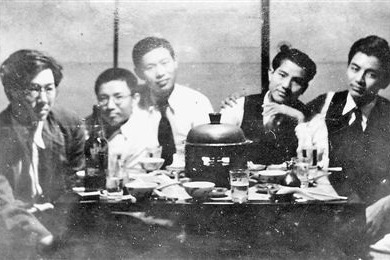
Restoration anniversary observed
The 80th anniversary of Taiwan’s restoration to China was commemorated in Beijing through a forum organized by the Central Committee of the Taiwan Democratic Self-Government League. The event underscored the historical significance of Taiwan’s return to its motherland in 1945, marking the end of 50 years of Japanese colonial rule. Shaw Kai-ping, a 73-year-old attendee, shared his family’s poignant story of resistance against Japanese aggression. His father, Shaw Daoing, born in Japanese-colonized Taiwan in 1916, joined the mainland’s war effort in 1940 as a frontline medic, embodying the spirit of unity and sacrifice. Shaw emphasized the importance of educating Taiwan’s youth about their shared heritage and the necessity of reunification. He expressed concern over the current ‘de-Sinicization’ efforts by Taiwan’s Democratic Progressive Party, which he believes undermine Taiwan’s national will and dignity. Chi Hsing, president of The Observer magazine in Taiwan, highlighted the patriotic spirit of Taiwan’s forebears and called for Oct 25 to be designated as Taiwan Restoration Day on the mainland. Huang Ching-hsien, a professor at Nankai University, reiterated that Taiwan’s status as part of China is confirmed by international law and stressed the need for collective efforts to achieve true restoration and a bright future for Taiwan.
-
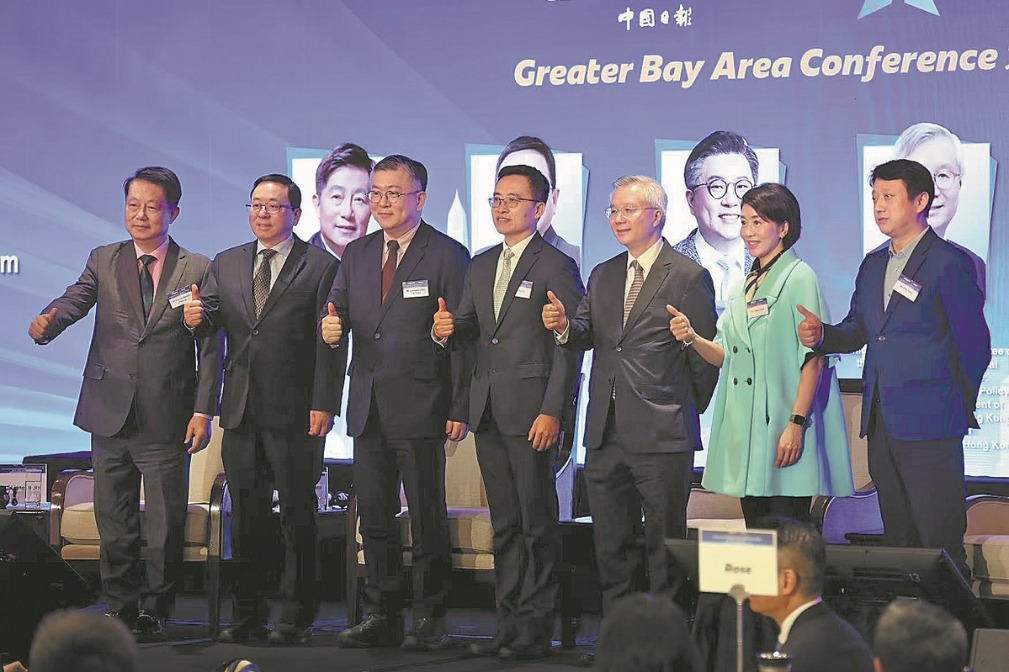
HK to spur growth of Greater Bay Area
Hong Kong is set to play a pivotal role in accelerating the integrated development of the Guangdong-Hong Kong-Macao Greater Bay Area, leveraging its unique position as a ‘super-connector’ to foster the flow of goods, capital, and talent. This was the central theme of the Greater Bay Area Conference 2025, co-organized by China Daily and the Hong Kong Coalition, which brought together over 300 industry leaders, policymakers, and experts to discuss the region’s future.
-

Nation’s green tech in mining highlighted
China has made significant strides in green mining technologies, as highlighted at the 27th China Mining Conference and Exhibition in Tianjin. Over the 14th Five-Year Plan period (2021-25), the nation invested nearly 450 billion yuan ($63 billion) in mineral exploration, discovering 150 new deposits. The Ministry of Natural Resources reported that 2024 alone saw a record high in the production of energy minerals like coal, crude oil, and natural gas, alongside increased output of nonferrous metals. Vice-Minister Xu Dachun emphasized the rehabilitation of over 160,000 hectares of abandoned mines and expanded international cooperation, including agreements with 70 countries and the establishment of 30 bilateral platforms under the Belt and Road Initiative. These efforts have positioned China as a global leader in sustainable mining practices, aligning with the UN’s 2030 Agenda for Sustainable Development. The conference also fostered international collaboration, with representatives from 42 countries discussing cutting-edge technologies and partnerships. South Africa and Namibia expressed interest in deepening ties with China, particularly in adopting its green mining innovations. Tianjin, the host city, showcased its strategic role in global trade, with its port ranking among the top 10 globally in cargo export volume.
-
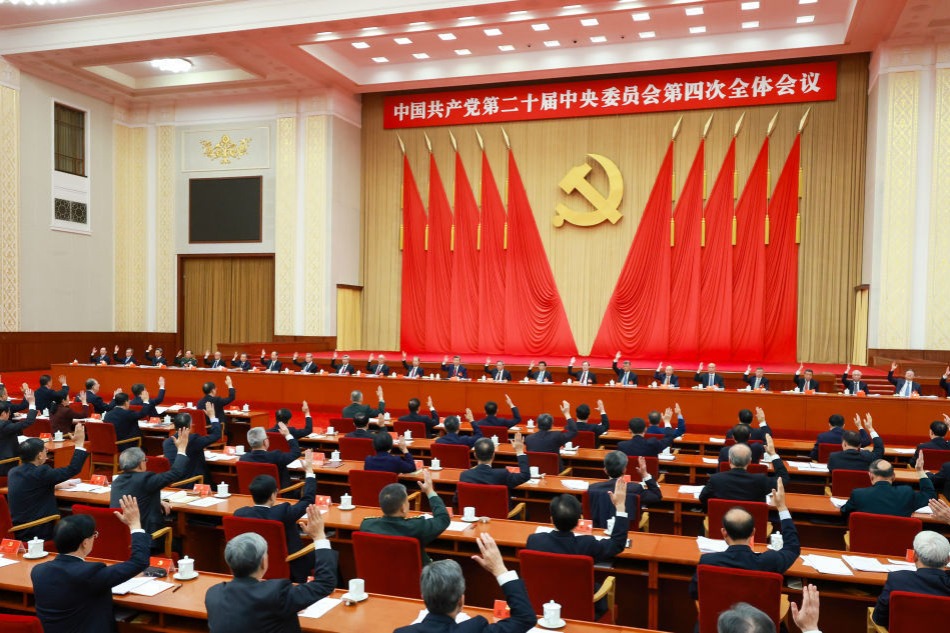
Communique of the Fourth Plenary Session of the 20th Central Committee of the Communist Party of China
The 20th Central Committee of the Communist Party of China (CPC) concluded its fourth plenary session in Beijing from October 20 to 23, 2025, setting the stage for the nation’s 15th Five-Year Plan (2026-2030) and advancing Chinese modernization. The session, attended by 168 Central Committee members and 147 alternate members, along with key officials and experts, was presided over by the Political Bureau, with General Secretary Xi Jinping delivering pivotal addresses. The plenum reviewed the Political Bureau’s work since the third plenary session, unanimously affirming its achievements in implementing the Party’s 20th National Congress directives, deepening reforms, and ensuring high-quality development. The session adopted the Recommendations for Formulating the 15th Five-Year Plan, emphasizing the critical role of this period in achieving socialist modernization by 2035. The plan outlines strategic priorities, including economic resilience, technological self-reliance, green development, and national security. The plenum underscored the importance of Xi Jinping Thought on Socialism with Chinese Characteristics for a New Era, calling for unwavering Party leadership, reform, and innovation to overcome challenges and seize opportunities in a complex global landscape. The session also addressed key areas such as industrial modernization, rural revitalization, cultural development, and public wellbeing, aiming to build a prosperous, sustainable, and secure China. The plenum concluded with a call for unity and determination to achieve the Second Centenary Goal of national rejuvenation through Chinese modernization.
-
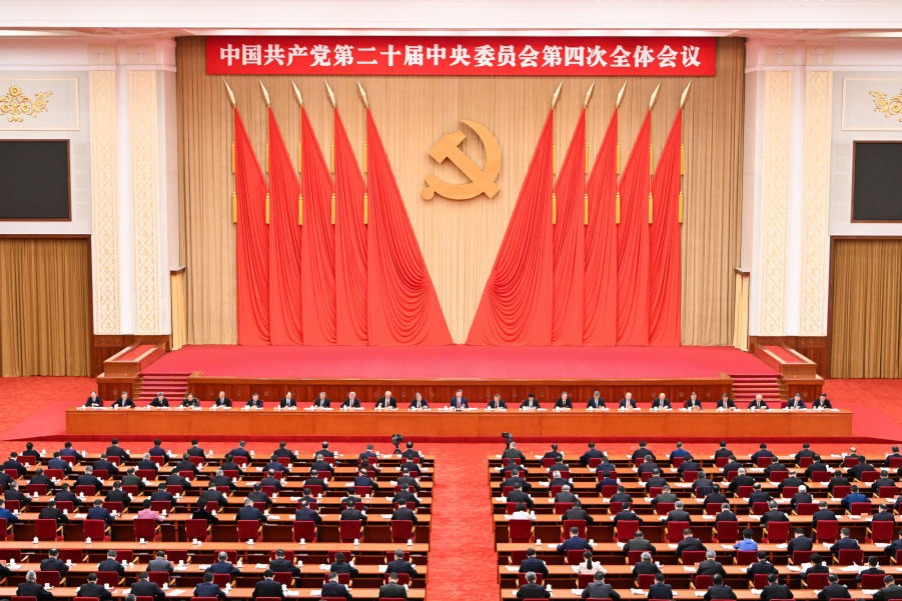
Plenum sets clear guidance
The fourth plenary session of the 20th Central Committee of the Communist Party of China (CPC), concluded on Thursday, has unveiled a comprehensive communique that outlines the nation’s strategic objectives and developmental roadmap for the 15th Five-Year Plan period (2026-30). This document, far from being a mere policy statement, serves as a foundational guide for China’s socioeconomic advancement over the next five years. It emphasizes the importance of upholding the Party’s overall leadership, prioritizing the people’s welfare, pursuing high-quality development, and deepening reforms to foster a harmonious interplay between an efficient market and a well-functioning government. The communique also underscores the dual focus on development and security, ensuring a balanced approach to national progress. The session’s outcomes are of paramount strategic significance, providing clear directives to authorities at all levels and showcasing the efficacy of China’s governance system. By delineating the country’s policy direction, economic priorities, reform commitments, and opening-up strategies, the plenum has reinforced global confidence in China’s developmental trajectory. The communique reflects the CPC’s astute assessment of both domestic and global landscapes, highlighting the Party’s pragmatic and holistic approach to policymaking, which consistently prioritizes the people’s interests and tangible results. Key initiatives include building a modernized industrial system, bolstering the real economy, achieving greater self-reliance in science and technology, consolidating a robust domestic market, accelerating the green transition, and promoting high-standard opening-up. These endeavors embody the Party’s foresight and unwavering commitment to high-quality development under the guidance of Xi Jinping Thought on Socialism with Chinese Characteristics for a New Era. The communique also reaffirms China’s modernization drive as a boon not only for its 1.4 billion citizens but also for global growth, offering new opportunities and certainties. Through collaborative initiatives like the Belt and Road Initiative, China continues to champion a more equitable, balanced, and inclusive international order. The nation’s steadfast determination to achieve comprehensive modernization and national rejuvenation remains unshakable, with external forces unable to impede its progress or undermine its core interests. Guided by the Party’s leadership, China will advance with confidence, unity, and resilience, transforming its strengths into concrete achievements and realizing its modernization vision step by step. The next five years will be pivotal in China’s modernization journey, demonstrating how perseverance, reform, and innovation can pave the way for a brighter future.
-

Ten photos from across China: Oct 17 – 23
China Daily Information Co (CDIC) holds exclusive rights to all content published on its platform, including text, photos, and multimedia materials. Unauthorized reproduction or use of this content in any form is strictly prohibited without prior written consent from CDIC. The website recommends using browsers with a resolution of 1024*768 or higher for optimal viewing. Additionally, CDIC provides various services such as advertising opportunities, job offers, and expatriate employment information. Users can also connect with CDIC through its social media channels for updates and engagement.
-

Why Assam still weeps for Zubeen Garg a month after his death
A month after the tragic death of Assamese cultural icon Zubeen Garg, the state of Assam continues to grieve deeply for its beloved artist. Zubeen, who passed away at the age of 52 in a drowning accident in Singapore, was cremated with full state honors on September 23 in Kamarkuchi, a small village near Guwahati. Since then, the cremation site has transformed into a pilgrimage spot, with thousands of mourners, spanning all ages and religions, visiting daily to pay their respects. The emotional outpouring has drawn global attention, with media giants like the BBC, Al Jazeera, and The Independent covering the collective grief of Assam. Zubeen’s influence extended far beyond his music. Known for his genre-defining compositions, he was also a fearless advocate for social and political causes, a philanthropist who donated generously to the poor, and a cultural ambassador who revitalized Assamese cinema. His death has united people across faiths, but it has also reignited political tensions in Assam. The state’s BJP government and opposition leaders are locked in a bitter feud over the investigation into his death, with allegations of negligence and political opportunism clouding the tragedy. Amid the turmoil, Zubeen’s legacy as a symbol of Assamese pride and humanity remains untarnished. His music, which blended traditional Assamese sounds with Western rhythms, provided hope during Assam’s darkest times in the 1990s, marked by violent separatist movements. Today, as Assam mourns, Zubeen’s life and work continue to inspire, reminding the world of the power of art and compassion.