标签: Asia

亚洲

  • Woman wanted by Interpol over trafficking of tiger parts arrested in India

    Woman wanted by Interpol over trafficking of tiger parts arrested in India

    Indian authorities have captured one of the world’s most sought-after wildlife traffickers in a significant victory against international animal poaching networks. Yangchen Lachungpa, whose name featured prominently on Interpol’s most-wanted list, was taken into custody following a meticulously coordinated operation between the Madhya Pradesh State Tiger Strike Force and the Wildlife Crime Control Bureau.

    The arrest marks a critical development in combating the illicit trade of endangered species, particularly highlighting the sophisticated networks transporting tiger parts across international borders. Lachungpa stands accused of masterminding trafficking corridors extending from India to Nepal, Tibet, and Bhutan, with operational bases in multiple Indian cities including the capital, Delhi.

    This case presents unusual dimensions in wildlife crime enforcement, as female involvement in high-level animal part trafficking remains exceptionally rare. Lachungpa had previously faced arrest in 2017 but vanished after obtaining bail, continuing her alleged criminal activities until this week’s apprehension.

    Court proceedings have already commenced, with judicial authorities denying bail during her Thursday appearance, reflecting the seriousness of the charges. Investigative records indicate collaborator testimonies, including from Jai Tamang—arrested in 2015—who confessed to providing Lachungpa with wildlife contraband in exchange for shelter.

    The trafficking network specifically targeted tigers, whose body parts command high prices in traditional Chinese medicine markets. While documented tiger poaching cases show a decrease from 56 in 2023 to 26 in 2024 according to the International Fund for Animal Welfare, experts caution that actual numbers likely significantly exceed reported figures due to undetected killings.

  • Dubai-Hyderabad Emirates flight receives bomb threat, lands safely

    Dubai-Hyderabad Emirates flight receives bomb threat, lands safely

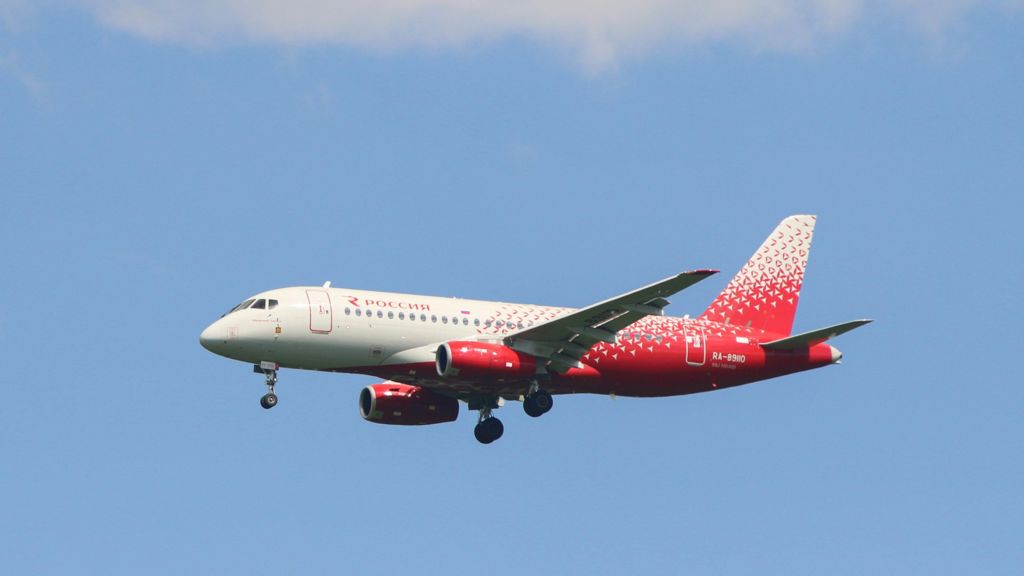
    An Emirates aircraft operating as flight EK526 from Dubai to Hyderabad became the subject of an intensive security response on Friday following receipt of a potential security threat. The incident prompted the immediate implementation of standard security protocols coordinated between aviation authorities and airline ground teams.

    The aircraft, which departed from Dubai International Airport, landed without incident at Rajiv Gandhi International Airport in Hyderabad at approximately 8:30 AM local time. Following standard security protocols, passengers disembarked normally after comprehensive security checks were conducted by authorities.

    Emirates officials confirmed in an official statement: ‘Authorities alerted us to a potential security threat on Emirates’ flight EK526 from Dubai to Hyderabad. Standard security procedures were implemented with full co-operation from Emirates’ ground teams.’ The airline emphasized that passenger and crew safety remains their highest priority throughout such incidents.

    The Indian news agency PTI reported the security concern specifically involved a bomb threat, though official sources described it more broadly as a ‘security threat.’ Indian authorities followed established safety procedures to ensure the protection of all passengers and the aircraft itself.

    Emirates, recognized as the world’s largest international carrier, maintains extensive operations throughout India with regular flights to multiple destinations including Mumbai, Hyderabad, Ahmedabad, Chennai, Bengaluru, Kochi, Delhi, Kolkata, and Thiruvananthapuram. The airline has built its reputation on safety and operational excellence within the global aviation industry.

  • Iranian press review: Rouhani calls for regional bloc against Israeli air power

    Iranian press review: Rouhani calls for regional bloc against Israeli air power

    Former Iranian President Hassan Rouhani has issued a stark warning regarding Iran’s national security vulnerabilities, emphasizing that the nation’s airspace has become dangerously exposed following recent regional conflicts. With sixteen years of experience as secretary of the Supreme National Security Council, Rouhani criticized current administration officials for underestimating Iran’s defense shortcomings, particularly highlighting how easily Israeli aircraft can penetrate Iranian airspace.

    Rouhani asserted that Iran’s neighboring countries—including Iraq, Syria, Lebanon, and Jordan—have airspace effectively controlled by the United States and Israel, leaving Iran without genuine deterrence capabilities. He advocated for strengthened regional alliances, stating that helping neighboring nations achieve independence ultimately benefits Iran’s security interests through shared risks and common objectives.

    This security alert emerges alongside significant domestic controversies. Iranian police recently conducted a raid on a private villa in Lavasan, north of Tehran, detaining over twenty individuals including seven prominent actors. Charges included illegal assembly, public indecency, and alcohol-related offenses. Legal experts have condemned the operation as violating both Iranian law and religious principles, with media outlets comparing the incident to the restrictive early post-revolution years.

    Simultaneously, the Masoud Pezeshkian administration has implemented a controversial fuel price increase policy, triggering concerns about potential social unrest. Effective December 12, the new policy maintains a government allocation of 60 liters at 15,000 rials and 100 liters at 30,000 rials monthly, with additional fuel priced at 50,000 rials per liter. While energy experts acknowledge the economic necessity of aligning prices with market rates, the move remains sensitive given that the 2019 fuel protests resulted in hundreds of casualties.

    Regionally, diplomatic activity has intensified with simultaneous visits by Saudi Deputy Foreign Minister Saud bin Mohammed al-Sati and Turkish Foreign Minister Hakan Fidan to Tehran. International relations analysts interpret these visits as reflecting growing regional concerns about Israel’s expanding influence. Experts suggest that despite historical rivalries, both Saudi Arabia and Turkey recognize the threat posed by Israel and may seek limited cooperation with Iran to establish regional balance and prevent further conflict escalation.

  • Turkey orders arrest of 29 footballers in betting scandal

    Turkey orders arrest of 29 footballers in betting scandal

    Turkish authorities have launched a sweeping crackdown on illegal sports betting, with an Istanbul prosecutor issuing arrest warrants for 46 individuals—including 29 professional footballers—in one of the nation’s most significant sports corruption investigations. The scandal has implicated players from top-tier clubs, with 27 athletes suspected of wagering on matches involving their own teams.

    Among the high-profile figures detained is Metehan Baltaci of reigning champions Galatasaray, who had previously received a nine-month suspension related to the scandal. The investigation has also ensnared Mert Hakan Yandas of Fenerbahce, who allegedly placed bets through a third-party account. Beyond players, the warrants target two club presidents accused of attempting to manipulate the outcome of a third-division match during the 2023-2024 season.

    The Turkish Football Federation (TFF) has responded with unprecedented disciplinary measures, suspending over 1,000 players and nearly 150 referees connected to the scandal. Among sanctioned players, 25 were from the Super Lig, with penalties ranging from 45 days to 12 months. Senegalese winger Alastane Ndao of Konyaspor stands as the only foreign national suspended, receiving a full-year ban.

    Law enforcement officials confirmed that 35 of the 46 individuals named in the arrest order have been taken into custody as the investigation continues to unfold, shaking the foundation of Turkish football.

  • Panda ambassadors fostering China-France friendship

    Panda ambassadors fostering China-France friendship

    In a remarkable display of cross-cultural diplomacy, giant pandas have emerged as unexpected ambassadors strengthening the bond between China and France. The story centers on Yuan Meng, an eight-year-old panda who returned to his ancestral home in Sichuan province two years ago after capturing hearts in France. Now residing at the Chengdu Research Base of Giant Panda Breeding, the charismatic bear has earned the affectionate nickname “Director Sheep” due to his distinctive vocalizations that resemble bleating sounds.

    Yuan Meng’s journey represents a much larger narrative of international cooperation. His parents, Huan Huan and Yuan Zai, were originally sent to France’s Beauval Zoo in 2012 as part of a comprehensive panda conservation initiative. Their presence transformed the French zoo, with annual visitor numbers skyrocketing from 600,000 to an impressive 2 million by 2024. The couple’s European legacy includes three offspring: Yuan Meng (born 2017, the first panda ever born in France) and twins Huan Lili and Yuan Dudu (born 2021).

    The panda exchange program operates under carefully structured agreements ensuring genetic diversity, typically requiring overseas-born cubs to return to China before age four. Yuan Meng’s departure was delayed until just before his sixth birthday due to his overwhelming popularity among French admirers. Such was his celebrity status that Beauval Zoo unveiled a 2.5-meter bronze statue in his honor in March 2024.

    This interspecies diplomacy has deep historical roots dating to 1869 when French Catholic priest and naturalist Pierre Armand David contributed to the scientific discovery of giant pandas in Sichuan. The Dengchigou Catholic Church, where David once resided, now serves as an educational center celebrating both panda conservation and Sino-French friendship, blending western Sichuan architecture with Gothic design elements.

    China’s conservation efforts have yielded significant results, with the International Union for Conservation of Nature reclassifying giant pandas from “endangered” to “vulnerable” in 2016. The establishment of the Giant Panda National Park in 2021 across three provinces represents the latest milestone, with Ya’an city containing nearly 40% of the park’s territory and Baoxing county reporting the nation’s highest density of wild pandas.

    The collaboration continues to evolve, with China’s forestry authority and the French Biodiversity Office recently agreeing to partner the Giant Panda National Park with France’s Pyrenees National Park. This alliance will focus on biodiversity monitoring, species protection, scientific education, and personnel training exchanges.

    As China and France celebrate 61 years of diplomatic relations in 2025, these charismatic black-and-white ambassadors symbolize both nations’ shared commitment to environmental stewardship and international cooperation, demonstrating how wildlife conservation can build bridges between cultures.

  • Dragon-lion festival highlights tradition, unity in Jianghua

    Dragon-lion festival highlights tradition, unity in Jianghua

    The Jianghua Yao Autonomous County in Hunan Province became a vibrant tapestry of light and motion on December 3rd, 2025, as it hosted a magnificent dragon-lion lantern festival. This dazzling display formed a central part of the celebrations commemorating the region’s 70th anniversary since its establishment.

    Seventy performance troupes, including participants from neighboring areas, converged upon a central park square at 7:30 PM. In a remarkable demonstration of intergenerational unity, performers aged from 9 to 85 years old captivated onlookers with expertly choreographed traditional dragon and lion dances. Their movements synchronized perfectly with the powerful rhythm of drums and enthusiastic crowd cheers, creating complex and mesmerizing patterns.

    The spectacle featured several extraordinary highlights, most notably a breathtaking 200-meter-long dragon composed of 77 individual sections, presented by a team from Shengang Village. Another crowd-favorite was a brilliantly multicolored dragon operated by a coordinated team of 1,000 performers, creating an unforgettable visual masterpiece.

    Following the stationary performances, the celebration transitioned into a vibrant parade as performers processed through the county’s main thoroughfares, extending the festive atmosphere throughout the community.

    This dragon-lion lantern tradition, officially recognized as an intangible cultural heritage of Yongzhou City, continues to thrive through the dedication of more than 300 active performance troupes who preserve and promote this important cultural practice.

  • Four countries to boycott Eurovision after Israel approved to participate

    Four countries to boycott Eurovision after Israel approved to participate

    The European Broadcasting Union (EBU) faces a significant credibility crisis as four national broadcasters—Spain (RTVE), Ireland, Slovenia (RTVSLO), and the Netherlands—have declared their withdrawal from the upcoming Eurovision Song Contest. This collective boycott stems directly from the EBU’s controversial decision to permit Israel’s participation amidst ongoing military operations in Gaza.

    The dispute reached a critical point during the EBU’s General Assembly on Thursday, where eight member nations, led by Spain’s RTVE, formally requested a secret ballot to vote on Israel’s exclusion. The motion was ultimately denied, with the EBU stating a ‘large majority of members’ agreed no further vote was necessary. The assembly instead approved new contest safeguards aimed at preventing vote manipulation and limiting disproportionate promotional campaigns, particularly those supported by governments or third parties.

    National broadcasters issued strong statements condemning the decision. RTVE expressed ‘distrust of the festival’s organisation,’ citing ‘political pressure’ and Israel’s alleged use of the contest for political purposes. RTVSLO stated participation ‘would conflict with its values of peace, equality and respect.’ In contrast, broadcasters from the United Kingdom and Germany confirmed they would continue their participation.

    The controversy is intensified by the context of the previous contest. Israel’s 2024 entry, Yuav Raphael—a survivor of the October 7th Nova festival attack—finished second amid widespread allegations of vote manipulation during the public voting round, prompting RTVE to request an official audit. In response to these allegations and mounting boycott pressure, the EBU has enacted new rules, reducing the maximum number of votes per payment method from 20 to 10.

    The 2026 edition, marking the contest’s 70th anniversary, is scheduled to be held in Vienna following Austria’s victory this year. The final assembly vote saw 65% of delegates approve the new rules and end discussion on Israel’s participation, while 23% voted against and 10% abstained, highlighting a deeply divided membership.

  • China set to host World Conference of Science Journalists in 2029

    China set to host World Conference of Science Journalists in 2029

    In a landmark decision at the recently concluded World Conference of Science Journalists in Pretoria, South Africa, China has been selected to host the prestigious 2029 edition of this global gathering. This will mark the first time the conference is held in Chinese territory, representing a significant milestone for the nation’s scientific journalism community.

    The Chinese Society for Science and Technology Journalism successfully secured the hosting rights through a formal application process during the South African conference. The event, organized under the auspices of the World Federation of Science Journalists with support from UNESCO, serves as a premier platform for science communication professionals worldwide to exchange cutting-edge reporting methodologies and practical experiences in scientific storytelling.

    As a founding member of the World Federation of Science Journalists, the China Association for Science and Technology News has maintained consistent engagement with the international science journalism community. This longstanding participation has now culminated in the opportunity to host the global conference, which is expected to significantly enhance China’s role in international science and technology governance discourse.

    The 2029 conference is anticipated to facilitate greater integration of Chinese science journalists into global networks while strengthening China’s influence in shaping international science communication standards. The event will provide a forum for showcasing China’s scientific advancements and journalistic approaches to an international audience, potentially setting new benchmarks for science reporting practices worldwide.

  • Guangzhou Baiyun Airport’s passenger trips exceed 2024 total

    Guangzhou Baiyun Airport’s passenger trips exceed 2024 total

    Guangzhou Baiyun International Airport has achieved a significant milestone by handling 76.52 million passenger trips as of Tuesday, December 3rd, 2025, already exceeding its entire 2024 total of 76.37 million passengers. This remarkable growth demonstrates the airport’s accelerating recovery and expansion in the post-pandemic aviation market.

    The airport’s international segment has been particularly robust, recording 15.84 million passenger journeys—representing approximately one-fifth of total traffic and a substantial 19.01% year-over-year increase. Airport authorities attribute this international growth primarily to China’s 144-hour visa-free transit policy, which has made the airport an increasingly attractive hub for global travelers.

    A key driver in this growth has been the operational launch of Terminal 3 on October 30th, which has significantly expanded the airport’s capacity. The terminal’s impact was immediately felt, with November alone witnessing 7.32 million passenger trips—a 12.56% increase compared to the same period last year. The new facility has already accommodated twenty-one domestic flights operated by six major Chinese carriers including China Eastern Airlines, Shanghai Airlines, and Juneyao Airlines.

    Route expansion has been another critical factor in the airport’s success. Since January, Baiyun Airport has launched, resumed, or increased frequency on more than 30 international routes. New destinations include Surabaya (Indonesia), Almaty (Kazakhstan), Algiers (Algeria), Madrid (Spain), and Darwin (Australia). Additionally, services to Vancouver (Canada), Kolkata, and Delhi (India) have been reinstated.

    The airport now connects to over 100 international and regional destinations, with several new international carriers commencing operations, including Air Astana, Vietjet Air, Eastar Jet, Nepal Airlines, Air Algerie, and IndiGo.

    Leveraging its massive ‘five runways and three terminals’ infrastructure, Baiyun Airport has achieved transformative improvements in international route density and intercontinental connectivity. This strategic expansion has further solidified its position as Southern China’s primary aviation gateway to Africa and the Middle East.

    Looking ahead, airport officials announced plans to further expand their network across Southeast Asia, South Asia, the Middle East, Australia-New Zealand, and African markets. The airport will prioritize new routes and increased frequencies to countries participating in the Belt and Road Initiative and RCEP member nations, while simultaneously extending coverage to destinations throughout Europe, North America, and South America.

  • Tianjin teacher’s street art transforms urban flaws into magic

    Tianjin teacher’s street art transforms urban flaws into magic

    In the urban landscape of Tianjin, a remarkable transformation is underway as local art educator Yuan Yuan converts mundane urban imperfections into captivating artistic expressions. The 32-year-old teacher has gained social media acclaim for her innovative approach to urban repair through art, most notably turning a simple brick wall crack into an enchanting mural featuring Nick and Judy from the popular animation Zootopia.

    With twelve years of teaching experience, Yuan has dedicated her spare time since last autumn to revitalizing various urban flaws including structural cracks, deteriorating walls, and tree cavities surrounding school environments. Her initiative represents a unique fusion of public art and urban maintenance that simultaneously serves educational purposes and community beautification.

    Yuan’s artistic methodology incorporates clever homophonic puns that carry cultural significance within Chinese educational contexts. Her creations include symbolic representations such as a flying rabbit denoting ‘making rapid progress’ and a mouse holding motivational signage that creatively plays on traditional Chinese idioms. These artistic interventions serve dual purposes as both aesthetic enhancements and subtle educational encouragements for young students.

    Employing durable acrylic paints specifically selected for outdoor conditions, Yuan acknowledges the transient nature of her creations, with most artworks maintaining their vibrancy for approximately one year before naturally fading. This ephemeral quality adds a layer of temporal beauty to her urban interventions, echoing the evolving nature of urban spaces themselves.

    Leading a dedicated team from her art institution, Yuan characterizes this initiative as a public welfare effort rather than a commercial enterprise. She poetically describes her miniature murals as ‘seeds’ planted throughout the urban environment, noting that while she doesn’t anticipate creating a forest, ‘just scattered bits of green are enough’ to positively impact the community’s visual landscape and inspire young minds.