标签: Asia

亚洲

  • China launches new remote sensing satellite

    China launches new remote sensing satellite

    China has successfully deployed a new Earth observation satellite into orbit, marking another significant advancement in the nation’s space capabilities. The Yaogan-47 remote sensing satellite was launched aboard a Long March-4B carrier rocket from the Jiuquan Satellite Launch Center in northwest China at 11:41 a.m. Beijing Time on December 9, 2025.

    The satellite achieved its predetermined orbit following a flawless launch operation, according to official reports. This mission represents the 614th flight of China’s Long March rocket series, demonstrating the country’s growing expertise and reliability in space launch technology.

    The newly deployed satellite is designed to serve multiple civilian purposes including comprehensive land resource surveys, urban development planning, transportation infrastructure design, and agricultural production assessment. Additionally, the satellite’s advanced sensing capabilities will contribute to environmental monitoring and disaster management programs, providing valuable data for natural disaster prediction and mitigation efforts.

    China’s expanding constellation of remote sensing satellites enhances the nation’s ability to monitor Earth’s surface with increasing precision and frequency. The successful launch continues China’s pattern of regular space missions that support both scientific research and practical applications for sustainable development and resource management.

  • Does Japan’s megaquake warning mean the ‘big one’ is coming?

    Does Japan’s megaquake warning mean the ‘big one’ is coming?

    Japanese authorities have escalated warnings about a potential catastrophic earthquake following Monday’s magnitude 7.5 tremor that struck northeastern Japan. This alert marks the second such warning in under two years, reviving concerns about the anticipated ‘big one’—a seismic event projected to occur once every century.

    According to Japan’s earthquake investigation panel, there is a 60-90% probability that a megaquake could originate from the Nankai Trough within the next three decades. This seismic zone extends along Japan’s Pacific coastline and has historically generated devastating earthquakes. Officials have projected worst-case scenarios including tsunamis exceeding 20 meters (66 feet) that could inundate Tokyo and surrounding prefectures, potentially resulting in approximately 300,000 fatalities and trillions of dollars in economic devastation.

    Residents across seven prefectures—from Hokkaido in the north to Chiba in central Japan—have been instructed to maintain heightened preparedness. While no formal evacuation orders have been issued, authorities are urging citizens to verify evacuation routes, secure household furniture, and assemble emergency supplies including food, water, and portable sanitation facilities.

    Government seismologists indicate that there is approximately a 1% chance that Monday’s earthquake could trigger a subsequent magnitude 8.0 or larger event. Takashi Yokota, Japan’s director for disaster management, emphasized during a press briefing that current global seismic data suggests a possibility rather than a prediction of an imminent major tremor.

    The Nankai Trough’s seismic history provides sobering context. This subduction zone between Suruga Bay and the Hyuganada Sea has generated catastrophic earthquakes approximately every century, often occurring in pairs. The most recent events in 1944 and 1946 resulted in significant destruction, while the 1707 rupture along the trough’s entire 600-kilometer length triggered Japan’s second-largest recorded earthquake and subsequent Mount Fuji eruption.

    Seismological experts remain divided on prediction capabilities. Geologists Kyle Bradley and Judith Hubbard describe the Nankai Trough’s historical pattern as ‘convincingly scary,’ while University of Tokyo Professor Emeritus Robert Geller maintains that earthquake warnings have ‘almost nothing to do with science,’ noting that only about 5% of earthquakes are preceded by detectable foreshocks.

    Japan’s current warning system, developed after the catastrophic 2011 magnitude 9.0 earthquake that killed over 18,000 people, was first implemented in August 2024. The Japan Meteorological Agency continues to balance public awareness with caution, stating that while earthquake probability is elevated, ‘this is not an indication that a major earthquake will definitely occur.’

  • Jakarta office fire kills at least 22, police confirm

    Jakarta office fire kills at least 22, police confirm

    A devastating fire erupted at a seven-story commercial building in central Jakarta on Tuesday afternoon, resulting in at least 22 fatalities as rescue operations continue. The tragedy struck during lunch hour when numerous employees were present inside the structure.

    Jakarta Police Chief Susatyo Purnomo Condro confirmed the blaze originated from a lithium battery explosion on the ground floor before rapidly ascending through the building’s upper levels. The property housed a drone manufacturing and services company that specializes in aerial surveying, mapping, and industrial inspections.

    Authorities reported a disproportionate number of female victims among the deceased, including one pregnant woman. Preliminary investigations suggest smoke inhalation rather than burns caused most fatalities, as thick toxic fumes quickly filled the upper floors where many workers became trapped.

    Fire and rescue services deployed 28 fire engines and approximately 100 personnel to combat the intense blaze. Dramatic rescue operations unfolded as firefighters used aerial ladders to evacuate stranded employees from smoke-engulfed windows. Despite extinguishing the flames, emergency teams face significant challenges accessing the sixth floor where structural integrity remains compromised.

    The Jakarta Globe reported rescue teams have completed initial sweeps of lower floors and are now concentrating search efforts on upper levels. Identification procedures for recovered victims are underway while authorities continue gathering comprehensive casualty data.

    The incident highlights growing concerns about lithium battery safety in commercial settings, particularly in buildings housing technology companies. This represents one of Jakarta’s deadliest office building fires in recent years, raising questions about emergency preparedness and safety protocols in Indonesian commercial structures.

  • China deploys 15th batch of internet satellites into orbit

    China deploys 15th batch of internet satellites into orbit

    China has successfully launched its fifteenth cluster of low-orbit internet satellites, marking another significant advancement in its ambitious space-based connectivity initiative. The deployment occurred at 6:11 am Beijing Time on December 9, 2025, utilizing a modified Long March 6A carrier rocket from the Taiyuan Satellite Launch Center in Shanxi province.

    The China Aerospace Science and Technology Corp (CASC), the nation’s primary state-owned space contractor, confirmed the satellites successfully reached their predetermined orbital trajectories shortly after launch. This latest batch of satellites was engineered and manufactured by the China Academy of Space Technology, a Beijing-based subsidiary of CASC.

    With this successful mission, China’s state-operated mega constellation now exceeds 110 satellites in orbit, substantially enhancing the network’s coverage and capacity for global internet services. The Long March 6A medium-lift launch vehicle, developed by the Shanghai Academy of Spaceflight Technology, features a sophisticated design incorporating a 50-meter liquid-propelled core booster augmented by four solid-fuel side boosters. Weighing 530 metric tons at liftoff, this versatile rocket platform is capable of delivering payloads to various orbital configurations including sun-synchronous, low-Earth, and intermediate circular orbits.

    This launch represents multiple milestones: the 81st Chinese space mission of the year and the 613th overall flight for the Long March rocket series. Notably, this mission marks the fifth utilization of the Long March 6A variant specifically dedicated to expanding China’s orbital internet infrastructure, demonstrating the country’s growing proficiency in frequent and reliable space deployments.

  • Baotou bets on digitized carbon ticket

    Baotou bets on digitized carbon ticket

    The industrial city of Baotou in Inner Mongolia Autonomous Region has emerged as an unexpected pioneer in climate innovation through its groundbreaking digital carbon ticket system. This homegrown environmental program represents a significant evolution in carbon market mechanisms, combining blockchain verification with ecological conservation to create a transparent, efficient carbon trading ecosystem.

    At the core of this initiative is a digital platform launched in 2021 that transforms traditional carbon credits into blockchain-verified digital assets. The system certifies carbon sequestration achieved by local forests and grasslands, creating tradeable digital tokens that provide real-time tracking and verification capabilities unavailable in conventional paper-based carbon credit systems.

    The program’s practical impact became evident in June 2023 when Guyang county successfully monetized 150,000 metric tons of carbon credits generated from a 1,500-hectare state forest. This transaction, valued at over 2 million yuan ($281,754), demonstrated the economic potential of carbon trading while funding continued ecological development.

    Unlike traditional corporate-focused carbon markets, Baotou’s system actively engages citizens through a mobile application that converts everyday eco-friendly activities—such as walking, cycling, and conservation efforts—into redeemable carbon credits. Residents like Qin Dan report widespread community participation, with neighbors earning carbon points that can be exchanged for merchant discounts or traded on the platform.

    According to Feng Xiaodong, Director of Reform Development and Science Technology at Baotou’s Forestry and Grassland Bureau, the city has established a comprehensive carbon neutrality mechanism that uploads all critical operational data to blockchain for certification. This ensures unprecedented transparency throughout the carbon ticket development, trading, and application process.

    The model’s success has attracted national attention, with enterprises from Zhejiang, Shandong, and Fujian provinces purchasing Baotou’s carbon credits to offset their emissions. The program reached a significant milestone when its credits were used to neutralize emissions during the 14th National Winter Games in 2024, marking the first application of regional carbon products at a national sporting event.

  • False names inserted in govt papers

    False names inserted in govt papers

    Chinese authorities have initiated nationwide investigations following the revelation that multiple government documents contained fabricated names directly copied from an online database, exposing systemic flaws in bureaucratic oversight mechanisms.

    The scandal emerged when five names—Zhang Jiwei, Lin Guorui, Lin Wenshu, Lin Yanan, and Jiang Yiyun—appeared as expert evaluators for a major government procurement project in Hubei province. Astute internet users discovered these names matched, in identical sequence, the top entries from Baidu’s widely circulated ‘10,000 Common Chinese Names’ database.

    Subsequent investigations revealed these fictitious identities have been systematically reused across China in various official contexts since at least 2019. The names have appeared as recipients of university grants in Zhejiang, violators of minor street regulations in Liaoning, and even winners of cultural competitions, earning them the unofficial title of ‘the internet’s five busiest people.’

    Legal experts have raised serious concerns about the practice. Huang Dong, a Guangzhou-based commercial litigation lawyer, told China Daily that using fabricated names in official procedures constitutes multiple legal violations, including breaches of China’s Government Procurement Law and Administrative Penalty Law. He warned that responsible officials could face disciplinary action for dereliction of duty and potentially criminal charges for bid rigging if the practice concealed collusive tendering.

    State media commentary has characterized the scandal as symptomatic of deeper ‘formalism’ within bureaucracy, where procedures are performed for appearance rather than substance. Professor Liu Dongchao of the National Academy of Governance suggested the phenomenon reflects an overly complex administrative system that prioritizes procedural compliance over substantive outcomes, creating incentives for fraudulent paperwork.

    Multiple local governments have canceled affected projects, issued public apologies, and pledged accountability. Reform advocates are calling for implementation of verifiable authenticity standards, independent third-party reviews for major projects, and increased use of AI and big data to detect anomalies in public documentation.

  • Cooling sustainably

    Cooling sustainably

    BELEM, BRAZIL – At the COP30 climate summit, prominent climate scientist Winston Chow emphasized that regional renewable energy sharing represents the most viable pathway for Southeast Asia to address escalating heat-related challenges without exacerbating carbon emissions.

    As co-chair of the UN’s Intergovernmental Panel on Climate Change working group on climate impacts, adaptation and vulnerability, Chow identified outdoor workers and slum residents as particularly vulnerable to rising temperatures. His analysis followed commitments from 185 cities, including Singapore, to implement localized cooling solutions that are both accessible and environmentally sustainable.

    The urgency of this transition was underscored by a recent UN Environment Programme report warning that global cooling demand could triple by 2050 due to increasing temperatures, population growth, and proliferation of inefficient cooling systems. Unchecked, cooling-related emissions could nearly double, potentially overwhelming power grids and derailing climate objectives.

    Chow, who serves as Professor of Urban Climate at Singapore Management University, noted Southeast Asia’s particular challenge: “We are still starved in terms of access to renewable energies,” highlighting the region’s limited solar, wind and hydropower resources compared to other areas. This scarcity underscores the critical importance of developing an ASEAN renewable energy grid, with member states targeting an interconnected power network by 2045 to ensure more affordable and reliable electricity supply.

    Beyond technological solutions, Chow pointed to nature-based approaches including community gardens, street greenery and urban agriculture that provide natural cooling while delivering co-benefits like carbon sequestration. He particularly commended the UNEP report for addressing risks to vulnerable populations in heat-stressed tropical regions.

    The scientist emphasized that effective cooling strategies must address both adaptation to rising temperatures and their root causes, noting: “You can’t just use air conditioning without realizing that most air conditioning is powered by fossil fuels.”

    Supporting this comprehensive approach, Singapore’s Minister for Sustainability and the Environment Grace Fu announced plans to share technical expertise in sustainable cooling and urban heat resilience through the COP30 cooling initiative led by the Brazilian presidency and UNEP.

    Amid sweltering conditions at the COP30 venue, Chow expressed hope that increasing temperature-related risks would spur more concerted global action, with cross-community and cross-governmental cooperation essential for implementing sustainable cooling solutions.

  • Breakthrough in wireless goods trains

    Breakthrough in wireless goods trains

    In a landmark achievement for rail transport technology, China has successfully conducted the world’s first test of multiple heavy-haul freight trains operating in synchronized formation using exclusively wireless control systems. This revolutionary trial occurred on December 9, 2025, along the Baoshen Railway in Inner Mongolia Autonomous Region—a critical freight corridor dedicated primarily to coal transportation from the energy-rich Ordos basin.

    The breakthrough demonstration involved seven separate freight trains, each weighing 5,000 metric tons, collectively moving 35,000 tons of cargo without traditional physical couplings. Instead, the convoy relied on an advanced intelligent control system developed domestically by China Shenhua (a subsidiary of China Energy Investment Corporation) in collaboration with research partners. The technology utilizes sophisticated wireless communication protocols and real-time algorithmic coordination to ensure perfect synchronization during acceleration and braking maneuvers.

    This technological advancement addresses the significant engineering challenge of maintaining precise coordination among multiple heavy trains on a single track, eliminating collision risks while preventing undesirable separation. Traditionally, freight operations have relied on single-train configurations or physically connected cars, limiting capacity and efficiency.

    The successful implementation of wireless train formation control promises to transform freight rail economics. Existing rail infrastructure can now achieve over 50% increased transport capacity without requiring new construction, offering a highly cost-effective solution for bulk commodity transportation. This development holds particular significance for China’s energy logistics, enabling more efficient movement of coal from production regions to consumption centers.

    Beyond domestic applications, this breakthrough establishes a new technical paradigm for global freight rail systems seeking enhanced safety and operational efficiency in long-distance heavy haul operations. The technology demonstrates how digital innovation can dramatically improve the performance of traditional industrial infrastructure.

  • Hamas, Israel edge toward 2nd phase ceasefire

    Hamas, Israel edge toward 2nd phase ceasefire

    Significant progress emerges in the Israel-Hamas peace process as both parties indicate readiness to advance toward the second phase of their truce agreement. Palestinian militant group Hamas has expressed unprecedented willingness to discuss disarmament terms, while Israeli Prime Minister Benjamin Netanyahu acknowledges the challenging road ahead in achieving Gaza’s demilitarization.

    Bassem Naim, a Hamas political bureau member, articulated the group’s openness to a comprehensive approach during discussions with The Associated Press in Qatar. While welcoming the potential deployment of a United Nations stabilization force along border regions to monitor ceasefire compliance, Naim explicitly rejected any international military presence within Palestinian territories.

    The diplomatic developments follow reports that U.S. President Donald Trump intends to announce the transition to Phase Two of the Gaza peace process before Christmas. This phase addresses the most contentious elements of the agreement, including Hamas’s disarmament and Gaza’s demilitarization.

    Netanyahu, during a Jerusalem news conference with German Chancellor Friedrich Merz, confirmed that Israel anticipates moving to the second phase shortly after recovering the remains of deceased hostage Ran Gvili. The Israeli leader credited military pressure and Trump’s diplomatic engagement with Arab and Muslim nations for compelling Hamas to negotiate.

    Despite these diplomatic advances, tensions persist on the ground. Israeli forces reportedly stormed a UN relief agency headquarters in East Jerusalem, while settlers continued land operations in the northern Jordan Valley. These actions have raised concerns among Arab and Muslim-majority nations, particularly following Israel’s announcement about opening the Rafah crossing, which prompted eight countries to issue statements rejecting Palestinian displacement.

    Regional analysts warn that Israel’s objections to proposed stabilization force participants—specifically Türkiye and Qatar—and its continued military operations threaten to undermine the entire peace process. Haydar Oruc, a Middle East researcher, emphasized that Israel must cease attacks, permit humanitarian access, and allow interim administration establishment to facilitate successful transition to Phase Two.

  • Thai airstrikes target border with Cambodia

    Thai airstrikes target border with Cambodia

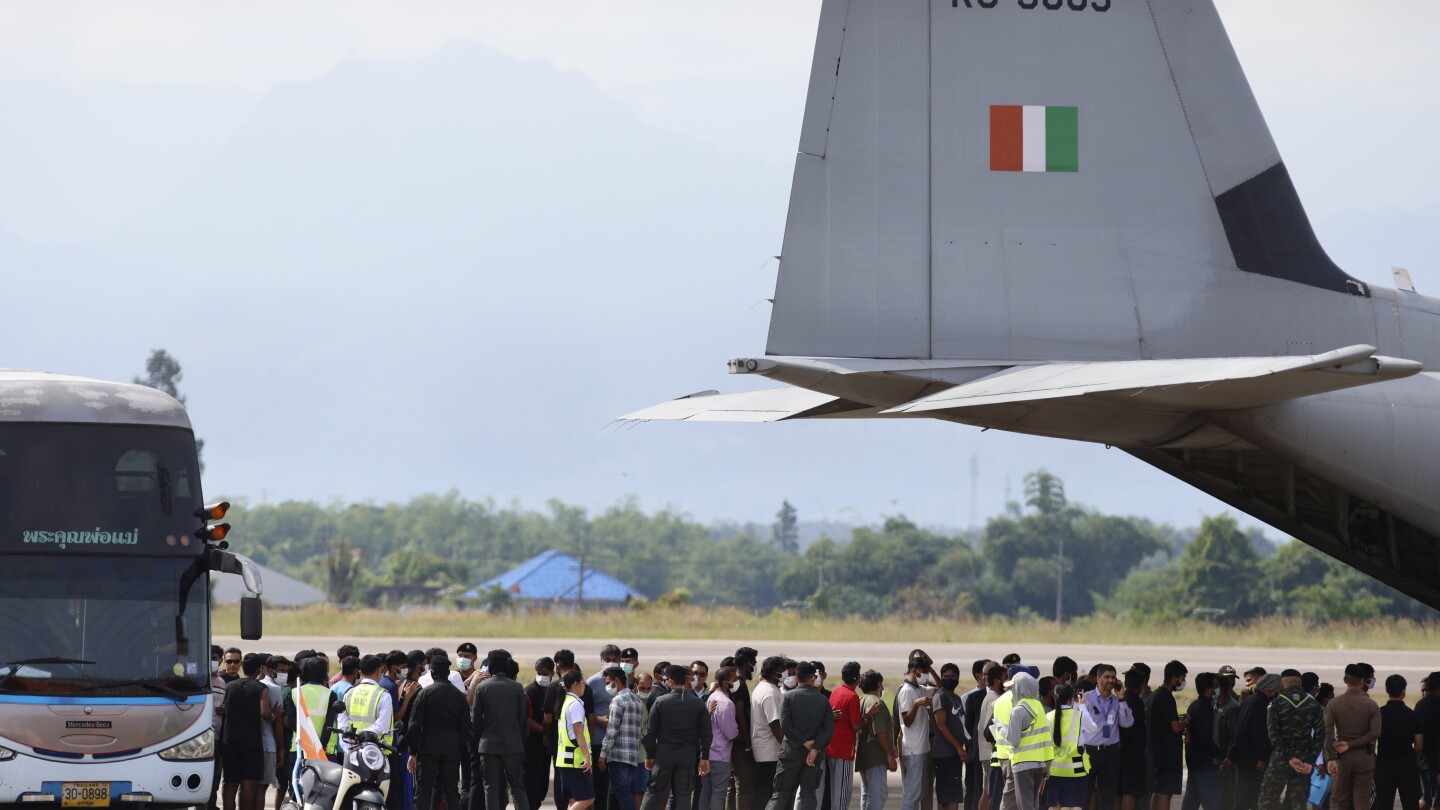
    Military tensions between Thailand and Cambodia reached a dangerous new level on Monday as Thai fighter jets conducted aerial assaults along their shared border, marking a significant escalation in the ongoing territorial dispute. The Royal Thai Air Force confirmed deploying F-16 aircraft to strike what it identified as Cambodian fire-support positions, command centers, and logistical routes that allegedly threatened Thai sovereignty.

    The aerial offensive follows weekend ground clashes in the Ubon Ratchathani Province that resulted in the death of at least one Thai soldier and multiple casualties on both sides. Thai military spokesperson Jackkrit Thammavichai asserted that Cambodia had mobilized heavy weaponry and repositioned combat units, necessitating what he described as ‘carefully executed defensive measures.’

    Cambodia’s Defense Ministry vehemently denied these allegations, stating that their forces had not violated any ceasefire agreements and rejecting claims of heavy weapons deployment. According to reports from Agence France-Presse, the recent hostilities have claimed the lives of at least four Cambodian civilians, with Defense Ministry spokeswoman Maly Socheata accusing Thai forces of targeting non-combatants.

    The humanitarian consequences are rapidly mounting, with approximately 400,000 residents evacuated across four Thai border provinces and the closure of hundreds of educational institutions. On the Cambodian side, 377 schools serving nearly 78,600 students have suspended operations indefinitely.

    Thai Prime Minister Anutin Charnvirakul declared that military operations would continue ‘as necessary according to the situation,’ while Cambodian Senate President Hun Sen urged restraint among frontline troops. The economic implications are already causing concern among analysts, with Kiatnakin Phatra Securities economist Pipat Luengnaruemitchai warning of potential damage to tourism and trade networks.

    Academic voices including Professor Puangthong Pawakapan of Chulalongkorn University have called for neutral observers to monitor the conflict and prevent further escalation, emphasizing that the violence ‘benefits no one—especially border communities and the long-term economic stability of both nations.’