标签: Asia

亚洲

  • WhatsApp panic vs reality: Will health insurance really jump 25% for UAE residents in 2026?

    WhatsApp panic vs reality: Will health insurance really jump 25% for UAE residents in 2026?

    Amid circulating WhatsApp messages forecasting substantial health insurance premium increases of 18-25% for UAE residents starting January 2026, industry authorities have moved to clarify the situation, characterizing the alarm as largely unfounded. According to insurance specialists, the notion of a blanket price surge is misleading, with actual adjustments expected to reflect individual circumstances rather than arbitrary calendar-year hikes.

    Toshita Chauhan, Chief Business Officer for General Insurance at Policybazaar.ae, emphasized the personalized nature of premium calculations, stating: “Health insurance pricing in the UAE is individualized and depends on factors such as age, claims history, benefits chosen, and renewal timing. For most residents, premiums are expected to remain stable for now.”

    While acknowledging the reality of medical inflation, Anas Mistareehi, CEO of eSanad, placed current healthcare cost increases at approximately 4-8% annually—significantly below the panic-inducing figures circulating through digital channels. He noted that competitive market dynamics are helping moderate price adjustments, with some insurers actually enhancing policy terms to maintain customer loyalty.

    The UAE’s basic health insurance scheme remains unaffected by any increases, maintaining its fixed annual rate of Dh320 as confirmed by regulatory authorities. However, families and senior citizens may experience more noticeable adjustments due to higher healthcare utilization patterns, with potential annual increases ranging from Dh1,200-2,500 for typical families and Dh1,600-4,000+ for elderly residents.

    Industry experts caution that panic-driven decisions—such as downgrading coverage or delaying renewals—could prove more financially damaging than moderate premium adjustments. Such actions may result in reduced hospital access, compromised emergency coverage, or inadequate chronic care protection.

    For those renewing policies in early 2026, specialists recommend initiating the process well before year-end 2025 to secure optimal terms and avoid last-minute constraints. Beyond premium amounts, consumers should vigilantly monitor changes to co-payment requirements, outpatient limits, pharmacy caps, and hospital network compositions that may effectively increase out-of-pocket expenses.

    The consensus among insurance professionals underscores the critical importance of selecting coverage based on comprehensive benefits rather than price alone, as inadequate protection can ultimately generate substantially higher personal healthcare costs when medical attention becomes necessary.

  • Lee’s visit deepens Sino-ROK relations

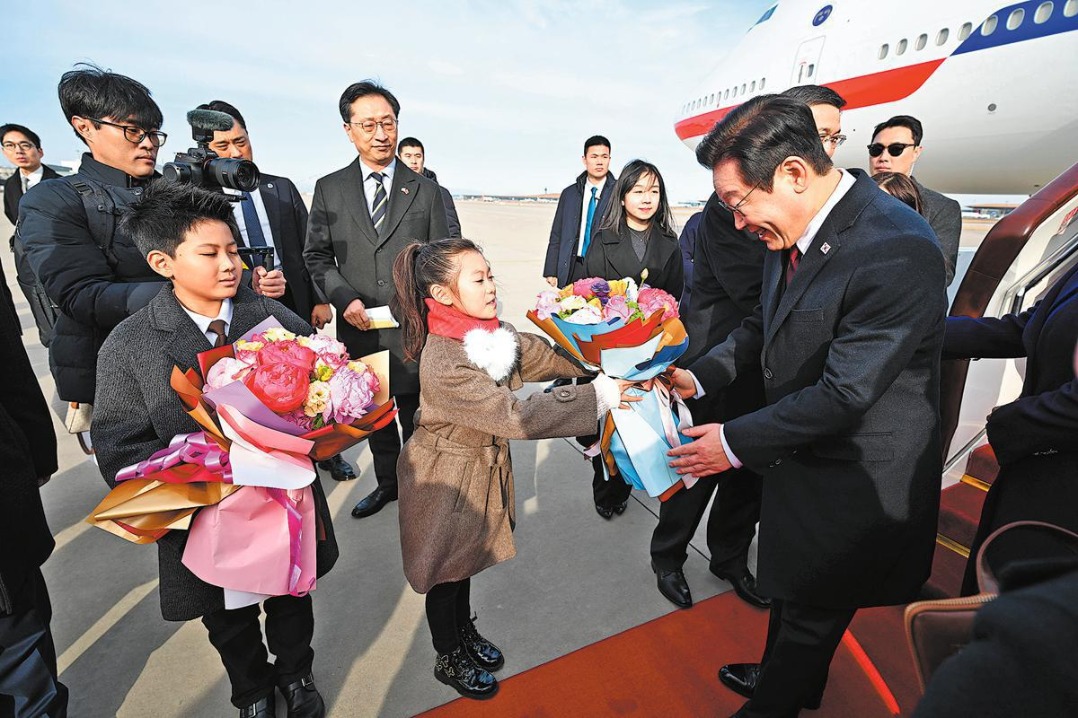
    Lee’s visit deepens Sino-ROK relations

    In a significant diplomatic breakthrough, South Korean President Lee Jae-myung concluded a transformative four-day state visit to China on Wednesday, marking the first such presidential visit since 2019 and signaling a major shift toward stabilized Sino-ROK relations. The visit, which included high-level meetings with Chinese President Xi Jinping in Beijing and historical commemorations in Shanghai, produced substantial economic agreements and demonstrated both nations’ commitment to pragmatic diplomacy.

    The journey yielded unprecedented outcomes, with leaders witnessing the signing of 15 bilateral cooperation documents and numerous additional corporate agreements across technology, manufacturing, and automotive sectors. President Lee’s delegation included approximately 200 business executives from South Korea’s corporate giants including Samsung, SK Group, Hyundai, and LG, underscoring the economic dimension of the renewed partnership.

    A particularly noteworthy development emerged from the mobility sector, where South Korea’s SWM reached a preliminary agreement with Chinese technology conglomerate Lenovo to collaboratively develop computing platforms for Level 4 autonomous vehicle commercialization. This high-tech collaboration represents a milestone in bilateral technological cooperation.

    The visit’s impact extended beyond diplomacy to financial markets, with the Korea Composite Stock Price Index reaching historic highs during the presidential mission. The benchmark index surged past 4,400 points during the leadership meetings, climbing to 4,500 on Tuesday and briefly exceeding 4,600 the following day, reflecting investor optimism about improved relations.

    President Lee characterized the outcomes as exceeding expectations, noting in Shanghai that both nations had established broad mutual understanding and developed solutions to potentially contentious issues. ‘South Korea-China relations are truly essential for both sides,’ Lee stated. ‘There is no need to unnecessarily provoke, reject or confront each other.’

    The diplomatic thaw was further symbolized through personal diplomacy when President Lee shared a viral selfie with President Xi and their spouses, captured with a Xiaomi smartphone gifted during their November meeting. The image, which Lee described as ‘the shot of a lifetime,’ garnered millions of engagements on social media platforms, with one observer noting that such personal moments advance international relations more effectively than formal communications.

    Experts interpreted the visit as demonstrating President Lee’s commitment to sustainable bilateral relations rather than short-term diplomatic gains. Woo Su-keun, head of the Institute of East Asian Studies of Korea, emphasized that the restoration of stable leader-to-leader communication represents the most significant achievement, creating foundations for regular dialogue and crisis management.

    Kyung Hee University professor Choo Jae-woo noted that Lee’s pragmatic approach toward comprehensive regional relationships could significantly contribute to Northeast Asian stability, mitigate tariff challenges, and enhance supply chain resilience for both economies.

  • Israeli FM’s Somaliland visit draws criticism

    Israeli FM’s Somaliland visit draws criticism

    A recent diplomatic visit by Israeli Foreign Minister Gideon Saar to the self-declared republic of Somaliland has ignited a fierce international dispute, drawing vehement condemnation from Somalia and raising concerns among regional powers. The trip, which occurred on January 6th, 2026, follows Israel’s official recognition of Somaliland’s independence on December 26th, 2025—a move not recognized by the vast majority of the international community, including the African Union and the United Nations.

    Somalia’s Ministry of Foreign Affairs and International Cooperation issued a forceful statement denouncing the visit as an ‘unauthorized incursion’ and a ‘serious violation of Somalia’s sovereignty, territorial integrity, and political unity.’ The Somali government maintains that Hargeisa, Somaliland’s capital, is an inseparable part of its sovereign territory and that any foreign engagement there without explicit federal consent is ‘illegal, null, and void.’

    Regional experts interpret Israel’s overture as a strategic maneuver born of increasing isolation. Abdul Wahed Jalal Nori, a lecturer at the International Islamic University Malaysia, characterized the move as an ‘act of desperation,’ stating, ‘Israel is fueling regional resentment and diplomatic backlash. This move reinforces perceptions that Israel is willing to deepen geopolitical fault lines to secure strategic allies.’

    The controversy has escalated to the highest levels of regional governance. The African Union Peace and Security Council convened an emergency virtual session to address the threat to Somalia’s sovereignty. Furthermore, the Organization of Islamic Cooperation (OIC) has announced an extraordinary meeting of its Council of Foreign Ministers in Jeddah, Saudi Arabia, to formulate a unified response and reaffirm support for Somalia’s territorial integrity.

    Israeli Foreign Minister Saar, in a post on the social media platform X, defended the visit, asserting that the mutual recognition ‘are not directed against anyone’ and that ‘Only Israel will decide whom it recognizes.’ The development underscores the complex and volatile interplay of diplomacy, sovereignty, and regional power dynamics in the Horn of Africa.

  • Chinese firms sweep awards at CES

    Chinese firms sweep awards at CES

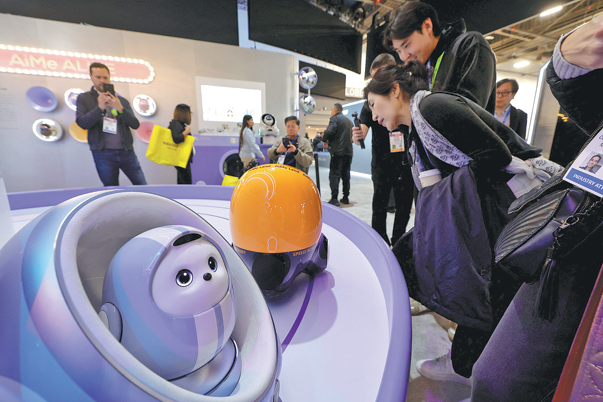
    LAS VEGAS – Chinese technology companies have emerged as the standout performers at CES 2026, capturing an unprecedented number of prestigious Innovation Awards at the world’s largest technology exhibition. The Consumer Technology Association revealed that Chinese firms secured multiple Best of Innovation designations among a record-breaking pool of 3,600 submissions across 36 product categories.

    The remarkable achievement underscores China’s transformation from manufacturing hub to innovation powerhouse, with Shenzhen-based companies leading the charge. Yingling Co. received the coveted Best of Innovation award for its advanced 8K 360 drone, while Netvue Technologies earned the same honor for its intelligent smart birdbath. Zettlab, another Shenzhen enterprise, gained recognition for its AI-driven storage solutions.

    According to Chris Pereira, CES Innovation Awards judge and CEO of iMpact, Chinese participation demonstrates a fundamental shift in technological capability. ‘What distinguishes China-based entries today is their end-to-end execution: seamless hardware-software integration, sophisticated industrial design, and accelerated iteration cycles that transform emerging components into market-ready products,’ Pereira noted.

    The data reveals staggering growth in specific sectors: robotics submissions increased by 32% compared to 2025, while AI and drone categories saw 29% and 32% growth respectively. Beyond the top winners, Chinese companies claimed over 100 of the 247 total honoree positions, representing approximately 40% of all awards.

    Notable recognitions included EcoFlow’s DELTA Pro Ultra X Whole-Home Power Solution in sustainability and Anker Innovations’ Prime Charger in computer hardware. Pereira identified three key areas where Chinese companies excel: practical robotics with enhanced perception and navigation systems, advanced energy management solutions with smarter battery ecosystems, and superior user experience design tailored for global consumers.

    The 2026 exhibition also marked a paradigm shift in artificial intelligence integration, with AI transitioning from standalone feature to foundational technology. ‘AI itself is no longer the primary selling point for leading brands – it has become the essential framework upon which products are built,’ Pereira observed.

    This year’s performance continues China’s growing influence at CES, following their 2025 participation as the largest foreign contingent with over 1,300 companies. The consistent excellence demonstrates both the scale and breadth of Chinese technological innovation on the global stage.

  • China defends curbs on dual-use goods exports

    China defends curbs on dual-use goods exports

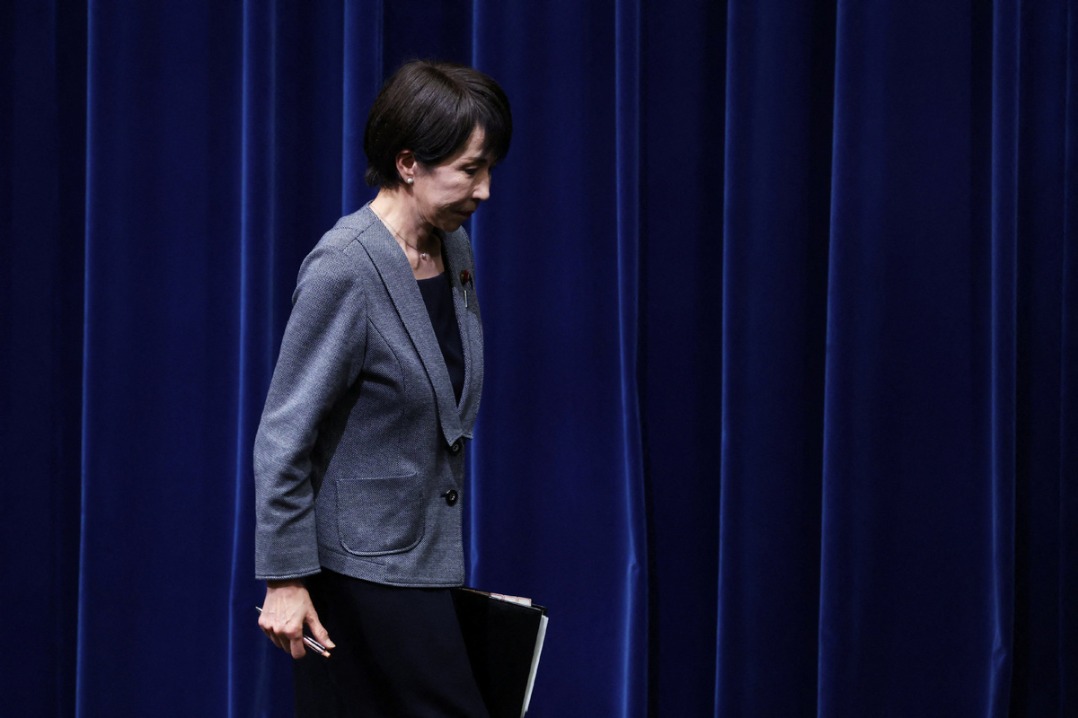
    China has formally implemented stringent export controls on dual-use goods to Japan, a move that Foreign Ministry spokeswoman Mao Ning characterized as “completely legitimate and reasonable” in response to what Beijing perceives as provocative statements from Japanese Prime Minister Sanae Takaichi regarding Taiwan.

    The diplomatic friction emerged following Prime Minister Takaichi’s November parliamentary comments suggesting that a “Taiwan contingency” could constitute a “survival-threatening situation” for Japan, language interpreted by Chinese officials as implying potential military intervention in the Taiwan Strait. Mao Ning asserted that these remarks represented both an infringement on China’s sovereignty and a blatant interference in internal affairs.

    China’s Ministry of Commerce announced the strengthened export controls effective immediately, explicitly prohibiting “the export of all dual-use items to Japanese military users, for Japan’s military use, and for any other end-users and end-use purposes that help enhance Japan’s military capabilities.” Dual-use items encompass products and technologies with both civilian and military applications.

    Economic analysts warn of significant repercussions for Japanese industry. Takahide Kiuchi, executive economist at Nomura Research Institute, identified potential restricted categories including semiconductors, electronic components, precision machinery, EV-related lithium compounds, rare earths, telecommunications equipment, and personal computers. Japanese trade data indicates these categories collectively represent approximately 42% of Japan’s total imports from China, valued at roughly 10.7 trillion yen ($49.2 billion) in 2024.

    Hidetoshi Tashiro, chief economist at Japan’s Infinity LLC, highlighted particular concern regarding rare earth elements, noting that automotive and electronics industries could face production disruptions if these materials are included in restrictions. Nomura Research Institute projections suggest three months of rare earth export restrictions could cost Japan approximately 660 billion yen, reducing GDP by an annualized 0.11%.

    The uncertainty surrounding specific controlled items has already created trade hesitancy, with Japanese firms reportedly reluctant to place or accept orders without clear definitional parameters. Tokyo’s stock market responded negatively, with the benchmark Nikkei index closing down 1.06% following the announcement.

  • Astronauts experiment on lithium-ion batteries

    Astronauts experiment on lithium-ion batteries

    In a groundbreaking orbital experiment, astronauts aboard China’s Tiangong space station have successfully completed pioneering research examining how microgravity conditions affect the internal performance mechanisms of lithium-ion batteries. The Chinese Academy of Sciences’ Dalian Institute of Chemical Physics confirmed the completion of this innovative study on Wednesday.

    The research initiative, spearheaded by payload specialist Zhang Hongzhang of the Shenzhou XXI mission crew, leveraged his specialized expertise to execute complex technical operations in the unique space environment. The experiment represents a significant advancement in understanding electrochemical processes free from Earth’s gravitational influences.

    Unlike terrestrial laboratories where gravity constantly interacts with electric fields, the microgravity environment of space provides scientists with unprecedented opportunities to observe fundamental battery processes in isolation. The research specifically investigated ion transport mechanisms, insertion dynamics, and extraction processes without gravitational interference that typically complicates ground-based experiments.

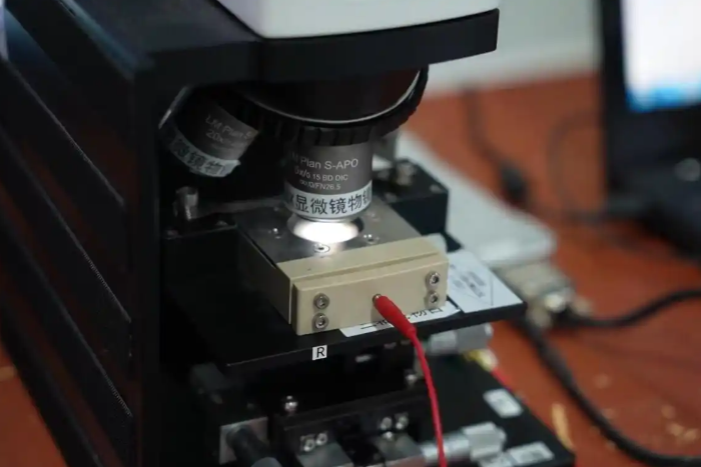
    Zhang conducted real-time monitoring and captured detailed optical observations of lithium dendrite formation—microscopic, needle-like structures that pose significant safety risks by potentially causing short circuits in battery systems. His work documented the full progression of these phenomena through comprehensive imaging techniques.

    The findings are expected to overcome critical knowledge gaps regarding coupled gravity-electric field effects and provide foundational data for enhancing current spacecraft energy systems. This research holds particular importance for developing next-generation space batteries with improved energy capacity, extended service life, and enhanced safety protocols for future space missions.

    Lithium-ion batteries remain indispensable for modern space exploration due to their high energy density, reliability, and longevity. This experiment addresses growing scientific interest in microscopic electrochemical mechanisms, particularly how chemical distribution within electrolytes affects power output and operational lifespan in space environments.

  • Guideline eases use of maritime mediation centers

    Guideline eases use of maritime mediation centers

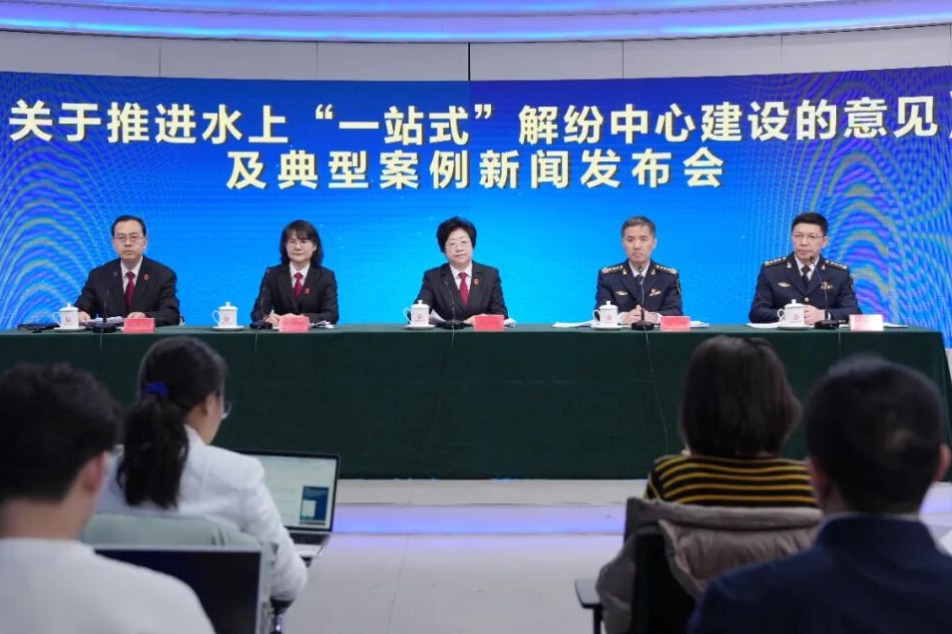
    China has launched a comprehensive national guideline to revolutionize maritime dispute resolution, creating an integrated network of mediation centers designed to handle conflicts involving sailors, shipping companies, and maritime enterprises with unprecedented efficiency. The landmark framework, jointly unveiled by the Supreme People’s Court and the Ministry of Transport on January 6, 2026, establishes standardized protocols for maritime mediation centers that have been proliferating across China’s coastal regions and inland waterways.

    By December 2025, China had already established over 60 specialized maritime mediation centers strategically located at major ports, maritime bureaus, and critical transportation hubs. These facilities operate under a collaborative model led by maritime courts working in concert with regulatory departments, forming a cohesive system that blends administrative mediation, judicial support, and social assistance mechanisms.

    The new guideline emphasizes a ‘mediation-first’ approach, recognizing the unique characteristics of maritime disputes that often involve time-sensitive matters, complex technical determinations, and frequent cross-border elements. Justice Wang Shumei of the Supreme People’s Court explained that this prioritization addresses the specialized expertise required for liability assessment in cases ranging from maritime traffic incidents to seafarer employment conflicts, personal injury compensation, vessel pollution, and administrative disagreements.

    To ensure high-quality dispute resolution, the framework mandates regular professional training for mediators, comprehensive legal interpretation services, and publication of landmark cases to establish precedents. Additionally, it requires courts and maritime authorities to share publicly accessible regulatory and judicial data, creating transparency and efficiency in dispute processing.

    Xu Wei, head of the Ministry of Transport’s Maritime Safety Administration, highlighted the transformative nature of the new system: ‘Previously, disputing parties had to navigate multiple departments seeking assistance. Now, they can access integrated administrative and judicial services through a single platform, enabling mediation, legal consultation, and judicial confirmation in one streamlined process.’

    The initiative represents a significant advancement in judicial-administrative collaboration, with Justice Shen Hongyu of the Supreme People’s Court noting that it ‘marks a new phase of cooperation between judicial and administrative authorities in resolving maritime disputes.’ The system will be further enhanced through regular interdepartmental meetings, professional exchanges, and joint training programs for maritime judges, law enforcement officers, and industry experts, with plans to expand online maritime judicial services to improve public accessibility.

  • Mayors warm to ice-and-snow economy

    Mayors warm to ice-and-snow economy

    HARBIN—Municipal leaders from winter cities across Europe, Asia, and North America converged at the Harbin Ice and Snow World this week to establish the groundbreaking Harbin Initiative, a collaborative framework for sustainable cold-climate urban development. The Global Mayors Dialogue event witnessed participation from officials representing Magdeburg (Germany), Rovaniemi (Finland), Bucheon (South Korea), Edmonton (Canada), Chiang Mai (Thailand), Erzurum (Turkey), and Chalandri (Greece).

    The initiative outlines four strategic pillars: establishing ecological civilization through sustainable ice-and-snow development, advancing technology-driven innovation in cold-region industries, creating mutual learning frameworks between cities, and modernizing urban governance systems. This cooperative effort signals a paradigm shift in how municipalities approach winter challenges, transforming climatic obstacles into economic opportunities.

    Harbin Mayor Wang Hesheng showcased his city’s credentials as China’s ice-and-snow sports birthplace and international winter tourism destination, highlighting the 27th Harbin Ice and Snow World—currently the world’s largest winter-themed park—alongside the Sun Island International Snow Sculpture Art Expo and public ice parks.

    International participants shared transformative winter strategies. Edmonton Mayor Andrew Knack described how his city reframes winter as “something to embrace rather than endure,” using festivals and sporting events as economic catalysts. Rovaniemi officials, representing Santa Claus’s official hometown, detailed how extended snow seasons become tourism assets through enhanced visitor experiences and ski infrastructure.

    Erzurum Vice-Mayor Zafer Aynalı demonstrated municipal management of ski centers located mere minutes from urban centers and airports, while Magdeburg representatives expressed interest in cross-sector collaboration extending beyond tourism to pharmaceuticals, technology, and construction.

    The event featured hands-on cultural immersion as delegates carved the dialogue’s logo into ice blocks within the specially designated sculpture zone, symbolizing their commitment to shared winter prosperity. Guided by China’s State Council Information Office and jointly hosted by Heilongjiang provincial and Harbin municipal governments, the dialogue exemplifies China’s growing role in facilitating global urban development exchanges.

  • Highs and lows mark China-US ties in 2025

    Highs and lows mark China-US ties in 2025

    The geopolitical landscape between the United States and China experienced significant volatility throughout 2025, characterized by dramatic fluctuations in diplomatic relations and trade policies. According to experts monitoring the bilateral relationship, the year presented a complex tapestry of escalating tensions followed by cautious diplomatic engagements.

    Gary Hufbauer, senior fellow at the Peterson Institute for International Economics, described the relationship as experiencing a ‘rollercoaster’ dynamic rather than the gradual decline witnessed in previous years. The turbulence stemmed primarily from calculated political maneuvers by the U.S. administration rather than accidental developments, creating periods of intense confrontation followed by gradual cooling-off phases.

    The relationship reached a critical juncture in April 2025 when the Trump administration implemented triple-digit tariff rates on Chinese imports, representing one of the most aggressive trade measures in recent history. China responded with immediate retaliatory measures, bringing both nations to the brink of a full-scale trade war. These reciprocal actions rendered cross-border trade economically challenging for numerous product categories, generating substantial market instability and creating significant uncertainty for businesses operating in both countries.

    China maintained a consistent strategic position throughout these developments, encapsulated by the widely circulated phrase: ‘Talk, our door is open; fight, we’ll respond till the end.’ This principle guided Beijing’s approach to the escalating tensions while leaving room for diplomatic resolution.

    Several factors ultimately prompted the White House to reassess its aggressive stance. Soaring consumer prices within the United States, particularly affecting middle-class households, combined with substantial losses in agricultural exports to China—especially soybean shipments—created mounting economic pressure. Additionally, China’s implementation of rare-earth export controls demonstrated Beijing’s strategic leverage in the technological supply chain, forcing a recalculation of American trade strategy.

    The latter part of 2025 saw renewed high-level trade discussions and head-of-state diplomacy, suggesting both nations recognize the mutual benefits of stability. Experts indicate that sustained dialogue remains crucial for establishing predictable relations moving into 2026, though the underlying structural tensions continue to require careful management.

  • Bringing care from afar

    Bringing care from afar

    For over a quarter century, a remarkable medical partnership has been unfolding at the B.P. Koirala Memorial Cancer Hospital in Nepal’s Chitwan district, where Chinese medical professionals have established an enduring legacy of cross-border healthcare cooperation.

    Established in 1998 through Chinese government assistance, this oncology center has evolved into a critical healthcare institution serving not only Nepalese citizens but also patients from across South Asia. The hospital represents one of the most sustained international medical aid initiatives in the region, with continuous rotations of medical teams from China’s Hebei province since 1999.

    The collaboration has progressed through multiple phases of development. Initially providing basic clinical support, Chinese medical experts have gradually implemented comprehensive capacity-building programs including specialized department co-development, standardized treatment protocols, and extensive training for local healthcare professionals. More than 250 Chinese doctors have contributed their expertise across various medical specialties, creating knowledge transfer that has fundamentally enhanced Nepal’s healthcare infrastructure.

    The current medical team, designated as the 16th Chinese medical contingent, includes specialists like anesthesiologist He Kun and gynecologist Liu Fang, who recently conducted consultations for elderly Nepalese patients. Their work exemplifies the ongoing commitment to addressing Nepal’s healthcare needs while fostering professional exchange.

    This medical diplomacy initiative has transformed healthcare accessibility in Nepal’s southern Terai plains, providing oncology services that were previously unavailable to many communities. The partnership stands as a testament to long-term international cooperation in healthcare development, demonstrating how sustained medical assistance can create lasting impact beyond immediate treatment to include systemic healthcare improvement and professional capacity building.