标签: Asia

亚洲

  • Beijing district recovers nearly 100 million yuan in scam losses

    Beijing district recovers nearly 100 million yuan in scam losses

    In a significant crackdown on telecommunications fraud, Beijing’s Tongzhou district has demonstrated remarkable success in financial recovery and crime prevention throughout 2025. Official data reveals that authorities have successfully intercepted approximately 100 million yuan ($14.2 million) in illicit funds, marking a substantial 21% year-on-year increase in recovered losses for victims.

    Deputy Director Tan Long of the district’s public security department announced these achievements during a Thursday press conference, highlighting a consistent ‘double decline’ in both fraud cases and associated financial damages. Despite these gains, law enforcement faces evolving challenges as criminals develop increasingly sophisticated methods targeting vulnerable demographics.

    Demographic analysis indicates that young and middle-aged residents constitute the primary targets, with individuals aged 18-40 representing over 50% of victims and those between 40-60 accounting for approximately 30%. Fraudsters have adapted their strategies by leveraging mainstream social media platforms, online gaming websites, and trending topics including heatwave subsidies and digital investment opportunities to lure victims toward niche fraudulent platforms.

    Offline tactics have similarly evolved, with perpetrators distributing explicit cards in areas including Majuqiao and Zhangjiawan to entice victims through QR code scanning operations. The methods for transferring illicit funds have become notably more concealed, requiring enhanced investigative techniques.

    To combat these sophisticated operations, Tongzhou police have established specialized investigation teams and strengthened collaborative mechanisms with financial institutions and telecommunications providers. This multi-agency approach has yielded impressive results, with fraud-related fund returns increasing by 54% compared to 2024 figures.

    China Unicom’s Tongzhou branch manager Zhang Cheng reported extensive public awareness campaigns, with employees conducting outreach visits to residential communities, educational institutions, and suburban areas. The company has distributed over 40,000 informational brochures to enhance public vigilance against fraudulent activities.

    The Bank of Tianjin’s Tongzhou branch head Li Yi confirmed successful resolution of 16 telecom fraud cases through police-bank collaboration, preventing potential losses exceeding 2.6 million yuan. Financial institutions have incorporated advanced technological solutions and conducted security lectures alongside law enforcement to strengthen the anti-fraud infrastructure.

    While these measures demonstrate substantial progress, officials acknowledge the continuous need for adaptive strategies against evolving fraudulent schemes that threaten public financial security.

  • China’s immigration hotline adds French language support

    China’s immigration hotline adds French language support

    China’s National Immigration Administration (NIA) has announced a significant enhancement to its 12367 Government Service Platform with the introduction of French language support effective December 11, 2025. This strategic expansion forms part of China’s ongoing initiative to optimize immigration and entry-exit services for international visitors and residents.

    The upgraded interactive voice response system now offers five language options: English, French, Russian, Korean, and Japanese. While English queries receive immediate automated responses, calls in French, Russian, Japanese, or Korean initiate a sophisticated three-way conference system connecting the caller simultaneously with a professional translator and an immigration specialist. This integrated approach ensures comprehensive service delivery under the administration’s “one number, immediate response, service completed” operational philosophy.

    As China’s premier integrated customer service portal for both domestic and international travelers, the 12367 platform maintains multiple access channels including telephone hotline, dedicated mobile application, WeChat and Alipay mini-programs, and an official website. The system serves as a critical interface for addressing urgent concerns and operational challenges related to China’s immigration management frameworks.

    Since its inauguration on April 8, 2021, the platform has processed over 20 million service inquiries originating from 165 countries and regions. The system has demonstrated exceptional performance metrics with a 98.82% average satisfaction rate and a remarkable 99.94% first-call resolution rate across various immigration-related matters including policy consultations and procedural guidance.

    The NIA has confirmed its commitment to further developing the 12367 platform through continued expansion of service channels, additional language options, and enhanced functionality to better facilitate international travel and cross-border mobility.

  • UK faces mounting pressure to repatriate British nationals detained in Syria

    UK faces mounting pressure to repatriate British nationals detained in Syria

    The British government confronts escalating demands to address the humanitarian and legal crisis surrounding its nationals arbitrarily detained in northeastern Syria. This complex issue involves both citizens stripped of their citizenship and numerous young children trapped in detention facilities controlled by Kurdish authorities.

    Recent protests outside London’s Foreign, Commonwealth & Development Office highlighted the growing frustration among families of detainees. Sally Lane, mother of imprisoned British-Canadian Jack Letts, articulated the urgent need for government action, stating: “I want to force the government to tell us what their plan is. They’ve fudged the issue for so long and had such a wide range of excuses.”

    The protests coincide with the publication of a landmark report by the Independent Commission on UK Counter-Terrorism Law, Policy and Practice. Led by former Northern Ireland Lord Chief Justice Sir Declan Morgan, the three-year review condemned Britain’s approach as increasingly untenable and violating international human rights obligations. The report documented “inhuman, dangerous, and degrading” conditions in camps like Al-Hol and Al-Roj, where many women and children face coercion, trafficking, and exploitation.

    Statistical analysis reveals Britain’s outlier status among nations. According to Rights and Security International data, the UK has repatriated merely four women and 21 children from Syria. Current estimates suggest between 55-72 British nationals remain detained, including approximately 10 men, up to 20 women, and around 40 children—mostly under age 10.

    Former UN Special Rapporteur Fionnuala Ni Aolain emphasized Britain’s exceptional position: “The UK is a complete outlier, and actually with very little reasonable basis for that, given we’ve seen successful repatriation in other countries and recidivism is really low. On every single measure, the UK is out of step with its partners.”

    The geopolitical landscape has shifted dramatically with the fall of Bashar al-Assad’s government and conclusion of Syria’s civil war. The transitional government under Ahmed al-Sharaa has signed agreements with Kurdish leaders to transfer camp responsibilities to Damascus within six months. This development, coupled with accelerated Iraqi repatriations and a UN conference urging member states to act, creates renewed urgency for resolution.

    Security experts warn of continuing risks, including potential IS revival in unstable regions and the transformation of detention facilities into incubators for future insurgency. Human rights organizations have compared the lack of due process and arbitrary detention conditions to those at Guantanamo Bay.

    The controversy surrounding citizenship-stripping powers remains particularly contentious. Critics argue this policy damages Britain’s international standing by transferring responsibility to other nations through sometimes tenuous citizenship claims, effectively creating a system of “medieval exile and banishment.”

    Despite the change in government from Conservative to Labour in July 2024, policy continuity has largely prevailed. Both administrations have defended citizenship-stripping on national security grounds while maintaining ad hoc, sporadic repatriation practices.

    For families like the Letts, who haven’t had contact with their son since January 2020, the situation remains desperately personal. John Letts summarized the fundamental demand: “He needs to see people. He needs medical help. We need to know he’s alive. Let’s talk to him. Is that so much to ask as a father after nine years?”

  • Memorial held for Indian doctor who served in China

    Memorial held for Indian doctor who served in China

    A solemn memorial ceremony was convened in India’s West Bengal state this week to honor the enduring legacy of Dr. Dwarkanath Kotnis, an Indian physician whose heroic service and ultimate sacrifice in China during a pivotal period in history continues to symbolize deep-rooted bilateral friendship. The December 9th event, organized by the Dr. Dwarkanath Kotnis Memorial Committee, marked the 83rd anniversary of the doctor’s passing in 1942.

    Attended by over 100 dignitaries including Mrigendranath Gantait, president of the memorial committee, and Pallab Sengupta, president of the World Peace Council, the gathering paid tribute to Dr. Kotnis’s extraordinary humanitarian contributions during the Chinese People’s War of Resistance against Japanese Aggression (1931-1945). Participants highlighted how his medical expertise saved countless Chinese lives while embodying principles of internationalism and anti-fascist solidarity.

    The commemorative event holds particular significance as 2025 marks the 80th anniversary of the victory in the World Anti-Fascist War. Chinese Consul General in Kolkata Xu Wei delivered an address emphasizing how Dr. Kotnis arrived in China when the nation was suffering under Japanese militarist aggression, demonstrating ‘a love beyond borders and race’ through his medical service and courage.

    ‘China will never forget the international friends who helped it fight against aggression,’ Consul General Xu stated, pledging that the Chinese Consulate General would continue collaborating with partners across eastern India to perpetuate Dr. Kotnis’s spirit. In a practical demonstration of this commitment, the consulate donated acupuncture supplies to the memorial committee to help spread traditional Chinese medical benefits among broader Indian communities.

    Committee President Gantait reaffirmed the organization’s dedication to actively cultivating this historic spirit of cooperation, vowing to contribute further to strengthening India-China friendship through continued people-to-people exchanges and mutual understanding.

  • Hong Kong’s cultural retail model to land in UAE

    Hong Kong’s cultural retail model to land in UAE

    In a significant cross-continental business development, Hong Kong’s Almad Group and its subsidiary K11 by AC have forged a strategic alliance with Dubai’s prominent Wafi Group. The partnership, formalized on December 11, 2025, establishes a new joint venture named Wafi Anime 11 that will introduce Hong Kong’s innovative cultural retail model to the United Arab Emirates.

    The collaboration represents a strategic market expansion that will provide Chinese consumer brands with direct access to the Middle Eastern market while catering specifically to the region’s Generation Z and Alpha demographics. The venture will focus on anime retail, entertainment experiences, and curated cultural exhibitions that blend Eastern and Western influences.

    This expansion is strategically timed alongside growing tourism connections between China and Dubai. Official data from Dubai’s Department of Economy and Tourism indicates a substantial 31 percent year-on-year increase in Chinese visitors, reaching 824,000 tourists in 2024.

    Sheikh Mana bin Khalifa Al Maktoum, Founder and Chairman of Wafi Group, emphasized the partnership’s broader significance: “Our collaboration will not only enhance Wafi City’s offerings but also fortify the cultural and commercial bridge between the Middle East and China.”

    Adrian Cheng, Founder and Executive Chairman of K11 by AC, highlighted Hong Kong’s unique positioning: “Our expertise lies in connecting Eastern and Western markets. We’re confident that the Chinese consumer brands, premium IP innovations, and immersive experiences we introduce will resonate strongly with the region’s rapidly evolving retail landscape and youthful population.”

    The partnership will launch a series of themed exhibitions starting in 2026, featuring anime, e-sports, and K-Pop elements, addressing the Middle East’s growing demand for youth-oriented cultural experiences.

  • Zootopia 2 fans fuel hazardous trend in online snake purchases

    Zootopia 2 fans fuel hazardous trend in online snake purchases

    A dangerous trend has emerged across Chinese e-commerce platforms as enthusiasts of the blockbuster animation Zootopia 2 fuel a hazardous market for highly venomous snakes resembling the film’s new character. The Island Bamboo Pit Viper, explicitly marketed as “Gary’s same-style little blue snake,” is being sold through covert online channels despite posing significant public safety risks.

    Investigation reveals that sellers on platforms including Xianyu, Douyin, and Xiaohongshu are employing coded hashtags such as “Guard a piece of blue” and “Poisonous snake” to evade content moderation systems. Prices range from 300 to 3,000 yuan ($42.5-$425), with vendors reporting surging demand since the film’s premiere. Alarmingly, sellers are advising novice buyers to purchase specialized handling equipment including snake hooks and bite-proof gloves, acknowledging the viper’s aggressive nature and toxicity.

    The trade exists within a regulatory gray area. While the non-native species isn’t listed on China’s protected wildlife lists, the National Forestry and Grassland Administration classifies it among wildlife prohibited from consumption and requires strict official approval for research purposes—requirements being systematically bypassed in these transactions.

    Legal experts warn that all parties involved—platforms, sellers, and logistics providers—face substantial legal exposure. Liu Ruini, senior partner at Shaanxi Bingrui Law Firm, emphasized that e-commerce platforms bear responsibility for verifying seller qualifications and ensuring transaction legality. Sellers of dangerous animals maintain a high duty of care regarding explicit warnings, while logistics companies violate postal regulations prohibiting live animal transportation.

    Gan Yuanchun of Hunan King Zone Lawyer Office outlined severe potential consequences: snake owners could face criminal charges including involuntary manslaughter for escapes causing injury or death, while deliberate public release could result in endangering public safety prosecution. Even mere keeping may constitute public disturbance violations with fines up to 500 yuan.

    Platform responses have been inconsistent. Xianyu’s customer service initially claimed the viper wasn’t “forcibly prohibited” since it’s not protected, but later stated the platform prohibits all live animal sales following media inquiries. This regulatory ambiguity highlights the challenges in controlling hazardous wildlife trade driven by pop culture phenomena.

  • Rising maternal malnutrition in Gaza drives up newborn mortality

    Rising maternal malnutrition in Gaza drives up newborn mortality

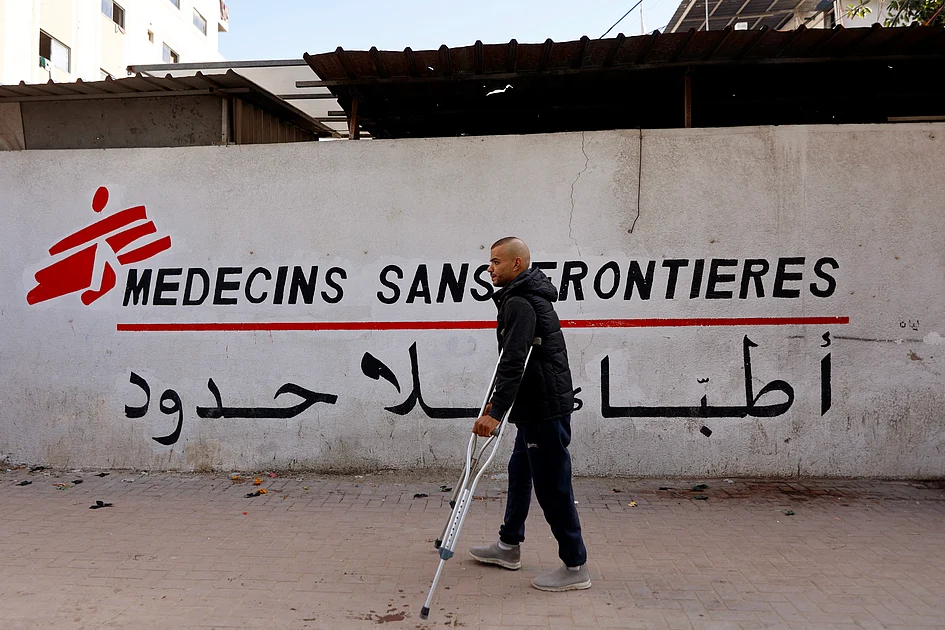
    A devastating humanitarian crisis is unfolding in Gaza’s maternity wards, where newborn mortality rates have skyrocketed by 75% according to alarming new data from the United Nations Children’s Fund (UNICEF). The agency’s comprehensive assessment reveals that between July and September, neonatal facilities recorded approximately 47 infant deaths monthly—a dramatic increase from the pre-conflict monthly average of 27 documented throughout 2022.

    The nutritional crisis affecting pregnant women has created a cascading health emergency. UNICEF’s Tuesday briefing disclosed that 38% of screened pregnant women received diagnoses of acute malnutrition, with at least 8,300 expectant and breastfeeding women requiring emergency nutritional treatment in October alone. This maternal health catastrophe has directly impacted newborn outcomes, with the number of underweight infants (below 2.5 kilograms) nearly doubling from 250 monthly cases in 2022 to approximately 460 currently.

    Medical professionals emphasize the grave implications of low birth weight, as these vulnerable infants face mortality risks 20 times higher than those born at healthy weights. UNICEF communications manager Tess Ingram provided firsthand testimony from Gaza’s hospitals, describing newborns weighing less than one kilogram struggling for survival. ‘The unmistakable pattern of malnourished mothers giving birth to premature or underweight infants represents a preventable tragedy,’ Ingram stated, noting that this suffering ‘could have been prevented if international humanitarian law had been respected.’

    The healthcare collapse exacerbates the crisis, with Israeli authorities repeatedly blocking medical delegations and restricting aid shipments. Despite ceasefire agreements, only 14,534 aid trucks have entered Gaza since October—less than half of the 37,200 trucks required for basic humanitarian relief. This systematic obstruction has contributed to over 450 documented deaths from starvation and dehydration, including more than 154 children.

    UNICEF officials report that 9,300 children across Gaza were identified as acutely malnourished in October, creating a generational health crisis that will likely result in lifelong complications for survivors. The agency continues urgent appeals for unimpeded humanitarian access, particularly for nutritional support targeting pregnant women and essential medical equipment for neonatal intensive care units.

  • South Africa’s batters restore some pride in 51-run win against India in 2nd T20

    South Africa’s batters restore some pride in 51-run win against India in 2nd T20

    In a remarkable reversal of fortune, South Africa’s cricket team delivered a commanding performance to defeat India by 51 runs in the second T20 international at New Chandigarh on Thursday. The victory levels the five-match series at 1-1, erasing memories of their disastrous opening match collapse.

    After being asked to bat first, the Proteas posted an imposing 213-4, spearheaded by Quinton de Kock’s explosive 90 runs from just 46 deliveries. The opener’s blistering innings featured seven sixes and five boundaries before his dismissal via a precision run-out executed by Indian wicketkeeper Jitesh Sharma.

    The South African innings gained tremendous momentum in the final stages, accumulating 49 runs across the last three overs. Donovan Ferreira’s unbeaten 30 from 16 balls proved particularly damaging, including two massive sixes against Indian pace spearhead Jasprit Bumrah in the final over. David Miller contributed a quickfire 20 not out from 12 deliveries to bolster the total.

    India’s response faltered early, finding themselves at 81-4 after ten overs despite Tilak Varma’s valiant 62 from 34 balls. The bowling attack, led by medium-fast bowler Ottneil Baartman’s career-best 4-24, systematically dismantled the Indian batting lineup, restricting the hosts to 162 all out in 19.1 overs.

    The match represented a stunning turnaround for South Africa, who made three strategic changes following their record-low 74 all out in the series opener. India maintained an unchanged lineup from their 101-run victory in the first match.

    The teams now prepare for Sunday’s crucial third T20 in Dharamsala, with both sides using the series as vital preparation for February’s T20 World Cup in India, where the hosts enter as defending champions after their dramatic final victory over South Africa earlier this year.

  • Heart project launched to save young lives in Laos

    Heart project launched to save young lives in Laos

    VIENTIANE, LAOS – A transformative healthcare partnership officially commenced operations on Thursday with the national launch of the Mekong Children’s Heart Care Project (2025-2027). This ambitious tripartite collaboration brings together Laos’ Ministry of Health, the Mekong Institute, and China’s prestigious Fuwai Hospital under the Chinese Academy of Medical Sciences.

    Financed through China’s Global Development and South-South Cooperation Fund, this initiative represents a concrete implementation of the Global Development Initiative. The program specifically targets congenital heart disease, which remains a leading cause of childhood mortality across Laos and Cambodia.

    The comprehensive project framework encompasses multiple strategic components: establishing national-level screening systems, introducing advanced diagnostic and treatment technologies, and substantially enhancing the professional capabilities of healthcare providers in both nations. Over its two-year implementation period, the initiative aims to achieve measurable impact through screening at least 10,000 children nationwide, providing complete treatment cycles for no fewer than 30 diagnosed patients, and training over 110 medical professionals.

    Additional capacity-building measures include specialized fellowship programs at Fuwai Hospital for Lao medical specialists, complemented by the donation of critical medical equipment including ultrasound machines and essential supplies.

    Khampasong Theppanya, Director-General of Laos’ Department of Health and Rehabilitation, emphasized the project’s dual significance: “This initiative delivers urgent care to children with congenital heart conditions, particularly those in remote regions, while simultaneously strengthening our national healthcare infrastructure through professional development and evidence-based policy formation.”

    The director-general further acknowledged China’s substantial support, noting that it “reflects China’s profound commitment to our enduring bilateral friendship and its sustained dedication to advancing Laos’ healthcare sector.”

    Suriyan Vichitlekarn, Executive Director of the Mekong Institute, characterized the project as a milestone in regional cooperation that “fortifies Lao PDR’s technical capacity while providing joint support for Cambodia, ultimately benefiting local communities and fostering more equitable healthcare systems throughout the Mekong region.”

    Duo Lin, Fuwai Hospital’s representative and project liaison, confirmed the initiative’s alignment with both China’s Belt and Road Initiative and the United Nations 2030 Agenda for Sustainable Development, particularly objectives targeting reduced mortality among children under five and adolescents.

  • Renji Hospital celebrates two decades of international medical excellence

    Renji Hospital celebrates two decades of international medical excellence

    Shanghai Renji Hospital commemorated two decades of providing world-class international medical services during a special ceremony on December 11, 2025, highlighting its pioneering achievements in pediatric liver transplantation that have transformed lives across borders.

    The celebration featured emotional reunions with former international patients, including a Malaysian woman who received a life-saving liver transplant at the hospital in 2014 when she was just three years old. The patient had been suffering from critical liver cirrhosis caused by biliary atresia, a condition that had exhausted all treatment options in her home country before her family sought help at the Shanghai institution.

    Under the leadership of Dr. Xia Qiang, President of Renji Hospital and esteemed academician of the Chinese Academy of Engineering, the medical team performed a successful living-donor liver transplant that saved the young girl’s life. This breakthrough case marked the beginning of what would become an extensive international pediatric transplant program.

    Over the past two decades, Renji Hospital’s specialized pediatric liver transplant team has treated more than 60 children from multiple countries including Malaysia, the Philippines, and Mongolia. Beyond direct patient care, the hospital has established knowledge transfer partnerships, particularly with Malaysian medical institutions, where Chinese specialists have shared surgical expertise and helped establish local capabilities for performing pediatric living-donor liver transplants.

    The anniversary event not only celebrated past achievements but also launched new initiatives to expand the hospital’s global healthcare mission, reinforcing Shanghai’s growing reputation as a destination for advanced medical treatment and international medical collaboration.