标签: Asia

亚洲

  • UAE emerges as global hub for tokenisation and blockchain innovation

    UAE emerges as global hub for tokenisation and blockchain innovation

    The United Arab Emirates has strategically positioned itself at the forefront of the global digital asset revolution, emerging as a premier destination for blockchain innovation and tokenization technologies. Through progressive regulatory frameworks established by authorities including VARA (Virtual Assets Regulatory Authority) and ADGM (Abu Dhabi Global Market), the nation has cultivated an ecosystem that balances innovation with investor protection.

    Tokenization—the conversion of physical assets into digital tokens on blockchain networks—represents the cornerstone of this financial transformation. This technology enables unprecedented market features including 24/7 trading accessibility, fractional ownership opportunities, enhanced transparency, and global market reach. These advancements collectively dismantle traditional barriers that have historically limited access to investment opportunities.

    Yoni Assia, Chief Executive Officer of investment platform eToro, identifies the UAE’s approach as particularly significant. “The combination of clear regulatory vision and commitment to financial innovation makes the UAE one of the world’s most dynamic digital asset markets,” Assia noted. He emphasized that tokenization fundamentally democratizes investment access, allowing retail participants to construct diversified portfolios with reduced capital requirements compared to traditional markets.

    The implications for financial inclusion are particularly profound. Blockchain technology addresses longstanding systemic barriers through its inherent security protocols and cost-efficient infrastructure. However, Assia cautions that technological advancement alone cannot guarantee accessibility. “True inclusion requires platforms designed with educational resources, user-friendly interfaces, and affordable access points at their foundation,” he explained.

    Regulatory developments including Europe’s Markets in Crypto-Assets (MiCA) framework and proposed US legislation indicate growing global recognition of the need for balanced oversight. Rather than creating competition between decentralized and traditional finance sectors, industry leaders anticipate collaborative integration. Financial institutions are increasingly exploring blockchain applications including on-chain funds, blockchain-based settlement systems, and stablecoin payment infrastructures.

    Current tokenization applications already demonstrate tangible impact in equities and commodities markets, enabling cross-timezone trading without traditional market hour restrictions. Future expansion may encompass real estate, institutional investment products, and additional asset classes previously inaccessible to retail investors.

    The UAE’s leadership in this technological transformation signals more than mere technological adoption—it represents a fundamental reimagining of global financial accessibility where investment opportunity becomes universally available rather than exclusively privileged.

  • Dubai: Santa suit to Filipino delicacies; how 20,000 expats marked Simbang Gabi’s first day

    Dubai: Santa suit to Filipino delicacies; how 20,000 expats marked Simbang Gabi’s first day

    Dubai’s St. Mary’s Catholic Church witnessed an extraordinary display of cultural and religious devotion as over 20,000 expatriates gathered for the inaugural day of Simbang Gabi on Monday. This cherished Filipino Christmas tradition, dating back to the Spanish colonial period of the 1600s, has found a vibrant new home in the UAE since its introduction by the Filipino Catholic community in the early 2000s.

    The evening mass transformed the church grounds into a spectacular celebration of faith and community. Unlike its dawn observance in the Philippines, the UAE adaptation occurs in the evening to accommodate working schedules. The atmosphere buzzed with festive energy as generations of worshippers—from elderly community members to infants in strollers—gathered in the open-air setting. Many attendees arrived directly from their workplaces, while families and friends brought folding chairs and mats to create comfortable seating areas.

    The celebration featured traditional Christmas carols preceding each service, with volunteers like Dubai resident Mark Omayam adding to the merriment by distributing gifts to children while dressed in Santa Claus costumes. The authentic Filipino experience was completed with traditional delicacies including puto bumbong (steamed rice pastry) and bibingka (rice cake) available in the churchyard.

    Church worker Policarpio Tinaja described the event as embodying both spiritual significance and communal joy. The special outdoor altar, constructed annually for this purpose, accommodated the massive congregation that filled the football field, basketball court, girls’ compound, and church portico.

    This year’s celebrations carry the theme ‘Pasko sa Jubileo 2025’, aligning with the Catholic Church’s jubilee year. Monday’s mass was presided over by Filipino priest Fr. Leny Escalada with co-celebrant Fr. Rex Cutamora. The nine-day observance will continue through December 23, with Tuesday’s service featuring Filipino Cardinal Luis Antonio Tagle, Pro-Prefect of the Dicastery for Evangelization and titular bishop of Albano.

  • ILT20: Desert Vipers win big on the field and for the planet

    ILT20: Desert Vipers win big on the field and for the planet

    In a remarkable fusion of sporting excellence and ecological advocacy, the Desert Vipers cricket franchise achieved a dual victory during Sunday’s International League T20 (ILT20) match against Dubai Capitals. The team secured their place in the playoffs with an unprecedented sixth consecutive win while simultaneously leveraging the platform to promote critical environmental awareness.

    The match, designated as the tournament’s ‘sustainability match’, witnessed the Vipers deliver a comprehensive five-wicket triumph over the defending champions. Captain Sam Curran spearheaded the performance with exceptional all-round contributions, claiming 2/17 with the ball followed by an unbeaten 52 runs.

    Beyond the boundary, the Vipers launched a multifaceted environmental initiative centered on wildlife conservation. Players donned special jerseys crafted from recycled materials featuring innovative ‘Biodiversity Stripes’ – a visual representation of global wildlife population trends over the past five decades. The gradient design transitions from green to grey, illustrating the alarming 73% decline in global wildlife populations since 1970.

    Team management emphasized the profound connection between sports and ecosystem health, noting that “healthy ecosystems regulate heat, water, and soil, all of which are essential to sport.” Pre-match activities engaged fans through educational ‘green activities’ at Dubai International Stadium, raising awareness about environmental protection.

    The sustainability measures extended to equipment and accessories, with players utilizing recycled water bottles and sunglasses manufactured from repurposed plastic waste. South African-American wicketkeeper-batter Andries Gous expressed enthusiasm about participating in the groundbreaking initiative, noting its potential to inspire younger generations toward environmental responsibility.

    Desert Vipers CEO Phil Oliver articulated the franchise’s philosophical approach: “Cricket and nature are inherently connected, and at Desert Vipers, we want to be proactive in playing for people and the planet.” The organization’s efforts establish new benchmarks for sports franchises seeking to integrate environmental stewardship with athletic competition.

  • Qatari failure to pay contractors leaves migrant workers unpaid, says report

    Qatari failure to pay contractors leaves migrant workers unpaid, says report

    A groundbreaking report from Human Rights Watch reveals a systemic failure in Qatar’s contracting industry, where government entities and major corporations are routinely delaying payments to contractors, creating a devastating ripple effect that ultimately leaves migrant laborers without wages.

    The investigation, published Monday, exposes how high-level clients—including Qatari government bodies—enjoy virtual impunity when violating payment agreements, forcing subcontracting firms that directly employ migrant workers to absorb the financial burden. Michael Page of Human Rights Watch emphasized that “influential contractors and employers in Qatar should stop stiffing workers by failing to pay subcontractors what they owe.”

    HRW conducted extensive research between February-March 2024 and September 2025, interviewing 16 individuals previously employed by Qatari labor supply companies. The organization additionally examined contractual agreements and email correspondence from two subcontractors, uncovering a pattern of financial distress caused by clients withholding legally obligated payments.

    The documentation reveals that both subcontractors faced severe cash flow crises when clients delayed payments, rendering them unable to compensate their workers. Despite one subcontractor pursuing legal threats to demand payment, no funds were ultimately released.

    According to the report, these payment violations potentially constitute complicity in wage theft against migrant workers. A subcontracting company representative described the cascading effect: “Non-payment by clients has badly affected our cashflow. We couldn’t pay our suppliers and subcontractors, and we’re facing legal threats from them. The company has not been able to pay its own workers’ salaries either.”

    HRW specifically identified problematic “pay when paid” clauses in contracts as contributing to this crisis and urged Doha to extend wage liability beyond immediate employers. Under International Labour Organisation conventions ratified by Qatar—including the forced labor convention—both withholding and non-payment of wages may amount to forced labor.

    The rights organization called for Qatari authorities to hold major firms accountable for abuses committed throughout their supply chains. Page concluded that “Qatari authorities are failing twice over to protect migrant workers—first as clients themselves fail to pay contractors, and second as ineffective regulators,” noting that highly publicized systems like the Wage Protection System and Wage Support and Insurance Fund have proven insufficient to prevent widespread wage theft.

  • China announces countermeasures against former Japanese senior official

    China announces countermeasures against former Japanese senior official

    China has enacted comprehensive sanctions against Shigeru Iwasaki, former chief of Japan’s Self-Defense Forces Joint Staff, for his alleged collaboration with Taiwanese separatist elements. The measures, effective immediately as of December 15, 2025, were formally announced by China’s Foreign Ministry through an official decree.

    The sanctions package includes the freezing of all movable and immovable assets that Iwasaki holds within Chinese territory. Additionally, Chinese organizations and individuals are prohibited from engaging in any transactions or cooperative activities with the former Japanese official. Iwasaki has been barred from entering China, including its Hong Kong and Macao Special Administrative Regions, and will be denied Chinese visas indefinitely.

    Foreign Ministry spokesman Guo Jiakun emphasized during a press briefing in Beijing that “the Taiwan question represents the core of China’s core interests and constitutes a fundamental red line that must not be crossed.” The ministry’s decree cited China’s Anti-Foreign Sanctions Law as the legal basis for these measures, asserting that Iwasaki’s actions constituted serious violations of the one-China principle and the four foundational China-Japan political agreements.

    The diplomatic confrontation stems from Iwasaki’s acceptance of a position as political consultant to Taiwan’s authorities, which China first protested in March 2025. According to spokesman Guo, despite multiple diplomatic protests, the former Japanese official continued his provocations rather than rectifying his behavior.

    This development occurs against the backdrop of escalating Sino-Japanese tensions, particularly following recent controversial remarks by Japanese Prime Minister Sanae Takaichi that suggested potential military intervention in Taiwan scenarios. Regional analysts, including Da Zhigang of Heilongjiang Provincial Academy of Social Sciences, interpret these events as indicative of Japan’s attempts to gradually erode the one-China principle, thereby creating significant risks for cross-strait stability.

  • Australia set to further tighten gun control laws

    Australia set to further tighten gun control laws

    In the wake of Australia’s deadliest mass shooting in nearly three decades, Prime Minister Anthony Albanese has declared an immediate and comprehensive overhaul of the nation’s firearm regulations. The December 15th terrorist attack at Bondi Beach, which claimed 15 lives and injured over 40 during a Hanukkah celebration, has prompted what the government describes as “strong, decisive and focused action” on gun control.

    Addressing the nation from Sydney, Prime Minister Albanese characterized the shooting as an act of “pure evil” and declared Monday a day of national mourning with flags flown at half-staff. Following an emergency Cabinet meeting, authorities commissioned police ministers and attorneys-general to develop reform options that will significantly tighten existing measures.

    The proposed legislative changes include limiting individual firearm ownership quantities, restricting open-ended licensing arrangements, narrowing categories of legal firearms, and enhancing the use of criminal intelligence in administrative licensing decisions. As an immediate priority, the government will implement stricter customs restrictions on firearm and weapon imports.

    New South Wales police have identified the perpetrators as a 50-year-old man and his 24-year-old son, the latter previously investigated by Australian Security Intelligence for suspected ties to an Islamic State terrorist cell. During the confrontation, police fatally shot the father and hospitalized the son, recovering six firearms and three improvised explosive devices from the scene.

    The international community has responded with widespread condemnation, with China extending official condolences through Foreign Minister Wang Yi. United Nations Secretary-General Antonio Guterres described the attack as “heinous,” while U.S. President Donald Trump explicitly condemned it as antisemitic violence. Multiple world leaders have expressed solidarity with Australia and the Jewish community.

    This tragedy represents the most significant gun violence incident since the 1996 Port Arthur massacre that originally prompted Australia’s stringent firearm reforms, including establishment of the National Firearms Register. New South Wales Police Commissioner Mal Lanyon has deployed over 300 officers and vowed continued protection for Jewish communities, stating: “We will not tolerate the types of violence or antisemitic behaviour we have seen.”

  • Millie Bobby Brown vanishes on the world’s fastest roller coaster, leaving husband Jake Bongiovi stunned on Yas Island Abu Dhabi

    Millie Bobby Brown vanishes on the world’s fastest roller coaster, leaving husband Jake Bongiovi stunned on Yas Island Abu Dhabi

    Yas Island Abu Dhabi has released a surreal new promotional video featuring Stranger Things star Millie Bobby Brown that blurs the lines between reality and supernatural fiction. The footage documents Brown’s experience on the island’s record-breaking attractions alongside husband Jake Bongiovi, with bizarre occurrences echoing her Netflix series’ supernatural themes.

    The adventure begins at Formula Rossa, the world’s fastest roller coaster capable of reaching 240 km/h. As the ride launches, Brown mysteriously vanishes from her seat, replaced by an unidentified young girl, leaving Bongiovi visibly astonished. The supernatural phenomena continue throughout the day—lights flicker erratically, service staff momentarily transform into characters from the show’s Scoops Ahoy ice cream parlor, and the iconic Stranger Things theme music emerges unexpectedly throughout the park.

    Even Brown’s brave facade proves vulnerable. Despite joking about her experience battling Demogorgons and Vecna, she unleashes unprecedented screams during the Turbo Track launch. The carefully orchestrated campaign cleverly integrates elements from the popular series, creating an immersive narrative that suggests the Upside Down might have infiltrated Ferrari World Abu Dhabi.

    The production serves as both entertainment content and promotional material for Yas Island’s newly launched Stranger Things experience packages. The complete episode is available on the destination’s official social media channels, offering fans an extended look at the supernatural-themed attractions.

  • Saudi Arabia ‘sets new death penalty record in a year’

    Saudi Arabia ‘sets new death penalty record in a year’

    Saudi Arabia has established a grim new benchmark in its use of capital punishment, with official records confirming 340 executions carried out during 2024. This figure surpasses the previous record of 338 executions documented in the same year, according to data compiled by AFP. The latest statistics follow Monday’s execution of three individuals in Mecca convicted of murder charges.

    Human rights organizations including Alqst, Amnesty International, and Reprieve have reported slightly higher numbers, documenting 345 executions during this period. The majority of these executions (232 cases) involved drug-related offenses, while others were conducted under terrorism charges—a broadly defined category within Saudi jurisprudence.

    Nadyeen Abdulaziz of UK-based Alqst told Middle East Eye: “Saudi authorities’ willingness to exceed last year’s execution toll demonstrates a disturbing disregard for fundamental human rights and repeated appeals from UN experts and civil society.”

    Significant concerns have emerged regarding judicial processes, with numerous cases involving confessions allegedly obtained through torture and the execution of individuals who were minors at the time of their alleged offenses. This practice directly violates international human rights law, particularly the UN Convention on the Rights of the Child, to which Saudi Arabia is a signatory.

    Despite a 2020 royal order prohibiting capital punishment for juvenile offenders and global scrutiny, the kingdom has continued to execute individuals who committed crimes as minors. Alqst has identified five additional child offenders currently facing imminent execution.

    International law strictly limits capital punishment to cases involving intentional killing, raising questions about the legality of drug-related executions. The resumption of death penalties for drug offenses in late 2022, following a three-year suspension, has particularly affected foreign nationals, who comprise a substantial portion of those executed.

    According to Amnesty International, Saudi Arabia maintained its position as having the world’s third-highest execution rate in 2022, 2023, and 2024, trailing only China and Iran in its use of capital punishment.

  • UK and South Korea strike trade deal

    UK and South Korea strike trade deal

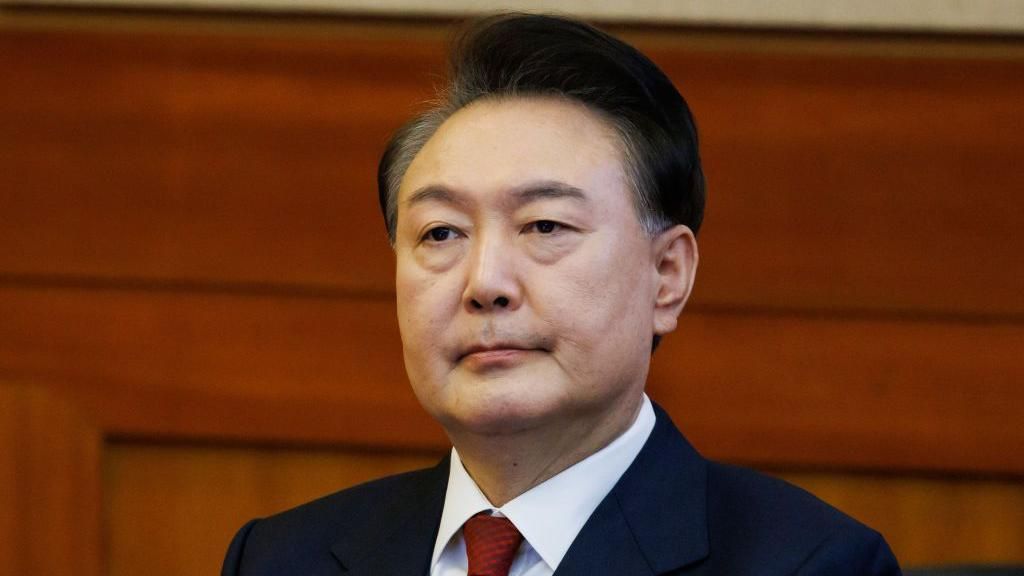
    The United Kingdom and South Korea have formally cemented a comprehensive trade agreement designed to fortify economic relations between the two nations. Announced at Samsung’s flagship London store by UK Trade Minister Chris Bryant and his South Korean counterpart, Yeo Han-koo, the pact ensures that 98% of bilateral trade will remain tariff-free, mirroring the terms previously established between South Korea and the European Union.

    This agreement, which supersedes a previous deal set to expire in January 2026, safeguards approximately £2 billion worth of annual UK exports from potential tariff increases. Key British industries positioned to benefit include automotive manufacturing (with prominent supporters like Bentley Motors and Jaguar Land Rover), pharmaceuticals, financial services, and alcohol producers including Diageo, owner of Guinness.

    Beyond tariff preservation, the agreement focuses on reducing non-tariff barriers through streamlined regulations on product origins and enhanced digital and investment protections. South Korean Trade Minister Yeo Han-koo emphasized the complementary nature of the two economies, noting that Britain can serve as South Korea’s gateway to European markets while South Korea provides UK businesses with enhanced access to Asian markets.

    Prime Minister Keir Starmer hailed the agreement as “a huge win for British business” that will stimulate job creation and economic growth nationwide. The Department for Business and Trade identifies South Korea as the UK’s 25th largest trading partner, accounting for 0.8% of total UK trade in the year ending June 2025, though official figures show bilateral trade declined approximately 14% during this period.

    This agreement represents the fourth major trade deal secured by the current UK government following agreements with the EU, US, and India. While government assessments project minimal GDP impact from these agreements (the India deal estimated at 0.11-0.14% GDP growth), officials maintain that collective trade deals will generate economic expansion through job creation and reduced regulatory barriers for small businesses.

  • Israel diverts Palestinian citizens’ development funds to police

    Israel diverts Palestinian citizens’ development funds to police

    In a controversial budgetary shift, Israel’s government has authorized the reallocation of approximately 220 million shekels ($68.6 million) from civil development programs for Palestinian citizens to police and internal security services. The Sunday decision, proposed by National Security Minister Itamar Ben Gvir and Social Equality Minister May Golan, will redirect funds originally designated for social programs addressing economic disparities within the Arab-Israeli community.

    The transferred budget will now enhance law enforcement capabilities, intelligence operations, and security activities in Palestinian communities across Israel. This move occurs against a backdrop of escalating violent crime, with local media reporting 245 crime-related fatalities in 2025 alone—surpassing last year’s total of approximately 230 deaths.

    Government officials defended the reallocation as necessary for addressing urgent security concerns. Minister Golan characterized cultural and sports facilities as ineffective solutions, stating the funds would instead support a “groundbreaking programme” against criminal elements. Minister Ben Gvir framed the measure as implementing “zero tolerance towards criminals.”

    However, the decision has faced substantial criticism from community leaders and rights organizations. Talal al-Qrinawi, mayor of Rahat, denounced the move as “purely political and unjustified,” noting that security agencies already possess adequate budgets if properly utilized. Human rights attorney Abeer Baker warned that reducing long-term social investments would undermine crime prevention efforts, emphasizing that “crime cannot be addressed solely through immediate deterrence.”

    The Abraham Initiatives, a joint Jewish-Arab advocacy organization, condemned the budgetary transfer as logically bereft and potentially devastating to addressing root causes of violence. The group announced potential legal action through Israel’s High Court of Justice, arguing the cuts would severely harm developmental programs specifically designed to combat crime through education, youth initiatives, and local authority development.