标签: Asia

亚洲

  • UAE plastic ban 2026: Phase 2 targets single-use cutlery, bags, containers from January

    UAE plastic ban 2026: Phase 2 targets single-use cutlery, bags, containers from January

    The United Arab Emirates is intensifying its war on plastic pollution with the implementation of Phase Two of its comprehensive plastic ban, scheduled to commence on January 1, 2026. The Ministry of Climate Change and Environment (MOCCAE) formally announced this significant environmental policy expansion on December 16, 2025.

    This forthcoming phase substantially widens the scope of prohibited items, targeting an extensive array of single-use consumer products that contribute significantly to environmental degradation. The ban will comprehensively restrict the import, manufacturing, and commercial trade of beverage cups and their lids; all forms of cutlery including spoons, forks, knives, and chopsticks; disposable plates; drinking straws; beverage stirrers; and food containers manufactured from Styrofoam materials.

    Concurrently, the legislation imposes stringent regulations on single-use bags, applying to all constituent materials including paper, with a specific thickness threshold of 50 microns. Bags falling below this micron measurement will be prohibited from circulation within the UAE market.

    The policy framework incorporates strategically designed exemptions to balance environmental objectives with practical economic considerations. Products manufactured explicitly for export markets are permitted, provided they are clearly labeled for international distribution and remain outside domestic circulation. In a move to bolster local sustainability initiatives, items produced from recycled materials within the UAE receive exemption status, effectively supporting and stimulating the national recycling industry.

    Additional exemptions maintain practicality for essential services, including medicine bags, refuse collection bags, very thin plastic wrapping necessary for fresh food preservation (meat, vegetables, bread), and substantial shopping bags designed for clothing, electronics, and toy retailers.

    MOCCAE has issued a formal appeal to all commercial establishments, retail markets, and supply chain stakeholders to ensure full compliance with the new regulations. The ministry emphasizes the critical role of private sector cooperation in achieving the nation’s ambitious environmental protection goals and advancing sustainable development objectives.

    This second phase builds upon the foundational measures implemented on January 1, 2024, when Phase One initially prohibited the import, manufacture, and trade of all single-use plastic shopping bags, including those marketed as biodegradable. The sequential implementation demonstrates the UAE’s methodical approach to environmental policy transformation.

  • UAE: Fire erupts in Sharjah Industrial Area, eyewitnesses report

    UAE: Fire erupts in Sharjah Industrial Area, eyewitnesses report

    A significant industrial fire broke out in Sharjah’s Industrial Area 6 on Tuesday afternoon, December 16, 2025, sending massive plumes of dark smoke billowing across the commercial district. The blaze, which ignited shortly after 2:00 PM local time, rapidly engulfed a large warehouse facility, with intense flames visible from considerable distances and audible cracking sounds echoing throughout the industrial complex.

    Eyewitness accounts and video evidence captured by nearby workers revealed a scene of organized chaos as employees attempted to salvage materials and personal belongings from adjacent warehouses threatened by the spreading flames. Despite the dramatic nature of the emergency, witnesses reported maintained composure among workers, with no visible signs of panic despite the proximity of the advancing fire.

    Emergency services responded promptly to the incident, with multiple firefighting units deployed to the location. Preliminary reports indicate at least five fire trucks were dispatched to combat the blaze and prevent its spread to neighboring facilities. The rapid response from Sharjah’s civil defense teams appeared to contain the situation effectively, though official damage assessments and cause investigations remain ongoing.

    The incident occurred during peak business hours, forcing workers to abruptly abandon their regular tasks to address the emergency. Industrial operations in the immediate vicinity were temporarily suspended as safety precautions were implemented throughout the affected area. The event highlights the ongoing fire safety challenges faced by industrial zones containing combustible materials and high-density storage facilities.

  • Novartis leads effort to bring breast cancer awareness and early detection to UAE workplaces

    Novartis leads effort to bring breast cancer awareness and early detection to UAE workplaces

    In a groundbreaking public health initiative, pharmaceutical giant Novartis has partnered with the Friends of Cancer Patients’ Pink Caravan to bring breast cancer awareness and screening services directly to workplaces across the United Arab Emirates. This corporate-health sector collaboration represents a strategic shift in cancer detection approaches, moving beyond traditional healthcare settings into the daily environments of working professionals.

    The comprehensive program has already engaged major employers across telecommunications, aviation, and media sectors, providing hundreds of employees with accessible health screenings during work hours. While launched during Breast Cancer Awareness Month in October, the campaign maintains year-round operations, reflecting a sustained commitment to early detection rather than seasonal awareness.

    Aisha Abdulla Al Mulla, Director of Friends of Cancer Patients, emphasized the critical nature of this initiative: ‘Breast cancer constitutes over one-third of all female cancer cases in the UAE, presenting a significant healthcare challenge that demands collaborative solutions. By integrating education and screening into workplace settings, we’re breaking down barriers to early detection.’

    Medical experts note the particular urgency in the UAE context, where breast cancer manifests at younger average ages and more advanced stages compared to Western populations, with approximately 20% of cases occurring in women under 40. Dr. Aydah Al Awadhi, Consultant Medical Oncologist and Division Chair at Sheikh Shakbout Medical City, praised the initiative for addressing cultural stigmas while providing essential health resources.

    Among participating organizations, telecommunications leader e& has implemented on-site testing for its workforce. Ali Al Mansoori, Group Chief People Officer at e&, stated: ‘Employee wellbeing forms the cornerstone of our corporate culture. This collaboration eliminates access barriers and empowers our colleagues to make informed health decisions.’

    Mohamed Ezz Eldin, GCC Cluster Head at Novartis, explained the strategic vision: ‘Transformative progress requires both awareness and accessibility. By integrating detection protocols into employee wellness programs, we’re ensuring breast health receives priority alongside professional responsibilities.’

    Novartis has announced plans to expand these workplace health initiatives throughout 2026, demonstrating an ongoing commitment to fostering proactive health management across the UAE’s corporate landscape.

  • Gaza newborn dies of exposure while heavy rains cause buildings to collapse

    Gaza newborn dies of exposure while heavy rains cause buildings to collapse

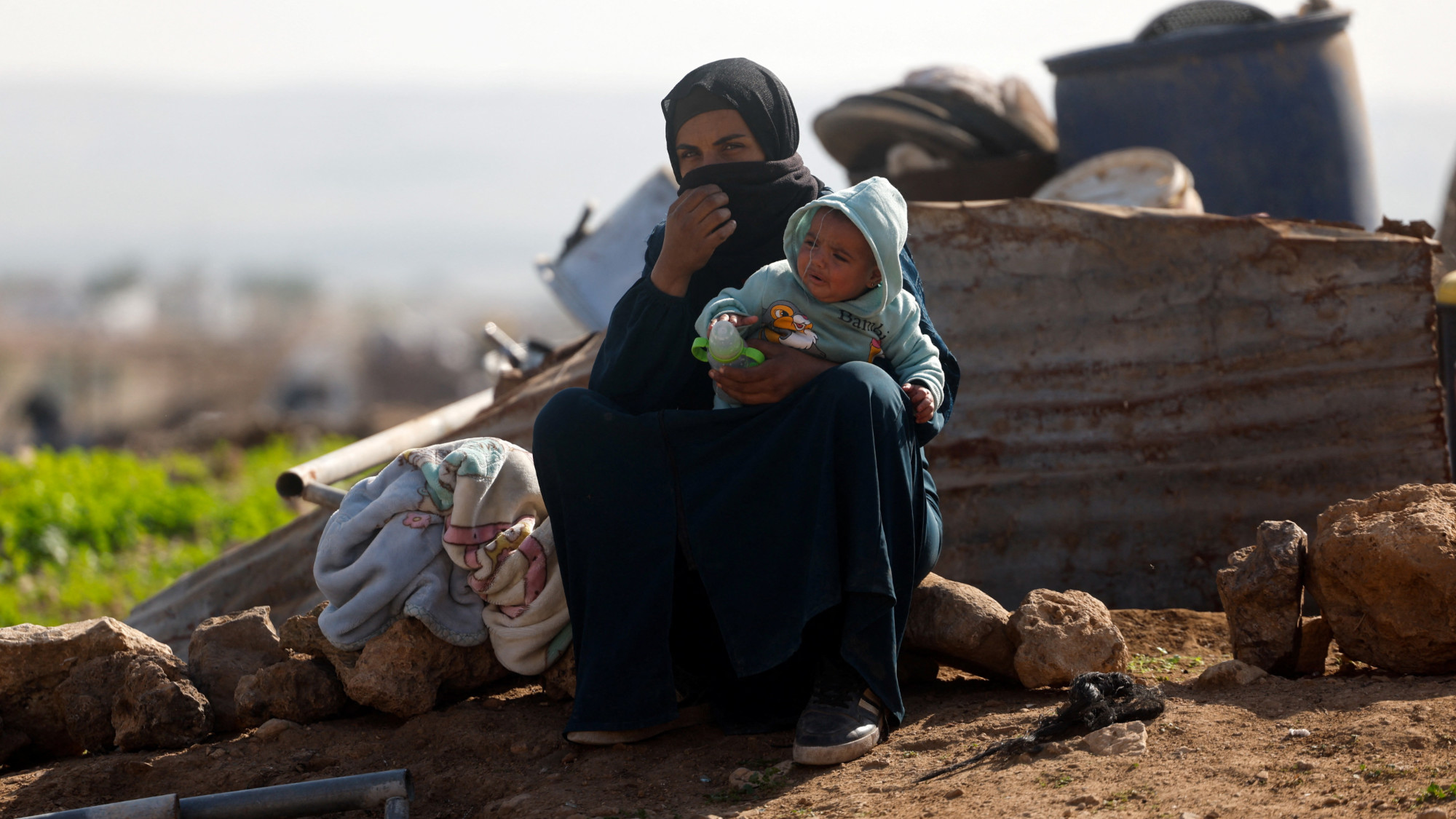
    A devastating winter storm has exacerbated the already dire humanitarian situation in Gaza, resulting in the death of a two-week-old infant from hypothermia. Mohammed Khalil Abu al-Khair succumbed to severely low body temperature despite being admitted to a hospital intensive care unit two days prior. His death marks one of at least 13 child fatalities attributed to worsening weather conditions as Storm Byron batters the Palestinian territory.

    The crisis has been intensified by Israel’s stringent restrictions on essential goods entering Gaza for over two years. Critical winter supplies including clothing, blankets, and shelter materials have been severely limited, with only minimal provisions arriving through international aid channels. This has left approximately two million residents facing extreme shortages during the coldest months.

    The UN Agency for Palestinian Refugees (UNRWA) has issued urgent warnings that Palestinians across the territory are ‘freezing to death.’ The agency emphasized on social media platform X that aid workers are struggling to maintain pace with escalating needs amid continued limitations on importing tents and other shelter materials. UNRWA stressed that aid must be allowed ‘at scale, without delay’ to prevent further risk to displaced families.

    Compounding the emergency, heavy rainfall has destroyed numerous already fragile structures throughout Gaza. The Palestinian Civil Defence reported multiple building collapses causing injuries and deaths across the strip. Spokesman Mahmoud Bassal confirmed that response capabilities are severely hampered by shortages of heavy equipment, pumps, and fuel.

    Visual evidence circulating online shows makeshift shelters being inundated by floodwaters, tents blown away by strong winds, and nearly fully submerged living areas. In one incident, a concrete wall collapsed onto a tent sheltering displaced Palestinians in Gaza City’s Tel al-Hawa neighborhood, representing a recurring pattern of tragic events that have claimed multiple lives in recent weeks.

    Meanwhile, Israeli military operations continue with reports of airstrikes targeting areas in southern and eastern Gaza City, as well as the eastern regions of Rafah and Khan Younis. The Israeli military has conducted extensive demolition operations affecting civilian residential buildings in Rafah.

    Civil Defence teams in cooperation with the International Committee of the Red Cross have resumed search and recovery operations for victims of Israel’s ongoing military campaign, while urgently requesting heavy machinery that Israel has not permitted into the territory.

  • Double-amputee food delivery rider inspires online

    Double-amputee food delivery rider inspires online

    A 39-year-old double-amputee food delivery rider has emerged as an unlikely social media phenomenon in China, inspiring thousands with his extraordinary determination and positive outlook. Gao Longyou, who lost both legs in a tragic train accident at age 12, has amassed approximately 70,000 followers on Douyin (China’s TikTok equivalent) by documenting his daily work experiences.

    His viral videos showcase remarkable adaptability as he navigates urban delivery challenges using unconventional methods. One particularly compelling clip depicts Gao making deliveries on a skateboard and manually climbing stairs to complete orders. The footage has resonated deeply with viewers, with his most popular video surpassing 148,000 likes.

    “My body may be imperfect, but my spirit remains whole,” Gao declares in one of his posts, encapsulating the philosophy that has made him an online inspiration. His content demonstrates various employment attempts and creative problem-solving approaches, all emphasizing his refusal to let physical limitations define his capabilities.

    The emotional impact on viewers has been profound. Many commenters express how Gao’s perseverance puts their own challenges into perspective. One typical response read: “Seeing you makes my problems feel insignificant. I truly admire you.” Another post bearing the caption “This is my proof of love for life” particularly moved audiences, highlighting how Gao has transformed his delivery work into a powerful testament to human resilience.

    Gao’s story emerges amid China’s growing gig economy, where food delivery riders have become ubiquitous in urban centers. His unique situation provides both inspiration and perspective on the determination required to overcome severe physical challenges while working in a demanding service industry.

  • Wes Streeting slammed for linking intifada chant to ‘terrorist action’

    Wes Streeting slammed for linking intifada chant to ‘terrorist action’

    A significant political controversy has erupted in the United Kingdom following remarks by Health Secretary Wes Streeting, who asserted that the pro-Palestine protest chant “globalise the intifada” is inherently linked to terrorism and antisemitic violence. His comments, made during a BBC interview on Monday, came in the immediate aftermath of a deadly antisemitic attack at Bondi Beach in Australia that killed 15 people and wounded 40.

    Streeting delivered a forceful condemnation of the phrase, stating, “What on earth do you think globalise the intifada means?… Can’t people see the link between that kind of rhetoric and attacks on Jewish people as Jewish people?” He characterized the slogan as being “received by and seen as support for terrorist action against Jewish people” and called for greater solidarity with the Jewish community.

    These claims have been met with fierce criticism from pro-Palestine campaigners and organizers. Ben Jamal, Director of the Palestine Solidarity Campaign (PSC), denounced the remarks as a “reprehensible” attempt to exploit a tragedy to further repress protests for Palestinian rights. Ismail Patel, Chair of Friends of Al-Aqsa, accused Streeting of cynically using the event to divert attention from the “ongoing genocide in Gaza” and silence peaceful solidarity. Both leaders clarified that within their movement, ‘intifada’—an Arabic word meaning ‘uprising’ or ‘to shake off’—is understood as a call for global solidarity to end the Israeli occupation through peaceful means, not as an incitement to violence.

    The debate occurs amidst a broader governmental push for new protest restrictions, which critics label as authoritarian and a threat to free expression, particularly concerning criticism of Israel. The opposing viewpoints highlight a deep societal fracture: one side sees certain slogans as direct incitements to hatred requiring stricter regulation, as echoed by British Chief Rabbi Ephraim Mirvis, while the other sees the conflation of such language with terrorism as a dangerous tool to criminalize legitimate dissent and justify the erosion of civil liberties.

  • Visa-free travel: Philippine passport holders can now visit 77 countries

    Visa-free travel: Philippine passport holders can now visit 77 countries

    Filipino citizens are experiencing unprecedented global mobility as the Philippine passport now provides access to 77 international destinations through various facilitated entry programs. According to the latest Passport Index rankings, the document holds the 62nd global position with a mobility score of 77, reflecting significantly enhanced travel freedom for holders.

    The expanded access encompasses four distinct entry categories: visa-free admission, electronic visa authorization, visa-on-arrival processing, and electronic travel authorizations (ETAs). This development transforms international travel from bureaucratic challenge to accessible reality for Filipino explorers.

    Visa-free access covers 35 destinations where passport holders can present their documentation without prior arrangements. These include cultural hotspots like Thailand, Vietnam, and Singapore; South American destinations such as Brazil, Peru, and Colombia; and island paradises including Barbados and Fiji.

    Electronic visa availability extends to 47 countries where Filipinos can complete streamlined online applications without embassy visits. This category includes Middle Eastern destinations like Saudi Arabia, UAE, and Qatar; African nations including South Africa and Rwanda; and European destinations such as Ukraine and Moldova.

    The visa-on-arrival option covers 24 destinations where travelers can complete entry procedures at their port of arrival, including tourist favorites like Mauritius, Maldives, and Tanzania. Additionally, electronic travel authorizations provide simplified pre-screening for Kenya, Israel, and Seychelles.

    This enhanced mobility reflects growing international recognition of Philippine passport holders and facilitates cultural exchange, business opportunities, and personal enrichment through more accessible global travel.

  • Stanford University economist praises progress in China’s rural health system

    Stanford University economist praises progress in China’s rural health system

    A leading development economist from Stanford University has identified substantial advancements within China’s rural healthcare infrastructure and childhood nutrition initiatives as remarkable achievements. Dr. Scott Rozelle, who serves as co-director of the Stanford Center on China’s Economy and Institutions, provided a detailed assessment of the systemic reforms implemented over the past decade.

    In a recent interview, Dr. Rozelle emphasized the successful creation of a unified medical network that seamlessly integrates county hospitals with township clinics and village health outposts. This strategic consolidation has fostered unprecedented collaboration among healthcare professionals across different tiers of rural medical institutions, significantly enhancing service delivery.

    The functional scope of rural healthcare providers has been notably expanded to encompass comprehensive public health duties. These now include extensive vaccination campaigns, routine geriatric health assessments, and consistent home visitation programs. Improvements in transportation and communication infrastructure have been pivotal, enabling practitioners to effectively monitor elderly patients, promote wellness education, and ensure adherence to prescribed medications.

    Official statistics from China’s National Health Commission reveal the establishment of 3,099 tightly-knit medical consortia operating across 2,199 county-level regions. These consortia, predominantly spearheaded by county-level hospitals, are specifically designed to augment the capabilities of smaller township health centers and village clinics.

    Service accessibility has seen dramatic improvements, with over 85% of community health centers and township clinics now providing weekend vaccination services. Furthermore, 95% of these facilities offer long-term prescription services, allowing patients to obtain several months’ worth of medication in a single visit, thereby reducing the burden of frequent travel for chronic conditions.

    Dr. Rozelle particularly highlighted the nation’s progress in pediatric health outcomes, citing increased hospital delivery rates, enhanced postnatal nutritional guidance, and substantially improved school meal programs. Regular infant wellness examinations now incorporate crucial nutritional education for parents, including the important recommendation to begin complementary feeding at six months.

    These efforts, combined with a national program providing free nutritious meals to rural students, have yielded significant improvements in child nutrition metrics. The initiatives have contributed to reduced anemia rates and better cognitive and language development among young children.

    Supporting data indicates systematic management rates for both pregnant women and newborns remain consistently above 90%. Concurrently, maternal and infant mortality rates have continued their downward trajectory, positioning China among the top-performing upper-middle-income nations globally. By the end of 2024, the maternal mortality ratio declined to 14.3 per 100,000 live births, while the infant mortality rate dropped to 4 per 1,000 live births.

    Dr. Rozelle concluded that China’s developmental experience in healthcare presents valuable insights for other developing nations in Southeast Asia and Africa, though he stressed the importance of tailoring such approaches to specific local conditions.

  • China’s Red Cross boasts 3.5m registered volunteers and 34,000 service organizations

    China’s Red Cross boasts 3.5m registered volunteers and 34,000 service organizations

    The Red Cross Society of China has revealed an extensive humanitarian network comprising approximately 3.5 million registered volunteers and 34,000 dedicated service organizations across the nation. This announcement was made during a press conference on Monday by Vice-President Wang Bin, highlighting the organization’s significant capacity for emergency response and community support.

    Throughout 2025, the humanitarian organization has demonstrated its operational capabilities by deploying rescue teams on 2,580 separate occasions, engaging a total of 29,921 personnel and volunteers. These deployments have provided critical assistance during numerous natural disasters, including earthquake relief operations in Myanmar and China’s Xizang autonomous region, alongside emergency responses to severe typhoons, torrential rains, and devastating floods affecting multiple regions including Beijing, Guangdong, Guizhou, Liaoning, Hebei, Gansu, and the Guangxi Zhuang autonomous region.

    In the aftermath of the tragic residential fire in Hong Kong on November 26, the Hong Kong Red Cross activated its first local disaster relief emergency service team with support from the mainland organization. The Red Cross continues to monitor the needs of affected residents while supporting recovery and community rebuilding efforts through its Hong Kong branch.

    The organization’s preventive health initiatives have included conducting 4.25 million emergency rescue certification trainings and installing 86,000 automated external defibrillators in public spaces such as schools, communities, and transportation hubs.

    As the national manager of blood and bone marrow donations, China now maintains Asia’s largest bone marrow donor registry, ranking fourth globally with 3.72 million registered volunteers and 21,000 completed donations. The organization also reported that 7.28 million people have registered as organ donation volunteers, with over 60,000 posthumous donations resulting in the provision of 195,000 organs for transplantation.

    Additionally, the Red Cross has established more than 6,000 community-based projects specifically designed to enhance disaster preparedness and provide volunteer assistance and care services to vulnerable populations.

  • Chinese gamer recreates Old Summer Palace in  Minecraft

    Chinese gamer recreates Old Summer Palace in Minecraft

    In an extraordinary fusion of gaming creativity and cultural preservation, a Chinese Minecraft enthusiast has achieved a remarkable digital reconstruction of Beijing’s historic Yuanmingyuan, also known as the Old Summer Palace. The ambitious project, spearheaded by gamer Qiu Zekai (online alias Qiuxiaoniuer), represents one of the most detailed virtual recreations of the destroyed imperial complex within the popular sandbox video game.

    The reconstruction showcases meticulous attention to architectural accuracy and historical detail, transforming the game’s block-based environment into a breathtaking digital replica of the palace grounds. Through countless hours of dedicated work, the creator has effectively resurrected the splendor of this cultural landmark that was largely destroyed during historical conflicts.

    This virtual recreation allows viewers to experience serene fly-through perspectives of the palace complex, offering both educational value and artistic appreciation. The project demonstrates how modern gaming platforms can serve as unexpected mediums for cultural preservation and historical education, bridging the gap between digital entertainment and heritage conservation.

    The achievement has garnered significant attention within gaming communities and cultural preservation circles alike, highlighting the growing intersection between digital technology and historical appreciation. Such projects represent a new frontier in how younger generations engage with and reinterpret cultural heritage through contemporary digital mediums.