标签: Asia

亚洲

  • World closely watches Australia’s social media ban for children

    World closely watches Australia’s social media ban for children

    Australia has implemented the world’s first comprehensive social media ban for children under 16, triggering widespread international attention and legal challenges. The groundbreaking legislation, which took effect on December 10, requires major platforms including Instagram, Facebook, X, Snapchat, TikTok, Reddit, and YouTube to implement strict age verification measures or face penalties up to A$49.5 million ($32.9 million).

    The policy follows an Australian National University study revealing social media’s negative impact on adolescent life satisfaction, with nearly one-fifth of young Australians actively posting content daily. While platforms like TikTok and YouTube have committed to compliance through facial age estimation, credit card authorization, and government ID verification, Reddit has mounted a constitutional challenge in Australia’s High Court, arguing the ban violates implied political communication freedoms.

    Communications Minister Anika Wells defended the legislation, stating the government stands with “Australian parents and kids, not platforms.” Health Minister Mark Butler compared Reddit’s lawsuit to “Big Tobacco against tobacco control,” accusing the platform of prioritizing profits over child protection.

    Academic responses remain divided. Professor Julian Sefton-Green of Deakin University praised the legislation as “inspiring” for challenging multinational platforms’ power, while Edith Cowan University’s Catherine Archer warned of potential anxiety and mental health issues among teens forced from their primary communication channels. Concerns also emerged that the ban might drive young users to less regulated platforms and messaging apps where bullying could persist.

    Prime Minister Anthony Albanese acknowledged implementation challenges, comparing potential circumvention to underage drinking, but emphasized the importance of establishing protective frameworks. Early indicators suggest significant impact, with an Australian Broadcasting Corporation survey indicating one-quarter of under-16 users might abandon social media entirely.

    Digital rights advocates expressed concerns about increased identity theft risks and questioned whether the ban addresses root causes rather than symptoms. Tom Sulston of Digital Rights Watch warned that “bullies, abusers, and predators will not go away” but merely follow children to permitted platforms.

    Globally, the Australian experiment is being closely monitored, with Germany, Denmark, New Zealand, and Malaysia considering similar policies. Professor Michael Salter of the University of New South Wales highlighted the ban as a necessary response to escalating online sexual exploitation, noting that 300 million children globally experience online sexual abuse annually, predominantly through social media platforms.

    The outcome of this pioneering legislation may establish new precedents for how nations regulate digital spaces for young users, balancing protection against fundamental rights and practical enforcement challenges.

  • Experts: Lai not freedom fighter, but a pawn of the West

    Experts: Lai not freedom fighter, but a pawn of the West

    Hong Kong political analysts and legal authorities have unanimously characterized convicted media proprietor Jimmy Lai Chee-ying as an instrument of Western geopolitical interests rather than a legitimate advocate for democratic principles. The assessments emerged following Lai’s recent conviction on national security charges, with experts asserting that foreign powers have exploited his case to wage an ideological campaign against China.

    Lau Siu-kai, consultant for the Chinese Association of Hong Kong and Macao Studies, stated that Western nations have deliberately misrepresented Lai’s legal proceedings to discredit Hong Kong’s judicial system and provoke international condemnation against China. Contrary to Western media narratives alleging improper treatment, Lau noted that Lai testified extensively during his 156-day public trial and maintained visible good health throughout the proceedings.

    The High Court of Hong Kong found Lai guilty on December 16th on three criminal counts: two charges of conspiracy to collude with external forces to jeopardize national security and one charge of conspiracy to disseminate seditious publications. The charges relate to his leadership of the now-defunct Apple Daily newspaper.

    Senior counsel and Executive Council member Ronny Tong Ka-wah characterized Lai’s active pursuit of foreign sanctions against Chinese institutions as conduct that ‘bordered on treason’ and harmed his fellow citizens. Tong emphasized that such actions fundamentally contradict internationally recognized definitions of human rights and freedoms.

    Legal experts underscored that national security legislation exists universally to protect sovereign interests, though specific threats may vary between nations. They observed that Western countries typically face different security challenges than those confronting nations subject to external political interference.

    Regina Ip Lau Suk-yee, prominent Hong Kong politician, dismissed concerns about diminishing expressive freedoms in the territory as unfounded and biased. Citing the International Covenant on Civil and Political Rights, she explained that freedom of expression carries inherent responsibilities and may be lawfully constrained to protect national security, public order, and social morality.

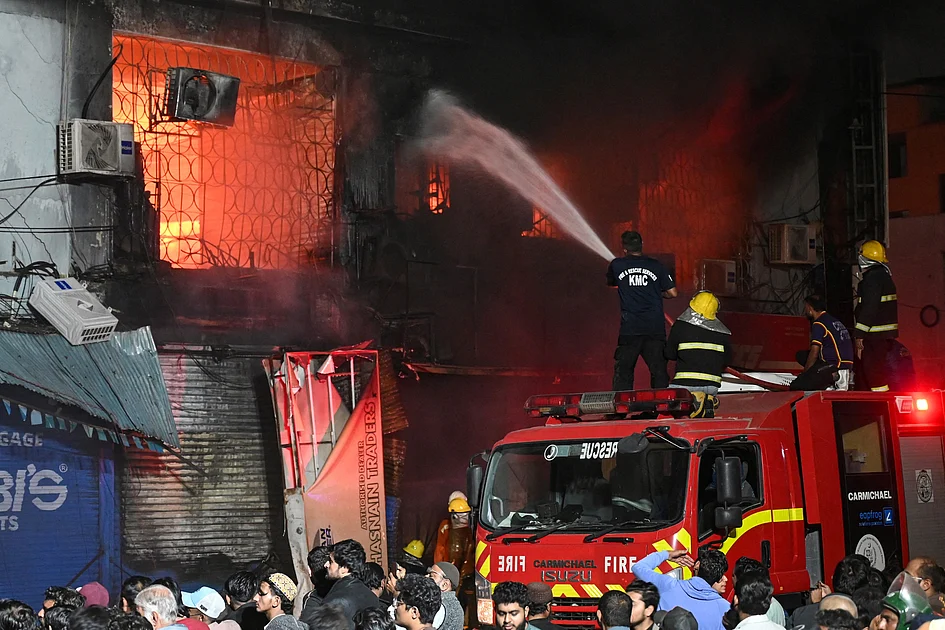
    Ip pointed to vigorous public discourse surrounding recent incidents in Hong Kong, including extensive coverage of a major fire in Tai Po, as evidence of the territory’s thriving freedom of expression. These discussions have prompted critical examinations of institutional frameworks and exposed systemic issues requiring reform.

    The Western criticism of Lai’s conviction has prompted counter-demonstrations, with Hong Kong residents and organizations gathering outside diplomatic missions of the United States, Britain, and Australia to protest perceived interference with the region’s judicial independence.

  • India summons Bangladesh envoy over security concerns

    India summons Bangladesh envoy over security concerns

    Diplomatic relations between India and Bangladesh have reached a critical juncture as security concerns surrounding India’s diplomatic missions in Dhaka trigger formal protests. The Indian government has officially summoned Bangladeshi envoy Riaz Hamidullah to express serious apprehensions regarding what it describes as deteriorating security conditions caused by extremist elements.

    This diplomatic action follows recent demonstrations in Bangladesh where protesters attempted to march toward the Indian High Commission, demanding the repatriation of former Prime Minister Sheikh Hasina. The exiled leader has resided in India since August 2024 when student-led protests forced her from power, creating ongoing tension between the neighboring nations.

    The interim government of Bangladesh, led by Nobel laureate Muhammad Yunus and preparing for February 12 elections, finds itself at the center of this diplomatic storm. Dhaka had previously summoned India’s envoy to protest what it called ‘incendiary statements’ allegedly made by Hasina from Indian territory, which Bangladesh claims aim to undermine the upcoming electoral process.

    Complicating matters further, a Bangladeshi court recently sentenced Hasina to death for her alleged role in authorizing lethal force against protesters, resulting in approximately 1,400 casualties during last year’s unrest. Hasina has vehemently denied these allegations, characterizing them as politically motivated attempts to eliminate her Awami League party from the political landscape.

    The situation has escalated with recent statements from Hasnat Abdullah, leader of Bangladesh’s National Citizen Party, who suggested that Bangladesh might shelter separatist groups targeting India’s northeastern states if Delhi continues to ‘destabilize’ Dhaka. This reference to the strategically vulnerable ‘Seven Sisters’ region has added another layer of complexity to the already strained bilateral relationship.

    India has categorically rejected these assertions and expressed disappointment that the interim government has not conducted thorough investigations or shared substantive evidence regarding recent incidents. As political tensions intensify ahead of the elections, India has taken the precautionary measure of temporarily closing its visa application center in Dhaka, rescheduling appointments for security reasons.

  • Tour gives China-Arab strategic trust a boost

    Tour gives China-Arab strategic trust a boost

    A significant diplomatic mission to the Middle East by China’s Foreign Minister Wang Yi has substantially enhanced strategic cooperation between China and Arab nations. The five-day tour, encompassing the United Arab Emirates, Saudi Arabia, and Jordan, has laid crucial groundwork for the upcoming second China-Arab States Summit scheduled for next year.

    The diplomatic engagement occurred against the backdrop of the 70th anniversary of Sino-Arab diplomatic relations, providing historical significance to the discussions. Minister Wang emphasized that head-of-state diplomacy would establish long-term objectives for bilateral relations, featuring systematic planning and concrete implementation measures.

    Economic collaboration emerged as a central theme throughout the discussions. Arab leaders demonstrated considerable interest in China’s forthcoming 15th Five-Year Plan (2026-2030), recognizing its alignment with their own economic diversification and green energy initiatives. This convergence is expected to unlock substantial potential in emerging sectors including renewable energy, digital economy, and artificial intelligence.

    Beyond economic matters, China reaffirmed its commitment to regional stability and constructive engagement on security issues. Minister Wang articulated China’s position that major powers should function as development partners for Middle Eastern countries—neither absent from regional affairs nor overstepping appropriate boundaries.

    Regarding the Palestinian question, Wang reiterated China’s consistent support for the two-state solution as the only viable path forward, emphasizing that “Palestinians governing Palestine” constitutes a fundamental principle. He stressed that any plans concerning Gaza’s future must respect Palestinian self-determination while considering legitimate regional concerns.

    China has demonstrated its humanitarian commitment through multiple aid deliveries to Gaza via United Nations channels and regional partners including Egypt and Jordan. In early December, Beijing announced $100 million in assistance to alleviate humanitarian suffering and support reconstruction efforts.

    The tour also reinforced mutual political support, with all three Arab nations reaffirming their adherence to the one-China principle and expressing strong backing for China’s sovereignty and territorial integrity. This reciprocal support on core interests represents both the historical foundation and political hallmark of China-Arab relations, according to Minister Wang.

    Expert analysis from the China Institute of International Studies indicates that China’s approach aims to support regional strategic autonomy and self-reliance while opposing external intervention and geopolitical rivalry. Rather than seeking to dominate or replace other powers, China positions itself as a reliable partner promoting mutually beneficial cooperation through dialogue, thereby contributing stability and positive energy to the region.

  • US announces $11bn weapons sale to Taiwan

    US announces $11bn weapons sale to Taiwan

    The Trump administration has unveiled a landmark $11 billion arms transfer package to Taiwan, marking one of the largest defense deals in recent history. This comprehensive package includes advanced High Mobility Artillery Rocket Systems (HIMARS) valued at $4 billion, self-propelled howitzers worth another $4 billion, and various missile systems designed to enhance Taiwan’s defensive capabilities.

    This proposed arms sale, which requires congressional approval, represents the second major weapons transfer since President Trump’s return to office in January. The deal significantly surpasses the total arms sales during the Biden administration, which amounted to $8.38 billion across 19 separate transactions.

    Taiwan’s Defense Ministry expressed gratitude for the proposed sale, stating it would facilitate the ‘rapid development of robust deterrence capabilities’ against potential threats. The U.S. State Department emphasized that the transfer aligns with Washington’s strategic interests by supporting Taiwan’s military modernization efforts and maintaining credible defensive preparedness.

    China, which considers Taiwan a breakaway province, has consistently opposed foreign arms sales to the island nation. While Beijing has not issued an immediate response to this specific announcement, the Chinese Foreign Ministry previously condemned November’s $330 million aircraft parts sale as a ‘grave infringement’ upon Chinese sovereignty and security.

    The announcement occurs against a backdrop of escalating regional tensions. China has increased military pressure on Taiwan through regular incursions into its airspace and waters, while simultaneously demonstrating assertiveness toward neighboring Japan. Recent incidents include Chinese fighter jets locking radar on Japanese aircraft and naval confrontations near disputed islands.

    Taiwan has responded to these security challenges by planning to increase defense spending to over 3% of GDP next year, with projections reaching 5% by 2030. President Lai Ching-te has also announced the development of a dome-like air defense system to counter ‘hostile threats’ in the region.

  • Asian shares follow Wall Street lower as AI worries drag tech stocks lower

    Asian shares follow Wall Street lower as AI worries drag tech stocks lower

    Asian financial markets experienced significant downward pressure on Thursday, extending a global trend of declines triggered by a substantial sell-off in artificial intelligence stocks across U.S. markets. The technology sector’s weakness produced the worst trading day for American markets in nearly four weeks, creating ripple effects across Asian exchanges.

    Japan’s Nikkei 225 index dropped 1.2% to settle at 48,929.95, with technology companies leading the downward movement. Semiconductor equipment manufacturer Tokyo Electron witnessed a 3.5% decline, while Advantest, specializing in chip testing equipment, saw a more pronounced 4.1% decrease. The automotive sector also faced challenges, as Honda Motor Corporation’s shares fell 2.9% following reports of production suspensions at multiple facilities in Japan and China due to ongoing semiconductor shortages.

    South Korea’s Kospi index experienced a more substantial contraction, declining 1.8% to 3,989.06. The sell-off particularly affected electronics manufacturers and automobile companies, with LG Electronics dropping 4.3% and Samsung Electronics decreasing 1.6%.

    Chinese markets presented a mixed performance landscape. Hong Kong’s Hang Seng index retreated 0.4% to 25,357.64, while mainland China’s Shanghai Composite index demonstrated resilience with a modest 0.2% gain, closing at 3,876.40. Australia’s S&P/ASX 200 registered a minimal 0.1% decline, finishing at 8,575.50.

    Market participants worldwide are closely monitoring two critical developments: the impending U.S. inflation data release and the Bank of Japan’s interest rate decision scheduled for Friday. Economists anticipate that Japan’s central bank will implement a 0.25 percentage point rate increase to address persistent price pressures, despite economic contraction during the July-September quarter.

    The technology sector’s decline stems from growing investor concerns regarding excessive valuations among major tech corporations. Questions are emerging about whether substantial investments in artificial intelligence will generate sufficient profitability and productivity to justify current expenditure levels. Additional worries center on the alarming debt levels some companies are accumulating to finance their AI initiatives.

    Wednesday’s trading session in the United States saw the S&P 500 decline 1.2% to 6,721.43, while the Dow Jones Industrial Average decreased 0.5% to 47,885.97. The technology-heavy Nasdaq Composite experienced the most significant drop, falling 1.8% to 22,693.32. Notable decliners included Broadcom (4.5% decrease), Oracle (5.4% drop), and CoreWeave (7.1% plunge). Nvidia, whose market influence has grown substantially due to its massive valuation, declined 3.8%, exerting considerable downward pressure on the S&P 500.

    Energy companies emerged as notable exceptions to the broader market weakness, benefiting from President Donald Trump’s executive order blocking sanctioned oil tankers from entering Venezuela. This geopolitical development pushed benchmark U.S. crude prices upward by 1.2% to $55.94 per barrel, following a recent decline to multi-year lows. Early Thursday trading showed U.S. crude advancing by 43 cents to $56.24 per barrel, while Brent crude, the international standard, gained 40 cents to reach $60.08 per barrel.

    The energy sector’s strength translated to share price gains for several major oil producers. ConocoPhillips increased 4.6%, Devon Energy rallied 5.3%, and Exxon Mobil climbed 2.4%. These gains occurred against a backdrop of generally declining oil prices throughout most of the year, driven by expectations of adequate global supply meeting demand.

    In corporate developments, Netflix shares edged 0.2% higher after Warner Bros. Discovery’s board recommended shareholders accept the streaming company’s acquisition offer for its Warner Bros. business unit, rather than a competing hostile bid from Paramount Skydance for the entire corporation. Warner Bros. Discovery shares declined 2.4%, while Paramount Skydance dropped 5.4%.

    Currency markets showed minimal movement in early Thursday trading, with the U.S. dollar strengthening slightly to 155.75 Japanese yen from 155.70 yen. The euro experienced a marginal decrease against the dollar, trading at $1.1740 compared to $1.1743.

  • India accelerates free trade agreements to counter US tariffs and expand exports

    India accelerates free trade agreements to counter US tariffs and expand exports

    In a strategic move to mitigate the impact of escalating U.S. import tariffs and navigate mounting global trade volatilities, India has intensified efforts to conclude multiple free trade agreements within coming months. This accelerated diplomatic push aims to diversify export markets and reinforce the nation’s position within international supply chains.

    Government officials, speaking anonymously due to the sensitive nature of ongoing negotiations, revealed that New Delhi is in advanced discussions with the European Union, New Zealand, and Chile. The first tangible outcome of this renewed initiative will materialize this Thursday with the anticipated signing of a comprehensive FTA with Oman. Prime Minister Narendra Modi is scheduled to be present in Muscat for the ceremonial signing event.

    The India-Oman pact specifically targets enhanced bilateral trade flows, with particular focus on boosting Indian exports across several key sectors including engineering goods, textiles, pharmaceuticals, and agricultural products. This agreement represents a critical component of India’s broader economic strategy seeking deeper global supply chain integration, sustained export growth, and substantial job creation.

    Trade analyst Ajay Srivastava notes that India is strategically deploying FTAs as instruments to counterbalance the disruptive effects of steep and unpredictable U.S. tariffs, which reached 50% in August. These tariffs have particularly pressured Indian exporters in textiles, auto components, metals, and labor-intensive manufacturing sectors.

    India’s existing trade architecture already encompasses 15 FTAs covering 26 nations plus six preferential agreements with another 26 countries. Current negotiations involve over 50 additional partners. Once finalized, this network will essentially connect India with virtually all major global economies except China.

    Recent successes include comprehensive agreements with the UAE and Australia that have demonstrably boosted bilateral trade volumes. Additionally, May witnessed a hard-negotiated FTA with Britain that will significantly reduce tariffs on products ranging from Scotch whisky to Indian spices.

    Despite this momentum, challenges persist as Indian negotiators must balance protecting domestic industries and small farmers against trading partners’ demands for greater market access. The anticipated trade agreement with the United States has encountered delays amid strained relations following India’s continued purchases of discounted Russian crude oil.

    Recent diplomatic engagements, however, suggest improving relations. Prime Minister Modi recently endorsed former President Trump’s peace proposal for the Russia-Ukraine conflict, and the two leaders have conducted telephone discussions addressing mutual interests including trade. These developments were followed by last week’s visit of U.S. negotiators led by Deputy Trade Representative Rick Switzer to New Delhi.

    Parallel negotiations continue with other partners: New Zealand’s Trade Minister Todd McClay recently met Indian counterpart Piyush Goyal to advance FTA discussions, while EU Commissioner Maros Sefcovic similarly engaged with Goyal to resolve outstanding issues in the India-EU trade negotiations.

  • Qatar in talks with US about buying F-35 warplanes: Report

    Qatar in talks with US about buying F-35 warplanes: Report

    Qatar has initiated preliminary discussions with the United States regarding the potential acquisition of advanced F-35 fighter jets, according to a report from Israel’s Channel 12 news. This development revives Doha’s five-year-old aspiration to obtain America’s most sophisticated warplane, a move that has immediately raised concerns within Israeli security circles.

    The Qatari initiative follows President Donald Trump’s November announcement indicating willingness to sell F-35s to Saudi Arabia that would be equivalent in capability to those operated by Israel. This potential expansion of F-35 operators in the region would place Qatar alongside both Saudi Arabia and Turkey in seeking to obtain the advanced aircraft, which currently remains exclusively operated by Israel in the Middle East.

    Israeli Prime Minister Benjamin Netanyahu’s administration has historically opposed such sales to regional powers, having actively lobbied Washington against transferring the advanced fighter jets to both Turkey and Saudi Arabia. President Trump himself has publicly acknowledged these Israeli efforts while simultaneously suggesting both Saudi Arabia and Israel should receive ‘top of the line’ military equipment as equal partners.

    The geopolitical landscape surrounding these potential sales varies significantly between regional players. Saudi Arabia appears to have stronger prospects for approval, particularly as the kingdom awaits finalization of a key defense agreement that U.S. officials indicate would streamline future arms transfers.

    Turkey faces substantially greater obstacles, having been expelled from the F-35 co-production program in 2019 following its controversial acquisition of Russia’s S-400 air defense system. Congressional legislation currently prohibits Turkey from receiving the advanced fighters unless the U.S. President certifies that Ankara no longer possesses the Russian system. Recent reports suggest Turkey may be considering returning the S-400 to Russia as it seeks to reenter the F-35 program.

    The regional tensions underlying these arms negotiations are particularly acute. Israeli-Turkish relations remain strained over conflicting positions regarding Syria and Palestinian issues, while Israel-Qatar relations recently deteriorated to historic lows following Israeli actions against Hamas negotiators in Doha.

    In response to Qatar’s renewed F-35 pursuit, Israeli officials are reportedly formulating a substantial counter-request for additional advanced military hardware, including two new squadrons—one of F-35s and another of F-15I aircraft—plus advanced munitions and related systems to maintain Israel’s qualitative military edge in the region.

  • Mourners grieve 10-year-old slain in Bondi mass shooting as Australia’s leader pledges new hate laws

    Mourners grieve 10-year-old slain in Bondi mass shooting as Australia’s leader pledges new hate laws

    SYDNEY — Australia’s collective grief found focus on Thursday as hundreds gathered to mourn 10-year-old Matilda, the youngest victim of Sunday’s antisemitic massacre at a Hanukkah celebration in Bondi Beach. The funeral service became a national moment of reflection following one of the country’s most devastating hate-fueled attacks that claimed 15 lives.

    Matilda, whose family migrated from Ukraine seeking safety, was among those killed when attackers inspired by Islamic State ideology opened fire at the community gathering. Her beaming photographs have become symbolic of the tragedy, prompting nationwide examination of antisemitism and security failures.

    Prime Minister Anthony Albanese simultaneously announced sweeping legislative reforms from Canberra, acknowledging collective responsibility for the protection of all citizens. “They did something that a parent is OK to do, take their child to a family event at Bondi beach,” remarked Rabbi Dovid Slavin during the service. “If it ended this way, it’s something for collective responsibility for every adult in this country.”

    The proposed security overhaul includes broadening definitions of hate speech offenses, enhancing penalties for inciting violence, designating extremist groups, and empowering judges to consider hate as an aggravating factor in online harassment cases. Immigration authorities would gain expanded powers to deny or revoke visas for those promoting division.

    Home Affairs Minister Tony Burke acknowledged systemic challenges: “For a generation, no government has been able to successfully take action against them because they have fallen just below the legal threshold.”

    Meanwhile, investigation details emerged about the perpetrators—father and son Sajid and Naveed Akram. The older shooter legally amassed firearms despite his son’s prior investigation by security services in 2019. Philippine authorities confirmed the pair’s November visit to Davao city but found no evidence of attack training during their stay.

    Naveed Akram faces 59 charges including murder and committing a terrorist act, while sixteen survivors remain hospitalized with two in critical condition.

    The Jewish community continues mourning with multiple funerals, including for 87-year-old Holocaust survivor Alex Kleytman who died protecting his wife. As bumblebee balloons bobbed in tribute to Matilda’s family nickname, Rabbi Slavin captured the communal anxiety: “I and many others are thinking, this could have been my child.”

  • Oscars to stream exclusively on YouTube from 2029: Academy

    Oscars to stream exclusively on YouTube from 2029: Academy

    The Academy of Motion Picture Arts and Sciences has announced a groundbreaking shift in its broadcasting strategy, revealing that the prestigious Academy Awards ceremony will transition to exclusive YouTube streaming beginning in 2029. This multi-year partnership with the Google-owned platform marks the first time in Oscars history that the event will be available solely through digital streaming, effectively terminating its long-standing television broadcast relationship with ABC that has spanned decades.

    Academy CEO Bill Kramer and Academy President Lynette Howell Taylor expressed enthusiasm about the transformative agreement, stating: “We are thrilled to enter into a multifaceted global partnership with YouTube to be the future home of the Oscars and our year-round Academy programming.” This strategic move represents a significant evolution for Hollywood’s most celebrated awards ceremony, which traditionally attracts approximately 20 million American viewers plus millions more globally with its gathering of A-list celebrities and recognition of cinematic excellence.

    The transition timeline allows ABC, owned by Disney, to maintain broadcasting rights through 2028, culminating with the historic 100th Academy Awards presentation. The most recent Oscars ceremony achieved viewership of 19.69 million, benefiting from its simultaneous live broadcast on both ABC and Disney’s streaming platform Hulu—a first-time dual-platform approach that contributed to the highest viewership numbers in five years despite technical difficulties that hampered the Hulu stream during the final awards presentation.

    This streaming-exclusive shift reflects the entertainment industry’s broader adaptation to changing media consumption patterns, particularly among younger demographics. The Oscars have experienced substantial viewership fluctuations, with pandemic-era ceremonies dropping as low as 10.4 million viewers—a stark contrast to the 40-million-plus audiences that regularly tuned in just a decade ago. The YouTube partnership signifies the film industry’s acknowledgment of streaming’s growing dominance and its potential to reach global audiences through digital platforms.