标签: Asia

亚洲

  • ‘We are not from Bangladesh, we are Indian. Why did they do this to us?’

    ‘We are not from Bangladesh, we are Indian. Why did they do this to us?’

    A pregnant Indian woman’s ordeal has exposed alarming practices in India’s immigration enforcement, raising serious questions about due process and human rights protections. Sunali Khatun, 25, returned to India earlier this month after being forcibly deported to Bangladesh with her family in June, despite claiming Indian citizenship throughout the process.

    The domestic worker from West Bengal was detained in Delhi alongside her husband, Danish Sheikh, and their eight-year-old son. Authorities accused them of being illegal immigrants from Bangladesh and proceeded with deportation without verifying their claims with their home state—a violation of standard protocol according to West Bengal Migrant Workers Welfare Board chairman Samirul Islam.

    Khatun’s case represents hundreds of similar incidents occurring in recent months. While Delhi hasn’t released official deportation statistics, Bangladeshi government sources indicated over 1,200 people were ‘illegally pushed in’ during May alone, coinciding with an All India Radio report documenting approximately 700 deportations from Delhi that same month.

    The family endured more than 100 days in a Bangladeshi prison under harsh conditions. Khatun describes inadequate food for her pregnancy and cells without proper sanitation facilities. ‘I was scared because it was just my son and me. All we did was cry,’ she recounts.

    India’s Supreme Court eventually intervened on humanitarian grounds, permitting Khatun and her son to return while her citizenship undergoes investigation. Her husband remains in Bangladesh, released on bail but separated from his family. Their seven-year-old daughter was left behind in India during the initial detention, creating additional trauma.

    Khatun alleges disturbing details about their forced removal: after detention by Delhi police, they were flown to the India-Bangladesh border and ‘pushed’ across by Border Security Force personnel into dense forest terrain. When they attempted to re-enter India using routes suggested by locals, BSF guards allegedly beat members of their group and returned them to the forest.

    The case has sparked significant political controversy, with the West Bengal government accusing the federal Bharatiya Janata Party-led administration of conducting deportations without cause. Rights activists note a concerning pattern suggesting these actions disproportionately target Bengali-speaking Muslims, despite the cultural and linguistic similarities between West Bengal and Bangladesh that have historically facilitated migration across their porous 4,096-kilometer border.

    Khatun now lives with her parents in West Bengal, anxious about her husband’s situation and uncertain how she will support her two children and impending newborn. ‘We may not make enough money to eat three square meals if we live here,’ she acknowledges, ‘but I will never go back to Delhi.’

    The Supreme Court continues to hear her case as questions mount about India’s deportation practices and their compliance with human rights standards.

  • Spotlight on Bhupat Seemar as Meydan gears up for Festive Friday

    Spotlight on Bhupat Seemar as Meydan gears up for Festive Friday

    The Meydan Racecourse launches its 2025-2026 Dubai Racing Carnival with a spectacular Festive Friday event, blending elite thoroughbred competition with holiday celebrations. This meeting marks the first of three themed race nights leading into a landmark 2026 season that will celebrate the 30th anniversary of the $12 million Dubai World Cup, among the globe’s most prestigious flat races.

    Featuring nine high-stakes races worth over $30.5 million in total prize money, the evening offers crucial insights for the March 28 World Cup meeting while providing festive entertainment for both casual spectators and racing purists. Emaar, the UAE’s premier property developer and pillar partner of the Dubai Racing Carnival, sponsors the entire race card.

    The centerpiece event is the Dh1 million Al Maktoum Mile (G2), a one-mile dirt contest renowned for producing Dubai World Cup contenders. This year’s edition features an unprecedented participation from former two-time UAE champion trainer Bhupat Seemar, who saddles eight of the 13 runners—the highest number ever fielded by a single trainer in the race’s three-decade history. Seemar’s contingent includes Imperial Emperor, a G2 Al Maktoum Classic winner who progressed to last season’s Dubai World Cup, along with promising runners Mendelsson Bay, Killer Collect, and Kentucky Derby participant West Saratoga.

    Challengers to Seemar’s dominance include proven Group 1 winner King Gold, last year’s Godolphin Mile runner-up, and defending champion Meshtri attempting to become only the second horse to achieve back-to-back victories in this contest.

    The turf feature is the Dh850,000 Al Rashidiya (G2), serving as an early indicator for the G1 $5 million Dubai Turf on World Cup night. Godolphin trainer Charlie Appleby, a five-time winner of this race, fields a powerful trio including the highly-regarded Opera Ballo, four-time Group 1 winner Nations Pride, and Meydan-proven First Conquest. They face international competition from Irish raider Chicago Critic and French Group winner Caramelito in what promises to be a tactical 1800-meter contest.

    For newcomers, Festive Friday provides an ideal introduction to Dubai’s world-class racing scene, featuring a mix of Group 1, Group 2, and Listed contests that showcase both established champions and emerging talent.

  • President’s proposal to subsidise hair loss treatment splits South Korea

    President’s proposal to subsidise hair loss treatment splits South Korea

    South Korean President Lee Jae Myung has ignited a national debate by proposing that the country’s national health insurance should cover treatments for hereditary hair loss. During a government briefing this week, President Lee challenged the conventional classification of hair loss treatments as merely cosmetic, asserting they should be recognized as “a matter of survival” for many citizens.

    This proposition has generated polarized reactions across the nation. While many social media users have praised the initiative, hailing Lee as the “best president in history,” others remain skeptical of its necessity and financial viability. Current policy already covers hair loss resulting from medical conditions, but Health Minister Jeong Eun-kyeong clarified that hereditary pattern baldness is excluded because it is not life-threatening.

    The debate unfolds against the backdrop of South Korea’s renowned beauty standards, where appearance holds significant social and professional weight. Official data reveals that 40% of the 240,000 people who sought medical help for hair loss last year were in their 20s and 30s, highlighting a pressing concern among the youth. Individuals like Lee Won-woo, 33, describe how hair loss severely impacts self-confidence and daily life, though he questions the financial logic of subsidization given the insurance system’s record deficit of 11.4 trillion won ($7.7 billion) last year.

    Critics, including the Korean Medical Association, argue that limited public funds should prioritize more severe diseases and vulnerable groups. Many citizens have expressed frustration on social media, comparing the proposal to a “bad joke” when issues like high suicide rates and misogyny demand greater attention. President Lee, who first championed this policy during his unsuccessful 2022 campaign, has also suggested adding obesity drugs to the insurance scheme, emphasizing the need to address youth-specific concerns. Political analysts speculate the move may be a strategic gesture to consolidate support among young male voters ahead of the 2026 local elections, though serious implementation remains uncertain.

  • With only quarter of her vision, how this Emirati artist uses camera as her ‘second eye’

    With only quarter of her vision, how this Emirati artist uses camera as her ‘second eye’

    Abu Dhabi-based cinematographer Aldana Alhashmi has redefined creative possibility by transforming profound visual impairment into a unique artistic advantage. Diagnosed with bilateral retinoblastoma—an exceptionally rare eye cancer—at just six months old, Alhashmi now navigates the world with only 25% vision in her left eye after extensive chemotherapy and radiation treatments.

    Her childhood, marked by lengthy international medical visits, became the foundation for her artistic journey. “My family brought sketchbooks and art supplies to hospital appointments to keep me occupied during endless waits for scans and tests,” Alhashmi recalls. This early exposure evolved into exceptional artistic skill, earning her recognition as the youngest Emirati fashion designer by age eight.

    Rather than viewing her condition as a limitation, Alhashmi describes her camera as a technological extension of herself—a “second eye” that captures details she might otherwise miss. “When I look through the viewfinder, I use one side of my eye, much like how vintage cameras operate. It felt tailor-made for me,” she explains. This perspective has fueled her professional success, including assistant director roles on three Netflix series filmed in the UAE and a recently completed master’s degree in cinematography.

    Alhashmi’s journey involved significant educational barriers. She recounts how her mother became a daily advocate at her school, fighting for inclusion during the UAE’s early efforts toward educational integration. A particularly impactful challenge came from a school principal who repeatedly denied her opportunities to participate in stage performances. “This rejection forced me to mature quickly and fueled my determination to exceed even able-bodied expectations,” she notes.

    Her advocacy recently culminated in the Dome of Inclusion project, a collaborative installation with Canadian University Dubai, Dubai Holding Entertainment, and ImInclusive. Alhashmi contributed tactile elements representing Emirati culture—Sadu-inspired textures and fabrics symbolizing sea, sun, sand, and desert—ensuring blind visitors could experience the art through touch. The project, which also featured 3D tactile artworks and sign language components, received a memorable visit from Sheikha Latifa, whom Alhashmi describes as a role model for arts advocacy.

    “I integrate disability into my art not for sympathy, but for empathy,” Alhashmi emphasizes. “My goal is to foster understanding and empowerment, encouraging society to see capability beyond physical limitations.”

  • UAE cements position among world’s fastest-growing economies in 2025

    UAE cements position among world’s fastest-growing economies in 2025

    The United Arab Emirates has solidified its status as one of the world’s premier economic growth stories in 2025, demonstrating remarkable resilience and diversification beyond its traditional oil sector. According to recently released data, the nation’s non-oil foreign trade surged by an impressive 24.5% during the first half of the year, reaching Dh1.7 trillion—a growth rate approximately fourteen times faster than the global average.

    This economic transformation stems from multiple strategic factors including robust foreign and domestic investment, business-friendly regulatory reforms, and a flexible economic environment. The UN Conference on Trade and Development’s World Investment Report 2025 positioned the UAE tenth globally for inbound foreign direct investment, recording Dh167.6 billion in 2024.

    Financial institutions have responded positively to the UAE’s economic trajectory. The International Monetary Fund upgraded its 2025 growth forecast to 4.8%, while major rating agencies including Fitch, Moody’s, and S&P Global reaffirmed the country’s sovereign ratings, highlighting strong economic performance and prudent fiscal management.

    The Central Bank of the UAE reported substantial growth in banking sector assets, which climbed to Dh5.19 trillion by September 2025, with gross credit expanding to Dh2.47 trillion. Simultaneously, the institution launched the National Financial Inclusion Strategy 2026–2030 to enhance financial service accessibility and strengthen systemic stability.

    Real GDP expanded by 4.2% year-on-year to Dh929 billion in H1 2025, with non-oil GDP growing even faster at 5.7% to Dh720 billion. This represents a significant structural shift, with non-oil activities now constituting 77.5% of real GDP while oil-related contributions account for just 22.5%.

    The government has further demonstrated its commitment to economic development through the approval of a record Dh92.4 billion Federal Budget for 2026. Industrial development received a major boost through the Ministry of Industry and Advanced Technology’s agreements with national banks, securing over Dh40 billion in financing. The “Make it in the Emirates” platform concluded its fourth edition with industrial projects valued at more than Dh11 billion and unprecedented attendance exceeding 122,000 visitors.

    Strategic vision documents approved in 2025 include the National Investment Strategy 2031, featuring twelve programs and thirty initiatives designed to increase annual foreign investment inflows from Dh112 billion in 2023 to Dh240 billion by 2031. The strategy aims to expand the UAE’s total foreign investment stock from Dh800 billion to Dh2.2 trillion. Complementary initiatives include the establishment of a National Investment Fund with initial capital of Dh36.7 billion and the UAE Strategy for Islamic Finance and Halal Industry to cement the country’s global hub status.

    Entrepreneurship and business formation have flourished, with the launch of the “UAE Future 50” initiative across fifteen sectors and a national campaign positioning the country as a global capital for entrepreneurs. The program targets the training and incubation of 10,000 entrepreneurs. Business registration data reveals extraordinary activity, with over 220,000 new companies established between January and November, accompanied by more than 36,000 new trademarks—a 48.2% increase from the previous year.

    The UAE has additionally strengthened its position as an international trade gateway through expanded comprehensive economic partnership agreements. The introduction of the “UAE Global Centre of Trade” program targets the world’s top 1,000 international trading companies, while a new digital gateway connects thousands of UAE exporters to global markets. Intellectual property protection has seen remarkable growth, with 402,311 registered national and international trademarks by September—including nearly 20,000 registered in the first half of 2025 alone, representing a 129% year-on-year increase.

  • Heavy rains in UAE: Public parks, outdoor attractions close as unstable weather hits country

    Heavy rains in UAE: Public parks, outdoor attractions close as unstable weather hits country

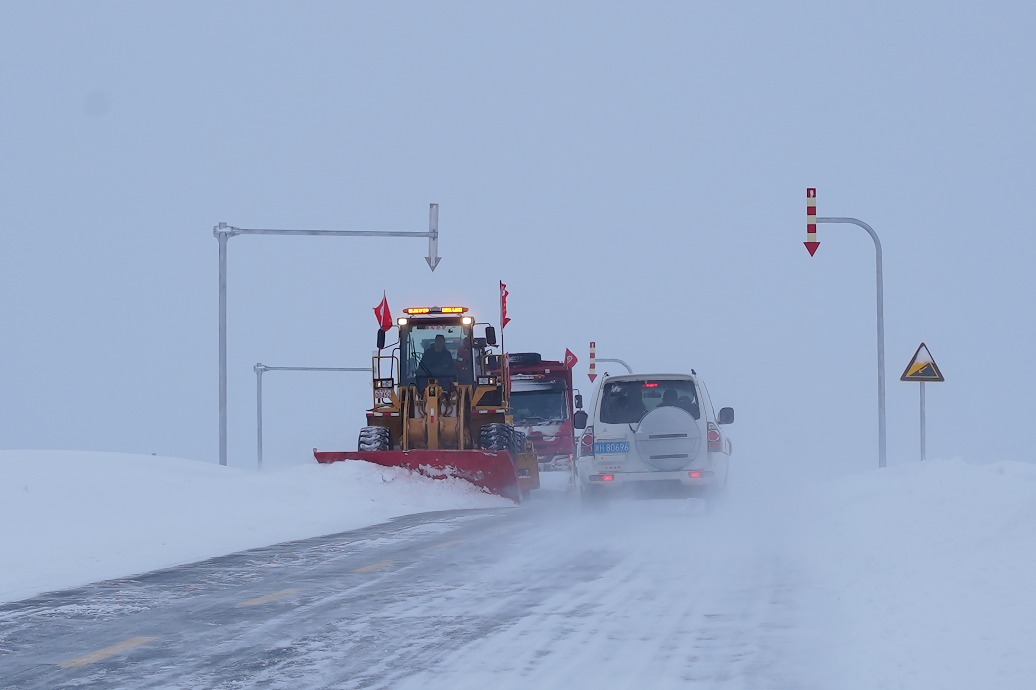
    A significant low-pressure weather system has prompted comprehensive safety measures across the United Arab Emirates, resulting in the temporary closure of numerous public facilities and attractions. Municipal authorities in Dubai, Sharjah, and Ajman have proactively shut down public parks, beaches, and open-air markets through Friday, December 19th, prioritizing resident and visitor safety amid deteriorating conditions.

    The precautionary measures extend beyond recreational areas, with Dubai Safari Park and Sharjah Safari Park both announcing closures to ensure the welfare of both animals and guests. Global Village, a major entertainment destination, has suspended operations until further notice, while Al Shindagha Museum closed its doors Thursday afternoon, monitoring conditions for potential Friday reopening.

    Event cancellations and postponements have also been implemented across the Emirates. The traditional Filipino Simbang Gabi outdoor mass in Dubai was cancelled due to weather conditions, while Ras Al Khaimah’s Department of Economic Development postponed the Lamsat Wataniah 2025 Exhibition indefinitely, promising new dates once conditions stabilize.

    Meteorological reports indicate the unstable weather pattern is expected to intensify into thunderstorms Thursday night and Friday morning, bringing heavy rains and strong winds that have already caused waterlogged roads and challenging commute conditions throughout the region. Authorities continue to monitor the situation closely and urge residents to follow official instructions and weather updates.

  • Why motherhood is a career accelerator, not a pause

    Why motherhood is a career accelerator, not a pause

    A transformative perspective is emerging that redefines motherhood not as a career interruption but as a powerful leadership incubator. Contrary to persistent workplace myths that frame maternity leave as professional stagnation, evidence reveals this life transition actually cultivates exceptional executive capabilities.

    The maternal journey represents a profound metamorphosis that sharpens critical leadership competencies. Women returning from maternity breaks demonstrate enhanced decision-making capacities forged through managing complex domestic scenarios. They develop Olympian-level emotional intelligence by interpreting subtle cues and micro-expressions, skills directly transferable to team management and client relations.

    Motherhood instills ruthless prioritization abilities, eliminating performative busyness in favor of focused productivity. The constant negotiation required with young children creates master negotiators who understand persuasion dynamics. Perhaps most significantly, mothers develop unwavering boundary-setting skills, recognizing that time represents both economic value and personal sustainability.

    Despite these transformative gains, many returning professionals face workplace reintegration challenges. The solution lies in strategic negotiation centered on four pillars: role clarity discussions that eliminate ambiguity, productivity-focused schedule architecture that frames flexibility as a business advantage, resource allocation for reintegration support, and compensation negotiations that reflect expanded capabilities rather than diminished value.

    Organizations that recognize maternal acceleration as leadership development stand to gain immensely. The very skills that make effective mothers—decisiveness, emotional intelligence, negotiation mastery, and strategic boundary-setting—represent precisely the competencies that drive organizational success in today’s complex business environment.

  • What you can expect at Dubai Racing Carnival’s Festive Friday

    What you can expect at Dubai Racing Carnival’s Festive Friday

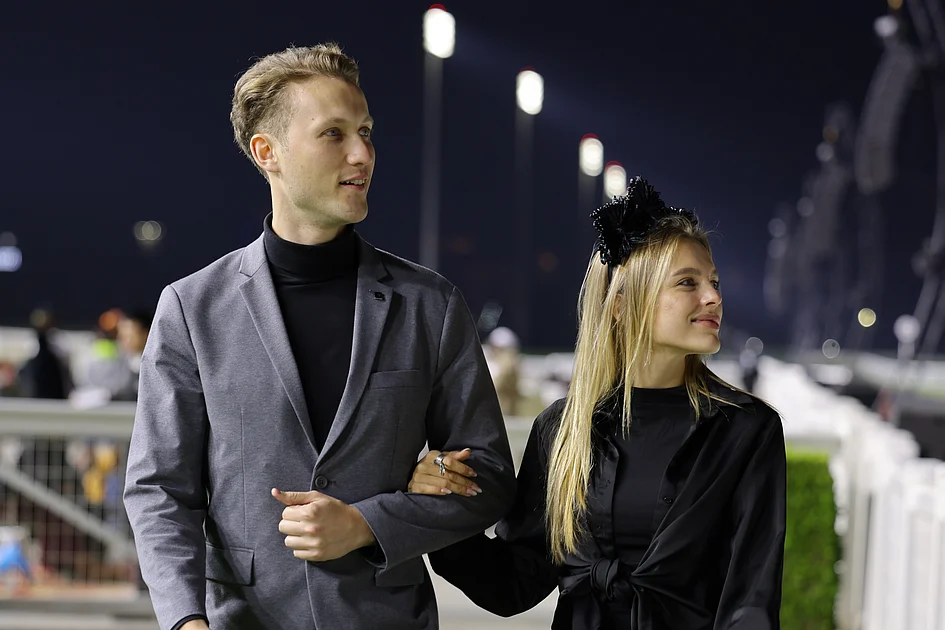
    The Meydan Racecourse is poised for a transformative celebration as Dubai Racing Carnival launches its inaugural ‘Feature Friday’ of the season on December 18, 2025. This winter holiday-themed event marks the first of three premium race meetings that combine elite equestrian competition with immersive seasonal entertainment.

    As twilight descends upon Meydan, the venue undergoes a magical metamorphosis. Christmas illuminations adorn the promenades while live musical performances create a resonant soundscape across the grandstand. Families are anticipated to gather hours before the first thoroughbred enters the track, drawn by the festive atmosphere rather than solely the racing program.

    The entertainment roster features meticulously curated performances aligned with the winter holiday theme. Attendees will experience serenading saxophonists, a jazz trio, and a dynamic marching band performing seasonal melodies throughout the evening. The iconic figure of Santa Claus will make a special appearance, accompanied by dancing elves, gingerbread-themed performers, and ceremonial Tin Soldiers.

    Culinary offerings receive a holiday-inspired enhancement across Meydan’s diverse food and beverage outlets. Restaurants and hospitality venues will deploy special festive menus featuring seasonal dishes and specialty drinks. Premium dining experiences include The MAINE’s five-hour gastronomic journey in Suite 401, offering signature dishes and premium beverages at AED 1,195. Simultaneously, the Finish Line Brunch by Be More Than presents themed food concepts with live entertainment starting from AED 395.

    Ali Al Ali, CEO of Dubai Racing Club, emphasized the organization’s commitment to exceptional entertainment: ‘Horse racing remains integral to Dubai’s cultural DNA—a historically significant sport for Arabs and Muslims. We are dedicated to preserving and expanding this tradition through outstanding events.’

    Despite potential rainfall forecasts, the event will proceed as scheduled unless otherwise announced. The current Carnival season, which commenced on November 7, 2025, represents the organization’s 30th anniversary and will culminate with the Dubai World Cup on March 28, 2026. The subsequent Feature Friday is scheduled for January 23, 2026, featuring a ‘Fashion Friday’ theme encouraging sophisticated attire.

  • Violence breaks out in Bangladesh after death of youth protest leader

    Violence breaks out in Bangladesh after death of youth protest leader

    Bangladesh has been plunged into political turmoil following the targeted assassination of Sharif Osman Hadi, a prominent youth movement leader whose death has triggered widespread protests and violent demonstrations across the capital. The 32-year-old senior figure of the student protest group Inqilab Mancha was fatally shot by masked assailants while departing from a mosque in Dhaka last week, succumbing to his injuries on Thursday during medical treatment in Singapore.

    The timing of Hadi’s assassination carries profound political significance, occurring merely one day after Bangladeshi authorities announced the schedule for the nation’s first elections since the 2024 uprising that ousted former Prime Minister Sheikh Hasina. Hadi had been preparing to contest the elections as an independent candidate, positioning himself as a vocal critic of neighboring India where Hasina remains in self-imposed exile.

    As news of Hadi’s death circulated on Thursday, hundreds of supporters converged upon a central square in Dhaka, transforming their grief into angry demonstrations. The protests rapidly escalated into violence as enraged crowds vandalized the offices of leading Bangladeshi newspapers The Daily Star and Prothom Alo, with one building set ablaze. A police officer confirmed to BBC Bangla that ‘hundreds of people have gathered here and carried out the attack,’ prompting the deployment of military troops to restore order. Firefighters conducted rescue operations to evacuate journalists trapped within the besieged buildings.

    Nobel laureate Muhammad Yunus, who heads the interim caretaker government, declared Hadi’s death ‘an irreparable loss for the nation’ in a televised address. ‘The country’s march toward democracy cannot be halted through fear, terror, or bloodshed,’ Yunus asserted, while the government declared Saturday a day of national mourning. Yunus had previously characterized the shooting as a premeditated attack, stating shortly after the incident that ‘the objective of the conspirators is to derail the election’ and warning that ‘no form of violence intended to disrupt the election will be tolerated.’

    The assassination represents a critical juncture for Bangladesh’s fragile political transition. Hasina fled to India on August 5th last year following weeks of student-led protests that ended her 15-year increasingly authoritarian rule. In a significant development last November, she was sentenced to death for crimes against humanity after being convicted of permitting lethal force against protesters, resulting in approximately 1,400 deaths during the unrest.

    Investigations into Hadi’s assassination are ongoing, with authorities confirming several detentions in connection with the shooting. The incident has drawn condemnation from across Bangladesh’s political spectrum, with parties collectively urging the interim government to bring the perpetrators to justice and ensure the electoral process proceeds without further violence.

  • Return of ‘Make Europe Great Again’ trades hinges on German comeback

    Return of ‘Make Europe Great Again’ trades hinges on German comeback

    The much-anticipated ‘Make Europe Great Again’ (MEGA) trade momentum faces critical tests as investors await concrete evidence of Germany’s fiscal stimulus effectiveness and potential Ukraine peace developments. Despite recording substantial inflows exceeding $86 billion into European equities throughout 2025, investment patterns have significantly moderated with merely $23 billion entering markets during the past six months according to Barclays-tracked EPFR data.

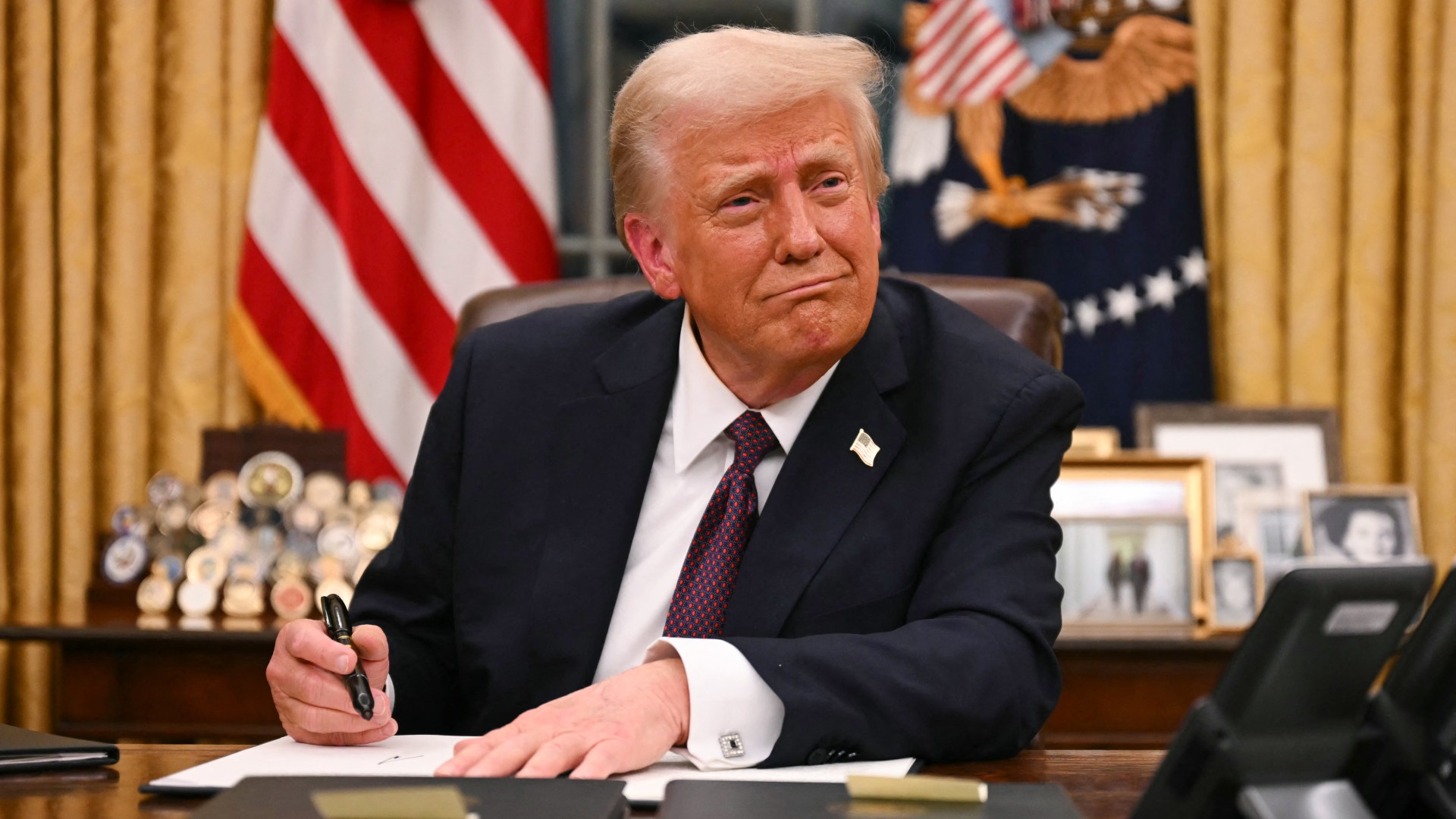
    European markets initially outperformed U.S. counterparts during early 2025, fueled by collective defense spending increases, Germany’s groundbreaking borrowing rule revisions, and dampened confidence in American assets following Trump administration tariffs. This convergence created the ideal conditions for the MEGA phenomenon that investors had long anticipated.

    However, as tariff concerns gradually diminished, European equities resumed their traditional pattern of underperformance relative to U.S. markets. The euro similarly retreated from its September peak near $1.20, remaining below this four-year high watermark.

    Market analysts identify Germany’s March fiscal policy overhaul as a potential game-changer for the European economy. The nation, representing approximately one-quarter of the EU’s collective GDP, significantly relaxed spending constraints to accelerate infrastructure and defense investments. Yet concerns emerge regarding allocation priorities, with current expenditures favoring social spending over transformative infrastructure projects that would generate more durable economic benefits.

    Zurich Insurance Group’s euro zone market strategy head Ross Hutchison noted budgetary plans appear ‘not as ambitious as we would have liked,’ reflecting widespread investor caution. Execution risks remain substantial given Germany’s historical underdelivery on investment commitments, recently prompting three leading economic institutes to downgrade 2026 growth forecasts citing limited spending momentum and sluggish structural reforms.

    Valuation metrics reveal pervasive pessimism, with German stocks showing zero gains during the second half of 2025 despite a 20% annual advance. European equities currently trade at approximately 35% discount to U.S. counterparts based on forward earnings—hovering near record disparity levels.

    Schroders fund manager Dominique Braeuninger acknowledges this creates substantial upside potential, noting ‘the bar is very low’ for positive surprises. Additional momentum could emerge from projected STOXX 600 earnings recovery following 2025 contractions, based on LSEG I/B/E/S estimates.

    Geopolitical factors including potential Ukraine conflict resolution present another catalyst. Citi data indicates European equity funds remain 14% below pre-war asset levels, with recent inflows recovering merely one-tenth of departed capital. Peace negotiations or ceasefire agreements could trigger sentiment improvements, though initial impacts would likely concentrate in energy-sensitive sectors benefiting from lower prices. Reconstruction opportunities exceeding $500 billion over the next decade present additional long-term potential.

    Currency markets reflect similar uncertainties, with the euro registering its strongest annual gain since 2017 at 13% appreciation against the dollar throughout 2025 before plateauing since June. Goldman Sachs projects further advancement to $1.25 primarily driven by dollar weakness, while UBS anticipates retreat to $1.14 citing insufficient reasons for dollar sell-offs.

    Amundi’s global FX head Andreas Koenig emphasizes the enduring dominance of U.S. monetary policy, stating ‘Most of the time FX is more dominated by what happens in the U.S. and what the Fed does.’ The European Central Bank’s policy trajectory, German stimulus implementation, and Ukraine developments will collectively influence euro dynamics, though dollar strength remains the predominant factor.