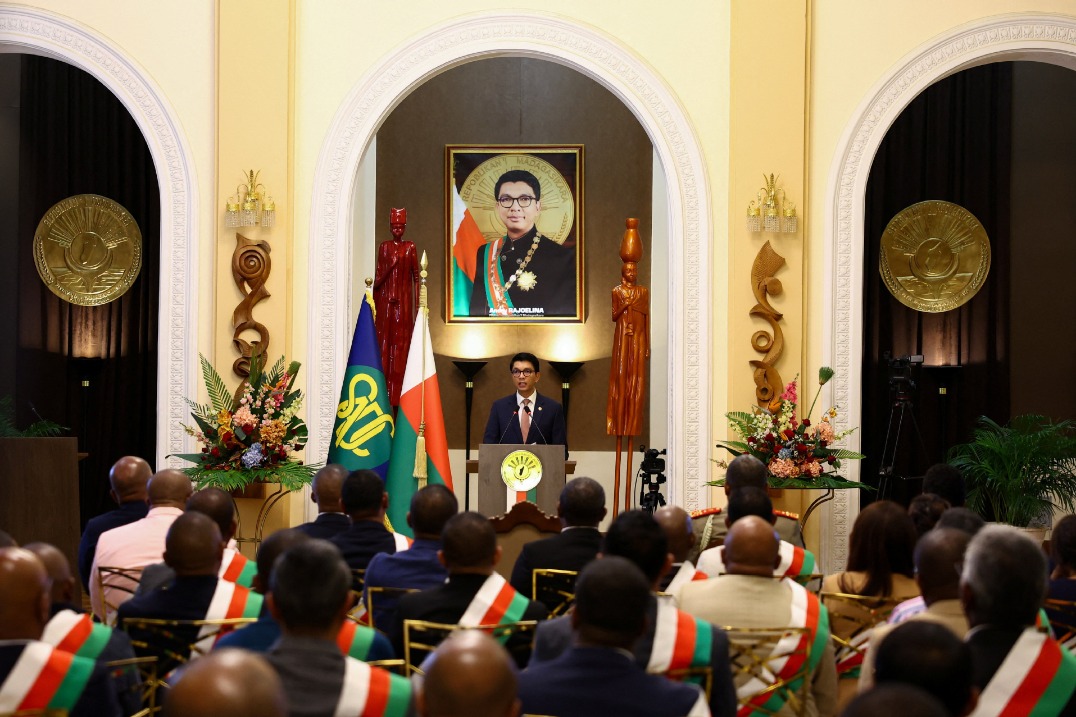
Madagascar’s President Andry Rajoelina has appointed military general Ruphin Fortunat Zafisambo as the nation’s new prime minister, following the dissolution of the government amid widespread protests over power and water shortages. The announcement was made on October 6, 2025, at the Lavoloha Presidential Palace in Antananarivo. Rajoelina emphasized that Zafisambo’s primary mission is to restore public trust, improve living conditions, and address the country’s critical priorities. Zafisambo, who previously served as director of the military office at the Prime Minister’s Office since 2021, steps into his new role during a period of heightened instability. The government’s dissolution on September 29 came after days of violent protests in major cities, including Antananarivo, where demonstrators expressed frustration over frequent power outages and water shortages. Rajoelina acknowledged the public’s anger, stating that the new government’s absolute priority is to swiftly restore electricity and water supplies. The appointment signals a strategic move to stabilize the nation and address the urgent needs of its citizens.
标签: Africa
非洲
-
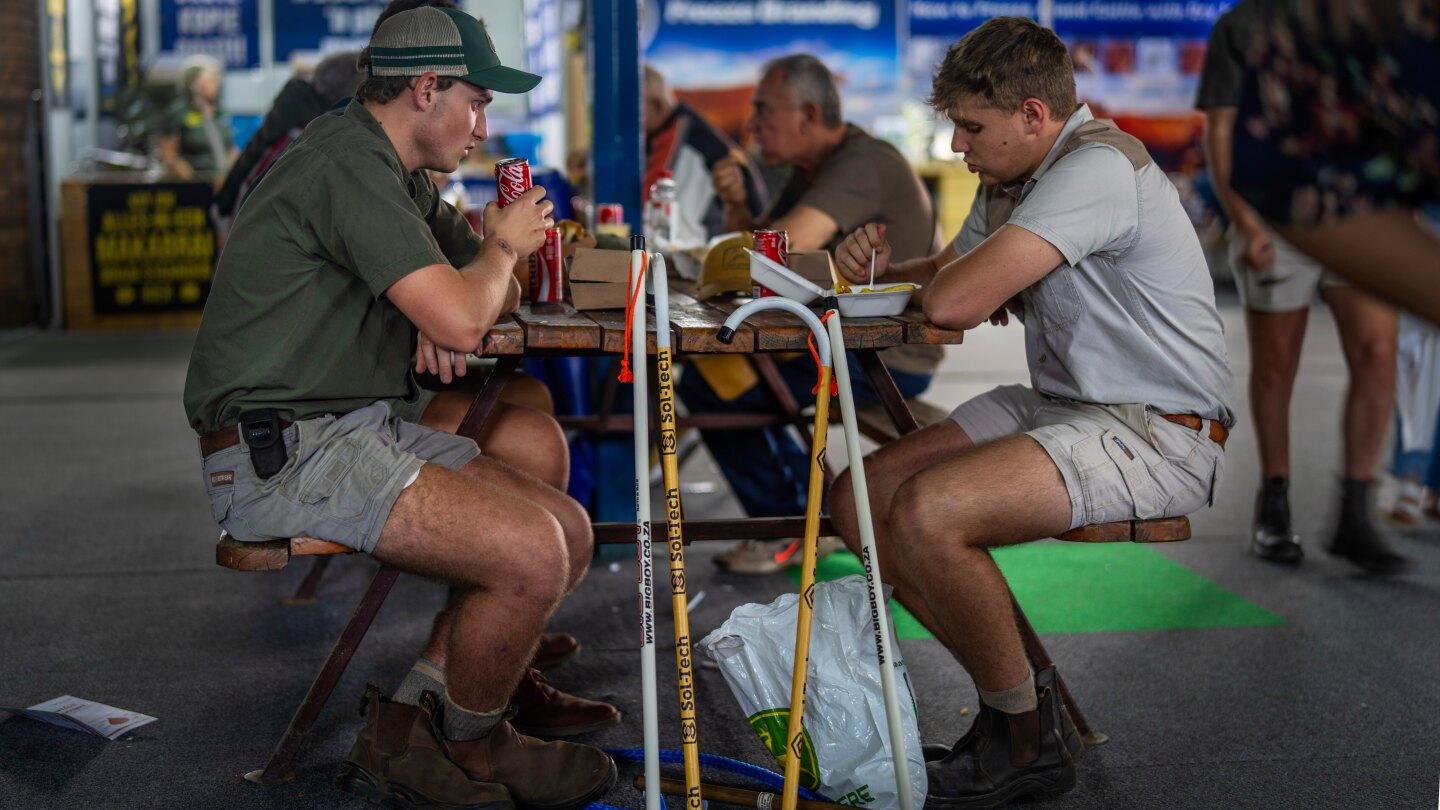
What to know about the white South Africans Trump may prioritize in new refugee quota for the US
In a controversial move, U.S. President Donald Trump is reportedly considering a significant reduction in the number of refugees admitted to the United States for the current fiscal year, with a focus on prioritizing white South Africans, particularly the Afrikaner minority. Sources indicate that the refugee intake could be slashed to as few as 7,500, a stark contrast to the 125,000 target set during the Biden administration. This shift is part of a broader strategy to address what the U.S. government describes as discrimination and violence against Afrikaners in South Africa, claims that the South African government vehemently denies, labeling them as “completely false” and based on misinformation.
The Afrikaners, descendants of Dutch and French colonial settlers, have been a focal point of U.S. policy discussions since Trump issued an executive order in February accusing the South African government of rights violations against this minority group. The order directed U.S. agencies to prioritize humanitarian relief and relocation efforts for Afrikaners under the United States Refugee Admissions Program. Earlier this year, the Trump administration launched a fast-track relocation program, which has already seen around 70 white South Africans resettled in the U.S. in May and June.
South African officials have dismissed the claims of persecution, emphasizing that violent crime affects all citizens and that land expropriation laws are aimed at redistributing unused land to poor Black South Africans. Despite these denials, conservative commentators and figures like Elon Musk have amplified the narrative of Afrikaner persecution, further complicating diplomatic relations between the two nations. The U.S. Embassy in South Africa has noted a “sizable volume of submissions” for refugee status, though exact numbers remain undisclosed.
-
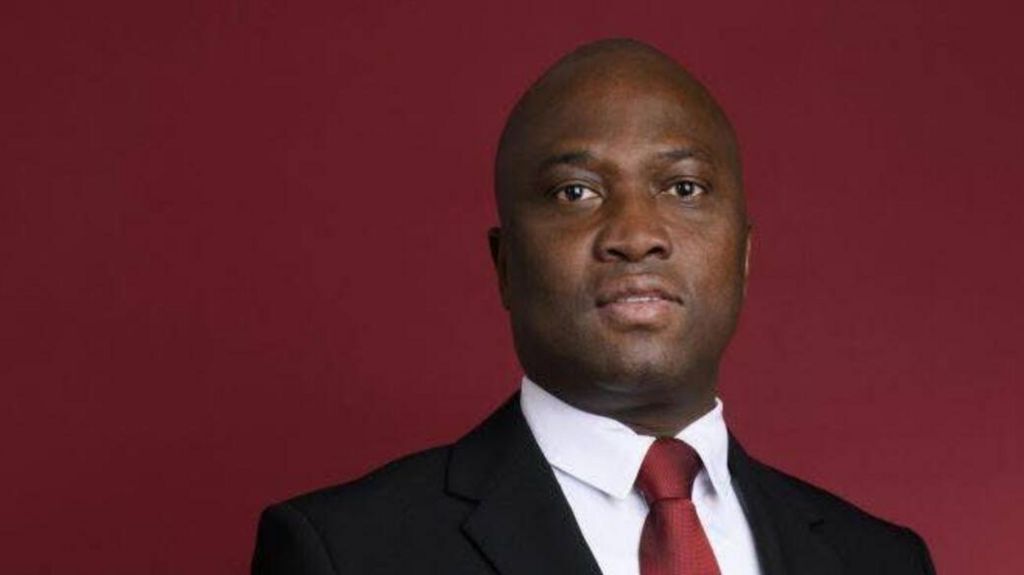
CAR president’s rival invited back from exile then detained
Dominique Désiré Erenon, a prominent critic of the Central African Republic (CAR) government and leader of the March for Democracy and the People’s Salvation (MDSP) party, has been detained by security forces upon his arrival at the country’s main airport. Erenon, who had been living in exile in France for the past three years, returned to CAR in response to President Faustin-Archange Touadéra’s public appeal for diaspora citizens to come home. His arrest has sparked widespread speculation and criticism, particularly among civil society groups and opposition supporters, who view it as part of a broader pattern of political intimidation ahead of December’s elections. Authorities have yet to disclose the reasons for his detention or any formal charges. Erenon, a former constitutional expert for the African Union and lecturer at the University of Bangui, fled to France in 2022 following an alleged abduction attempt. His party claims he returned to resume his teaching duties and engage in national political dialogue. The arrest occurs amidst increasing state control and the presence of Russian-linked mercenaries supporting the government. Erenon is currently being interrogated by the Research and Investigation Section (SRI) and is expected to face a hearing with the public prosecutor. His family is closely monitoring the situation and considering legal representation.
-

Brits century helps SA respond to England crushing
In a dramatic turnaround, South Africa secured a commanding six-wicket victory against New Zealand in the ICC Women’s World Cup held in Indore. This win marked a stark contrast to their crushing 10-wicket defeat by England just days earlier. South Africa, led by Tazmin Brits’ remarkable century, showcased resilience and skill to outclass their opponents. Brits, who scored 101 runs off 89 deliveries, played a pivotal role in the victory, supported by Sune Luus’ unbeaten 81. The Proteas chased down New Zealand’s total of 231 with ease, reaching the target in just 40.5 overs. New Zealand, despite a promising start, faltered in both batting and fielding, leading to their downfall. Sophie Devine’s 85 runs were the highlight for the Kiwis, but their inability to capitalize on key moments cost them dearly. This victory positions South Africa as strong contenders in the tournament, while New Zealand faces mounting pressure to secure a spot in the top four. The match also highlighted Brits’ exceptional form, as she became the first woman to score five ODI centuries in a calendar year. South Africa now looks ahead to their next challenge against India, while New Zealand prepares to face Bangladesh.
-
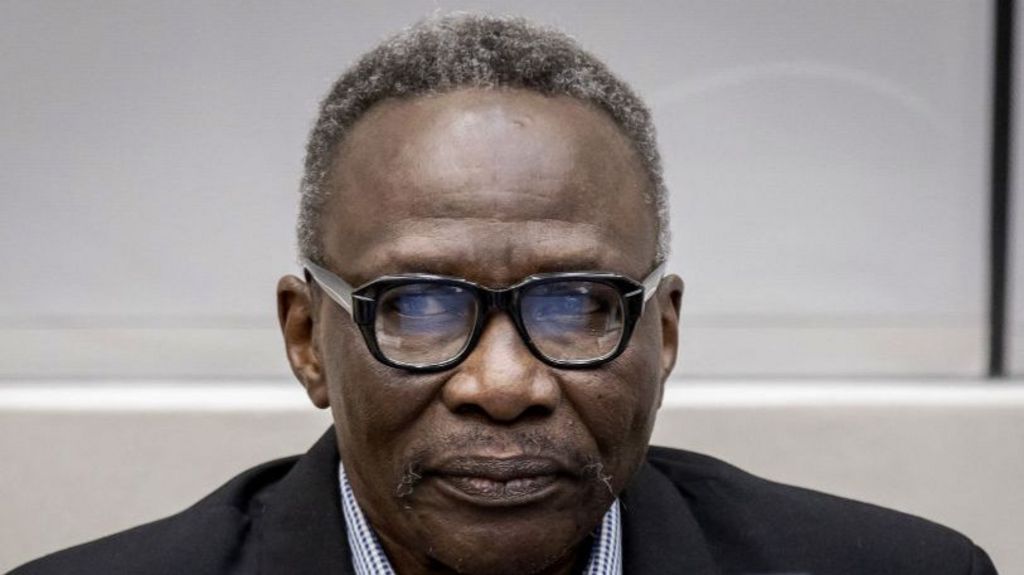
Sudan militia leader convicted of war crimes during Darfur war
Ali Muhammad Ali Abd-Al-Rahman, widely known as Ali Kushayb, has been found guilty of war crimes and crimes against humanity by the International Criminal Court (ICC). The verdict marks a historic moment as Kushayb becomes the first individual to be tried by the ICC for atrocities committed in Darfur, Sudan, over two decades ago. Kushayb led the Janjaweed, a government-backed militia notorious for its brutal campaign in Darfur, which resulted in the deaths of hundreds of thousands and widespread devastation. The conflict, which spanned from 2003 to 2020, is regarded as one of the most severe humanitarian crises in recent history. During the trial, survivors recounted harrowing experiences of village burnings, mass executions, sexual violence, and torture, all orchestrated under Kushayb’s leadership. The ICC judges convicted him on 27 counts, focusing on attacks carried out between 2003 and 2004. Despite Kushayb’s defense of mistaken identity, the court found overwhelming evidence of his pivotal role in the atrocities. The verdict has brought a sense of justice to Darfuris, many of whom waited outside the court in The Hague, Netherlands, to witness the ruling. However, the legacy of the Janjaweed persists, as many of its members have transitioned into the Rapid Support Forces (RSF), a paramilitary group now embroiled in Sudan’s ongoing civil war. The RSF has been accused by the UK, US, and human rights organizations of continuing ethnic cleansing against non-Arab communities in Darfur. Kushayb’s sentencing will be determined at a later date, but his conviction underscores the ICC’s commitment to holding perpetrators of grave crimes accountable.
-
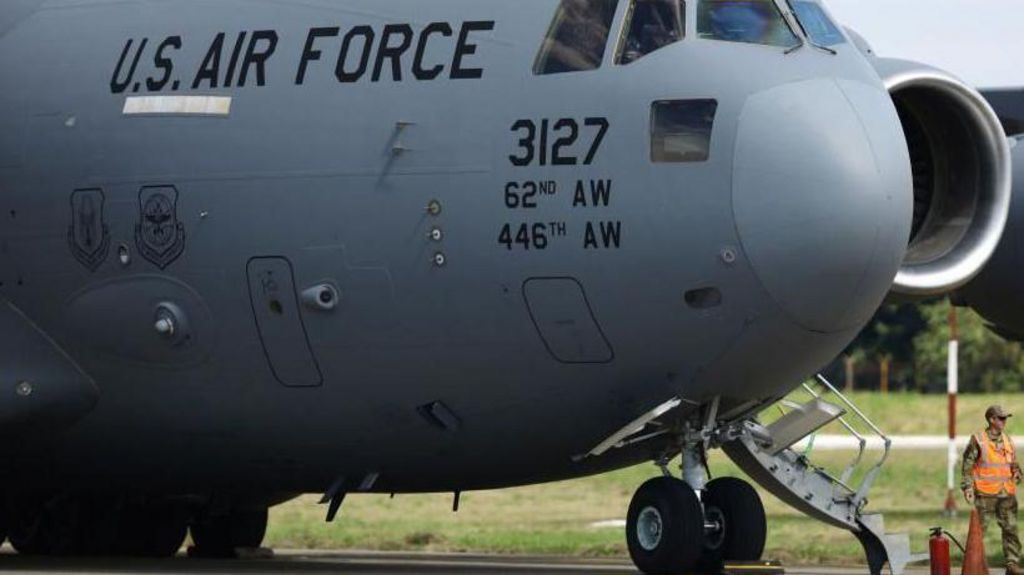
Eswatini accepts 10 US deportees despite legal challenge
The United States has deported a second group of 10 individuals to Eswatini, a small southern African nation, despite ongoing legal challenges from local rights groups. This move is part of the Trump administration’s stringent immigration policies, which have drawn significant criticism both domestically and internationally. Eswatini’s prison department confirmed that the deportees have been securely housed and pose no public threat. This follows an earlier deportation in July, where five individuals labeled by the U.S. government as ‘deprived monsters’ were sent to Eswatini. One of those deportees has since been repatriated to Jamaica, with two others expected to follow soon. The Eswatini government stated it had agreed to accept 11 deportees under a bilateral agreement with the U.S., though only 10 arrived, with no explanation provided for the discrepancy. The identities of the deportees remain undisclosed. The deportations have sparked legal action from the Southern African Litigation Centre (SALC) and other civil society groups, who argue that the agreement violates Eswatini’s constitution by bypassing parliamentary approval. Activists have also protested outside the U.S. embassy, condemning the deal as secretive and a setback for democracy. Meanwhile, neighboring South Africa has expressed concerns about the potential for deportees to cross its porous border. Eswatini, formerly known as Swaziland, is a landlocked monarchy ruled by King Mswati III since 1986. The case highlights broader tensions over U.S. immigration policies and their global implications.
-
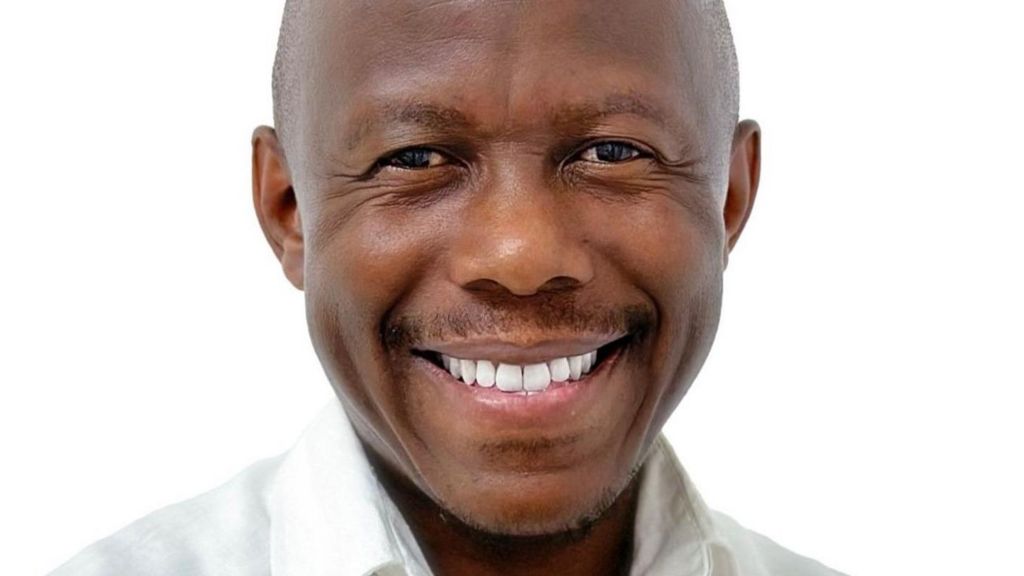
Tanzanian ex-ambassador and government critic abducted, family says
A former Tanzanian ambassador and vocal critic of the government, Humphrey Polepole, has reportedly been abducted under mysterious circumstances, according to his family. The incident allegedly took place in the early hours of Monday at his residence in Dar es Salaam. His younger brother, Godfrey Polepole, described the scene as harrowing, with the door broken, electric wires severed, and significant bloodstains evident. Disturbing videos of the incident have since circulated online. The family has formally reported the matter to the authorities. Dar es Salaam’s police chief, Jumanne Muliro, confirmed that the incident is under investigation but appeared skeptical, noting that Polepole often claimed to be abroad. National police spokesperson David Misime also acknowledged the reports and stated that an investigation is underway. Polepole resigned from his ambassadorial position earlier this year after publicly denouncing the government for what he perceived as a disregard for justice, the rule of law, and constitutional principles. His diplomatic status was subsequently revoked by President Samia Suluhu Hassan. This incident has sparked widespread concern, particularly in light of Tanzania’s recent warnings about social media use and the circulation of videos calling for military action.
-
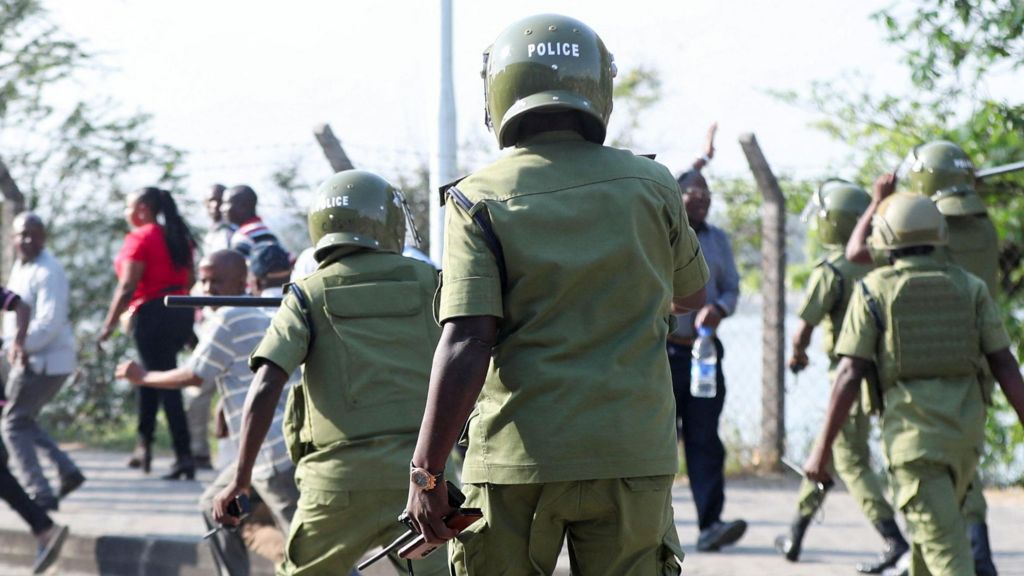
Tanzania issues social media warning after video calls for military ‘action’
Tanzanian authorities have issued stern warnings against the misuse of social media to disseminate misinformation, particularly in the wake of a viral video featuring an individual claiming to be a military officer criticizing the government. The video, which has been widely circulated, comes just three weeks before the country’s general elections, adding to the already tense political climate. The self-proclaimed ‘Capt Tesha’ from the air force accuses the government of corruption, human rights violations, and political interference within the military. He calls on military chief Jacob Mkunda to take action to unite the country and protect citizens’ rights, while also encouraging Tanzanians to demand their rights and stage demonstrations. The authenticity of the video remains unverified, as the military has not confirmed the identity of the individual, and the BBC has been unable to verify his claims. In response, the military has emphasized its commitment to maintaining professionalism and staying out of politics. Military spokesman Col Bernard Masala Mlunga stated that such content is often posted by individuals falsely claiming military affiliation or those dismissed for misconduct. Meanwhile, Tanzanian police have warned that sharing ‘criminal and inflammatory’ information on social media is a punishable offense, vowing to track down and prosecute those responsible. Opposition activists have seized on the video, interpreting it as a sign of military support for their cause. The political environment remains fraught, with President Samia Suluhu Hassan seeking re-election under the ruling Chama Cha Mapinduzi (CCM) party. The main opposition party, Chadema, has been barred from participating in the elections, and its leader, Tundu Lissu, remains detained on treason charges that human rights groups allege are politically motivated. Critics of the government have increasingly faced repression, raising concerns about the fairness and transparency of the upcoming elections. Civil society groups and journalists have also reported heightened government control over media and public gatherings, further intensifying the political tension.
-
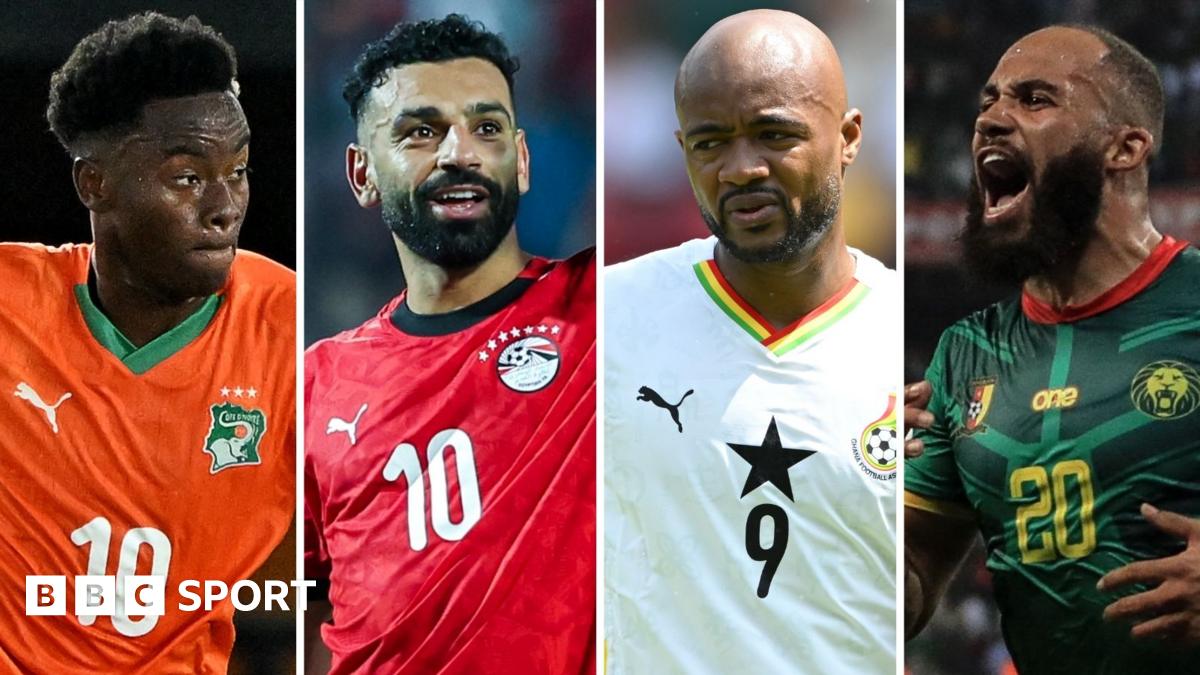
Who can still claim Africa’s spots at 2026 World Cup?
The race for the 2026 FIFA World Cup spots in Africa is heating up as the group stage of the qualifiers approaches its climax. With seven places available, the competition is fierce, and only the nine group winners are guaranteed a spot in the expanded 48-team tournament. Morocco and Tunisia have already secured their places, while other teams are fighting tooth and nail to join them. Cape Verde is on the verge of making history with their first-ever World Cup appearance, needing just one more victory. Egypt and Algeria are also in strong positions, with three points from their next two games likely securing their spots. The four best-ranked second-placed teams will enter play-offs next month, with the winners getting another chance to qualify via an intercontinental route. Continental heavyweights like Cameroon and Nigeria are in danger of missing out, adding to the drama. Egypt has a five-point lead over Burkina Faso and is expected to secure qualification with a win against Djibouti. Burkina Faso, Senegal, and DR Congo are also in the mix, with Senegal holding a one-point lead in Group B. South Africa’s chances took a hit after FIFA ruled they fielded an ineligible player, turning a 2-0 win into a 3-0 forfeit. Cape Verde’s shock victory over Cameroon has put them in a strong position, while Morocco has already qualified with two games to spare. Ivory Coast, Gabon, Algeria, and Tunisia are also in strong positions, with Ghana leading their group. The final rounds of qualifiers promise to be thrilling, with much still to be decided.
-
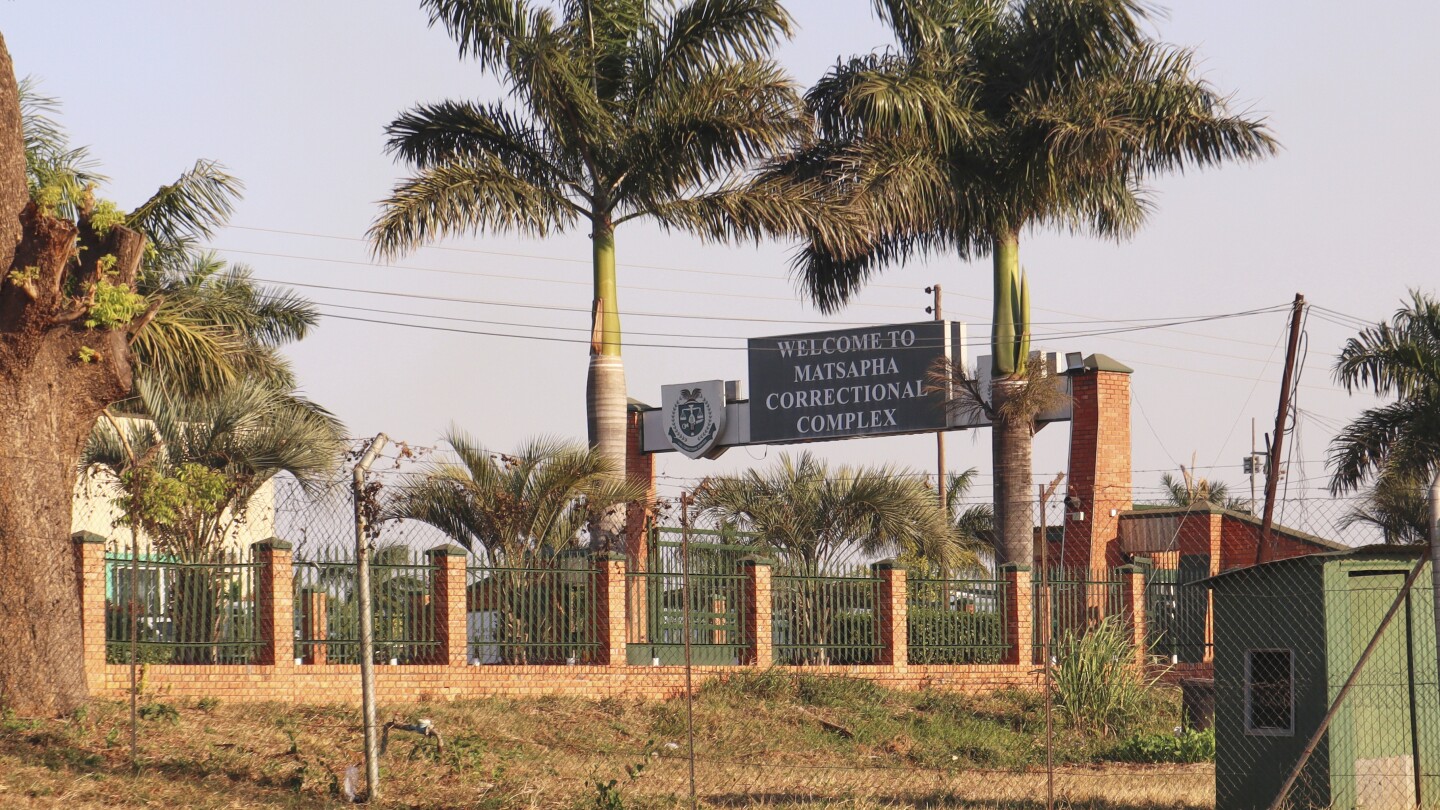
10 more deportees from the US arrive in the African nation of Eswatini
In a contentious move, a group of 10 migrants deported from the United States arrived in the African nation of Eswatini early Monday, according to local authorities. This marks the latest wave of deportations under a controversial program initiated by the Trump administration, which has struck largely undisclosed agreements with at least five African nations to accept migrants under its third-country deportation initiative. Rights groups and activists have vehemently opposed the program, citing concerns over due process and humane treatment.