标签: Africa

非洲

  • Treason trial of South Sudan’s suspended VP is further eroding peace deal, UN experts say

    Treason trial of South Sudan’s suspended VP is further eroding peace deal, UN experts say

    United Nations experts have issued a stark warning that the ongoing treason trial of South Sudan’s suspended Vice President Riek Machar is severely undermining the 2018 peace agreement between Machar and President Salva Kiir. The UN panel’s report reveals that military forces from both factions continue to engage in confrontations across the country, creating conditions ripe for renewed major conflict.

    The political landscape has dramatically shifted since the signing of the peace accord, with years of neglect fragmenting government and opposition forces into a complex patchwork of uniformed soldiers, defectors, and armed community defense groups. These factions are increasingly preoccupied with local struggles rather than national reconciliation efforts.

    UN Peacekeeping Chief Jean-Pierre Lacroix recently informed the Security Council that South Sudan’s crisis is rapidly escalating, describing a visible ‘breaking point’ with time running ‘dangerously short’ to salvage the peace process. The situation marks a troubling development for the oil-rich nation that gained independence from Sudan in 2011 after prolonged conflict, only to descend into civil war in 2013 along ethnic divisions between Kiir’s Dinka supporters and Machar’s Nuer loyalists.

    The 2018 agreement that ended the civil war—which claimed over 400,000 lives—established a unity government but has suffered from sluggish implementation. The already delayed presidential election is now scheduled for December 2026.

    Tensions dramatically escalated in March when a Nuer militia seized an army garrison, prompting Kiir’s government to charge Machar and seven other opposition figures with treason, murder, terrorism, and other crimes. While Kiir’s administration maintains that peace agreement implementation continues unaffected through an opposition faction led by Stephen Par Kuol, those siding with Machar’s former deputy Natheniel Oyet have been largely removed from positions and forced to flee the country.

    The African Union, regional countries, and the Intergovernmental Authority on Development (IGAD) have unanimously called for Machar’s release and emphasized strong support for the 2018 agreement’s full implementation. Meanwhile, the humanitarian situation continues deteriorating, with latest assessments indicating 7.7 million people—57% of the population—facing crisis-level food insecurity and famine conditions in communities most affected by renewed fighting.
  • Eritrea quits regional bloc as tensions rise with Ethiopia

    Eritrea quits regional bloc as tensions rise with Ethiopia

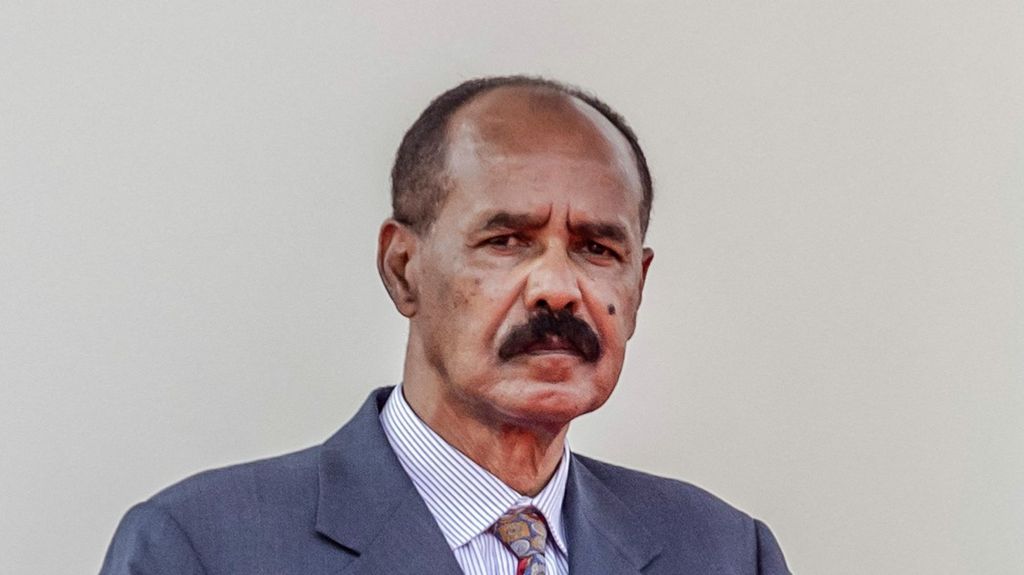
    Eritrea has formally announced its withdrawal from the Intergovernmental Authority on Development (IGAD), condemning the regional bloc for deviating from its foundational principles and transforming into a political instrument against member states. The Eritrean Ministry of Foreign Affairs issued a statement on Friday declaring that the organization no longer serves its strategic interests or contributes meaningfully to regional stability.

    This decisive move occurs against the backdrop of intensifying diplomatic friction between Eritrea and neighboring Ethiopia, raising concerns about potential military escalation. The two nations share a tumultuous history marked by deadly border conflicts and fragile peace agreements.

    IGAD, established to foster economic cooperation, food security, and political stability across East Africa, includes member states Ethiopia, Kenya, Sudan, South Sudan, Uganda, and Djibouti. In response to Eritrea’s withdrawal, IGAD officials noted that Asmara had failed to participate actively in bloc activities since rejoining in 2023 and had not contributed substantive proposals for institutional reform.

    The current tensions stem primarily from Ethiopian Prime Minister Abiy Ahmed’s renewed demands for Red Sea access through Eritrean territory. These claims have provoked strong reactions from Asmara, particularly as Ethiopian officials have controversially questioned Addis Ababa’s recognition of Eritrean independence. Eritrea gained sovereignty from Ethiopia in 1993 after a prolonged independence struggle, rendering Ethiopia landlocked.

    Historical context underscores the gravity of present developments: Abiy received the 2019 Nobel Peace Prize for reconciling with Eritrean President Isaias Afwerki following a two-decade border war that claimed over 100,000 lives. However, Eritrea has consistently accused IGAD of bias toward Ethiopia in regional disputes and alleged Western-backed conspiracies to destabilize the nation.

    Further complicating regional dynamics, Eritrea maintains severed diplomatic relations with Djibouti—host to IGAD headquarters—since their 2008 border clash. The appointment of former Ethiopian Foreign Minister Workneh Gebyehu as IGAD’s executive secretary has additionally fueled Eritrean suspicions regarding the bloc’s impartiality.

    Analysts note that IGAD faces broader criticism for its ineffective response to multifaceted crises in the Horn of Africa, where civil conflicts, terrorism, and interstate confrontations continue to challenge regional security architecture.

  • Building under construction collapses on temple in South Africa, leaving 1 dead

    Building under construction collapses on temple in South Africa, leaving 1 dead

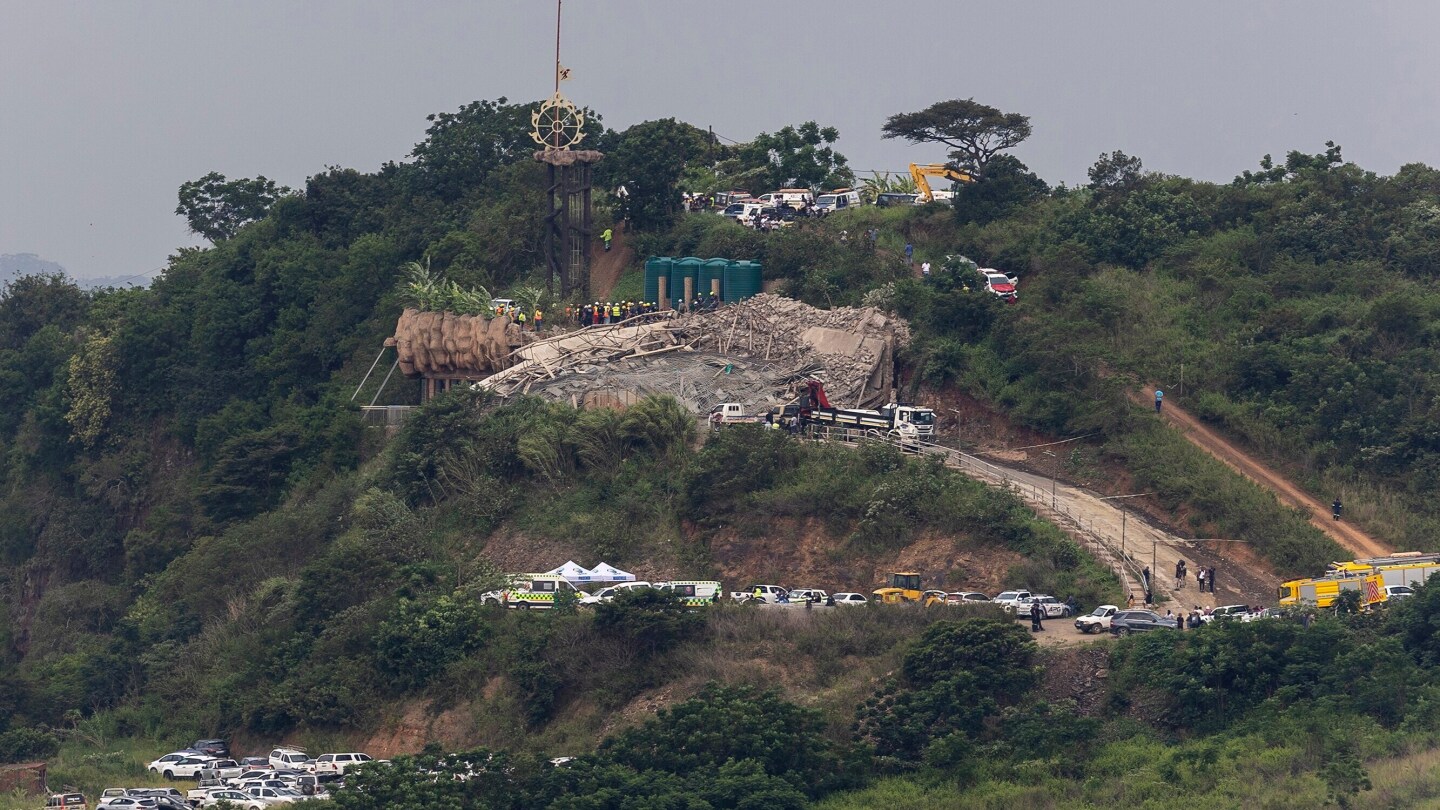
    VERULAM, South Africa — A multistory expansion project atop a Hindu temple collapsed violently on Friday in this eastern South African town, resulting in one confirmed fatality and leaving multiple individuals trapped beneath concrete rubble. The incident has triggered a complex rescue operation amid growing concerns about illegal construction practices.

    Local authorities from EThekwini Municipality confirmed the structural failure occurred north of Durban, revealing that preliminary investigations indicate the construction lacked approved building plans. Municipal officials characterized the structure as illegally under development at the time of the collapse.

    Emergency response teams reported at least eight injured individuals transported to medical facilities, though the exact number of trapped victims remains unverified. Prem Balram of Reaction Unit South Africa, a private emergency response organization, indicated initial reports suggested six people remained buried beneath the debris, though official numbers await confirmation.

    Disturbing accounts emerged of trapped victims using mobile phones to communicate their locations to family members, who then relayed information to rescue crews. The identity of those trapped—whether construction workers, temple worshippers, or both—remains uncertain according to Balram, who noted one of the temple proprietors might be among the entrapped.

    The collapsed structure, described as a three-to-four story extension to the existing temple, presented rescuers with what Balram characterized as a ‘mammoth task’ due to the instability of the remaining structure. Situated atop a hill overlooking a ranch, the site now displays grotesque tangles of twisted metal support beams, shattered concrete pillars, and massive rubble mounds where the building once stood.

    This tragedy echoes another recent construction disaster in South Africa, where over 30 workers perished in a building collapse in George along the country’s southern coast just last year. That incident, subsequently attributed to design deficiencies, substandard materials, and gross negligence, prompted weeks of rescue efforts and eventual criminal investigations.

    Multiple emergency response agencies, including both municipal teams and private organizations, coordinated efforts at the Verulam site as operations continued through Friday.

  • RSF commander linked by BBC Verify to Sudan massacre sanctioned in UK

    RSF commander linked by BBC Verify to Sudan massacre sanctioned in UK

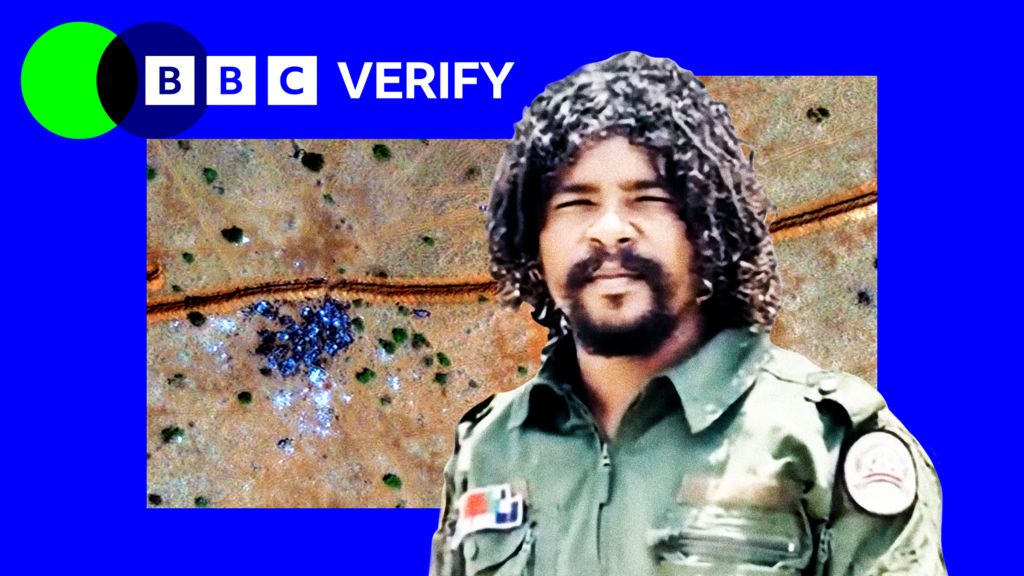
    The United Kingdom has imposed severe sanctions on Brigadier General Al-Fateh Abdullah Idris, a Sudanese paramilitary commander widely known as Abu Lulu, following a BBC Verify investigation that exposed his direct involvement in the el-Fasher massacre. Video evidence confirmed by BBC Verify shows Abu Lulu executing at least ten unarmed captives with an assault rifle following the Rapid Support Forces’ (RSF) capture of the city in late October.

    The UK Foreign Office has additionally sanctioned three other high-ranking RSF commanders: deputy leader Abdul Rahim Hamdan Dagalo (already under EU sanctions), Gedo Hamdan Ahmed, and Tijani Ibrahim Moussa Mohamed. These individuals stand accused of orchestrating ‘heinous’ acts including mass killings, systematic sexual violence, and deliberate targeting of civilians. All face comprehensive travel bans and asset freezes.

    UK Foreign Secretary Yvette Cooper condemned the atrocities in Sudan as ‘a scar on the conscience of the world,’ vowing that such crimes ‘cannot, and will not, go unpunished.’ The sanctions announcement coincided with a £21 million aid package for civilians affected by the conflict, providing essential food, shelter, and medical services.

    The el-Fasher massacre represents one of the most brutal chapters in Sudan’s ongoing civil war, which erupted over two years ago following the collapse of the fragile ruling coalition between the RSF and the national army. The conflict has resulted in hundreds of thousands of deaths and displaced millions. El-Fasher, the army’s final major stronghold in Darfur—the RSF’s traditional operational base—endured a protracted siege characterized by extreme brutality. BBC Verify documented RSF tactics including detention and torture of supply smugglers and construction of massive sand barriers to prevent civilian escape.

    Satellite imagery from Yale University’s Humanitarian Research Lab revealed piles of bodies and mass graves throughout el-Fasher following the RSF takeover. In a subsequent public relations move, RSF leader Gen Mohamed ‘Hemedti’ Dagalo acknowledged troop ‘violations’ and announced investigations. Abu Lulu was briefly shown in a staged arrest video on RSF’s Telegram channel, though his current status remains unknown. His TikTok account, previously featuring propaganda content, was removed in October following BBC Verify’s inquiries.

    The UK’s sanctions follow similar actions by the United States two days prior, targeting networks allegedly recruiting Colombian mercenaries for the Sudanese conflict. The US Treasury Department reported hundreds of Colombian fighters have joined the RSF as infantry and drone pilots since 2024. President Donald Trump recently pledged to address ‘tremendous atrocities’ in Sudan through coordinated efforts with Egypt, Saudi Arabia, and the UAE.

  • Attacks by insurgents in Mozambique are compounding a displacement crisis, especially for children

    Attacks by insurgents in Mozambique are compounding a displacement crisis, especially for children

    A severe humanitarian emergency is unfolding in northern Mozambique as Islamic State-affiliated militants intensify their violent campaign, creating a massive displacement crisis with particularly devastating consequences for children. Recent weeks have witnessed a surge in attacks characterized by extreme brutality, including civilian beheadings, village burnings, and systematic targeting of communities across multiple provinces.

    The United Nations reports that November alone saw more than 100,000 people forcibly displaced from their homes, with approximately 70,000 being children according to UNICEF estimates. Many children have become separated from their families during the chaos, with some undertaking perilous journeys of five to six days alone to reach safety.

    This latest wave of displacement adds to an already catastrophic situation, bringing the total number of displaced persons to approximately 1.3 million since the insurgency began in 2017 in Cabo Delgado province. The militant group, identified as Islamic State-Mozambique by U.S. intelligence assessments, operates as an autonomous branch of the global terrorist network with an estimated 300 fighters seeking to impose sharia law.

    The insurgency gained international attention in 2021 when militants launched a sustained assault on the coastal town of Palma, resulting in numerous casualties and forcing French energy conglomerate Total to suspend a landmark $20 billion liquefied natural gas project—a crucial development initiative for Mozambique’s economy that is believed to have been a primary target.

    While initially concentrated in Cabo Delgado, the conflict has now expanded into neighboring Nampula and Niassa provinces, creating a broader regional security challenge. According to data from Armed Conflict Location and Event Data, the violence has claimed over 6,300 lives, including 2,700 civilians.

    Humanitarian organizations describe a system pushed to its absolute limits, with inadequate resources to address the overwhelming needs for food, water, shelter, and healthcare. Compounding the crisis, northern Mozambique faces additional environmental challenges including cyclones from the Indian Ocean—four of which have struck in the past year—following a severe drought in 2024.

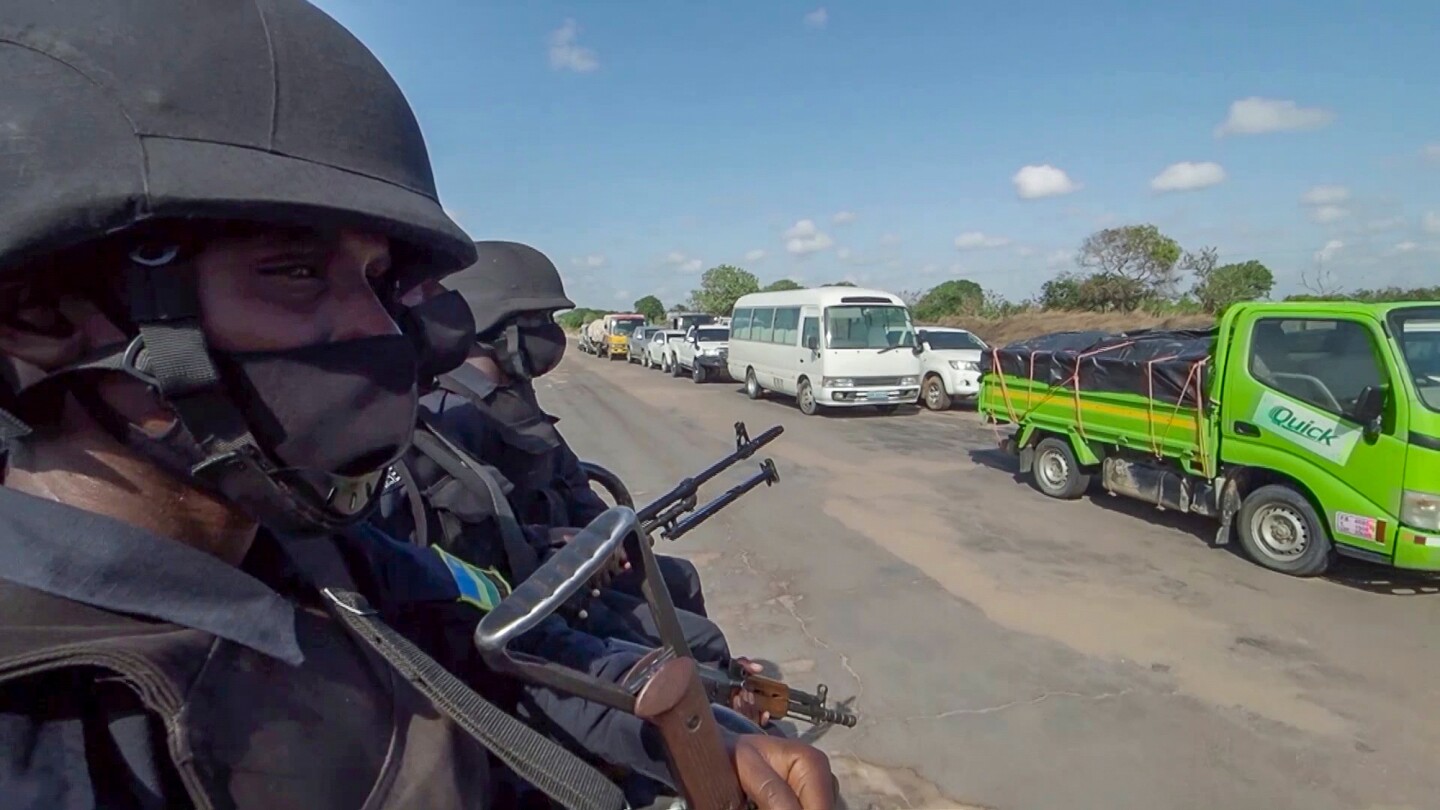
    UN officials characterize the situation as reaching a ‘breaking point,’ with children comprising 67% of the displaced population and facing particular vulnerabilities including abduction, recruitment by militants, gender-based violence, and severe psychological trauma. Despite ongoing military assistance from Rwanda, the Mozambican government has struggled to contain the insurgency, leaving countless civilians in desperate circumstances with limited prospects for safety or stability.

  • Six players to watch at Afcon 2025

    Six players to watch at Afcon 2025

    The 35th edition of the Africa Cup of Nations (AFCON) is poised to kick off in Morocco on December 21st, culminating with the final in Rabat on January 18th. This prestigious tournament returns to North African soil for the first time since 1976, creating a compelling backdrop for both established superstars and emerging talents to showcase their abilities on the continental stage.

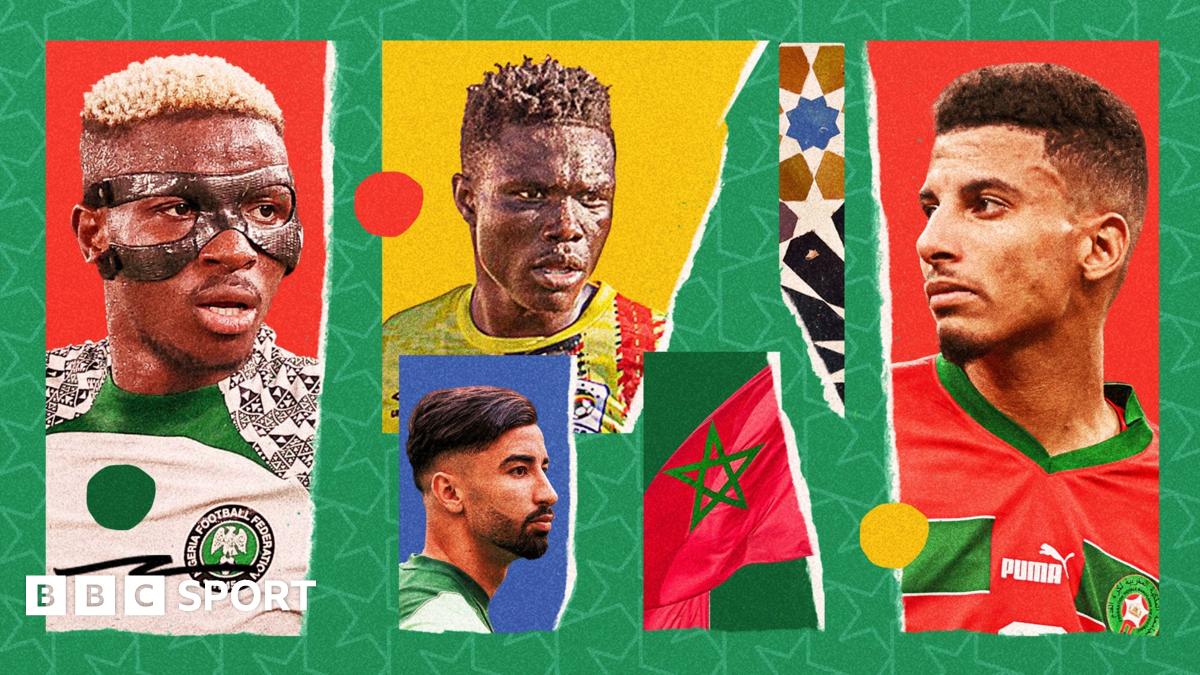
    Host nation Morocco enters the competition with heightened expectations but faces potential adversity as captain Achraf Hakimi, the reigning African Footballer of the Year, battles fitness concerns. Should Hakimi be unavailable, creative responsibility may fall to midfield orchestrator Azzedine Ounahi. The 25-year-old Girona playmaker, a product of Morocco’s esteemed Mohammed VI Academy, has rediscovered his exceptional form after a challenging period at Marseille, emerging as a potential linchpin for the Atlas Lions in Group A encounters against Comoros, Mali, and Zambia.

    Algeria’s attacking prospects have been significantly enhanced by the remarkable emergence of Mohamed Amoura. The Wolfsburg striker has delivered an extraordinary international scoring record with 11 goals in just eight appearances since March, establishing himself as a perfect complementary force to veteran leader Riyad Mahrez. Despite his modest stature, Amoura’s aerial prowess makes him a multifaceted threat that Group E opponents Sudan, Burkina Faso, and Equatorial Guinea must diligently contain.

    Nigeria’s championship aspirations appear intrinsically linked to the form and fitness of talismanic striker Victor Osimhen. Statistical evidence reveals the Super Eagles’ profound dependence on the Galatasaray forward, having secured merely four points from fifteen available during his absence in World Cup qualifying. Described by teammates as operating on “another level,” Osimhen’s performance will be pivotal against Group C adversaries Tanzania, Uganda, and Tunisia.

    Senegal, the 2021 champions, continue to benefit from the established excellence of Sadio Mané while integrating promising new talent. Seventeen-year-old sensation Ibrahim Mbaye has generated substantial excitement following his record-breaking debut for the Teranga Lions, becoming the nation’s youngest ever goalscorer. The Paris Saint-Germain prospect, who recently started against Barcelona in the Champions League, represents the exciting future of Senegalese football as they navigate Group D matches against Botswana, DR Congo, and Benin.

    Uganda’s return to AFCON after a six-year absence features the dynamic talents of Rogers Mato. The 22-year-old winger has demonstrated exceptional form for both club and country, scoring spectacular goals during qualification and emerging as a joint-top scorer in North Macedonia’s domestic league. His creative influence will be essential against formidable Group C opponents including Nigeria and Tunisia.

    Historical achievement marks Mozambique’s campaign, with Sunderland defender Reinildo becoming the nation’s first Premier League representative. The 31-year-old left-back’s leadership and top-flight experience provide newfound credibility to a squad seeking their first-ever knockout stage appearance against Group F powerhouses Ivory Coast, Cameroon, and Gabon.

  • Ghanaian influencer charged with scamming elderly Americans

    Ghanaian influencer charged with scamming elderly Americans

    Ghanaian social media personality Frederick Kumi, widely known by his online alias Abu Trica, has been taken into custody following allegations of masterminding an elaborate romance scam that defrauded elderly American victims of more than $8 million. The sophisticated operation utilized artificial intelligence to fabricate convincing digital personas that targeted vulnerable seniors through social platforms and dating websites.

    United States prosecutors detailed how Kumi and his associates built emotional connections with victims through sustained intimate communication across various digital channels before fabricating emergency scenarios to solicit funds. These fabricated crises included fabricated medical emergencies, travel expenses, and fraudulent investment opportunities. The illicit proceeds were then funneled through accomplices posing as third-party intermediaries.

    The 31-year-old influencer, who also operated under the name Emmanuel Kojo Baah Obeng, drew suspicion through his conspicuous display of luxury vehicles, substantial cash, and premium properties to his extensive Instagram following exceeding 100,000 followers. His online ostentation eventually triggered investigations into the legitimacy of his wealth sources.

    Kumi now faces serious charges in the U.S. judicial system, including conspiracy to commit wire fraud and money laundering conspiracy. If convicted on all counts, he potentially faces a maximum sentence of 20 years imprisonment. Following a coordinated international operation between Ghanaian and American authorities, his extradition to the United States is now being pursued.

    This case represents part of a broader transatlantic crackdown on financial crimes targeting elderly Americans. The prosecution is proceeding under the U.S. Elder Abuse Prevention and Prosecution Act, reflecting increased focus on protecting vulnerable demographics from organized fraud networks. Recent months have seen several similar extraditions and convictions, including a Ghanaian national known as Dada Joe Remix and Nigerian national Oluwaseun Adekoya, who received a 20-year sentence for comparable money laundering activities.

  • Kunming fund enhances global biodiversity efforts

    Kunming fund enhances global biodiversity efforts

    Global environmental leaders have hailed the Kunming Biodiversity Fund as a transformative force in advancing worldwide conservation initiatives, particularly across developing nations. Established by China in May 2024 with a substantial commitment of 1.5 billion yuan ($213 million), this international financing mechanism is rapidly scaling up biodiversity protection projects worldwide.

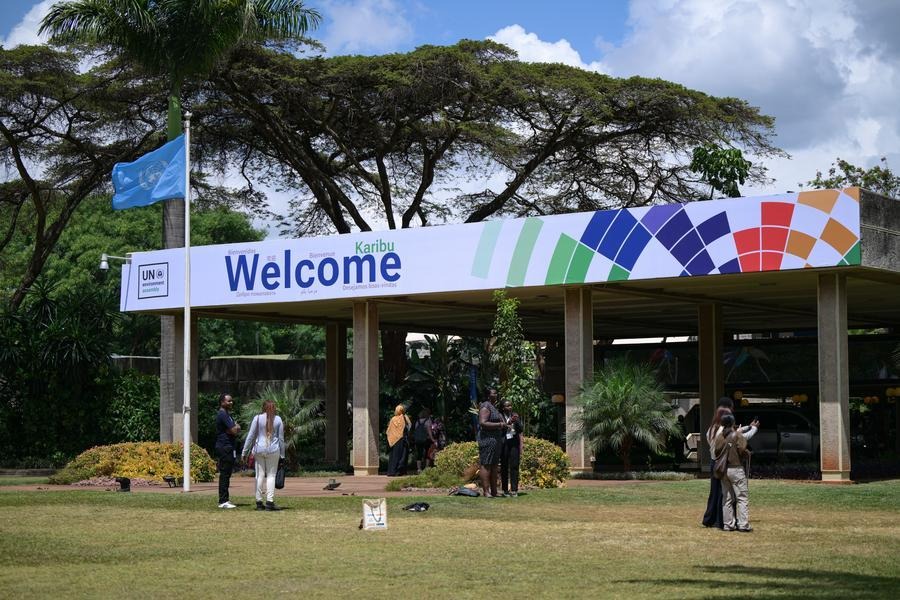
    At the recent seventh session of the United Nations Environment Assembly in Nairobi, Kenya, Elizabeth Mrema, deputy executive director of the UN Environment Programme, revealed the fund’s significant progress. The initiative has established an Independent Technical Advisory Group, launched calls for catalytic and full-size projects, and implemented operational manuals to ensure consistency and efficiency in its conservation efforts.

    The fund addresses a critical financing gap hindering implementation of the Kunming-Montreal Global Biodiversity Framework adopted in 2022. In a major development last October, the initiative endorsed 22 comprehensive projects valued at $27 million, supporting biodiversity action across 34 countries. These projects are translating global commitments into tangible national actions through policy strengthening, capacity building, and resource mobilization.

    Steven Victor, Environment Minister of Palau, emphasized the fund’s importance for Pacific Island nations facing unique challenges. “Food system transformation is critical for Palau, where we import 80 percent of our food,” Victor noted. He expressed hope that the project would provide scientific foundation and expertise needed to restore traditional connections with nature while addressing modern conservation needs.

    Sri Lanka’s Environment Minister Dammika Patabendi highlighted how the fund will support creation of a unified national biosecurity system to proactively address invasive species. “This investment is transformative,” Patabendi stated, explaining that it will institutionalize a comprehensive framework for invasive species prevention and establish a national digital monitoring system for real-time response capabilities.

    China’s Vice-Minister of Ecology and Environment Guo Fang reiterated the fund’s role in advancing global biodiversity governance and supporting developing countries in achieving 2030 conservation targets. The initiative represents China’s commitment to multilateralism and building a shared future for humanity, while playing a leading role in narrowing the global biodiversity financing gap.

  • About 200 West African soldiers in Benin for ‘clean-up’ after failed coup

    About 200 West African soldiers in Benin for ‘clean-up’ after failed coup

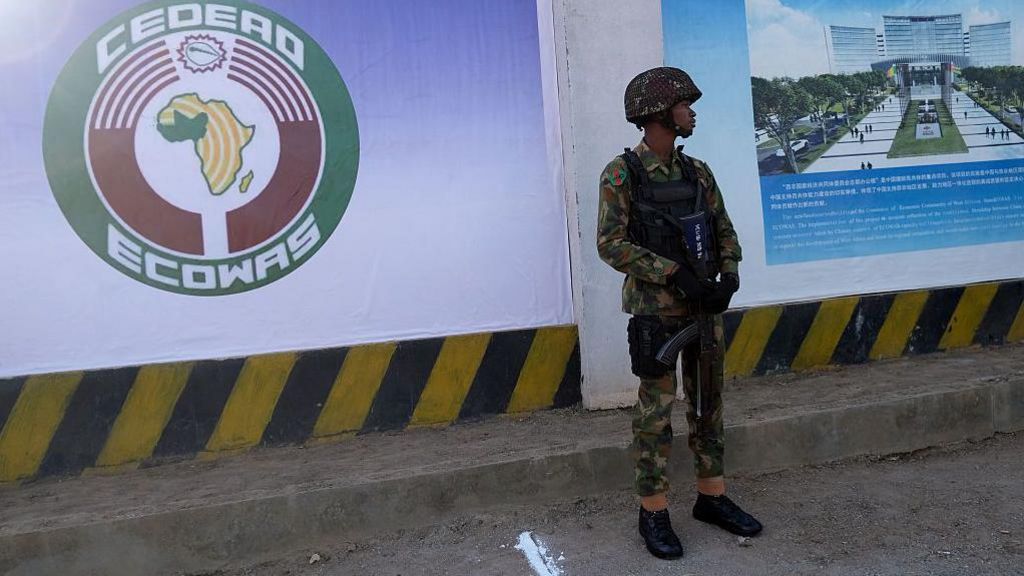
    Benin’s government has officially confirmed the presence of approximately 200 West African soldiers within its borders following Sunday’s thwarted coup attempt. Foreign Minister Olushegun Adjadi Bakari disclosed that these regional forces, primarily from Nigeria and Ivory Coast, remain engaged in “sweep and clean-up operations” to stabilize the nation.

    The failed takeover unfolded when mutineers seized a military base and state television headquarters before Nigerian fighter jets intervened decisively. This military support, coordinated through the Economic Community of West African States (ECOWAS), enabled Beninese forces to repel the insurgents with surgical precision to minimize civilian casualties.

    Minister Bakari, speaking alongside Nigerian counterpart Yusuf Maitama Tuggar in Abuja, emphasized that the coup had “already failed” before international assistance was formally requested. The collaborative response demonstrated unprecedented diplomatic and military coordination between neighboring nations.

    Security operations continue as the alleged coup leader remains at large, reportedly seeking refuge in neighboring Togo. The rebels had justified their actions by criticizing President Patrice Talon’s management of security challenges in northern Benin, where jihadist insurgencies from Niger and Burkina Faso have increasingly threatened stability.

    ECOWAS, facing regional pressure after multiple successful coups in West Africa, has signaled strengthened commitment to protecting democratic governance. The bloc deployed troops from Nigeria, Ghana, Sierra Leone, and Ivory Coast to secure critical infrastructure and prevent violence resurgence.

    Discussions regarding the duration of regional forces’ presence remain ongoing, with Bakari noting any decisions will prioritize coordination with Beninese defense forces who demonstrated considerable bravery during the crisis. The potential continued involvement of French special forces, who reportedly assisted loyalist troops, remains unconfirmed.

    President Talon, a Western ally completing his second term, is scheduled to leave office next year with elections anticipated in April.

  • Ethiopia arrests ‘indecently’ dressed TikTok stars after awards ceremony

    Ethiopia arrests ‘indecently’ dressed TikTok stars after awards ceremony

    Ethiopian authorities have detained a sixth prominent TikTok creator amid a widening crackdown on social media influencers accused of violating the country’s cultural norms through their attire at a public event. The latest arrest targets Adonay Berhane, a 25-year-old motivational content creator with nearly four million followers who recently received “TikToker of the Year” honors at the very ceremony now embroiled in controversy.

    The arrests have sparked intense debate across Ethiopian social media platforms, creating a clear division between proponents of creative expression and defenders of traditional values. Those detained include Wongelawit Gebre Endrias (known online as Evan), a fashion influencer who attended the event braless beneath an oversized blazer, and Yohannes Mekonnen (Jahnny), a dancer who carried a man-bag while accepting his video production award.

    Federal police confirm all six influencers remain under investigation for allegedly promoting behavior that undermines public morality. Authorities have expressed particular concern about the growing influence of international digital trends on Ethiopian youth, warning of further action against anyone perceived to be violating the nation’s cultural values or promoting what they term “shallow culture.

    The government has maintained official silence on the matter, while family members have expressed shock at the detentions. Adonay’s mother, Abeba Gebru, described her son as an “example to Ethiopian youth” and her personal “backbone” in comments to BBC Tigrinya.

    This incident highlights the escalating tension between Ethiopia’s rapidly expanding digital landscape—with over eight million social media users—and its deep-rooted cultural conservatism. The case represents a significant test case for how traditional societies navigate the globalizing influence of social media platforms and their content creators.