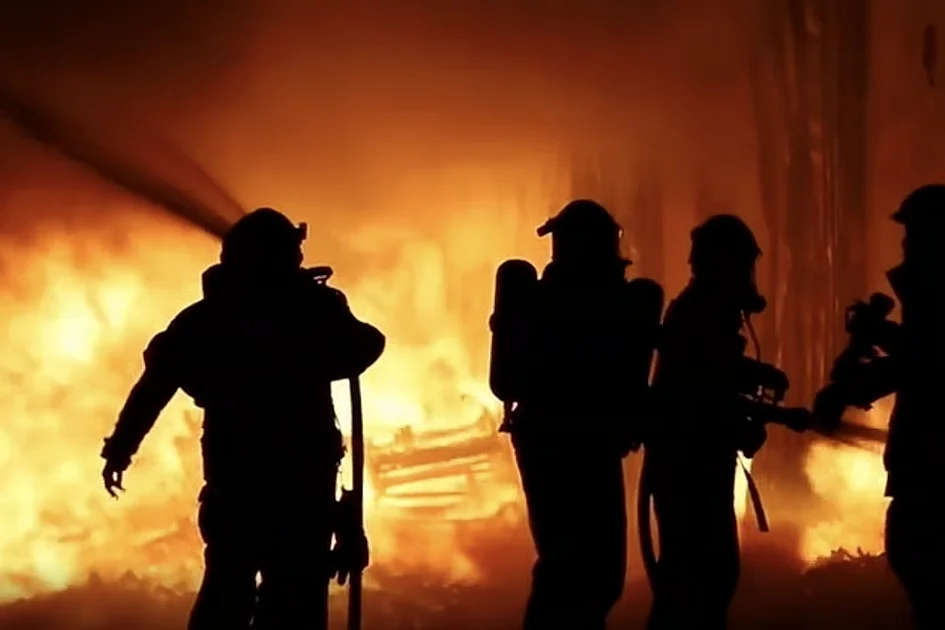
A significant fire erupted in the Musaffah Industrial Area of Abu Dhabi on the evening of Tuesday, October 28, 2025, prompting an immediate response from local authorities. Abu Dhabi Police, in collaboration with the Abu Dhabi Civil Defence Authority, swiftly mobilized to combat the blaze, which had engulfed several commercial shops. Through coordinated efforts, the fire was successfully brought under control, and subsequent cooling and smoke extraction operations were initiated to ensure the area’s safety. Authorities confirmed that no injuries or casualties were reported during the incident. In a statement shared on social media platform X, officials urged residents to rely solely on official government sources for accurate information. This incident follows a similar fire in the same industrial area last month, which was also promptly managed by emergency teams. The quick and efficient response highlights the preparedness and effectiveness of Abu Dhabi’s emergency services in handling such crises.
标签: Africa
非洲
-
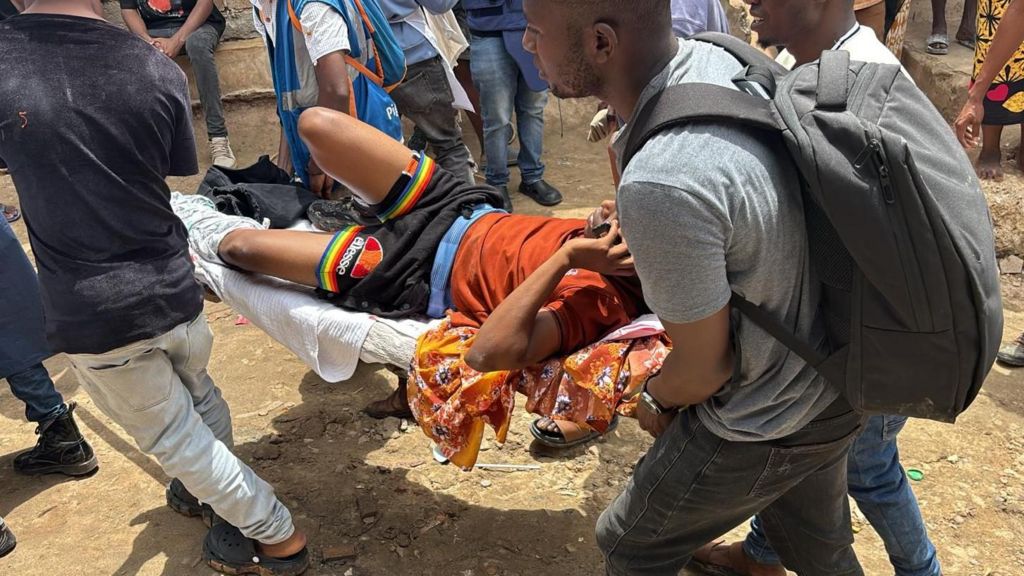
Police fire teargas as protests erupt during Tanzania election
Tanzania’s general election has been overshadowed by controversy, as opposition supporters took to the streets of Dar es Salaam to protest against what they claim is an undemocratic process. Police responded by firing tear gas to disperse the crowds, resulting in several injuries. The election, widely expected to secure a second term for President Samia Suluhu and her ruling party, Chama Cha Mapinduzi (CCM), has been boycotted by the main opposition party, whose leader is currently jailed on treason charges. Reports indicate low voter turnout in Dar es Salaam, with many citizens expressing concerns over safety. Despite assurances from police that there is no threat to public safety, the atmosphere remains tense. Over 37 million registered voters are eligible to cast ballots in the presidential and parliamentary elections, but the absence of significant opposition has led critics to label the process as a ‘coronation rather than a contest.’ Rights groups, including Amnesty International, have condemned the government for alleged repression, citing enforced disappearances, torture, and extrajudicial killings of opposition figures. The government has denied these claims, insisting the election is free and fair. President Samia, Tanzania’s first female president, initially gained praise for easing political repression but has since faced criticism for narrowing the political space and targeting critics. The electoral body is expected to announce results within three days.
-
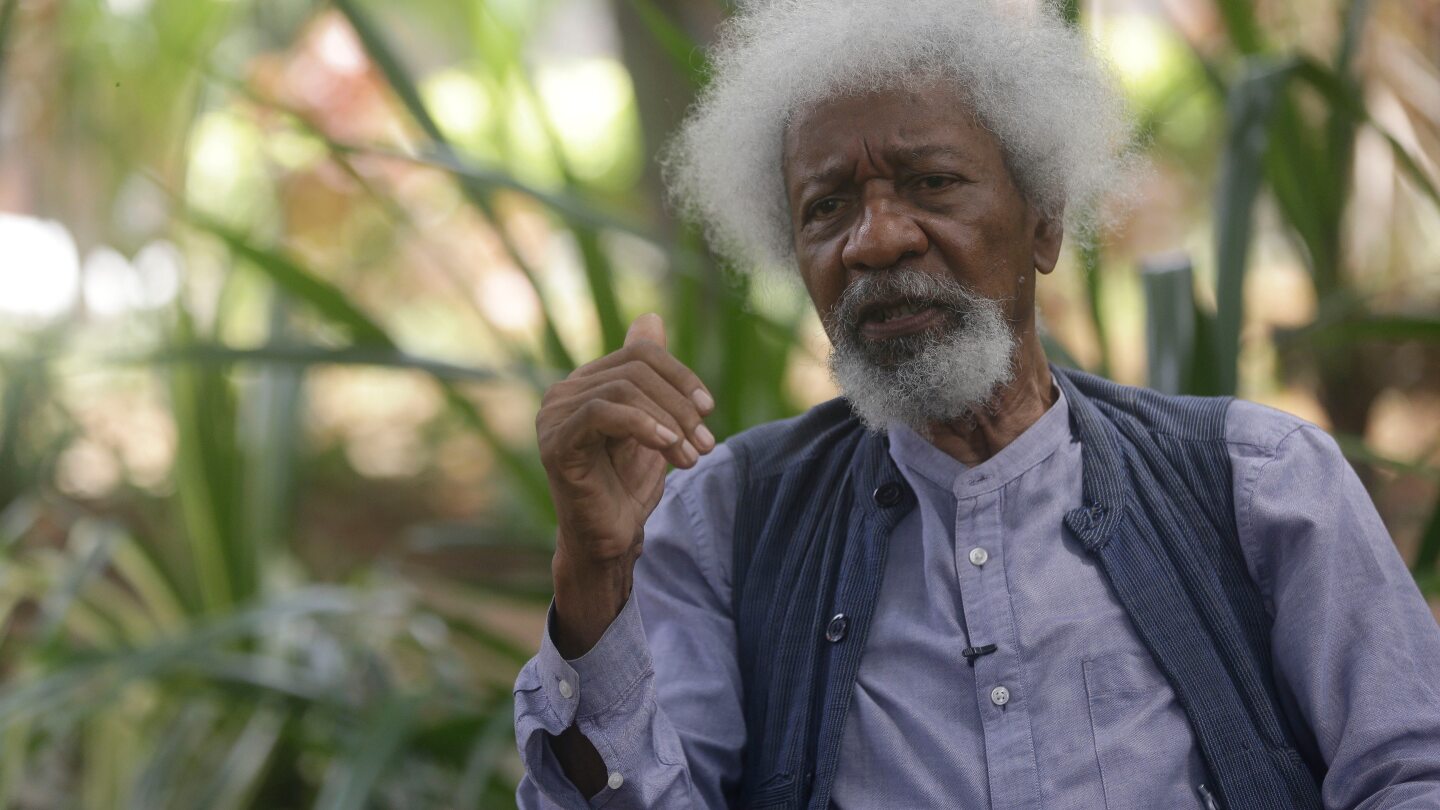
Nigeria’s Nobel-winning author Wole Soyinka says his US visa was revoked
Renowned Nigerian author and Nobel Prize laureate Wole Soyinka revealed on Tuesday that his non-resident visa to the United States had been revoked, suggesting that his recent criticism of former U.S. President Donald Trump might be the reason behind the decision. Soyinka, who became the first African to win the Nobel Prize in Literature in 1986, expressed his belief that the visa denial was less about him personally and more a reflection of broader U.S. immigration policies. The 91-year-old author, who has previously held a green card and taught in the U.S., humorously recounted how his green card ‘had an accident’ eight years ago when he destroyed it in protest of Trump’s inauguration. Soyinka stated that he has no intention of reapplying for a visa, emphasizing the principle of human dignity. The U.S. Consulate in Lagos referred inquiries to the State Department, which has yet to comment on the matter.
-

Holders Nigeria lead qualifiers for 2026 Wafcon
Malawi and Cape Verde have secured their first-ever appearances at the Women’s Africa Cup of Nations (Wafcon) after impressive performances in the qualifying rounds. Malawi’s national team, known as the Scorchers, triumphed over Angola with a 2-0 aggregate victory, thanks to midfielder Faith Chinzimu’s decisive goals in the second leg. Cape Verde staged a remarkable comeback against Mali, overturning a first-leg deficit to win 4-3 on aggregate. This achievement marks a significant milestone for both nations, particularly for Cape Verde, whose men’s team recently qualified for the World Cup. Reigning champions Nigeria also advanced, defending their title after a 3-1 aggregate win against Benin. Other teams, including Kenya, Burkina Faso, and South Africa, have also secured their spots in the tournament. With the expansion of Wafcon from 12 to 16 teams, the competition promises greater exposure for emerging football nations. The final four spots will be determined from the 11 losing teams of the second round, as per the Confederation of African Football’s (Caf) decision. The tournament, hosted by Morocco, is tentatively scheduled for March 17 to April 3, 2026.
-
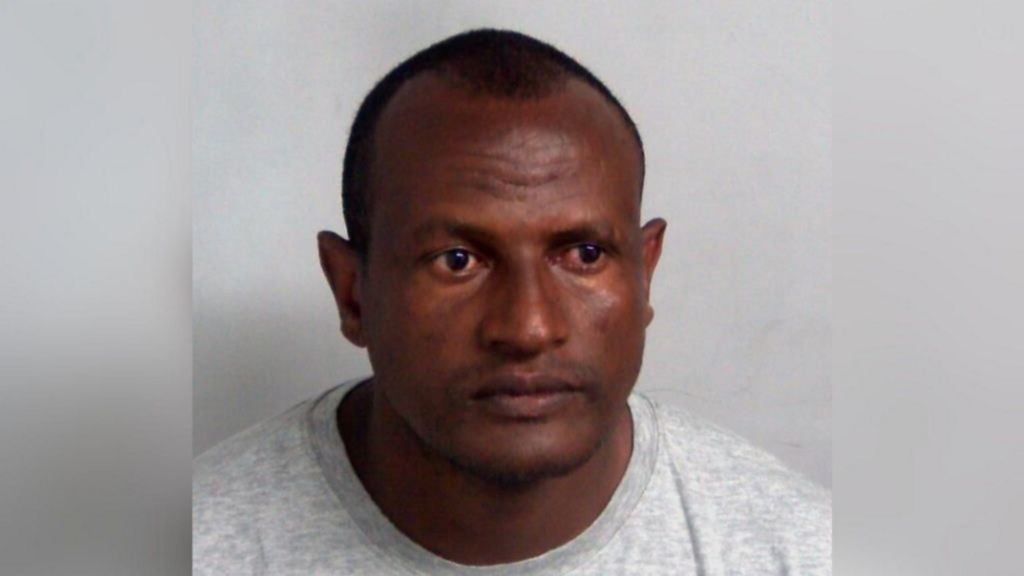
Migrant sex offender deported from UK after mistaken release
Hadush Kebatu, a migrant convicted of sexual assaults in Epping, Essex, has been deported to Ethiopia after being mistakenly released from prison. Kebatu, who was living in an asylum hotel, was found guilty of sexually assaulting a 14-year-old girl and a woman. Despite being scheduled for deportation under the Early Removals Scheme (ERS) for foreign national offenders, he was erroneously released from HMP Chelmsford on Friday. Following a two-day manhunt, Kebatu was re-arrested in North London and subsequently deported on Tuesday night, with no right to return to the UK. Home Secretary Shabana Mahmood expressed her anger over the incident, stating that she had taken every measure to ensure Kebatu’s removal from British soil. She emphasized that the streets are now safer as a result. The mistake, described as a ‘human error’ by Justice Secretary David Lammy, has prompted an independent inquiry led by former Metropolitan Police deputy commissioner Dame Lynne Owens. The investigation will examine the circumstances of Kebatu’s release and recommend measures to prevent similar incidents, which have increased in recent years. Immediate controls, including more stringent checks, have been implemented in prisons. A prison officer has been suspended, and no further removals under the ERS will occur this week. Kebatu’s deportation has brought relief to the Epping community, where local protests had erupted following his arrest in July. His crimes, which included sexually explicit comments and assaults, had sparked outrage. Kebatu arrived in the UK on a small boat in June 2023 after traveling through Sudan, Libya, Italy, and France. Under the UK Borders Act 2007, his 12-month custodial sentence mandated deportation.
-
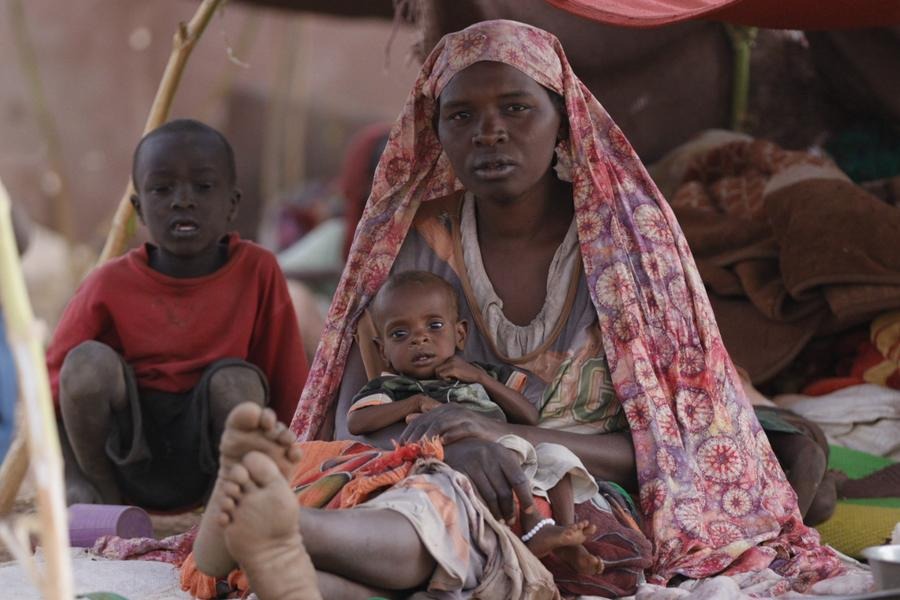
UN, humanitarian partners condemn attacks on civilians in Sudan’s El Fasher
The United Nations and its humanitarian partners have issued a stern condemnation of the escalating violence against civilians in El Fasher, the capital of Sudan’s North Darfur state. The UN Office for the Coordination of Humanitarian Affairs (OCHA) reported that the Rapid Support Forces (RSF) have been implicated in severe attacks on civilians, civilian infrastructure, and humanitarian workers. These violations include summary executions, house-to-house raids, and obstacles preventing civilians from reaching safety. Sexual violence, particularly against women and girls, continues to be reported, and local aid responders are at grave risk, with some detained or killed. The Office of the United Nations High Commissioner for Human Rights has documented approximately 1,850 civilian deaths in North Darfur, with an estimated 1,350 occurring in El Fasher from the beginning of the year to October 20. However, this figure is believed to underrepresent the actual number of conflict-related deaths due to challenges in telecommunications and access on the ground. Humanitarian workers are operating under extreme danger to assist those fleeing toward Tawila and surrounding areas. The UN Refugee Agency (UNHCR) is providing life-saving assistance and essential services to displaced families, including shelter, basic necessities, and cash assistance. However, access to El Fasher remains blocked, and humanitarian capacity is rapidly shrinking as needs soar. The humanitarian community in Sudan is calling for urgent action to protect civilians and humanitarian workers, guarantee safe passage and humanitarian access to people trapped in El Fasher, ensure accountability for all violations of international humanitarian law, and scale up funding to sustain life-saving operations. The United Nations and its humanitarian partners remain committed to scaling up their life-saving support across Darfur and re-establishing their presence on the ground. OCHA also reported that fighting has intensified in Sudan’s North Kordofan state, emphasizing that civilians must be protected wherever they are and allowed to flee safely and with dignity. The office urged all parties to immediately halt hostilities, respect their obligations under international humanitarian law, and enable safe, sustained humanitarian access.
-
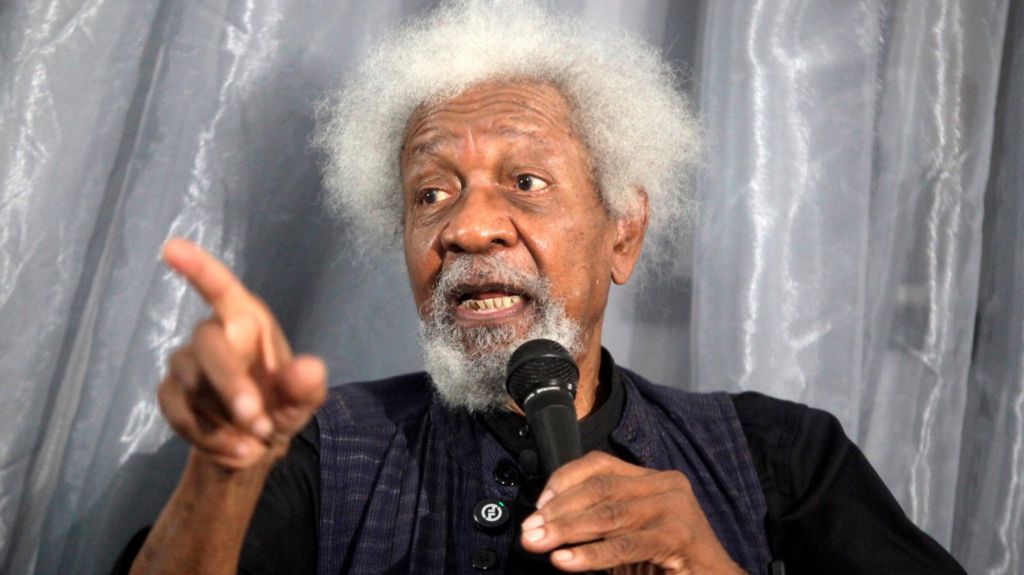
Nigerian Nobel laureate Wole Soyinka says US revoked his visa
Nigerian Nobel Prize-winning author Wole Soyinka has revealed that the United States revoked his visa and imposed a travel ban on him. The 91-year-old literary icon, who was awarded the Nobel Prize in Literature in 1986, disclosed that the US consulate requested his passport to cancel his visa in person, citing unspecified new information. Soyinka described the invitation as a “rather curious love letter from an embassy” during a press conference on Tuesday. He advised organizations planning to invite him to the US to “not waste their time.” The US Embassy in Nigeria declined to comment on individual cases. Soyinka, who previously held US permanent residency, famously tore up his green card in 2016 to protest Donald Trump’s election. He humorously remarked that the card had “fallen between the fingers of a pair of scissors and got cut into pieces.” Soyinka has been a vocal critic of Trump’s immigration policies, linking the visa revocation to his outspoken remarks. He recently compared Trump to Uganda’s infamous dictator Idi Amin, calling him “Idi Amin in white face.” When asked if he would return to the US, Soyinka quipped, “How old am I?” The US State Department recently tightened visa policies for Nigeria and several other African countries, reducing validity periods significantly.
-
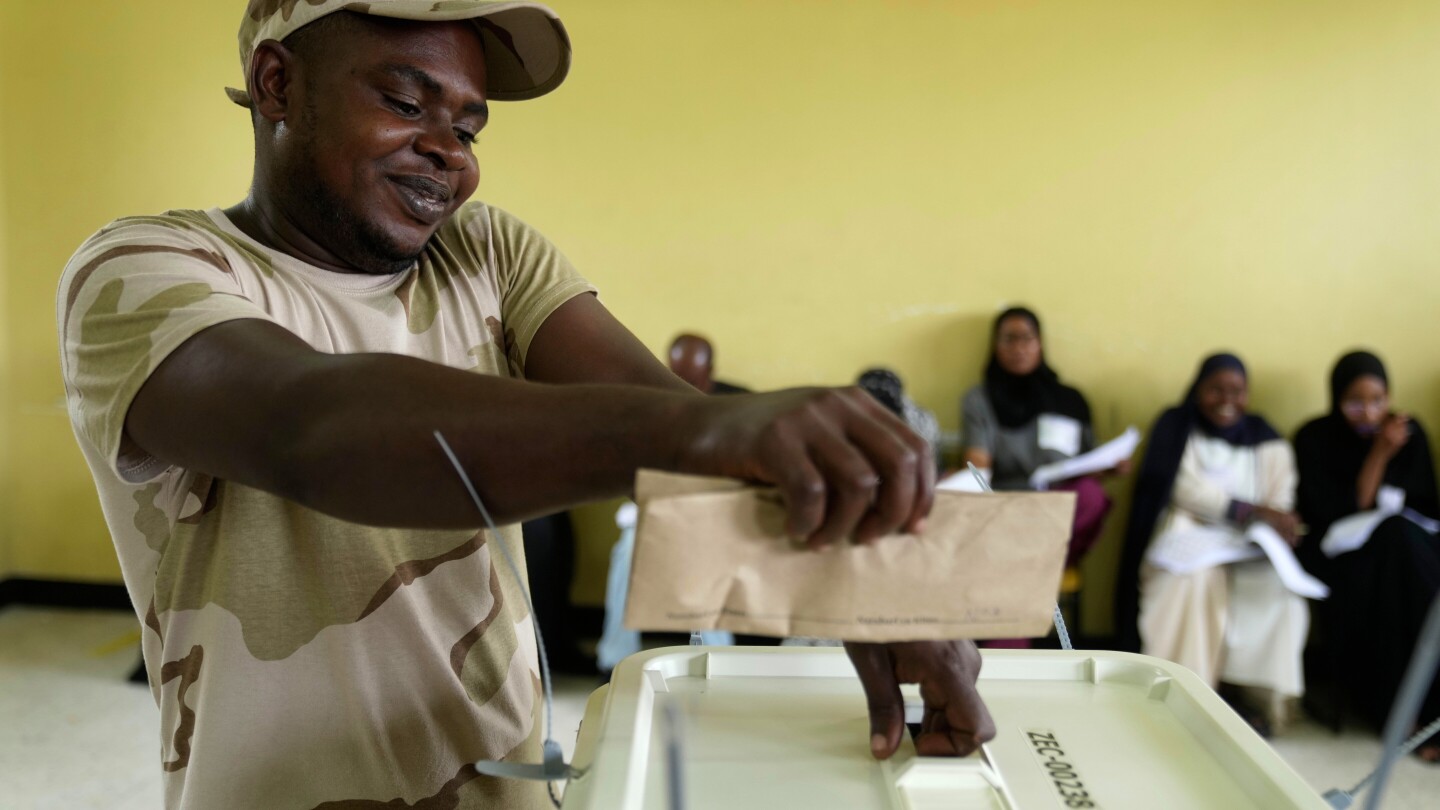
Polls open in Tanzania as ruling party seeks to extend decades in power
Polling stations across Tanzania opened on Wednesday for a highly contentious election, marked by widespread concerns from human rights organizations and the detention of key opposition figures. President Samia Suluhu Hassan, representing the long-ruling Chama Cha Mapinduzi (CCM) party, is vying for her second term. The CCM has dominated Tanzanian politics since the country’s independence in 1961. Voting commenced at 7:00 a.m. local time and is set to conclude at 4:00 p.m., with preliminary results anticipated within 24 hours. However, the electoral commission retains up to seven days to declare the final outcome. The election has been overshadowed by the imprisonment of Tundu Lissu, leader of the main opposition party CHADEMA, who faces treason charges for advocating electoral reforms. Additionally, the candidate from the second-largest opposition party was disqualified from running. Amnesty International has raised alarms about the pre-election environment, citing verified instances of enforced disappearances, arbitrary arrests, and extrajudicial killings. The rights group contends that these alleged abuses by security forces have severely undermined the election’s legitimacy. Despite a 26% increase in registered voters since 2020, analysts predict low voter turnout due to widespread apathy and the perception that Hassan’s victory is inevitable. CHADEMA has called for protests on election day, further heightening tensions.
-
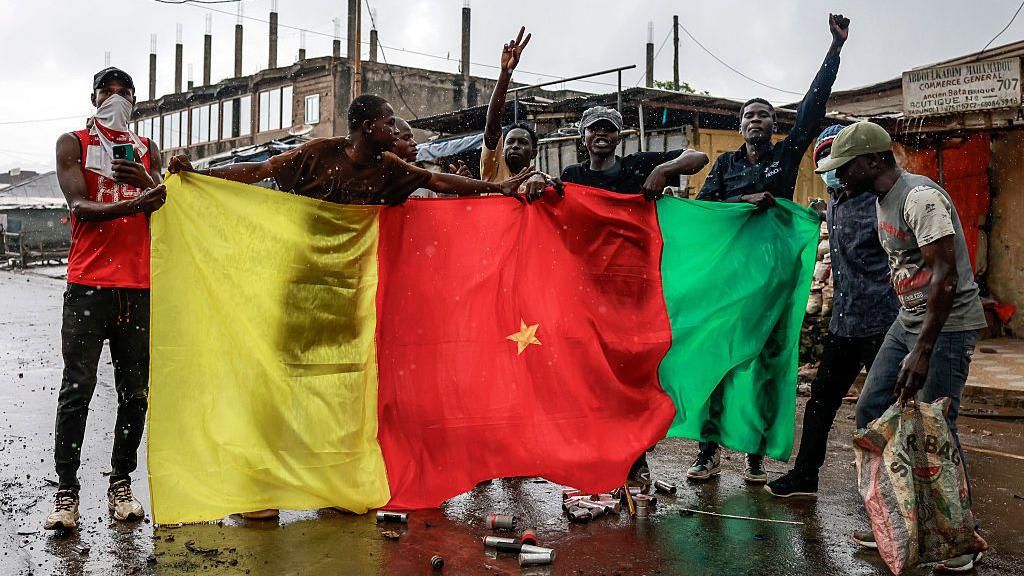
Cameroon opposition leader to face legal action over election unrest, government says
Cameroon is grappling with escalating tensions following the controversial re-election of 92-year-old President Paul Biya for an unprecedented eighth term. The election, held on October 12, has been marred by violent clashes between security forces and opposition supporters, resulting in at least four fatalities. Opposition leader Issa Tchiroma Bakary, who claims victory in the election, faces legal action for allegedly inciting “violent post-election demonstrations.” Cameroon’s Interior Minister Paul Atanga Nji accused Bakary of organizing “illegal” protests and declared that his accomplices in an “insurrectionary plan” would also be prosecuted. The government has announced an investigation into the violent incidents surrounding the election. Despite Nji’s assurance that the situation is under control, protests persist in cities like Douala and Garoua, where demonstrators have erected roadblocks and set fire to tires. The international community, including the UN, African Union, and EU, has expressed concern over the violent crackdowns and called for restraint. Analysts warn that the ongoing unrest could plunge Cameroon into a deep political crisis.
-
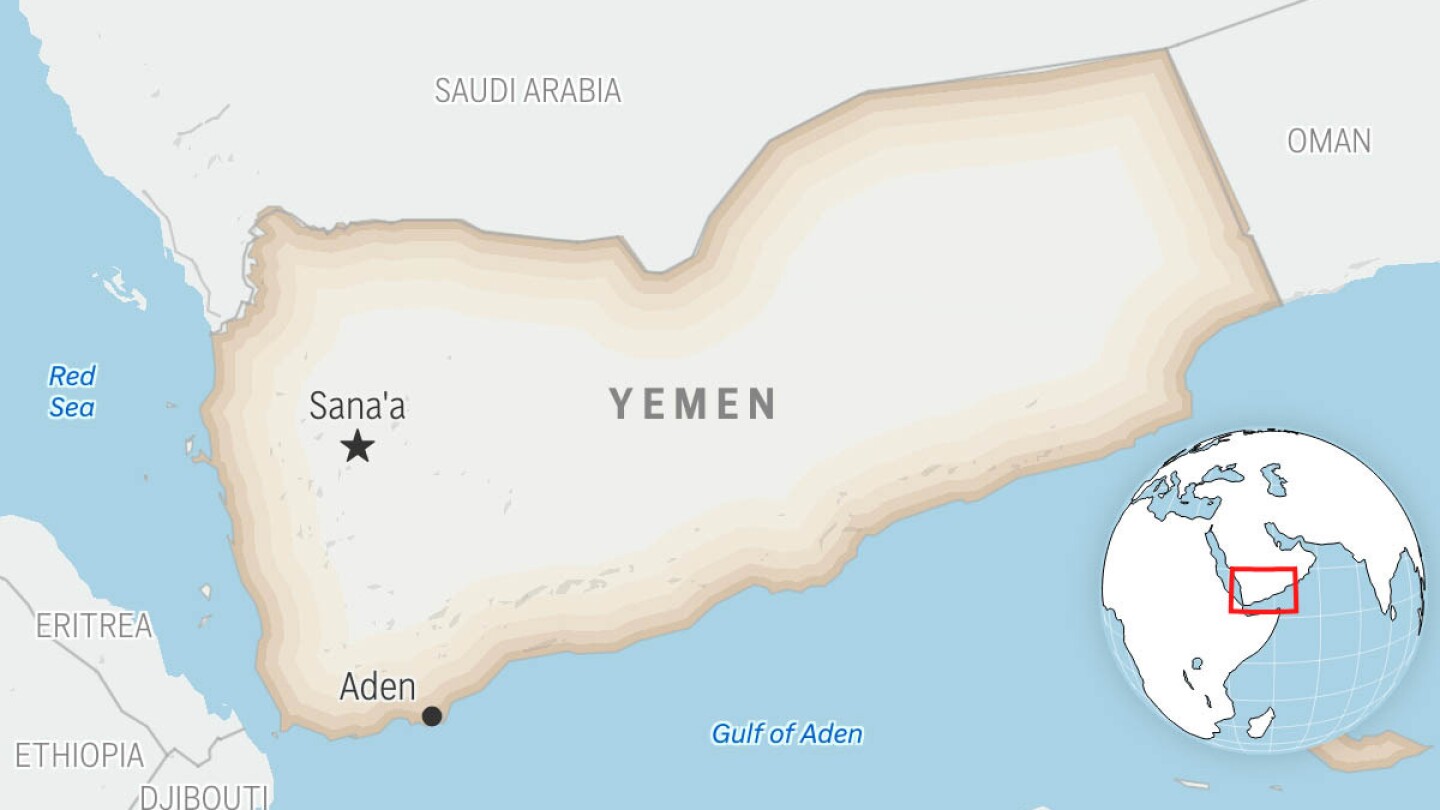
Amnesty says US strike on a Yemen prison that killed dozens of African migrants may be a war crime
A controversial U.S. airstrike in April on a prison operated by Yemen’s Houthi rebels, which resulted in the deaths of over 60 detained African migrants, has drawn calls for investigation as a potential war crime. Amnesty International, a leading human rights organization, has urged scrutiny into the April 28 attack in Yemen’s Saada province. The strike was part of an intensified U.S. military campaign under President Donald Trump, targeting Houthi rebels for disrupting Red Sea shipping routes amid the Israel-Hamas conflict. The U.S. military’s Central Command has yet to provide an explanation for the strike, which occurred at a site previously bombed by a Saudi-led coalition. Survivors, all Ethiopian migrants detained while attempting to reach Saudi Arabia, reported no Houthi fighters present at the time of the attack. Amnesty International has labeled the strike as an “indiscriminate attack,” emphasizing that international law prohibits targeting civilian structures like prisons unless they are used for military purposes. The Houthis recently revised the death toll to 61, down from an initial report of 68. The incident echoes a similar 2022 strike by the Saudi-led coalition on the same compound, which killed 66 detainees. The Houthis have denied misconduct but face criticism for their crackdown on activists and humanitarian workers. The U.S. campaign, which escalated under Trump’s Operation Rough Rider, has reportedly caused significant civilian casualties, with Airwars estimating at least 224 civilian deaths during the operation. U.S. Army Gen. Michael Kurilla has promised transparency regarding civilian casualties, though details remain undisclosed. The strike has raised concerns about the humanitarian impact on African migrants seeking better opportunities in the Gulf region.