标签: Africa

非洲

  • US film stars Meagan Good and Jonathan Majors become Guinea citizens after DNA tests

    US film stars Meagan Good and Jonathan Majors become Guinea citizens after DNA tests

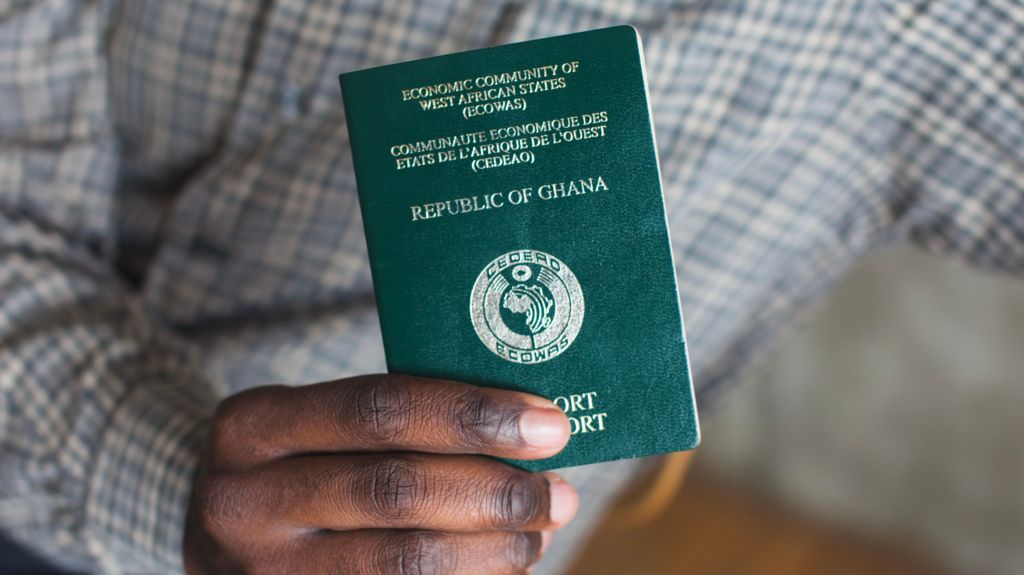
    In a significant cultural ceremony on Friday, acclaimed Hollywood actors Meagan Good and Jonathan Majors were formally granted citizenship by the Republic of Guinea after tracing their ancestral lineage to the West African nation through DNA testing. The private event, organized by Guinea’s Ministry of Culture at the Gbassi Kolo tourist and cultural center, represents the latest initiative by African nations to encourage diaspora communities to reclaim their heritage.

    Djiba Diakité, Minister and Chief of Staff of the Presidency, presented the official passports to the couple on behalf of President Mamadi Doumbouya. “We both believe that you are among the worthy sons and daughters of Guinea to represent our country and the red and green flag throughout the world,” Diakité stated during the ceremony, which featured traditional dance performances and djembe drumming.

    The actors, who began dating in May 2023 and married last year, expressed their profound connection to Guinea. “We could absolutely see ourselves having a home here and spending meaningful time in Guinea,” the couple told the BBC via email. “This is not a fleeting connection – it’s something we see as long-term and evolving.”

    Majors, known for his roles in ‘Creed’ and ‘Ant-Man,’ described the citizenship as a means of “bridging the gap” between their identities as entertainers and members of the African diaspora. Good, celebrated for her performance in ‘Think Like a Man,’ noted this marked her first visit to Guinea.

    The ceremony occurred against the backdrop of Guinea’s recent political transition. The country has recently returned to civilian rule following elections last month, won by coup leader General Mamady Doumbouya with 87% of the vote. Unlike other West African nations that have experienced recent coups, Guinea has maintained relations with Western governments, particularly France.

    This event continues a trend began by Ghana’s 2019 “Year of Return” initiative, which has seen several prominent figures including Stevie Wonder (2024), Ciara (Beninese citizenship), and Samuel L. Jackson (Gabonese passport) establish formal ties with African nations. Guinea itself has historical precedent in welcoming diaspora figures, having hosted South African singer Miriam Makeba and civil rights activist Stokely Carmichael (later known as Kwame Ture) in the 1960s.

    The couple’s itinerary includes a tour of Boké, a coastal region containing historic slave trade sites. While their specific investment plans remain unclear, the gesture symbolizes Guinea’s ongoing outreach to the global African community despite the country’s economic challenges—being mineral-rich yet having one of West Africa’s poorest populations.

  • Mbeumo ‘sad’ over Cameroon Afcon exit

    Mbeumo ‘sad’ over Cameroon Afcon exit

    In a thrilling quarter-final clash at the 2025 Africa Cup of Nations, host nation Morocco secured a 2-0 victory against Cameroon at Rabat’s packed Prince Moulay Abdellah Stadium. The match saw Brahim Diaz and Ismael Saibari net decisive first-half goals that ultimately proved insurmountable for the Indomitable Lions.

    Cameroon’s Manchester United forward Bryan Mbeumo expressed profound disappointment with his team’s initial performance, acknowledging that their hesitant start significantly compromised their chances. “Our first-half display fell considerably short of our capabilities,” Mbeumo stated. “We demonstrated marked improvement after the interval, forcing Morocco to adapt, but ultimately they capitalized on their opportunities.”

    The match represented a personal milestone for Mbeumo, who was competing in his first AFCON tournament since switching international allegiance from France to Cameroon in 2022. Despite failing to score throughout the competition, the 26-year-old contributed a crucial assist during Cameroon’s opening victory against Gabon.

    Cameroon’s head coach David Pagou, who assumed leadership shortly before the tournament following the controversial dismissal of Belgian manager Marc Brys, concurred with Mbeumo’s assessment. Pagou noted the team’s initial timidity but praised their second-half resurgence and overall tournament performance, emphasizing that the youthful squad had provided “significant emotions to the Cameroonian people.”

    The victory held particular historical significance for Morocco, marking their first semi-final appearance since 2004. Real Madrid playmaker Brahim Diaz continued his exceptional tournament form, scoring his fifth goal to become Morocco’s all-time top scorer in a single AFCON competition. Head coach Walid Regragui hailed Diaz as the team’s “X factor” and praised his transformed mentality, suggesting the player possesses potential to become “the world’s best.”

    The electric atmosphere generated by Moroccan supporters received special recognition from both teams, with Saibari describing the environment as “amazing” and Regragui noting the crowd effectively functioned as a twelfth player. Morocco now advances to face the winner of the Algeria-Nigeria matchup, continuing their quest for a second continental title fifty years after their first triumph.

  • Hollywood couple Meagan Good and Jonathan Majors gain Guinean citizenship

    Hollywood couple Meagan Good and Jonathan Majors gain Guinean citizenship

    In a significant cultural moment, American actors Meagan Good and Jonathan Majors were formally granted citizenship by the Republic of Guinea during a private ceremony in Conakry on Friday. The recognition came after the couple successfully traced their ancestral lineage to the West African nation through DNA testing.

    Djiba Diakité, head of the presidential cabinet, presided over the ceremony, stating: “We consider you among Guinea’s most worthy descendants. You will represent our nation and the red-yellow-green flag across the globe.”

    The citizenship award places the Hollywood couple among a growing trend of African nations extending formal recognition to descendants of the diaspora. This development follows similar initiatives by Benin, which granted citizenship to singer Ciara last year, and Ghana, which naturalized 524 African Americans in 2019 as part of commemorations marking the 400th anniversary of the first enslaved Africans’ arrival in North America.

    Majors’ career trajectory adds complexity to the story. Once positioned for Hollywood’s highest echelons following acclaimed performances in “Da 5 Bloods” and “Lovecraft Country,” and his casting as Kang the Conqueror in the Marvel Cinematic Universe, his career faced substantial challenges after a 2023 assault conviction. The legal proceedings resulted in his departure from Marvel Studios and the delayed release of his film “Magazine Dreams.”

    Throughout his legal challenges, Good maintained a consistent presence, with the couple engaging in 2024 and marrying last year during an impromptu ceremony. Their Guinean citizenship comes during a period of political transition in the country, which has been under military rule since General Mamadi Doumbouya’s 2021 coup. Doumbouya recently secured a controversial presidential election victory amid reported suppression of political opposition.

    The newly minted citizens are scheduled to tour Guinea’s significant cultural and tourist sites on Sunday, deepening their connection to their ancestral homeland.

  • South Africa’s strained ties with US face new test – war games with China, Iran and Russia

    South Africa’s strained ties with US face new test – war games with China, Iran and Russia

    South Africa finds itself at a geopolitical crossroads as it hosts joint naval exercises with China, Russia, and Iran—a move that risks further deteriorating its already strained relationship with the United States. The week-long ‘Will for Peace’ maritime drills, initiated on Friday off the coast of Simon’s Town, represent an expansion of the BRICS+ alliance’s activities beyond economic cooperation into military collaboration.

    The exercise, originally conceived as the third iteration of the China-Russia-South Africa ‘Mosi’ series, was rebranded and broadened to include other BRICS+ members following its postponement from November due to the G20 summit. This development occurs against the backdrop of severely compromised US-South Africa relations, exacerbated by the Trump administration’s accusations regarding treatment of white farmers and Pretoria’s genocide case against Israel at the International Court of Justice.

    Defense analysts highlight the paradoxical nature of the military cooperation, noting that BRICS+ members include nations with opposing political interests and even active border conflicts. The South African government maintains the exercises focus on maritime safety and interoperability, while opposition parties condemn the participation of sanctioned nations as a violation of the country’s professed non-aligned stance.

    The economic implications are substantial. With the US implementing 30% tariffs on South African exports—potentially costing 100,000 jobs—and remaining a crucial trading partner that supports over 500,000 jobs through American companies, the naval exercises risk further alienating a critical economic ally. Meanwhile, China’s economic footprint, while growing, reportedly generates significantly fewer jobs despite government claims of 400,000 positions.

    South Africa’s military acknowledges practical motivations for the drills, citing budget constraints that have decimated naval capabilities and limited opportunities for international training. However, commentators warn that the optics of cooperating with US adversaries could provoke stronger reactions from the Trump administration, potentially squeezing South Africa in the escalating great power competition between Washington and the BRICS+ nations.

  • As tensions flare in Minnesota, Treasury Secretary Bessent pushes a crackdown on fraud

    As tensions flare in Minnesota, Treasury Secretary Bessent pushes a crackdown on fraud

    The U.S. Treasury Department has initiated heightened financial surveillance targeting money transfers between Minnesota and Somalia, signaling a significant escalation in the federal government’s immigration enforcement operations within the state. Treasury Secretary Scott Bessent confirmed the measures during his Friday visit to Minnesota, revealing ongoing investigations into four unspecified money service businesses facilitating international remittances.

    This financial crackdown coincides with escalating tensions in Minneapolis following the fatal shooting of a woman by an Immigration and Customs Enforcement officer on Wednesday, which has triggered widespread protests and intensified conflicts between federal and local authorities.

    The Treasury’s actions appear directly influenced by President Trump’s intensified focus on Minnesota’s Somali diaspora community, which has been subjected to both increased immigration enforcement and derogatory presidential comments. The department initially announced its targeted approach toward Somali remittances last month, specifically focusing on money service businesses.

    These measures have been partially justified by reference to high-profile fraud cases, most notably the Feeding Our Future scandal where a nonprofit organization allegedly misappropriated approximately $300 million in pandemic relief funds intended for school meal programs. The organization’s founder, Aimee Bock, was convicted in March on multiple counts including conspiracy, wire fraud, and bribery while maintaining her innocence.

    Secretary Bessent outlined key Treasury actions including Financial Crimes Enforcement Network investigations targeting Minnesota-based money services, enhanced reporting requirements for international transfers originating from Hennepin and Ramsey counties, and alerts to financial institutions regarding fraud identification in child nutrition programs.

    While meeting with financial institutions to discuss fraud prevention measures, Bessent declined to provide specifics about ongoing investigations. He emphasized the department’s determination to “deploy all tools to bring an end to this egregious unchecked fraud and hold perpetrators to account.”

    The policy has drawn criticism from civil liberties advocates, with Nicholas Anthony of the Cato Institute condemning the approach as “building a legacy of financial surveillance and control” that restricts Americans’ ability to send money abroad.

    Local Somali leaders report anecdotal accounts of community members being detained by federal agents, though specific details remain scarce. Minnesota officials including Governor Tim Walz and Minneapolis Mayor Jacob Frey have pledged to protect the community, despite Walz facing Republican criticism for his administration’s delayed detection of the Feeding Our Future fraud before ending his reelection bid this week.

  • Trump warns of more Nigeria strikes if Christians ‘continue to be killed’

    Trump warns of more Nigeria strikes if Christians ‘continue to be killed’

    Former US President Donald Trump has issued a stark warning regarding potential military escalation in Nigeria, suggesting increased airstrikes if violence against Christians persists in the West African nation. During a comprehensive interview with the New York Times, Trump addressed the controversial Christmas Day operations in Sokoto state that targeted Islamist militants, indicating these strikes could become recurrent rather than isolated incidents.

    Trump’s comments directly contradict Nigeria’s official position, which maintains that both Muslim and Christian communities face equal threats from jihadist organizations. The Nigerian government has previously rejected Trump’s characterization of religious persecution, emphasizing their commitment to protecting all citizens regardless of faith.

    This diplomatic tension emerges against the backdrop of Nigeria’s complex security landscape, where multiple insurgent groups including Boko Haram and IS-affiliated factions have created a devastating fifteen-year insurgency primarily affecting the northeastern regions. The country additionally contends with criminal kidnapping networks, resource-based conflicts, and separatist movements across various territories.

    Regarding the December strikes, US and Nigerian authorities described targeting camps operated by Lakurawa—a jihadist organization operating in the northwestern border region near Niger. While both governments confirmed the operation as a collaborative effort, they provided conflicting narratives regarding its religious motivations and timing. Nigerian Foreign Minister Yusuf Maitama Tuggar explicitly denied any connection to Christmas celebrations, despite Trump’s characterization of the strikes as a ‘Christmas present.’

    The situation remains diplomatically delicate, with Nigeria’s foreign ministry spokesperson Alkasim Abdulkadir emphasizing continued engagement with international partners ‘on the basis of mutual respect, international law, and Nigeria’s sovereignty.’ Demographic context reveals Nigeria’s population of over 230 million people is nearly evenly divided between Christians (predominantly in the south) and Muslims (concentrated in northern regions), complicating simplistic religious narratives about the conflict.

  • The musician and the strongman leader – what you need to know about Uganda’s election

    The musician and the strongman leader – what you need to know about Uganda’s election

    Uganda stands at a pivotal juncture as it prepares for presidential elections on January 15th, presenting voters with a stark choice between continuity and transformation. President Yoweri Museveni, 81, seeks to extend his 40-year reign—one of Africa’s longest administrations—while his primary challenger, 43-year-old former pop sensation Bobi Wine, promises radical governance reforms and represents generational change.

    The electoral landscape is characterized by significant tension, with opposition campaigns experiencing systematic disruption through activist detentions and police intervention at rallies. These developments occur against a backdrop of pressing economic concerns, particularly youth unemployment in a nation where over three-quarters of the population is under 30.

    This marks the second electoral confrontation between Museveni and Wine, following the contentious 2021 poll where Museveni secured 58% of votes amid widespread allegations of electoral manipulation and opposition suppression. Museveni’s prolonged tenure has been facilitated by constitutional amendments eliminating presidential age and term limits, enabling his seventh consecutive candidacy.

    Bobi Wine (legal name Robert Kyagulanyi) has emerged as the most formidable opposition figure, capitalizing on his popularity among urban youth and working-class constituencies. His National Unity Platform became parliament’s largest opposition party following the previous election, though Wine has faced persistent harassment from security forces throughout the campaign period.

    Beyond the two frontrunners, six additional candidates complete the presidential field, though none are projected to secure significant vote shares. Notably absent is veteran opposition leader Kizza Besigye, currently imprisoned on treason charges in Kenya.

    Economic considerations dominate voter concerns, with unemployment, infrastructure deficiencies, and unequal access to education and healthcare representing primary issues. While Uganda has avoided the severe inflation affecting neighboring nations, corruption remains pervasive—the country ranks 140th globally on Transparency International’s Corruption Perceptions Index.

    International observers have expressed concern about the electoral environment, with UN experts noting a ‘pervasive climate of fear’ and Amnesty International documenting a ‘brutal campaign of repression’ involving tear gas, pepper spray, and physical violence against opposition supporters. The government maintains these measures are necessary to ensure peaceful elections.

    Election officials promise transparent voting procedures with party agents and independent monitors observing the count, though critics question the electoral commission’s independence. Opposition leaders have urged supporters to safeguard ballots against potential manipulation, while preparing technological solutions like Bluetooth-enabled monitoring apps to circumvent possible internet restrictions.

    According to electoral regulations, presidential results must be announced within 48 hours of polling closure. A candidate must secure over 50% of the national vote to avoid a runoff—a threshold Museveni has consistently achieved in previous elections.

  • How radioactive rhino horns are helping with conservation

    How radioactive rhino horns are helping with conservation

    In a groundbreaking anti-poaching initiative, South African conservationists are implanting radioactive isotopes into the horns of live rhinoceroses. This radical approach aims to render the horns dangerously radioactive, thereby making them easier to detect at international border crossings and significantly less desirable on the black market.

    The project, a collaboration between the University of the Witwatersrand and other research entities, utilizes a process of drilling a small hole into the inert keratin of the horn to insert a minute quantity of radioactive material. This substance is carefully calibrated to be powerful enough to trigger radiation monitors installed at ports, airports, and border posts—key smuggling checkpoints globally—while posing no health risk to the animal itself or its surrounding ecosystem.

    The primary objective is to drastically increase the cost and difficulty for wildlife traffickers. By turning the horn into a radioactive product that would be flagged by security systems, the method introduces a formidable layer of risk for smugglers, potentially deterring poachers and disrupting illicit supply chains. This innovation represents a fusion of nuclear science and conservation biology, offering a new, high-tech weapon in the ongoing battle to protect these critically endangered species from extinction driven by the illegal wildlife trade.

  • UN rights office cites ‘widespread repression’ in Uganda before next week’s presidential election

    UN rights office cites ‘widespread repression’ in Uganda before next week’s presidential election

    GENEVA — The United Nations Human Rights Office has issued a stark warning regarding Uganda’s upcoming presidential election, characterizing the pre-election environment as one dominated by systematic repression and intimidation tactics against opposition figures and dissenting voices. In a comprehensive report released Friday, the Office of the UN High Commissioner for Human Rights (OHCHR) detailed concerning patterns of state-sponsored suppression ahead of the January 15 vote.

    The Geneva-based agency documented multiple instances where Ugandan authorities have employed legal warfare and military legislation to curtail political activities. Security forces have reportedly utilized live ammunition to break up peaceful assemblies and deployed unmarked vehicles—locally referred to as ‘drones’—to abduct supporters of opposition parties.

    UN High Commissioner for Human Rights Volker Türk emphasized the imperative for Ugandan authorities to guarantee all citizens’ right to participate safely in the electoral process under international law. He specifically called for restraint, urging that ‘no unnecessary or disproportionate force, including lethal force, be used to disperse peaceful protests.’

    The report highlights several specific cases, including the ongoing detention of opposition leader Kizza Besigye on treason charges and the imprisonment of prominent civic leader Sarah Bireete. Bireete, director of the Center for Constitutional Governance, was arrested December 30 on allegations of illegally accessing the national voters’ registry. A magistrate ordered her detained until January 21, effectively silencing one of the government’s most vocal critics during the critical pre-election period.

    Human Rights Watch condemned Bireete’s arrest as evidence of the government’s ‘continuing intolerance of dissent.’ Before her detention, Bireete had publicly characterized President Yoweri Museveni’s administration as ‘a military dictatorship masquerading as democracy.’

    President Museveni, 81, Africa’s third-longest-serving leader, seeks a seventh term amid accusations of systematically undermining democratic institutions. His main challenger, musician-turned-politician Bobi Wine (Kyagulanyi Ssentamu), has repeatedly reported military victimization of himself and his supporters, alleging that security forces dominate election preparations.

    Ugandan police spokesman Kituuma Rusoke did not immediately respond to requests for comment on the UN allegations. The country has not witnessed a peaceful presidential transition since gaining independence from British colonial rule six decades ago.

  • China, Russia and Iran join South Africa for naval drills as tensions run high

    China, Russia and Iran join South Africa for naval drills as tensions run high

    CAPE TOWN, South Africa — In a significant display of naval cooperation, warships from China, Russia, and Iran commenced joint maritime exercises with South Africa’s navy on Friday. The week-long drills, occurring off the strategic Cape Town coast where the Atlantic and Indian Oceans converge, underscore evolving geopolitical alliances amid heightened tensions with Western powers.

    The maneuvers, organized under the BRICS framework of developing nations, were originally scheduled for November but postponed due to diplomatic considerations during South Africa’s hosting of the G20 summit. South African military officials describe the operations as focusing on maritime security protocols and anti-piracy tactics, emphasizing their goal to ‘deepen cooperation’ among participating nations.

    Notable vessels participating include China’s 161-meter destroyer Tangshan and Russia’s Stoikiy warship accompanied by a support tanker from the Baltic Fleet. The exercises mark the second consecutive year of such cooperation, following similar drills in 2023.

    The participation occurs against a complex backdrop: Iran joins despite ongoing domestic protests against its leadership, while all participating nations face varying degrees of Western sanctions. The BRICS bloc, which expanded in 2024 to include Iran alongside core members Brazil, Russia, India, China, and South Africa, has frequently served as a platform for criticizing American foreign policy.

    These developments have exacerbated strains in U.S.-South African relations, with the Trump administration previously accusing Pretoria of supporting ‘bad actors on the world stage’ and specifically citing its Iranian ties when cutting aid. The Biden administration further escalated tensions in 2023 by alleging South Africa permitted a sanctioned Russian vessel to load weapons for Ukraine conflict at Simon’s Town naval base—charges South Africa denies.

    Domestically, the governing coalition faces criticism from the Democratic Alliance, the second-largest party, which condemns the hosting of ‘heavily sanctioned’ nations and characterizes the BRICS branding as a ‘political trick’ masking military alignment with controversial regimes.