标签: Africa

非洲

  • Every door tells a story: Dubai displays historic doors that shaped the city

    Every door tells a story: Dubai displays historic doors that shaped the city

    Dubai has launched an extraordinary cultural exhibition showcasing historic doors that serve as tangible narratives of the city’s evolution. ‘Dubai Doors’ at Nad Al Sheba Square presents meticulously preserved teak entryways from the 19th and 20th centuries, each revealing intricate craftsmanship through symmetrical panels, fan-shaped motifs, and diamond carvings. These architectural artifacts feature traditional security elements like domed iron nails and geometric five-pointed stars symbolizing protection, alongside spiritual elements including Arabic calligraphy with Quranic verses that demonstrate the sacred role of homes in historical Emirati society.

    The exhibition, running through January 26, 2026, highlights functional innovations such as ‘roshan’ ventilation openings that provided light and airflow while maintaining privacy. Central stiles display continuous floral chains that blend aesthetic elegance with structural integrity. According to Asem Al Qassim, Director of Architectural Heritage and Antiquities at Dubai Municipality, these doors represent living documents that reveal the social, architectural, and security functions of traditional homes while showcasing local artisans’ exceptional skills.

    Dubai’s urban preservation strategy involves comprehensive mapping of six historic districts, cataloging buildings by age, and codifying authentic architectural elements. This initiative aligns with global UNESCO standards while addressing challenges posed by rapid urbanization. The municipality is integrating traditional materials with modern components like aluminum and PVC without compromising authenticity, while researching historical cooling techniques such as wind towers (Barjeel) and ventilation courtyards for contemporary applications.

    Community engagement forms a crucial component of preservation efforts, with live workshops and Ramadan markets at Deira Souq designed to help youth connect with their cultural identity. These heritage conservation measures constitute a fundamental pillar of the Dubai 2040 Urban Master Plan, ensuring that historic areas like Deira and Bur Dubai remain as living memories rather than mere relics of the past.

  • Slowdown in Dubai? Property data from 2025 proves analysts wrong

    Slowdown in Dubai? Property data from 2025 proves analysts wrong

    Dubai’s property market has delivered a stunning rebuttal to pessimistic forecasts, achieving unprecedented growth throughout 2025 that has fundamentally reshaped market expectations. According to official data released by the Dubai Land Department, the emirate recorded over 270,000 real estate transactions valued at Dh917 billion, representing a remarkable 20 percent year-on-year increase in volume.

    This exceptional performance directly contradicts projections made by global ratings agency Fitch in 2024, which had anticipated price corrections of up to 15 percent across 2025 due to anticipated supply increases. Instead, the market demonstrated robust growth across all key metrics, with average prices increasing by approximately 7 percent according to DLD figures, while internal data from major agencies showed even stronger appreciation trends.

    Industry leaders emphasize that Dubai’s real estate expansion is fundamentally driven rather than speculative. Lewis Allsopp, Chairman of Allsopp & Allsopp, stated: “All key metrics—transaction volume, pricing, and average prices—show consistent growth. The narrative of a slowdown simply doesn’t align with the actual data.”

    The market’s strength stems from multiple structural factors including sustained population growth, continued inflow of high-net-worth individuals, long-term residency initiatives, and comprehensive infrastructure development. Real estate investments during 2025 exceeded Dh680 billion across 258,600 deals, representing a 29 percent value increase and 20 percent growth in transaction numbers. The investor base expanded significantly to approximately 193,100 participants, including 129,600 new entrants.

    Humaira Vaqqas, Senior Consultant at Range International Properties, noted: “The record transaction volumes demonstrate sustained end-user demand alongside institutional and international investor confidence. The market has evolved into a more transparent and regulated ecosystem, maintaining momentum while avoiding extreme volatility.”

    Looking toward 2026, industry executives express even greater optimism based on sustained demand drivers, affordable project launches, and Dubai’s positioning as a global real estate hub. The market’s performance aligns with the objectives of the Dubai Real Estate Sector Strategy 2033, which aims to increase transaction volume by 70 percent to reach Dh1 trillion.

  • Why Osimhen has become ‘king of Nigerian football’

    Why Osimhen has become ‘king of Nigerian football’

    As Nigeria prepares for its critical Africa Cup of Nations semi-final clash against host nation Morocco, the narrative surrounding superstar striker Victor Osimhen transcends mere footballing statistics. The 27-year-old Galatasaray forward stands poised to etch his name permanently into Nigerian sporting lore, needing just two goals to equal the legendary Rashidi Yekini’s national record of 37 international strikes.

    The tournament journey, while successful with five consecutive victories, has revealed the intense competitive fire that defines Osimhen’s character. A highly publicized on-field disagreement with teammate Ademola Lookman during Nigeria’s 4-0 round of 16 triumph over Mozambique sparked media speculation about dressing room discord. Osimhen’s visible frustration over a missed scoring opportunity and subsequent early departure from celebrations prompted rumors of potential camp abandonment—all firmly denied by team officials.

    Those closest to the athlete argue that this relentless drive forms the essential core of his greatness. Former Nigeria captain William Troost-Ekong provided poignant insight into the origins of this mentality, recounting Osimhen’s unimaginably difficult childhood. Orphaned at a young age in Lagos, Osimhen supported his siblings by selling water in traffic, developing what Troost-Ekong describes as a profound “hunger and hustle” that manifests in every aspect of his life, from being first to the dinner buffet to his relentless attacking positioning.

    Despite his proximity to individual glory, Osimhen maintains remarkable perspective regarding Yekini’s legacy, stating: “It doesn’t matter if I equal the record or I surpass it. I think Mr Rashidi Yekini is the best striker the Super Eagles have ever produced. I’m just trying to win something important for my country.”

    Nigerian football journalist Oluwashina Okeleji has declared Osimhen the “new king of Nigerian football,” noting his transformational impact since his under-17 days and his unofficial leadership role within the squad. This influence extends beyond international duty, evidenced by his record-breaking club career across Europe’s top leagues.

    After emerging as a scoring sensation with Lille in Ligue 1, Osimhen achieved icon status at Napoli where his 26-goal season delivered their first Serie A title in 33 years, simultaneously making him the highest-scoring African in Italian football history. His subsequent move to Galatasaray produced immediate success with 26 goals in 30 appearances, securing a domestic double and establishing continued dominance in the Turkish Super Lig.

    With continental glory within reach and historical immortality awaiting, Osimhen represents both Nigeria’s present hopes and future legacy as they seek to capture their fourth Africa Cup of Nations championship.

  • Ugandan voters face soldiers in the street and an internet shutdown before presidential election

    Ugandan voters face soldiers in the street and an internet shutdown before presidential election

    KAMPALA, Uganda — Ugandans head to the polls Thursday in a high-stakes presidential election marked by unprecedented digital censorship and military mobilization. President Yoweri Museveni, Africa’s second-longest serving leader who seized power in 1986, seeks a seventh term that would extend his nearly four-decade rule. His primary challenger is 43-year-old musician-turned-legislator Bobi Wine (born Robert Kyagulanyi), who embodies a generational shift and widespread yearning for political change.

    The electoral landscape has been dominated by three critical developments: a nationwide internet shutdown implemented Tuesday by the Uganda Communications Commission, massive military deployments across the capital Kampala, and an opposition strategy urging voters to physically protect polling stations against alleged tampering. The internet suspension, justified by authorities as necessary to combat ‘misinformation and electoral fraud,’ has severely hampered pro-democracy activists’ ability to document alleged irregularities.

    Security forces have transformed Kampala into a fortified zone, with armored vehicles and patrolling soldiers becoming ubiquitous. Military spokesman Colonel Chris Magezi maintains these measures aim to deter violence, rejecting characterization of the mobilization as anti-democratic. Meanwhile, Wine’s National Unity Platform party has instructed supporters to remain near polling stations after voting—a tactic that has created tension with electoral officials who urge voters to return home.

    The election also highlights concerns about hereditary succession. Museveni’s son, General Muhoozi Kainerugaba, commands Uganda’s military and has openly expressed presidential ambitions. The four-star general has previously made inflammatory social media statements about opposition figures, including threats against Wine and former presidential candidate Kizza Besigye.

    With 21.6 million registered voters choosing among eight presidential candidates, analysts predict Museveni will likely extend his rule despite growing discontent over economic challenges and democratic backsliding. The United Nations Human Rights Office has documented ‘widespread repression’ including abductions and disappearances of opposition supporters during the campaign period.

  • Adesanya set for return – but could it be the end?

    Adesanya set for return – but could it be the end?

    Former two-time UFC middleweight champion Israel Adesanya is set to make his highly anticipated return to mixed martial arts competition against Joe Pyfer on March 28th at Climate Pledge Arena in Seattle, Washington. This marks Adesanya’s first appearance since suffering a knockout defeat against Nassourdine Imavov in February 2025, which extended his losing streak to three consecutive bouts.

    The Nigerian-born New Zealand fighter, who once dominated the middleweight division with five successful title defenses between 2020 and 2022, now faces critical questions about his fighting future. At 36 years old, Adesanya holds the second-most wins in UFC middleweight title fights (8), trailing only Anderson Silva’s record of 11 victories.

    His opponent, 29-year-old Joe Pyfer, currently ranked 15th in the middleweight division, presents a formidable challenge with an impressive record of six wins in his seven UFC appearances. The matchup represents a classic crossroads fight between a former champion seeking redemption and an ascending contender looking to make his mark.

    Adesanya has undergone significant philosophical shifts during his hiatus, publicly stating that championship pursuits no longer drive his career motivations. Instead, the veteran fighter emphasizes a desire to compete more freely and embrace greater risks within the octagon.

    The event will also feature a high-profile women’s flyweight bout between former champion Alexa Grasso of Mexico and American contender Maycee Barber, adding depth to what promises to be a compelling fight card.

  • Ugandan opposition leader campaigns in flak jacket

    Ugandan opposition leader campaigns in flak jacket

    MUKONO, Uganda — Opposition presidential candidate Bobi Wine conducted campaign activities in Mukono while clad in protective military gear, illustrating the volatile political climate preceding Uganda’s January 15th elections. The musician-turned-politician, legally named Kyagulanyi Ssentamu, appeared in public wearing both flak jacket and helmet as government forces maintained heavy visibility throughout the capital city of Kampala.

    Despite these visible security measures, the protective equipment provides no defense against the recurrent deployment of tear gas that has characterized Wine’s campaign events. Security personnel maintain constant surveillance at opposition rallies, creating an atmosphere of tension throughout the election cycle.

    Wine represents the primary electoral challenge to incumbent President Yoweri Museveni, who is pursuing an unprecedented seventh term in office. Museveni has maintained continuous political control since 1986 through systematic constitutional modifications that have eliminated presidential term limits and age restrictions. The longstanding leader has consistently neutralized political rivals through imprisonment and marginalization tactics.

    In his December 31st national address, President Museveni explicitly endorsed security forces’ use of tear gas against opposition gatherings, referring to Wine’s supporters as “criminal elements.” This rhetoric echoes the treatment Wine experienced during his initial presidential campaign in 2021, when he faced physical assault by police officers, had his clothing torn, and witnessed the imprisonment of dozens of his supporters.

  • Global central bankers defend Fed’s Powell after Trump threat

    Global central bankers defend Fed’s Powell after Trump threat

    In an extraordinary display of institutional unity, central bank governors from across the globe issued a rare joint statement on Tuesday expressing unwavering support for Federal Reserve Chair Jerome Powell following threats of criminal indictment from the Trump administration. The unprecedented collective action came as political pressure on the world’s most powerful financial institution reached critical levels.

    The controversy stems from Powell’s congressional testimony last summer regarding renovations to the Federal Reserve’s headquarters, which the chair characterized as a ‘pretext’ for gaining presidential influence over interest rate decisions. This confrontation represents the most significant challenge to central bank independence in modern history, with President Trump having repeatedly demanded lower rates and applied pressure on individual policymakers.

    Leading the coordinated response were the European Central Bank, Bank of England, and Bank of Canada, joined by eight other major institutions including those of Sweden, Denmark, Switzerland, Australia, South Korea, Brazil, and France. The coalition emphasized that central bank independence serves as the fundamental cornerstone of price stability, financial security, and economic predictability that benefits all citizens.

    According to sources familiar with the diplomatic effort, ECB President Christine Lagarde played a pivotal role in orchestrating the response, while Bank for International Settlements General Manager Pablo Hernandez de Cos facilitated coordination among individual governors. Notably absent from the initial signatories was the Bank of Japan, though sources indicated the institution had expressed preliminary support and might still join the statement.

    Financial experts warn that political interference with the Fed’s autonomy could severely undermine market confidence in its inflation management commitments, potentially triggering higher inflation rates and increased global financial volatility. Given the dominant position of the U.S. economy, such instability would likely propagate through international markets, complicating other central banks’ efforts to maintain price stability.

    The statement concluded with a powerful reaffirmation: ‘It is therefore critical to preserve that independence, with full respect for the rule of law and democratic accountability.’ This remarkable show of solidarity transcends typical international financial cooperation, representing a defensive stance against what many perceive as an existential threat to the global economic architecture.

  • ‘Welcome to 2976’ – North Africa’s Amazigh people ring in the new year

    ‘Welcome to 2976’ – North Africa’s Amazigh people ring in the new year

    Communities across North Africa are currently immersed in vibrant celebrations marking the arrival of the Amazigh year 2976, a calendar system that predates the Gregorian calendar by nearly a millennium. This ancient chronology commences from 950 BC, coinciding with the ascension of King Sheshonq to the Egyptian throne.

    The Yennayer new year festivities, occurring between January 12-14 across Algeria, Morocco, Tunisia, and Libya, feature elaborate family feasts, ceremonial bonfires, and traditional musical performances. The greeting ‘aseggas ameggaz’ (happy new year) echoes through both rural villages and urban centers, with celebrants adorned in intricately embroidered traditional attire.

    The Amazigh people, whose name translates to ‘free people’ or ‘noble people,’ represent North Africa’s indigenous inhabitants with a historical presence dating to antiquity. While precise demographic data remains scarce due to insufficient official statistics, estimates suggest tens of millions of Amazigh individuals reside throughout the region, comprising approximately 40% of Morocco’s population.

    Yennayer celebrations emphasize familial unity, cultural renewal, and the community’s profound connection to nature. Culinary traditions vary significantly across regions, featuring specialties like Morocco’s ‘ourkemen’ (a savory blend of legumes, spices, and whole grains) and Algeria’s ‘trèze’ (a symbolic mix of sweets, dried fruits, and nuts traditionally showered upon the youngest family member to invoke prosperity).

    Beyond private gatherings, the festivities extend to public manifestations including parades, concerts, and carnivals that transform city streets into vibrant displays of cultural heritage. These celebrations hold particular significance given the Amazigh community’s historical marginalization following the 7th-century Arab conquests that imposed Arabic language and Islamic religion across North Africa.

    Recent decades have witnessed substantial progress in cultural recognition, with Morocco granting official language status to Tamazight in 2011. Both Algeria (2017) and Morocco (2023) have established Yennayer as an official public holiday, marking a hard-won victory for Amazigh activists after periods of severe repression, including Libya’s ban on Tamazight education under Gaddafi’s regime.

    The contemporary observance of Yennayer thus represents not merely a new year celebration but a testament to cultural resilience and the ongoing reclamation of indigenous identity across North Africa.

  • Arteta urges Arsenal to learn from League Cup pain ahead of Chelsea semi

    Arteta urges Arsenal to learn from League Cup pain ahead of Chelsea semi

    Arsenal manager Mikel Arteta has issued a rallying cry to his squad, emphasizing the critical need to harness the painful lessons from last season’s League Cup collapse as they prepare for a high-stakes semi-final confrontation with London rivals Chelsea.

    The Premier League table-toppers suffered a devastating 4-0 aggregate defeat to Newcastle United in the 2024-25 semi-finals, a result that extended the club’s trophy drought to a fifth consecutive season. That crushing disappointment serves as the backdrop for this year’s campaign, which continues with a first-leg encounter at Stamford Bridge on Wednesday.

    Addressing journalists at his pre-match press conference on Tuesday, Arteta underscored the importance of converting experience into performance. “We’ve demonstrated strong consistency in this competition once again,” he stated. “Our objective is clear: we must overcome another elite opponent to reach the final. We must internalize the lessons from last year’s heartache—particularly the frustration of creating numerous opportunities yet failing to advance. This time, we aim to exhibit greater precision and clinical efficiency.”

    Reflecting on his tenure as Pep Guardiola’s assistant at Manchester City, where League Cup triumphs frequently catalyzed broader success, Arteta highlighted the psychological significance of securing silverware. When questioned whether ending Arsenal’s trophy drought—dating back to the 2020 FA Cup—would alleviate seasonal pressures, he offered a nuanced perspective: “Advancing to the final and achieving victory generates tremendous momentum, collective belief, and reinforces every individual’s contribution to the project. Football remembers champions—not runners-up. When you reach that stage, you must complete the mission.”

    This semi-final pits Arteta against newly appointed Chelsea manager Liam Rosenior, creating a fascinating subplot. The two managers previously faced one another as players in the 2014 FA Cup final, where Arteta captained Arsenal to a dramatic comeback victory over Rosenior’s Hull City. Arteta acknowledged the symmetry, noting: “I’ve encountered some nostalgic imagery from that day. It exemplifies football’s beautiful narrative—two distinctly different career pathways now intersecting on the touchline.”

    Meanwhile, defending champions Newcastle United are set to battle Manchester City in the other semi-final fixture, setting the stage for a potentially explosive finale at Wembley.

  • UAE, Philippines share vision for resilient, open economies: Minister of Foreign Trade

    UAE, Philippines share vision for resilient, open economies: Minister of Foreign Trade

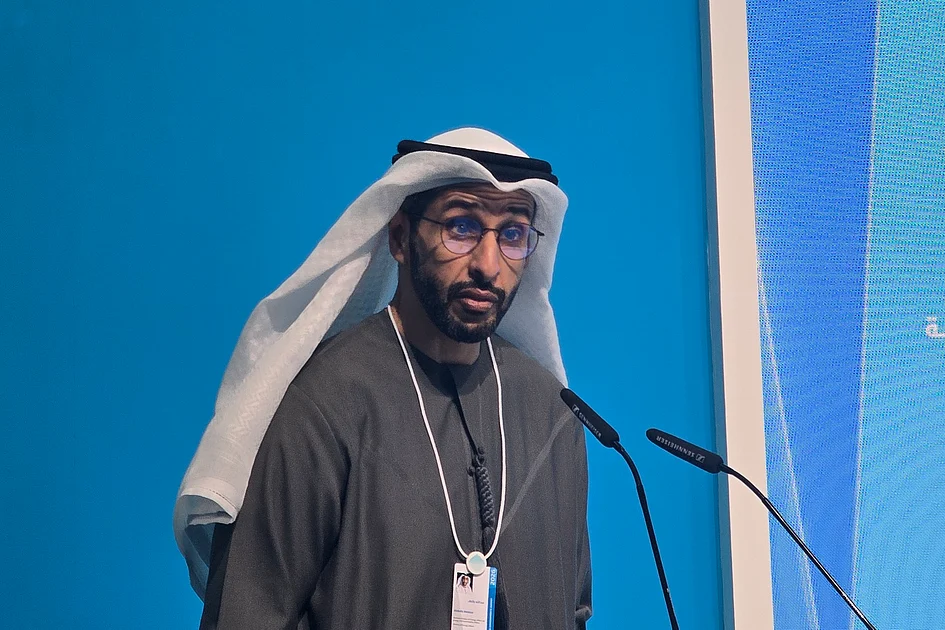
    The United Arab Emirates and Philippines have solidified a transformative economic alliance through a Comprehensive Economic Partnership Agreement (CEPA) that establishes a framework for sustained bilateral growth. Announced by Dr. Thani bin Ahmed Al Zeyoudi, UAE Minister of Foreign Trade, this agreement represents the fourth such partnership between the UAE and ASEAN nations, following similar pacts with Cambodia, Indonesia, and Vietnam.

    The agreement emerges from robust existing economic relations, with non-oil trade reaching approximately $940 million in 2024 and showing a remarkable 22.4% annual growth rate during the first three quarters of 2025. The Philippines, recognized as ASEAN’s second-fastest growing economy with 5.6% growth in 2024 and a nominal GDP of $471.8 billion, presents strategic advantages as a major logistics hub and member of the Regional Comprehensive Economic Partnership.

    Economic projections indicate the CEPA will contribute $2.4 billion to the UAE’s GDP by 2032 while boosting UAE exports to the Philippines to $7.62 billion within the same timeframe. The partnership eliminates or reduces customs duties on over 83% of tariff lines, covering key exports including polyethylene, petrochemicals, fertilizers, mechanical equipment, ceramics, glass, and metals.

    The agreement facilitates enhanced market access in services—a sector constituting 62% of the Philippine economy—while establishing regulatory frameworks for digital trade and effective dispute resolution mechanisms. Significant existing investments include DP World’s developments in Philippine ports and logistics infrastructure, alongside Masdar’s landmark $15 billion agreement for renewable energy projects targeting one gigawatt of clean energy capacity by 2030.

    With over 700,000 Filipinos residing in the UAE—the second-largest Filipino community in the Gulf—the agreement strengthens people-to-people connections while positioning the UAE as a central hub connecting Arab, European, Asian, and African supply chains. Both nations share aligned visions for building resilient, open economies committed to free trade principles and sustainable long-term growth.