标签: Africa

非洲

  • Deadly conflict in the Sahel sends herders fleeing to Africa’s coastal cities

    Deadly conflict in the Sahel sends herders fleeing to Africa’s coastal cities

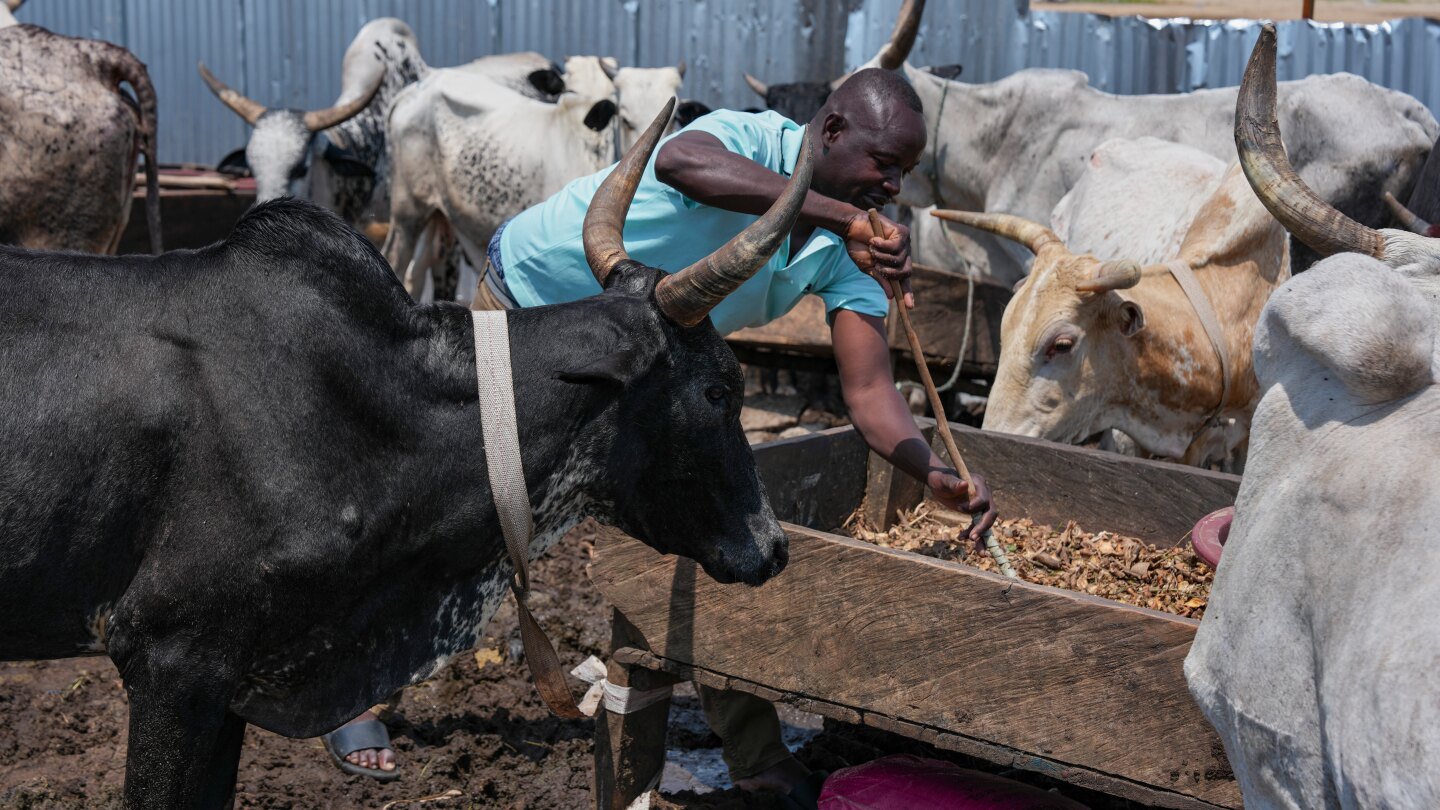
    ABIDJAN, Ivory Coast — For generations, Nouhoun Sidibè’s family identity was intertwined with pastoral life in northern Burkina Faso. That legacy shattered in 2020 when armed militants stormed his home, seizing his entire livestock inventory within minutes. The 49-year-old father of four suddenly joined thousands of displaced herders across Africa’s Sahel region—a vast semi-arid territory south of the Sahara desert experiencing escalating violence.

    For three subsequent years, Sidibè wandered through Burkina Faso seeking employment in a nation grappling with intensified attacks from armed factions, including al-Qaida affiliates. Finding no sustainable work, he eventually crossed into neighboring Ivory Coast in 2023. Now residing in a cramped, amenity-deficient settlement on Abidjan’s swampy outskirts, he assists cattle merchants with vaccinations—a stark departure from his former leadership role.

    “I feel profoundly disoriented. I was a community leader; now I labor for others,” Sidibè confessed to The Associated Press, embodying the identity crisis facing nomadic pastoralists compelled to abandon their traditions.

    This migration surge reflects the Sahel’s expanding security deterioration, which originated in Mali’s 2012 uprising and subsequently engulfed Burkina Faso and Niger. Ivory Coast—a regional economic hub with relative stability—has become a primary destination for those fleeing violence. UNICEF data reveals over 72,000 individuals sought refuge here from Mali and Burkina Faso between January and March 2024 alone, dramatically exceeding previous migration figures.

    Security analysts indicate armed groups systematically target herders to finance operations and dominate territories. Many displaced are ethnic Fulani Muslims, frequently accused of militant sympathies despite also suffering attacks. “A Fulani without cattle loses his fundamental identity,” explained Amadou Sonde, director of Burkinabè Fulani Associations in Ivory Coast, who assists newcomers finding urban employment.

    Academic researchers note some pastoralists transition into real estate or commerce, but most struggle with urbanization’s challenges. Tanané Ibrahim, who fled Burkina Faso after militants confiscated even his poultry, described urban adaptation difficulties: “Cities demand exhausting labor for minimal wages. After expenses, nothing remains.”

    With military juntas in Sahel nations increasingly overwhelmed by multifront assaults, experts foresee prolonged displacement. “This crisis shows no imminent resolution,” affirmed Oluwole Ojewale, conflict specialist at the Institute of Security Studies. For Sidibè and thousands like him, the pastoral freedom they cherished remains an unrecoverable memory.
  • Amnesty accuses Sudanese paramilitary of war crimes in assault on refugee camp

    Amnesty accuses Sudanese paramilitary of war crimes in assault on refugee camp

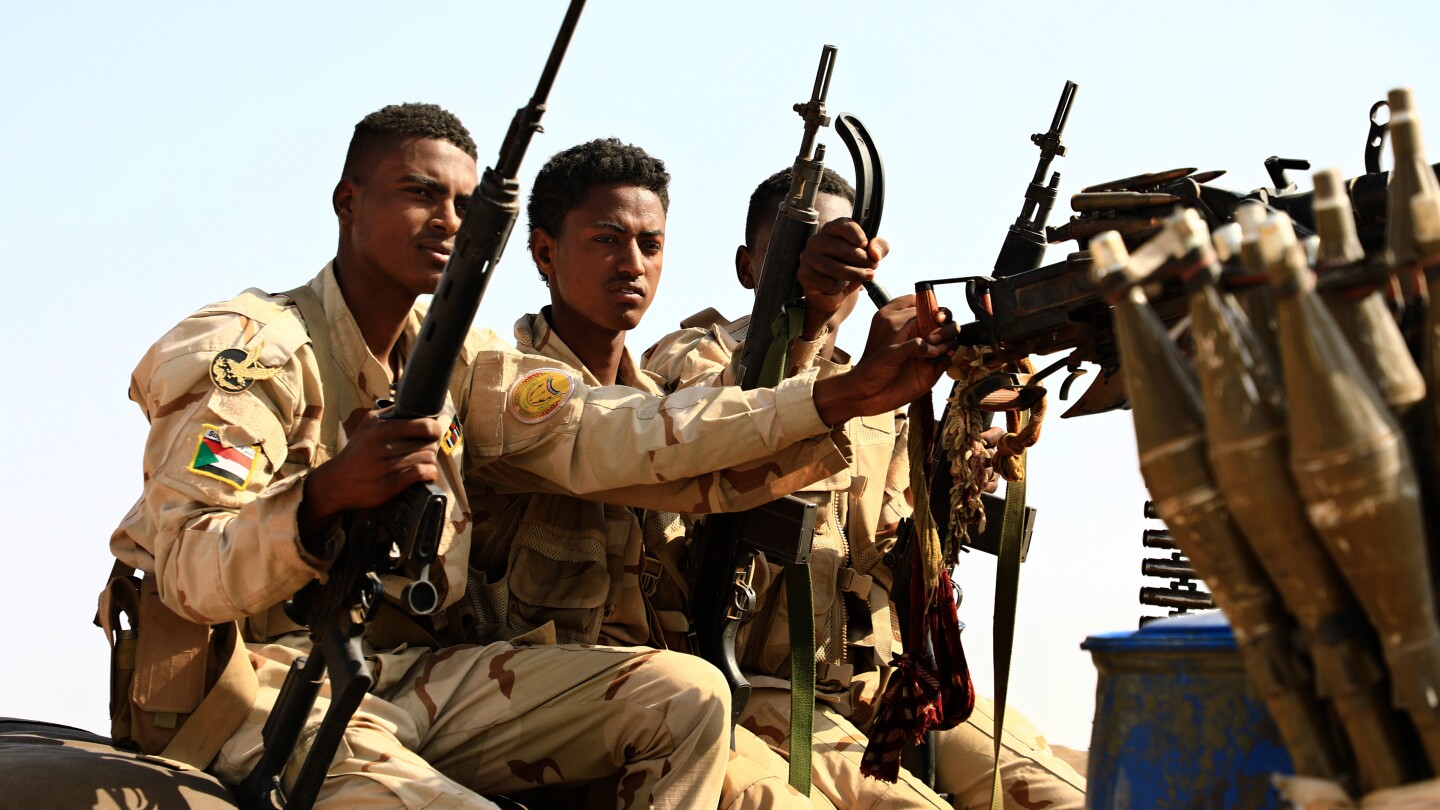
    Amnesty International has issued a damning report documenting systematic war crimes committed by Sudan’s Rapid Support Forces (RSF) during their April assault on Zamzam camp, the nation’s largest displacement settlement in the Darfur region. The comprehensive investigation reveals a pattern of atrocities including civilian executions, hostage-taking, and the deliberate destruction of essential infrastructure including mosques, schools, and medical facilities.

    The paramilitary group’s multi-day offensive on the camp, situated near el-Fasher—North Darfur’s provincial capital which subsequently fell to RSF control in October—represents what Amnesty describes as a sustained campaign targeting vulnerable populations. According to eyewitness accounts compiled by the organization, RSF fighters engaged in indiscriminate shooting in populated areas, sexual violence against women and girls, and the widespread burning of residential structures and markets.

    The attack, which occurred on April 11-12, effectively emptied the two-decade-old camp that had provided sanctuary to approximately 500,000 people originally displaced by earlier conflicts. Survivors recounted harrowing details to investigators, including the targeted killing of 47 individuals who had sought refuge in homes, clinics, and places of worship. One shell reportedly struck near a mosque during wedding ceremonies, causing multiple casualties.

    This incident occurs within the broader context of Sudan’s devastating 30-month civil war between the RSF and national military forces, which has claimed an estimated 40,000 lives and created the world’s most severe humanitarian crisis with over 14 million displaced. Both sides face allegations of atrocities, though the RSF—which evolved from the notorious Janjaweed militias responsible for early 2000s genocide in Darfur—faces particular international scrutiny.

    Amnesty Secretary-General Agnès Callamard condemned the ‘horrific and deliberate assault on desperate, hungry civilians,’ while simultaneously criticizing the United Arab Emirates for its alleged material support to the RSF. The UAE has consistently denied arms transfer accusations.

    International response continues to intensify, with the U.S. government accusing the RSF of genocide in Darfur and the International Criminal Court conducting active investigations into suspected war crimes throughout the conflict.

  • ILT20: Andries Gous dazzles as Vipers beat Capitals in opener

    ILT20: Andries Gous dazzles as Vipers beat Capitals in opener

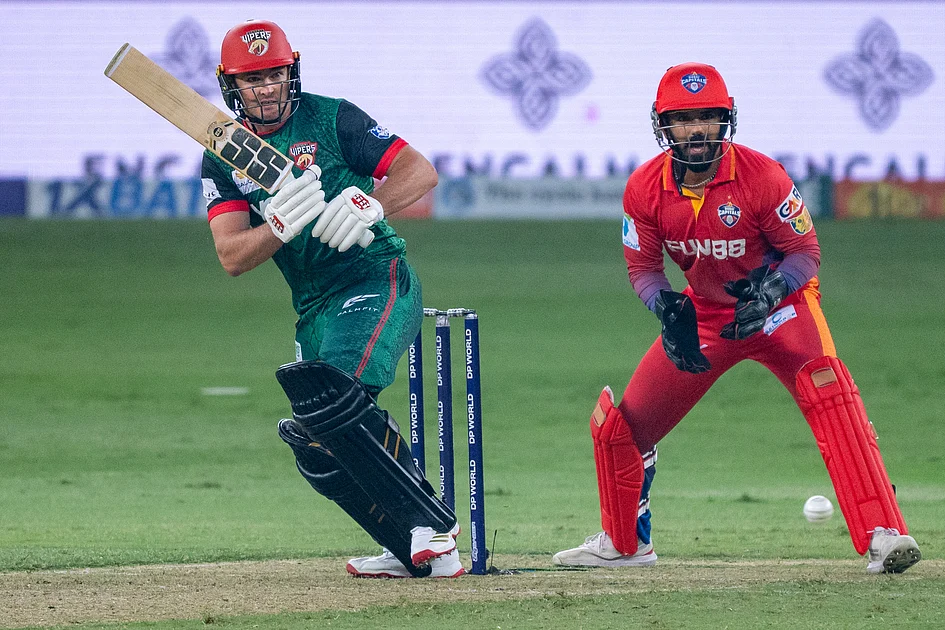
    In a dramatic opening match of the International League T20 season, Desert Vipers secured a hard-fought four-wicket victory against defending champions Dubai Capitals at Dubai International Stadium on Tuesday. The match served as a compelling rematch of last season’s final, delivering poetic justice for the Vipers who had suffered defeat on the same ground earlier this year.

    The Capitals, batting first after losing the toss, struggled to establish momentum against a disciplined Vipers bowling attack. Despite a promising start, they were restricted to 150/8 in their allotted 20 overs. West Indies powerhouse Rovman Powell top-scored with 39 from 22 deliveries, but consistent wicket-taking pressure from the Vipers’ bowling unit prevented any substantial partnerships from developing.

    South African wicketkeeper-batsman Andries Gous emerged as the undisputed hero of the match, delivering a spectacular performance that earned him Player of the Match honors. His explosive 58 runs from just 36 balls, featuring six boundaries and three maximums, provided the crucial foundation for the Vipers’ successful chase. Gous formed a devastating opening partnership with Pakistani star Fakhar Zaman (26 off 15 balls), the duo accumulating 50 runs in merely 28 deliveries.

    Though the Capitals mounted a late resurgence with quick wickets that saw the Vipers stumble to 109/4, composed finishing from England’s Dan Lawrence (19* off 16) and Khuzaima Tanveer (12* off 8) ensured victory was achieved with six deliveries remaining. The bowling honors were shared among multiple Vipers players, with David Payne (2/26), Noor Ahmad (2/25), and Tanveer (2/35) making significant contributions.

    The victory sets an impressive tone for the Vipers’ campaign in the tournament, demonstrating their capability to perform under pressure against the defending champions.

  • Trump says he doesn’t want Somalis in US as ICE plans Minnesota operation

    Trump says he doesn’t want Somalis in US as ICE plans Minnesota operation

    President Donald Trump has sparked controversy with explicit remarks regarding Somali immigrants during a cabinet meeting, stating he does not want them in the United States and suggesting they should return to their country of origin. The comments came alongside revelations of planned immigration enforcement operations targeting Minnesota’s substantial Somali community.

    Speaking candidly to reporters, Trump characterized Somalia as lacking structure and described accepting immigrants from such nations as bringing ‘garbage’ into the country. ‘I don’t want them in our country,’ Trump emphasized, dismissing concerns about political correctness. His remarks extended to criticism of Representative Ilhan Omar, the first Somali-American congresswoman, whom he labeled as incompetent and hateful.

    The verbal attacks coincided with reports from CBS News that U.S. Immigration and Customs Enforcement (ICE) has been directed to conduct targeted operations against undocumented Somali immigrants in the Twin Cities area. While federal officials denied targeting based on race or ethnicity, stating enforcement focuses solely on immigration status, local authorities expressed concerns about potential violations of due process and the sweeping up of American citizens.

    Minnesota hosts one of the largest Somali communities globally, with approximately 80,000 residents of Somali descent, most of whom are U.S. citizens. The planned enforcement follows recent tragic events in Washington DC, where a shooting incident involving National Guard members prompted intensified immigration crackdowns. The administration also considers ending Temporary Protected Status for Somali residents, affecting several hundred immigrants.

    Local leaders and officials, including Minneapolis Mayor Jacob Frey and Minnesota Governor Tim Walz, have condemned both the rhetoric and planned operations, arguing that indiscriminate targeting undermines legitimate law enforcement efforts and community trust.

  • OpenAI declares ChatGPT ‘code red’ over stiff competition: Media reports

    OpenAI declares ChatGPT ‘code red’ over stiff competition: Media reports

    OpenAI CEO Sam Altman has issued an urgent internal ‘code red’ directive in response to mounting competitive pressures in the artificial intelligence sector, according to multiple US media reports. The emergency declaration comes as the company’s flagship ChatGPT technology faces increasingly sophisticated challenges from rival AI systems, particularly Google’s recently launched Gemini model.

    In a company-wide memorandum circulated on Monday, Altman emphasized that OpenAI has reached a critical juncture requiring immediate strategic reallocation of resources toward fortifying ChatGPT’s competitive position. The memo explicitly stated that non-essential projects would be postponed indefinitely, including previously planned advertising initiatives for the chatbot and development of automated AI agents designed for commercial and healthcare applications.

    The urgency of this corporate maneuver is particularly notable given OpenAI’s extraordinary market valuation of approximately $500 billion, making it the world’s most valuable privately-held company. Despite this impressive valuation and intense investor interest, significant questions persist regarding the company’s capacity to monetize its technology effectively. The fundamental challenge remains generating sufficient revenue to offset the enormous operational costs associated with providing AI services to hundreds of millions of predominantly free users.

    This competitive alert signals a dramatic reversal in the AI landscape since ChatGPT’s groundbreaking debut three years ago, which initially caught established tech giants like Google by surprise. Google’s subsequent development and refinement of its Gemini AI platform represents one of the most significant competitive responses to OpenAI’s early market dominance. The intensified competition reflects the increasingly strategic importance of generative AI technologies within the broader technology sector, with multiple corporations now vying for leadership in this transformative field.

  • Look: UAE Rulers watch rare clips at Eid Al Etihad ceremony at new Zayed National Museum

    Look: UAE Rulers watch rare clips at Eid Al Etihad ceremony at new Zayed National Museum

    Abu Dhabi witnessed a profound historical narrative unfold on December 2nd as the UAE President and Rulers of all seven emirates convened for the 54th Eid Al Etihad ceremony at the newly inaugurated Zayed National Museum. This inaugural event at the architectural marvel designed by Foster + Partners served as both a National Day celebration and preview of the institution set to open to the public on December 3rd.

    The production masterfully transcended conventional historical presentation through multi-sensory storytelling. The desert landscape itself assumed the role of narrator, accompanied by archival radio recordings and citizen voices, guiding attendees through millennia of regional history. The ceremony challenged temporal boundaries by fluidly transitioning between ancient civilizations, pre-Union Bedouin communities, and contemporary achievements.

    A particularly poignant moment featured restored footage of the late Sheikh Zayed bin Sultan Al Nahyan driving his 1966 Chrysler Newport through the desert in 1968, his voice resonating through the hall with the traditional greeting ‘Y Marhba ya Zain’ (hello beautiful). The vehicle, meticulously restored after being located in the United States, now constitutes a centerpiece of the museum’s permanent collection.

    Technological innovation merged with artistic expression as drone formations over Abu Dhabi reconstructed symbolic artifacts from the museum’s holdings. These aerial displays represented archaeological treasures including the 8,000-year-old Abu Dhabi Pearl, the ancient metalworking site of Saruq Al Hadid, and carnelian trade beads demonstrating early commercial networks.

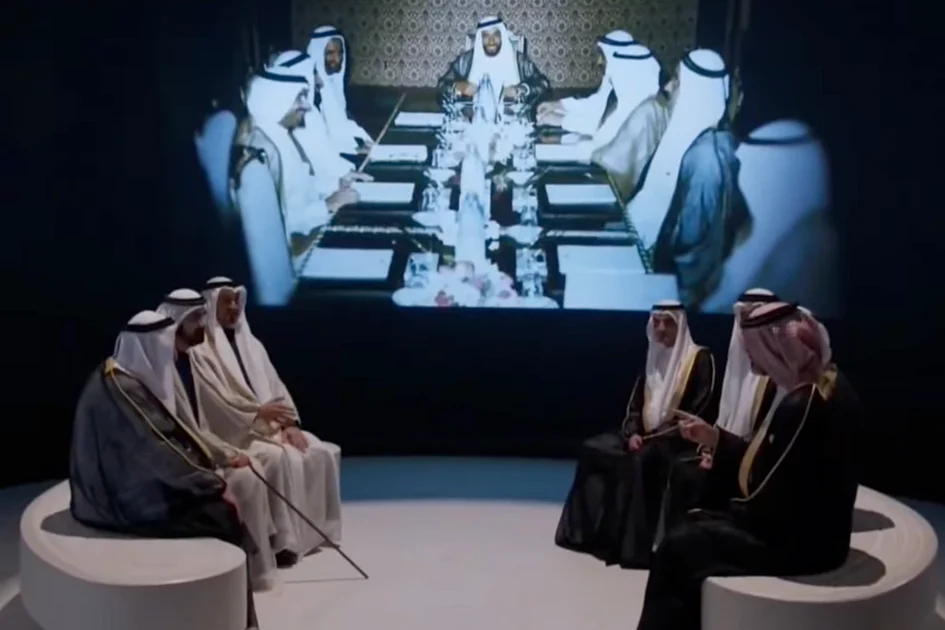
    The historical journey culminated with archival footage documenting the pivotal meetings between Sheikh Zayed and fellow rulers preceding the 1971 federation. The original radio broadcast announcing the UAE’s formation was seamlessly integrated into the ceremony, creating an auditory bridge across decades.

    Cultural milestones were achieved as the newly formed UAE National Orchestra delivered its inaugural public performance of the national anthem ‘Ishy Biladi’, uniting Emirati and international musicians. The production further highlighted post-union advancements in sustainability, nuclear energy, medical research, and space exploration, symbolized by a Mirage 2000-9 jet’s ascent representing extraterrestrial ambition.

    The ceremony concluded with children’s performances emphasizing unity and responsibility, reinforcing that Sheikh Zayed’s legacy continues evolving through future generations who will shape the nation’s destiny.

  • Look: Fireworks, drones light up Dubai skies as UAE celebrates 54th National Day

    Look: Fireworks, drones light up Dubai skies as UAE celebrates 54th National Day

    The skies above Dubai transformed into a canvas of light and color on Tuesday evening as the United Arab Emirates commemorated its 54th National Day with breathtaking celebrations. The landmark occasion featured synchronized fireworks displays and sophisticated drone light shows that captivated residents and visitors alike, creating a visual spectacle across the city’s iconic skyline.

    The meticulously choreographed events represented a significant milestone in the nation’s history, marking 54 years since the federation’s establishment in 1971. The celebrations demonstrated the UAE’s technological advancement through the deployment of hundreds of drones that formed intricate patterns and national symbols against the night sky, while traditional fireworks provided a complementary display of pyrotechnic artistry.

    Authorities organized multiple viewing areas across Dubai to accommodate the large crowds gathering to witness the festivities. The events were designed to reinforce national unity and pride while showcasing the Emirates’ capacity for organizing world-class public celebrations. The coordination between various government entities ensured both the spectacular visual impact and the safety of all participants.

    The National Day celebrations also included cultural performances and traditional activities throughout the day, culminating in the evening aerial displays. The events reflected the country’s progressive vision while honoring its rich heritage and cultural traditions, creating a meaningful blend of historical remembrance and futuristic expression.

  • Was it coup or was it a ‘sham’? Behind Guinea-Bissau’s military takeover

    Was it coup or was it a ‘sham’? Behind Guinea-Bissau’s military takeover

    In a development that has left regional experts questioning conventional coup narratives, Guinea-Bissau’s political landscape has been dramatically reshaped by what some are calling a ‘ceremonial coup.’ The events unfolded last Wednesday when military personnel seized control of key government institutions, detained President Umaro Sissoco Embaló, and suspended the electoral process just days after presidential elections.

    The military intervention occurred under highly unusual circumstances that have prompted widespread skepticism among political analysts and regional leaders. While soldiers occupied the presidential palace and state television stations—classic coup indicators—the subsequent events deviated markedly from standard military takeover protocols. President Embaló maintained communication with international media during his detention and was permitted to depart for Senegal on a military flight within 24 hours of his arrest, an exceptionally rapid release unprecedented in recent African coup history.

    Compounding the mystery, the newly installed military leader, General Horta N’Tam, had been widely regarded as a close ally of the deposed president. The military leadership has vehemently rejected the term ‘coup,’ instead claiming their actions prevented a destabilization plot backed by unnamed politicians and a known drug baron. Meanwhile, attackers destroyed the electoral commission’s main server, effectively eliminating any possibility of verifying the presidential election results that were scheduled for release the day after the military intervention.

    Regional reactions have been notably skeptical. Former Nigerian President Goodluck Jonathan, who was observing the elections, characterized the events as a ‘ceremonial coup’ rather than a genuine military takeover. Senegalese Prime Minister Ousmane Sonko similarly dismissed the situation as a ‘sham,’ prompting Embaló’s abrupt departure from Senegal to Congo-Brazzaville.

    The political context reveals deeper tensions. President Embaló had previously dissolved the opposition-dominated parliament in 2023 following another alleged coup attempt, ruling without legislative oversight. His main electoral opponent, Fernando Dias da Costa, had been backed by former Prime Minister Domingos Pereira, who was controversially disqualified from the presidential race. Both Embaló and Dias had claimed victory in the election before the military intervention.

    Public response has been divided, with some citizens welcoming military intervention while others protest demanding transparency. Hundreds demonstrated calling for Pereira’s release and the publication of election results, while civil society groups have initiated strikes and civil disobedience campaigns. The country now faces an uncertain future under a transitional military government that promises to rule for one year before restoring civilian governance.

  • Some friendly, some on-the-news questions at first briefing for new Pentagon press corps

    Some friendly, some on-the-news questions at first briefing for new Pentagon press corps

    The Pentagon has ushered in a new era of media relations under Defense Department chief Pete Hegseth, with Tuesday’s briefing demonstrating a dramatic shift from traditional press interactions. Kingsley Wilson, the newly appointed press secretary, conducted her first briefing under controversial new rules that have effectively excluded most nonpartisan news organizations in favor of conservative-leaning outlets.

    The briefing revealed a transformed dynamic where questions ranged from softball inquiries to performative exchanges, with Wilson consistently adhering to administration talking points while occasionally criticizing legacy media. This transition follows Hegseth’s implementation of new credentialing rules that mainstream outlets argue severely limit press freedom and critical reporting capabilities.

    Among the topics addressed were sensitive military operations, including scrutiny over U.S. strikes on suspected drug courier boats off South America. When questioned about reports that a secondary strike killed two survivors from an initial attack, Wilson emphasized that President Trump and Defense Secretary fully authorized all actions taken by Admiral Frank Bradley.

    The session grew particularly contentious when addressing The Washington Post’s reporting that Hegseth had issued a verbal order to ‘kill everybody’ on one targeted boat. Wilson aggressively dismissed the publication, suggesting readers ‘should think twice about reading that outlet again,’ while hinting at potential legal action against the newspaper.

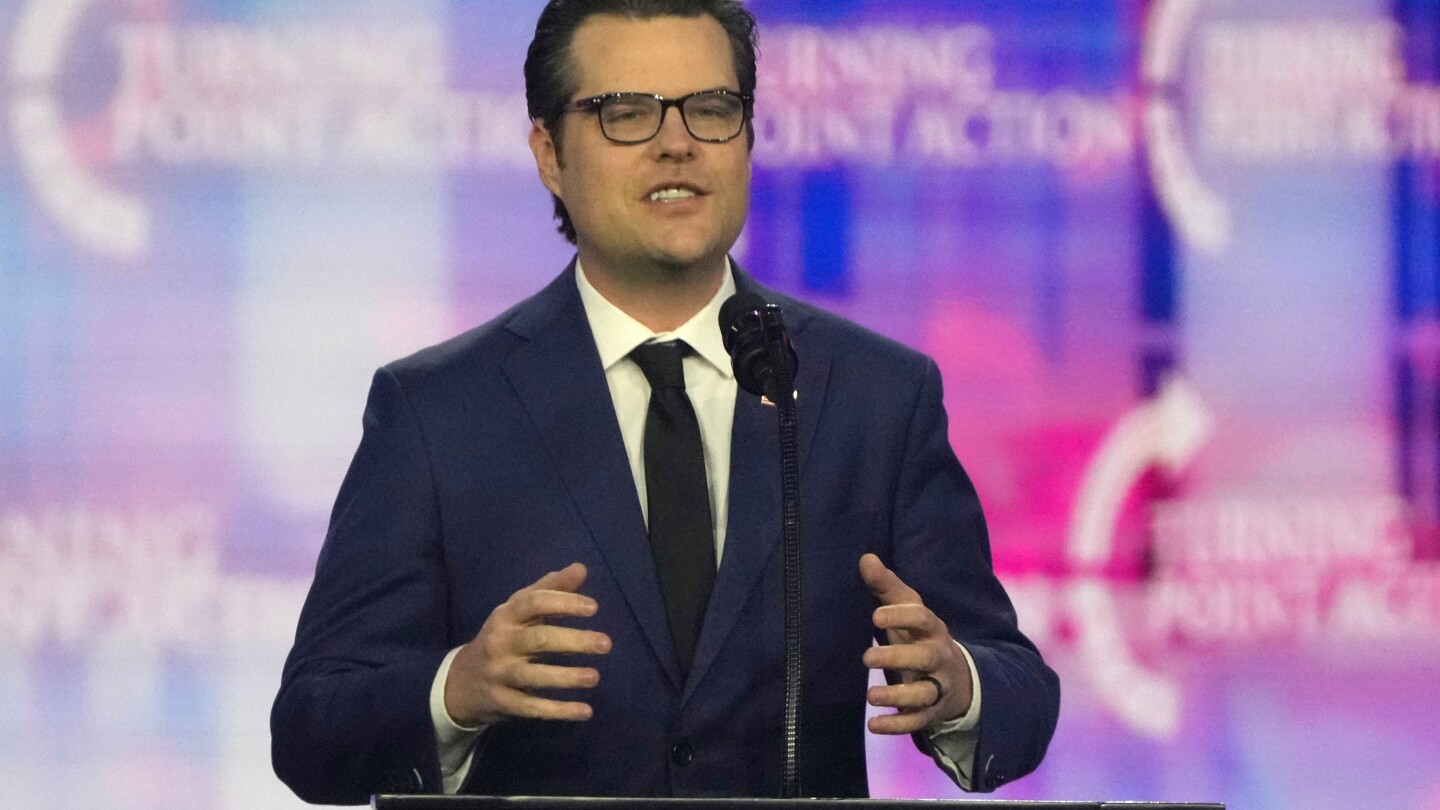
    Notable participants included former Congressman Matt Gaetz, now credentialed for One America News, who inquired about Pentagon plans for Venezuela should President Trump oust Nicolás Maduro. Wilson’s evasive responses to several substantive questions drew criticism from veteran journalists observing remotely.

    Barbara Starr, retired CNN Pentagon correspondent, noted that while reporters asked ‘very good, pointed, on-the-news questions,’ they largely ‘didn’t get good answers.’ Starr characterized the event as journalistically unsound due to the exclusion of major news organizations.

    The briefing also featured supportive questions from conservative commentators, including James O’Keefe, who asked about rooting out ‘disloyal Pentagon employees’—a query Wilson praised as ‘important work.’

    The Defense Department has explicitly stated that future briefings will be for ‘invited press only,’ signaling a permanent departure from traditional Pentagon press relations and raising concerns about transparency in military reporting.

  • Tunisian police detain leading human rights defender as crackdown on critics widens

    Tunisian police detain leading human rights defender as crackdown on critics widens

    Tunisian security forces detained distinguished human rights attorney Ayachi Hammami at his residence near the capital on Tuesday, executing a five-year prison sentence mandated last week in a highly controversial state security case. The arrest marks the latest escalation in President Kais Saied’s comprehensive campaign against political opposition in the North African nation.

    Hammami stands among approximately forty individuals—including prominent politicians and business leaders—who received prison terms ranging from two to forty-five years in the same alleged conspiracy case. International human rights organizations have universally condemned the judicial proceedings, with Human Rights Watch and Amnesty International characterizing them as politically motivated maneuvers designed to eliminate dissent.

    In a pre-recorded statement released following his detention, Hammami declared an indefinite hunger strike until his freedom is secured. “I will transform the confinement space into which Kais Saied intends to place me into an arena of continued resistance,” the veteran rights defender asserted. “We collectively endure the oppression of this regime—our imperative remains unification against tyranny.”

    Fida Hammami, the attorney’s daughter, provided firsthand testimony to The Associated Press, describing the judicial process as fundamentally compromised. “The court that issued this verdict has relinquished all pretense of independence,” she stated, noting the trial featured “baseless allegations and systematic violations of due process standards.”

    Her assessment echoes broader concerns about Tunisia’s democratic backsliding since President Saied consolidated power in 2021. The Hammami case coincides with the arrest of Chaima Issa, opposition leader of the National Salvation Front, who received a twenty-year sentence and has similarly initiated a hunger strike protesting her detention by plainclothes officers in an unmarked vehicle.

    The Tunisian government maintains these prosecutions constitute essential national security measures against destabilization plots. Official statements repeatedly deny political motivations, framing the cases as necessary protections against threats to state stability.

    This developing situation underscores the continuing erosion of civil liberties in the nation that sparked the Arab Spring uprisings, drawing increased international scrutiny toward Saied’s administration and its treatment of government critics.