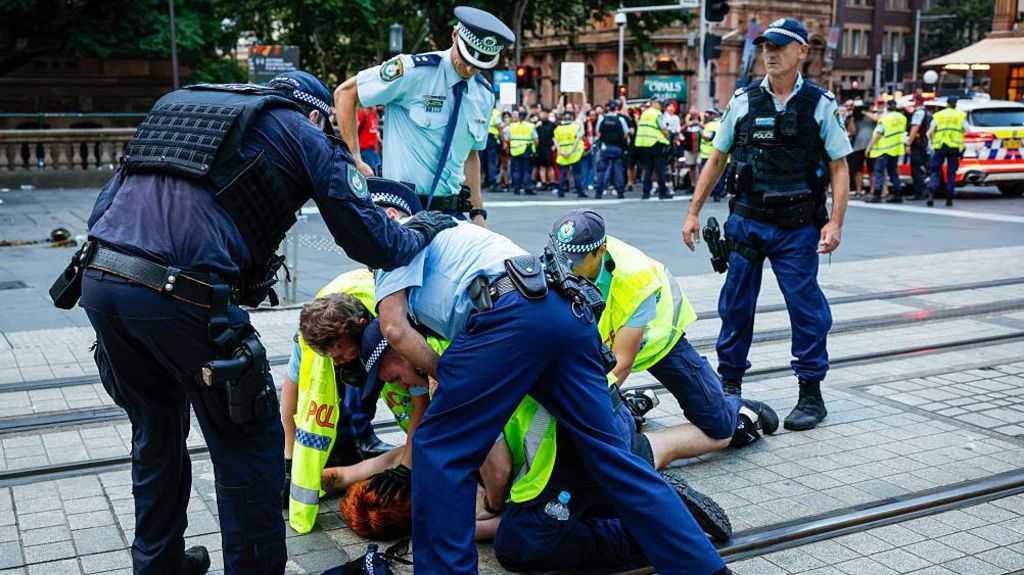
Australia’s New South Wales (NSW) police oversight body has initiated a formal investigation into officer conduct during violent protests against Israeli President Isaac Herzog’s visit to Sydney. The Law Enforcement Conduct Commission (LECC) announced Friday it would examine Monday’s police operation following numerous public complaints alleging misconduct.
Visual evidence circulating online appears to depict law enforcement personnel striking demonstrators and forcibly removing a group of Muslim men engaged in prayer. Among those reporting injuries was a state parliamentarian present at the rally. The Palestine Action Group (PAG), which organized the demonstration, has characterized the police response as exhibiting ‘all the hallmarks of a police riot’ targeting peaceful protesters.
The controversy stems from thousands gathering to protest President Herzog’s Australian visit, with demonstrators accusing him of inciting genocide in Gaza—allegations he strongly denies. The government had extended the invitation following December’s antisemitic attack at Bondi Beach, intending to support the Jewish community’s healing process.
NSW Police Commissioner Mal Lanyon previously praised officers’ ‘remarkable restraint,’ while Premier Chris Minns described police as being ‘put in an impossible situation.’ The Australian National Imams Council expressed dismay that police conduct didn’t reflect ‘the Australia we know,’ demanding an official apology.
The LECC confirmed it would review all available evidence, including video footage, and conduct hearings before delivering a public report to state parliament. Twenty-seven arrests were made during the protest, with nine individuals subsequently charged, and ten officers reporting assaults.
This incident occurs amid heightened tensions over newly implemented protest restrictions following the Bondi attack, which granted police expanded authority to designate ‘major events’ and control demonstration areas. Monday’s rally proceeded just thirty minutes after protesters failed to overturn these special designation powers in court.