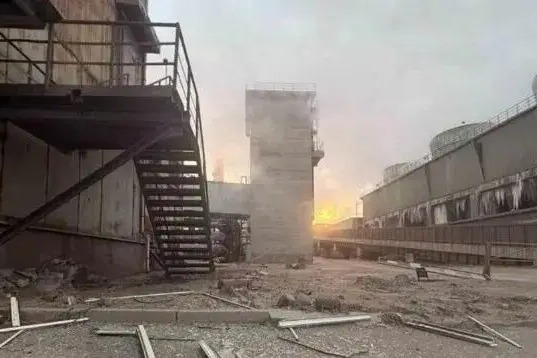
A catastrophic explosion at a Baotou steel facility in China’s Inner Mongolia Autonomous Region, which resulted in 10 fatalities and 84 injuries this past January, has been officially attributed to severe supervisory negligence. According to Li Haowen, Director of Investigation and Statistics at the Ministry of Emergency Management, the disaster was entirely preventable.
The incident originated from a significant leak in a steam sphere tank. Despite the clear danger, production was deliberately not halted. Li revealed at a Beijing press briefing that the tank had been leaking heavily for approximately 90 minutes prior to the explosion. Shockingly, two on-site supervisors, under pressure to maintain output, explicitly ordered work to continue. This decision proved fatal for everyone in the immediate vicinity, including the supervisors themselves.
Li condemned the lapse in safety protocols, stating, “The supervision was not done properly. It harmed others and also harmed the supervisors.” While presenting an annual safety report, he noted that China’s overall workplace safety situation remained “generally stable” in 2025, with major accidents kept to single digits. However, he emphasized that the lessons from this and other incidents were “extremely painful.
The official further criticized a broader pattern of corporate misconduct, citing companies that “failed to do basic work well, rushed schedules blindly, and engaged in corner-cutting, falsification, and other misconduct.” He illustrated this with another case involving the collapse of a highway bridge section in Maerkang, Sichuan, where a surveying company had falsified borehole data, planting major hidden risks. Li concluded that these tragedies underscore the fundamental principle that high-quality development must be built upon a foundation of high-level safety.