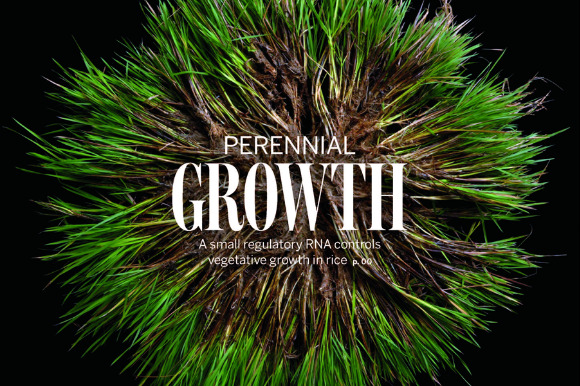
Chinese researchers have achieved a groundbreaking advancement in agricultural science by identifying and cloning a crucial “longevity gene” from wild rice varieties. This discovery, published on the cover of the journal Science, represents a significant step toward transforming rice from an annual crop into a perennial plant capable of regrowing year after year without replanting.
The research team from the Chinese Academy of Sciences’ Center for Excellence in Molecular Plant Sciences spent eight years investigating the genetic mechanisms that distinguish perennial wild rice from domesticated annual varieties. Their research revealed that a mutation in the EBT1 gene during early domestication caused rice to lose its perennial characteristics as humans selectively bred for higher grain production and faster growth cycles.
Lead scientist Han Bin explained that by reintroducing the EBT1 gene into high-yield cultivated rice, researchers have successfully created a perennial “wild-like rice” that has survived in field conditions for over two years in Hainan province. The plant demonstrates a unique biological capability to reverse its developmental program, transitioning back from the reproductive stage to vegetative growth every three to four months, effectively resetting its physiological age.
This biological mechanism enables “one planting, multiple harvests”—a feature that could revolutionize rice farming practices. The bred perennial rice shows remarkable productivity, generating approximately 70 secondary tillers compared to the dozen typically produced by wild-type parent plants.
The development holds profound implications for sustainable agriculture, potentially reducing labor requirements, minimizing soil erosion through eliminated tilling, and contributing to carbon sequestration efforts. Science journal highlighted the environmental benefits, noting that perennial rice could significantly slow soil erosion while ensuring food security through reduced planting cycles.
Field observations continue as scientists monitor the long-term viability and agricultural performance of this genetically enhanced rice variety, which could fundamentally transform global rice production methods.