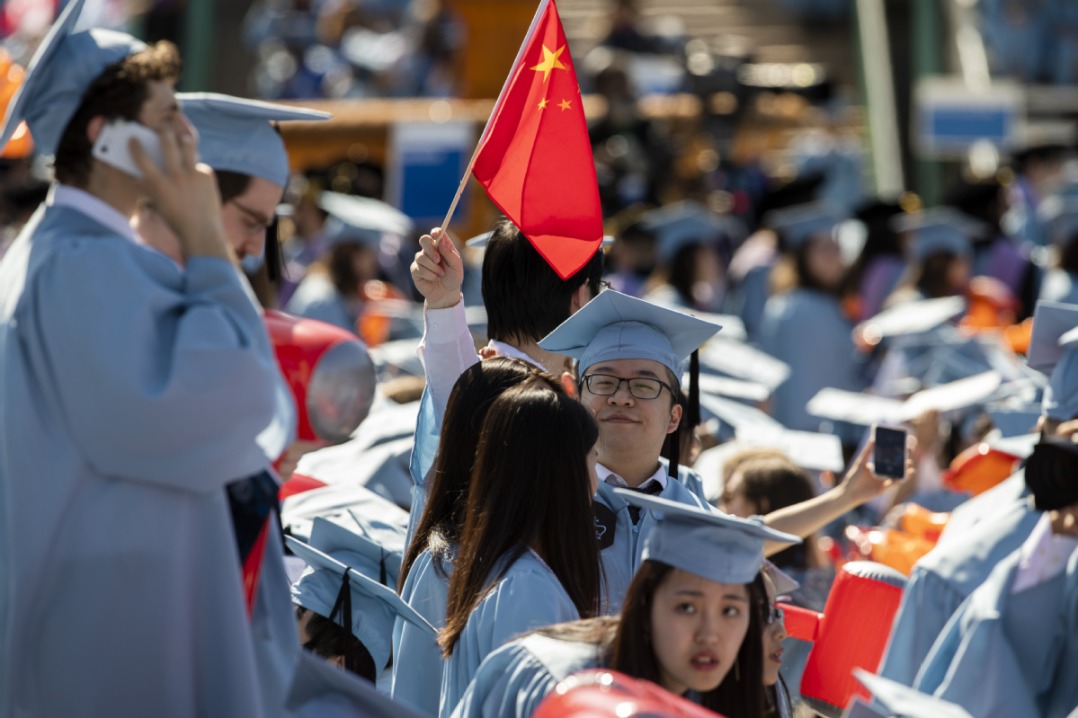
The 2026 China Study Abroad Forum, which kicked off Friday in Beijing, has released fresh data outlining evolving trends in overseas education and talent mobility for Chinese students, revealing a consistent pattern of skilled graduates returning home to build their careers after completing international study programs.
According to figures presented by Wang Daquan, director of the Chinese Service Center for Scholarly Exchange, 570,600 Chinese students enrolled in overseas higher education programs during 2025, marking sustained strong interest in international academic experience despite shifting global geopolitical and economic conditions. Most notably, the number of graduates returning to China after finishing their studies overseas climbed to 535,600 last year — an increase of 40,600 compared to 2024, and a jump of 120,000 from 2023 levels.
Cumulative data stretching back to the launch of China’s reform and opening-up policy in 1978 underscores the long-term scale of this mobility: between 1978 and 2024, a total of 8.88 million Chinese students pursued education overseas, 7.43 million completed their programs, and more than 6.44 million ultimately chose to return to China after graduation.
A new employment trends report released alongside the official data confirms that the flow of high-skilled talent back to China is accelerating, with more than half of all current overseas graduates reporting increased intent to launch their careers in China. Geographically, traditional major talent hubs including Beijing, Shanghai, and the Guangdong-Hong Kong-Macao Greater Bay Area continue to attract the majority of returning graduates. However, emerging new first-tier cities such as Hangzhou, Chengdu, Suzhou, and Chongqing have rapidly grown in popularity, fueled by targeted pro-talent policies and rapid local industrial upgrading that creates high-quality professional opportunities. When it comes to industry choice, the report identifies finance, information technology, and education as the three most popular sectors for returning Chinese graduates.
International stakeholders emphasized the mutual value of cross-border academic exchange at the forum. Jo Johnson, former UK Minister of State for Universities, Science, Research and Innovation, highlighted that global education must evolve beyond the historic one-way flow of students moving from East to West, and instead embrace a circular, reciprocal model of mobility that benefits all nations. “One thing remains constant, and that’s the fact that education is the most durable bridge between countries,” Johnson said. He added that cross-border student mobility delivers three core, lasting benefits: it drives academic growth through exposure to diverse teaching methods, research cultures and intellectual traditions; it builds deeper intercultural understanding; and it fosters long-lasting professional and personal networks that span borders.
Ren Youqun, Vice-Minister of Education of China, noted that China’s education sector has grown into an increasingly influential global player, characterized by rising academic quality, greater openness to international collaboration, and a strong focus on cultivating social responsibility in students. He described overseas study as a critical infrastructure for cross-civilizational mutual learning and a core pillar of global talent exchange, calling on all nations to strengthen communication, deepen collaborative partnerships, and build more welcoming, inclusive environments for international students worldwide.
Li Peng, president of Zhengzhou University and a longstanding beneficiary of China’s national study abroad policy, shared her personal experience to illustrate the transformative impact of international education. In autumn 1988, Li traveled from Beijing to the United States to pursue her first overseas academic program on a Chinese government scholarship. After completing her master’s degree and doctorate in the U.S., and gaining additional work experience in Singapore and Hong Kong, Li returned to take up a position at Tsinghua University in 2005. “My study and work experiences overseas have been invaluable assets, expanding not only my knowledge but also my mindset, allowing me to understand and see the world from a broader perspective,” she said.