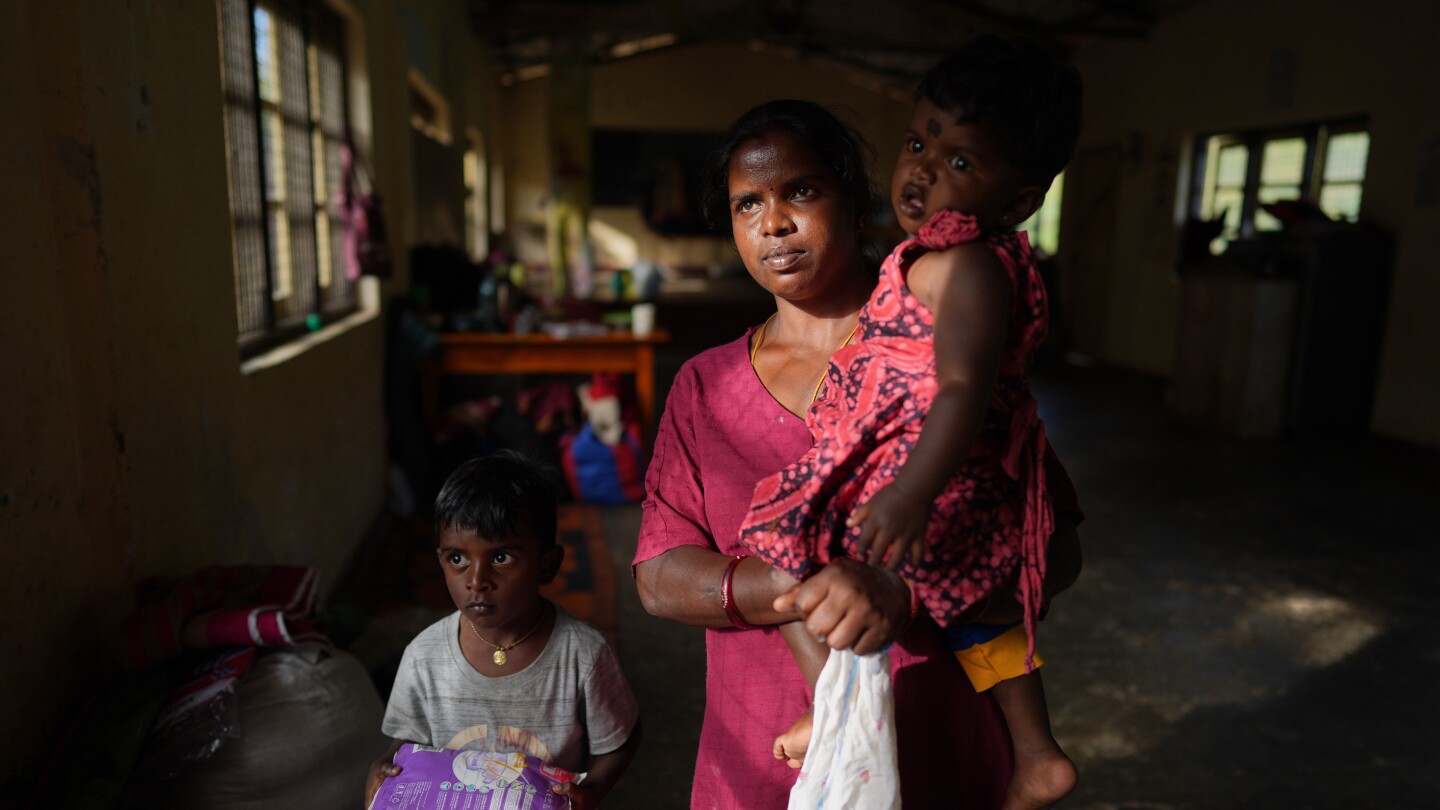
The devastating impact of Cyclone Ditwah has laid bare the extreme vulnerabilities facing Sri Lanka’s tea plantation communities, where centuries-old systemic inequalities have amplified a natural disaster into human tragedy. In the hilly central regions, entire communities of Malaiyaha Tamil workers—descendants of indentured laborers brought from India during British colonial rule—have been virtually erased by catastrophic landslides and flooding.
Survivors like Kumaran Elumugam returned from work to discover his home completely buried, claiming six family members including his wife, mother-in-law, and grandchildren. “The small one is still under the mud,” he lamented, encapsulating the horrifying human toll. Across the affected regions, over 640 lives were lost with hundreds more missing, while more than 100,000 homes were destroyed or damaged.
The disaster disproportionately impacted tea workers who typically inhabit primitive 150-year-old colonial-era structures measuring barely 100 square feet, often housing eight family members with inadequate sanitation facilities. Climate researcher Melanie Gunathilaka noted that while tea plantations on flatter ground remained largely unaffected, worker settlements situated near dangerous mountain slopes were completely destroyed—a stark illustration of how little value has been placed on these communities’ safety.
These communities, representing Sri Lanka’s fourth-largest ethnic group, survive on wages well below the minimum of 1,200 rupees ($4) per day with limited access to education, healthcare, or alternative employment. The catastrophe has exposed how climate vulnerability intersects with preexisting socioeconomic disparities.
The government has promised compensation packages and new housing initiatives, including an Indian-assisted project to build 7,000 homes. Deputy Minister Sundaralingam Pradeep confirmed negotiations with tea companies to identify safer lands for reconstruction. However, survivors report continuing to work under dangerous conditions as companies provide no support without labor.
Beyond immediate recovery, Sri Lanka faces profound climate adaptation challenges. The nation accounts for less than 1% of global emissions yet ranks among the most vulnerable to climate impacts. According to UN estimates, Sri Lanka loses over $300 million annually to climate-related disasters, with 19 million citizens living in disaster-prone areas.
The country’s massive debt burden—owing billions to the IMF, multilateral banks, and national creditors—severely hampers climate resilience efforts. As analyst Sandun Thudugala observed, “Disasters don’t break the system. They expose the already broken systems.” Without debt relief and significant investment in climate-resilient infrastructure, early warning systems, and adaptive housing, Sri Lanka’s most marginalized communities remain trapped in a cycle of vulnerability despite contributing minimally to the global climate crisis.