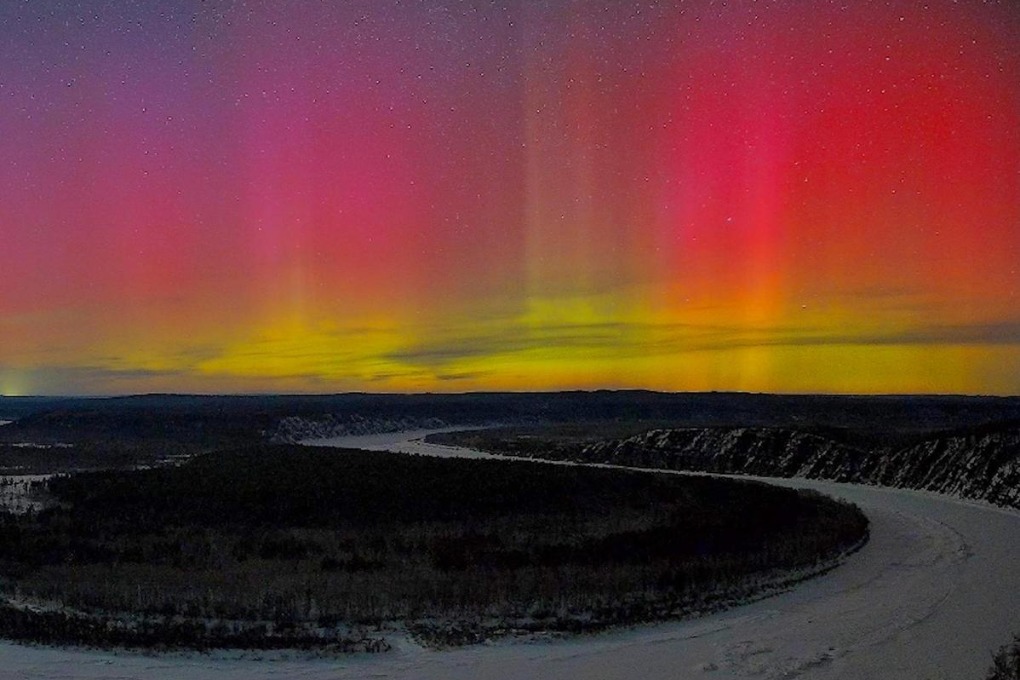
Residents and skywatchers in Northeast China’s Heilongjiang province were treated to a spectacular natural light show as vibrant auroras painted the night sky from March 22 through the early hours of March 23, 2026. The celestial phenomenon, typically associated with polar regions, became visible across multiple locations in China’s northernmost province due to intensified geomagnetic activity.
The auroral display was particularly prominent in Mohe city, China’s northernmost settlement, where photographers captured stunning images of the dancing lights. The phenomenon occurred as charged particles from solar winds interacted with Earth’s magnetosphere, creating the colorful patterns that shimmered across the heavens.
Scientists note that such visible aurora displays at relatively low latitudes remain uncommon, making this event particularly noteworthy for both astronomical observers and the general public. The occurrence provides valuable research opportunities for space weather specialists studying the effects of solar activity on Earth’s magnetic field.
The event attracted significant attention from photography enthusiasts and nature lovers who braved the cold nighttime temperatures to witness the rare atmospheric spectacle. Local tourism officials reported increased visitor interest in the region following the celestial event.