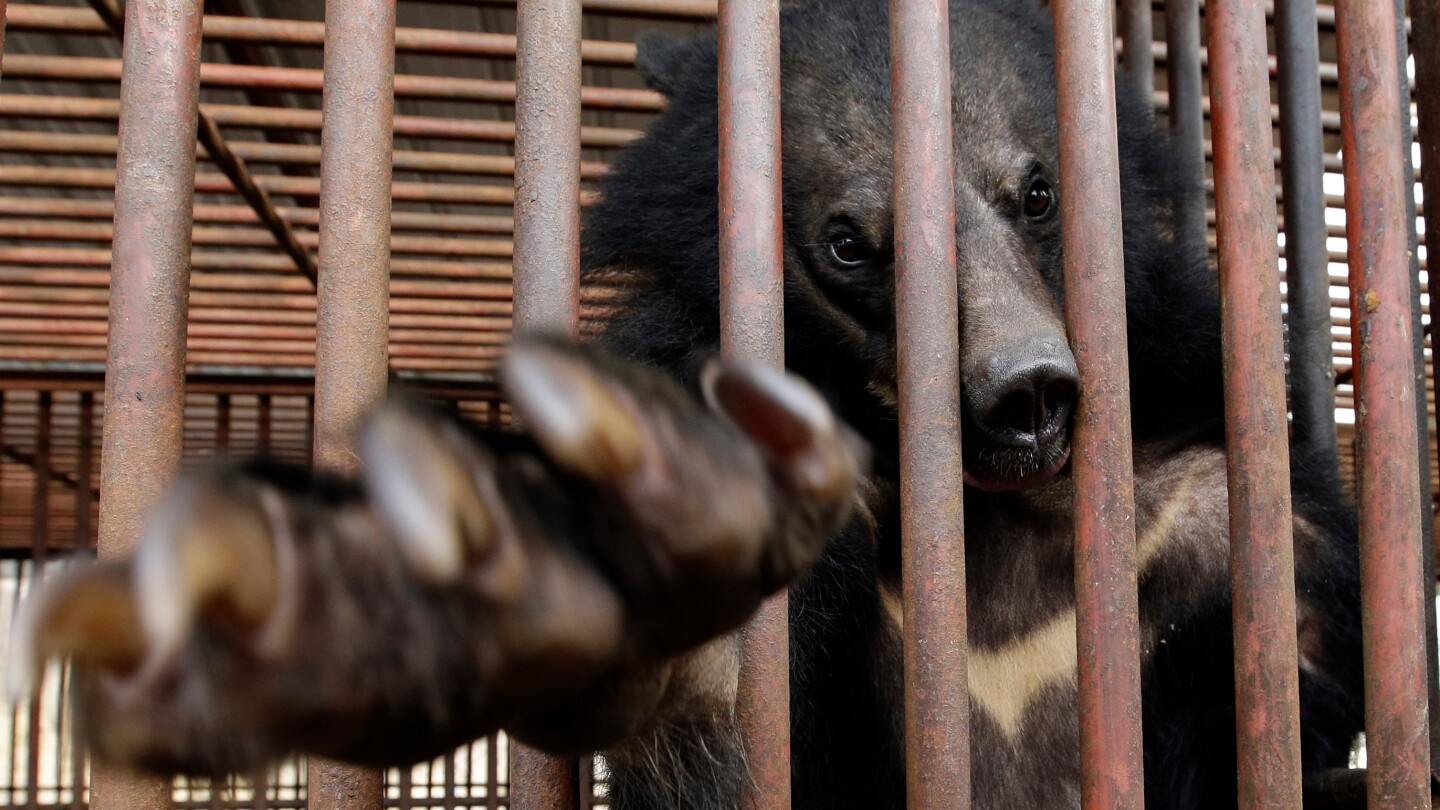
SEOUL, South Korea — In a historic decision for animal welfare, South Korea has officially prohibited its long-controversial bear bile farming industry effective January 1st. The Ministry of Climate, Energy and Environment announced the comprehensive ban on bear breeding, possession, and bile extraction, implementing revised animal protection legislation that mandates prison sentences of two to five years for violations.
This industry, one of the few remaining globally, primarily involved Asiatic black bears (moon bears) farmed for their gall bladders used in traditional medicine. The practice has dramatically declined over the past twenty years due to skepticism about medicinal efficacy, availability of affordable alternatives, and growing public consciousness about animal cruelty.
The prohibition executes a 2022 tripartite agreement between government authorities, farmers, and animal rights organizations to terminate bear bile operations by 2026. Under this arrangement, animal advocacy groups are tasked with purchasing bears from farmers while the government establishes sanctuary facilities.
Implementation challenges persist as approximately 199 bears remain confined across 11 domestic farms. Disagreements over appropriate compensation amounts have slowed the transition process. Thus far, 21 bears have been successfully relocated to a government-operated sanctuary in Jeolla province.
The Environment Ministry has instituted a six-month grace period for existing farmers and will enforce financial incentives for those maintaining proper care until bears can be transferred. Environment Minister Kim Sungwhan characterized the move as demonstrating “our country’s resolve to improve welfare of wild animals and fulfill our related responsibility,” pledging to ensure protection “until the last one.”
Farmer perspectives reveal the economic complexities. Kim KwangSoo, who maintains 78 bears in Dangjin, described the policy as “very bad,” noting substantial debts from upkeep costs despite his intention to comply with regulations.
While animal rights organizations applaud the prohibition, they highlight infrastructure shortcomings. Current sanctuary capacity remains inadequate, with existing facilities accommodating only 30-49 bears versus the hundreds requiring relocation. A second planned facility has faced delays, now scheduled for 2027 opening due to flooding complications.
Korea Animal Rights Advocates director Cheon JinKyung acknowledged the government’s progressive stance while emphasizing that “there aren’t sufficient measures to protect bears” and “there aren’t place where these bears can stay.” The industry originated in the early 1980s with bears imported from Southeast Asia, once numbering over 1,000 animals before the recent decline.