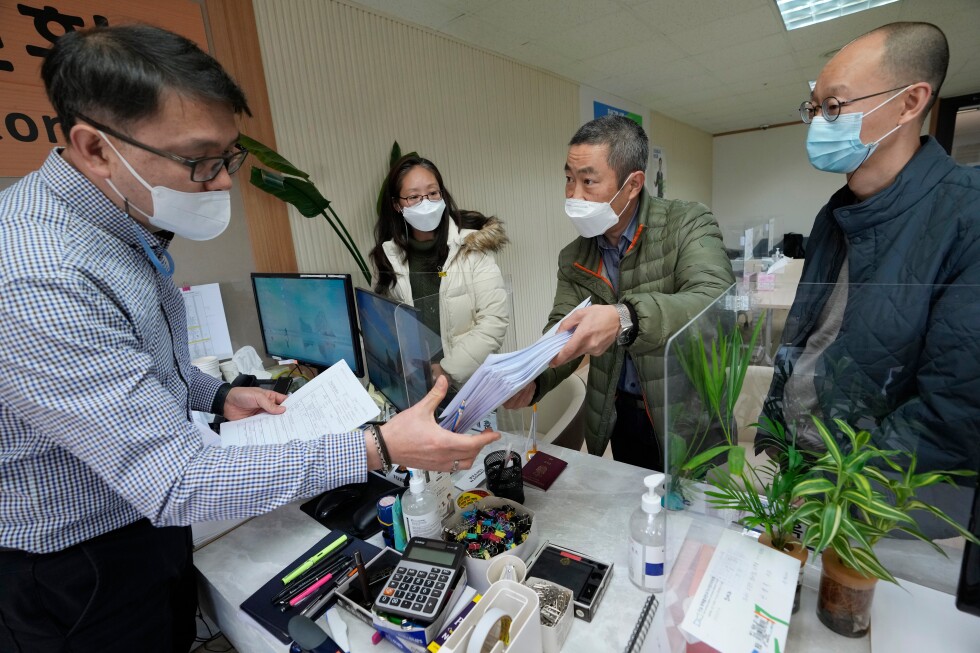
South Korea has inaugurated a new Truth and Reconciliation Commission with an expanded mandate to examine historical human rights violations, placing particular emphasis on systemic corruption within the nation’s foreign adoption program that spanned decades. This third such commission in the country’s history commenced operations on Thursday, accepting new cases while inheriting over 2,100 unresolved complaints from its predecessor, whose mandate concluded last November.
The commission’s investigative scope encompasses 311 previously deferred or incompletely reviewed cases submitted by Western-based Korean adoptees. This follows the abrupt termination of a landmark adoption investigation in April last year by the previous commission, which stalled due to internal disagreements regarding case eligibility criteria.
Advocacy groups report substantially heightened interest among the adoptee community, with hundreds already seeking investigations—many from the United States, which received the largest proportion of Korean children over the past seventy years despite being underrepresented in previous inquiries.
However, operational challenges may delay substantive investigations until mid-year. The government has yet to appoint a commission chair, and investigative teams remain unformed, with initial operations being managed by civil servants responsible for case registration and documentation.
Established under legislation enacted in January, the commission’s broadened authority extends beyond adoption cases to examine other government-attributable human rights violations, including civilian massacres during the 1950-53 Korean War, political repression under military dictatorships from the 1960s to 1980s, and prolonged institutional abuse within welfare facilities.
Historical context reveals that South Korea exported thousands of children annually to Western nations between the 1970s and early 2000s, reaching peaks exceeding 6,000 children per year during the 1980s. The military government of that era viewed population control as essential to economic development and treated international adoptions as a mechanism to reduce domestic welfare burdens, creating what is now potentially the world’s largest diaspora of adoptees.
The previous commission’s adoption investigation, suspended after nearly three years of reviewing cases across Europe, the United States, and Australia, confirmed human rights violations in only 56 of 367 complaints. Despite this low confirmation rate, the commission produced a significant interim report attributing government responsibility for a foreign adoption program fundamentally compromised by fraudulent practices and systemic abuse. The report documented how private agencies frequently manipulated children’s backgrounds and origins while implementing government policies aimed at reducing welfare expenditures.
This official assessment challenged longstanding narratives in both South Korea and receiving nations that portrayed these adoptions as primarily humanitarian endeavors. The commission’s findings corroborated previous investigative reporting by The Associated Press and Frontline (PBS), which revealed collaborative efforts between South Korea’s government, Western nations, and adoption agencies to supply approximately 200,000 Korean children to overseas parents despite extensive evidence of corrupt and illegal procurement methods.