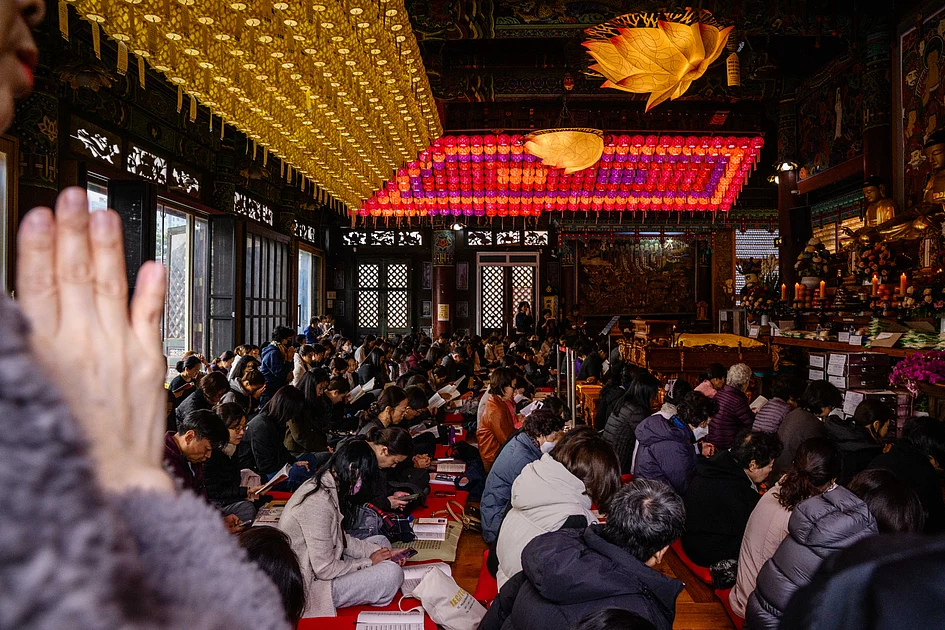
South Korea has implemented a series of nationwide measures to ensure a smooth and distraction-free environment for students taking the highly consequential College Scholastic Ability Test (CSAT), locally known as the ‘Suneung.’ The exam, held on November 13, 2025, is a pivotal event in the lives of South Korean students, as it determines admission to top universities and is widely viewed as a gateway to social mobility, economic stability, and even marital prospects. With so much at stake, the government has taken extraordinary steps to minimize disruptions. A 35-minute flight ban was enforced during the English listening test, affecting 140 flights, including 75 international services. Additionally, banks and public offices delayed their opening hours by an hour to reduce traffic congestion. Parents and students alike were visibly anxious, with many parents visiting shrines, churches, and temples to pray for their children’s success. The exam day is steeped in traditions and superstitions, such as avoiding seaweed soup, believed to cause students to ‘slip’ in their performance. The 2026 admission cycle also introduced a new requirement for universities to consider applicants’ records of school violence, marking a significant shift in policy. Over 550,000 students registered for the exam, with many receiving encouragement from younger peers and community members. The day-long test, held at centers like Yongsan High School in Seoul, saw a heavy media presence and police assistance for latecomers. The CSAT remains a defining moment in South Korea’s education system, reflecting the nation’s intense focus on academic achievement and its broader societal implications.