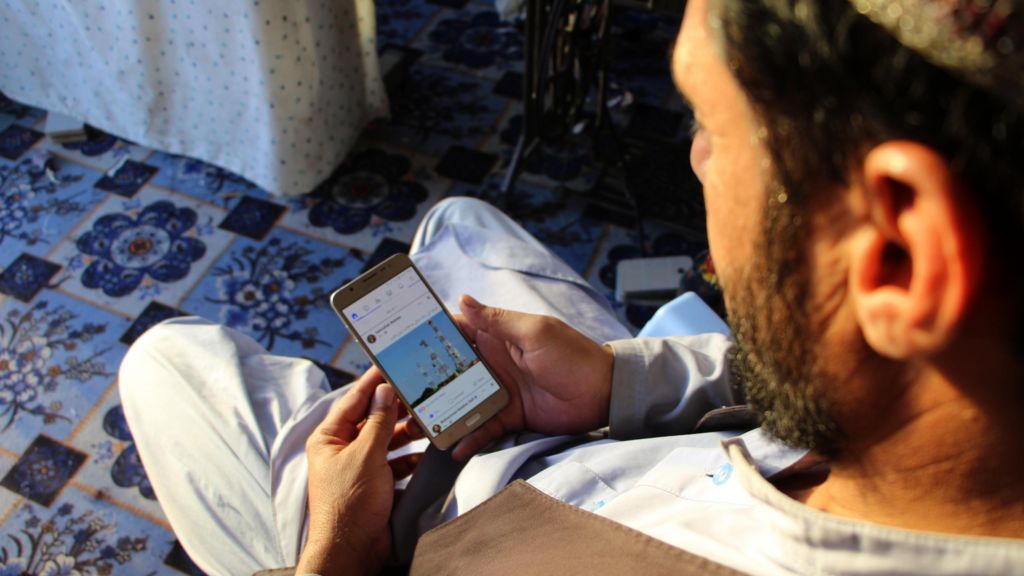
The Taliban-led government in Afghanistan has implemented stringent restrictions on social media platforms, including Facebook, Instagram, and X (formerly Twitter), according to sources from the Ministry of Communications and Information Technology. While the specific criteria for content filtering remain unclear, users in Kabul have reported issues such as unviewable videos on Facebook and restricted access to Instagram. These measures follow a recent two-day nationwide internet and telecommunications blackout, which caused widespread disruptions to businesses, emergency services, and daily life. The blackout, which ended with public relief, heightened concerns about the further isolation of women and girls, whose rights have been severely curtailed since the Taliban regained power in 2021. Social media users across various provinces have reported limited access to platforms since Tuesday, with some experiencing severely slow internet speeds or complete outages of fibre optic connections. A government source stated that the filtering measures are widespread and cover most provinces, though no formal explanation has been provided. Cybersecurity organization NetBlocks confirmed the intentional nature of these restrictions, noting intermittent accessibility on smartphones. The Taliban’s actions align with their interpretation of Islamic Sharia law, which has led to numerous societal restrictions, including bans on education for girls over 12 and the removal of books authored by women from universities. For Afghan women, the internet has been a crucial connection to the outside world, making these restrictions particularly impactful.