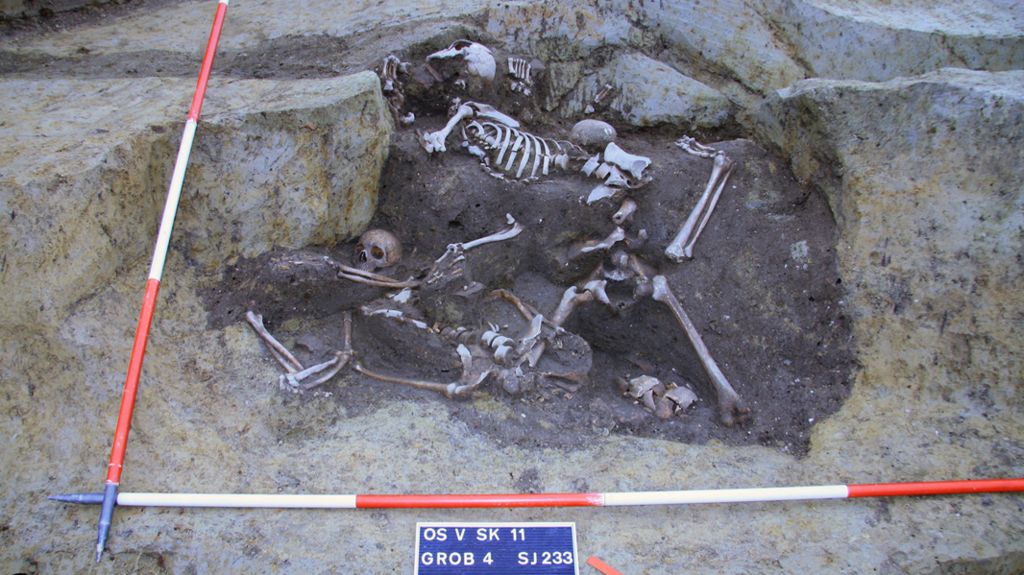
A groundbreaking archaeological discovery in Croatia has shed light on the lives and deaths of seven Roman soldiers who lived approximately 1,700 years ago. The remarkably well-preserved skeletons, unearthed in 2011 at the site of the ancient Roman city of Mursa (modern-day Osijek), were found in a mass grave that researchers believe was originally a water-well. The findings, detailed in a new research paper, suggest these men were likely victims of the tumultuous ‘Crisis of the Third Century,’ particularly the Battle of Mursa in 260 CE, a period marked by violent conflicts over imperial succession. The skeletons, belonging to men aged between 36 and 50, exhibited signs of robust physicality and a primarily vegetarian diet, though some had consumed meat and seafood. All bore evidence of both healed and unhealed injuries, including blunt force trauma and puncture wounds likely caused by arrows or spears. Additionally, DNA analysis revealed a diverse ancestry, indicating none were local to the region. The researchers noted that mass burials were uncommon in the Roman Empire, typically reserved for extreme circumstances such as large-scale battles. The discovery underscores Mursa’s historical significance as a hub of trade, craft, and conflict during the Roman era.