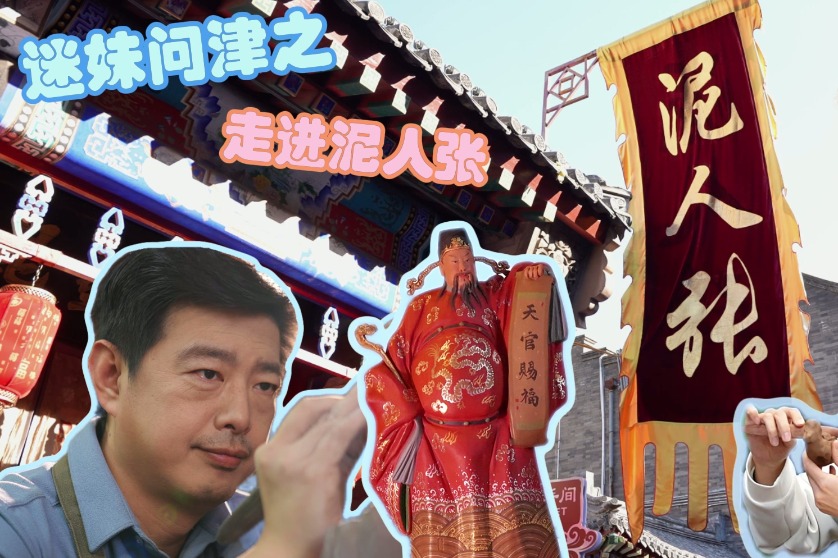
In a Tianjin studio, sixth-generation inheritor Zhang Yu is revolutionizing the century-old Clay Figurine Zhang tradition by prioritizing spiritual essence over vibrant coloration. His monochromatic sculpture of writer Lu Xun stands in deliberate contrast to the brightly painted folkloric figures typically associated with this nationally recognized intangible cultural heritage.
Zhang believes this minimalist approach better aligns with contemporary aesthetics. ‘Traditional clay figures are very colorful,’ he acknowledged, ‘but raw clay allows the form and spirit of the figure to stand out.’ This philosophical shift represents both personal artistic preference and response to evolving public tastes.
The Clay Figurine Zhang school, dating to the late Qing dynasty (1644-1911), has historically been celebrated for its exquisitely painted, expressive figures drawn from historical, operatic, and mythological themes. Zhang Yu maintains this expressive tradition while refining its presentation. His creative process emphasizes capturing the subject’s inner essence, insisting that ‘every line must serve the spirit of the character.’
This principle manifests in his Lu Xun sculpture through furrowed brows and penetrating gaze, achieved through simplified yet profoundly expressive lines. Alongside these serious portraits, Zhang creates playful pieces targeting younger audiences, including a horse carrying a gold ingot—a visual pun for ‘wealth arrives on horseback’ designed for the upcoming Year of the Horse.
‘We need to make young people feel clay sculpture is fun, not aloof and distant,’ Zhang explained. By introducing lighter, cuter designs, he aims to enhance accessibility for the traditional art form. He emphasizes that each generation of the Clay Figurine Zhang family has developed distinctive styles rather than rigidly replicating predecessors. While maintaining traditional subjects like Zhong Kui and Guan Yu, Zhang considers innovation essential for the craft’s survival. ‘Our task is to let ancient art continue to live in the present,’ he concluded.