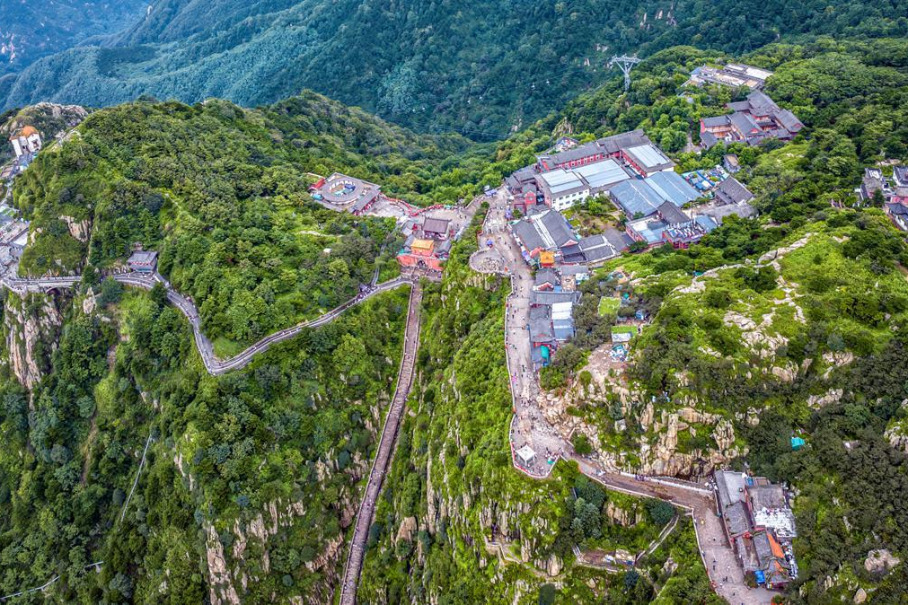
As China commemorated its 48th National Tree Planting Day on March 12, 2026, Shandong Province unveiled remarkable achievements in its comprehensive environmental conservation programs. Under the leadership of Zhao Xiaohui, Director of the Shandong Provincial Department of Natural Resources, the eastern Chinese province has demonstrated significant progress in expanding forest coverage and integrating ecological considerations into urban development strategies.
According to official statistics released during a press conference, Shandong’s forested areas now encompass approximately 3 million hectares, with national and provincial-level public welfare forests constituting roughly 25% of this total. The province has established nine specialized national forest tree breeding centers dedicated to sustainable forestry practices, with particular emphasis on cultivating key species including poplar, black locust, and black pine varieties.
A distinctive characteristic of Shandong’s environmental approach involves the seamless incorporation of green space expansion within urban planning frameworks. Since the initiation of the 14th Five-Year Plan period (2021-2025), provincial authorities have created more than 450 major urban parks and established over 3,900 kilometers of interconnected urban greenways. These developments have elevated per capita park green space to 18.66 square meters, significantly enhancing urban livability standards.
Beyond ecological improvements, Shandong’s forestry initiatives have generated substantial economic benefits for local communities. The programs have facilitated the cultivation of high-value traditional crops including chestnuts and persimmons across various regions. These agricultural activities are increasingly combined with forest wellness tourism and ecotourism ventures, creating diversified income streams for rural populations.
The province has developed numerous nationally recognized geographical indication products, including Yantai apples, Laiyang pears, Zhanhua winter jujubes, Pingyin roses, and Heze peonies. Additionally, Shandong has established four national-level forest wellness bases, further strengthening the integration of ecological conservation with economic development.
Director Zhao emphasized that emerging sectors combining environmental protection with agricultural and tourism activities have experienced continuous expansion in both operational scale and financial returns. The province has simultaneously maintained stable forest coverage rates while progressively reducing areas affected by desertification and sandy land degradation, demonstrating the effectiveness of its comprehensive environmental management strategies.